



-
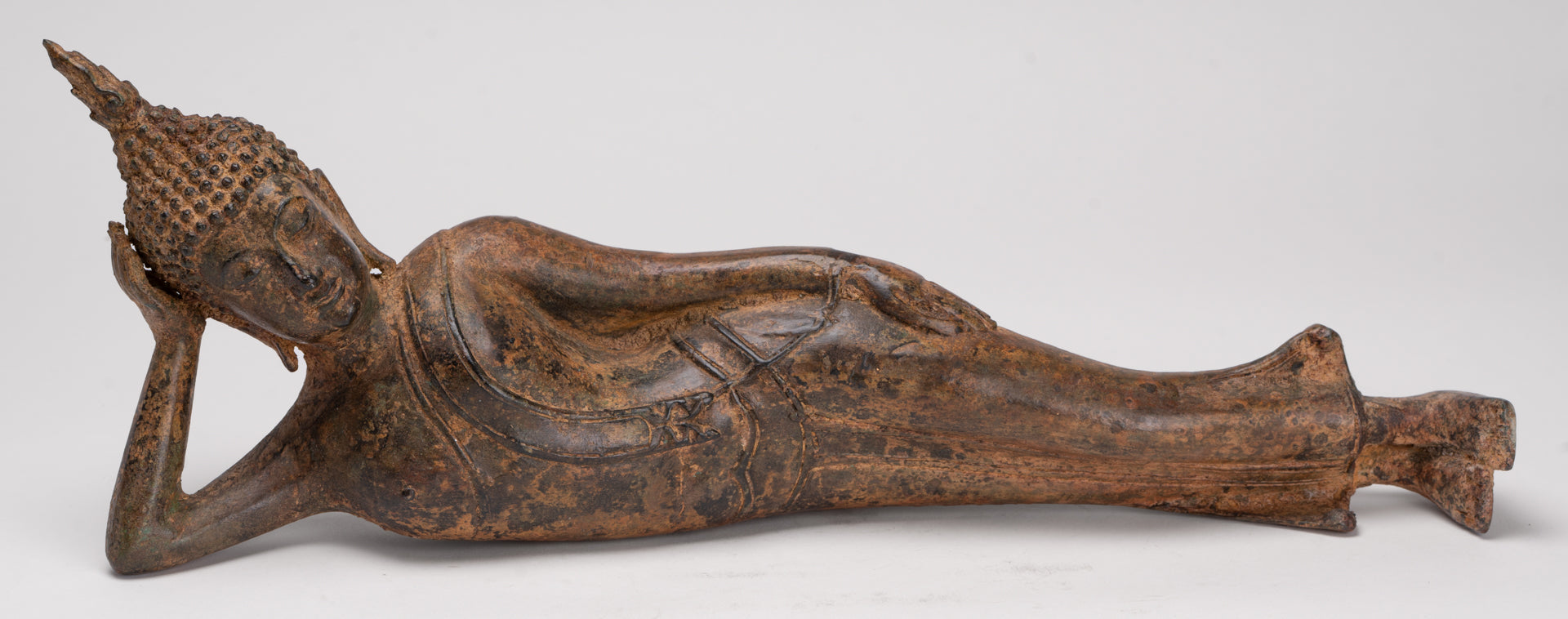
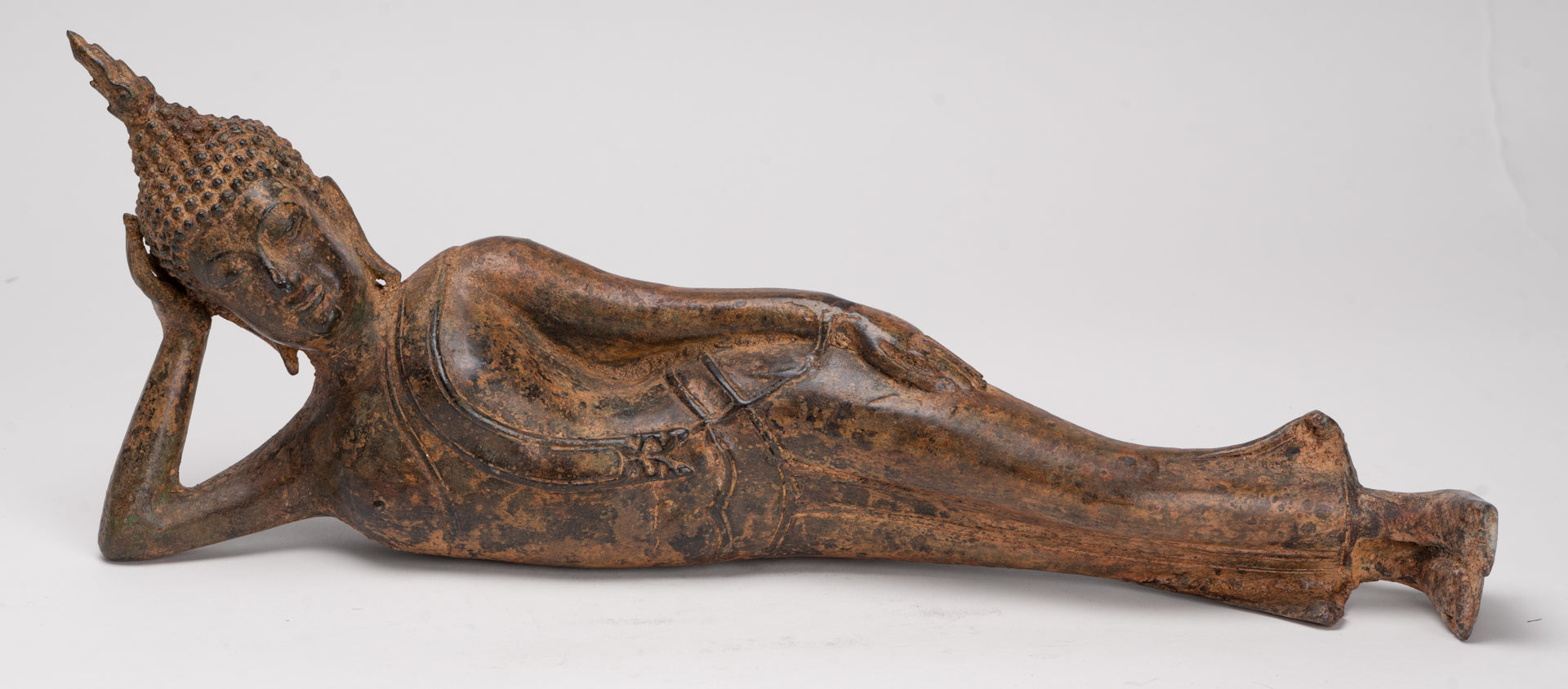
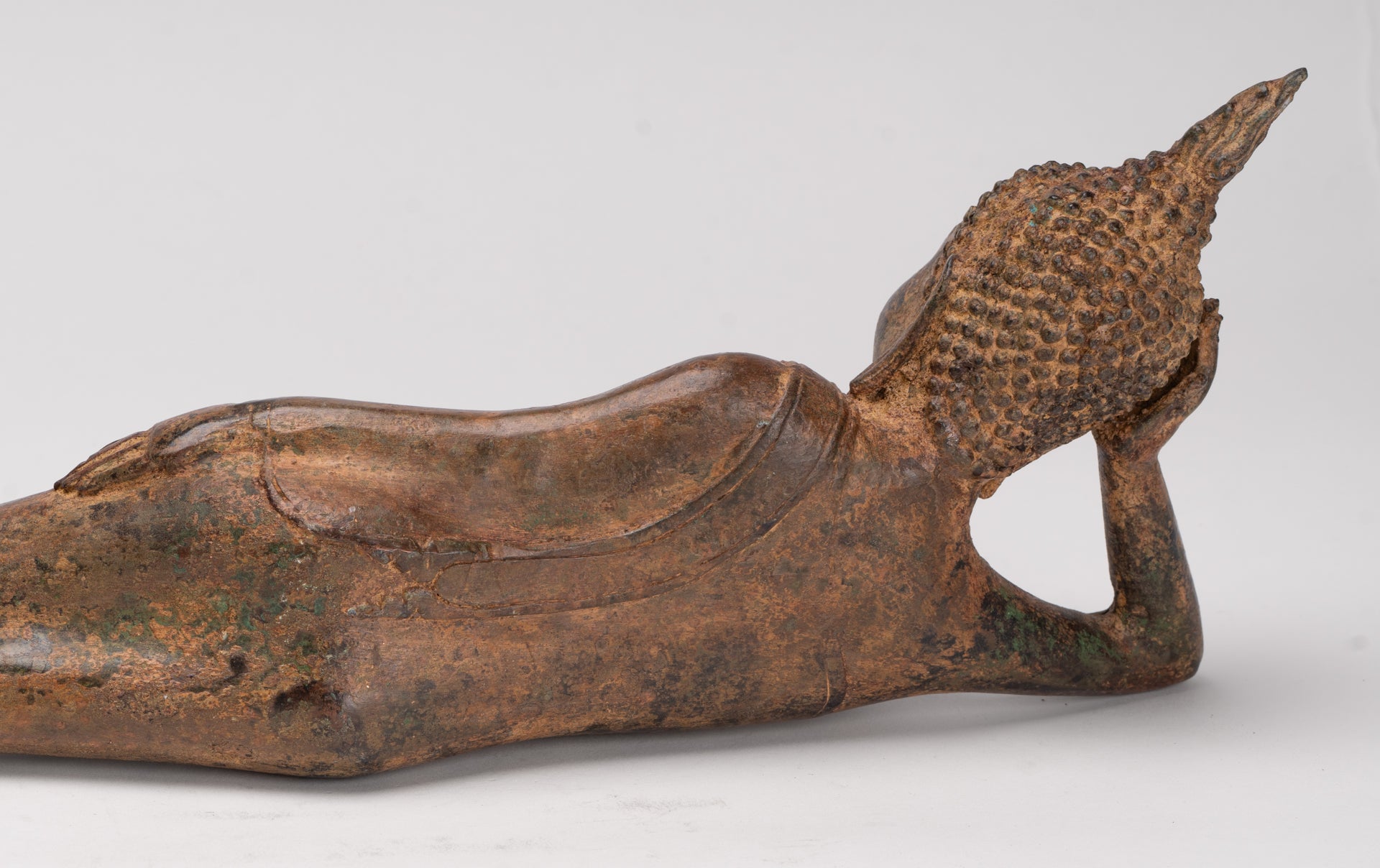
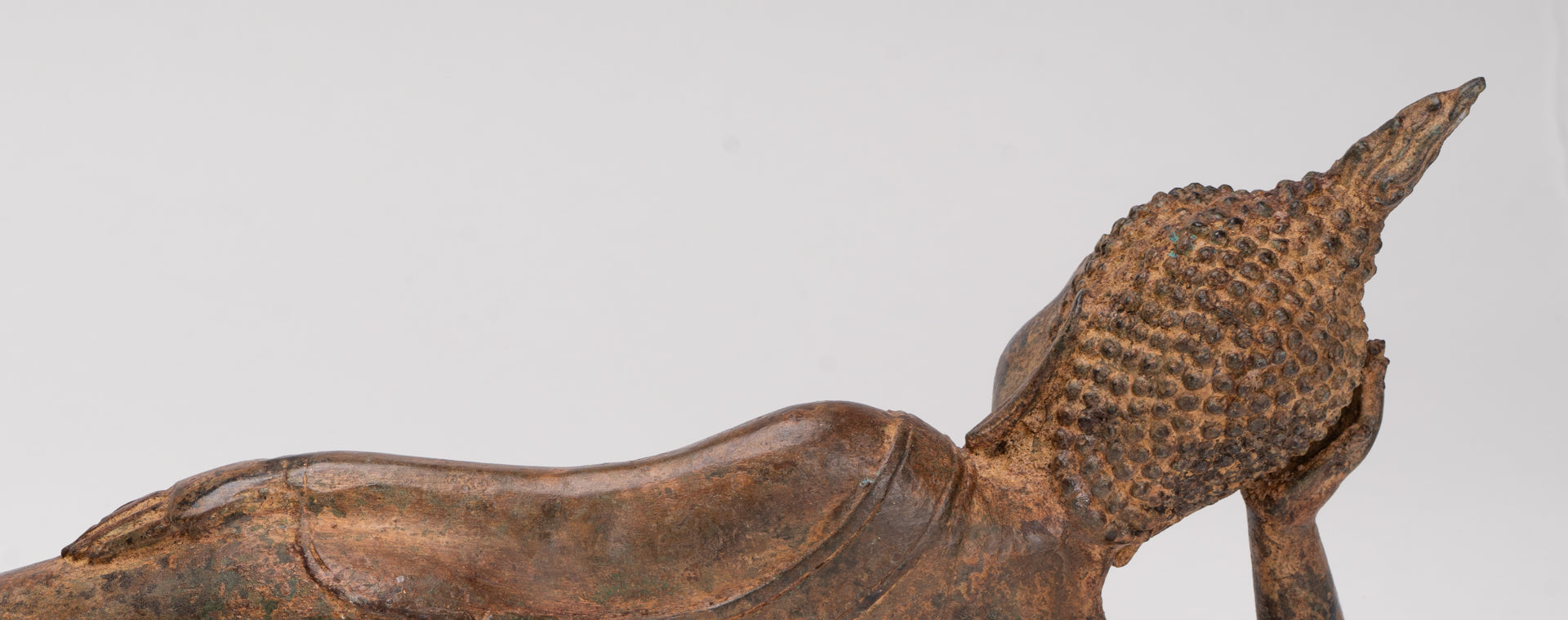
Antique Thai Style Bronze Sukhothai Reclining Nirvana Buddha Statue - 43cm/17"
Measures (Length) 43cm/17"
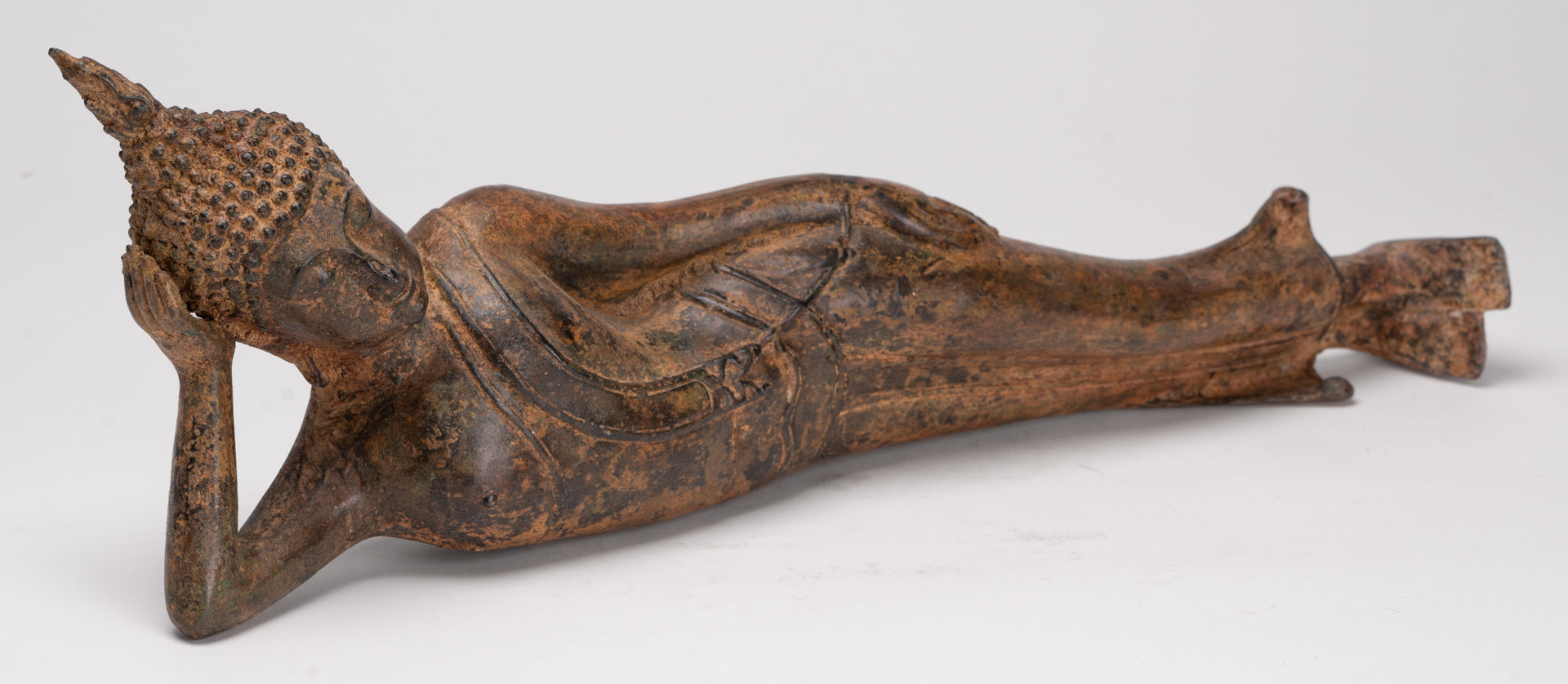
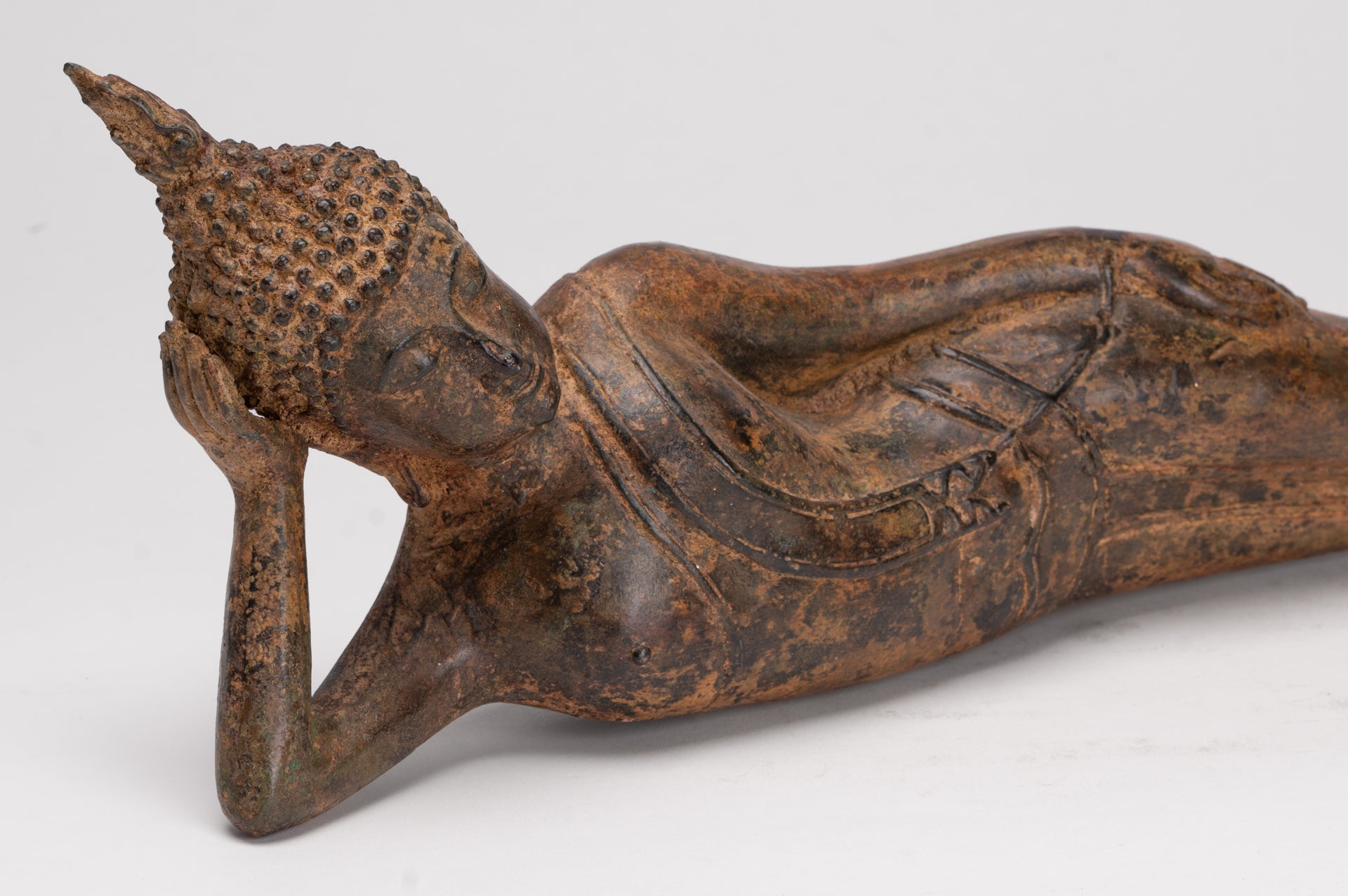
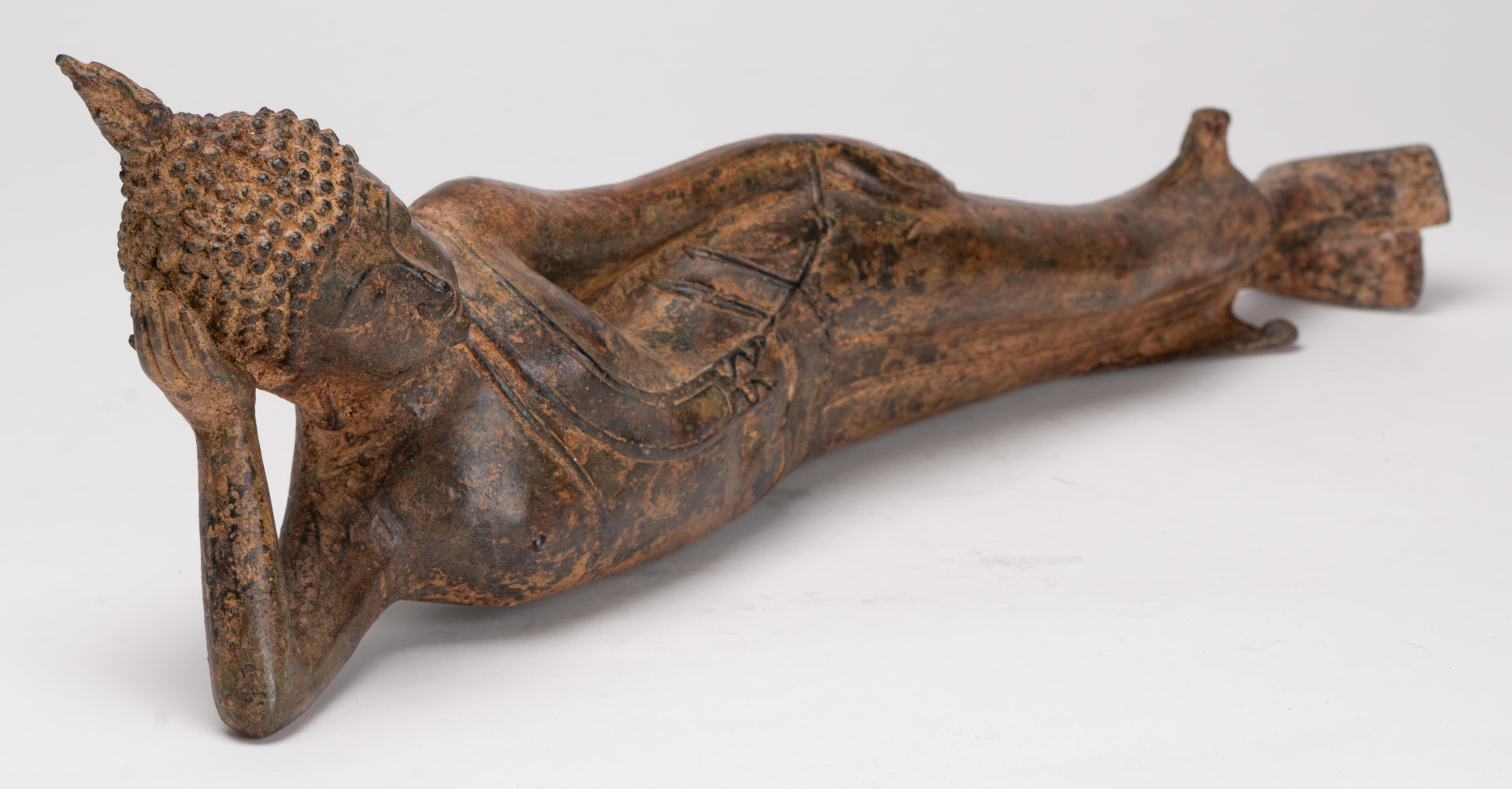
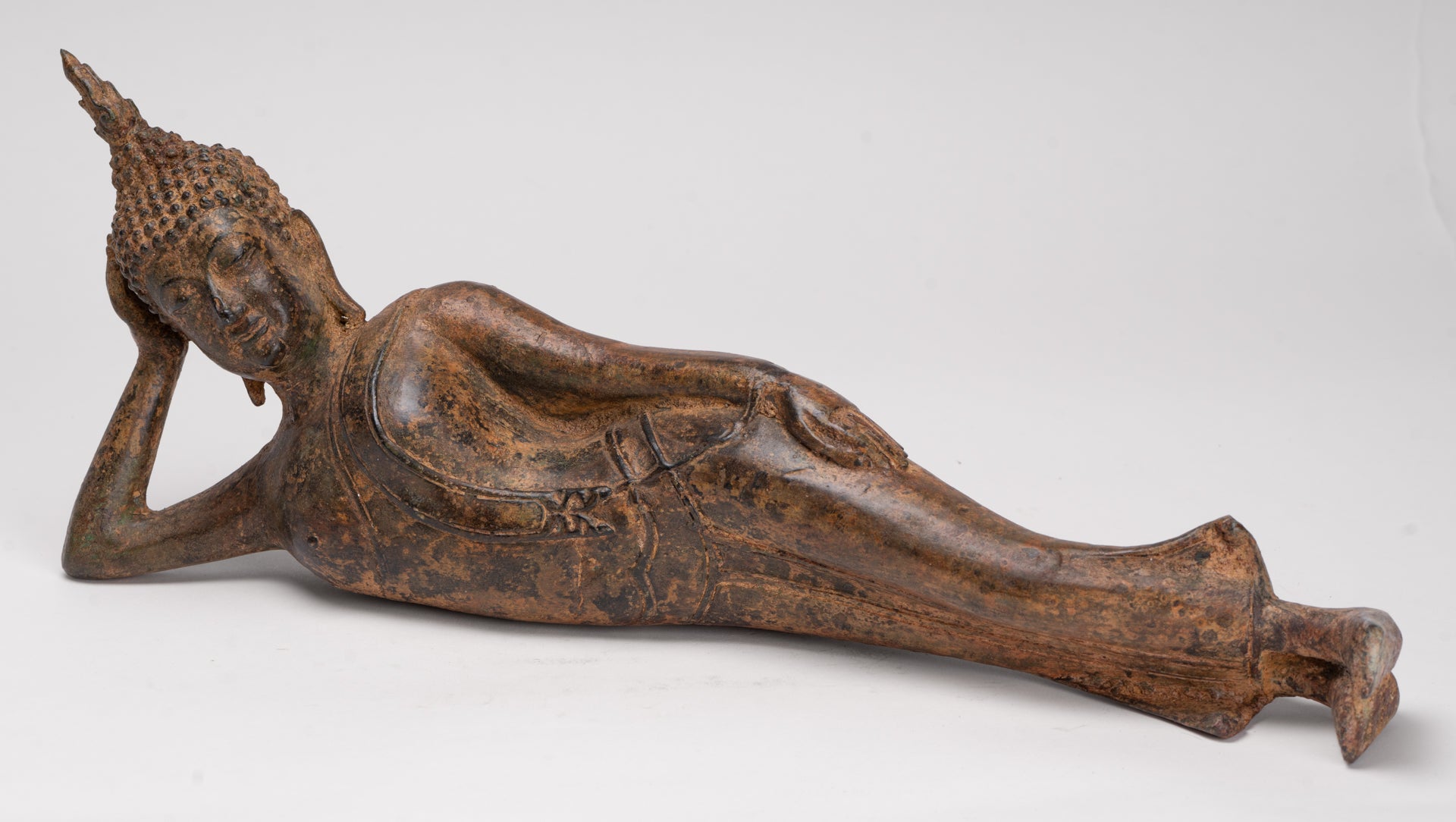
An antique Thai Sukhothai-style reclining Buddha depicting the Blessed One in nirvana, or enlightened repose. This graceful image captures the Buddha’s final moments in the physical world and symbolises ultimate liberation from the cycle of birth, death, and rebirth.
In Buddhist teaching, Nirvana (Nibbana in Pali) is the highest goal: the complete cessation of suffering, craving, and individual ego, and the end of samsara, the cycle of rebirth. It represents perfect peace, wisdom, and freedom, and embodies the full realisation of the Buddha’s path. In Thai Buddhism, the reclining or Nirvana Buddha serves as a powerful reminder of life’s impermanence and the ever-present possibility of release from suffering.
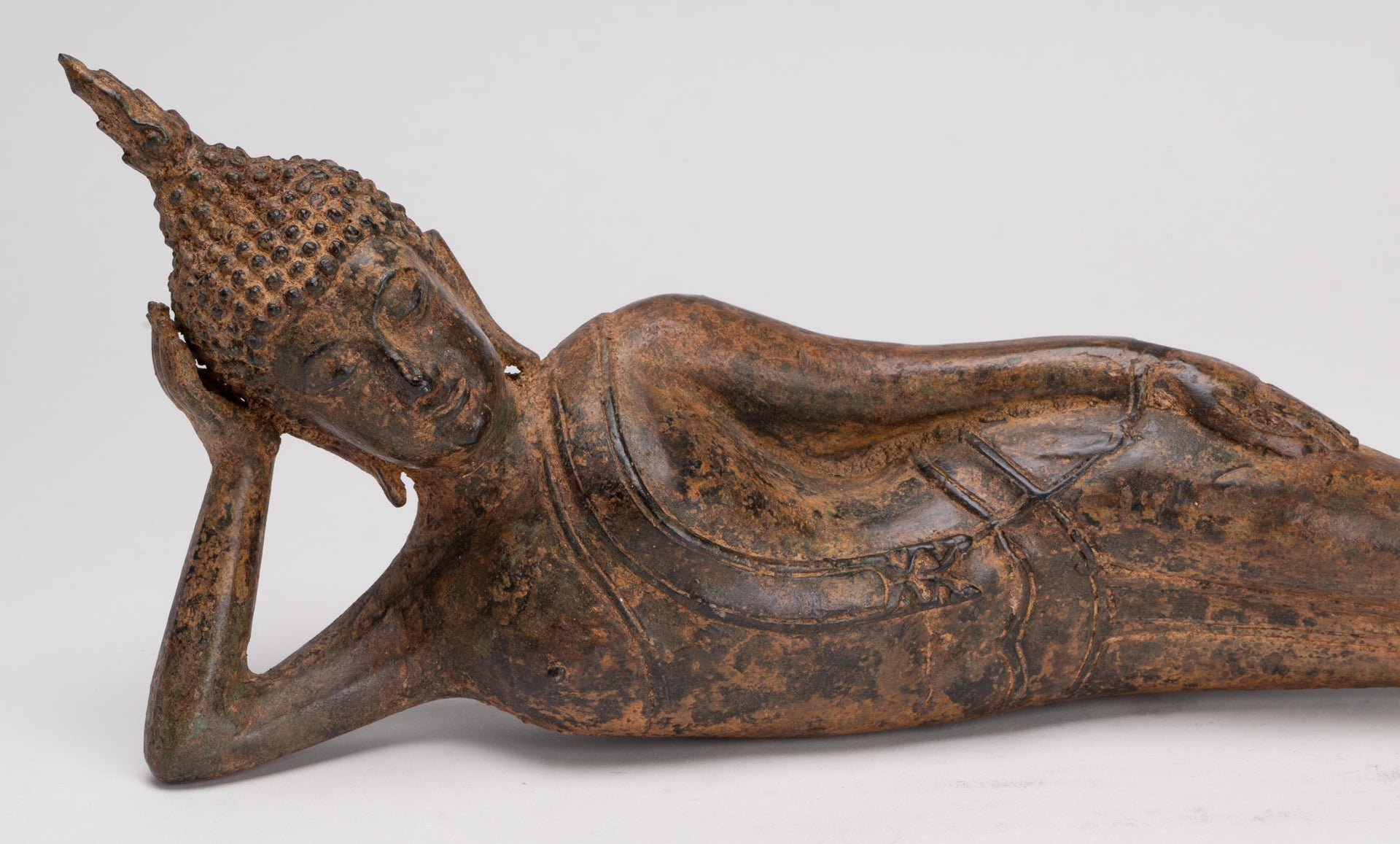
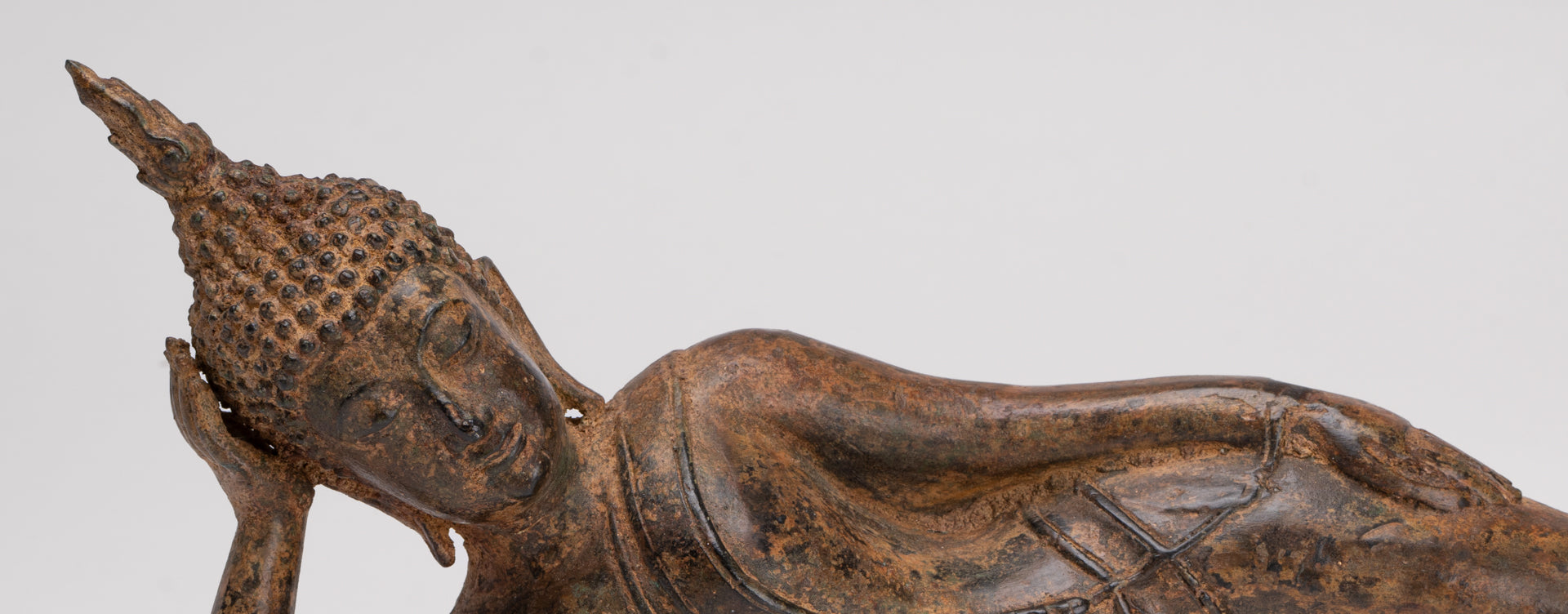
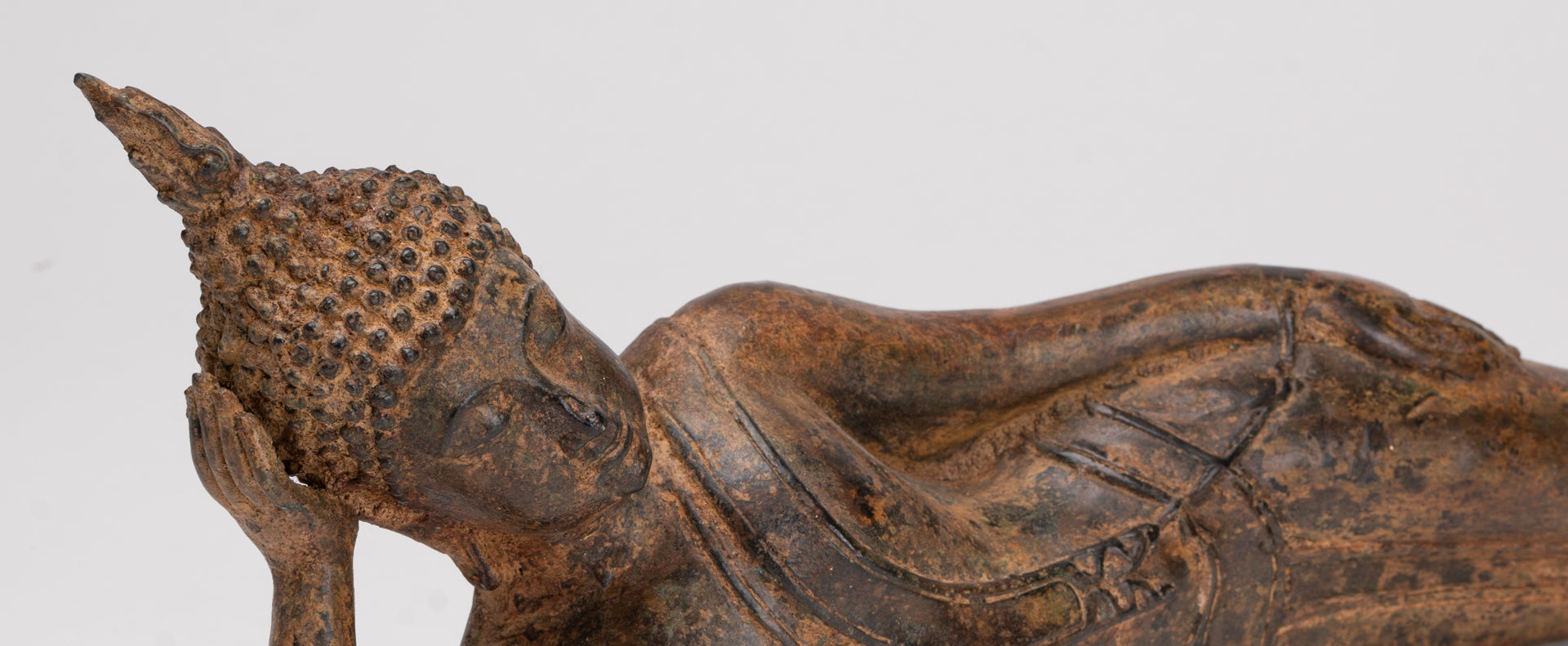
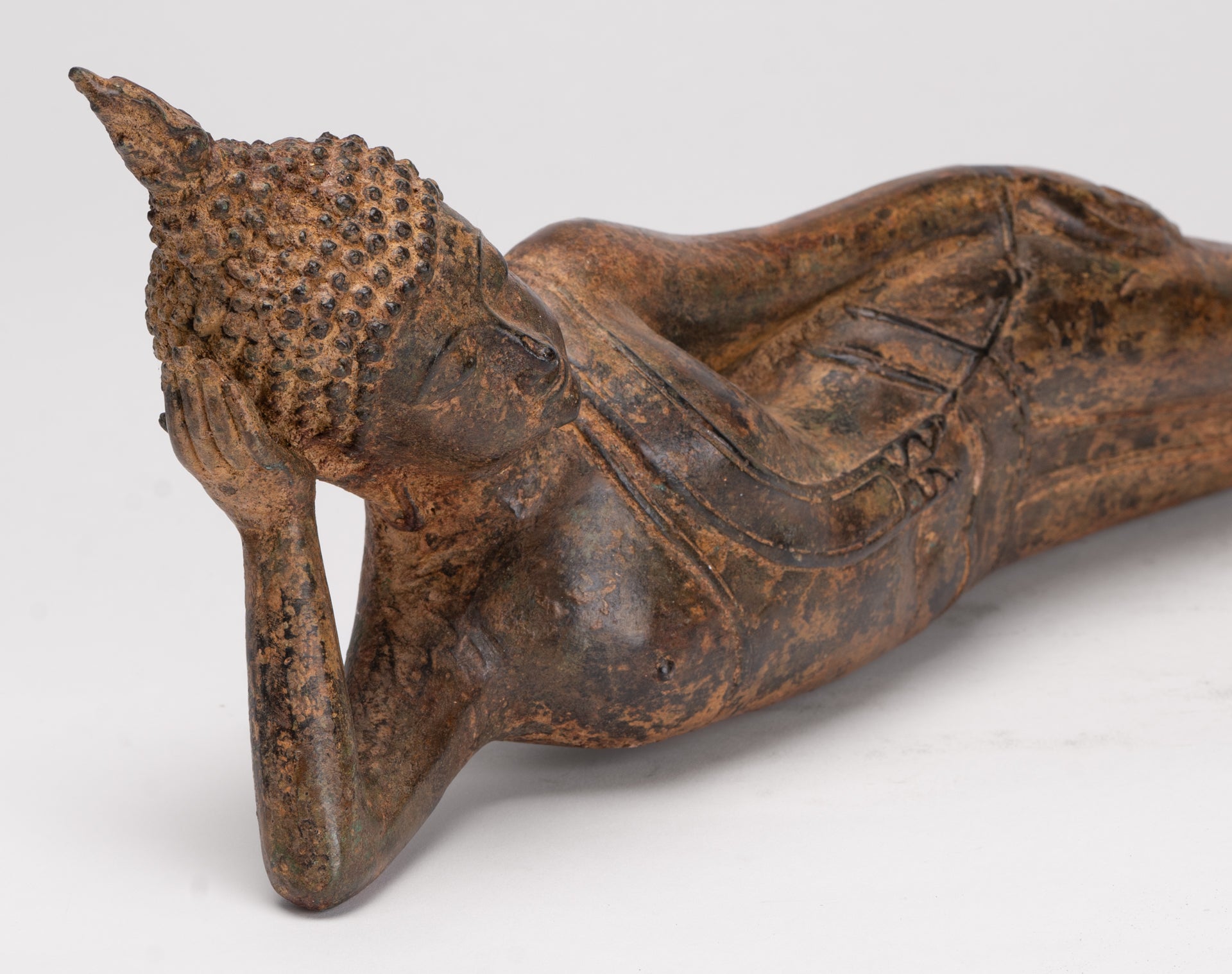
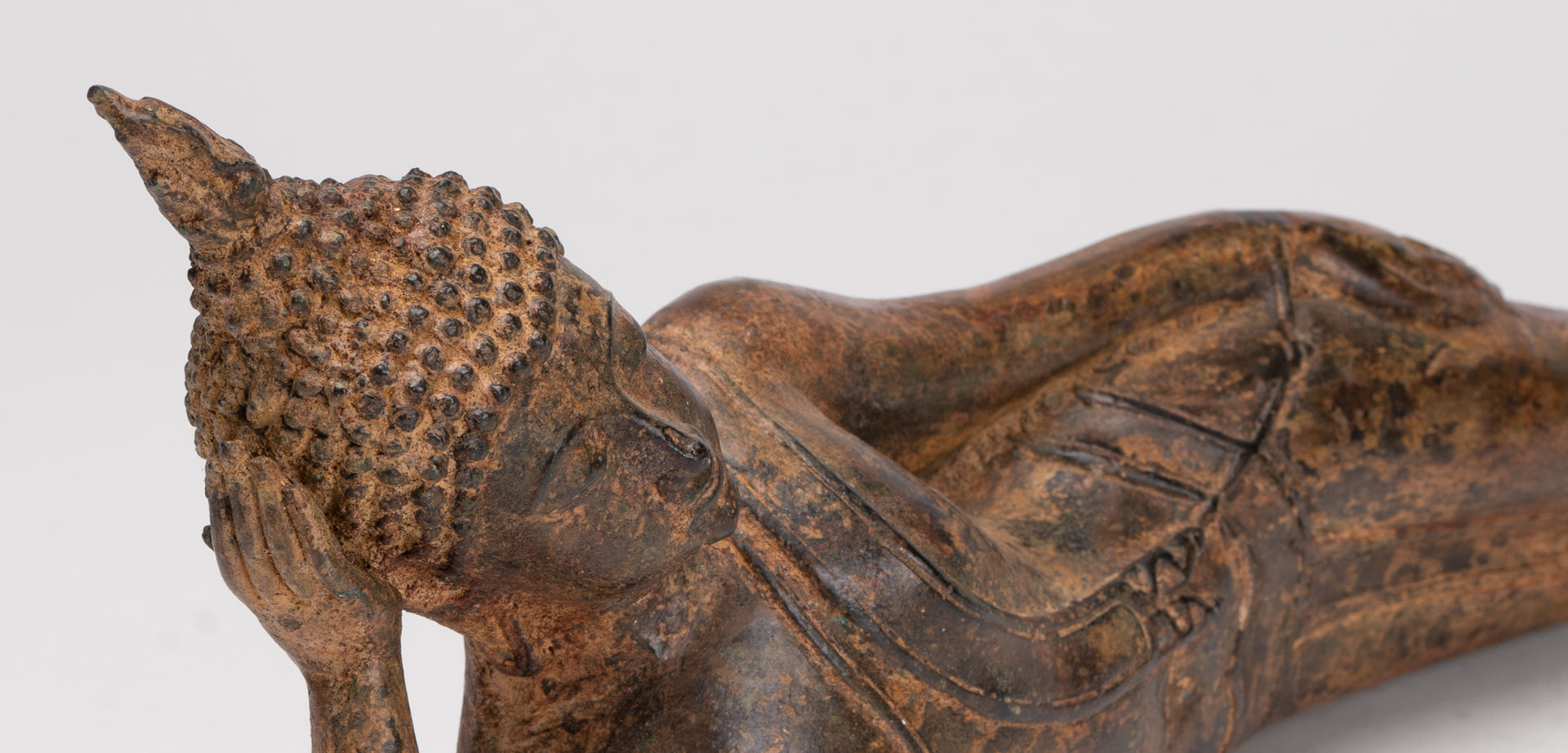
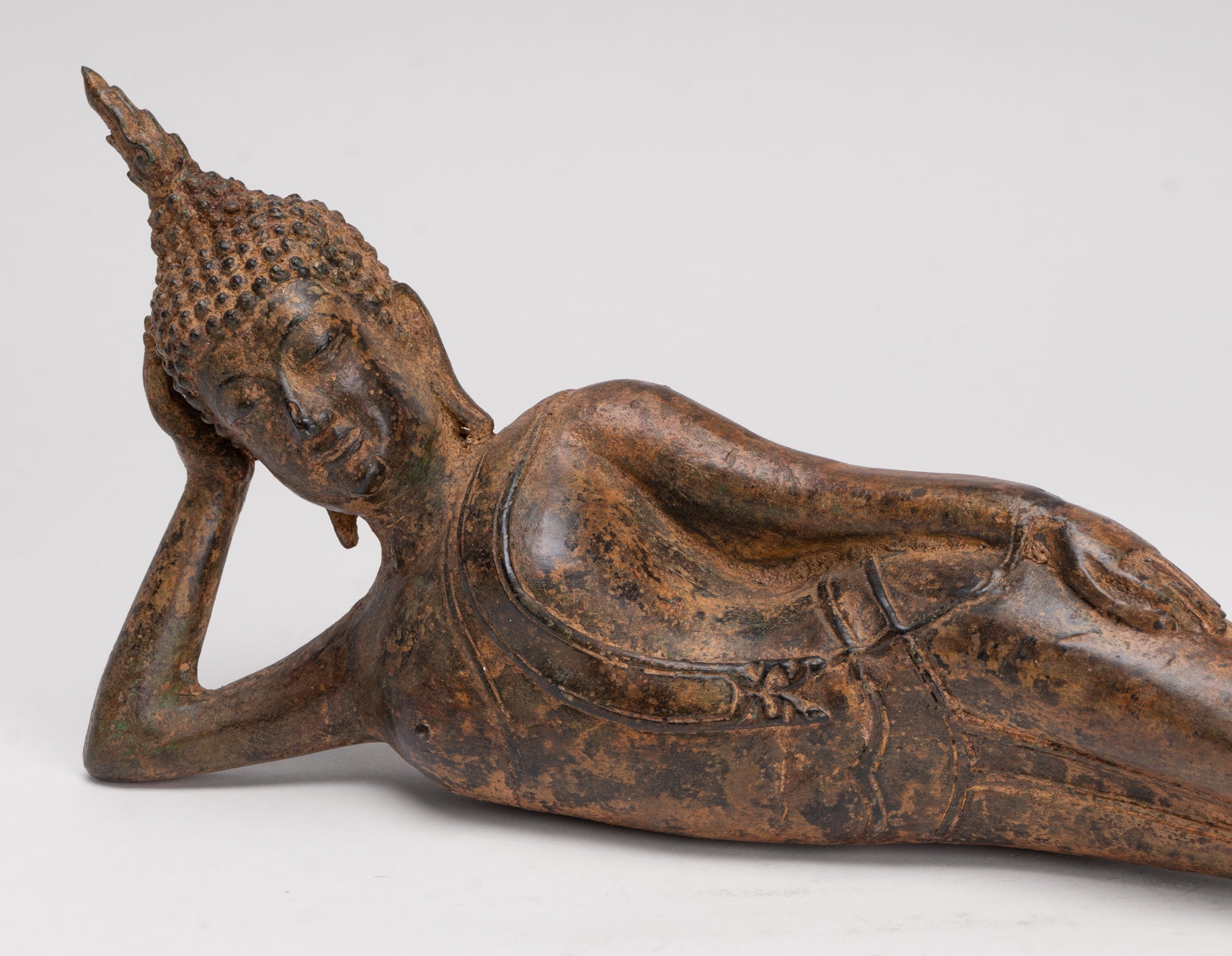
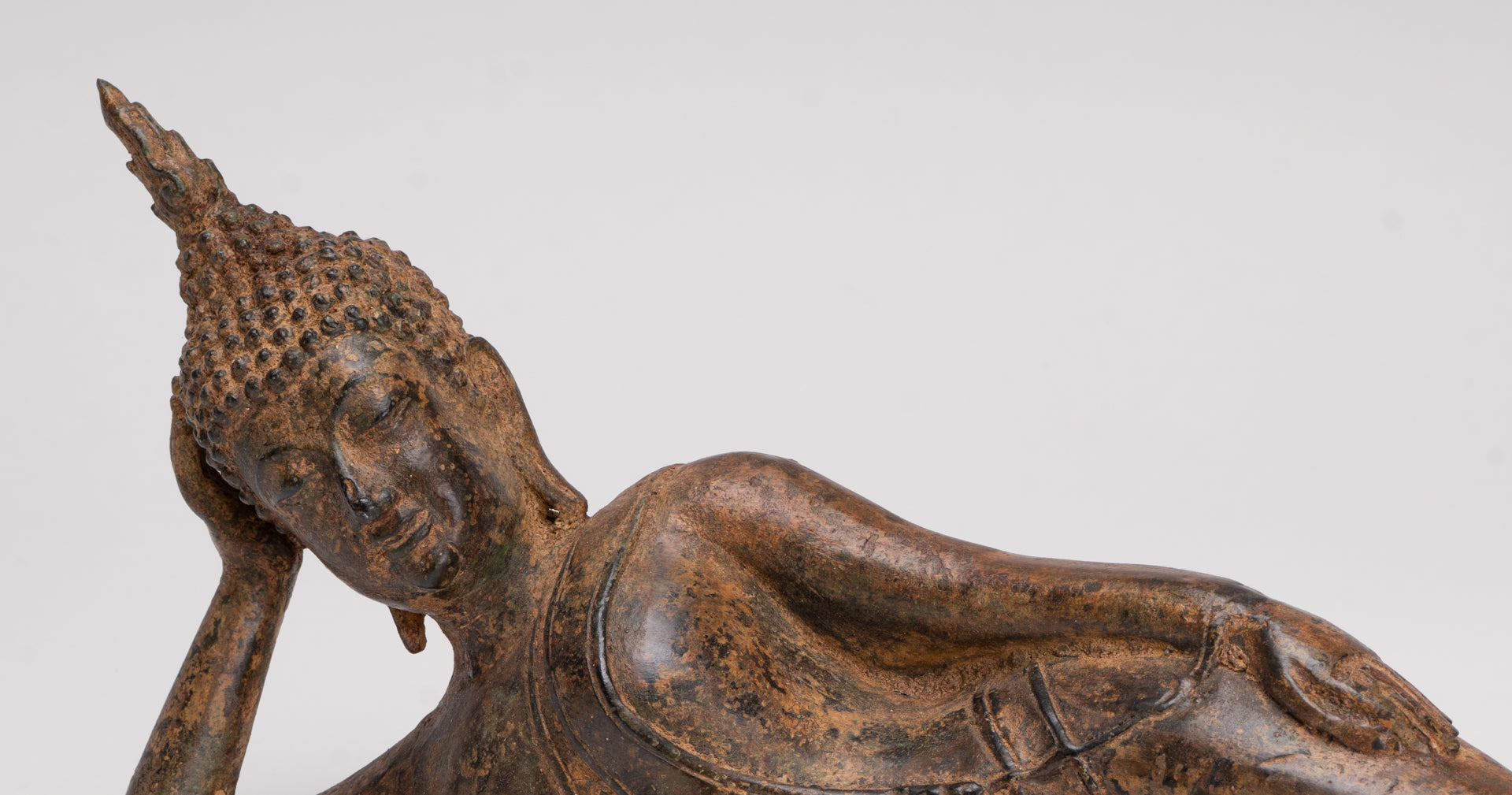
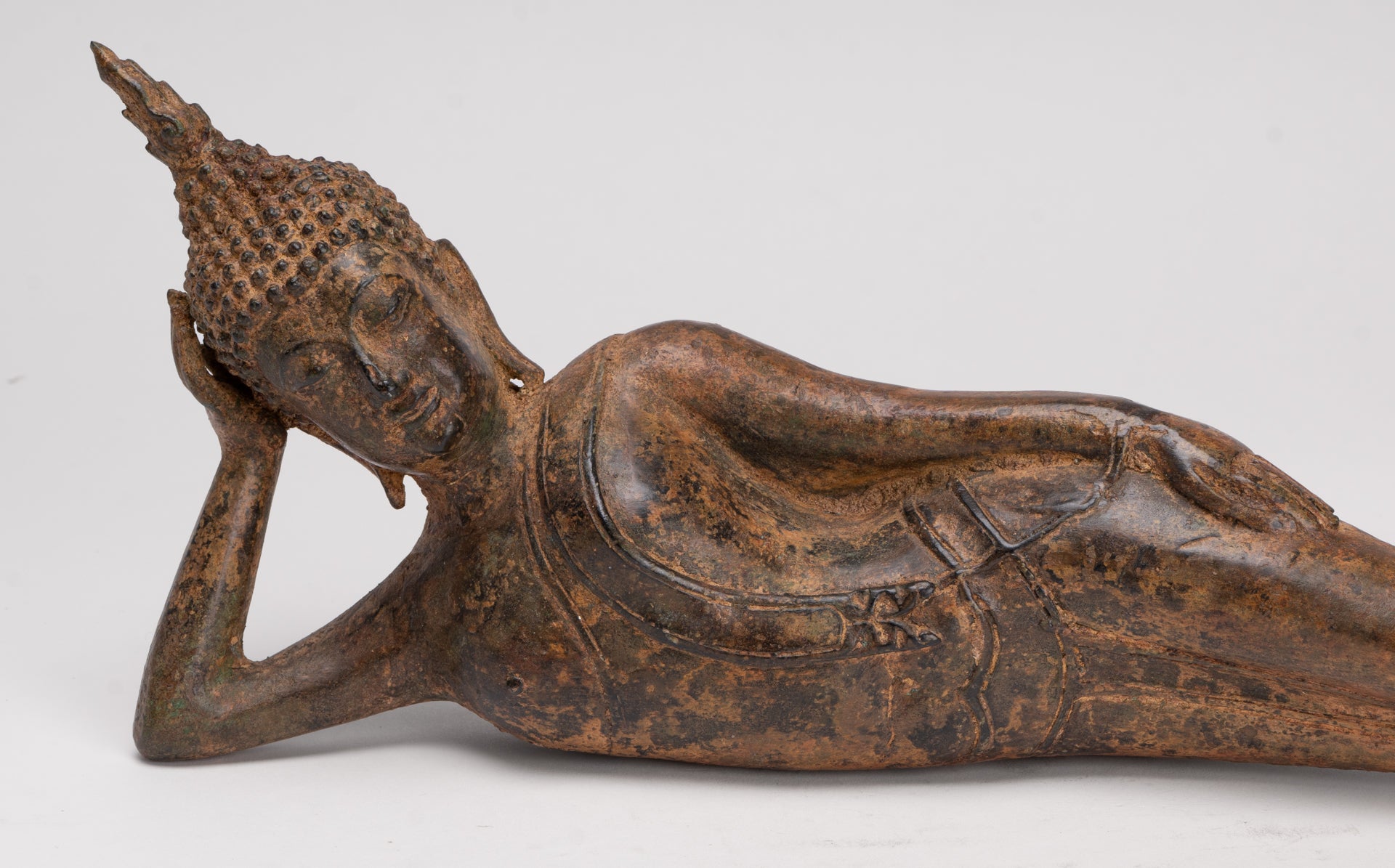
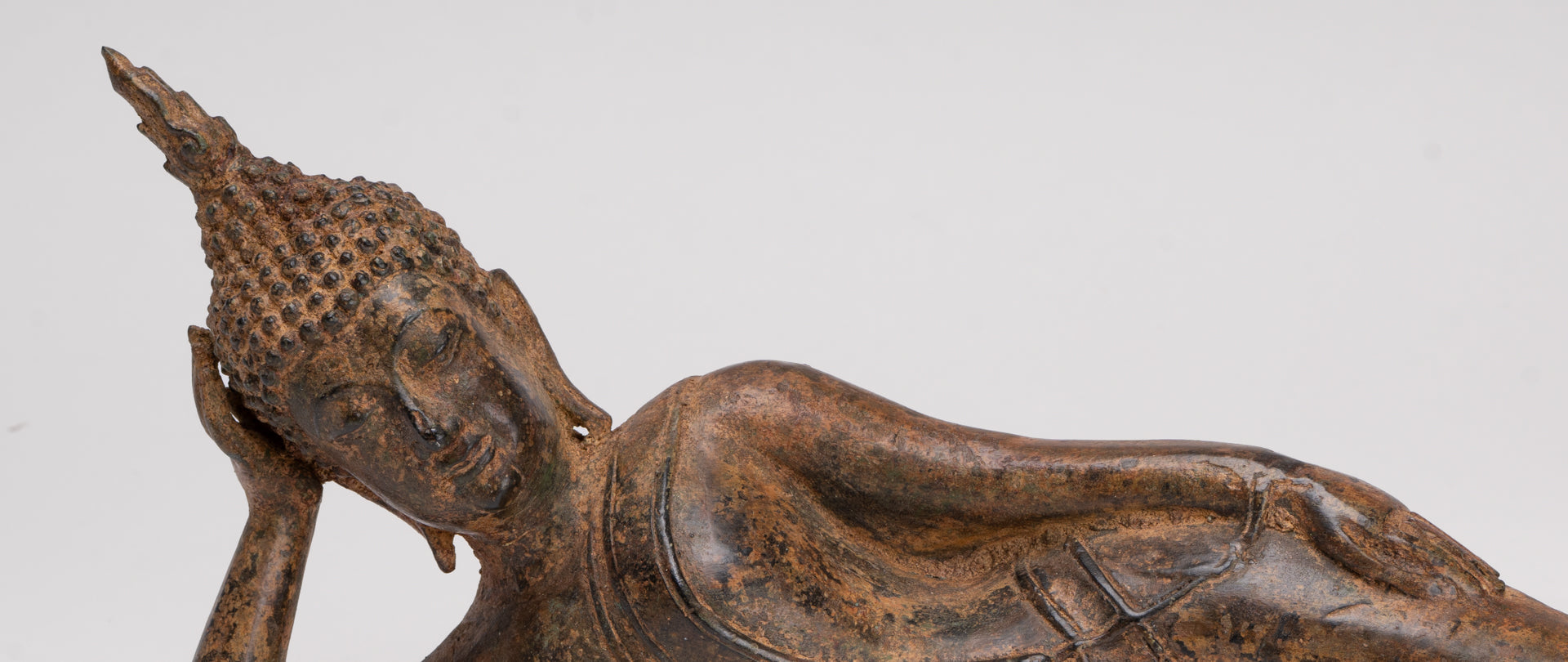
Here the Buddha lies calmly on his side, with a serene expression that conveys deep inner peace and completion. A prominent ushnisha crowns his head, signifying his high level of spiritual attainment. His elongated earlobes recall his princely youth, when he wore heavy gold earrings before renouncing worldly life, while the downcast introspective eyes and firm brow suggest profound meditative awareness, even in his final moment.
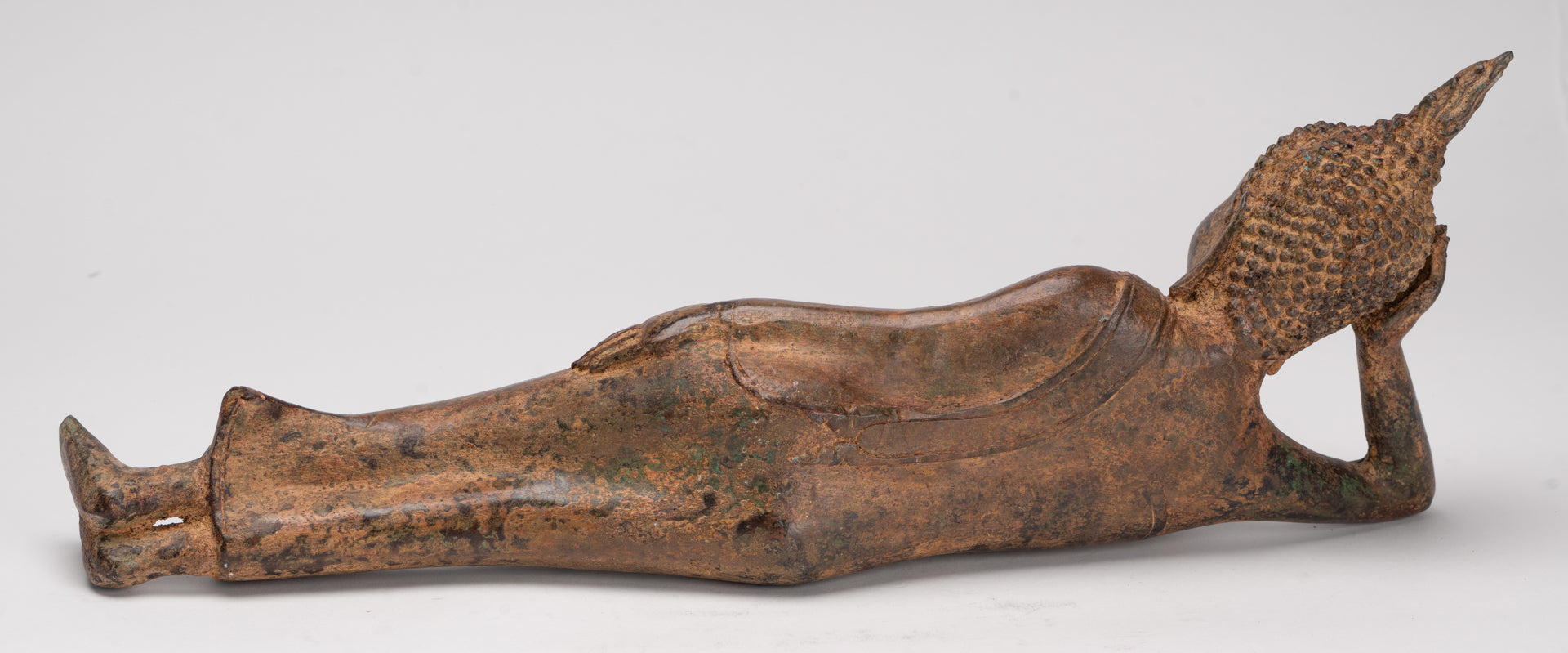
The sculpture displays magnificent, intricate detailing, with flowing robes that fall in elegant, curling folds along the length of the body. Subtle azurite and malachite tones enliven the patina, giving the surface a rich depth of colour and enhancing the sense of age and authenticity. The fine casting is evident in the delicate treatment of the face, hands, and drapery, where each line and contour is crisply and sensitively rendered.
Often referred to as the Sleeping Buddha, this pose commemorates the moment the Buddha consciously lay down, fully aware of the time of his passing, and peacefully entered parinirvana—final Nirvana beyond all rebirth. It symbolises not only his personal liberation but also the promise that such awakening is possible for all beings who follow the path.
This Nirvana Buddha stands as a profound symbol of spiritual completion, compassion, and timeless wisdom. Displayed in a home, meditation room, office, or sacred space, it invites quiet reflection on the nature of impermanence, the possibility of inner peace, and the enduring guidance offered by the Buddha’s teachings.
Key Features
-
Antique Thai Sukhothai‑style Reclining Buddha – An elegant bronze image of the Buddha in enlightened repose, inspired by Thailand’s graceful Sukhothai artistic tradition.
-
Substantial horizontal format – Measures 43cm / 17" in length, making it an eye‑catching focal point for a console, mantel, shelf, altar or meditation space.
-
Nirvana / Parinirvana imagery – Depicts the Buddha’s final earthly moments and entry into parinirvana, symbolising liberation from suffering and the cycle of rebirth.
-
Profound spiritual symbolism – A powerful reminder of impermanence, peace, compassion and awakening.
-
Serene facial expression – Downcast eyes, composed brow and softly modelled features convey calm awareness and spiritual completion.
-
Classical Buddha attributes – Prominent ushnisha signifies advanced spiritual realisation; elongated earlobes recall the Buddha’s princely past and subsequent renunciation.
-
Finely cast flowing robes – Detailed drapery follows the reclining body in elegant, curling folds, giving the sculpture movement and visual softness.
-
Rich mineral‑toned patina – Subtle azurite and malachite tones enrich the surface, enhancing depth, texture and a beautifully time‑worn appearance.
-
Compact yet meaningful display piece – A refined choice for a home, office, therapy room, meditation space or dedicated shrine.
-
Traditional Thai spiritual art – Combines Sukhothai‑style elegance with one of Buddhism’s most profound and recognisable sacred subjects.
Frequently Asked Questions
Q: What does a Reclining Buddha represent?
A: A reclining Buddha most commonly represents the Buddha in his final earthly moments, peacefully entering parinirvana. It is not an image of ordinary sleep; it symbolises his final liberation from the cycle of birth, death and rebirth.Q: Is this called a Sleeping Buddha or a Nirvana Buddha?
A: Both terms are commonly used. “Sleeping Buddha” describes the calm reclining appearance, while “Nirvana Buddha” or “Parinirvana Buddha” more accurately identifies its religious meaning: the Buddha’s final passing beyond samsara.Q: What is the difference between Nirvana and Parinirvana?
A: Nirvana is liberation from craving, suffering and ignorance, realised during life. Parinirvana refers to the final liberation associated with the Buddha’s passing, when there is no further rebirth. The reclining image is traditionally associated with this latter, complete release.Q: Does the Reclining Buddha represent sadness or death?
A: No. Although it commemorates the Buddha’s final earthly passing, the mood is one of profound peace, fulfilment and freedom rather than grief. The serene expression reminds us that awakening is possible and that freedom from suffering lies at the heart of Buddhist teaching.Q: What style is this sculpture?
A: The Buddha is created in a Thai Sukhothai style, inspired by one of Thailand’s most admired artistic periods. Sukhothai‑influenced images are especially appreciated for their graceful proportions, calm faces, flowing robe lines and spiritual delicacy.Q: Is this an original Sukhothai‑period antique?
A: The description identifies the piece as an antique Thai Sukhothai‑style Reclining Buddha. “Sukhothai‑style” refers to the artistic inspiration and should not automatically be read as a claim that the sculpture itself dates to the historical Sukhothai Kingdom unless separate dating or provenance is provided.Q: Why is the Buddha lying on his side?
A: The Buddha is traditionally shown reclining on his right side, a posture associated with his last moments before parinirvana. The calm, supported position communicates composure, awareness and release rather than physical weakness.Q: What do the downcast eyes mean?
A: The lowered, introspective gaze conveys deep meditative awareness. Even in this final moment, the Buddha is shown fully calm, compassionate and free from fear, offering a visual lesson in acceptance and inner peace.Q: What is the ushnisha on the Buddha’s head?
A: The ushnisha is the raised cranial protuberance on the crown of the head. It is a traditional mark of Buddhahood, representing spiritual development, enlightened wisdom and the Buddha’s exceptional realisation.Q: Why are the earlobes so long?
A: The elongated earlobes refer to the Buddha’s early life as Prince Siddhartha, when he wore heavy royal earrings. After renouncing material privilege, the long ears came to represent spiritual wealth, compassionate listening and freedom from worldly attachment.Q: What is special about the robe detailing?
A: The robe falls in flowing, curling folds along the reclining body, creating a sense of softness and movement. Fine treatment of the drapery is an important feature of Thai Buddhist sculpture, balancing the stillness of the Buddha’s expression with a graceful, rhythmic surface.Q: What are the blue‑green tones on the surface?
A: The subtle azurite and malachite tones are part of the sculpture’s distinctive aged patina. These mineral‑like blue and green variations bring depth to the bronze surface and highlight the folds, facial features and contours of the figure.Q: Is the patina meant to be polished?
A: No. The time‑worn patina is an important part of the sculpture’s character and visual appeal. It should be preserved rather than polished away, as metal polish and abrasive cleaners can remove surface colour and alter the finish irreversibly.Q: Is this suitable for a meditation room or home shrine?
A: Yes. A Nirvana Buddha is especially fitting for a meditation room, shrine or reflective living space. Its imagery encourages contemplation of impermanence, letting go, compassion and the possibility of deep inner peace.Q: Is it appropriate for non‑Buddhists to display a Reclining Buddha?
A: Yes. Many people from different backgrounds appreciate the Reclining Buddha as a symbol of serenity and spiritual wisdom. It is best displayed respectfully on a clean, stable and elevated surface, rather than directly on the floor or in a cluttered area.Q: Where should I place a Reclining Buddha at home?
A: A shelf, sideboard, console, mantelpiece, study, meditation room or dedicated altar are all suitable. Because the statue measures 43cm / 17" long, allow enough clear space around it to appreciate the graceful horizontal silhouette and robe detailing.Q: Can I place offerings near the sculpture?
A: Yes. Flowers, a small bowl of water, incense, a candle or LED tealight can create a simple contemplative setting. Keep offerings clean and lower than the Buddha image, and avoid allowing wax, ash or moisture to come into contact with the surface.Q: How should I care for the sculpture?
A: Dust gently with a soft dry cloth or a soft natural‑bristle brush, especially in the robe folds and around the face and hands. Avoid chemical cleaners, commercial metal polish, abrasive pads and excessive water. Keep the statue in a stable indoor environment away from radiators, damp and sustained direct sunlight.Q: Can the Buddha be displayed outdoors?
A: Indoor display is recommended. Rain, frost, humidity, pollution and direct sunlight can alter the aged patina and affect the surface over time.Q: Who would especially appreciate this piece?
A: This Reclining Buddha is ideal for collectors of Thai and Southeast Asian art, Buddhist practitioners, meditation and yoga enthusiasts, therapists, interior designers and anyone seeking a sculptural reminder of peaceful release, resilience and timeless wisdom.SATISFACTION GUARANTEE - We have been offering SE Asian Art for many years and are proud of the reputation we have developed for fair and honest listings. However, if for any reason, whatsoever, you are unhappy with your purchase please just let us know and we will provide a full refund. We want you to be 100% happy with your purchase.
-
-
The majority of orders will be shipped with DHL. This is a secure, express and fully tracked service.
Items less than 2Kg we typically ship using Royal Mail.
Once we receive your order we try to ship all orders the same or next working day.
Large and/or fragile pieces requiring palletising, specialist crating and/or extra packaging may take a little longer. Palletised shipments will be delivered curbside.
All orders over 35 GBP will be shipped free of charge.

-
We genuinely hope that all purchases delight.
However, if they do not, regardless of reason, we will refund all orders upon receipt of the unwanted item. Just notify us within 14 days of receiving your order that you wish to make a return and send the piece back to us with 30 days of delivery.


