


-
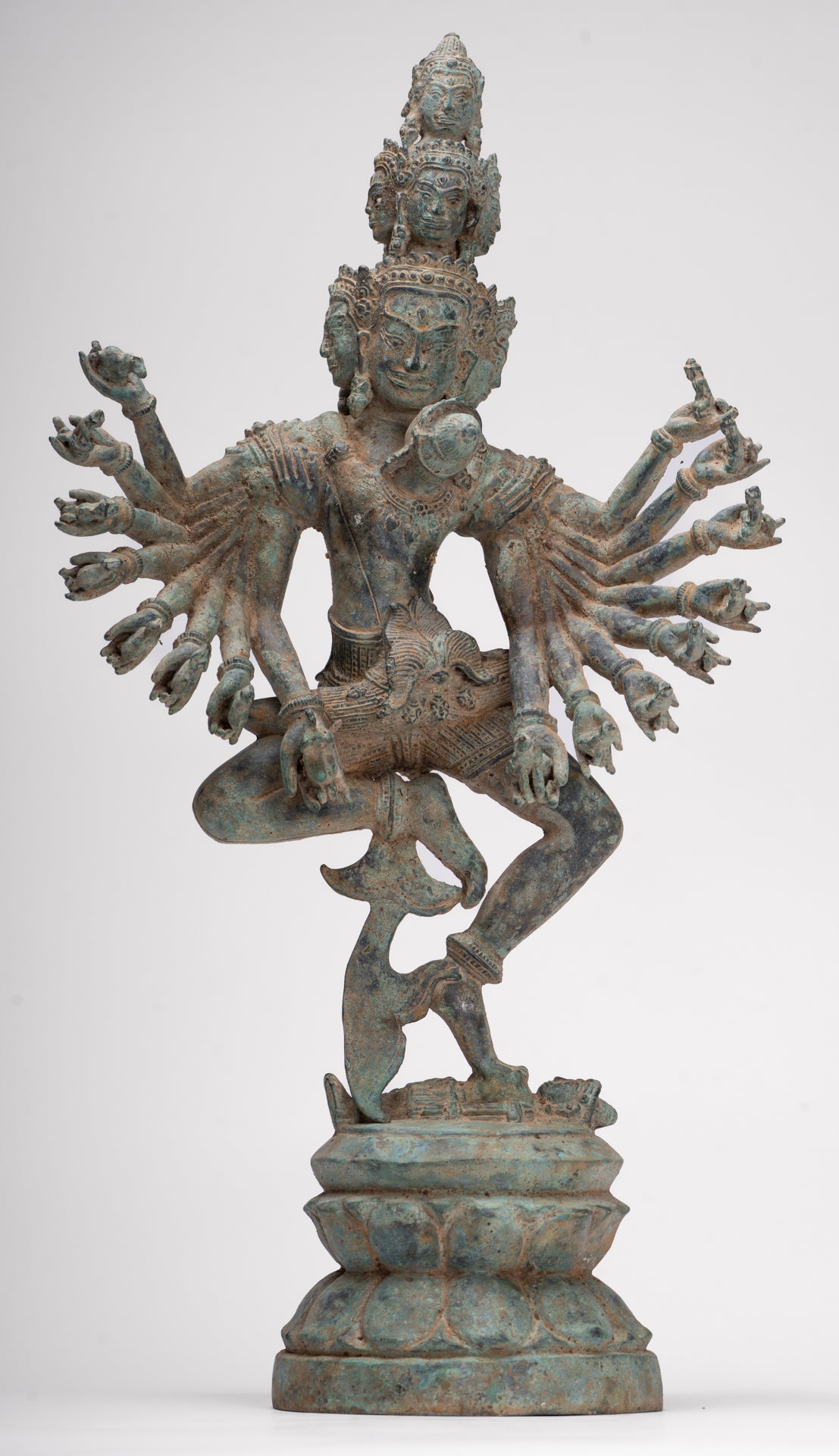
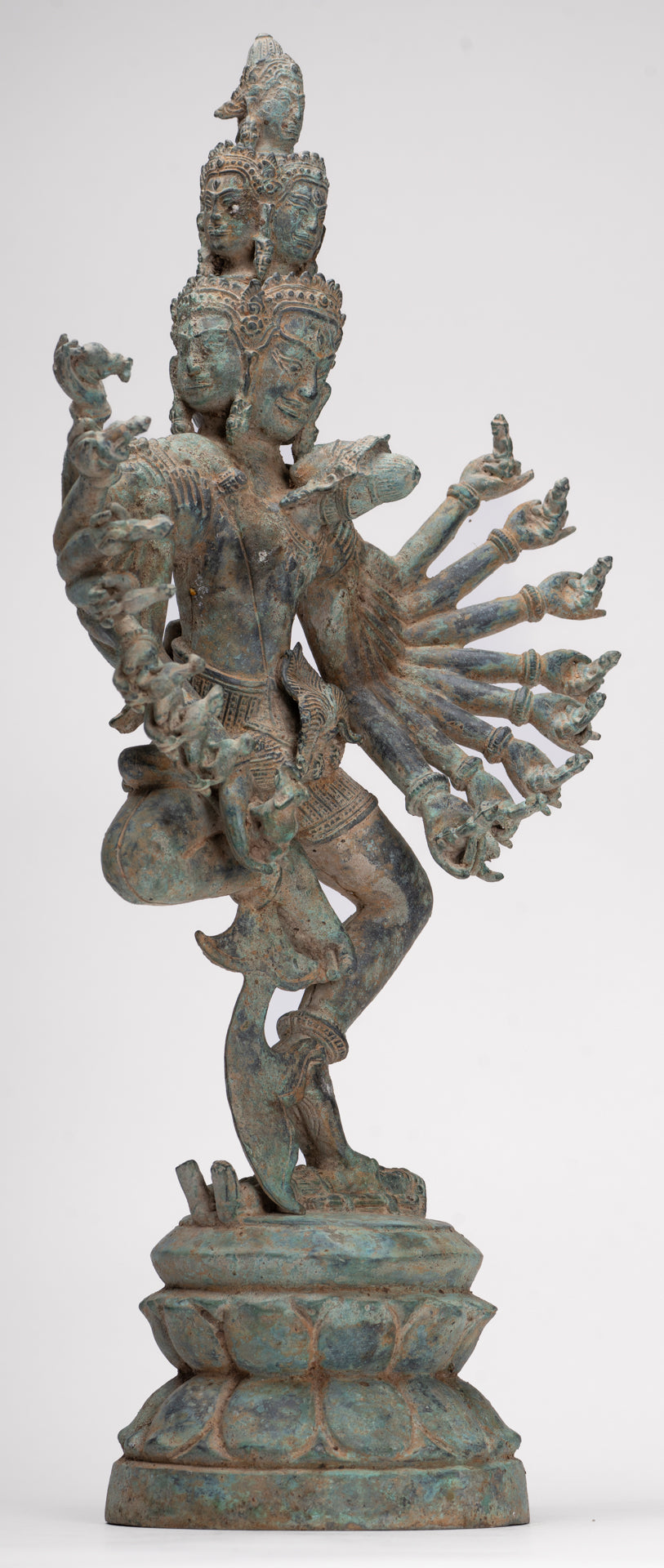
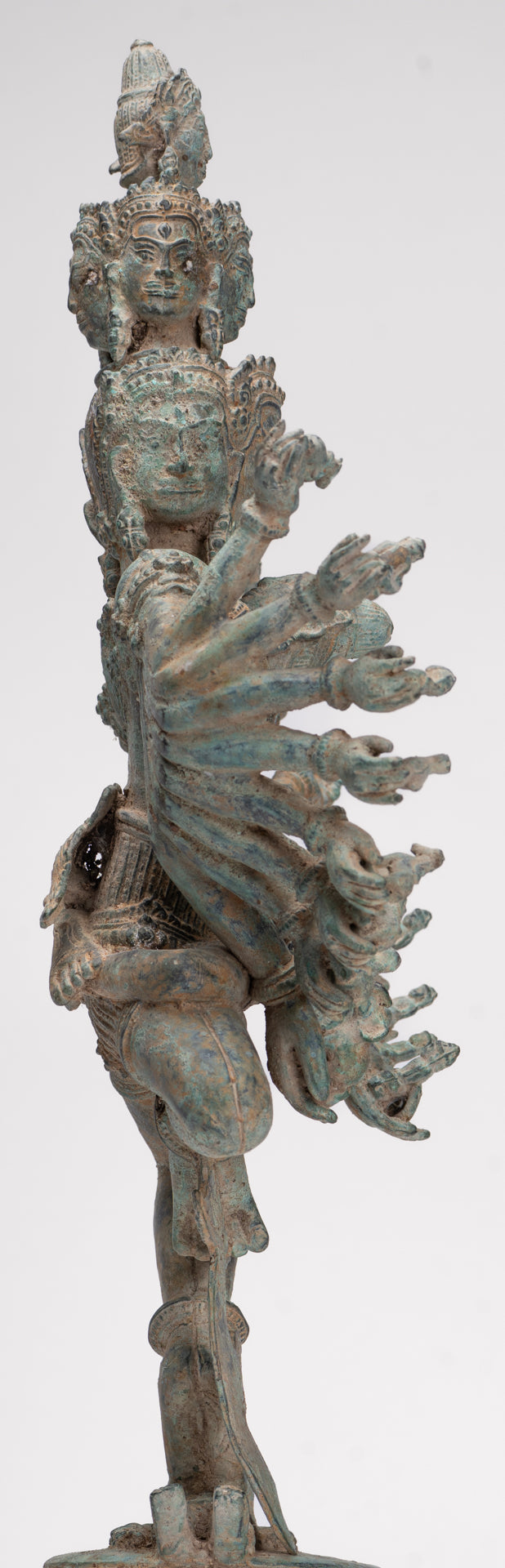
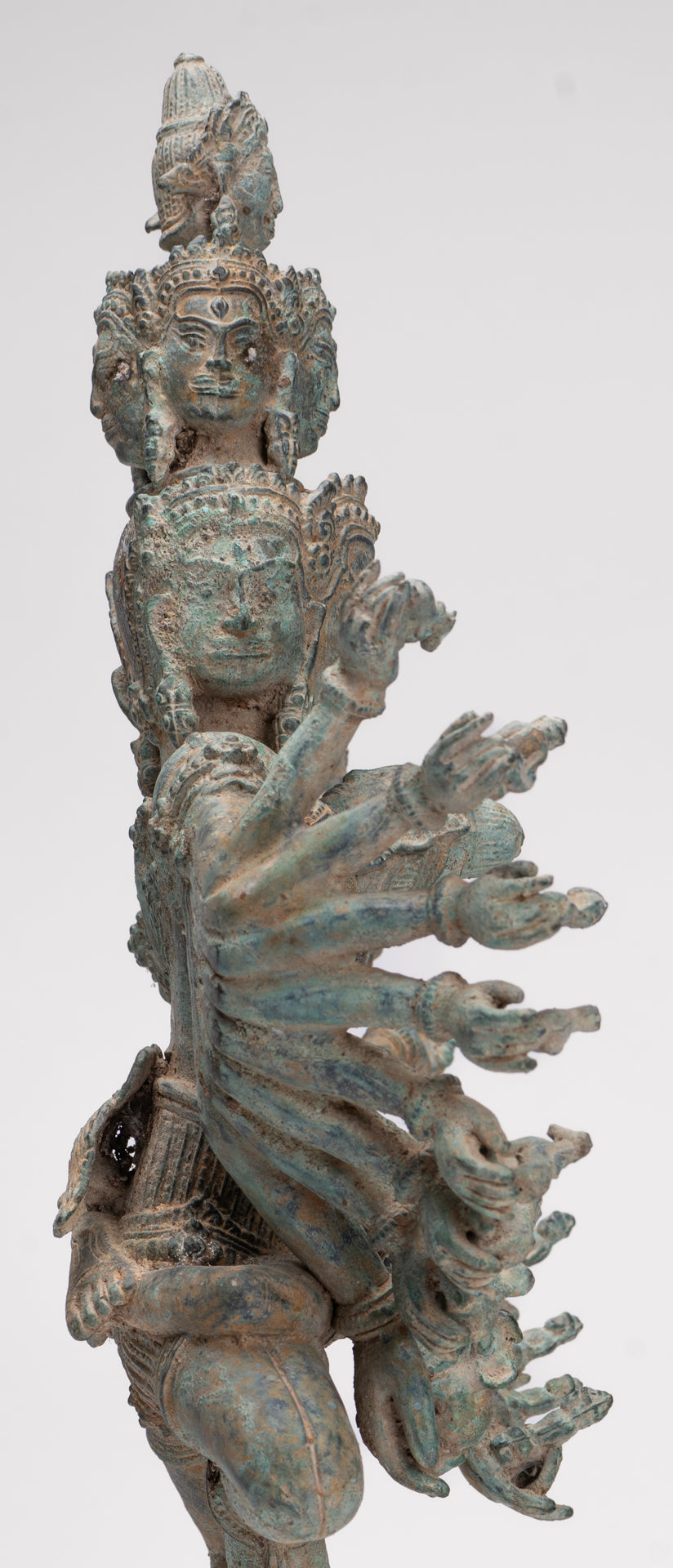
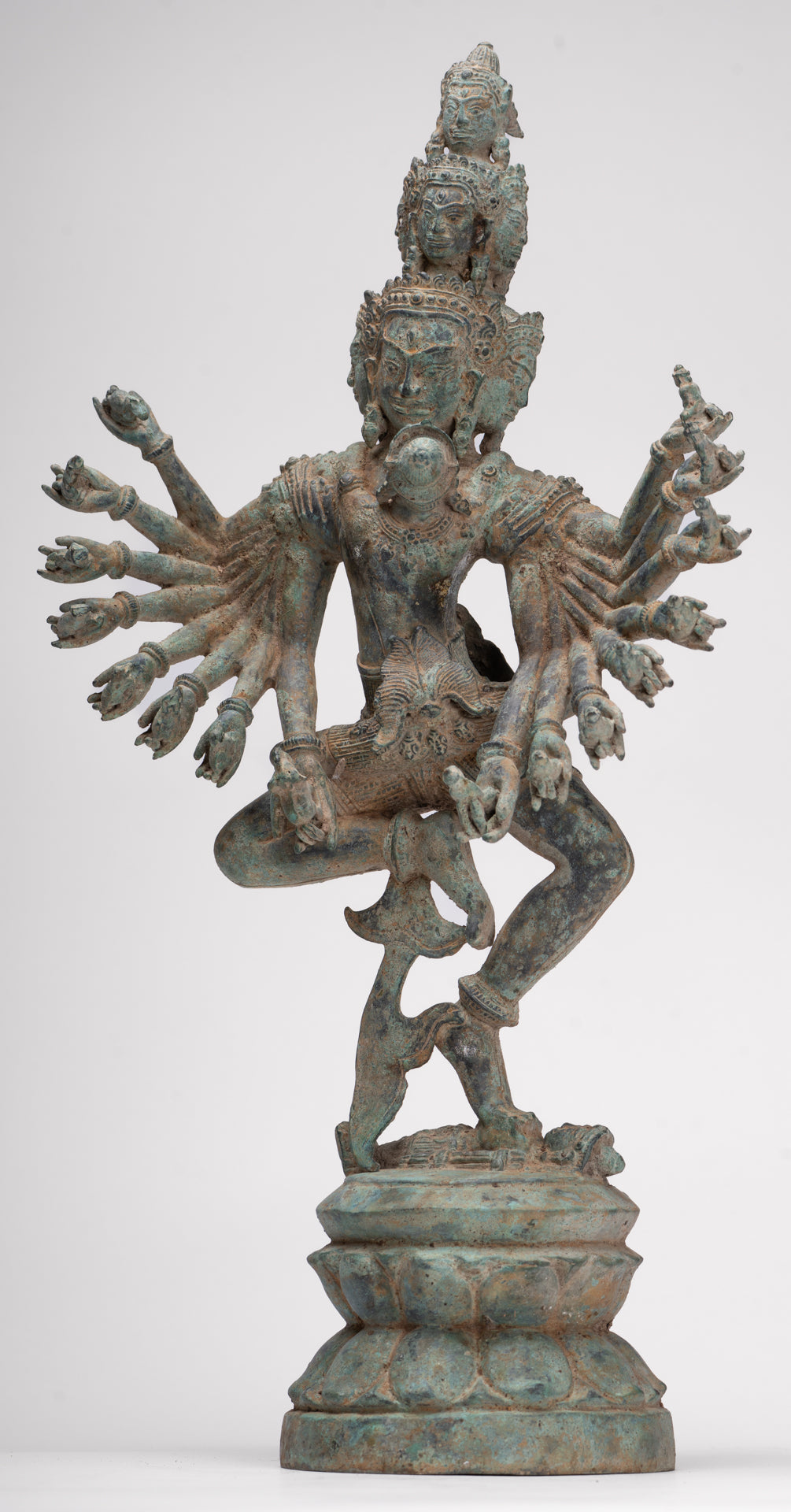
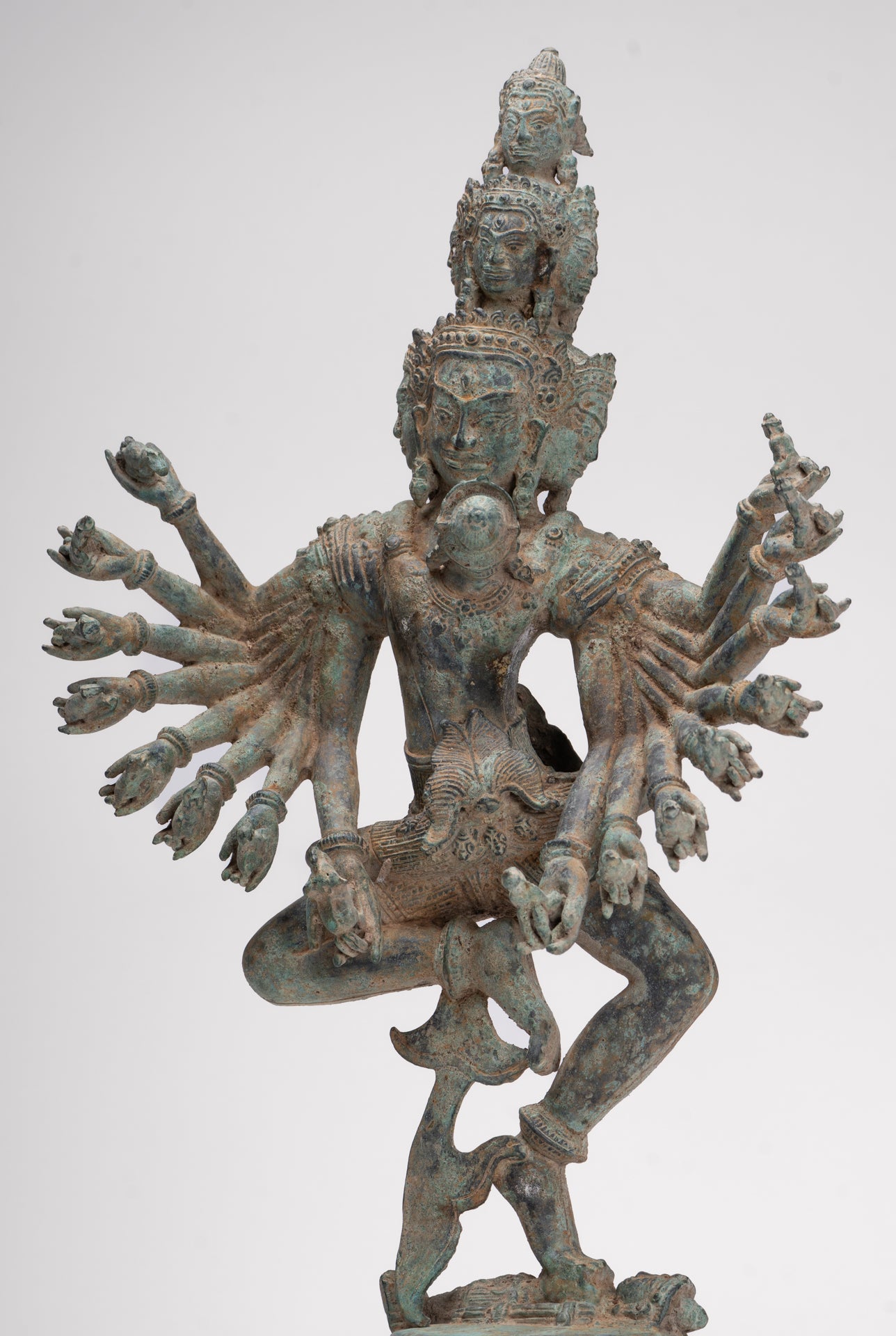
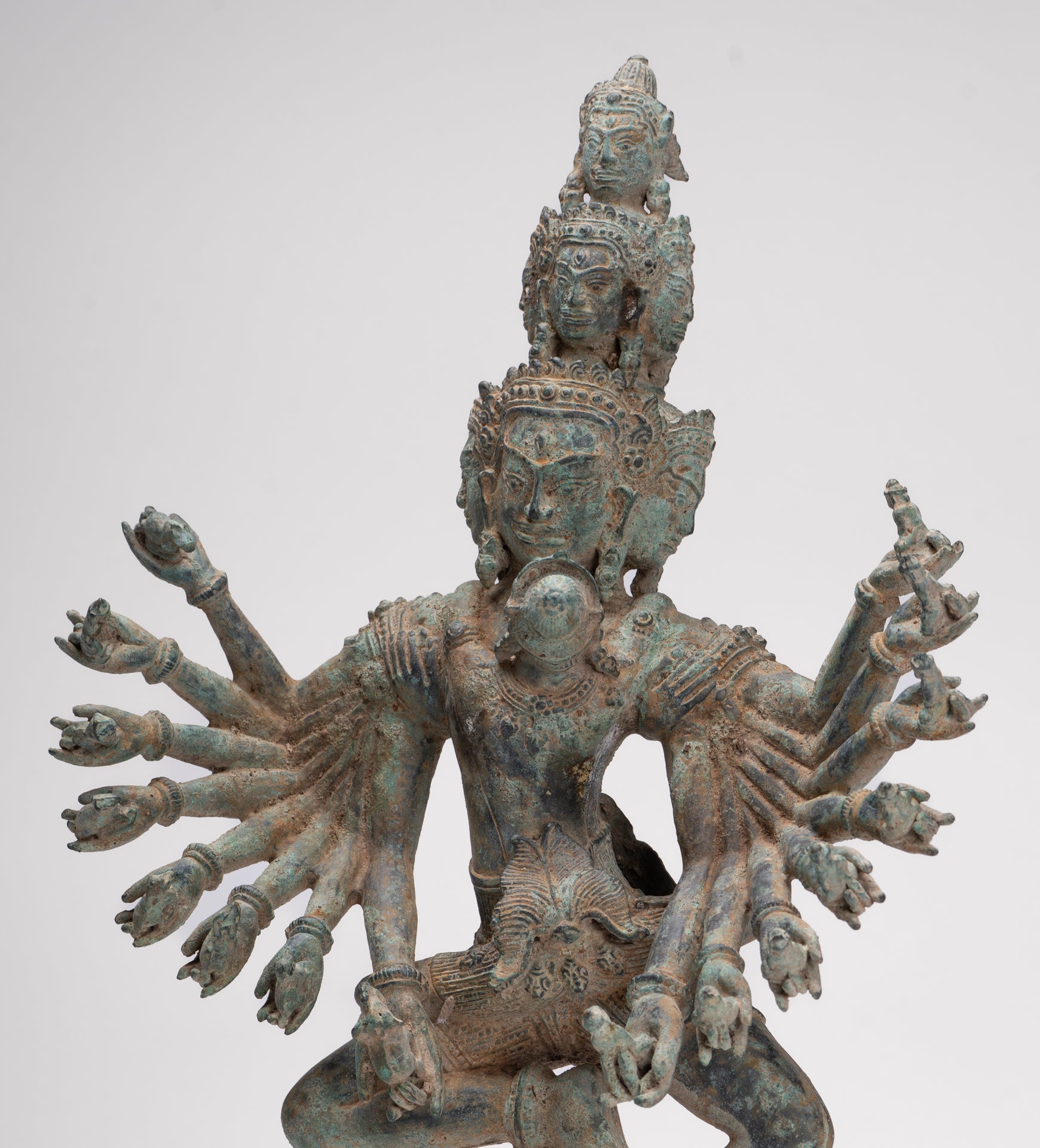
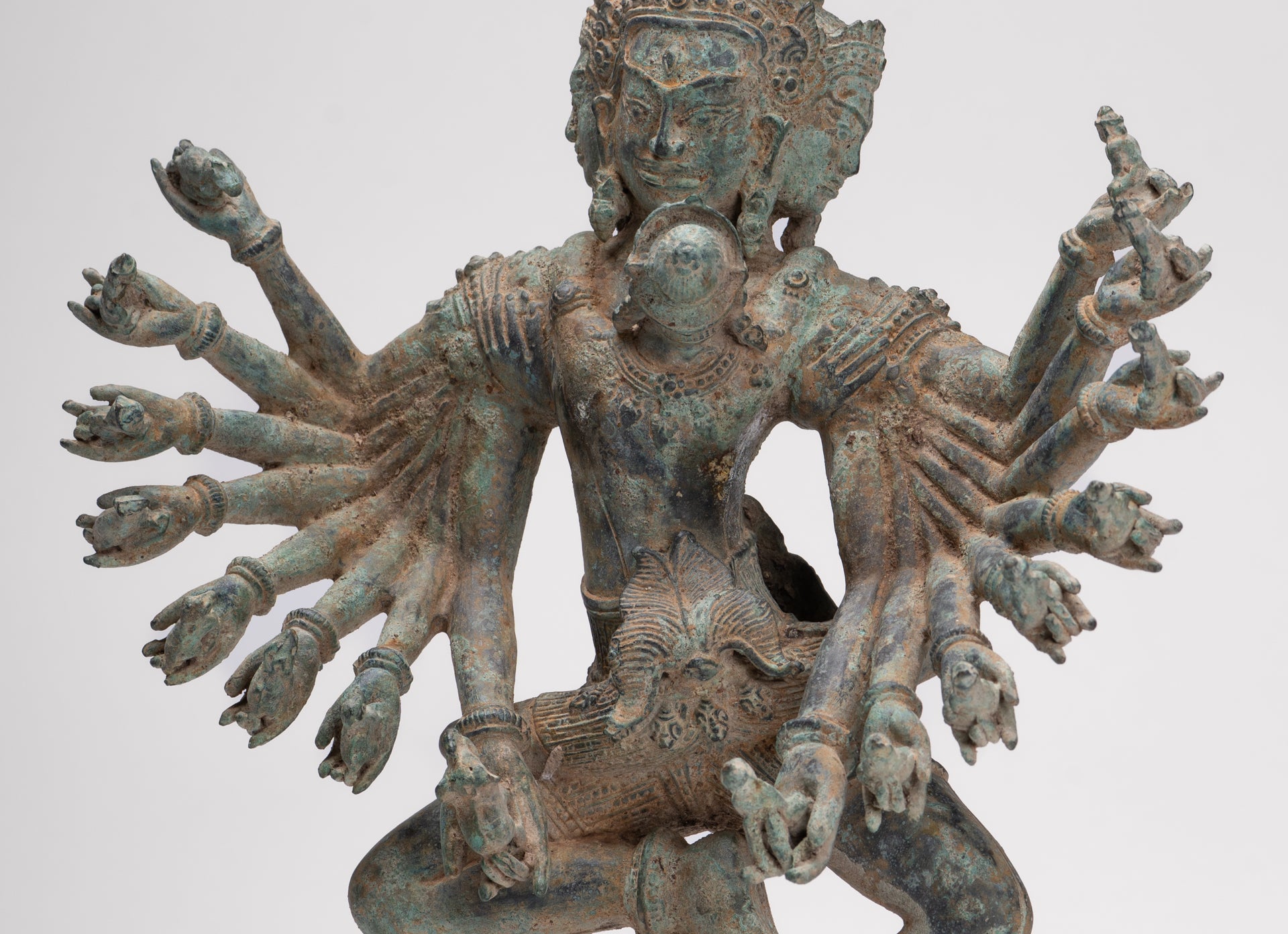
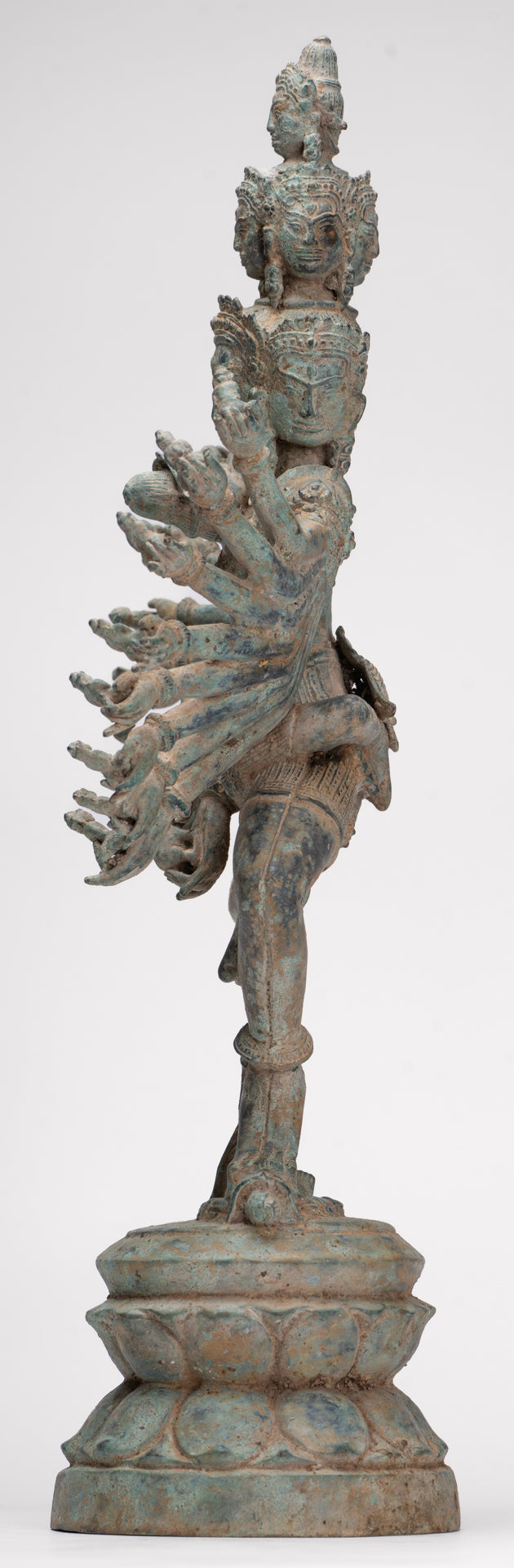
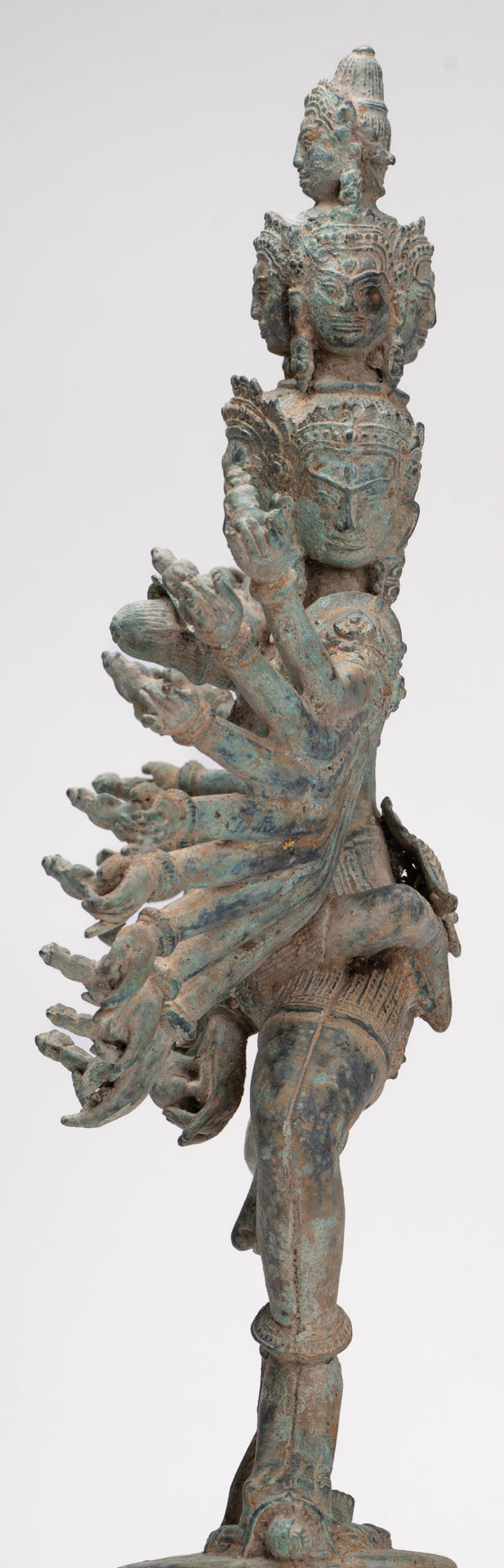
Antique Khmer Style Standing Bronze Tantric Hevajra & Nairatmya Statue - 48cm/19" Tall
Measures (Height) 48cm/19"
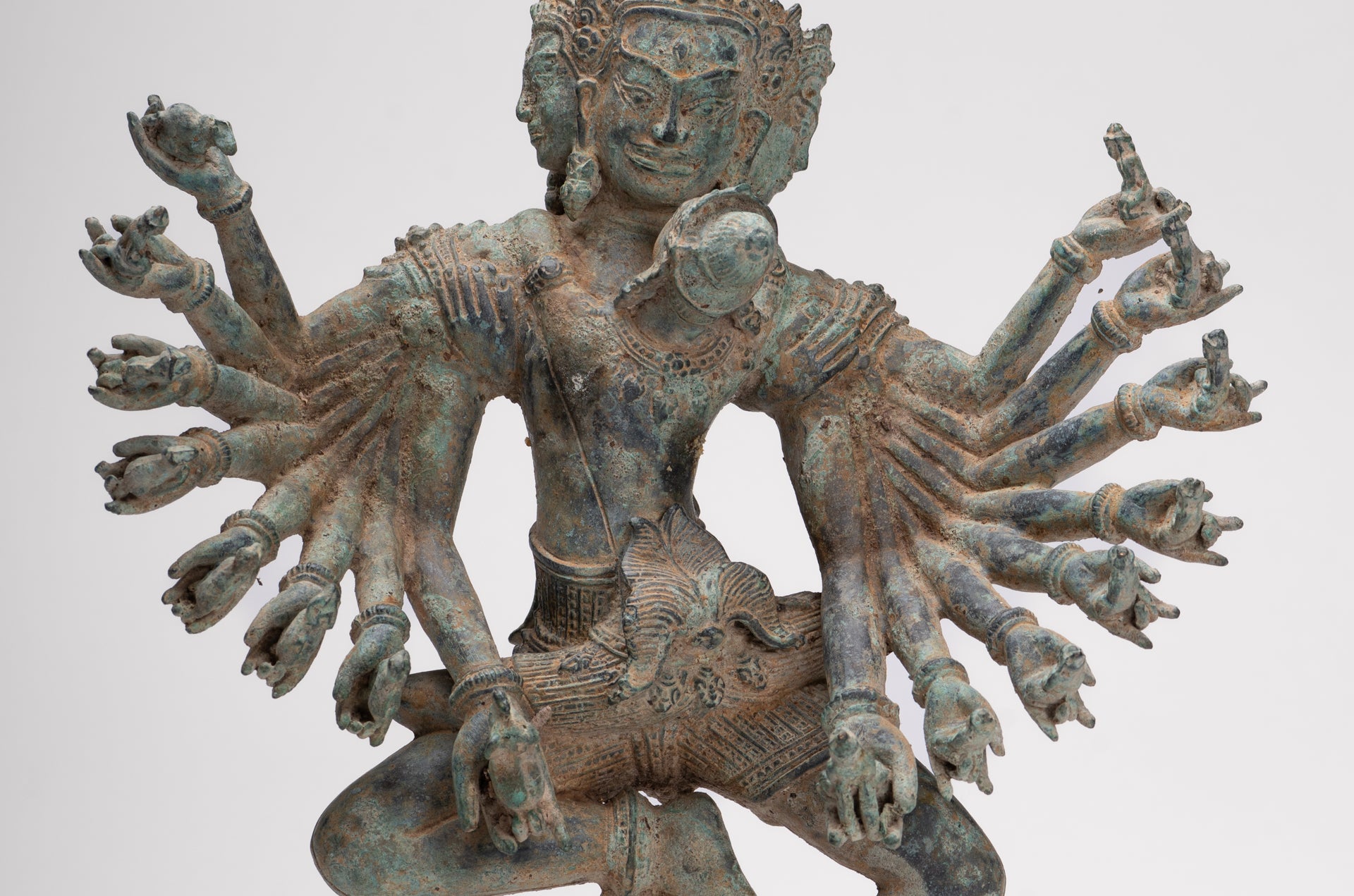
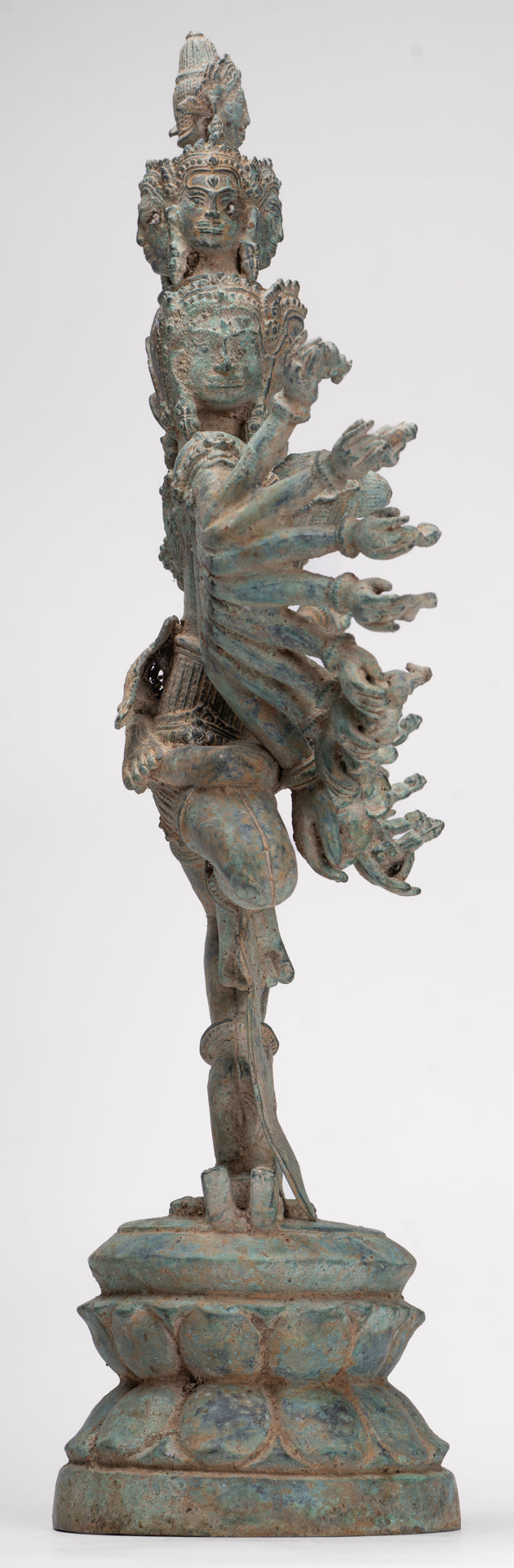
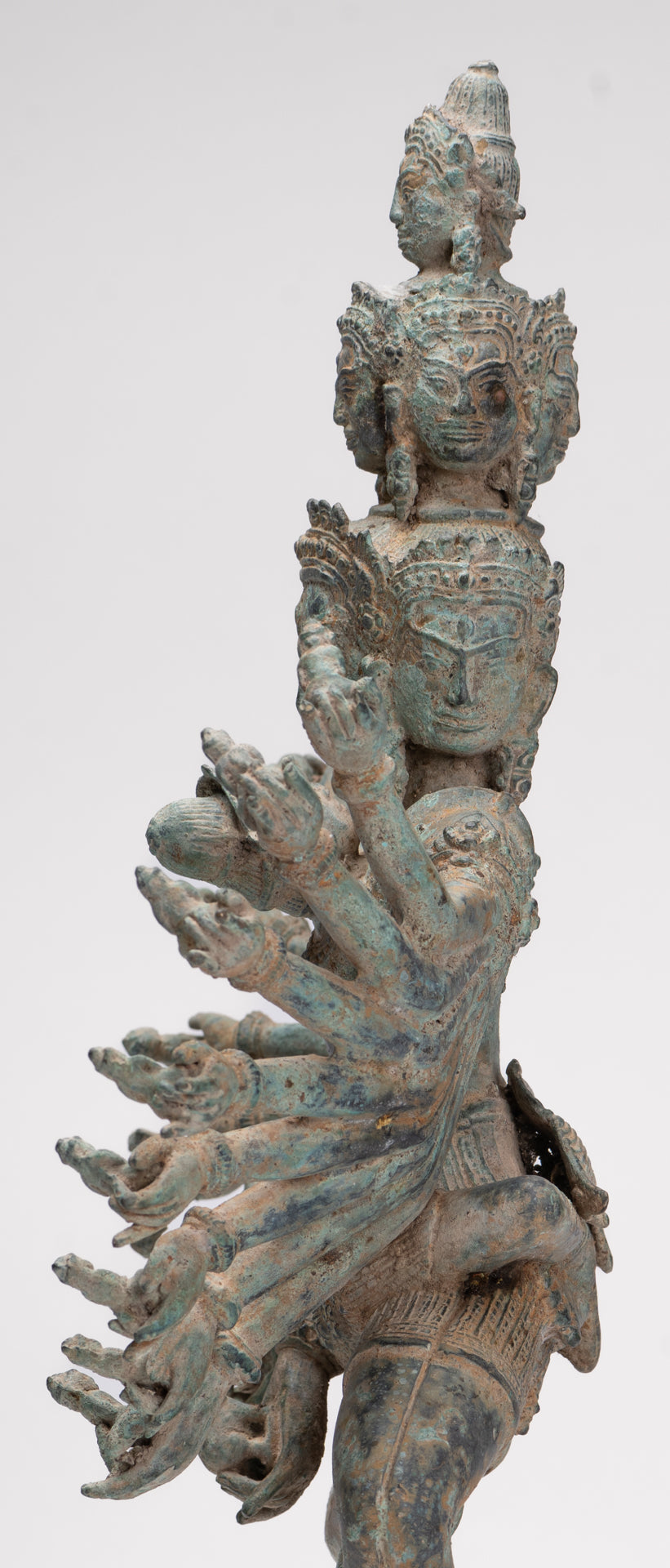
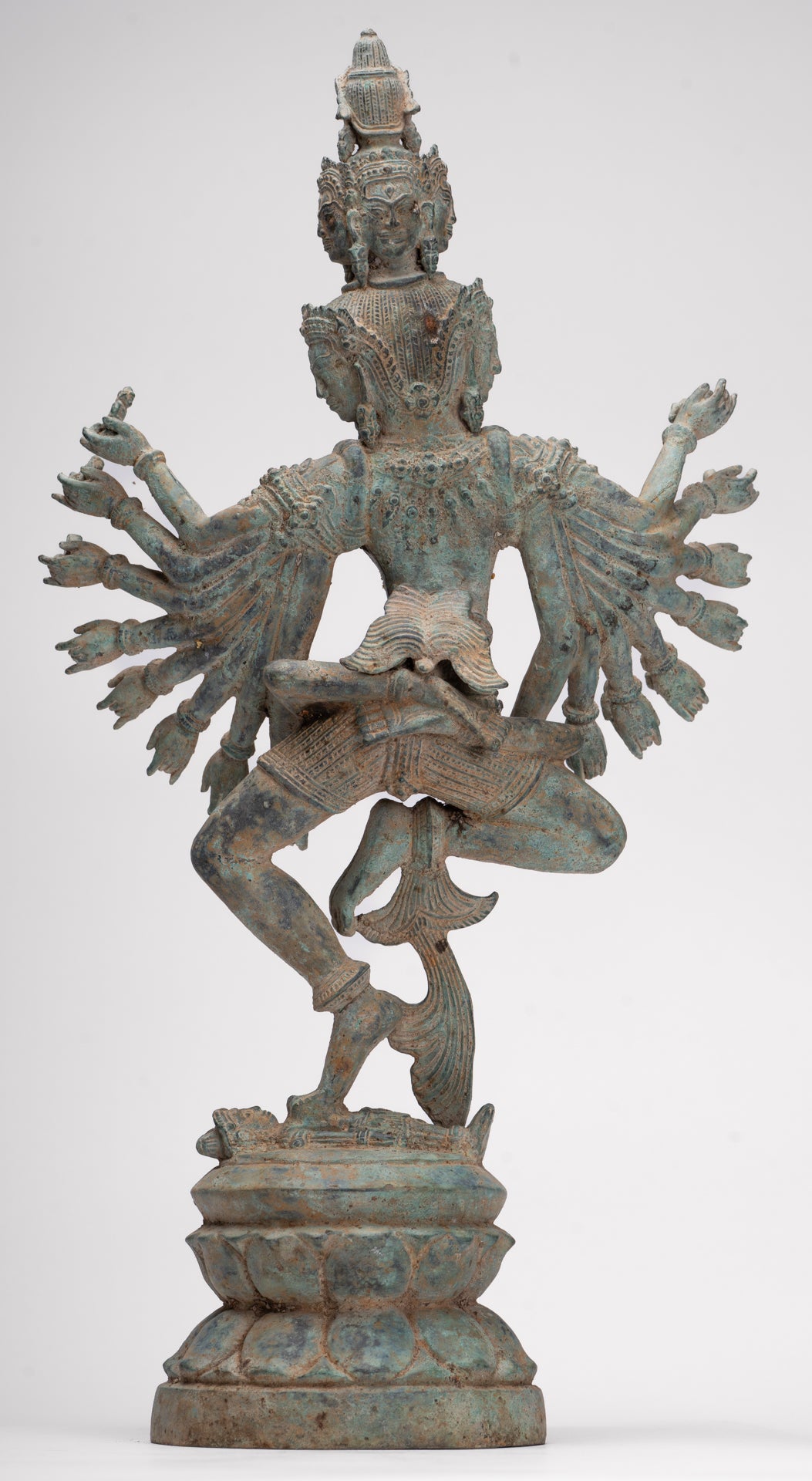
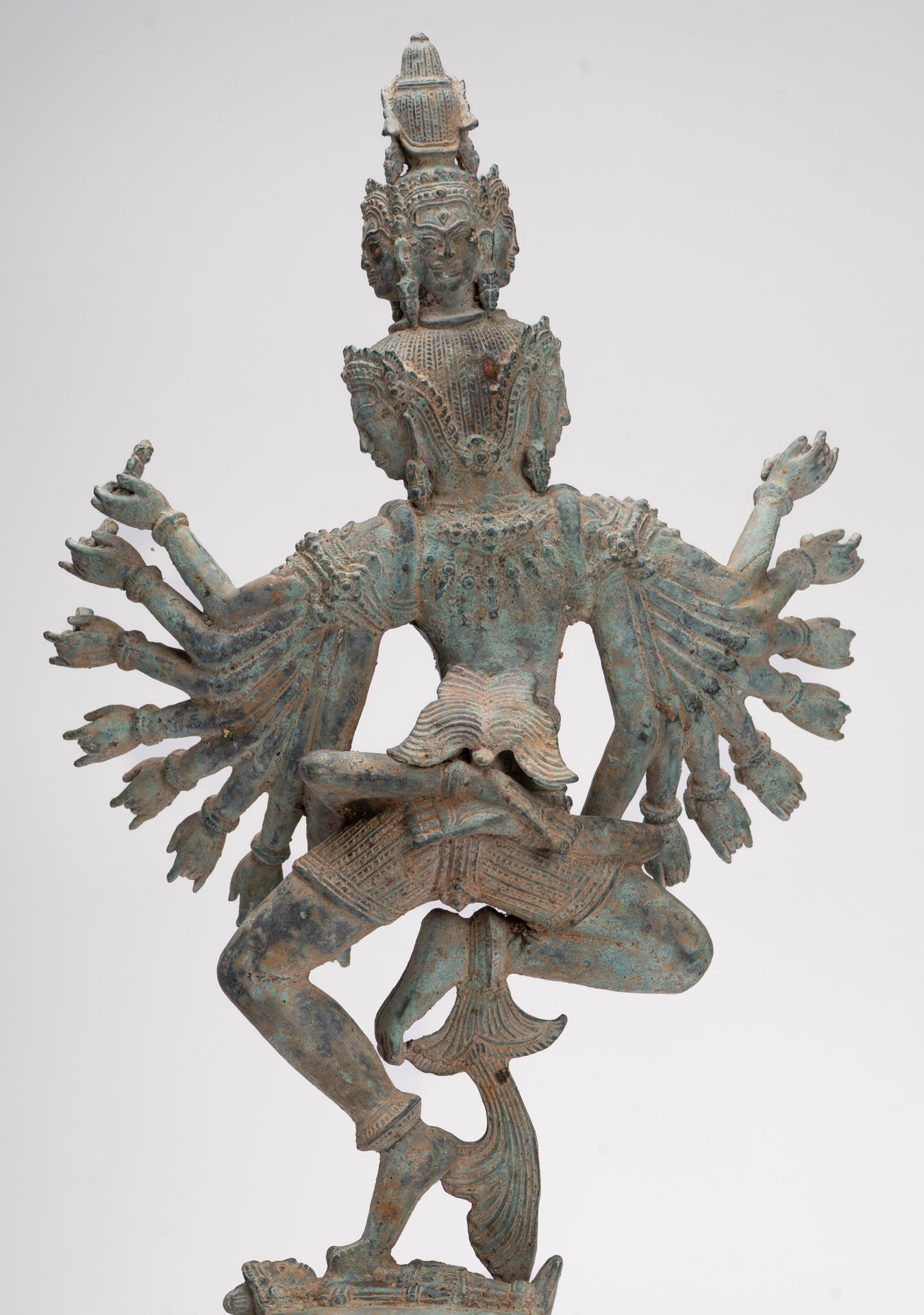
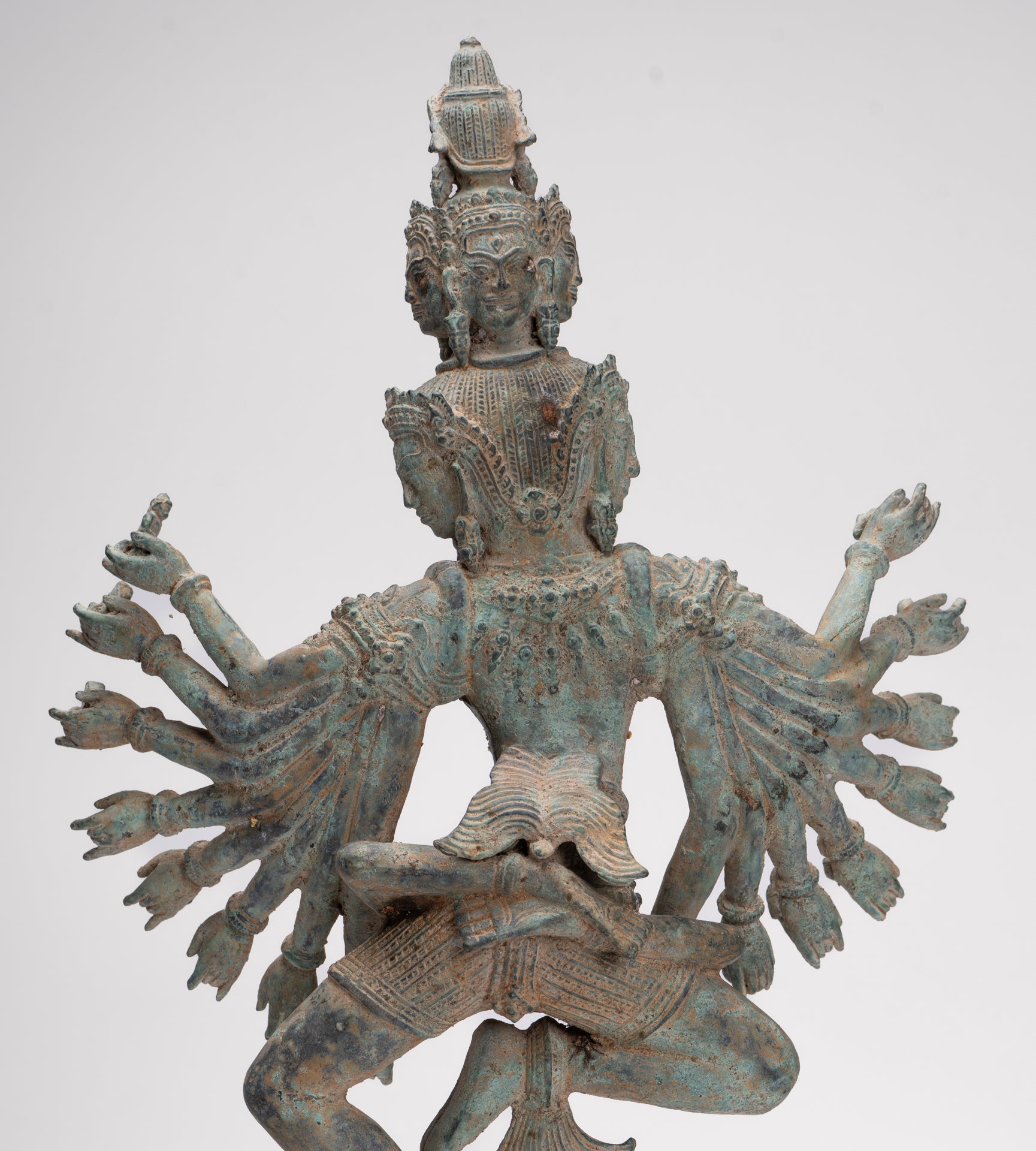
A beautiful and rare antique Khmer style bronze Tantric Hevajra & Nairatmya statue in 13th century Bayon style. Hevajra is one of the main yidams (a fully enlightened being) in Tantric or Vajrayana Buddhism.
In tantric Buddhism, Hevajra is a powerful meditational deity (yidam) who personifies complete enlightenment, often portrayed dancing in fierce joy. His consort Nairatmya, whose name means “egolessness” or “no‑self”, embodies the realisation that all phenomena are empty of a permanent self.
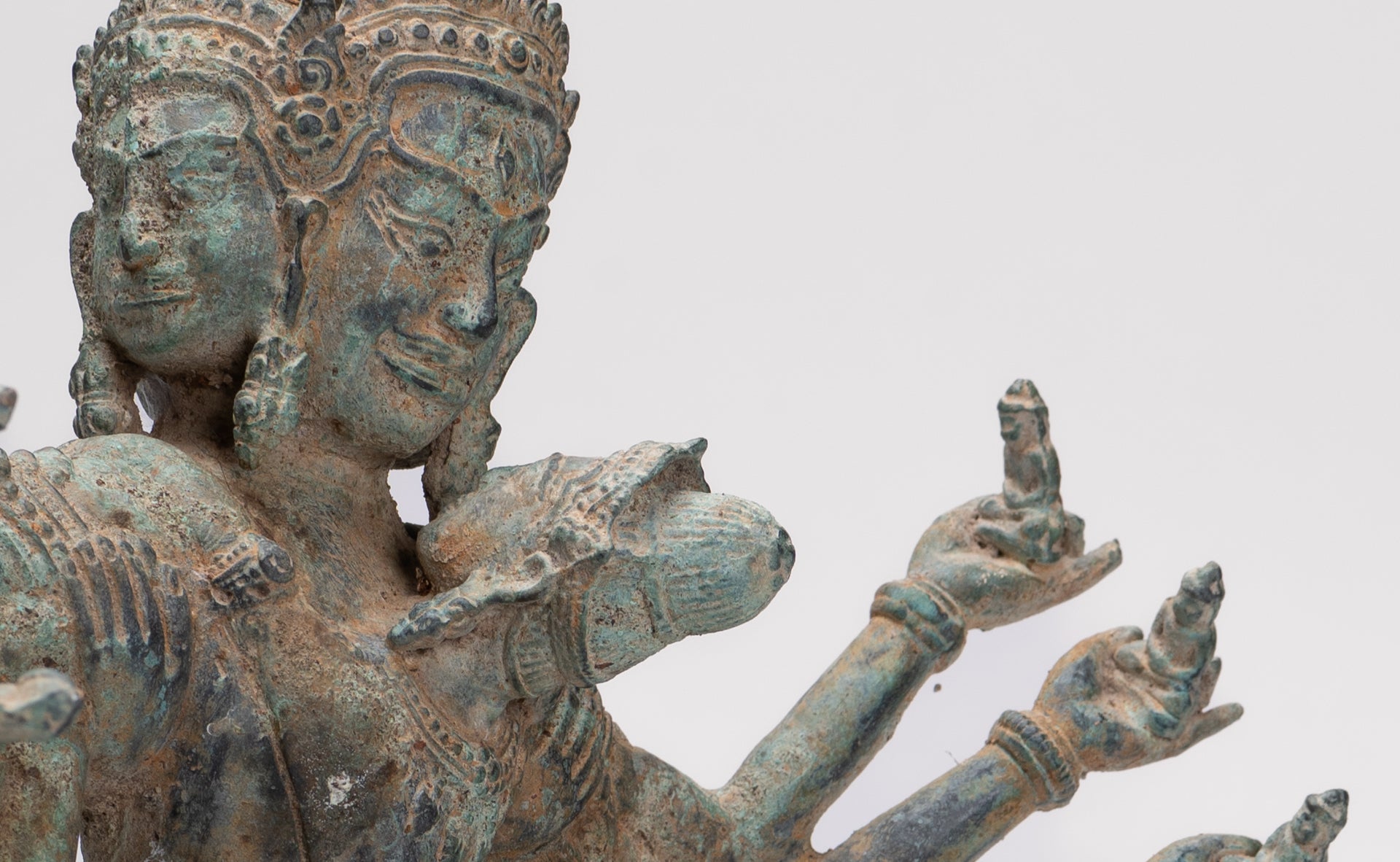
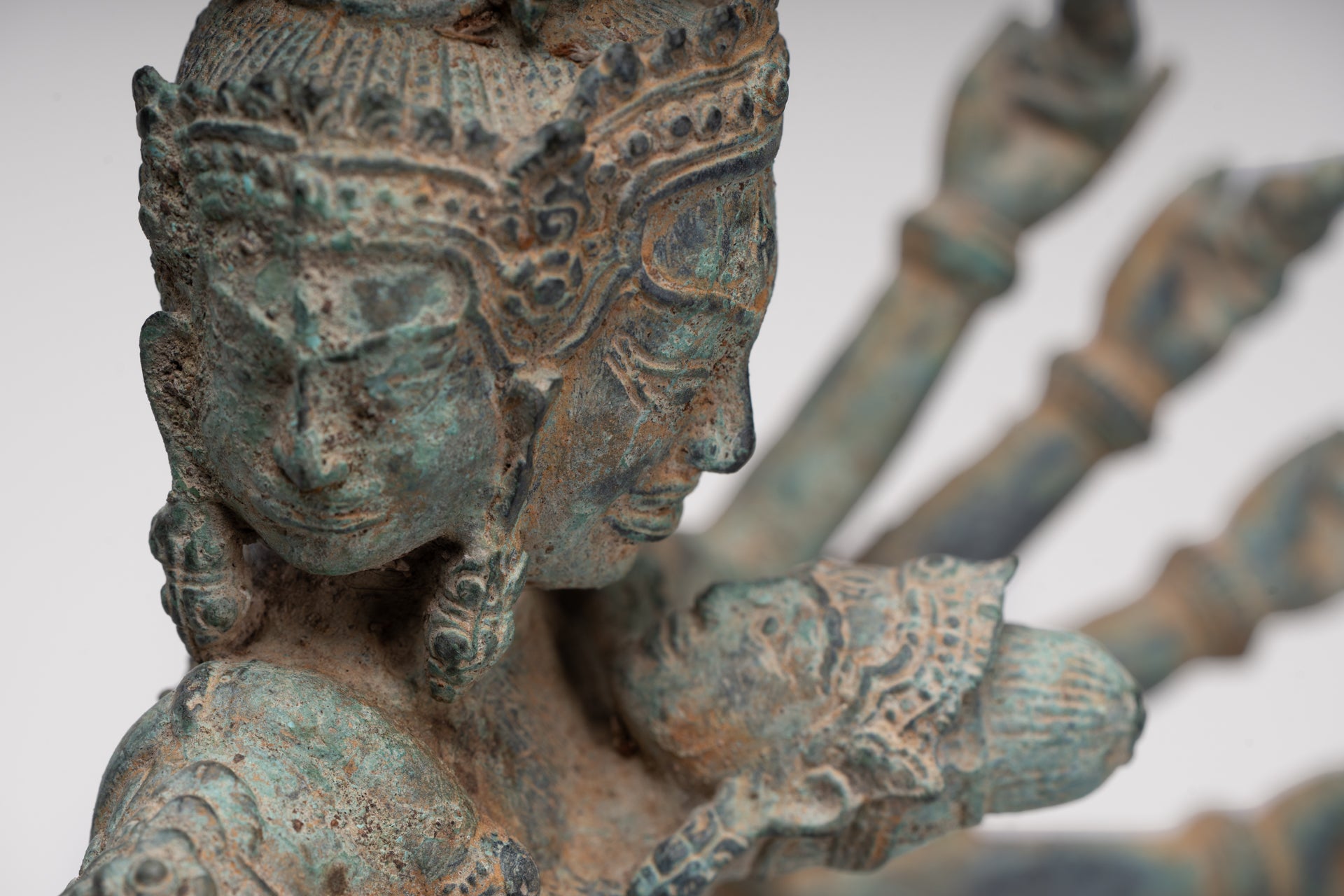
Together they are depicted in yab‑yum—literally “father‑mother”—where the male deity embraces his consort, symbolising the inseparable union of method (compassion, skilful means) and wisdom (realisation of emptiness). In this embrace, Hevajra’s dynamic, many‑armed form and Nairatmya’s poised, often smaller body become a three‑dimensional mandala of the tantric path.
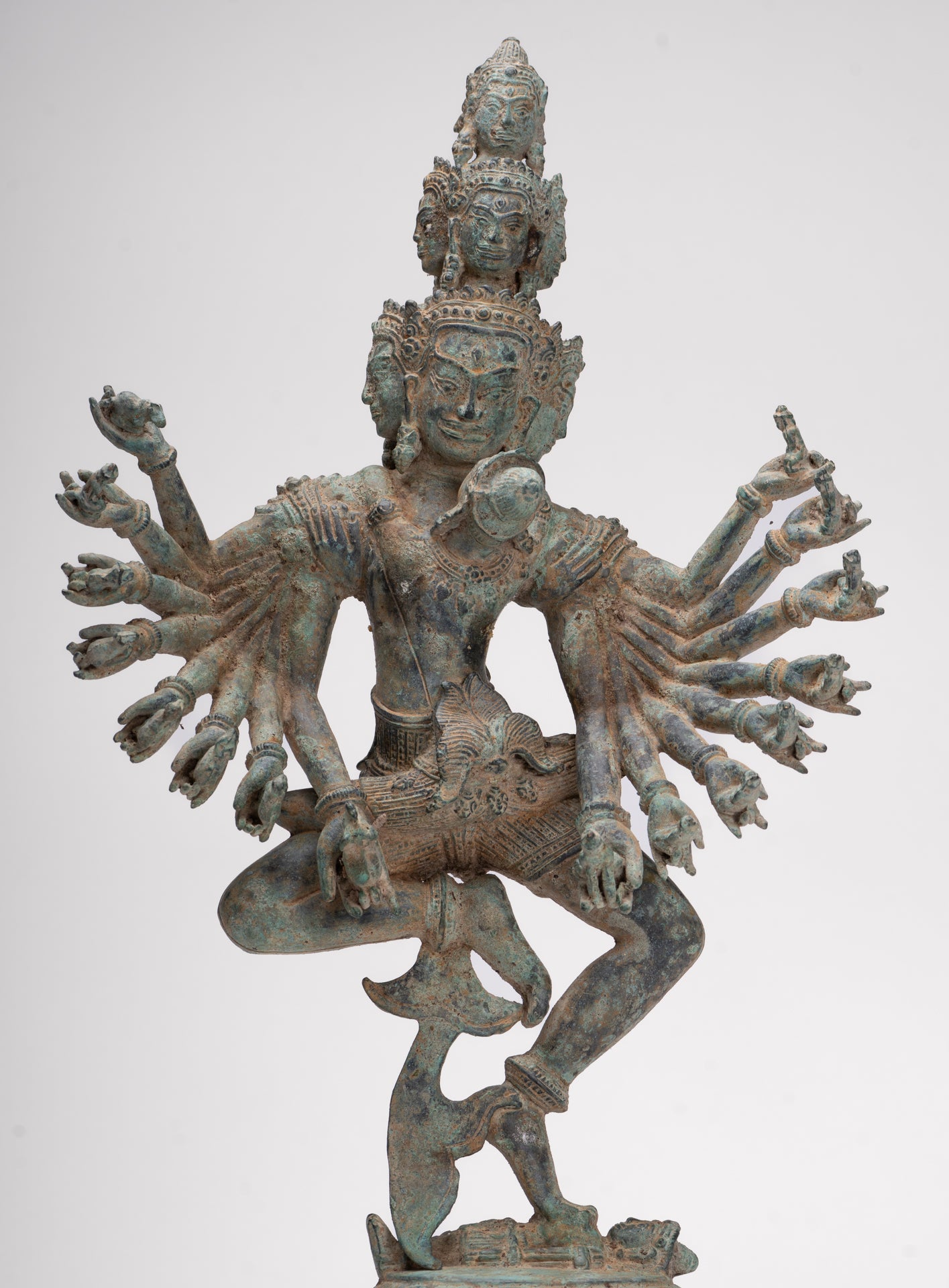
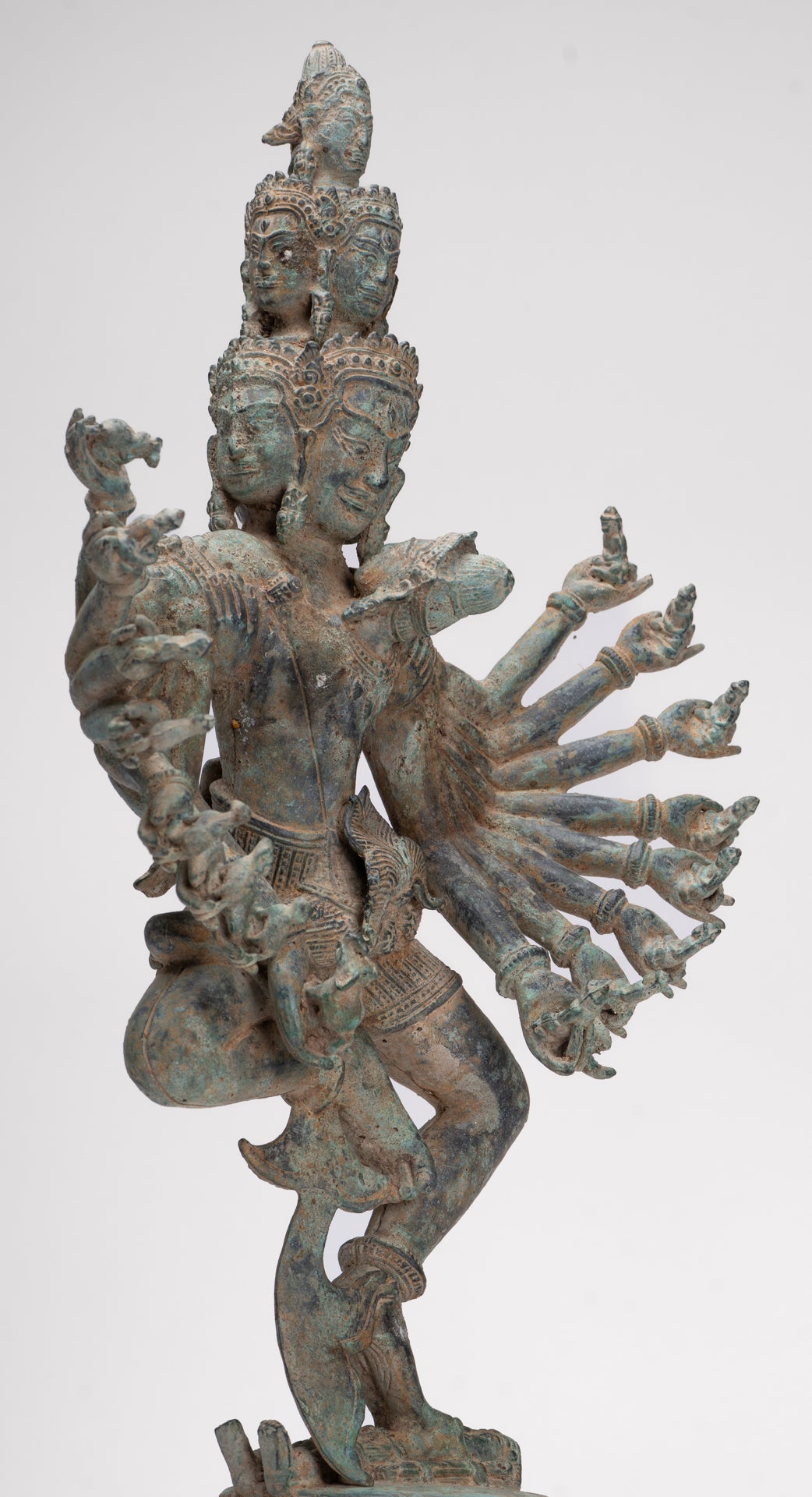
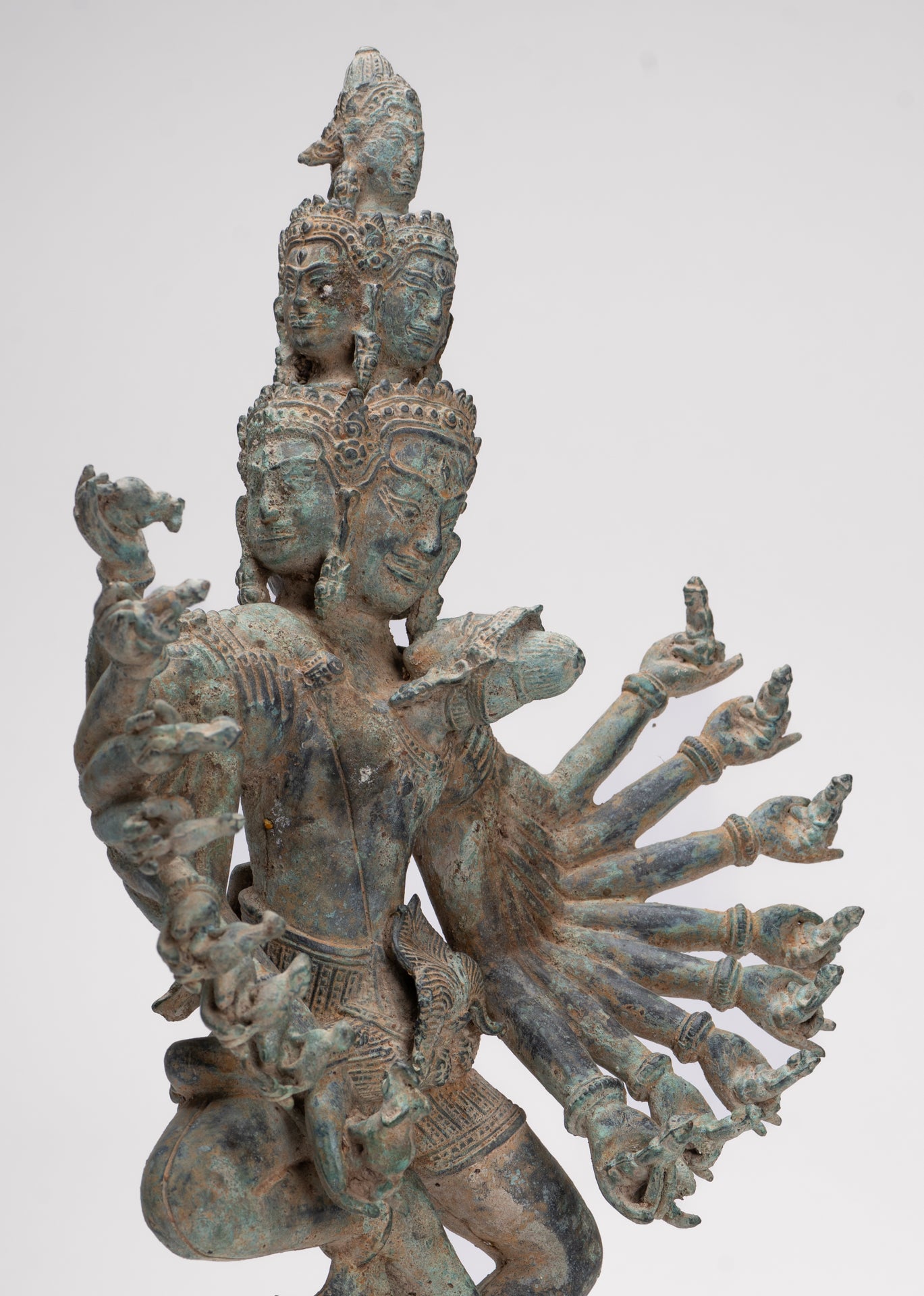
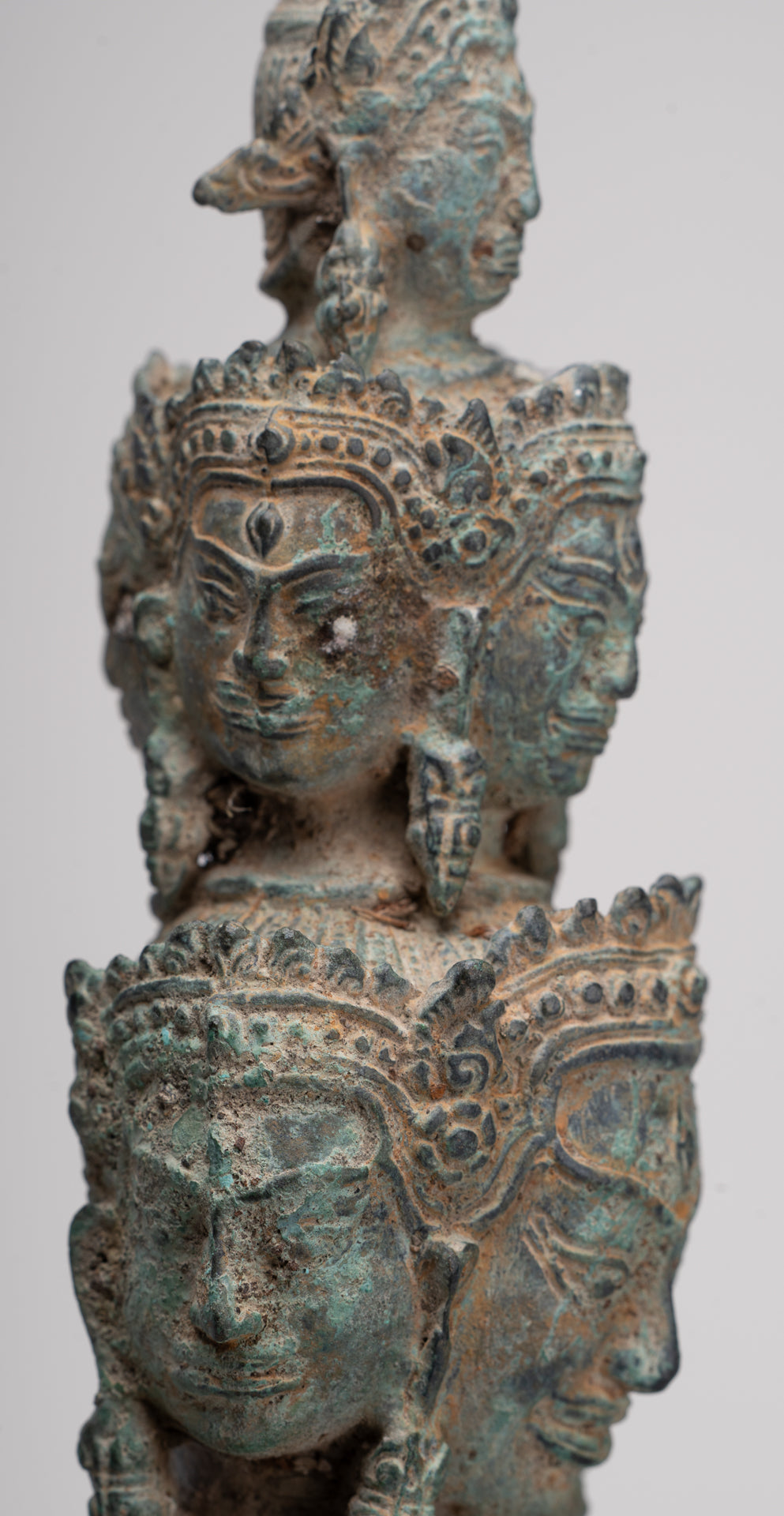
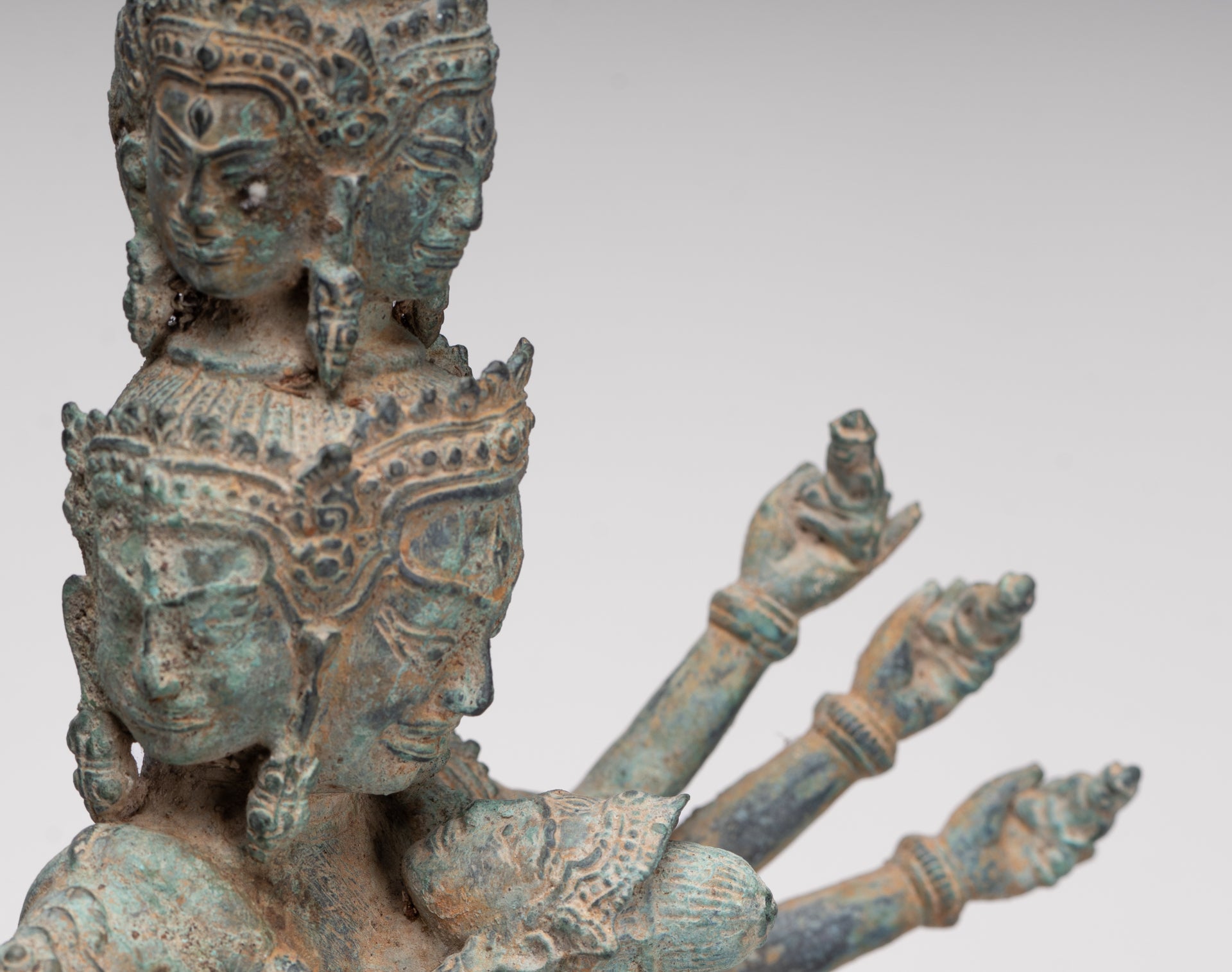
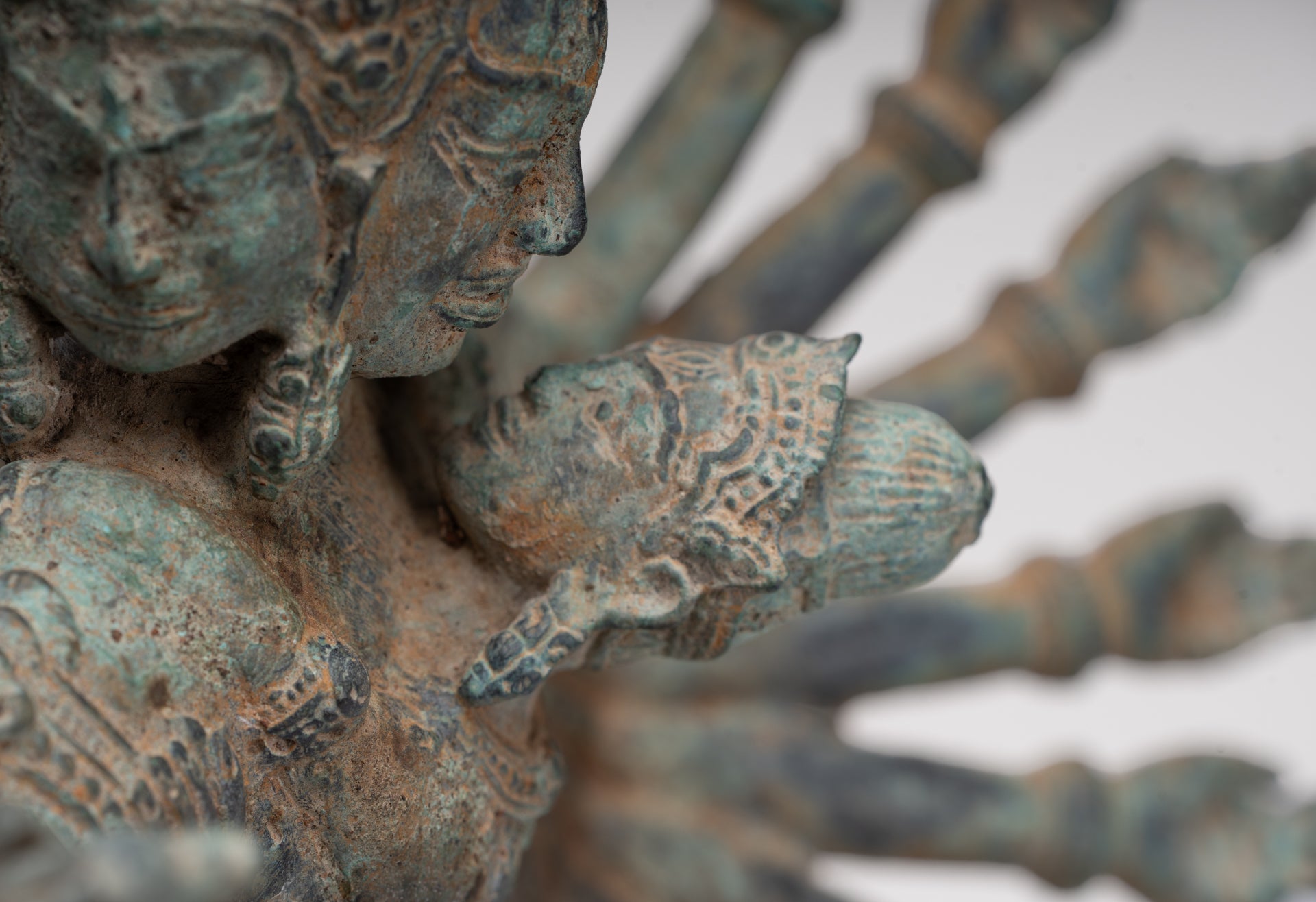
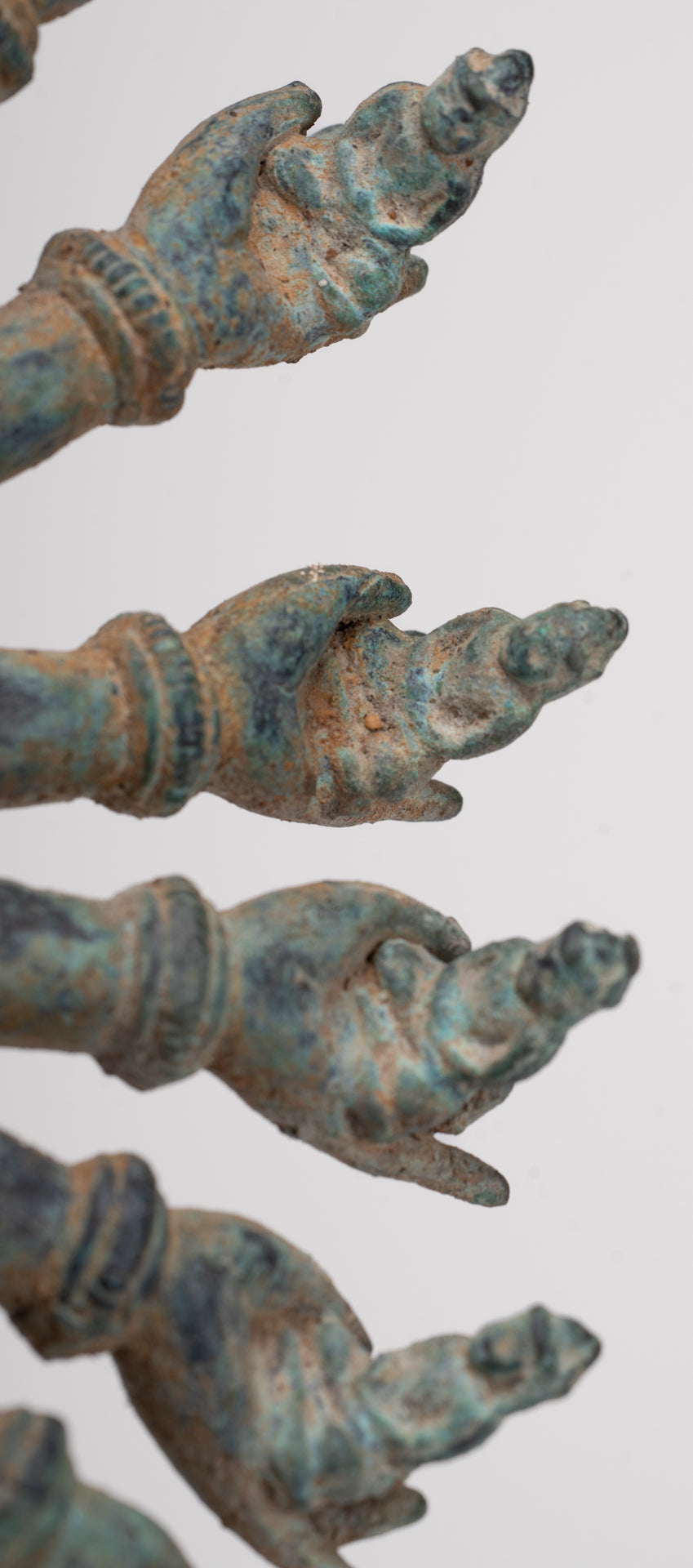
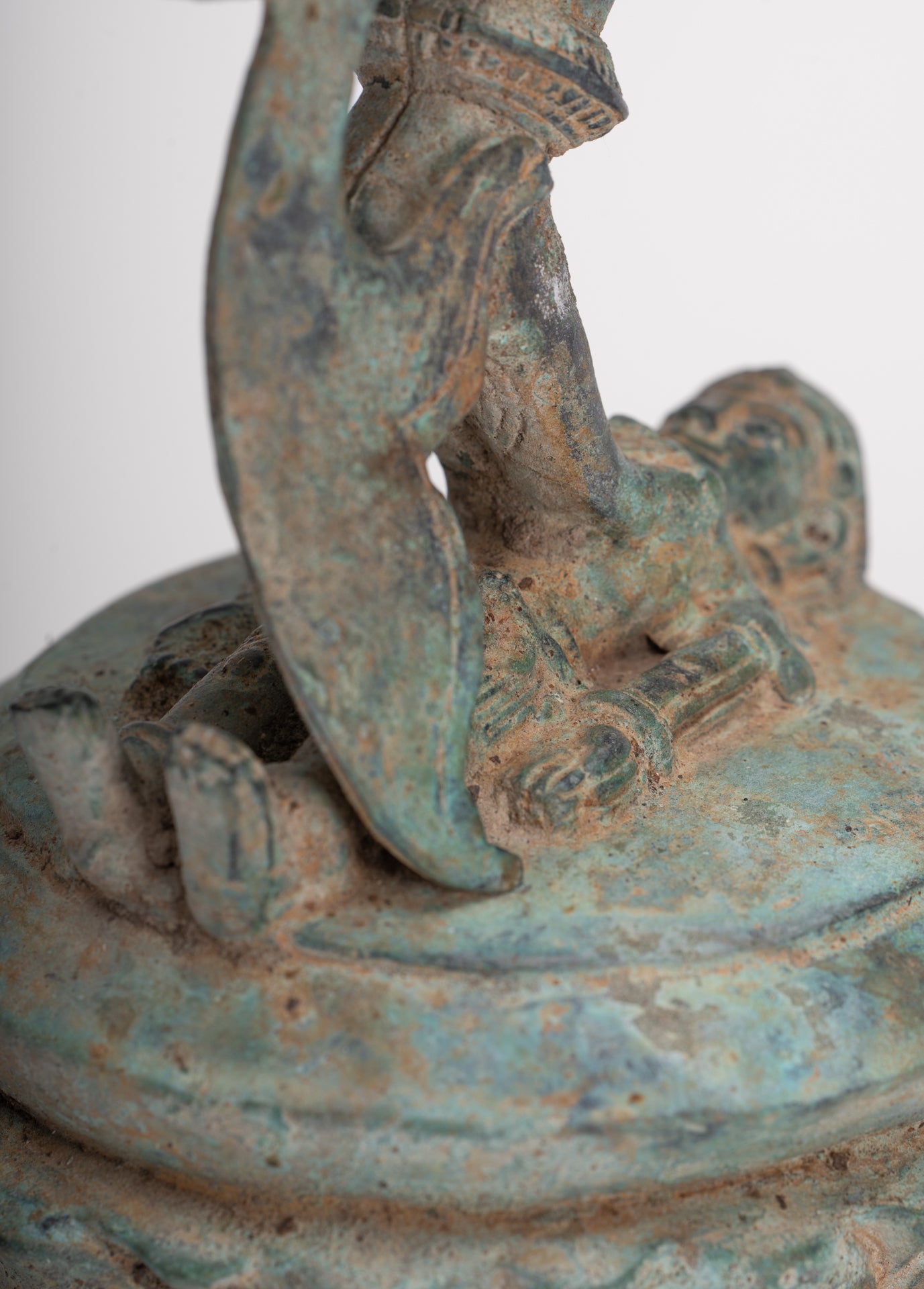
Here, Hevajra appears as an eight‑headed, sixteen‑armed, four‑legged deity, with one right leg raised in a vigorous dance above trampling the demon, Mara.
Key features of Khmer Hevajra include:
-
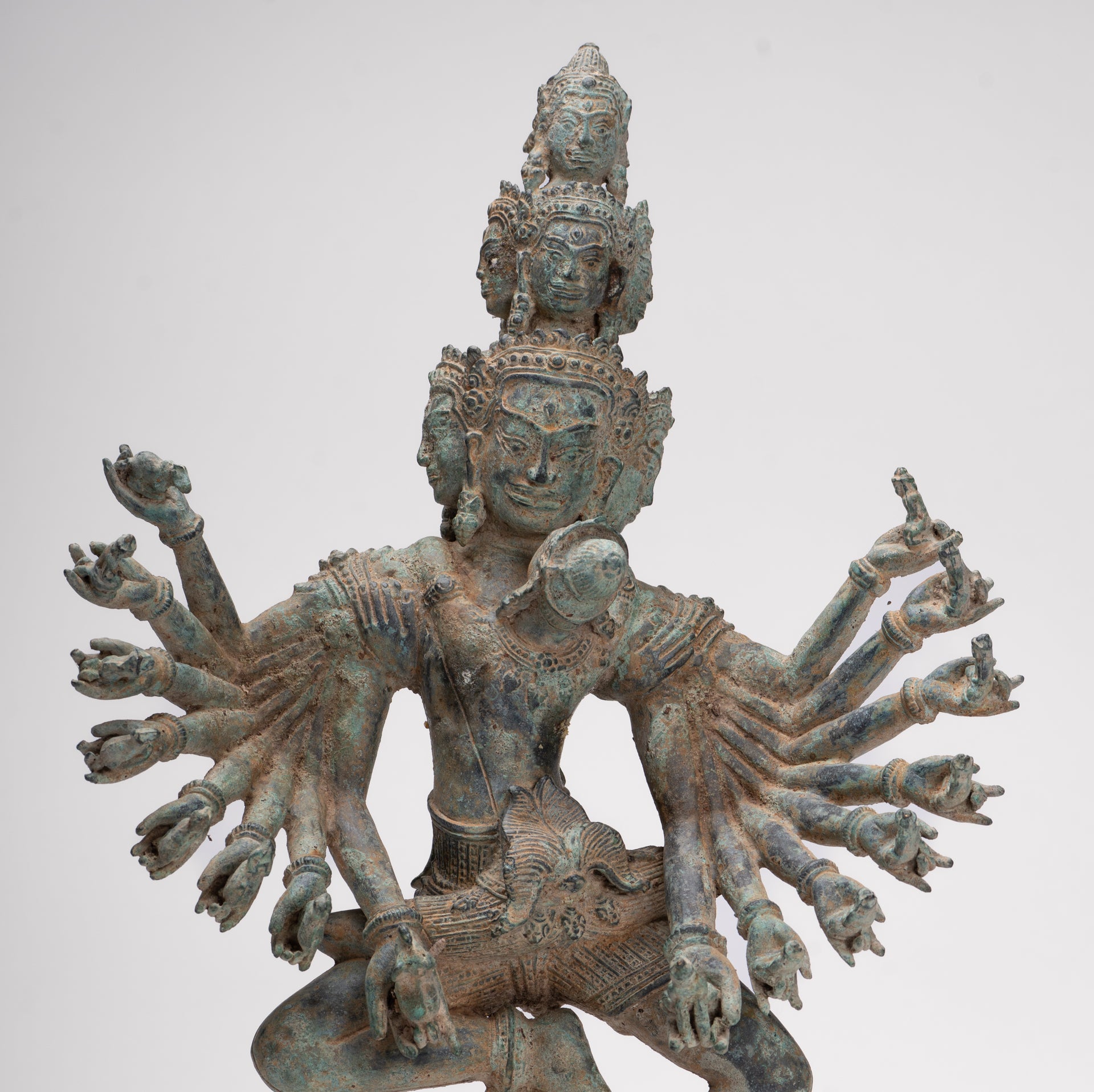
Multiple heads: Eight heads, arranged in tiers, representing different aspects of awakened awareness encircling a central, primary face.
-
Sixteen arms: Each hand holds a small animal, Buddha deity, or symbolic object, signifying Hevajra’s mastery over worldly forces and mental poisons.
-
Four legs in dance: One leg stamps on the prone figure of the demon Mara, while another is lifted in a dramatic motion, expressing liberation from samsaric constraints.
While bronze images of Hevajra alone are already rare outside Cambodia, bronze representations of Hevajra embracing Nairatmya are considerably rarer. A small number of examples—often cited in specialist catalogues and private collections—show the fully developed yab‑yum form:
-
Hevajra retains his eight heads and sixteen arms, but his primary pair of arms enfolds Nairatmya at the heart of the composition.
-
Nairatmya sits pressed against his torso, with her own attributes, the two bodies forming a single, compact vertical axis.
-
The sculpture stands on a double lotus base. The lotus flower represents purity, compassion and the giving of great joy to all. Above a prostrate figure of the demon Mara, within what is effectively a sculpted mandala of union and transformation.
Because many Khmer bronzes were lost or melted down over the centuries, surviving pieces of Hevajra and Nairatmya in yab‑yum are often treated as reference points in the study of Southeast Asian tantric art. It is precisely this level of rarity that makes any authentic Khmer bronze of the pair such a significant object in museum and specialist gallery contexts.
The flourishing of Hevajra imagery in Cambodia is closely tied to the reign of King Jayavarman VII (late 12th–early 13th century), the great builder of Angkor Thom, Bayon, Ta Prohm, and other iconic temples.
For contemporary collectors, curators, and students of Southeast Asian Buddhism, Khmer images of Hevajra and Nairatmya offer a rare three‑dimensional window into tantric practice at Angkor. Museums such as the Cleveland Museum of Art and the Met feature important Hevajra pieces, while specialist research and exhibitions continue to refine our understanding of this iconography.
In the private sphere, authentic Khmer bronzes of Hevajra—especially those with Nairatmya in yab‑yum—are typically handled by major auction houses, high‑end dealers, and a small number of specialised galleries.
For collectors used to Cambodian Buddhist and Hindu sculpture, a genuine Hevajra bronze represents:
-
A touchstone of Angkor’s tantric era, directly connected to Jayavarman VII’s religious programme.
-
An unusually explicit visualisation of non‑dual wisdom and compassion in Southeast Asian form.
-
A sculptural challenge that shows the technical peak of Khmer bronze casting.
For those more broadly interested in tantric Buddhism, even studying images of these bronzes—and visiting them in museum collections—can deepen appreciation for how sophisticated, and how localised, Vajrayana practice became outside India.
-
-
The majority of orders will be shipped with DHL. This is a secure, express and fully tracked service.
Items less than 2Kg we typically ship using Royal Mail.
Once we receive your order we try to ship all orders the same or next working day.
Large and/or fragile pieces requiring palletising, specialist crating and/or extra packaging may take a little longer. Palletised shipments will be delivered curbside.
All orders over 35 GBP will be shipped free of charge.

-
We genuinely hope that all purchases delight.
However, if they do not, regardless of reason, we will refund all orders upon receipt of the unwanted item. Just notify us within 14 days of receiving your order that you wish to make a return and send the piece back to us with 30 days of delivery.


