



-
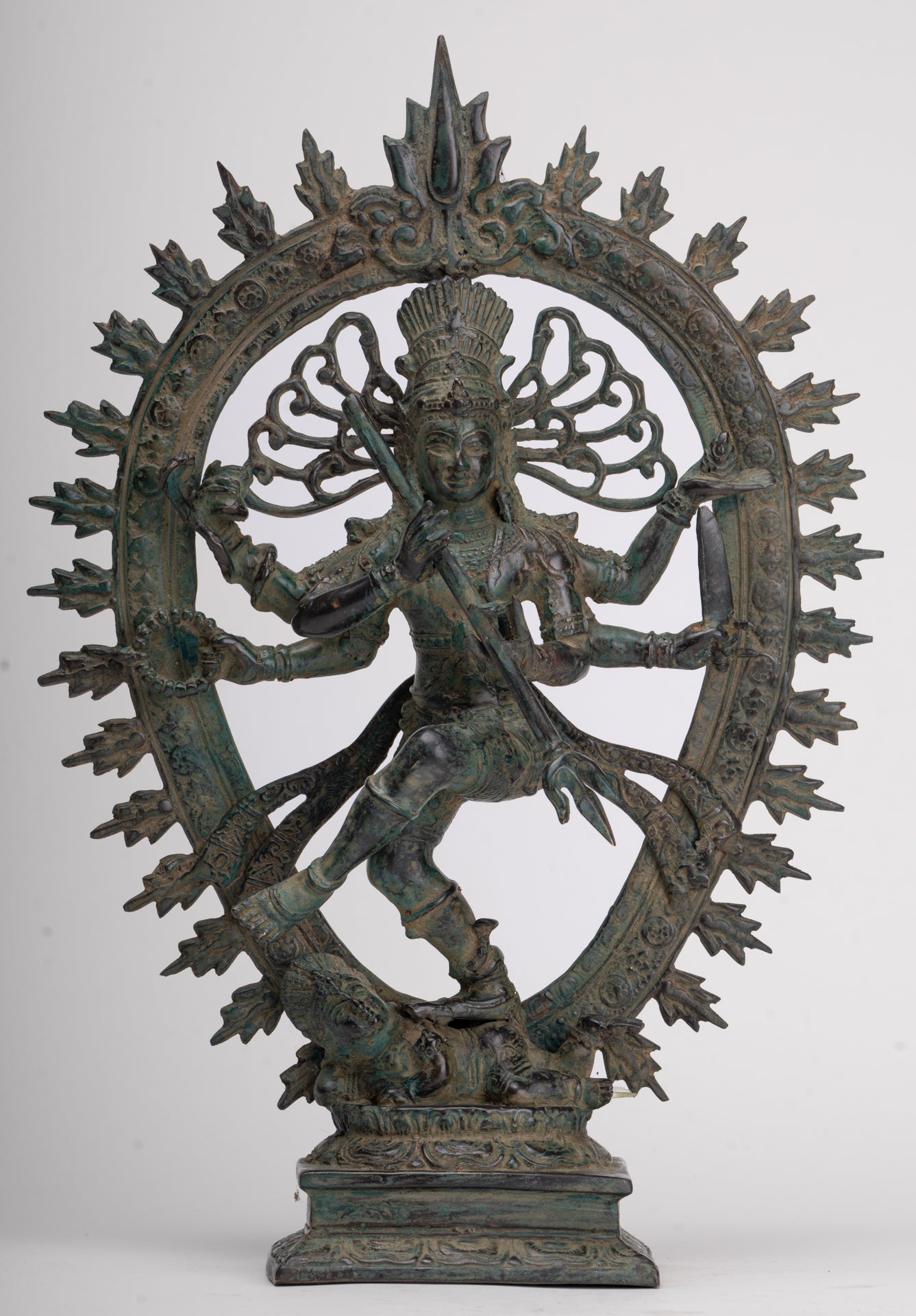
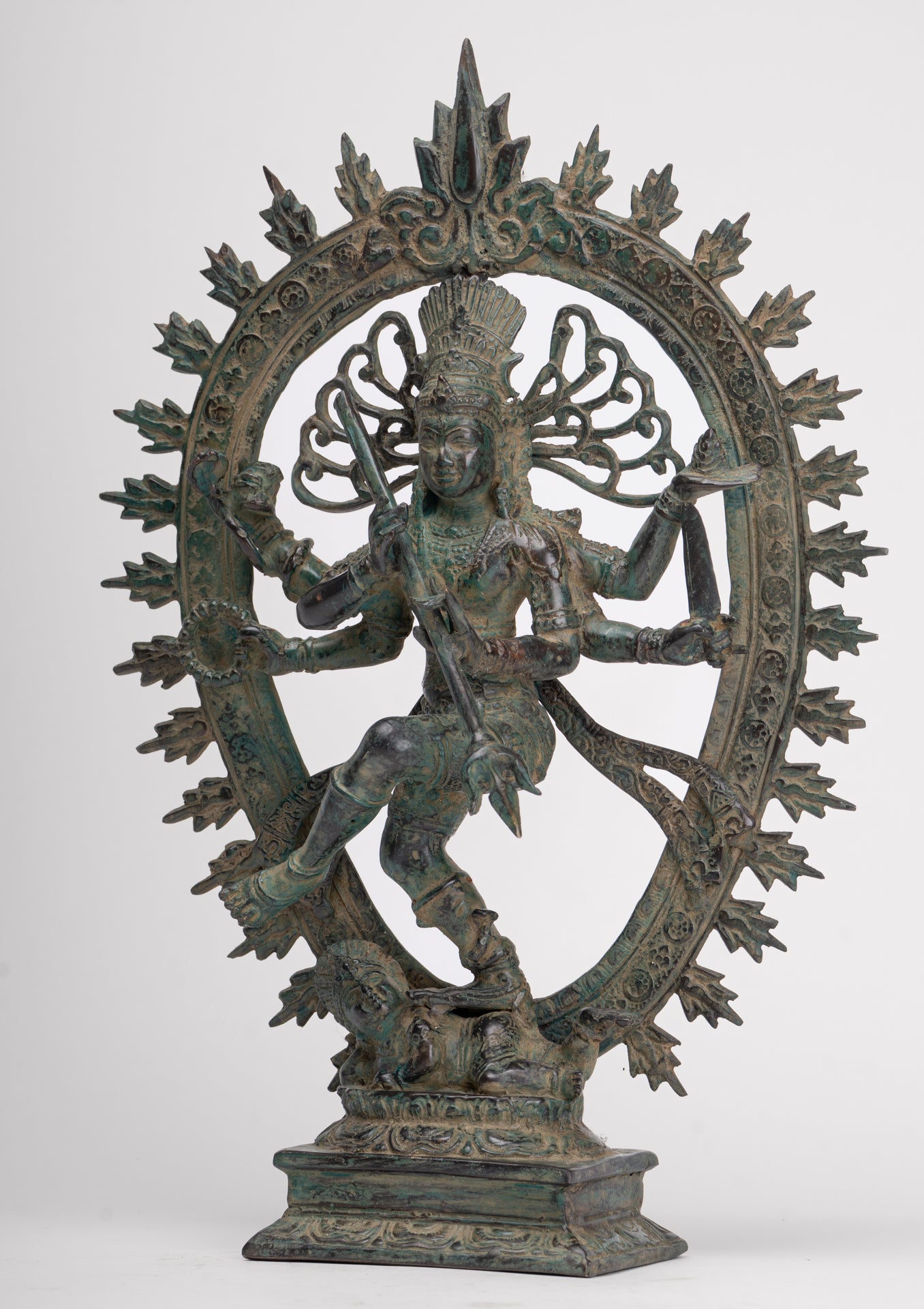
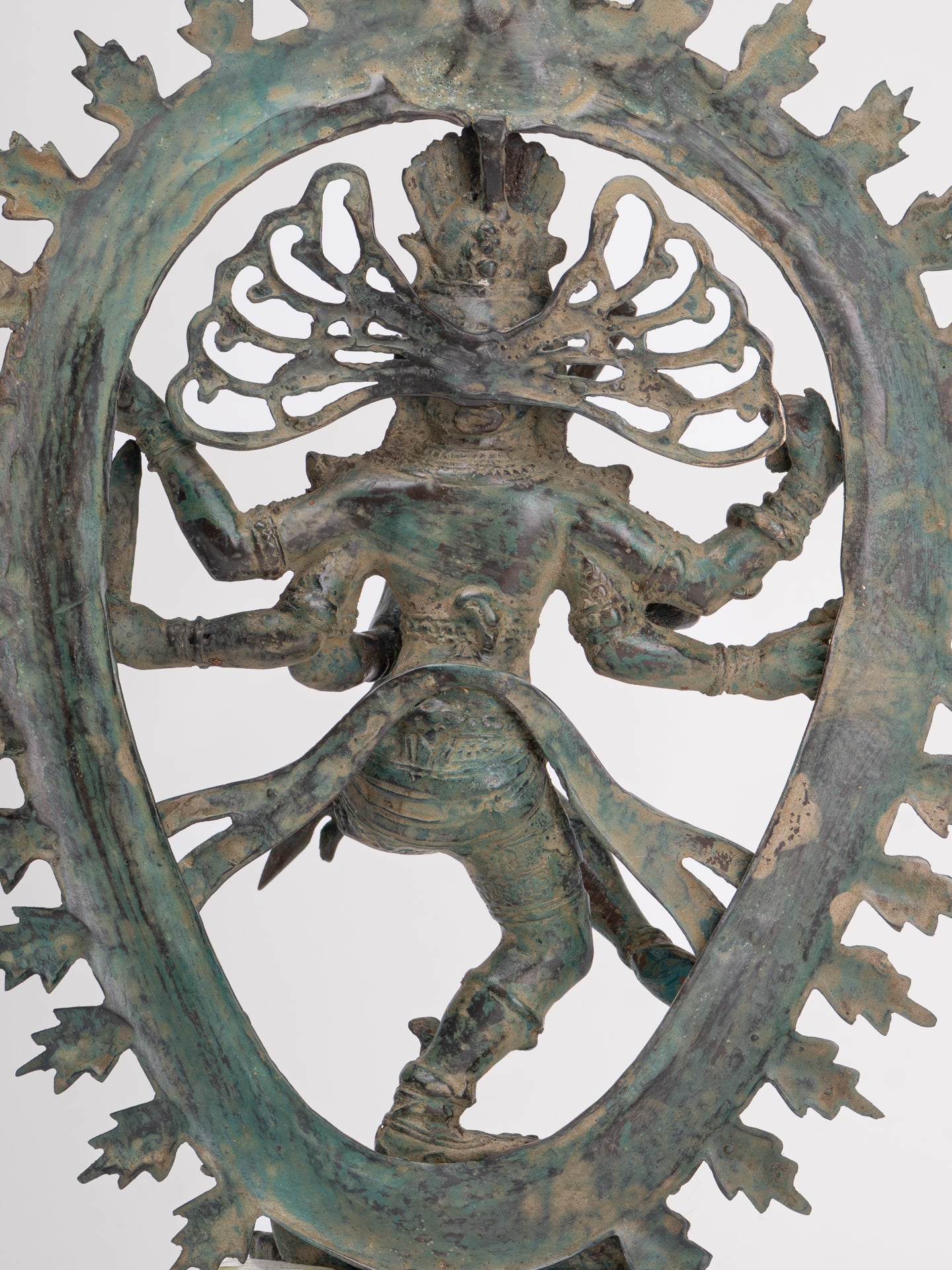
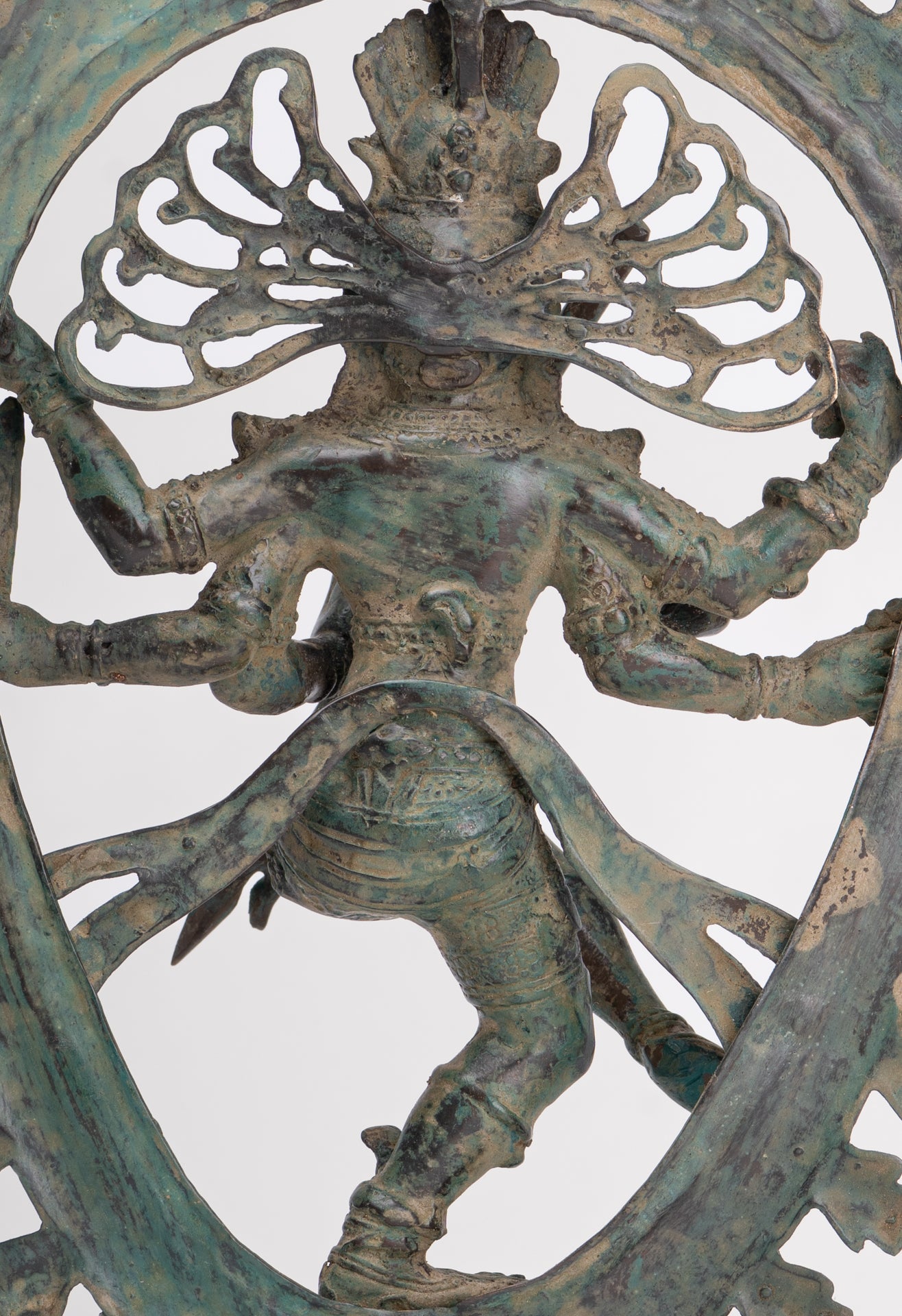
Shiva Statue - Antique Javanese Style Bronze Dancing Shiva statue as Lord Nataraja - 34.5cm(14") Tall
Measures (Height) 34.5cm/14"
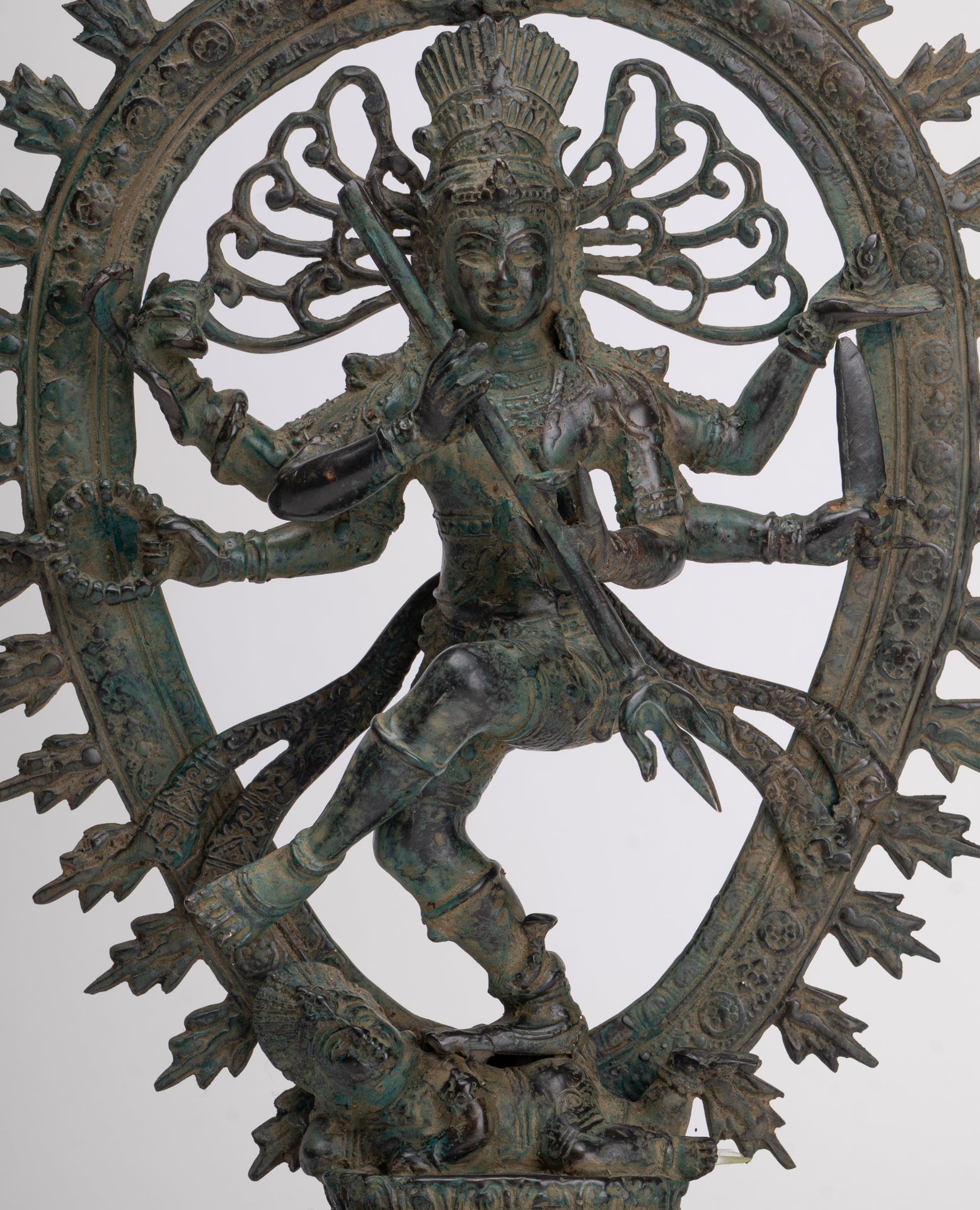
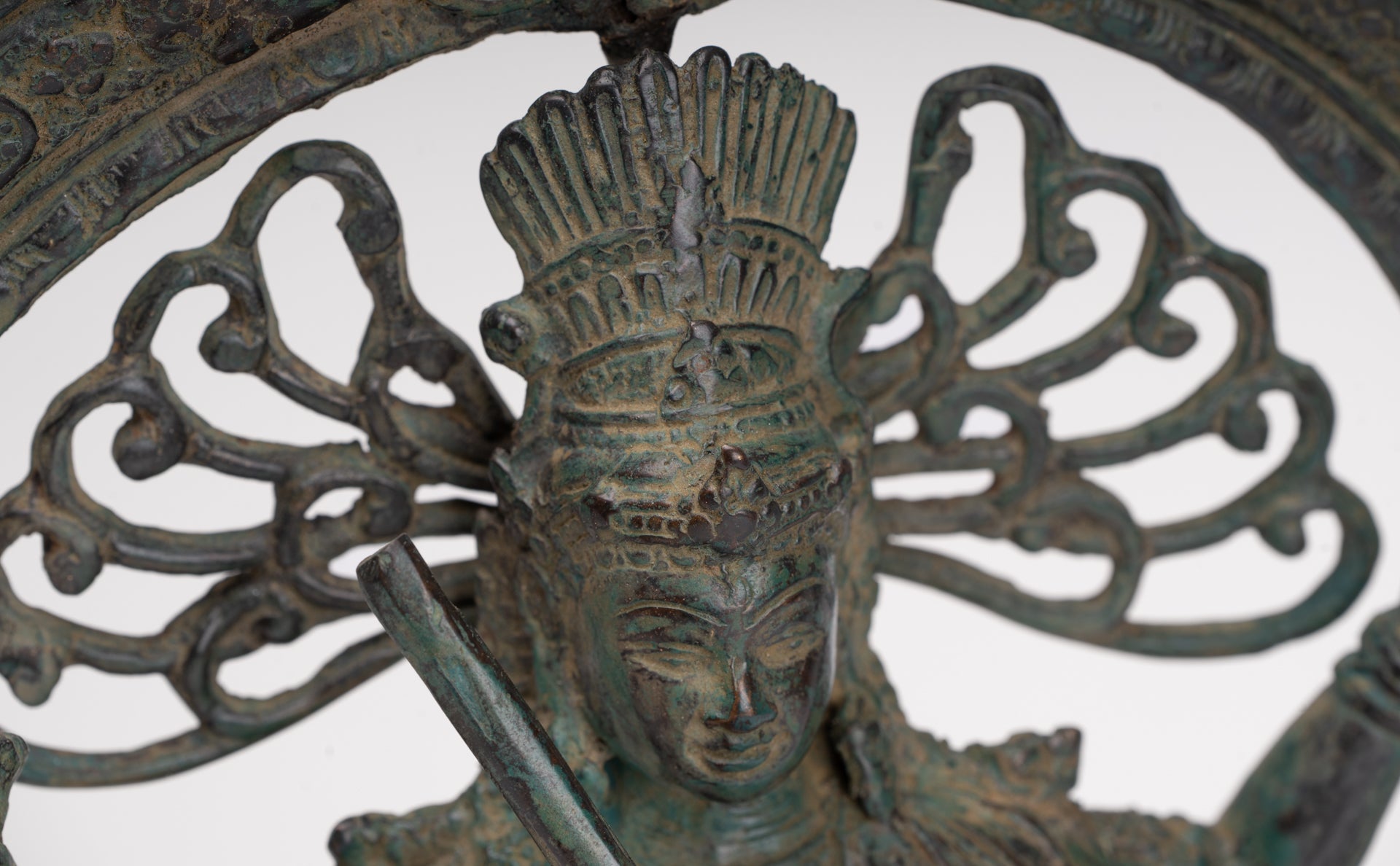
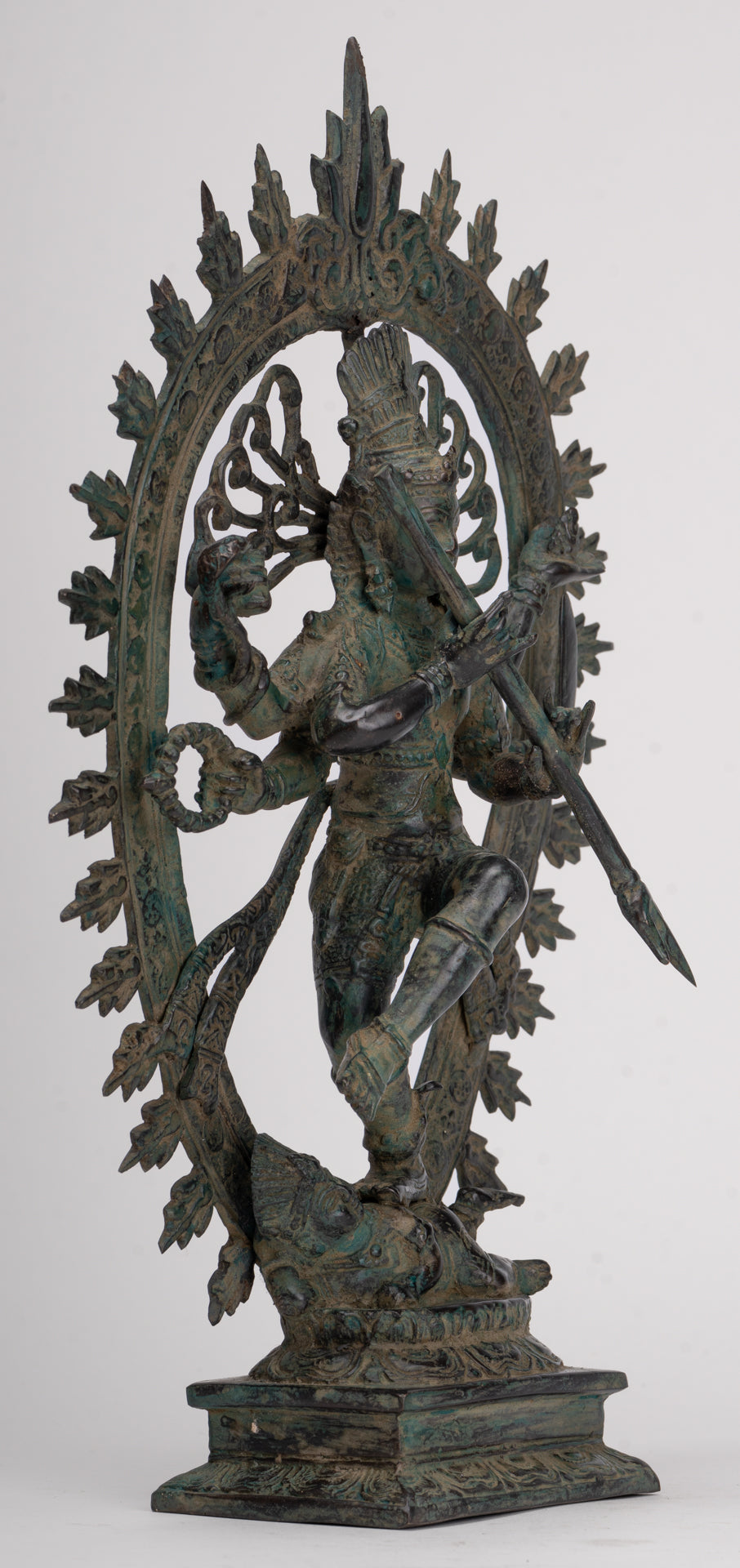
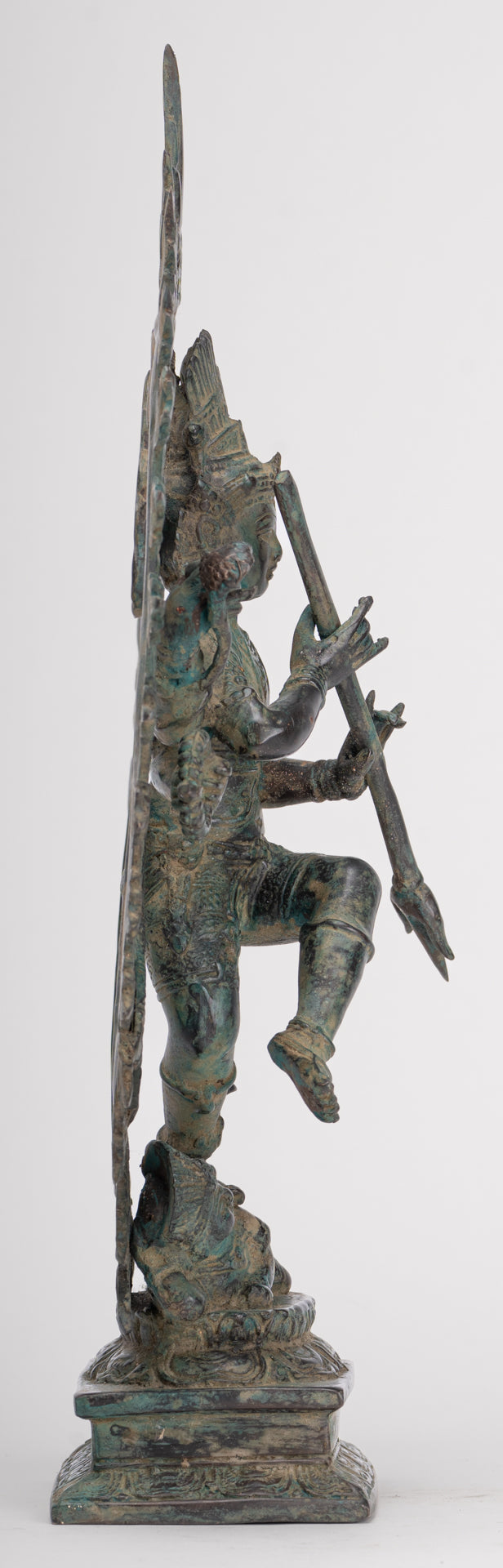
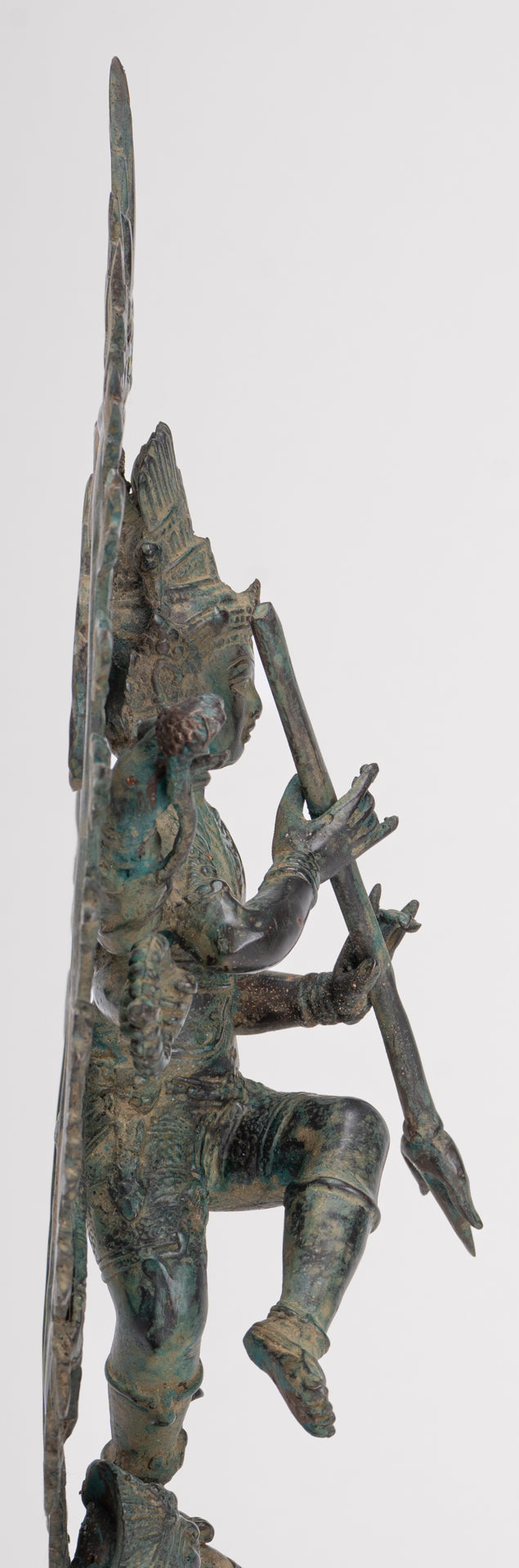
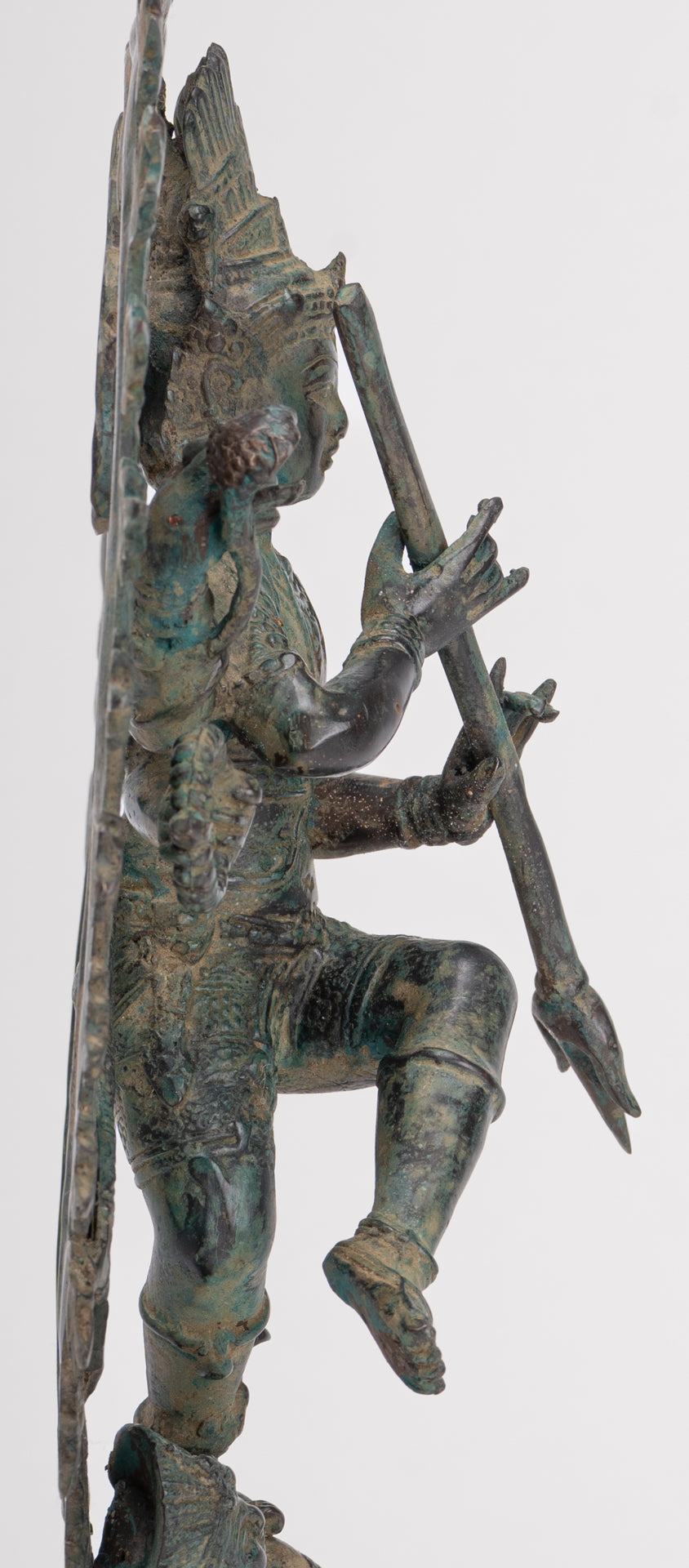
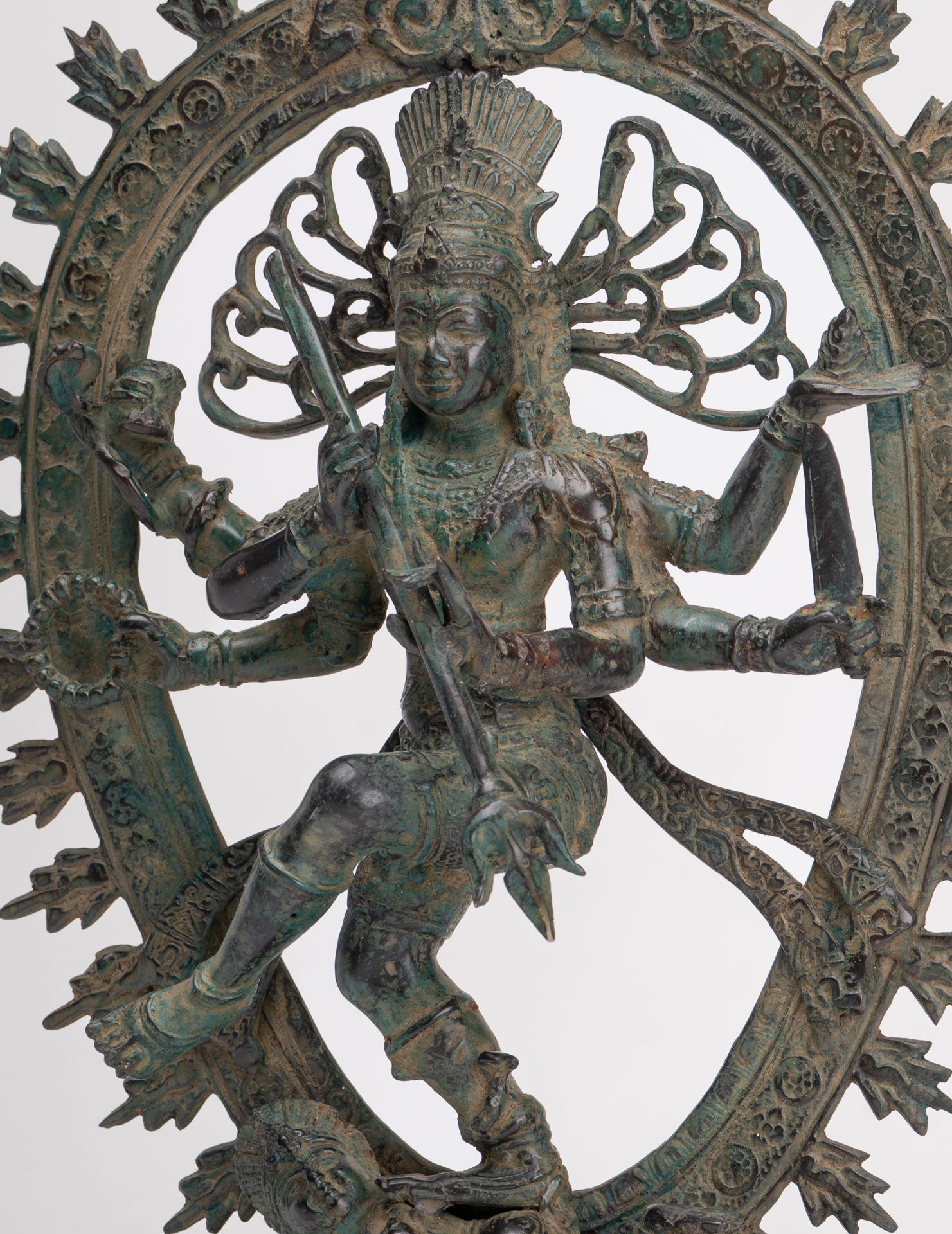
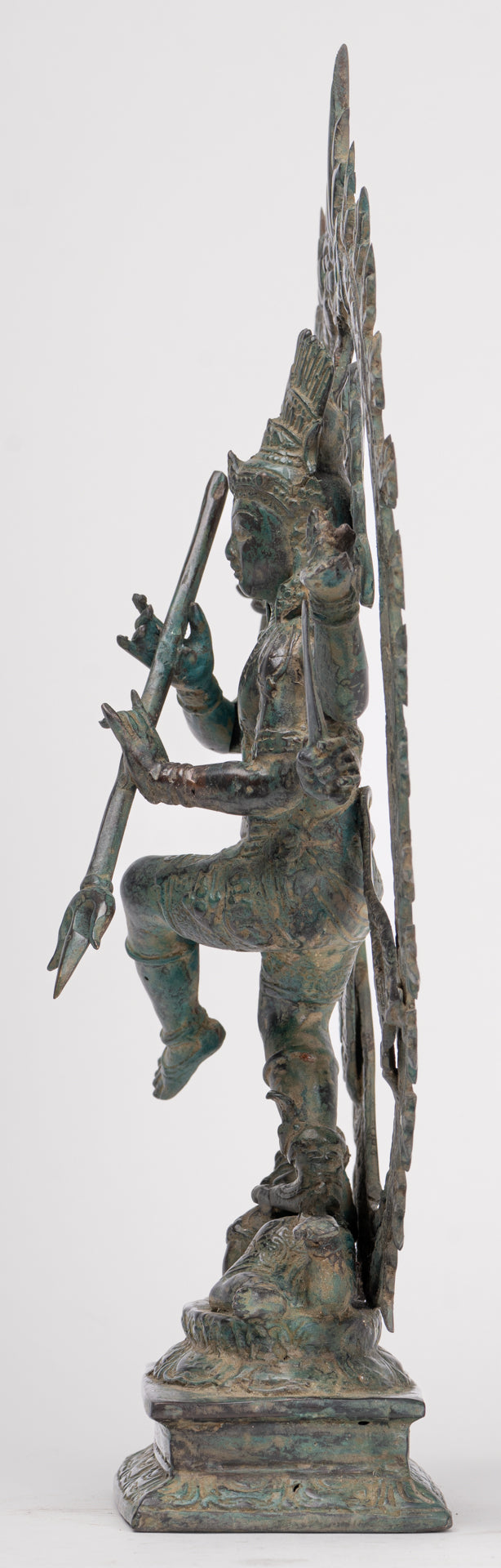
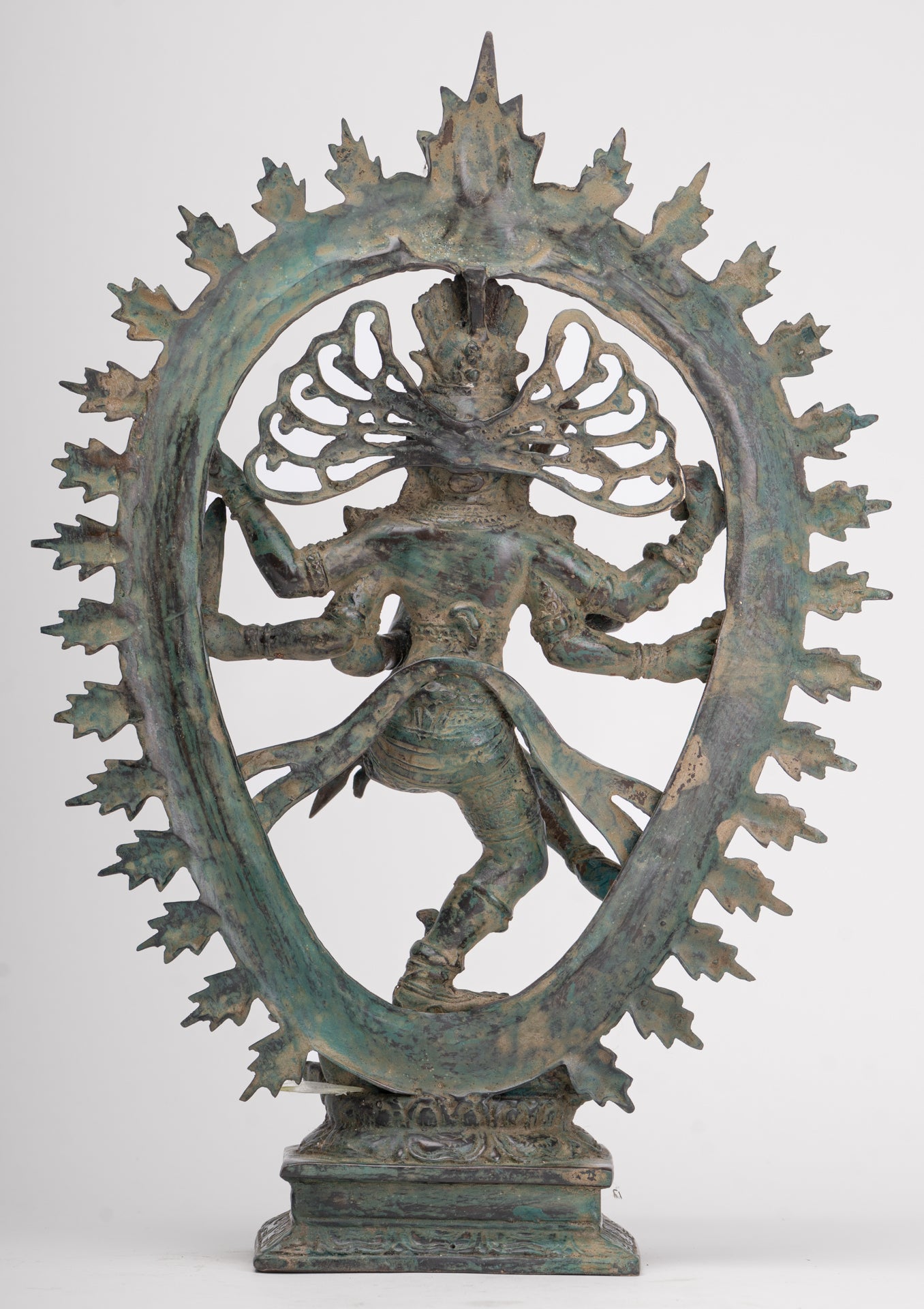
An antique Javanese‑style dancing Shiva as Lord Nataraja, rendered in classic 13th‑century Majapahit style and perfectly framed within a flaming circular aureole. In this dynamic image Shiva appears as the divine dancer and lord of the dramatic arts, poised at the heart of the cosmic rhythm where creation, preservation and dissolution unfold in continuous, harmonious flow.
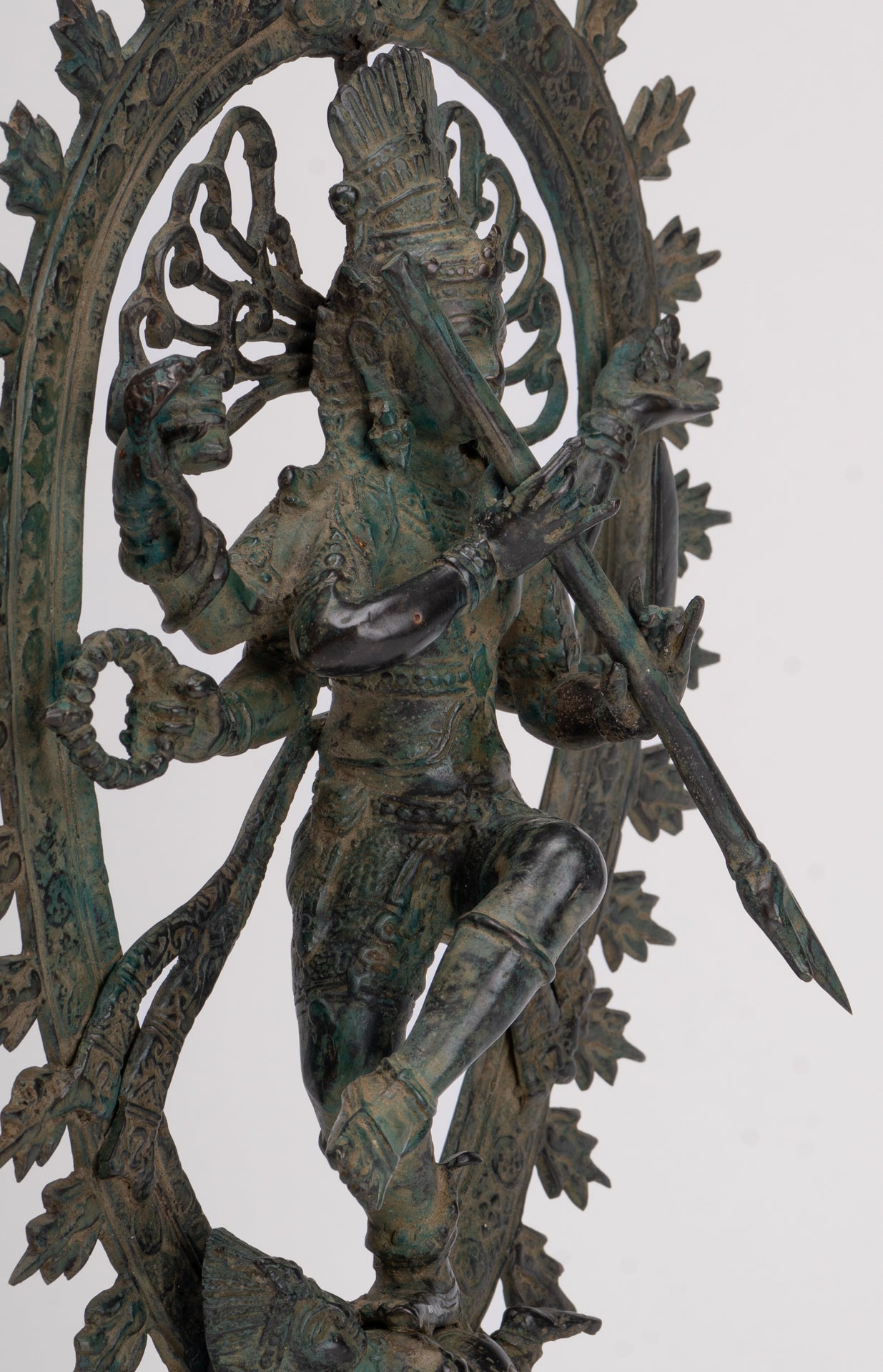
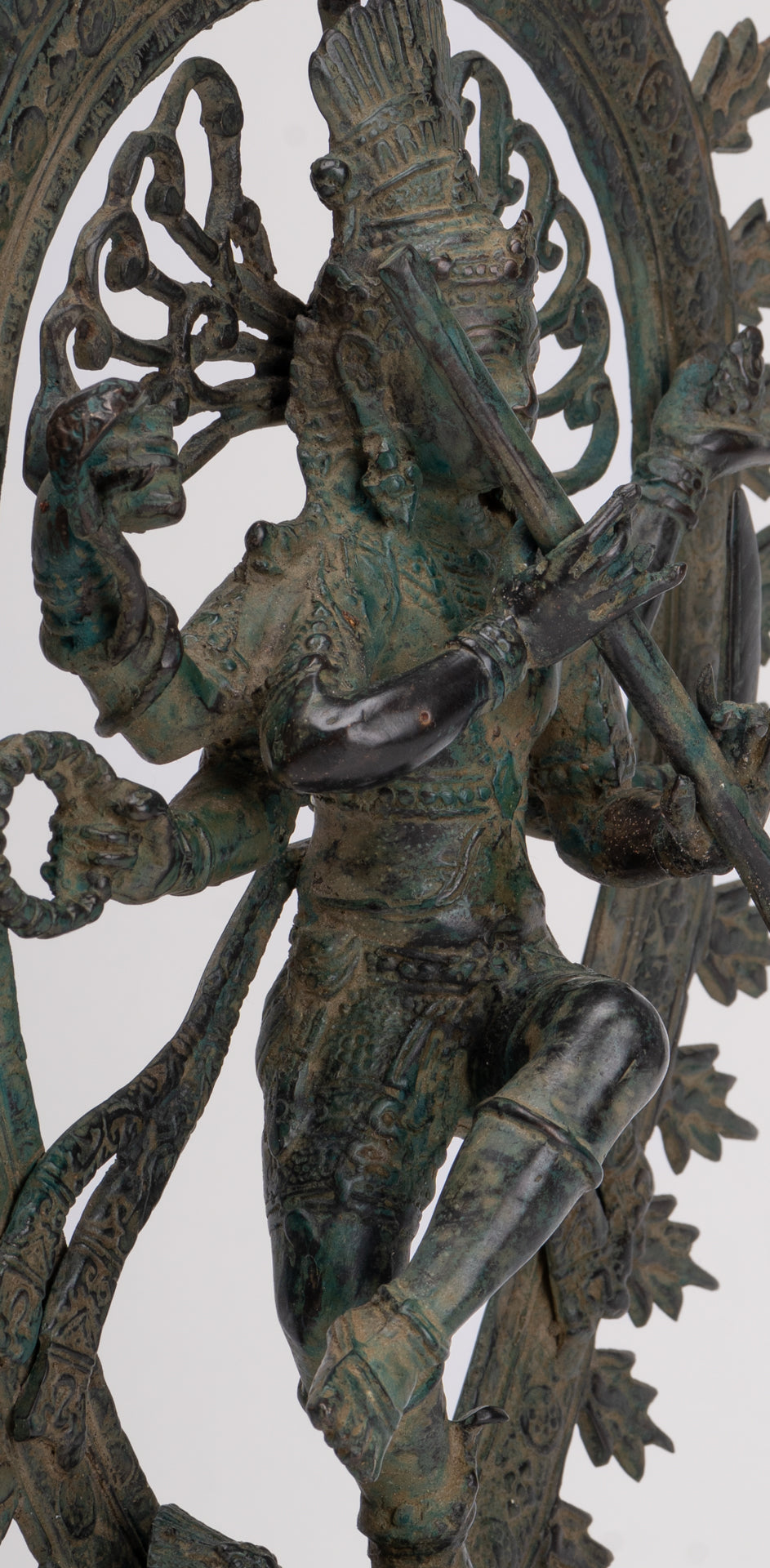
One of the right hands is shown in abhaya, the gesture of protection and reassurance, with a snake coiled elegantly around the wrist, while the rear right hand holds a damaru or hand‑drum whose beat signifies the pulse of creation.
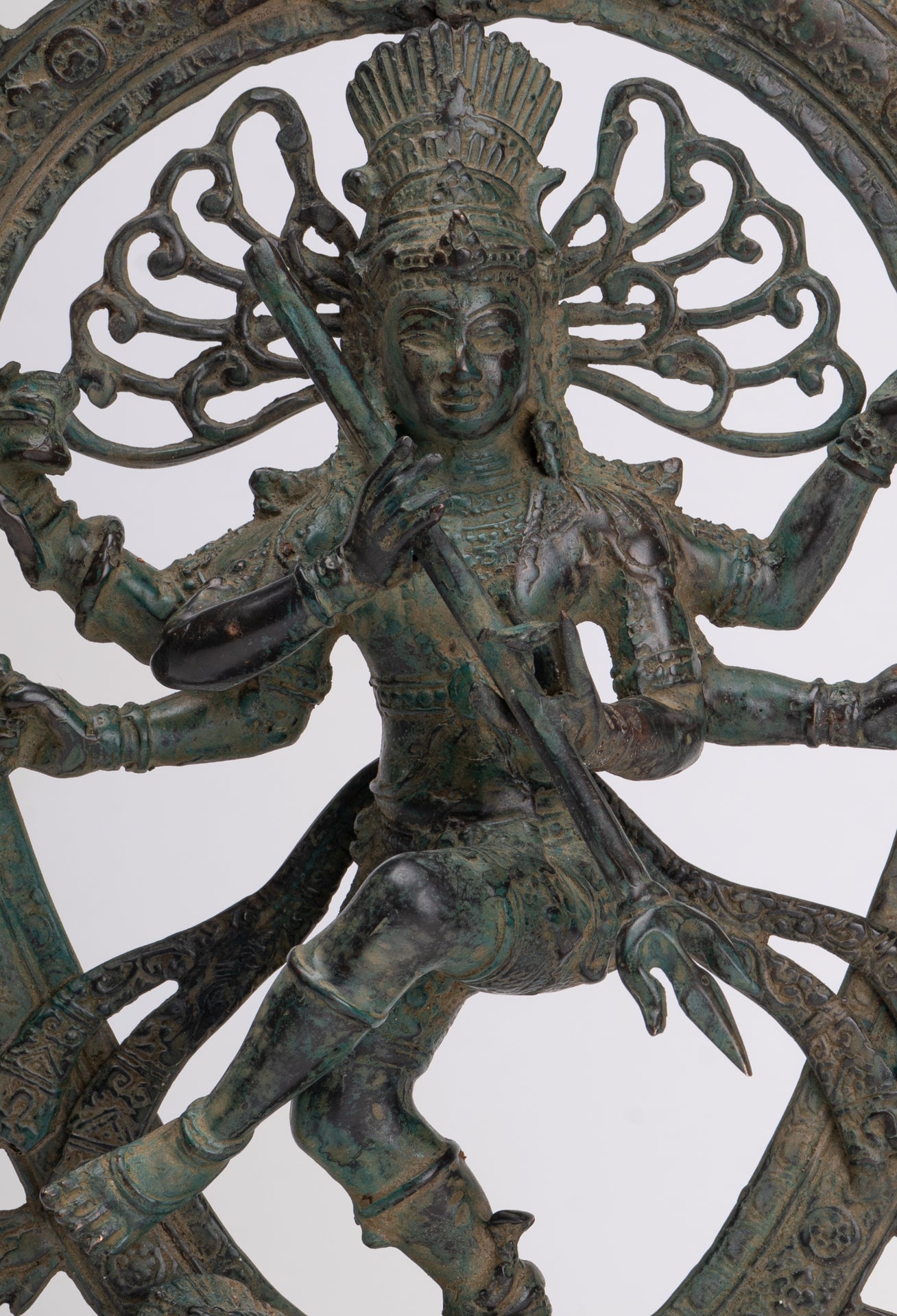
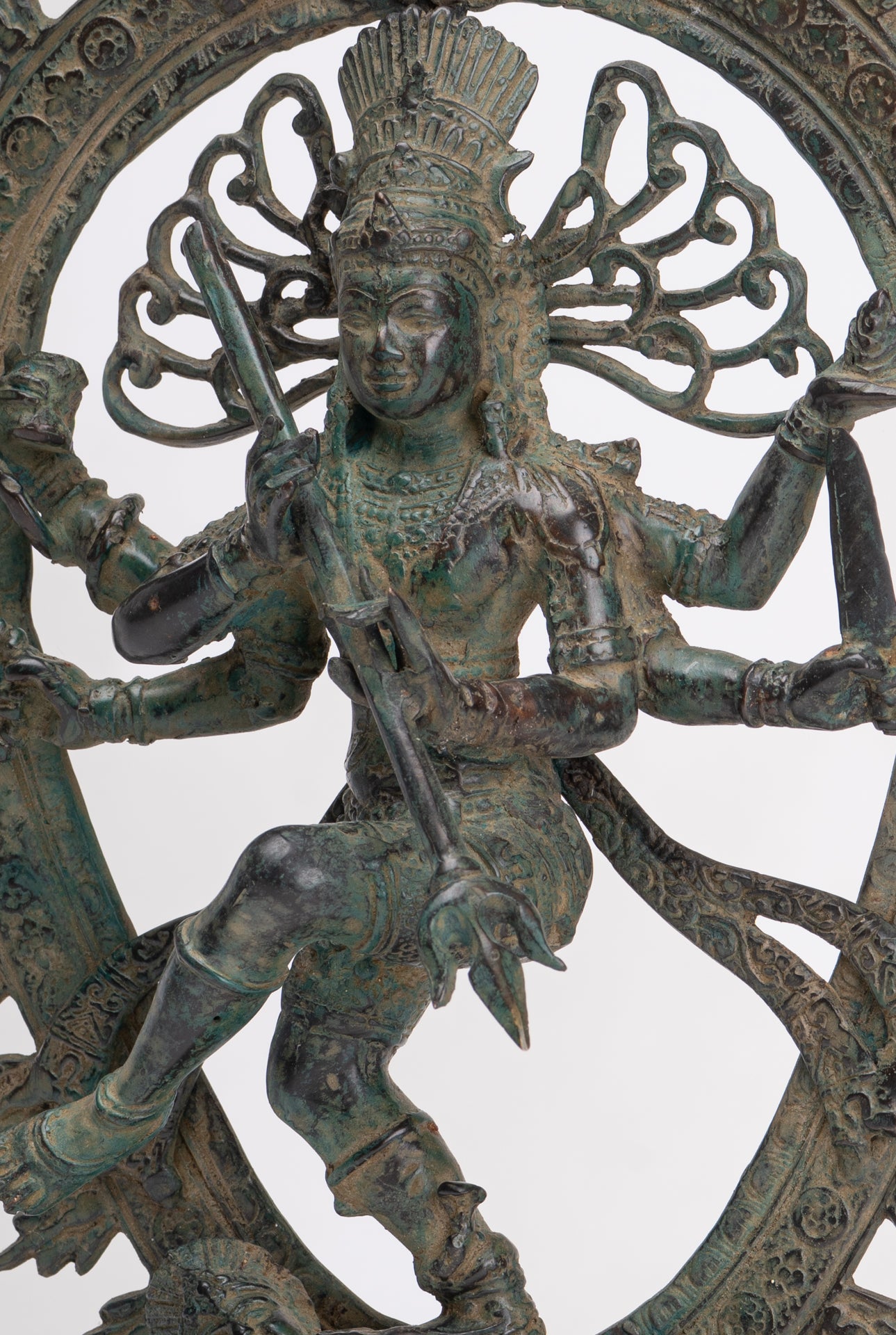
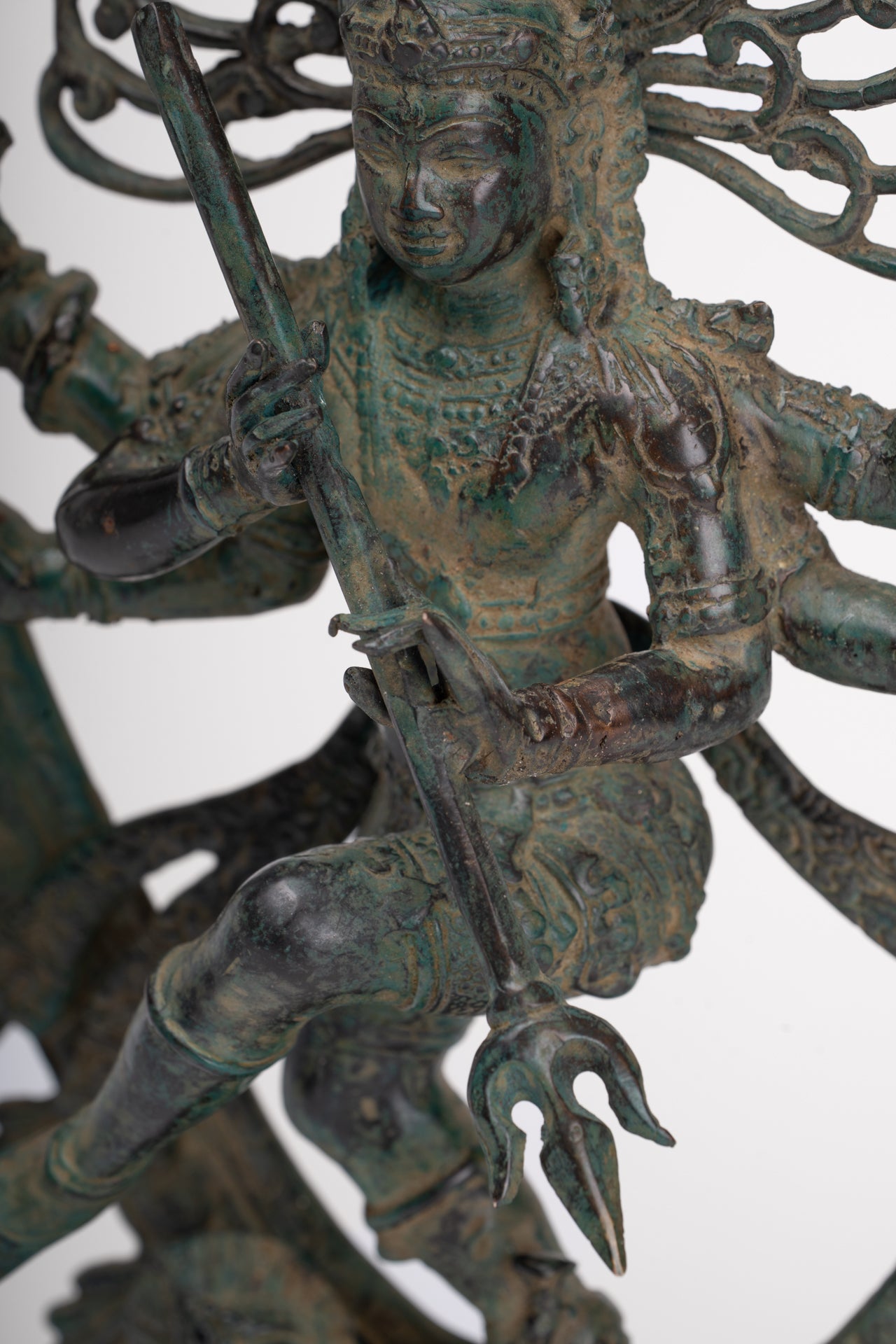
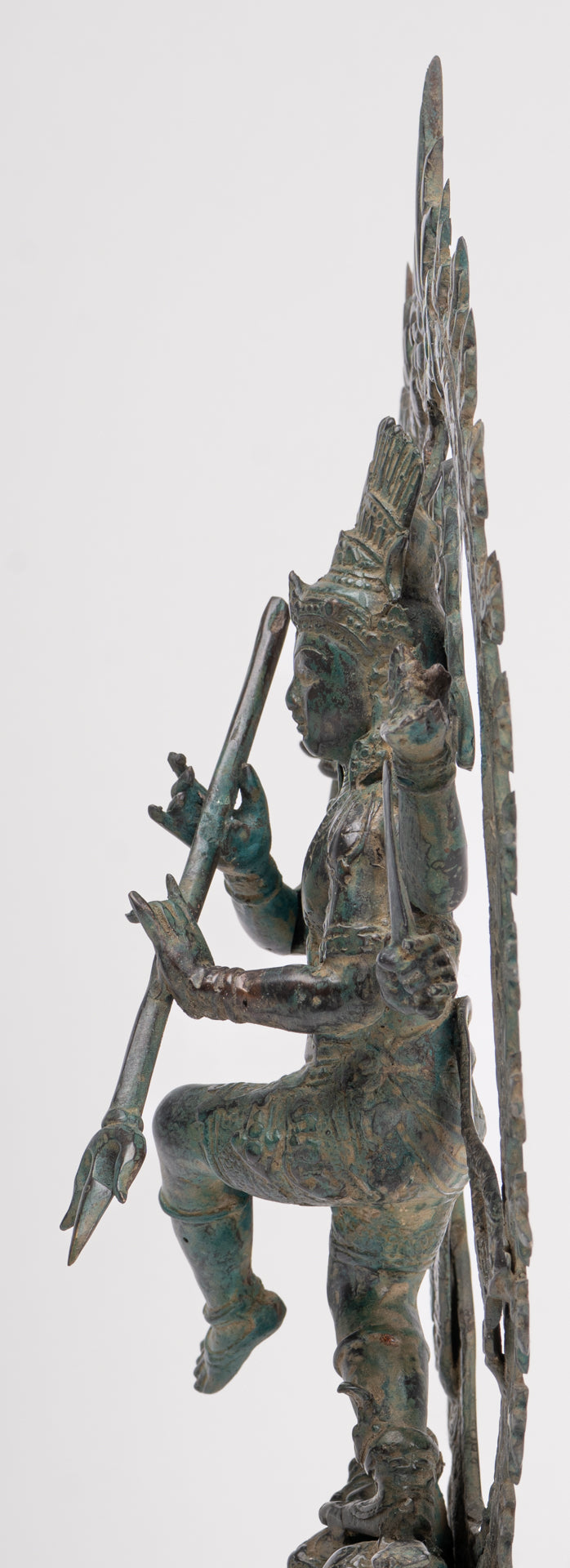
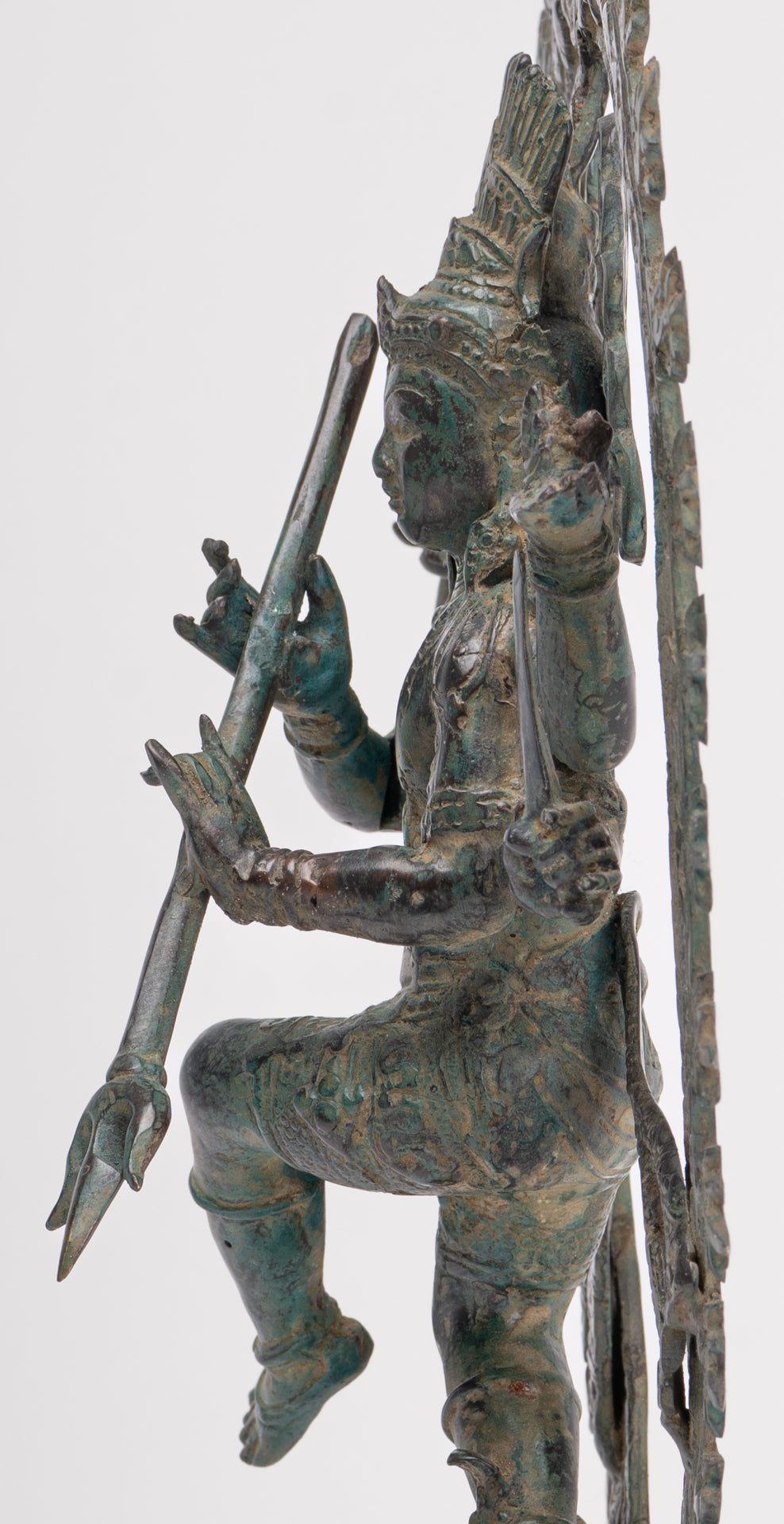
The remaining hands extend gracefully to display weapons and attributes, their lines echoing the sweeping curves of Shiva’s body and the arc of the surrounding halo. Fingers, ankles, neck, face, head, ear lobes and dress are richly adorned; finely chased jewellery and patterned textiles emphasise his royal and divine status without interrupting the sense of movement.
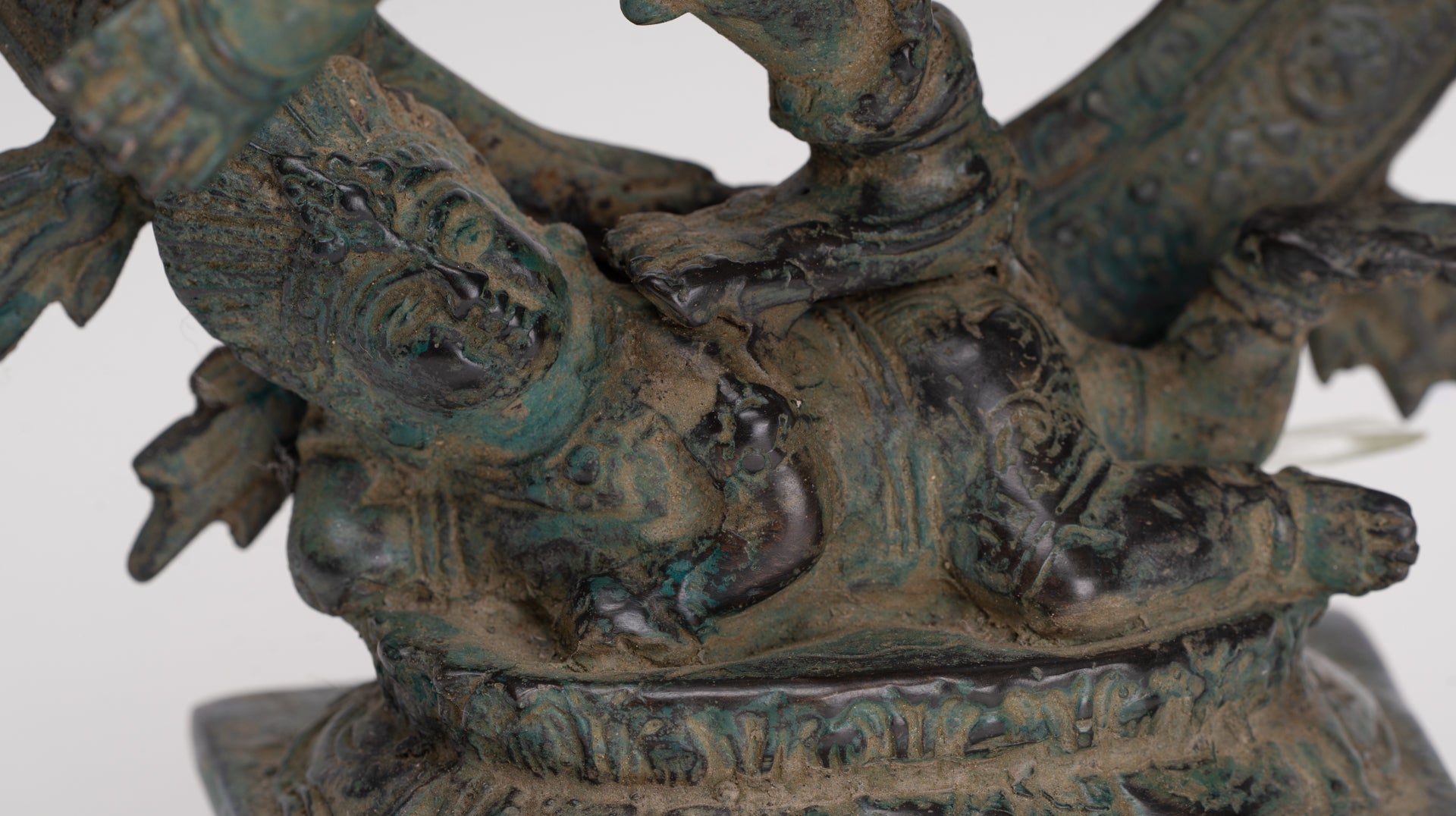
Shiva is backed by a circular aureole with beaded border and flaming rim, topped by a decorative finial that symbolises his radiance and boundless cosmic energy. He dances upon a rectangular double‑lotus pedestal, raising his left leg in the familiar Nataraja pose while trampling the dwarf‑demon Apasmara (Muyalaka), who represents ignorance and spiritual forgetfulness.
The lotus beneath him stands for purity, compassion and joy, its rise from muddy waters mirroring the journey from worldly entanglement to clarity and awakening.
The energetic movement of Shiva’s dance is rendered with particular refinement in this Majapahit interpretation. He wears a simple robe with a sash swirling at his side and carefully modelled ornaments including crown and earrings, while his hair is arranged in a tripartite chignon decorated with a cockade.
Discreet adornments—a necklace, diamond‑shaped earrings, the sacred Yajnopavita thread and single bangles on each wrist—create a balanced interplay of simplicity and richness, allowing structure and rhythm to remain the focus.
The bronze displays a beautifully varied patina that softens the relief and lends depth to every detail.
As the destroyer within the Hindu Trimurti, Shiva is revered as limitless, transcendent and unchanging, while also celebrated as patron god of yoga, meditation and the arts. The Trilochana, his third eye on the forehead, marks him as the Three‑Eyed Lord—an eye of wisdom that sees beyond “Maya,” the illusion and duality of everyday life, and the source of his untamed spiritual energy.
This traditional yet striking Nataraja sculpture distils these layered meanings into a single, compelling form, making it an ideal centrepiece for a home, workspace or sacred environment—a piece that brings movement, protection and a uniquely powerful, ever‑dancing presence to any setting.
Key Features
-
Antique Javanese‑style Nataraja in classic 13th‑century Majapahit idiom
-
Shiva as Lord of the Dance, poised within a complete flaming circular aureole
-
Front right hand in abhaya mudra (protection and reassurance), with an elegant snake bracelet
-
Rear right hand holding the damaru hand‑drum, symbol of the cosmic pulse of creation
-
Remaining hands displaying weapons and attributes, their lines echoing the sweep of the body and halo
-
Richly adorned with finely chased jewellery, patterned textiles, crown, earrings and sacred thread
-
Circular aureole with beaded inner border, flaming rim and decorative finial expressing radiance and boundless energy
-
Shiva dancing on a double‑lotus pedestal, trampling the dwarf‑demon Apasmara (ignorance and spiritual forgetfulness)
-
Expressive Majapahit‑style movement, with swirling sash, carefully modelled ornaments and tripartite chignon
-
Beautifully varied aged bronze patina, adding depth and softness to the relief
-
A powerful devotional and sculptural centrepiece for home, studio or meditation space
FAQs – Nataraja Shiva in Majapahit Style
1. Who is Nataraja and what does this form of Shiva represent?
Nataraja—literally “Lord of the Dance”—is one of the most profound and recognisable images of Shiva in Hindu art. In this form, Shiva dances at the centre of the cosmos, simultaneously creating, sustaining and dissolving the universe. Every element of the pose is symbolic: the raised leg signifies liberation, the foot pressing down the dwarf‑demon Apasmara represents the defeat of ignorance, and the swirling hair and halo of flames evoke the energy of transformation. Collectors and devotees value Nataraja images for their ability to encapsulate, in a single dynamic figure, both the destructive and compassionate aspects of Shiva’s power.2. What makes this piece specifically Javanese or Majapahit in style?
While the iconography is rooted in South Indian Shaiva tradition, this sculpture translates the Nataraja image into a Javanese–Majapahit visual language. The elongated proportions, slightly softer modelling of the torso, and distinctive treatment of the crown, jewellery and aureole all echo 13th‑century East Javanese bronze and stone sculpture. The careful balance between ornament and open space, and the way the halo hugs the body in an almond‑shaped arc rather than a perfectly round circle, are also consistent with Majapahit sensibilities, where Indian influences were reinterpreted through local aesthetics.3. What do the multiple arms and specific hand gestures mean?
Shiva’s multiple arms indicate his superhuman ability to perform many cosmic functions at once. The front right hand in abhaya mudra offers fearlessness and reassurance, assuring devotees that they are protected even amid change and upheaval. The rear right hand holds the damaru, whose rhythmic beat symbolises the sound from which creation arises and to which it eventually returns. The remaining hands, often holding weapons or symbolic objects, express his capacity to cut through ignorance, maintain order and guide beings toward liberation. Together, they present Shiva not merely as a destroyer, but as a complete cosmic principle.4. Why is Shiva shown trampling a dwarf under his foot?
The dwarf‑demon Apasmara (or Muyalaka) personifies ignorance, forgetfulness and spiritual inertia—the forces that keep beings trapped in confusion and suffering. By dancing directly on Apasmara’s back, Shiva demonstrates that true liberation requires the subjugation of ignorance, not the destruction of the world for its own sake. It’s a visual reminder that the obstacles we experience are rooted in misunderstanding, and that awakening is possible when clarity and discipline are brought to bear on our own inner “demon”.5. What is the significance of the circular halo of flames?
The circular aureole, with its beaded inner rim and flaming outer edge, represents the universe itself—a field of constant movement and transformation encircled by the fire of divine energy. The flames symbolise both destruction and purification: they burn away illusion while illuminating truth. The decorative finial at the top of the halo heightens this symbolism, suggesting an axis or summit where earthly and cosmic energies meet. Having Shiva perfectly framed by this halo underscores that his dance takes place at the very heart of reality.6. What does the lotus pedestal stand for?
The double‑lotus base beneath Shiva is more than an elegant support—it is a symbol of purity, compassion and spiritual awakening. The lotus rises unsullied from muddy waters, just as consciousness can rise from the confusion of everyday life to clarity and insight. In this Nataraja, the lotus underlines that Shiva’s dance, though fierce, is ultimately an expression of compassion; he destroys what is stale and ignorant so that new understanding can blossom.7. How does this sculpture relate to yoga, meditation and the arts?
Shiva is widely honoured as patron of yoga, meditation and the performing arts. Nataraja in particular is beloved by dancers and musicians, who see in his posture the perfect expression of balance between stillness and movement. For practitioners of yoga and meditation, the dance symbolises the dynamic stillness of the awakened mind—completely engaged with the world yet free from clinging. Placed in a practice space, an image like this serves as both inspiration and reminder of the deeper purpose behind artistic and spiritual disciplines.8. How should I display this Nataraja in my home or workspace?
Because of its strong silhouette and symbolic richness, this Nataraja works best as a focal piece. Position it at or slightly above eye level on a console, altar, plinth or dedicated shelf, ideally against a plain background where the halo of flames can be clearly seen. It pairs beautifully with images of Ganesha, Parvati or other Shaiva deities, but also holds its own as a single centrepiece. Keeping the area around it uncluttered helps maintain the sense of sacred space and allows the dynamic lines of the dance to read cleanly.9. How do I care for the bronze and its patina?
The beautifully varied patina is part of the sculpture’s character and should be preserved rather than polished away. Dust it gently with a soft, dry cloth or a natural‑bristle brush, and avoid abrasive cleaners or commercial metal polishes, which can strip the surface and flatten the relief. In a normal indoor environment, stable temperature and humidity are sufficient; if you wish, a conservator‑approved microcrystalline wax can be applied very sparingly to protect the surface while retaining its depth and nuance.10. Can non‑Hindus keep a Nataraja statue respectfully?
Yes. Many non‑Hindu collectors and practitioners honour Nataraja as a universal symbol of transformation, creativity and the dance of life. Respectful display—on a clean, elevated surface, free from casual clutter—is generally considered appropriate. Some people choose to light a candle or incense near the sculpture from time to time, or to use it as a visual focus during meditation on change, impermanence and renewal. What matters most is approaching the image with sincerity and an appreciation for the tradition it represents.SATISFACTION GUARANTEE - We have been offering SE Asian Art for many years and are proud of the reputation we have developed for fair and honest listings. However, if for any reason, whatsoever, you are unhappy with your purchase please just let us know and we will provide a full refund. We want you to be 100% happy with your purchase.
-
-
The majority of orders will be shipped with DHL. This is a secure, express and fully tracked service.
Items less than 2Kg we typically ship using Royal Mail.
Once we receive your order we try to ship all orders the same or next working day.
Large and/or fragile pieces requiring palletising, specialist crating and/or extra packaging may take a little longer. Palletised shipments will be delivered curbside.
All orders over 35 GBP will be shipped free of charge.

-
We genuinely hope that all purchases delight.
However, if they do not, regardless of reason, we will refund all orders upon receipt of the unwanted item. Just notify us within 14 days of receiving your order that you wish to make a return and send the piece back to us with 30 days of delivery.


