





-
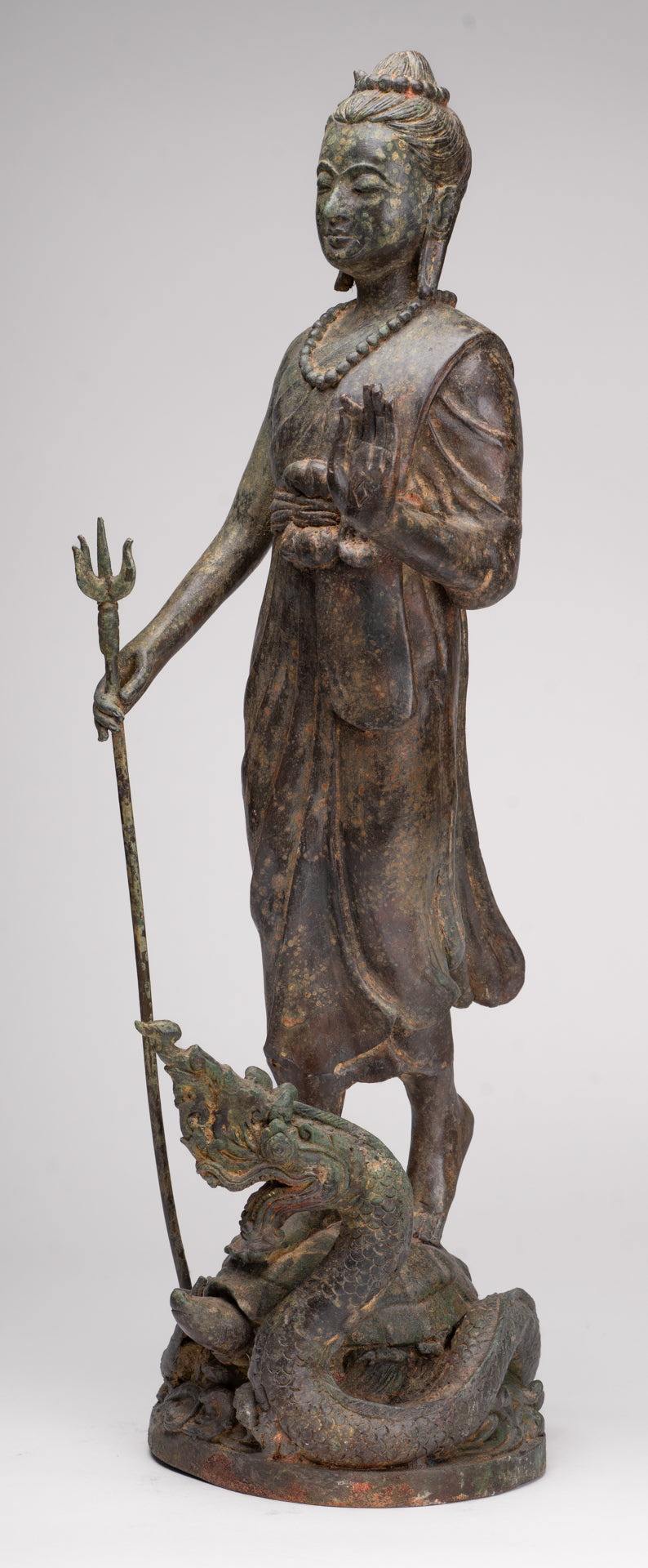
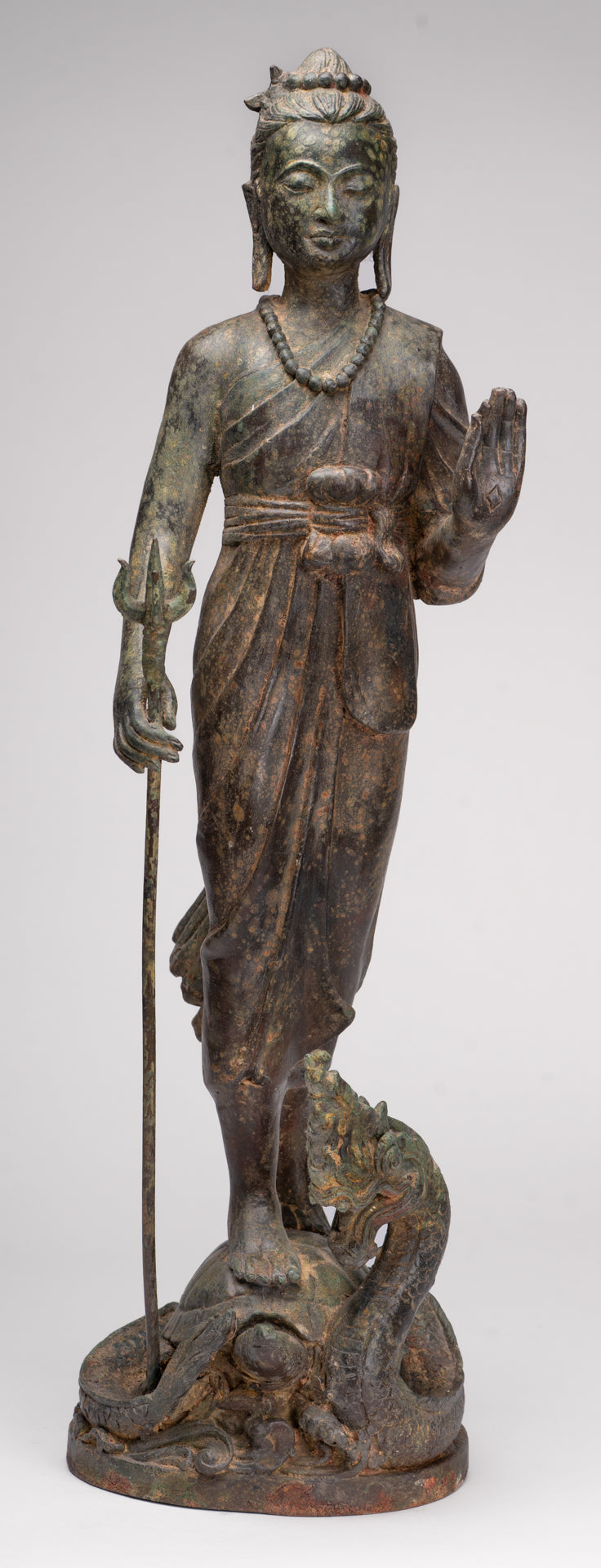
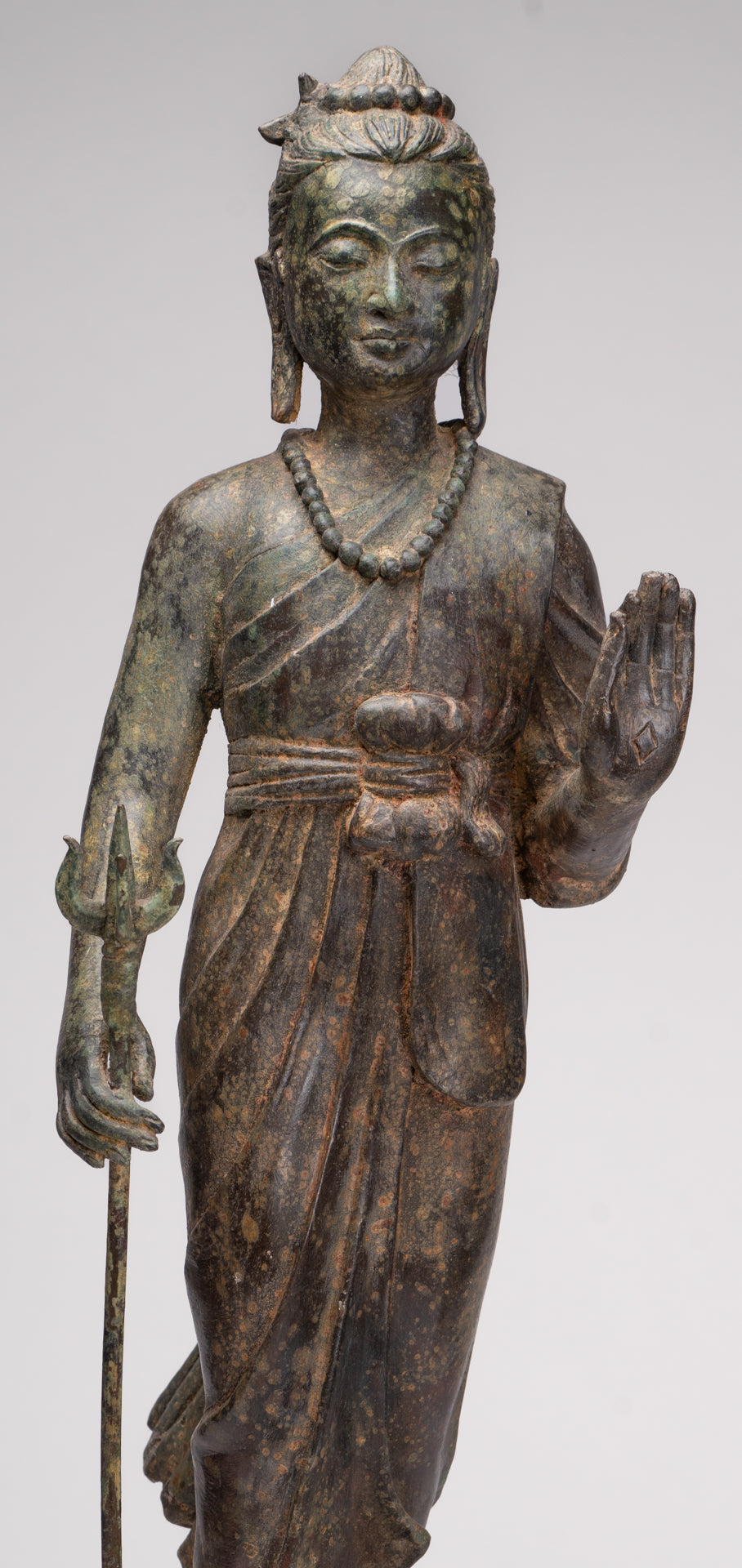
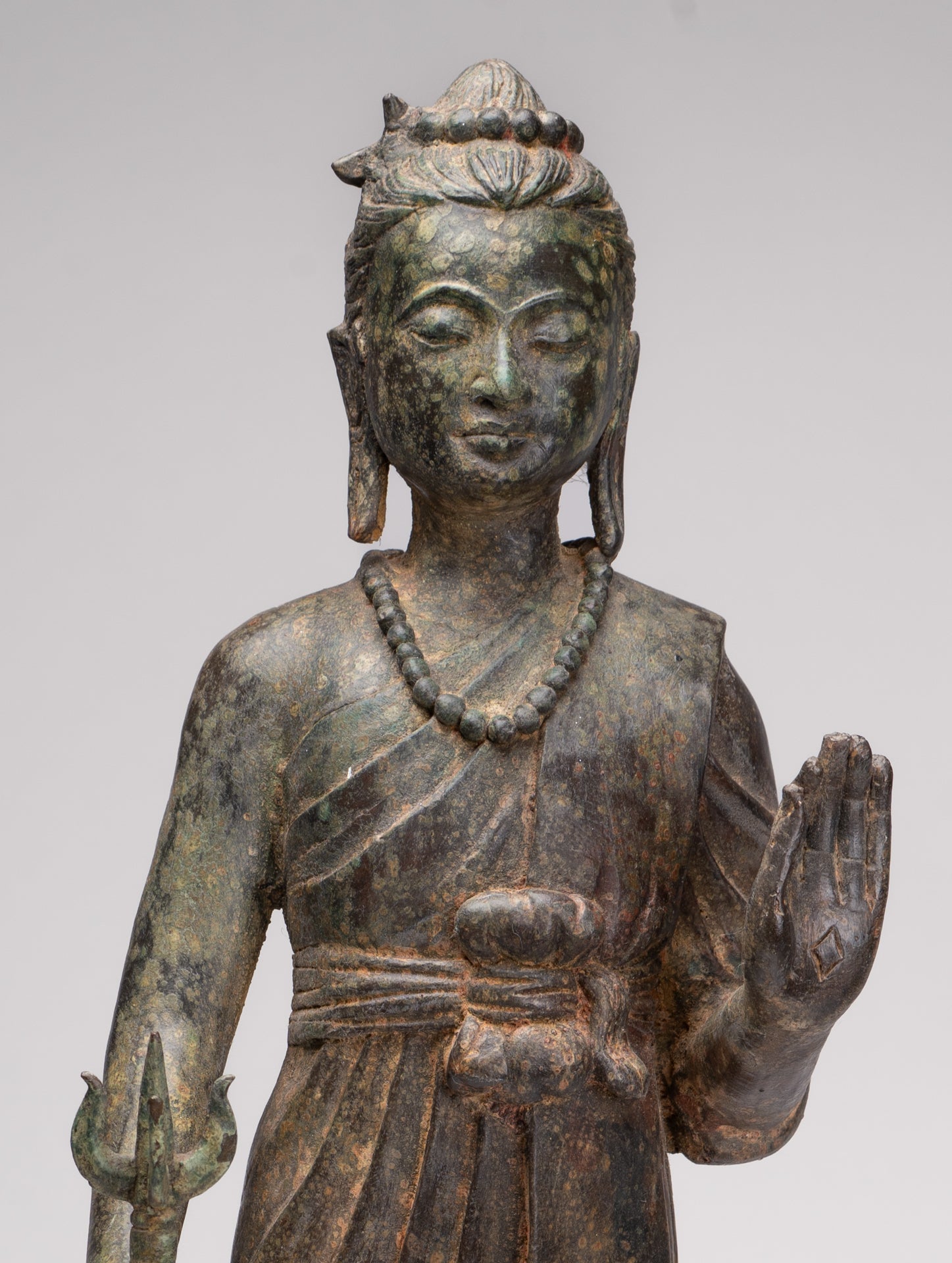
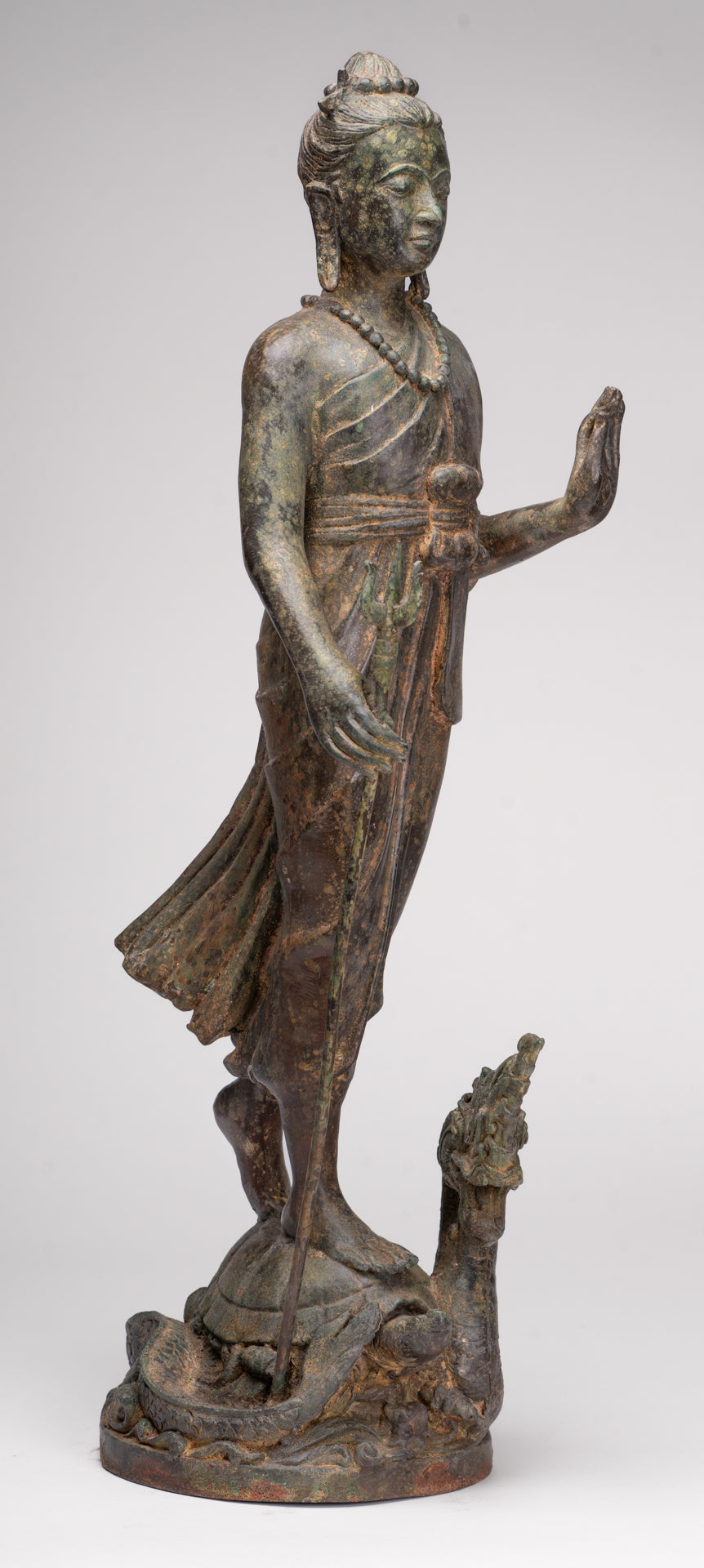
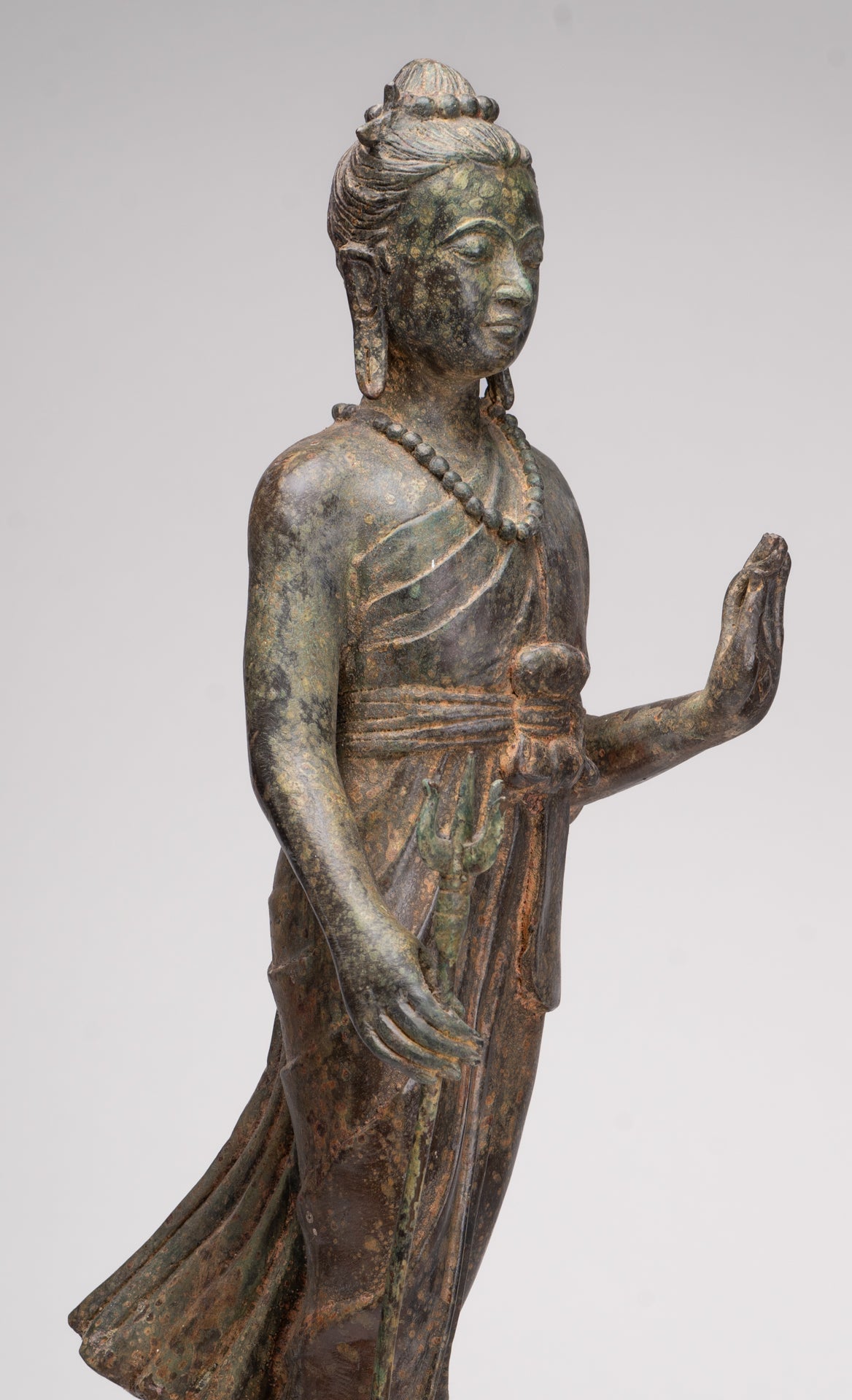
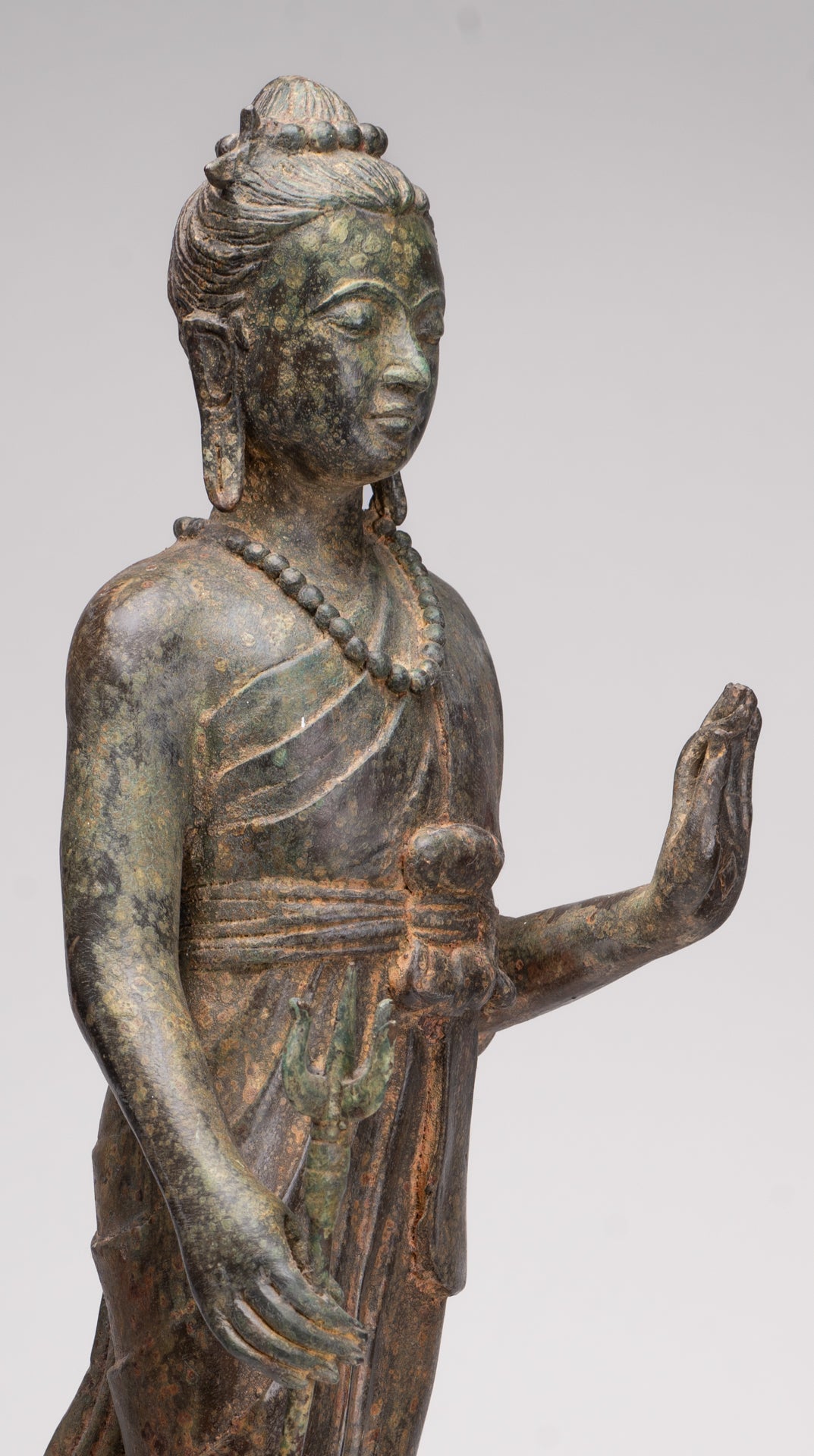
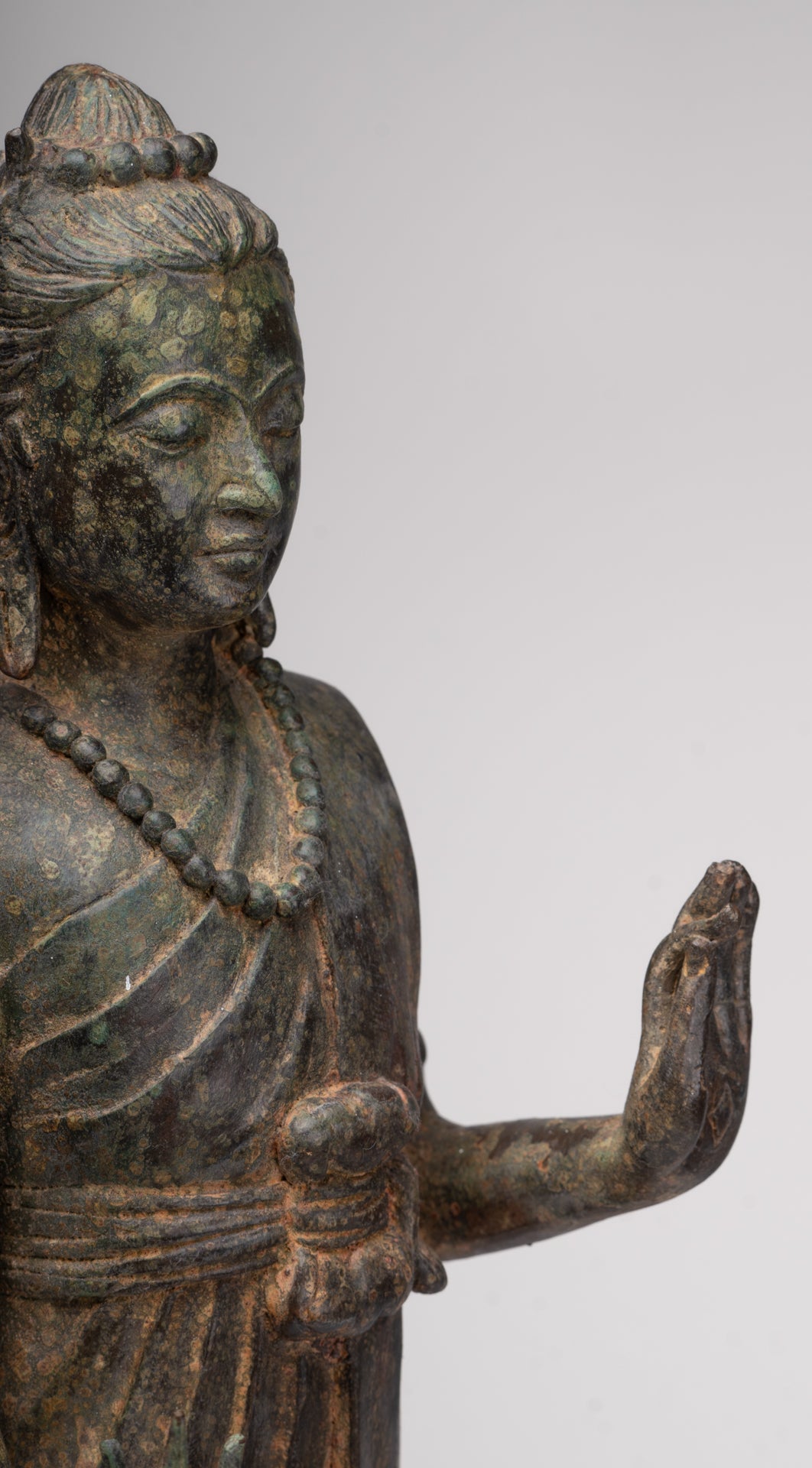
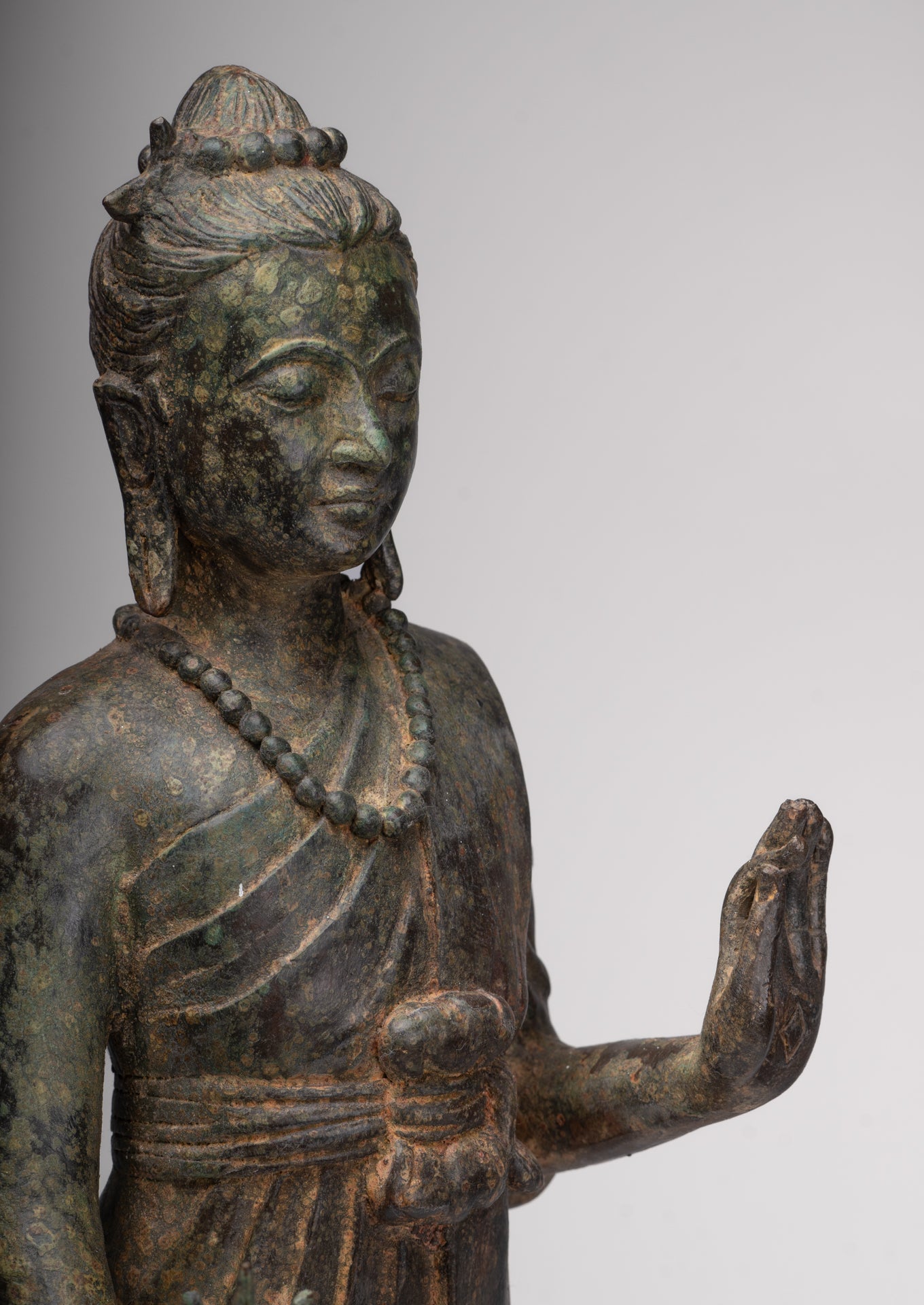
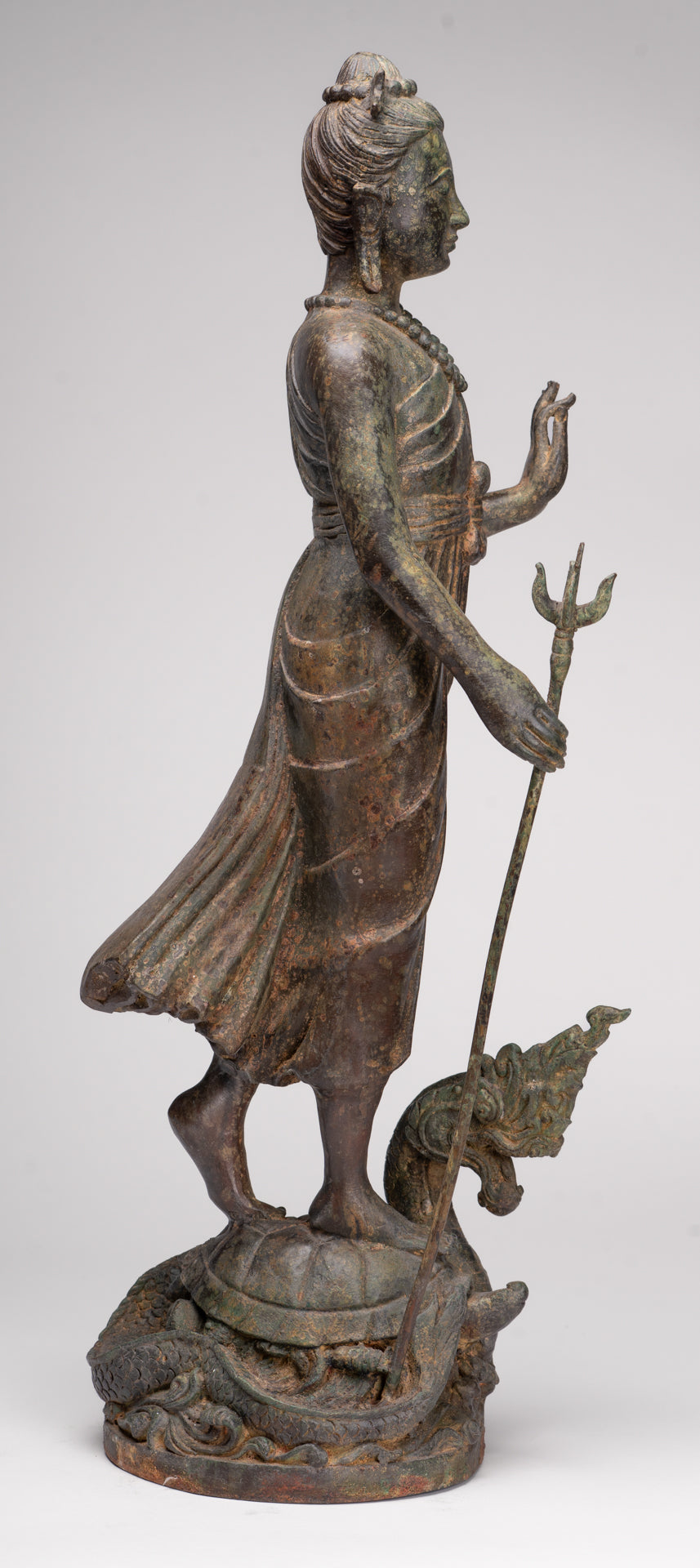
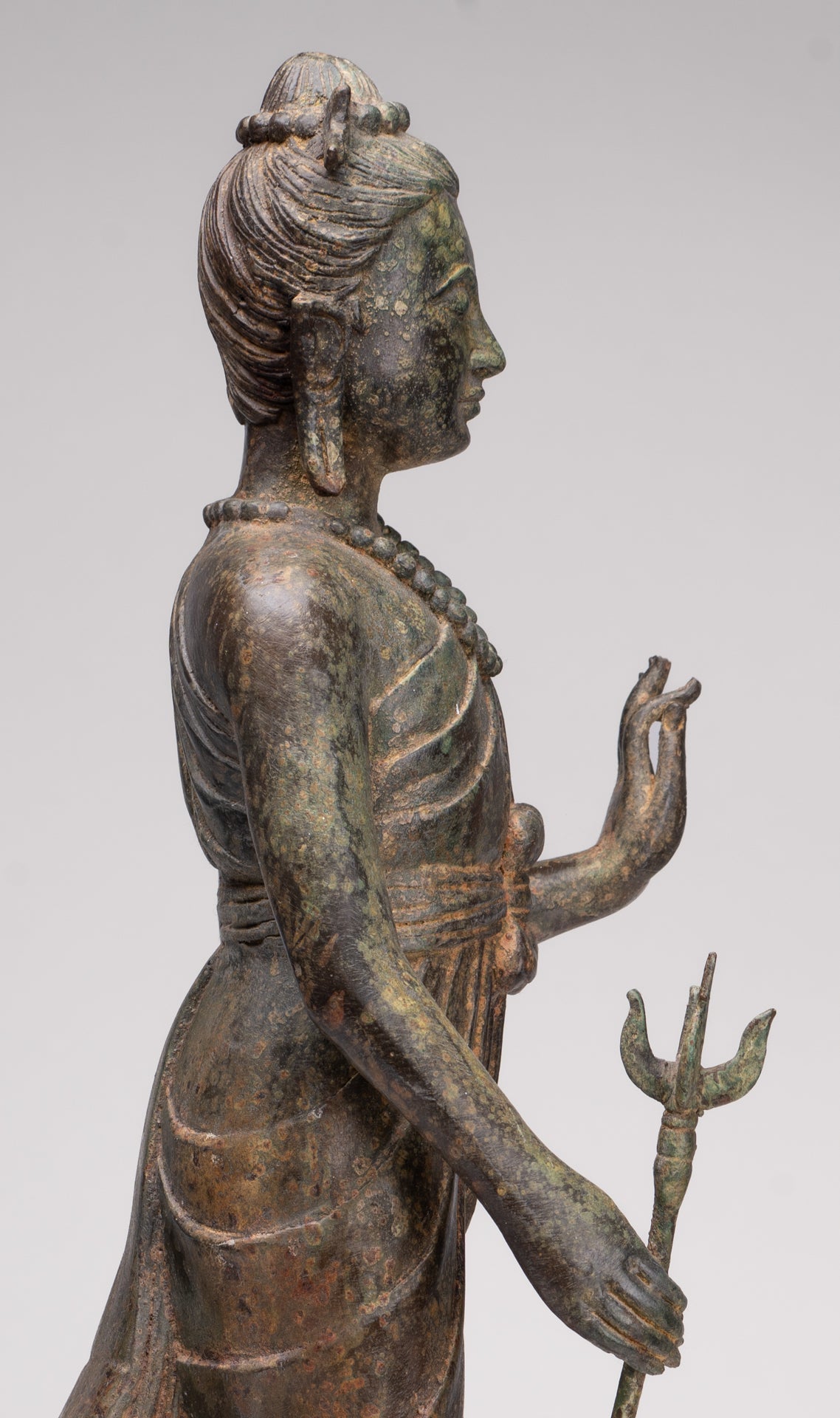
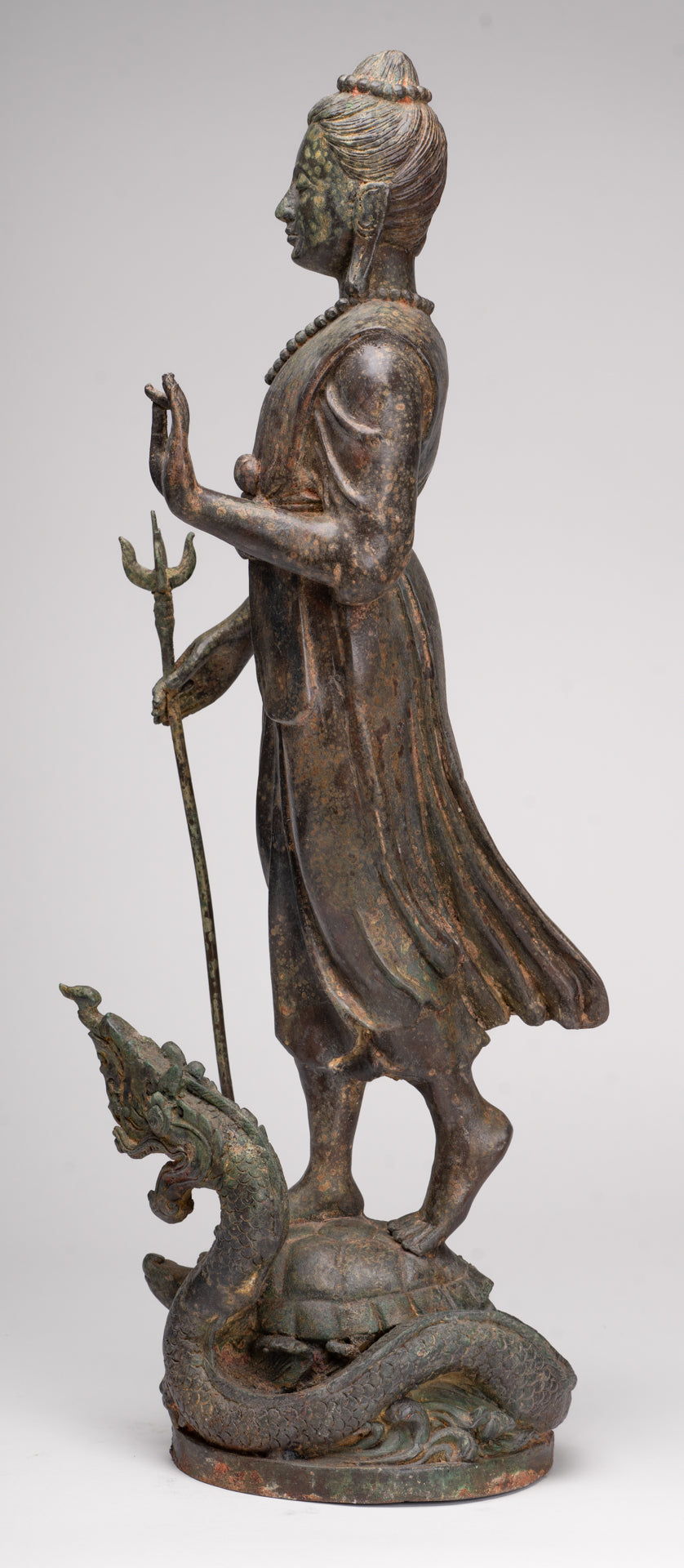
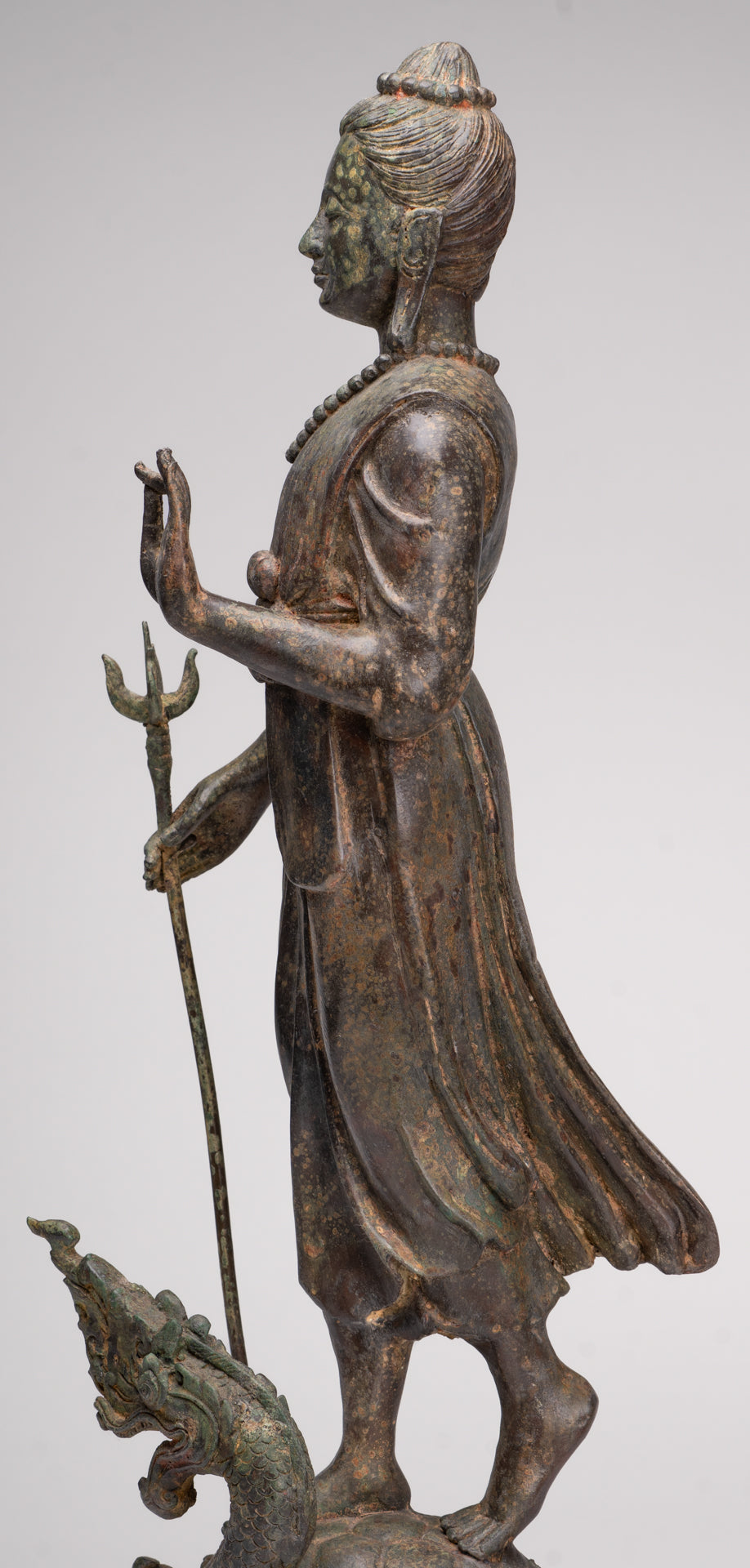
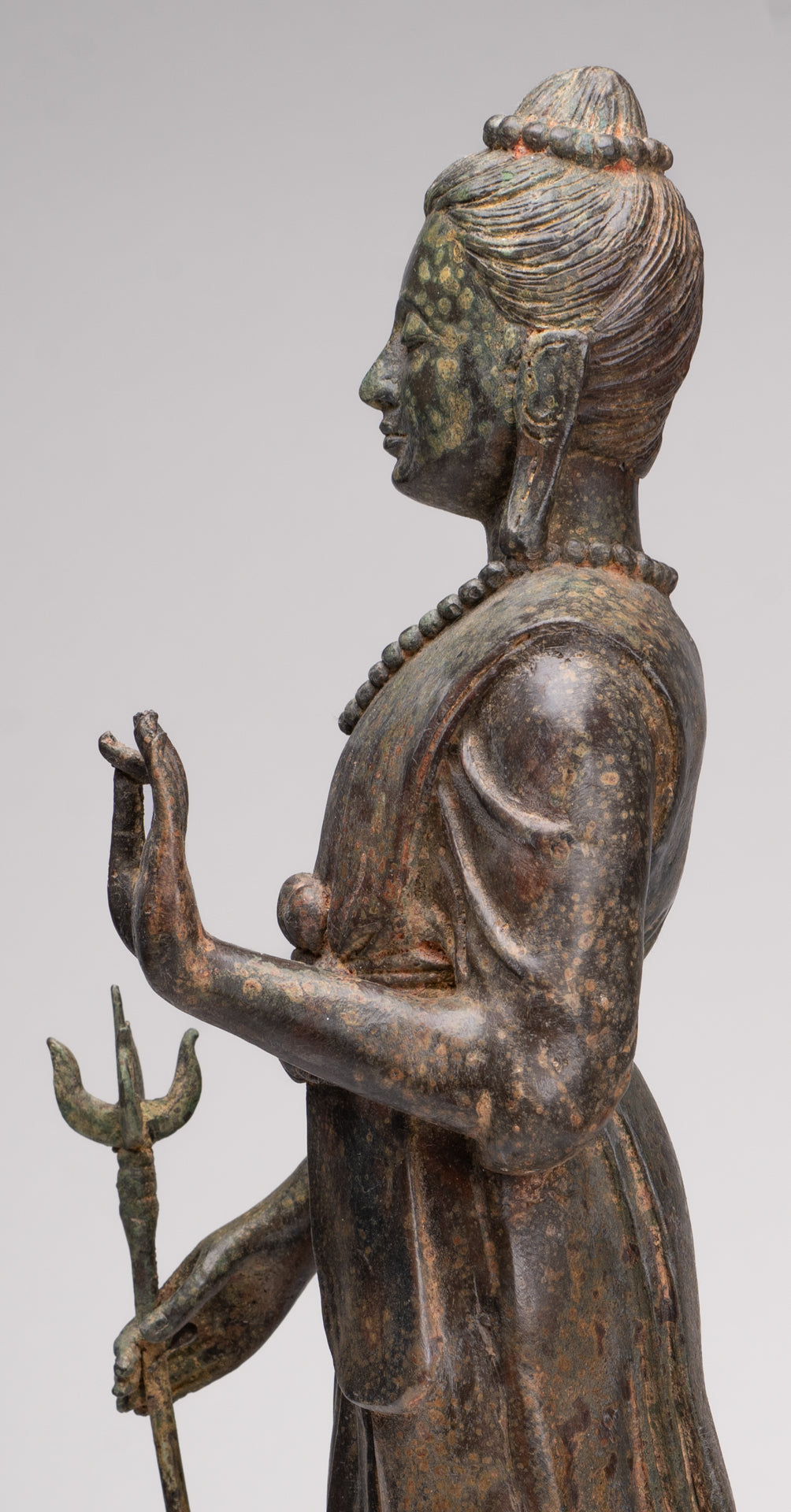
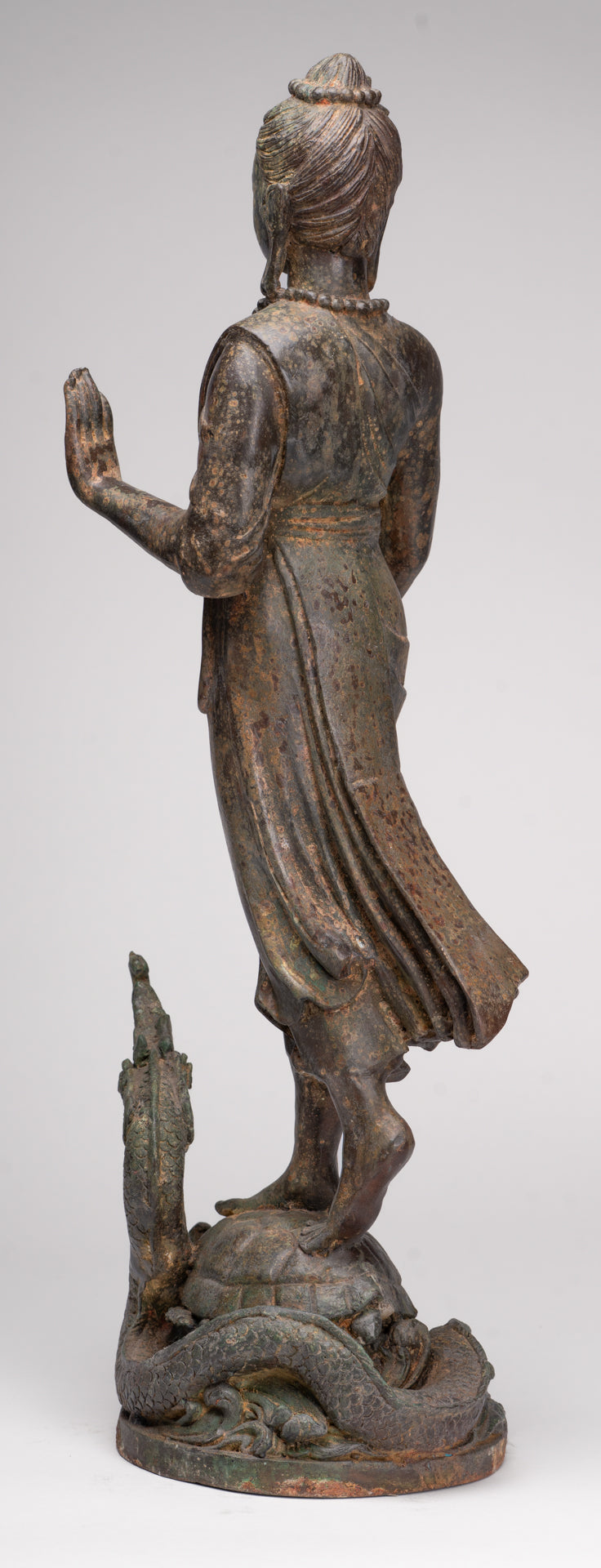
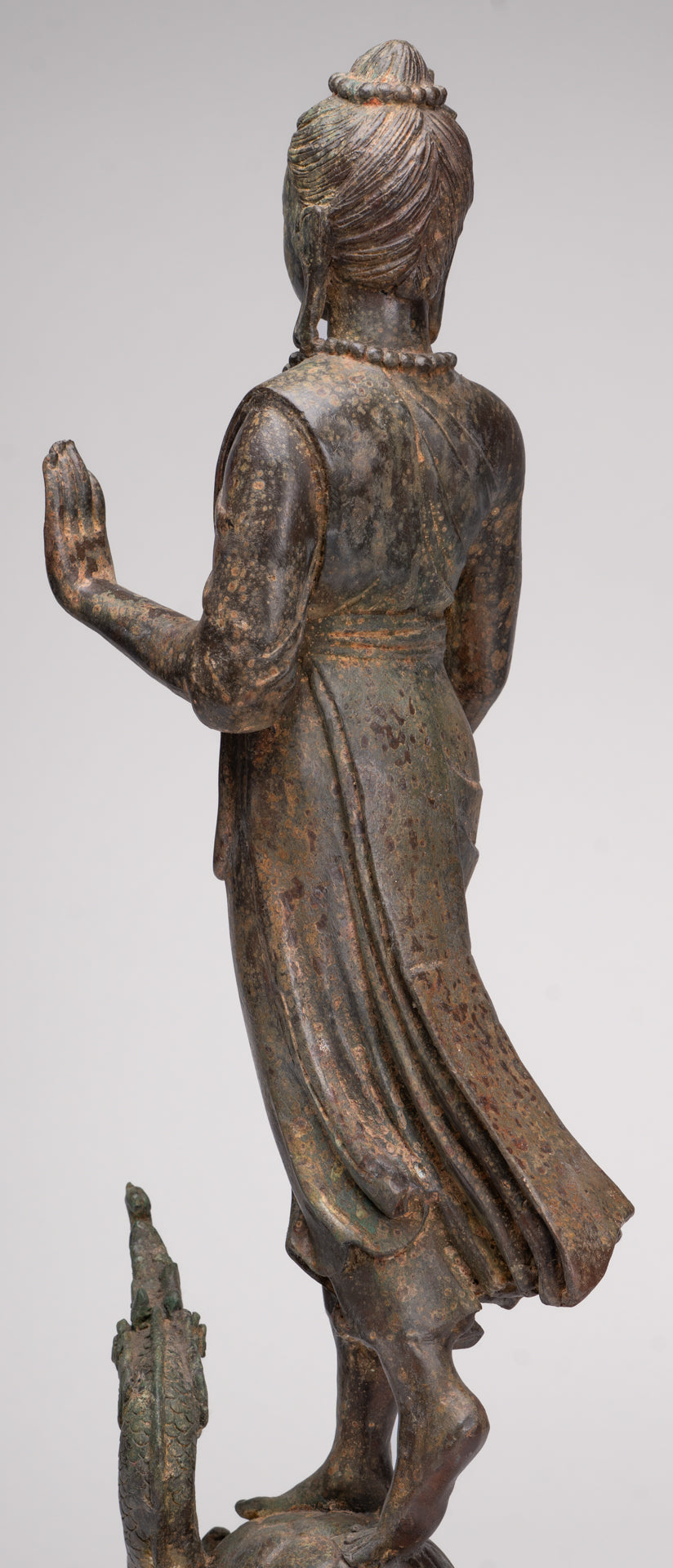
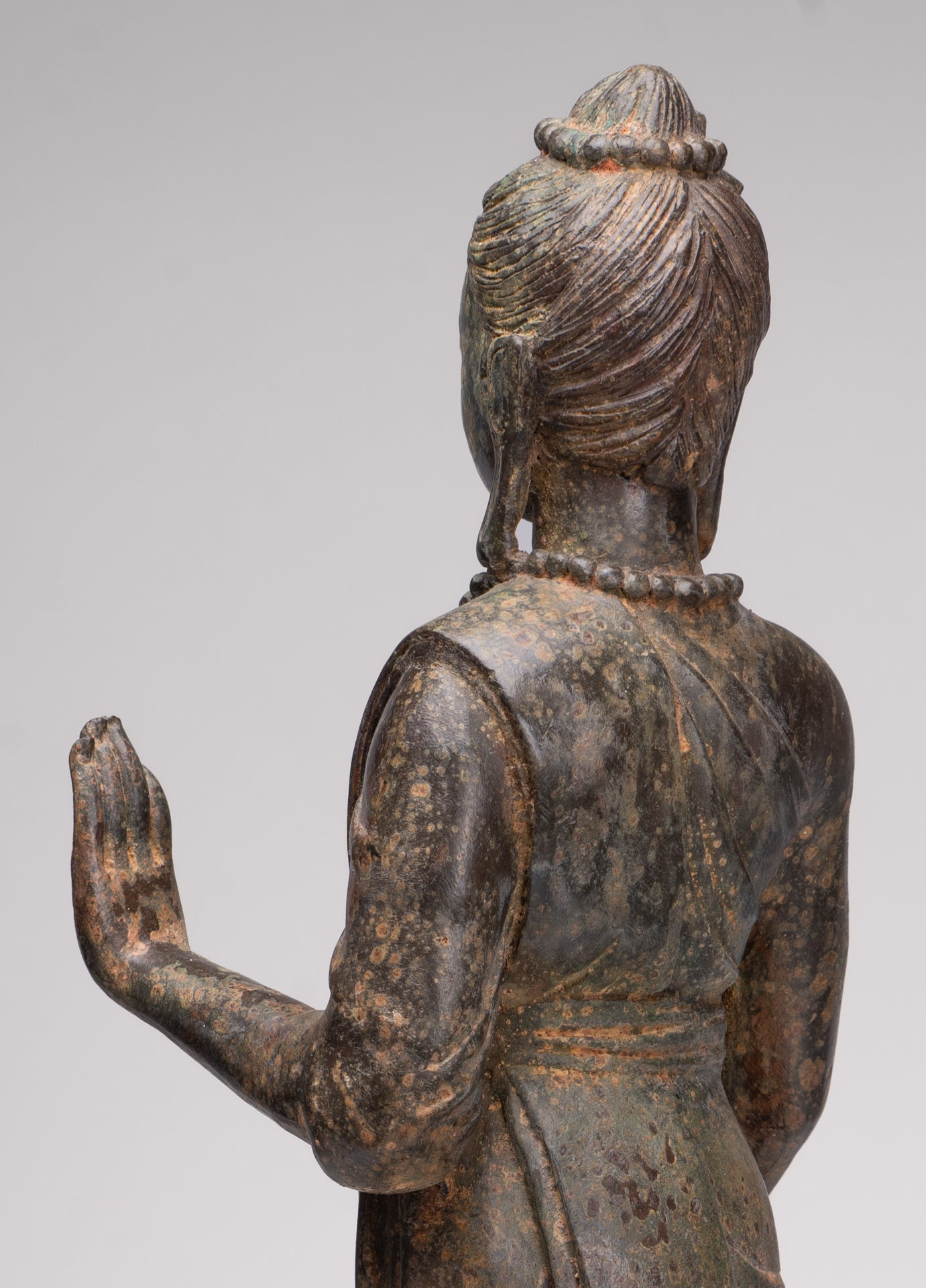
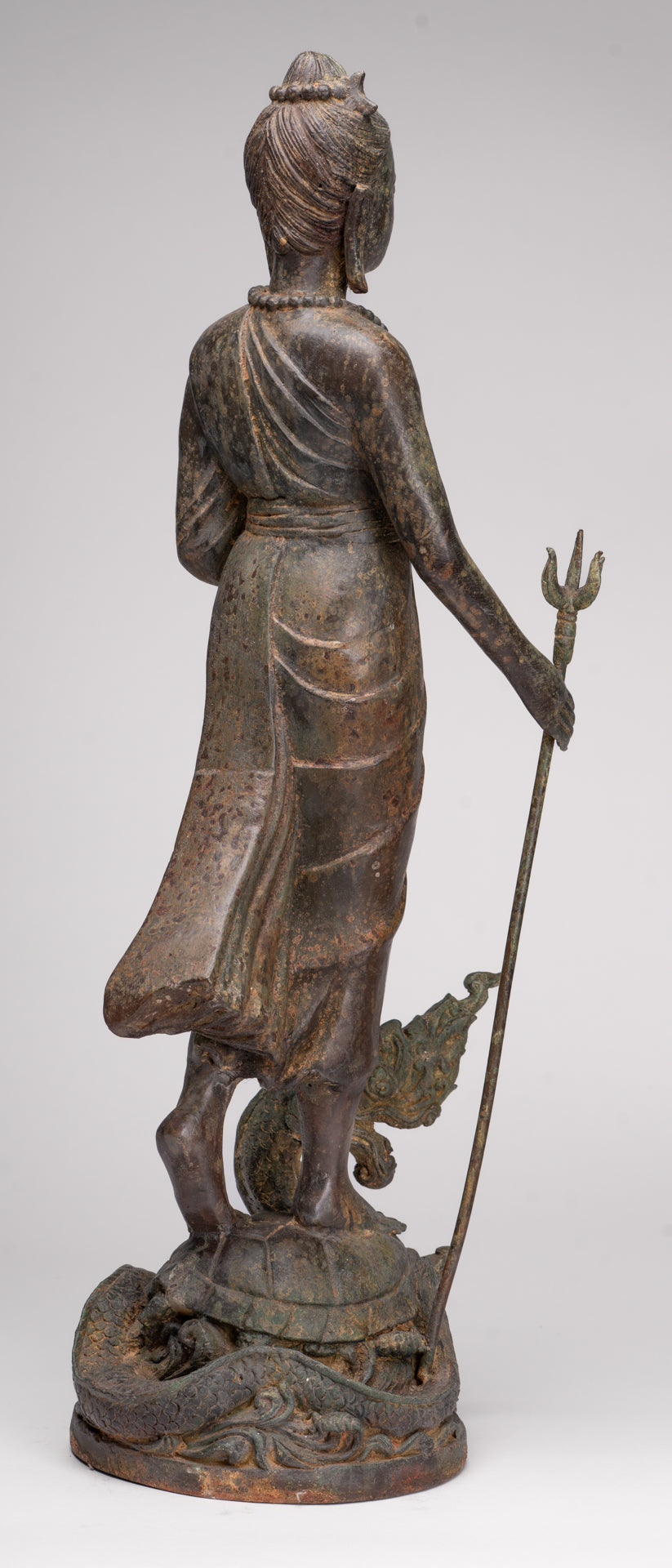
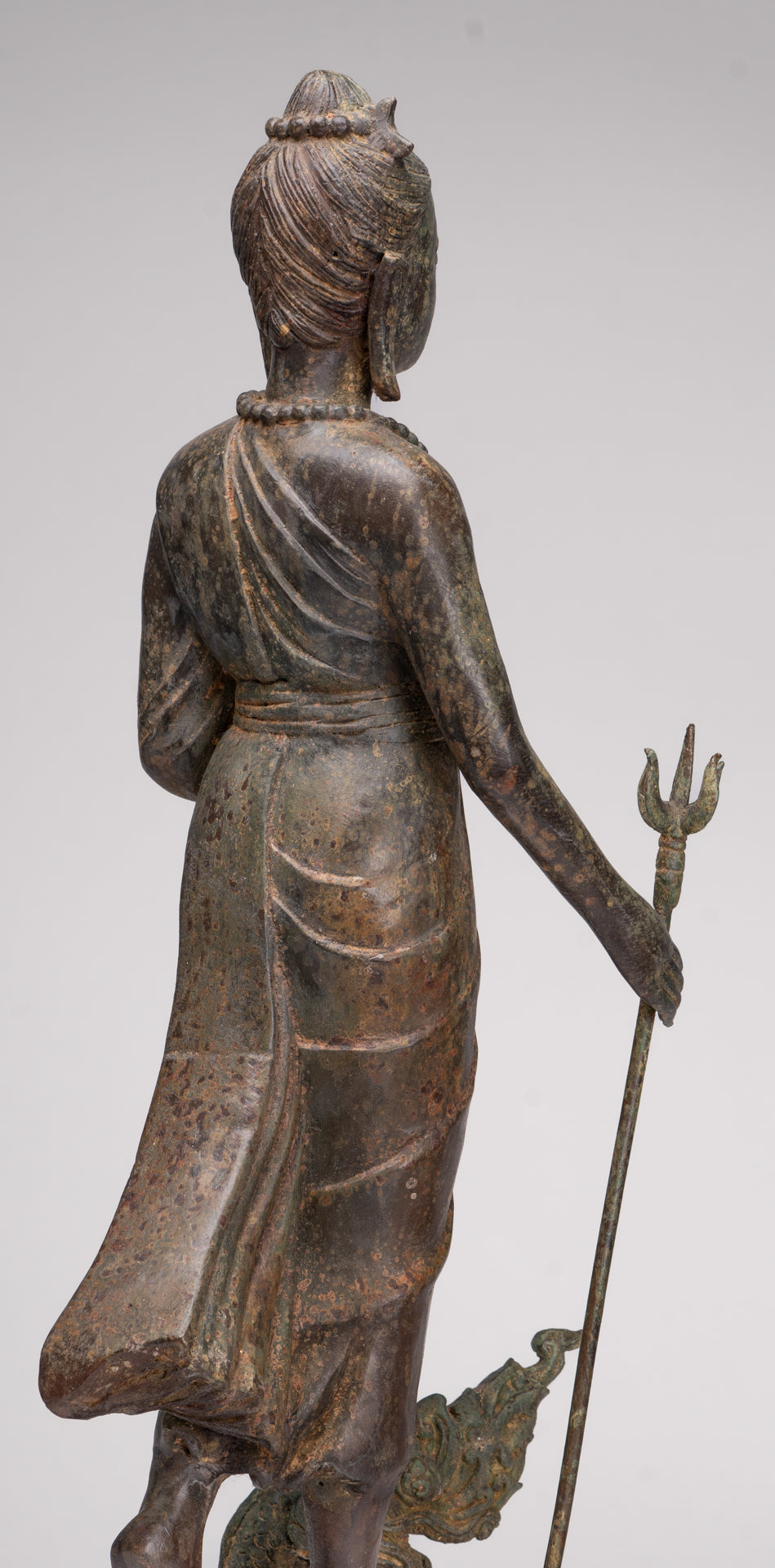
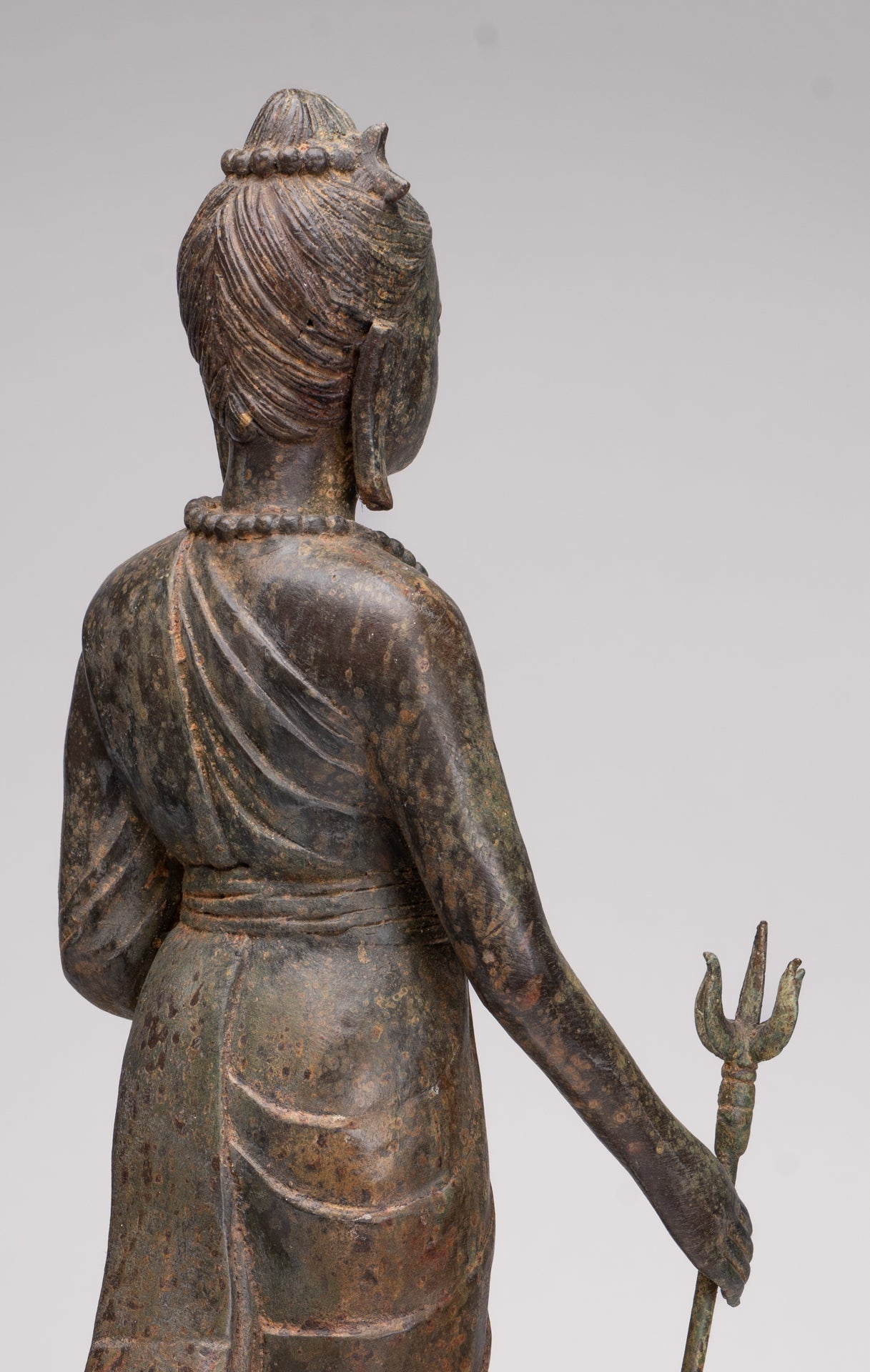
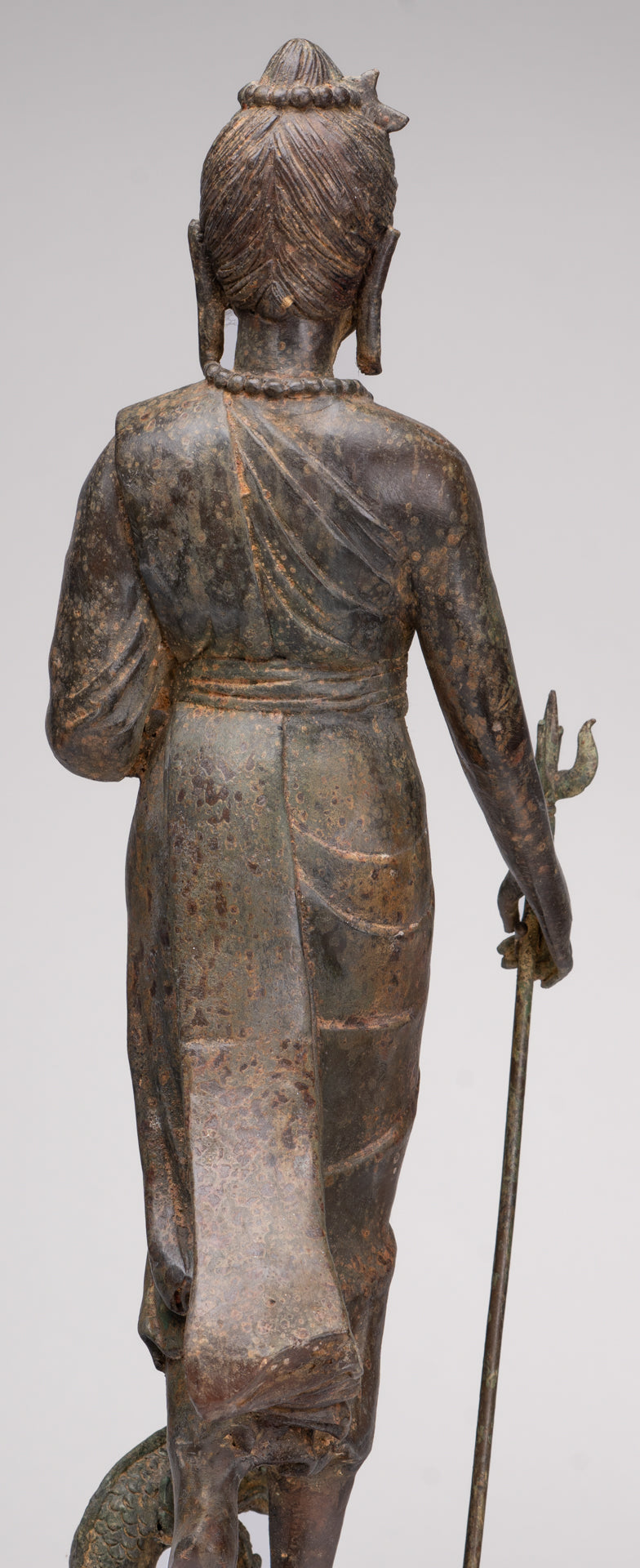
Antique Thai Style Bronze Standing Shiva with Turtle and Naga - 58cm/23"
Measures (Height) 58cm/23" (Weight) 8.1kg/18lbs
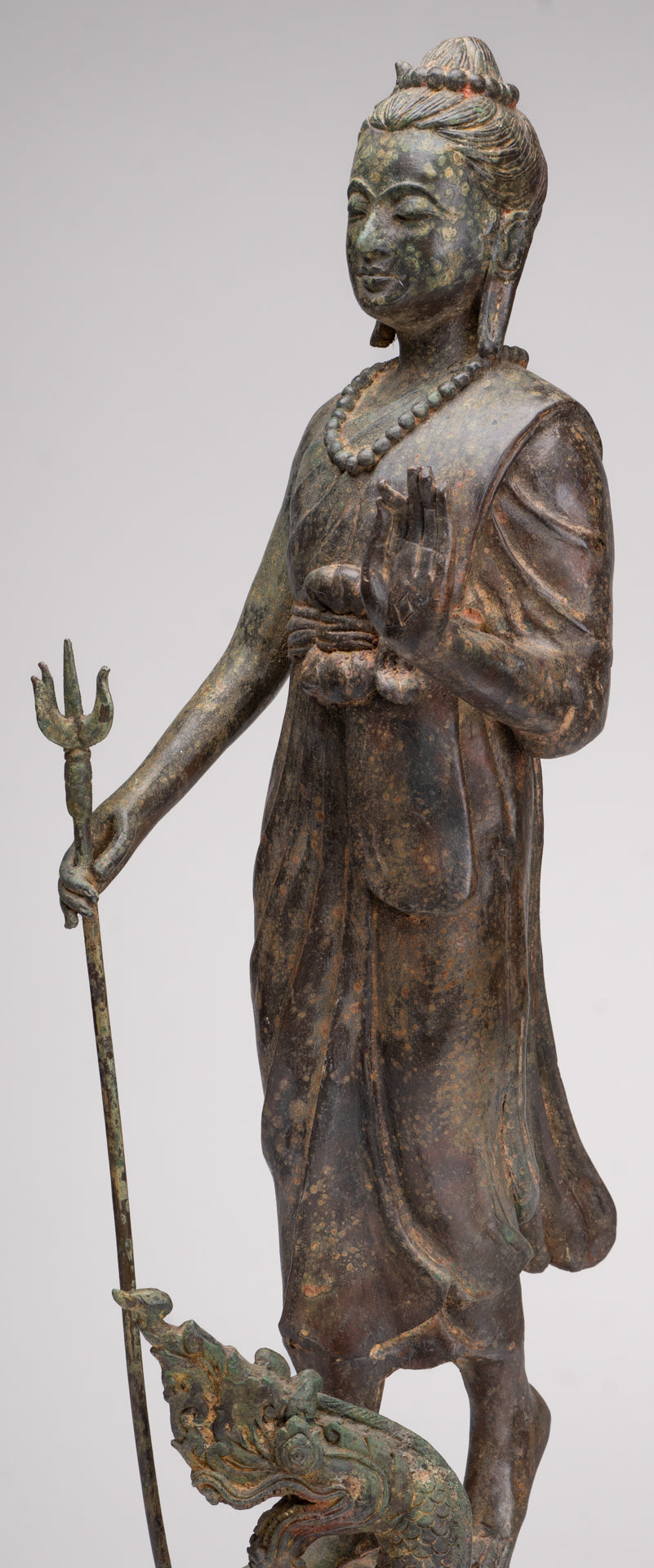
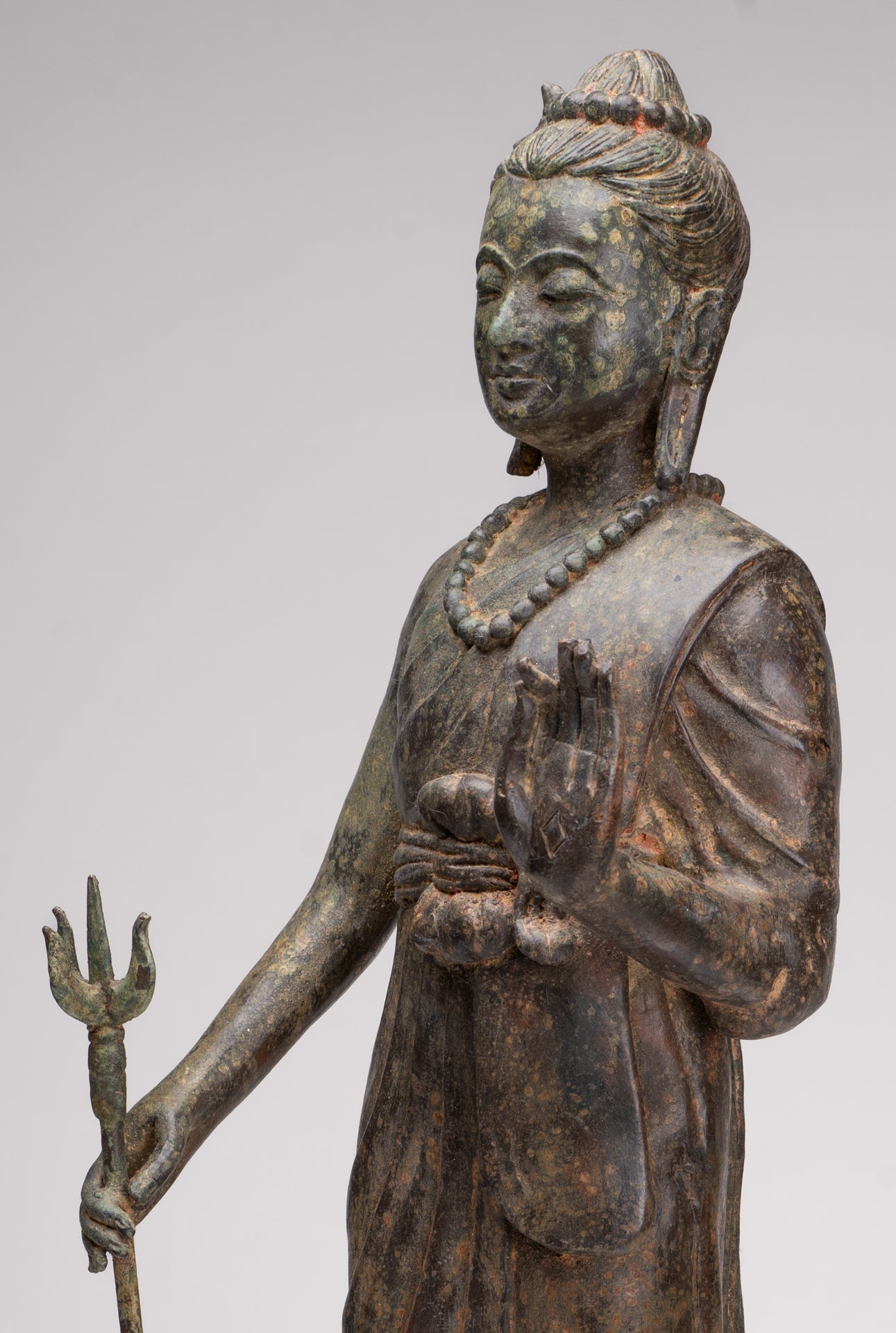
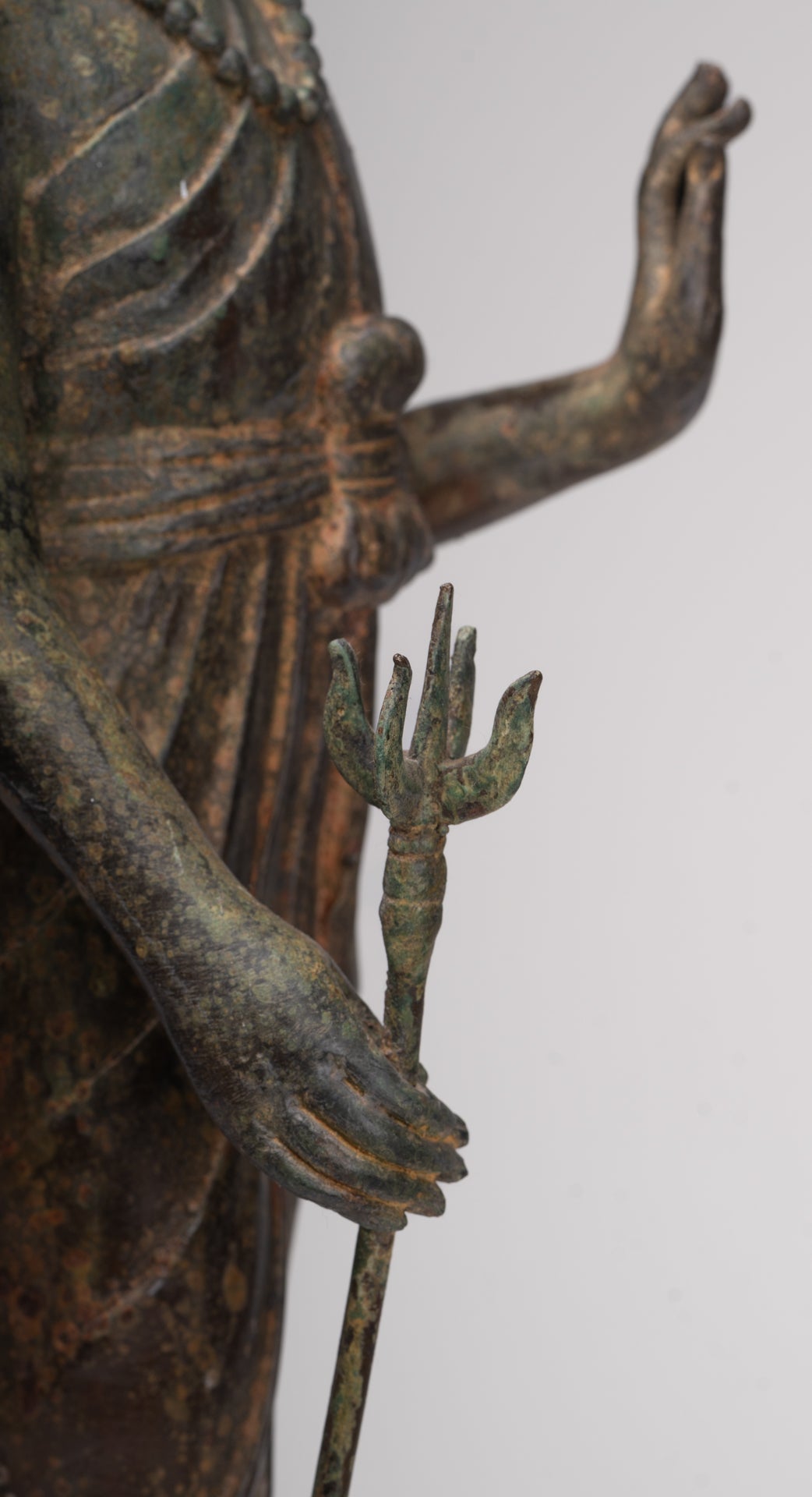
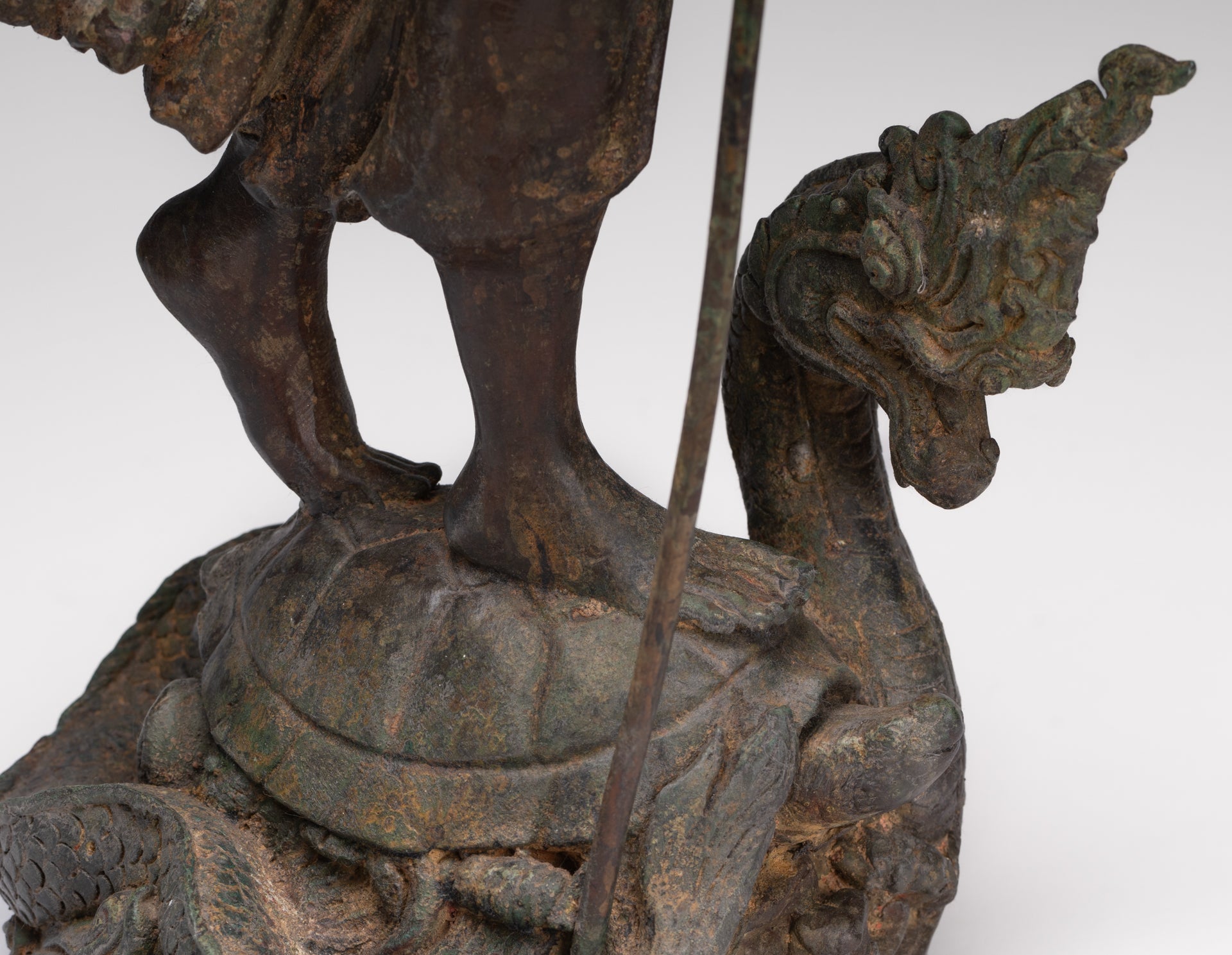
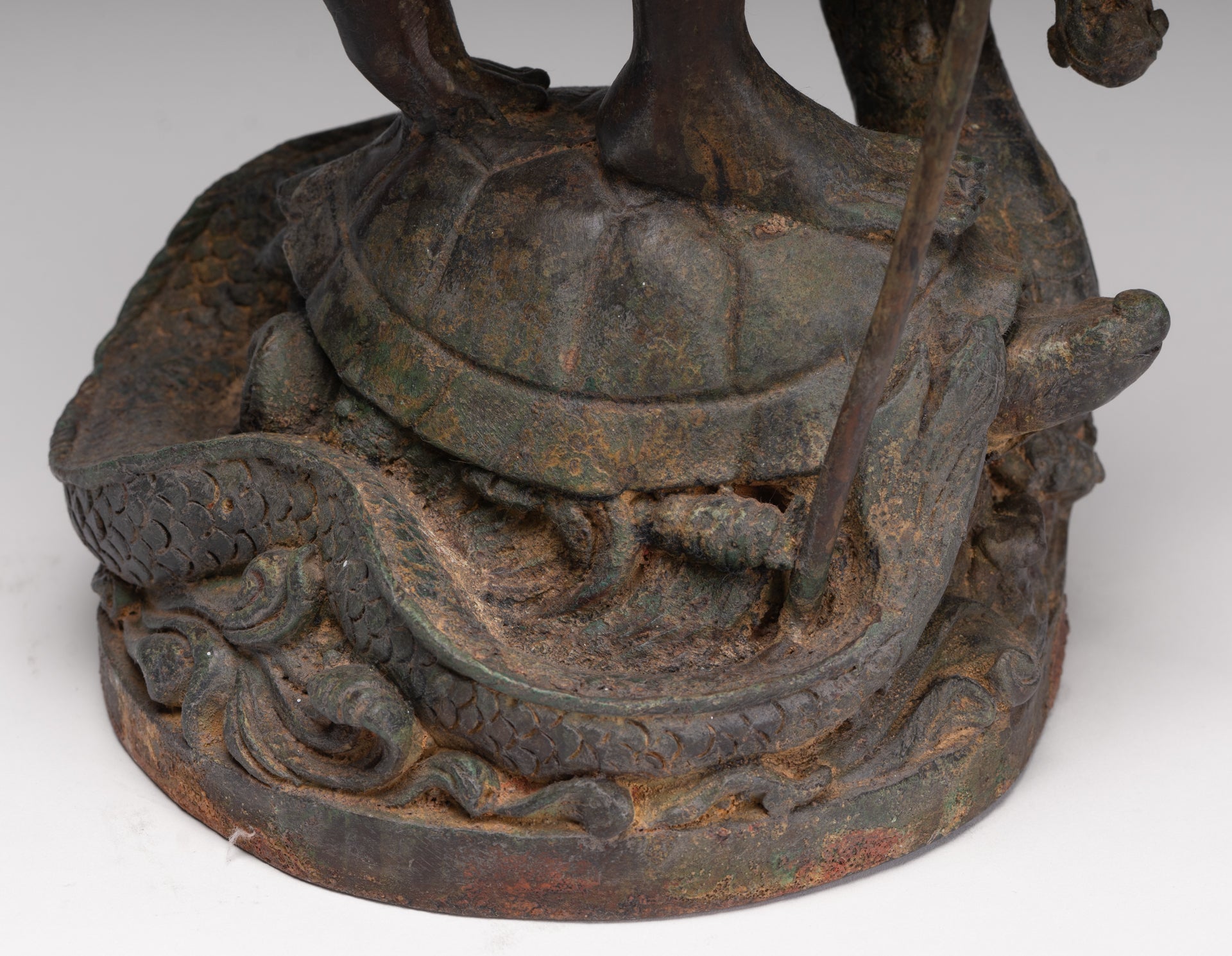
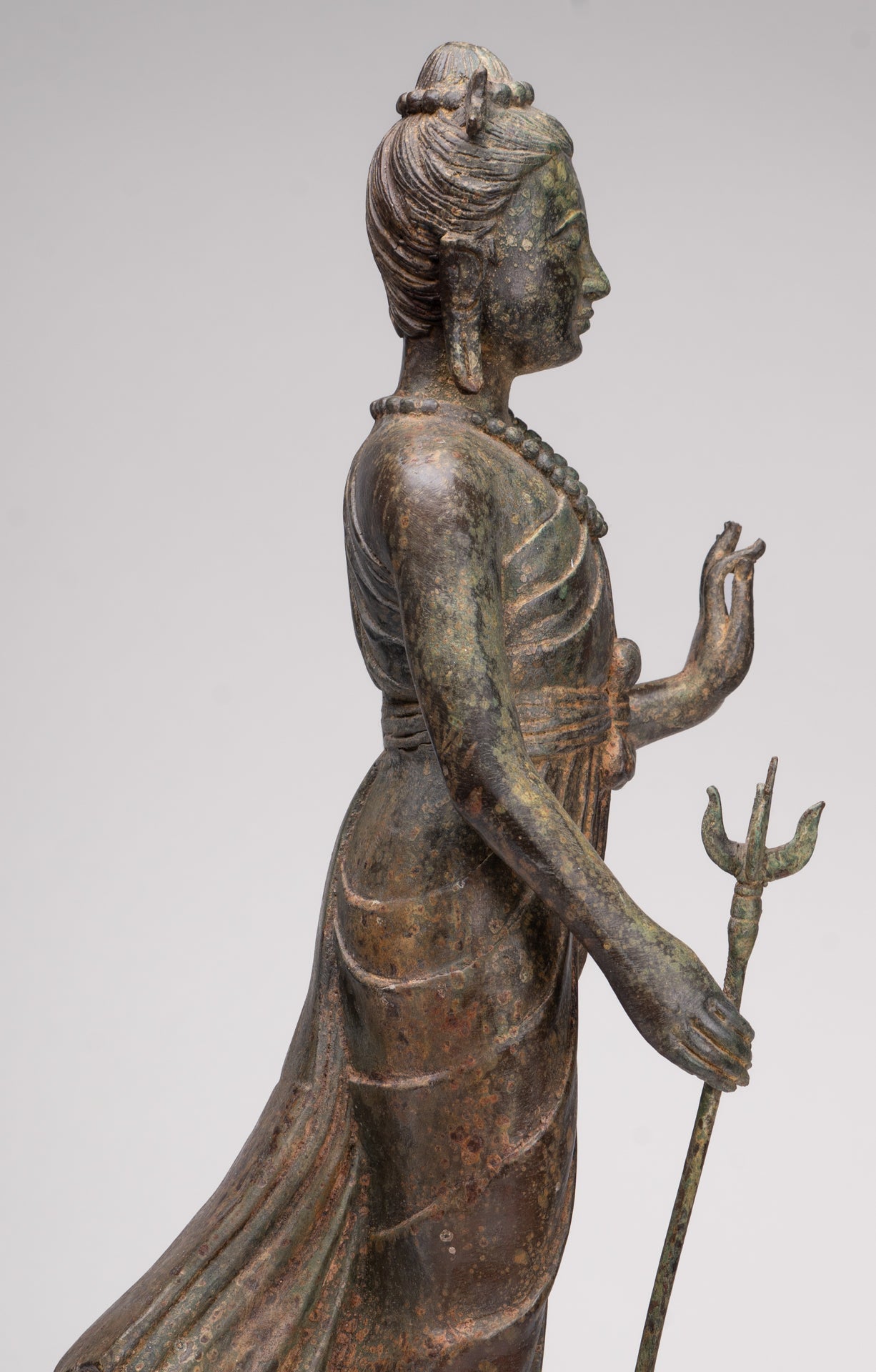
A majestic antique Thai style walking Shiva, with Trident, stood on a Turtle with the protective Naga.
As the destroyer, Shiva is regarded as limitless, transcendent and unchanging. Shiva is also regarded as the patron god of yoga, meditation and arts.
In Hindu art, Lord Shiva is most commonly portrayed as Nataraja, Mahāyogī seated in meditation, or Ardhanarishvara, the androgynous union of Shiva and Shakti.
But more esoteric images show Shiva standing on or above a turtle, encircled by a Naga (serpent), and holding the Trident (Trishula).This composite icon is rich with yogic, cosmological, and psychological symbolism. It speaks to mastery over the senses, transcendence of the material world, and the harmonization of opposing energies within creation and within oneself.
The Turtle at Shiva’s Feet: Foundation, Patience, and Cosmic Support
The turtle (often connected to Kurma, the tortoise avatar of Vishnu) is a powerful symbol in Hindu cosmology:
-
Cosmic Support: In Puranic lore, the cosmic mountain Mandara is placed on the back of Kurma during the churning of the ocean of milk. The turtle therefore represents the stable support of the universe and the hidden ground of existence.
-
Withdrawal of the Senses: The Bhagavad Gita compares the yogi to a turtle who can withdraw its limbs into its shell, symbolizing pratyāhāra—the drawing of the senses inward.
-
Patience and Longevity: The turtle’s slow pace and long life evoke endurance, steadiness, and timelessness.
When Shiva stands on a turtle or has a turtle at his feet, several meanings are suggested:
-
Yogic Mastery Over the Senses
Shiva is the supreme yogi (Mahāyogī). Standing on the turtle shows that he has fully mastered pratyāhāra, resting firmly on the withdrawal and control of the senses. What binds ordinary beings becomes the very foundation of his stillness. -
Transcendence of the Material Base
The turtle, as support of the cosmic mountain, symbolizes prakṛti—the material and energetic foundation of the cosmos. Shiva standing on it shows that he transcends yet stabilizes the world: he is beyond matter, yet the universe is balanced upon his yogic stillness. -
Inner Stability amidst Change
Like a turtle that carries its home everywhere, Shiva on the turtle reminds devotees that true security lies within, not in external circumstances. The yogi who stands on the turtle has found an inner ground that cannot be shaken.
The Naga (Serpent) Around Shiva: Kundalini, Protection, and Primordial Energy
The Naga, or sacred serpent, is a multi‑layered symbol in Indian traditions:
-
Kundalini Shakti: The coiled serpent at the base of the spine symbolizes kundalini, the latent spiritual energy that rises through the chakras during deep yogic practice.
-
Primordial Waters and Fertility: Nagas are linked with rivers, rain, and underground waters, representing both fertility and hidden power.
-
Protection and Guardianship: Serpents often act as guardians of thresholds, treasures, and sacred spaces.
In an image where Shiva is surrounded by or accompanied by a Naga, we can read several layers:
-
Awakened Kundalini and Perfect Channeling of Power
As Lord of Yoga, Shiva is the ideal of the fully awakened and perfectly controlled kundalini. The serpent near or encircling him shows that this raw, primal energy has been sublimated into wisdom, compassion, and steady awareness. -
Guardian of the Inner Temple
The Naga can also be seen as the guardian of Shiva’s divine presence, warning that approaching higher states of consciousness requires purity, discipline, and respect. The serpent keeps away ignorance and negativity. -
Union of Fear and Fearlessness
While serpents can inspire fear, in Shiva’s presence the Naga becomes docile and protective. This teaches that what we fear—our own energy, emotions, and desires—can, when approached with awareness, become a source of strength and protection.
The Trident (Trishula) in Shiva’s Hand: Cutting Through the Threefold Illusion
The Trident, or Trishula, is one of Shiva’s most important attributes:
-
Its three prongs represent the three gunas (sattva, rajas, tamas), the three aspects of time(past, present, future), or the three fundamental misidentifications (body, mind, ego).
-
It is a weapon of discernment, used to cut through ignorance, bondage, and negative forces.
In the context of Shiva on the turtle with the Naga:
-
Mastery of the Three Worlds
The Trident shows that Shiva holds power over the heavenly, earthly, and nether realms. The turtle (cosmic base) and Naga (subterranean waters/energies) are stabilized and uplifted by the consciousness represented by the Trishula. -
Penetrating the Layers of the Psyche
On a psychological level, the three prongs can represent body, mind, and subtle energy. Shiva holding the Trident while standing on the turtle and among serpents indicates the integration and purification of all layers of being. -
Transforming Instinct into Insight
Serpents and the lower waters represent instinct, desire, and unconscious drives. The Trident shows that the yogi does not merely repress these forces, but transforms and directs them toward higher realization.
A Vision of Transcendent Yogic Power
The icon of Shiva standing on a turtle, surrounded by a Naga, and holding the Trident is far more than decorative mythology. It is a coded diagram of yogic realization:
-
Turtle – withdrawal of the senses, unwavering stability, the steady base of practice.
-
Naga – awakened life-force, protection, the mystery of the subconscious made conscious.
-
Trident – discriminating wisdom cutting through illusion and harmonizing the threefold world.
-
Shiva himself – pure, witnessing consciousness, the yogi who has mastered and integrated every level of existence.
To contemplate this image is to be reminded that true spiritual power is quiet, balanced, and deeply rooted—able to stand calmly even atop the shifting foundations of the world.
Summary
-
The image of Shiva on a turtle with Naga and Trident encodes a rich set of meanings about yogic mastery, inner stability, and the union of opposites.
-
The turtle symbolizes cosmic support, patience, and control of the senses, while the Nagarepresents kundalini energy, protection, and primal power.
-
The Trident signifies discriminating wisdom that cuts through illusion and harmonizes the three worlds and three aspects of existence.
-
Altogether, this form of Shiva expresses a state of consciousness that stabilizes the cosmos, transforms raw energy into insight, and stands serene above the ocean of samsara.
SATISFACTION GUARANTEE - We have been offering SE Asian Art for many years and are proud of the reputation we have developed for fair and honest listings. However, if for any reason, whatsoever, you are unhappy with your purchase please just let us know and we will provide a full refund. We want you to be 100% happy with your purchase.
-
-
The majority of orders will be shipped with DHL. This is a secure, express and fully tracked service.
Items less than 2Kg we typically ship using Royal Mail.
Once we receive your order we try to ship all orders the same or next working day.
Large and/or fragile pieces requiring palletising, specialist crating and/or extra packaging may take a little longer. Palletised shipments will be delivered curbside.
All orders over 35 GBP will be shipped free of charge.

-
We genuinely hope that all purchases delight.
However, if they do not, regardless of reason, we will refund all orders upon receipt of the unwanted item. Just notify us within 14 days of receiving your order that you wish to make a return and send the piece back to us with 30 days of delivery.


