



The Meaning of Ganesha in Indonesian Art: Java, Bali & Hindu-Buddhist Tradition
The Meaning of Ganesha in Indonesian Art: Java, Bali & Hindu-Buddhist Tradition
You might be standing in front of a Ganesha carving right now, trying to work out why it feels different from the Indian images you've seen in books. The answer often sits in the details, the curve of the trunk, the weight of the crown, the way the figure occupies space, and the setting around it. In Indonesian art, those details tell a story of local adaptation, not simple repetition.
The Meaning of Ganesha in Indonesian Art: Java, Bali & Hindu-Buddhist Tradition becomes much clearer once you stop reading the deity as a fixed icon and start reading him as a regional form shaped by temples, trade, ritual use, and living devotion. That shift matters for collectors, students, and anyone looking at a statue in a home, museum, or gallery. It changes the question from “What is this?” to “What kind of relationship to place and practice does this figure express?”
Table of Contents
- The Living Presence of Ganesha in Indonesia
- Decoding Javanese Iconography and Style
- Balinese Traditions and Liminal Spaces
- The Syncretic Evolution of Hindu-Buddhist Art
- Practical Guidance for Display and Placement
- Preserving Cultural Heritage Through Collection
The Living Presence of Ganesha in Indonesia
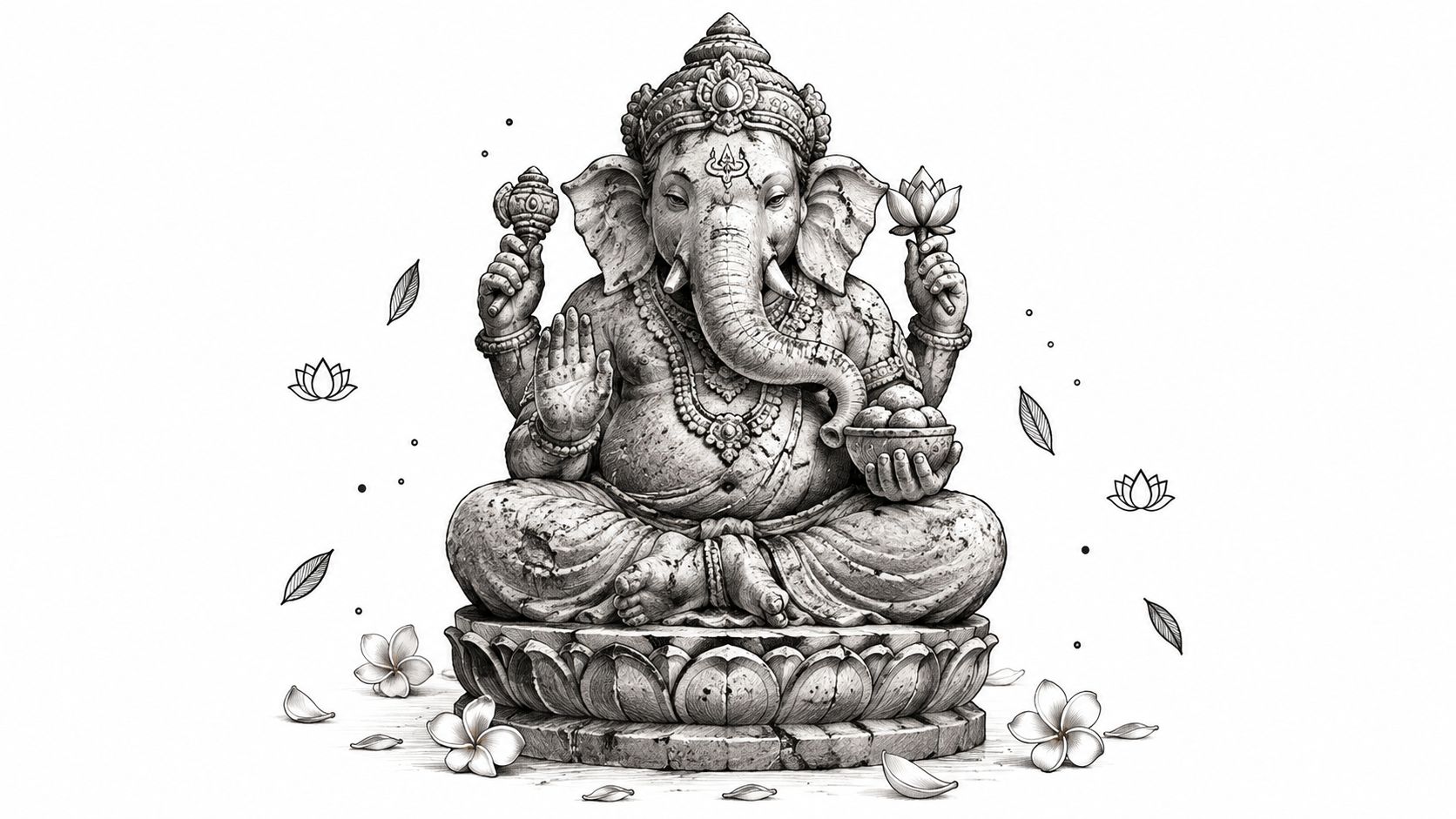
A Ganesha statue in Indonesia rarely feels like a neutral object. Stone, ash, incense, flowers, and the surrounding architecture frame him as someone being addressed, not just observed. That setting is part of the meaning, because in Indonesian settings Ganesha often sits inside a wider sacred conversation between temple, household, and natural environment.
A figure that crosses boundaries
The British Museum's exhibition materials place a Java Ganesha dated to about AD 1000 to 1200 within the wider Hindu-Buddhist movement across Southeast Asia British Museum exhibition guide. That dating matters because it shows the figure moving through different communities while remaining instantly recognizable.
For a visitor, the visual cue is immediate. Javanese artists gave the deity regional features such as skulls, feet held together, and an empty bowl instead of sweets. Those choices make the statue feel rooted in Java rather than generic or imported.
Practical rule: when a Ganesha image looks stern, compact, or unusually local in detail, those differences are the point. Read them as evidence of a regional workshop tradition.
The same London exhibition placed Ganesha early in the visitor route and set him alongside other devotional traditions, which helps explain why the figure still feels active in museums as well as temples British Museum exhibition page. For a fuller account of how Ganesha took root across the archipelago, see The Rise of Ganesha in Indonesia.
Collectors often miss this. They look for an abstract “Hindu god” and overlook the visual evidence of regional devotion. A statue becomes easier to read once you treat it as an object shaped by use, placement, and local imagination, the same way a museum label becomes clearer when the object itself is studied closely.
Decoding Javanese Iconography and Style
A Javanese Ganesha rewards close looking. The figure is more than a deity image, it shows how Java reshaped a pan-Indian form into a local visual language. The British Museum dates the Java sculpture to about AD 1000 to 1200, which gives that style a clear historical frame British Museum exhibition guide.
The first clue is posture. UK coverage of the exhibition described the Javanese example as stern and highly distinctive beside an Indian Ganesha Apollo Magazine preview. That difference is not just about mood. It is visible in the compressed body, the controlled pose, and the hard-edged modelling that gives the figure a disciplined finish.
A useful way to read the sculpture is to separate the features into three parts:
- Head and face, often more severe than Indian forms, with a look that resists prettiness.
- Feet and lower body, which may be held together in a way that gives the statue a formal, contained presence.
- Hand-held attributes, where the broken tusk, bowl, axe, and rosary appear as standard iconographic markers in Indonesian Hindu art The Conversation.
If the face is compact and the pose feels controlled, you may be looking at a sculpture in the East Javanese or Majapahit visual vocabulary. For a fuller breakdown of that regional style, see Indonesian Hindu-Buddhist Sculpture: Majapahit, Singhasari and East Java Style.
These details matter because they separate a Javanese work from a generic “Southeast Asian” object. A collector who studies the trunk, hands, feet, and bowl can read the sculpture more accurately than someone who only identifies the deity. The object becomes easier to place once the visible choices are treated as evidence of workshop habit, local taste, and regional memory.
A Javanese Ganesha is valuable because the carving preserves a specific historical way of seeing the god.
Balinese Traditions and Liminal Spaces
Balinese Ganesha looks related to the Javanese forms, but the setting changes everything. In Bali, the figure remains part of a living ritual context, and that shift shows up first in placement, then in pose, and then in the objects around it.
Placement tells the story
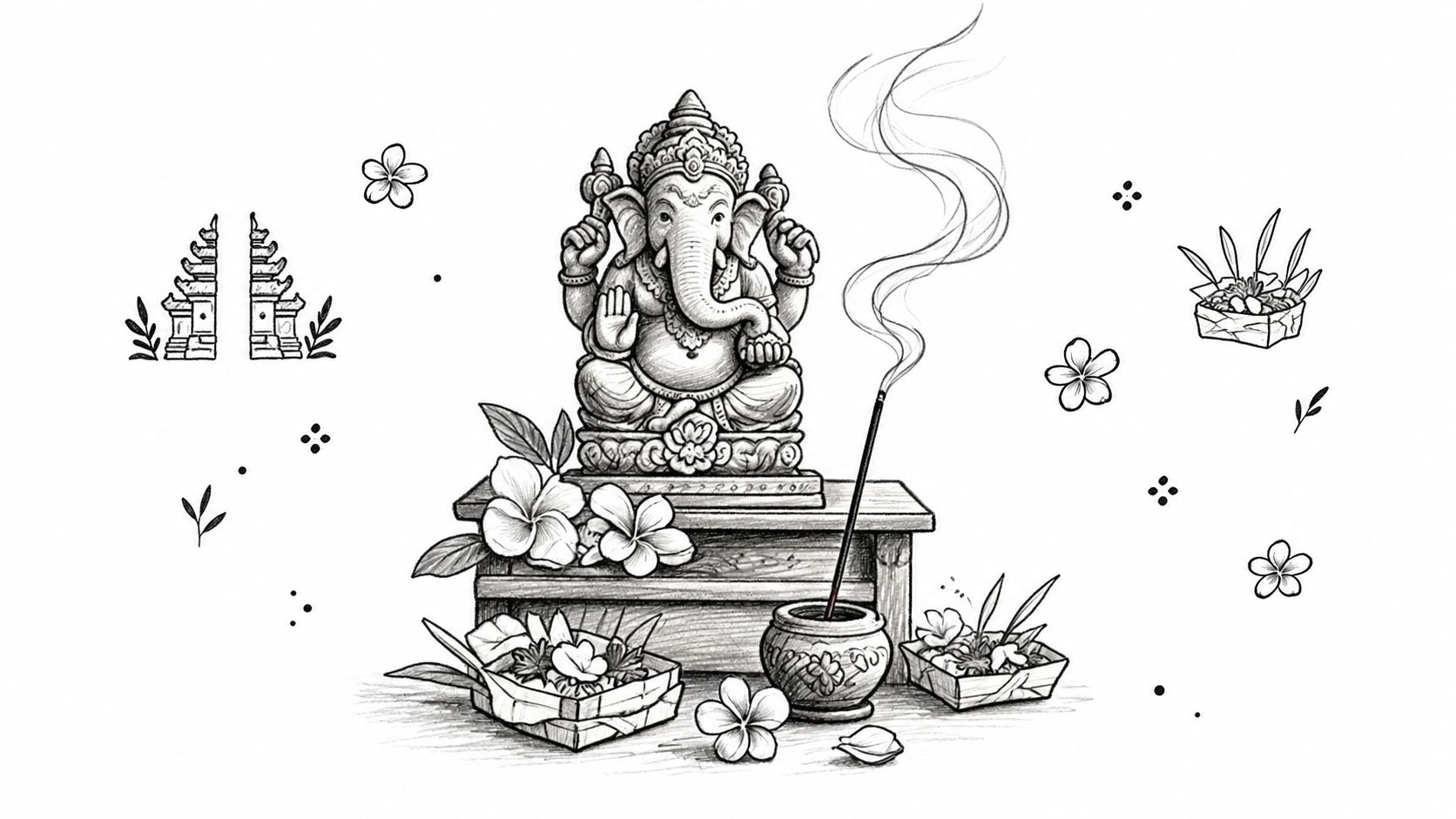
An Indonesian symposium summary notes that Ganesha images are among the most frequently found in Bali and are commonly set in vulnerable or liminal locations, including mountain slopes, under banyan or large trees, and other spiritually charged sites. That is a different spatial logic from treating the image as a freestanding decorative object. The tree, the slope, and the temple edge all do part of the storytelling.
The same source notes that Ganesha also appears as a symbol of knowledge in educational settings, and that the standard iconography often includes four arms with the broken tusk, bowl, axe, and rosary The Conversation. So in Bali, the god can move between school, shrine, and public art without becoming a different figure.
Side by side with Java
Compared with the Javanese mainland style, Balinese Ganesha tends to feel more embedded in ritual life. The Javanese image, especially in museum display, can read as an art historical milestone. The Balinese image more often reads as a continuing participant in worship, guardian presence, or place marker.
That distinction helps collectors avoid a common mistake. A Balinese statue should not be judged only by antique-looking surface or carved complexity. A figure under a tree or near a temple boundary communicates protection and threshold symbolism alongside its aesthetics.
When you next see a Balinese Ganesha photographed beneath a banyan, read the tree, the threshold, and the offerings as part of the sculpture itself.
The Syncretic Evolution of Hindu-Buddhist Art
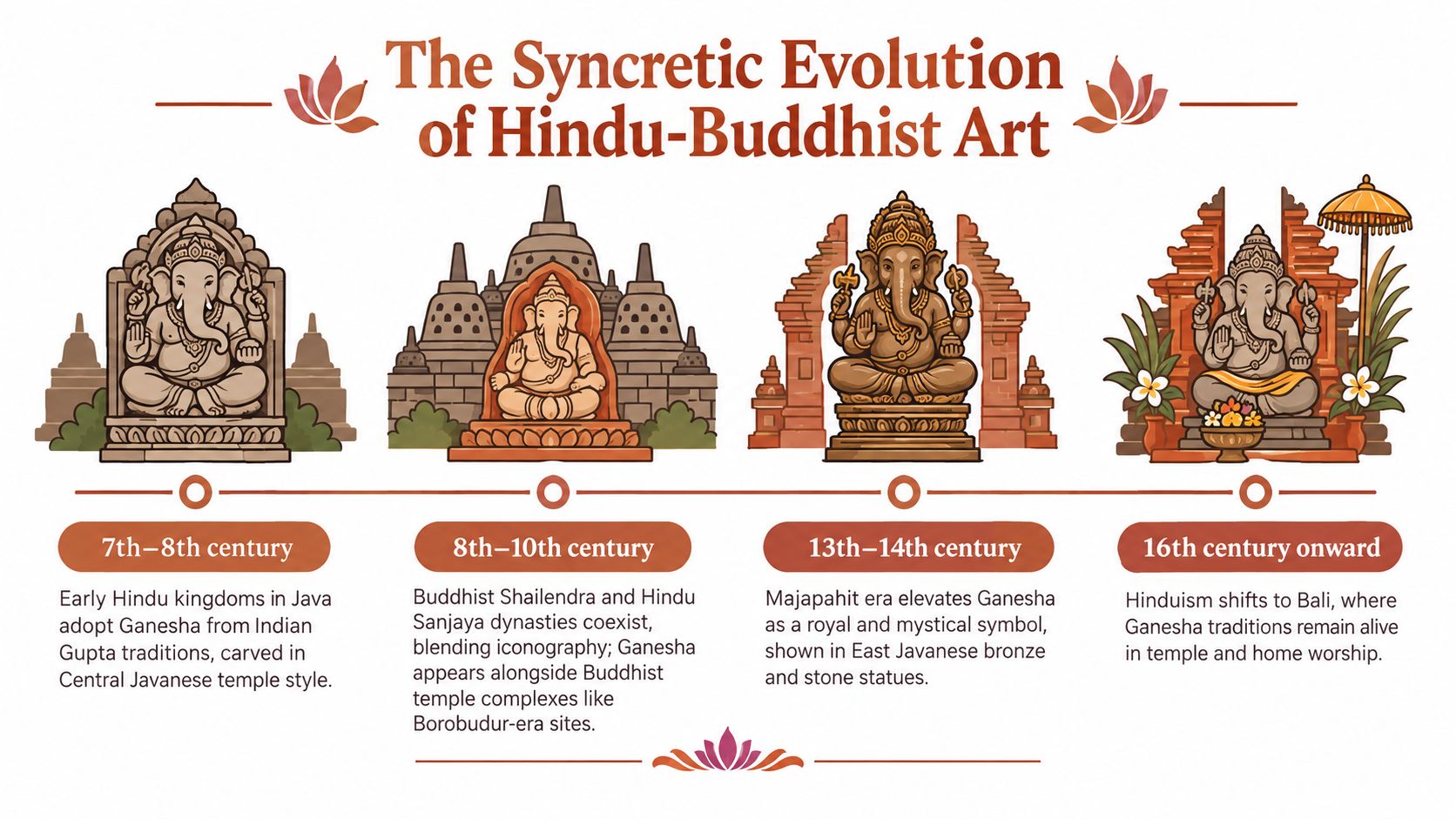
A museum label can only do so much. The key lesson appears when you look closely at the sculpture itself and compare its features with images from elsewhere in the Hindu world. In the British Museum display, the Java Ganesha is set beside an 8th-century Indian Ganesha, and the difference is easy to see in the body, the crown, and the way the figure sits Apollo Magazine preview. That contrast carries the whole argument of this article.
How the image changed without disappearing
The exhibition guide points to the long movement of ideas through trade and political contact British Museum exhibition guide. That background matters, but the object itself shows the more interesting part. Javanese sculptors did not copy an imported template line for line. They adjusted it to local hands, local tastes, and local workshop habits.
The best way to see the shift is in the details. In East Java, named images such as the Bara and Karangkajen figures show how the crown can be tightened into a more regional silhouette, while the mount and body proportions feel more settled and compact than many Indian examples. Those choices are small individually, but together they give the figure a different presence.
| Stage | Visual tendency | What changes |
|---|---|---|
| Early adoption | Indian deity form enters Java | Local carving habits begin to shape the body |
| Regional development | Javanese features become visible | Face, posture, and attributes become more distinctive |
| Wider Southeast Asian exchange | Sacred imagery circulates across islands | The figure gains new settings and meanings |
| Balinese continuity | The tradition stays alive in ritual use | The image remains devotional, not only historical |
Why this matters for interpretation
The British Museum's exhibition brought the Java sculpture into a wider conversation with a large group of works, which helps viewers read Ganesha as part of a living artistic network rather than a single isolated piece British Museum exhibition guide. The point is scale of context, not scale for its own sake.
For Indonesian art history, the key insight is plain. By the 11th and 12th centuries, Javanese sculpture was already speaking in its own accent, even while remaining in conversation with Indian models. Bali later kept that conversation alive in ritual form. The result is a tradition that changes from place to place, yet still remains recognisably Ganesha.
Practical Guidance for Display and Placement
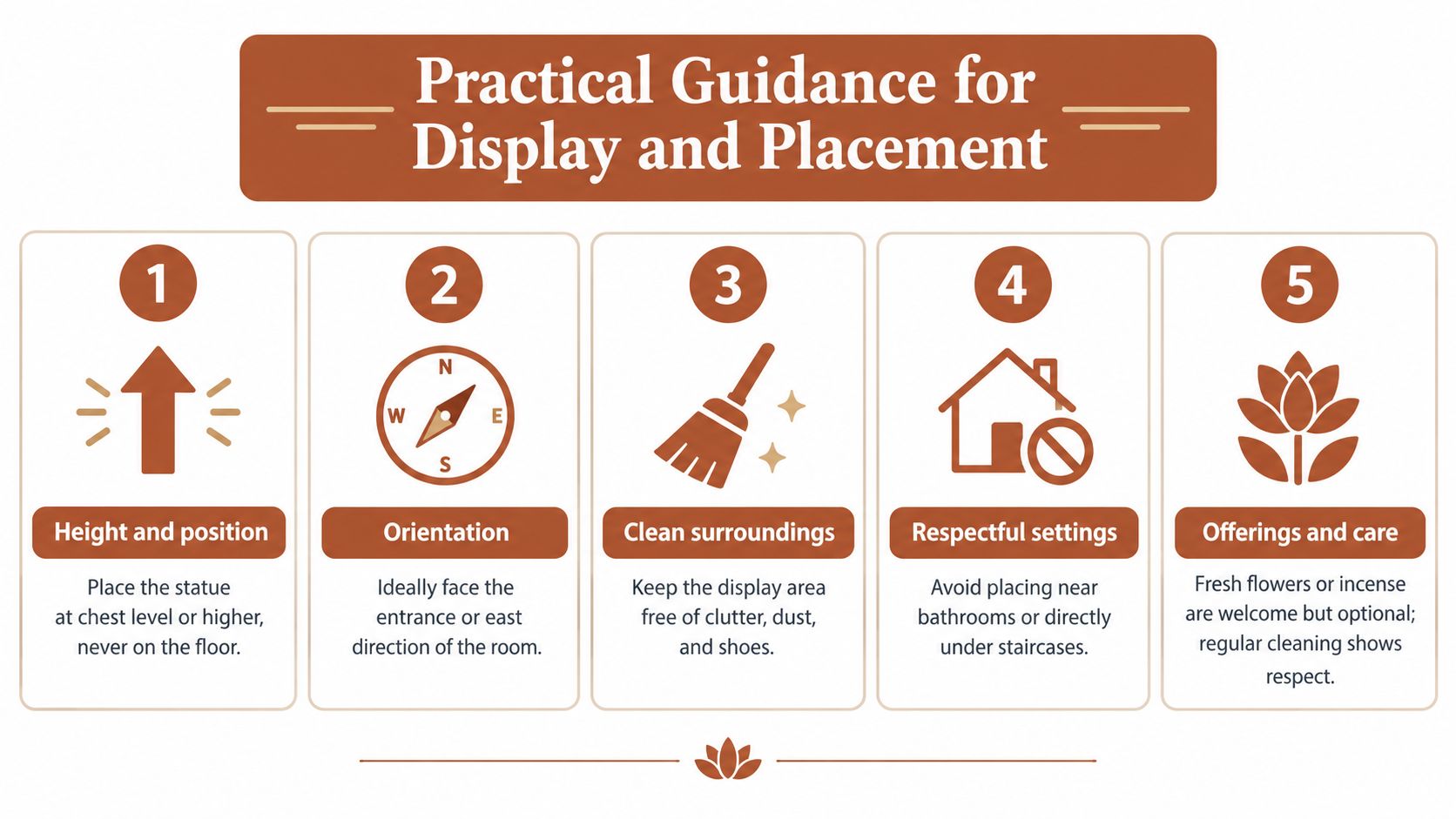
If you're considering where to place a Ganesha statue, start with respect rather than decoration. Traditional guidance often focuses on the figure's elevation, surrounding cleanliness, and the direction the image faces. Those principles matter because they change how the statue is encountered every day.
Placement choices that honour the figure
A good starting point is the home altar or a quiet room where the statue won't be treated as clutter. The practical guide from HD Asian Art's home-placement article is a useful companion here, especially if you're deciding whether a piece belongs in a meditation space or a more public interior finding the perfect place for your Ganesha statue. The point isn't superstition, it's coherence between object and setting.
Use these checks before you place the statue:
- Height and visibility, keep the figure at chest level or higher so it reads as honoured rather than stored.
- Orientation, face the entrance or, where appropriate, an eastward direction to create a clear visual focus.
- Clean surroundings, leave space around the base so dust, shoes, and clutter don't compete with the image.
- Respectful proximity, avoid awkward placements near bathrooms or beneath staircases.
- Offerings and care, fresh flowers or incense can be offered, but regular cleaning already communicates attention.
Material and context
Material also affects how the statue sits in a room. Stone feels anchored and architectural. Bronze or metal can read as more compact and devotional. Either way, the goal is the same: the figure should feel deliberately placed, not merely displayed.
Practical rule: if a Ganesha statue looks like it has been hidden, squeezed, or treated as general décor, the room is already sending the wrong message.
Collectors sometimes ask whether a piece should face a wall, a door, or a central axis. There isn't one universal rule that fits every tradition, but there is a strong principle of intentionality. A respectfully positioned image always looks settled, not accidental.
Preserving Cultural Heritage Through Collection
A good collection does more than gather objects. It preserves context. With Indonesian Ganesha sculpture, provenance and visual reading matter as much as age or surface condition, because the carving itself records how local artists adapted a pan-Indian deity.
A well-documented Ganesha, with a known findspot or collection history, functions as a record of Java's sculptural language rather than a generic devotional image. The figure may show Javanese restraint in the body, Balinese ritual clarity in the setting, or a blend of both. Verifying a dealer's standing is part of that work, and a business directory listing can help you check specialists and cultural contacts before a purchase.
Before you buy, ask for the findspot or at least the island of origin, the carving material, and any export documentation. Those three details separate a documented piece from a decorative one. They also give you a clear basis for display, care, and future transfer.
A responsible acquisition should be easy to explain in plain terms. If the object's region, material, and history can be stated clearly, the collection helps protect the work's cultural meaning instead of obscuring it.
