



Essential Items for a Zen Meditation Corner
Essential Items for a Zen Meditation Corner
Table of Contents
- What Makes a Zen Meditation Corner Work
- Setting Up a Small Space Meditation Corner
- Choosing the Right Meditation Cushion and Seating
- Meditation Altar Decor: Statues, Mats, and Meaningful Objects
- Meditation Corner Lighting for Calm and Focus
- Scent, Sound, and Natural Materials
- Budget Tiers and Low-Cost DIY Alternatives
- Conclusion
- Frequently Asked Questions
What Makes a Zen Meditation Corner Work
A zen meditation corner is a small, dedicated area at home for quiet sitting, breathing, and reflection. The space itself signals to your mind that it is time to slow down.
At HD Asian Art, we hear from collectors and practitioners who want a corner that feels calm without becoming cluttered.
Below, we break down the essentials for a zen meditation corner and how to fit them into a small apartment or spare room, separating what you truly need from what is nice to have.
Essentials vs. Optional: A Quick Checklist
Start with the short list. Add the rest only when the space feels incomplete.
Essentials
- A meditation cushion or firm seat
- A mat or area rug to define the floor space
- Soft, warm lighting
- One object with personal meaning
Optional
- Incense or essential oils
- A small plant
- A singing bowl or bell
- Crystals, stones, or mala beads
- A low table or altar surface
Setting Up a Small Space Meditation Corner
You can build a small space meditation corner in a closet-sized nook, a bedroom corner, or the end of a hallway. Claim the floor, not the room.
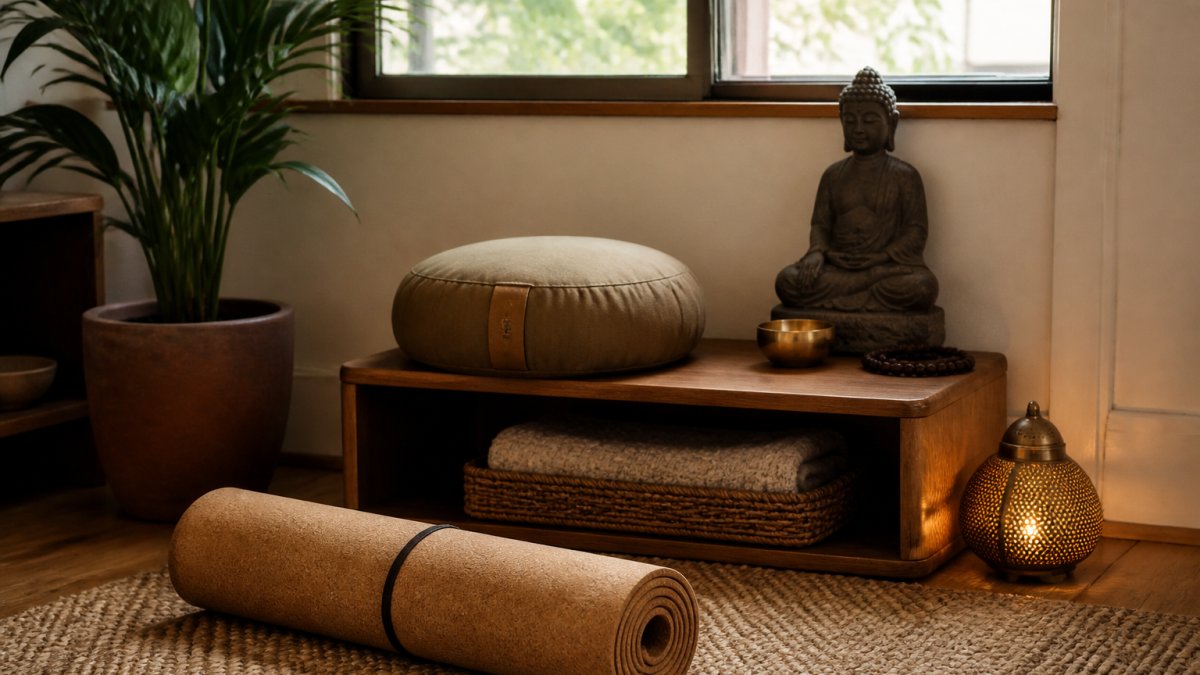
Here is how we would set one up:
- Pick a corner you pass daily but do not walk through.
- Clear everything already stored there.
- Lay down a mat or small rug to mark the boundary.
- Place your cushion at the back, facing into the room.
- Add light to one side, never directly overhead.
- Keep one object within arm's reach.
A corner facing a wall feels more enclosed and easier to settle into; facing a window is fine as long as the light is not in your eyes.
Layouts and Storage for Tight Rooms
Small rooms need storage that disappears. A woven basket beside the cushion holds a blanket, beads, and incense out of sight.
For narrow spaces, try a fold-away layout: roll the mat, stack the cushion on a shelf, and the corner returns to living space in under a minute. This suits studios and shared apartments where the room does double duty.
Choosing the Right Meditation Cushion and Seating
The best meditation cushion lets you sit for twenty minutes without your knees or lower back complaining. Height and firmness matter far more than color or fabric.
A round zafu tilts the hips forward and lets the knees drop toward the floor.
Try this before you buy:
- Sit on a folded blanket to test the height you need.
- Check that your knees rest at or below hip level.
- Make sure the fill does not flatten within a few minutes.
For floor sitting, a zabuton, a flat padded mat placed under the cushion, protects your ankles and shins. It also keeps the cushion from sliding on hard floors.
Adaptable Seating for Accessibility
Not everyone can sit cross-legged on the floor, and that is fine. A sturdy chair with a flat seat and feet on the ground supports a calm, upright posture just as well.
If you use a wheelchair, position the corner so you can roll in and face your focal point directly, with the altar or object at eye level. For limited reach, keep everything within arm's length so you never twist or stand mid-session.
Meditation Altar Decor: Statues, Mats, and Meaningful Objects
Meditation altar decor should hold your attention, not compete for it. One well-chosen piece does more than five small ones.
For many practitioners, a Buddha or Hindu statue becomes the still point the eyes rest on.
A simple arrangement we recommend:
- A low wooden table or a single shelf
- One statue or sculptural piece as the center
- A small incense holder or candle to one side
- Fresh flowers or a single stem
- A folded cloth or mat beneath the objects
Meaningful objects can also be personal: a stone from a trip, a poem, or mala beads.
If you are unsure how a statue will look in a small corner, measure first.
Meditation Corner Lighting for Calm and Focus
Meditation corner lighting should be warm, low, and indirect. Bright overhead light keeps the brain alert, the opposite of what you want.
Aim for a small lamp at floor or table height, placed to one side, a salt lamp, paper lantern, or simple table lamp all work. If you sit in the morning, let natural light in and skip the lamp.
Avoid:
- Overhead ceiling lights
- Cool white or blue-toned bulbs
- Direct light aimed at your face
Candles add a soft, steady glow and a focal point. Keep them on a stable, heat-safe surface and never leave one burning unattended.
Scent, Sound, and Natural Materials
Scent and sound shift a room's mood fast, acting on the nervous system before your thinking mind gets involved. A single stick of incense or one strike of a singing bowl can mark the start of a session and pull you out of the day's momentum.
Treat these as optional: they deepen a corner that already works but do not fix one that is uncomfortable to sit in.
Scent: What Works and What to Watch
A few options that work well:
- Incense: Sandalwood, cedar, and frankincense are the common choices. Use a holder with an ash catcher, and keep the stick at least a foot from fabric, curtains, or paper.
- Essential oils: Lavender and cedarwood are popular for winding down. A diffuser run for 20 to 30 minutes before you sit is usually enough; running it the whole session can overwhelm a small room.
- Fragrance-free option: If you have asthma, allergies, or a shared wall with a scent-sensitive neighbor, skip scent entirely. A plain bowl of water, a single unscented candle, or nothing at all works just as well. Scent is not a requirement in any sitting tradition.
People often over-scent a small corner in the first week and then stop using it. Start with one stick or one short diffuser cycle and see how the room feels the next morning.
Sound: Bells, Bowls, and Ambient Tracks
- Singing bowl or bell: One strike at the start, one at the end, gives the session a clear shape. A bowl with a cushion ring stays put and does not need a stand.
- Meditation music: Low, steady ambient tracks help mask street noise. Keep the volume below the level where you have to strain to hear your own breath.
- Timers: A simple phone timer on silent, or a small mechanical timer, avoids the temptation to check notifications mid-session.
If you live with others, agree on a volume that does not carry through a wall. A bowl struck softly carries farther than most people expect.
Natural Materials and Low-Light Plants
Natural materials tie the corner together: wood, stone, linen, and wool feel warmer than plastic and age well. A small, unfussy plant adds life and a touch of green.
- Pothos: Tolerates low light and irregular watering.
- Snake plant: Handles a dark corner and needs water roughly every two to three weeks.
- ZZ plant: Similar tolerance, slower growth, fewer pests.
If you keep mala beads or prayer beads, a shallow bowl or tray keeps them tidy and within reach, and a folded linen cloth under it protects a wooden surface from oil and dust.
Budget Tiers and Low-Cost DIY Alternatives
You can build a working zen meditation corner at almost any budget. The seat and the light matter most, so spend there first and let everything else wait.
| Tier | What to Include | Low-Cost Approach | What to Skip |
|---|---|---|---|
| Starter | Cushion or firm seat, mat, one lamp | Folded blankets, a thrifted rug, a secondhand lamp | Statue, bowl, oils, plants |
| Mid-range | Firm cushion, zabuton, small table, one focal object | DIY plywood table, one curated piece | Multiple statues, matching decor set |
| Full setup | Dedicated bench, altar, bowl, plants, textiles | Buy slowly, one meaningful item at a time | Anything bought to fill space |
DIY Substitutions That Actually Hold Up
- Seat: A stack of three or four firm blankets under a folded towel makes a serviceable seat for short sits. It compresses over time, so plan to replace it once you know you will keep the practice.
- Mat: A woven utility mat from a hardware store works as a base. Look for a non-slip backing so the cushion does not slide on hard floors.
- Light: A clip-on lamp with a warm bulb costs little and can be aimed at a wall rather than your face.
- Altar surface: A single wall shelf or a low wooden crate turned on its side reads as intentional and keeps the floor clear.
- Focal object: A stone, a small framed print, or a single flower in a jar does the same job as a larger piece.
What Not to Skimp On
Cushion fill is the one place where cheap materials show up fast. Low-density foam flattens within weeks, and a sagging seat will end your practice faster than any missing decoration. Look for buckwheat hull, kapok, or a firm high-density foam, and check that the cover is removable and washable.
A second place to spend is the mat under the cushion. A thin, slippery mat is worse than no mat at all, because you spend the session adjusting instead of sitting.
A Note on Buying Slowly
People often buy a full decor set in one weekend, then stop using the corner within a month. Buying one item at a time, only when the space feels incomplete, keeps the corner tied to your practice rather than a shopping list.
Conclusion
Building a calm corner is less about buying things and more about choosing a few that earn their place. Start with a seat, a mat, and soft light. Add scent, sound, and one meaningful object when the space asks for them.
At HD Asian Art, we help practitioners and collectors find that focal piece.
Browse the collection and find the piece that anchors your corner.
Frequently Asked Questions
What items do you need for a zen meditation corner?
The essentials are a meditation cushion or supportive seating, a mat or rug to define the floor area, soft lighting such as a warm lamp or candle, and one meaningful focal object like a statue or singing bowl. Optional additions include incense, a small tabletop fountain, plants, and a soft throw blanket. Start with the essentials and add decor as your practice grows.
How do you create a small space meditation corner?
A small space meditation corner needs only about 1 square meter. Choose a low-traffic area near a wall, use a foldable cushion or floor pouf you can tuck away, and mount a small shelf for your altar decor. A corner of a bedroom or the end of a hallway works well. Keep the area uncluttered so it stays visually calm.
Do you need a meditation cushion to meditate?
No, but a meditation cushion raises your hips above your knees, which reduces strain on your back and legs during longer sits. If sitting on the floor is uncomfortable, a firm chair with a supportive back works just as well. What matters is that your seat lets you stay relaxed and alert without shifting constantly.
What lighting is best for a meditation corner?
Warm, dimmable lighting works best for a meditation corner. A small table lamp with a 2700K bulb, a salt lamp, or a beeswax candle gives a soft glow without harsh glare. Avoid overhead fluorescent lights, which feel clinical and can strain your eyes. If you meditate in the morning, sheer curtains that diffuse daylight are a good alternative.
