




-
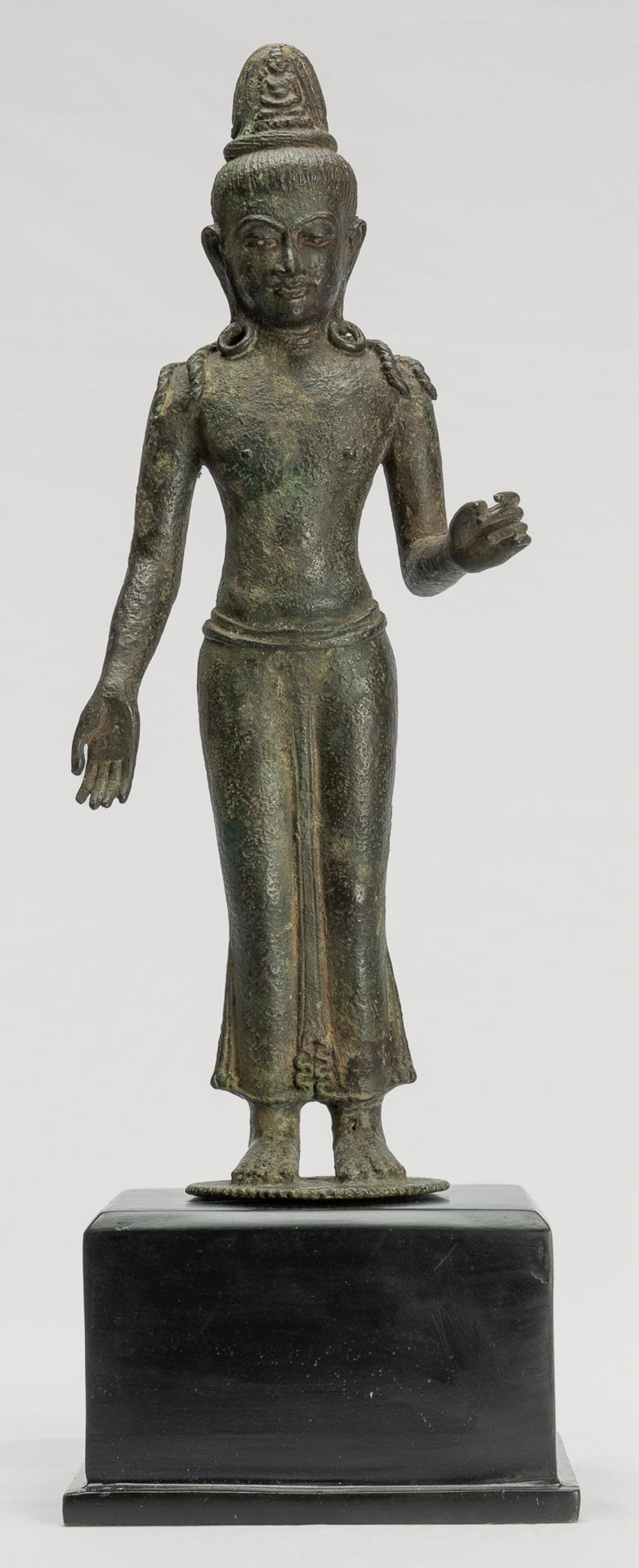
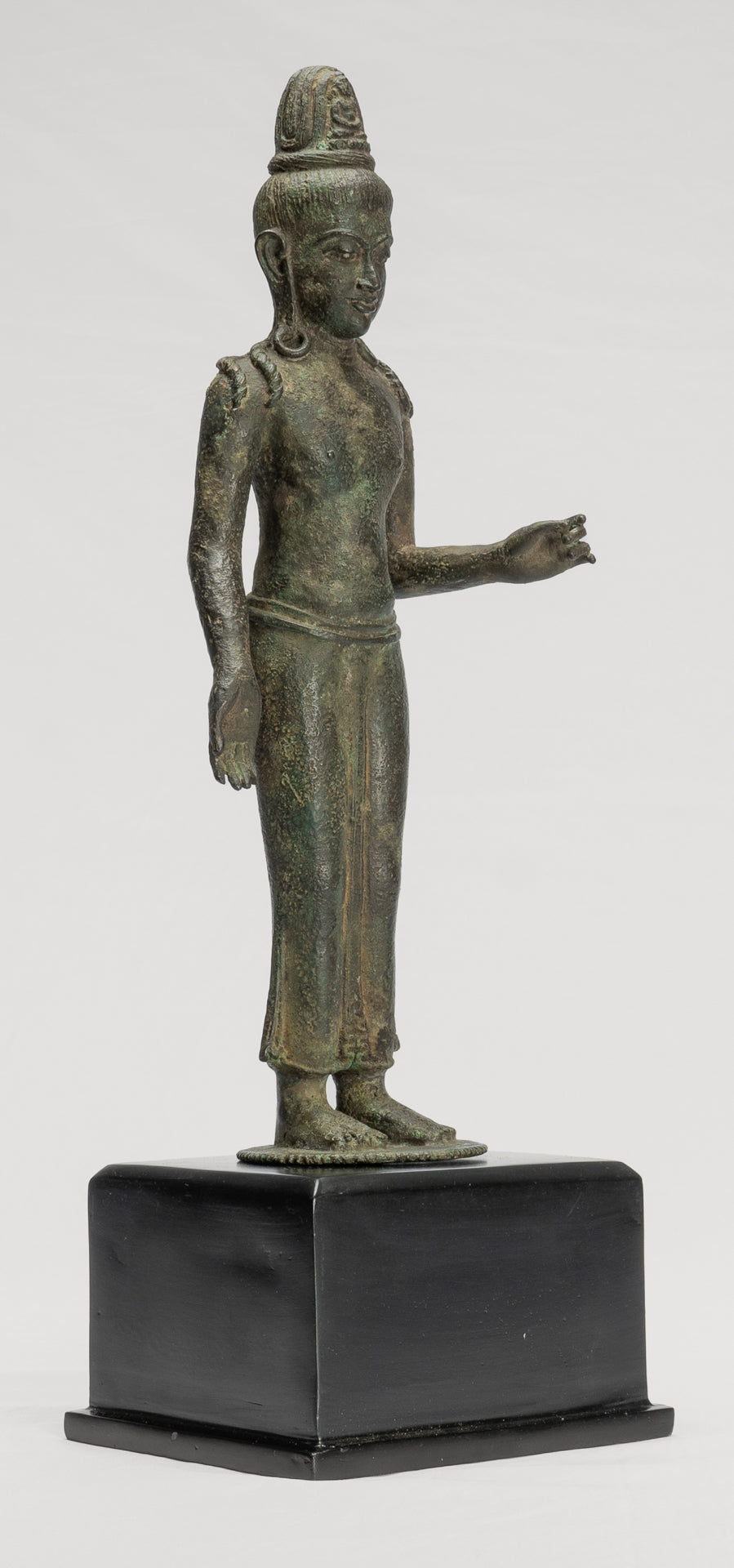
Antique Javanese Style Majapahit Standing Bronze Lokeshvara Statue - 44cm/17.3"
Standing Bodhisattva of Compassion
Measurements Height 44cm/17.3"
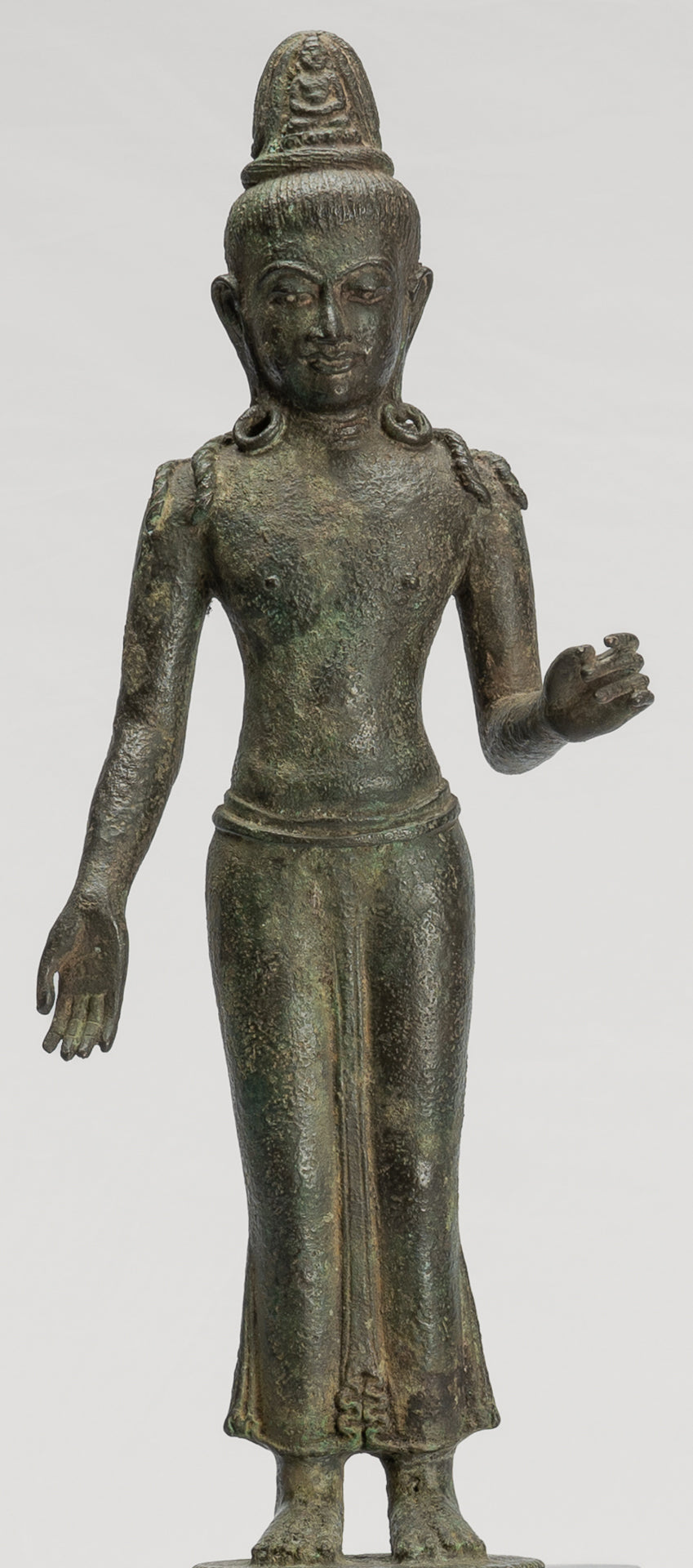
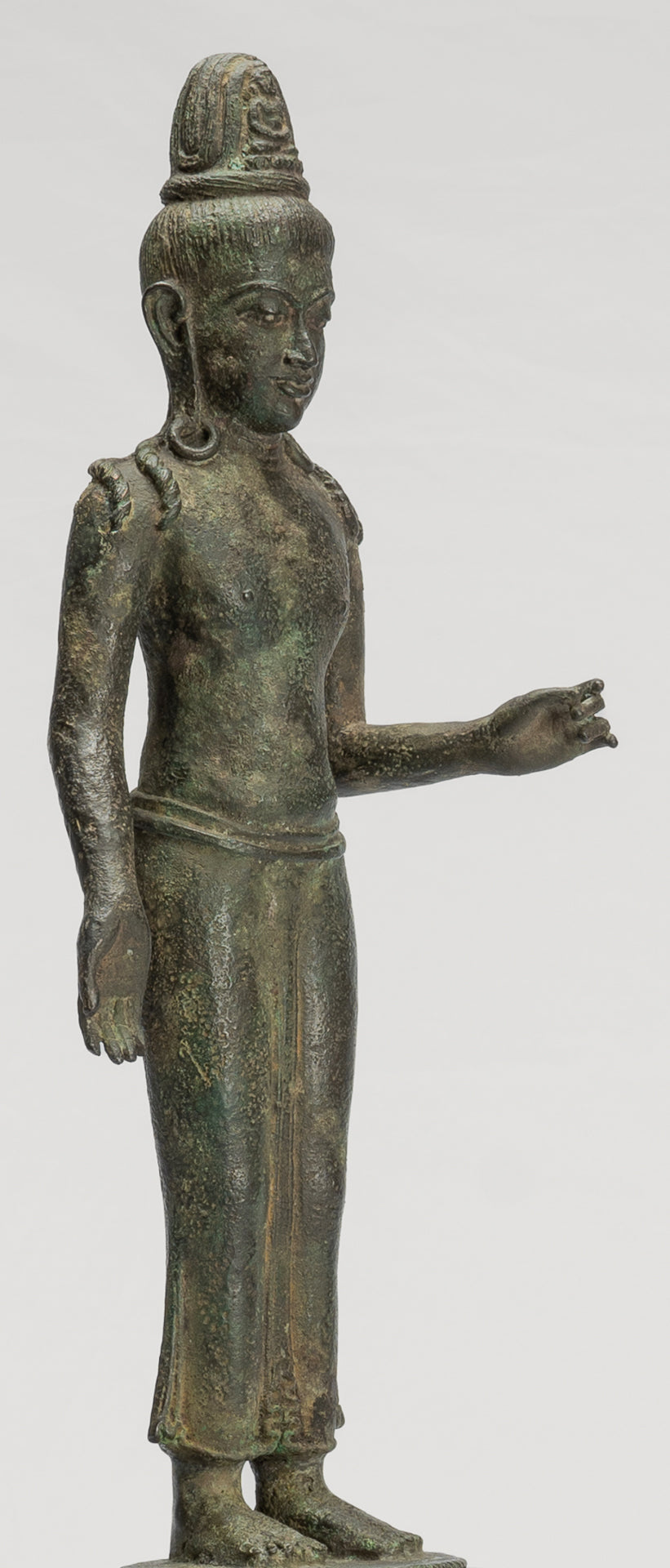
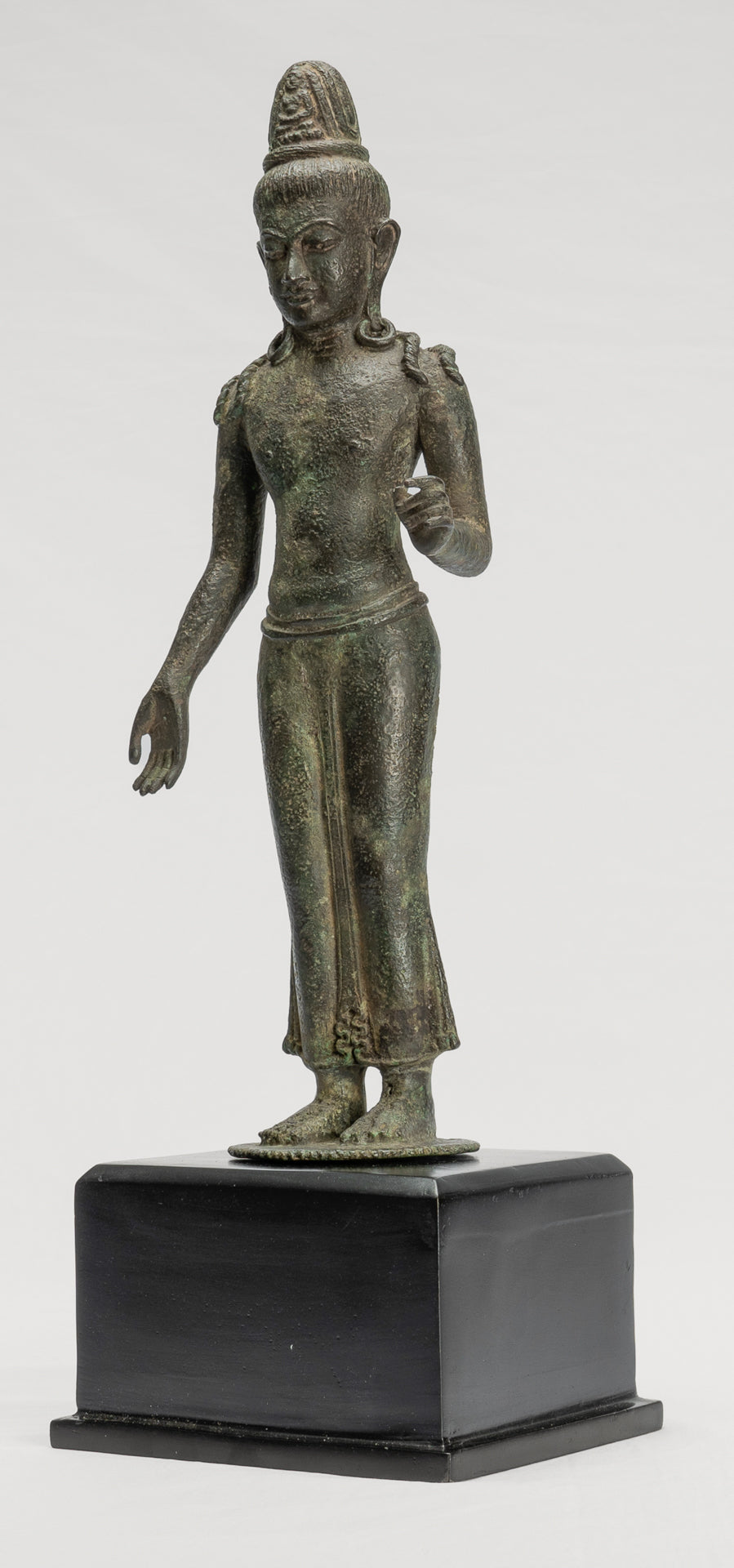
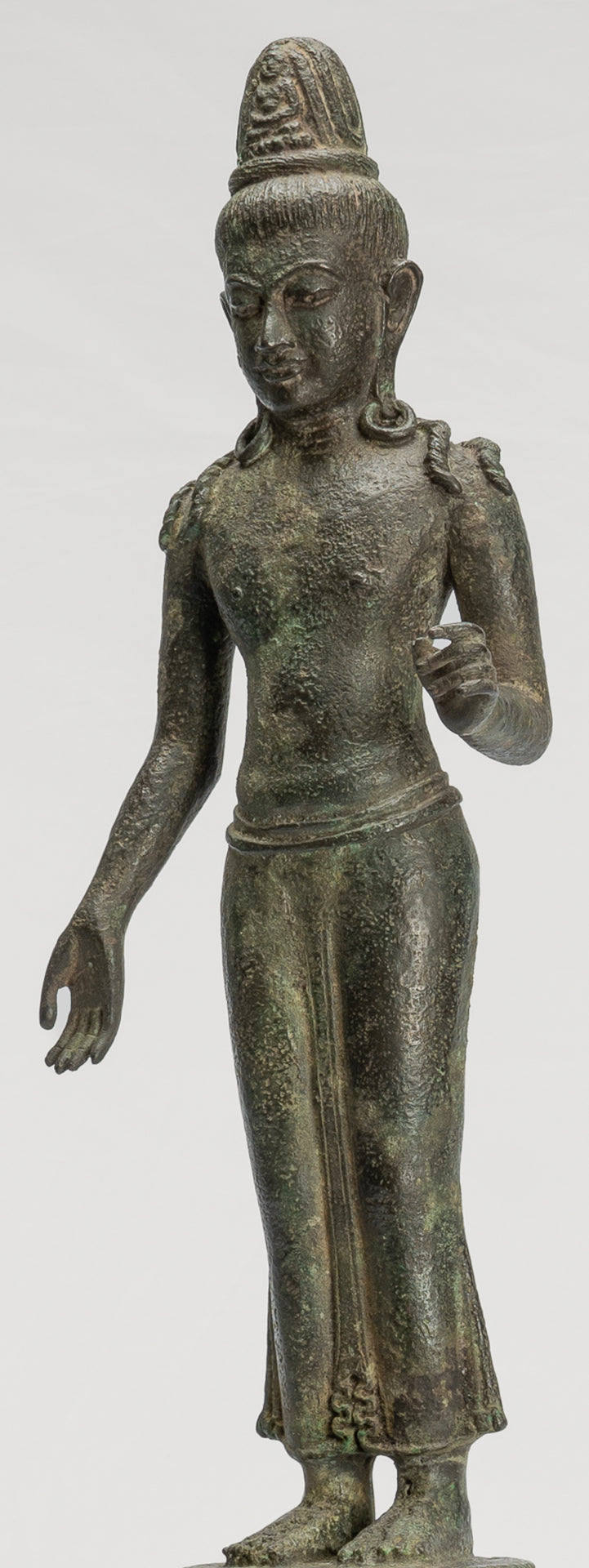
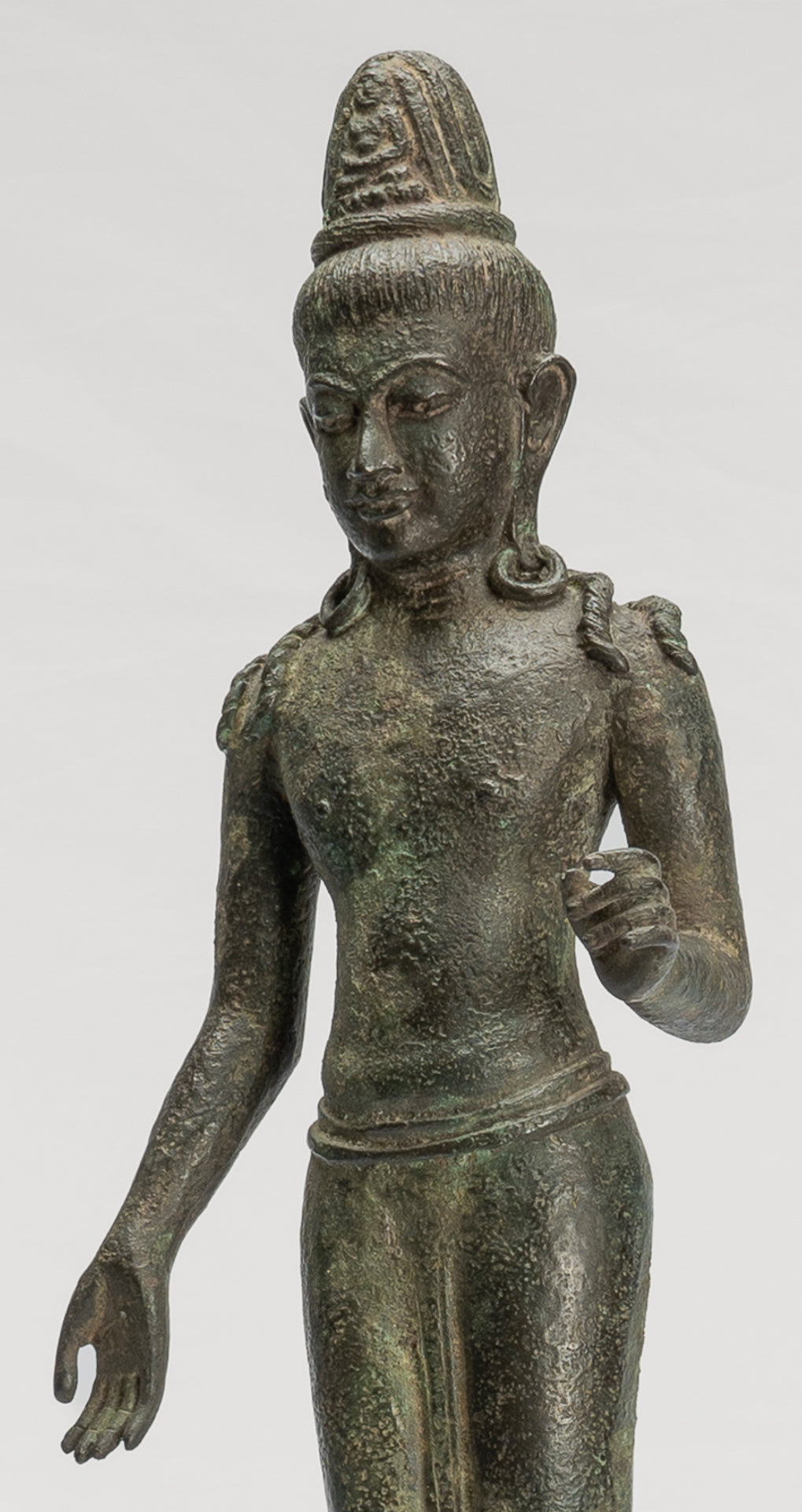
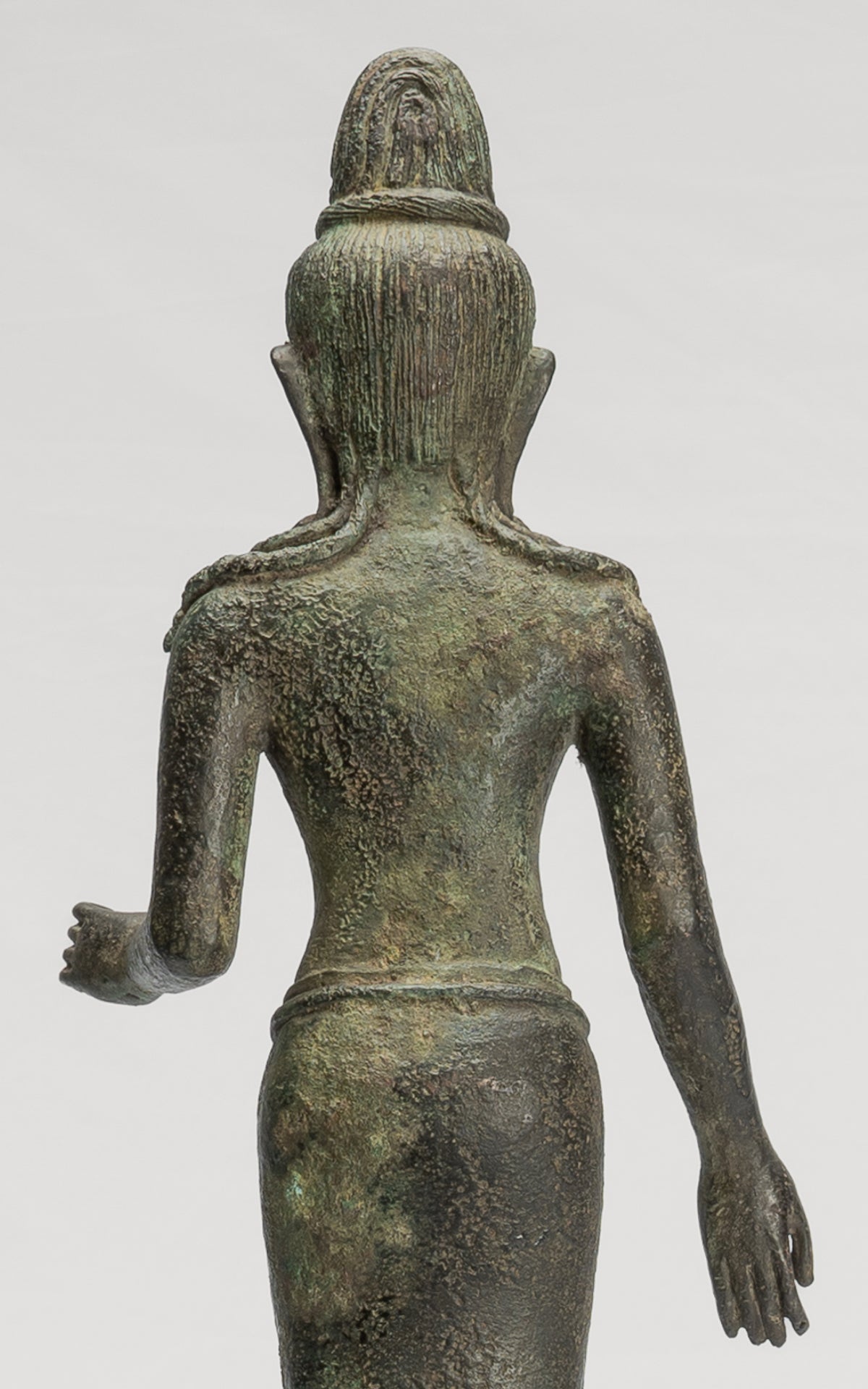
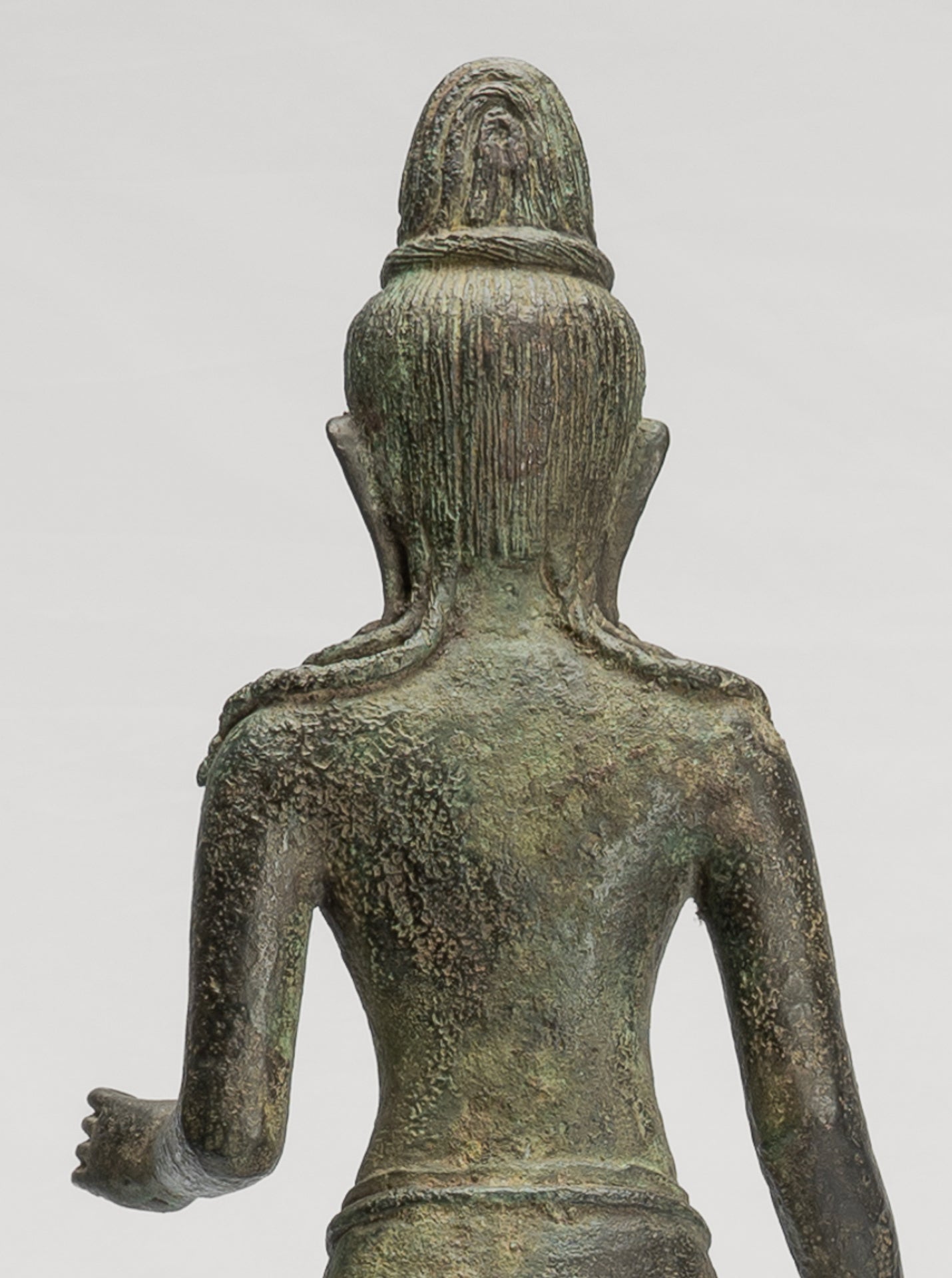
An elegant antique Javanese-style bronze depicting Lokeshvara, also known as Avalokiteshvara, the Buddhist bodhisattva of compassion. Standing in a poised, balanced stance upon a small oval plinth, the figure combines slender proportions with restrained ornament and a gently contemplative expression.
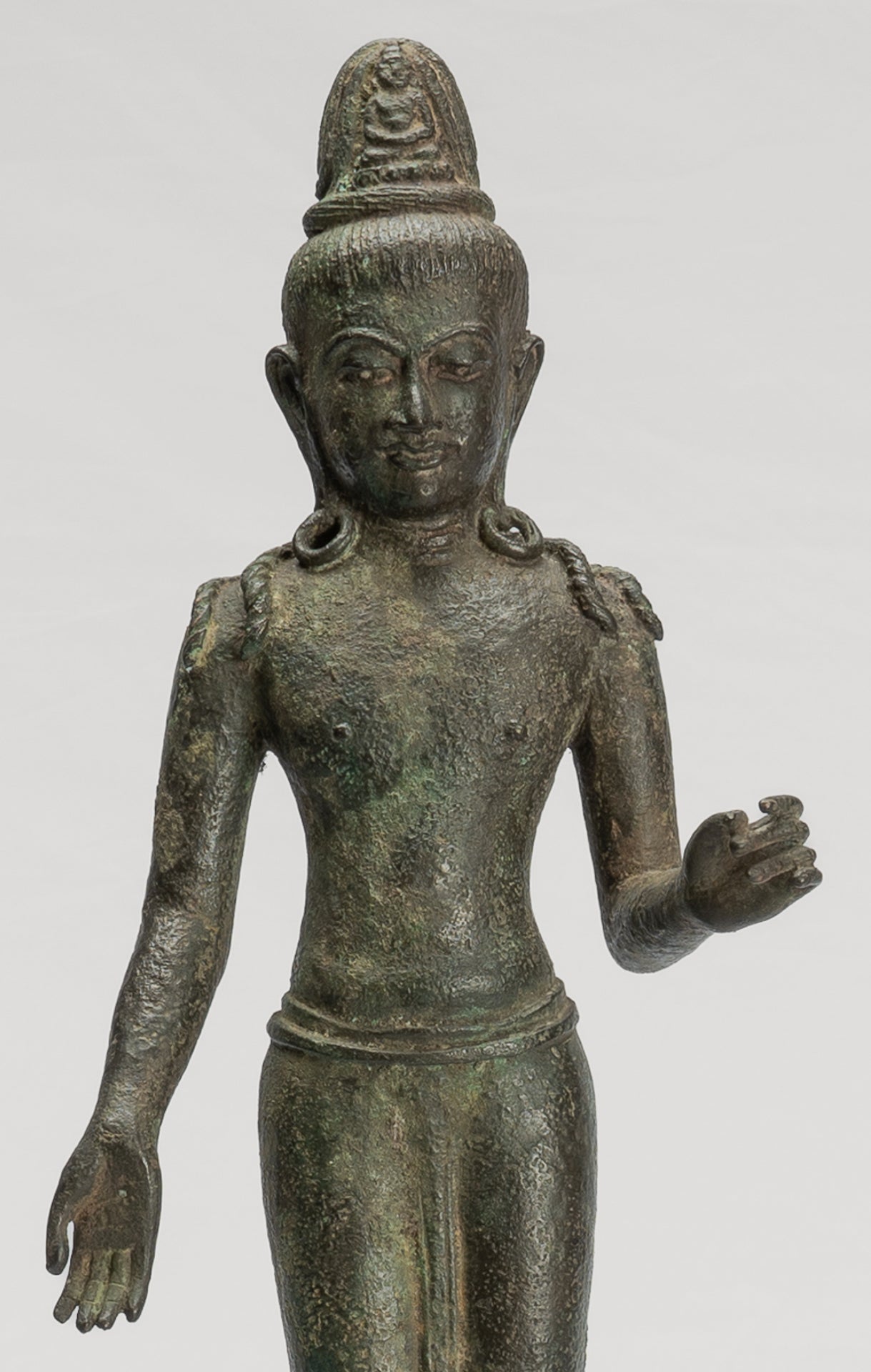
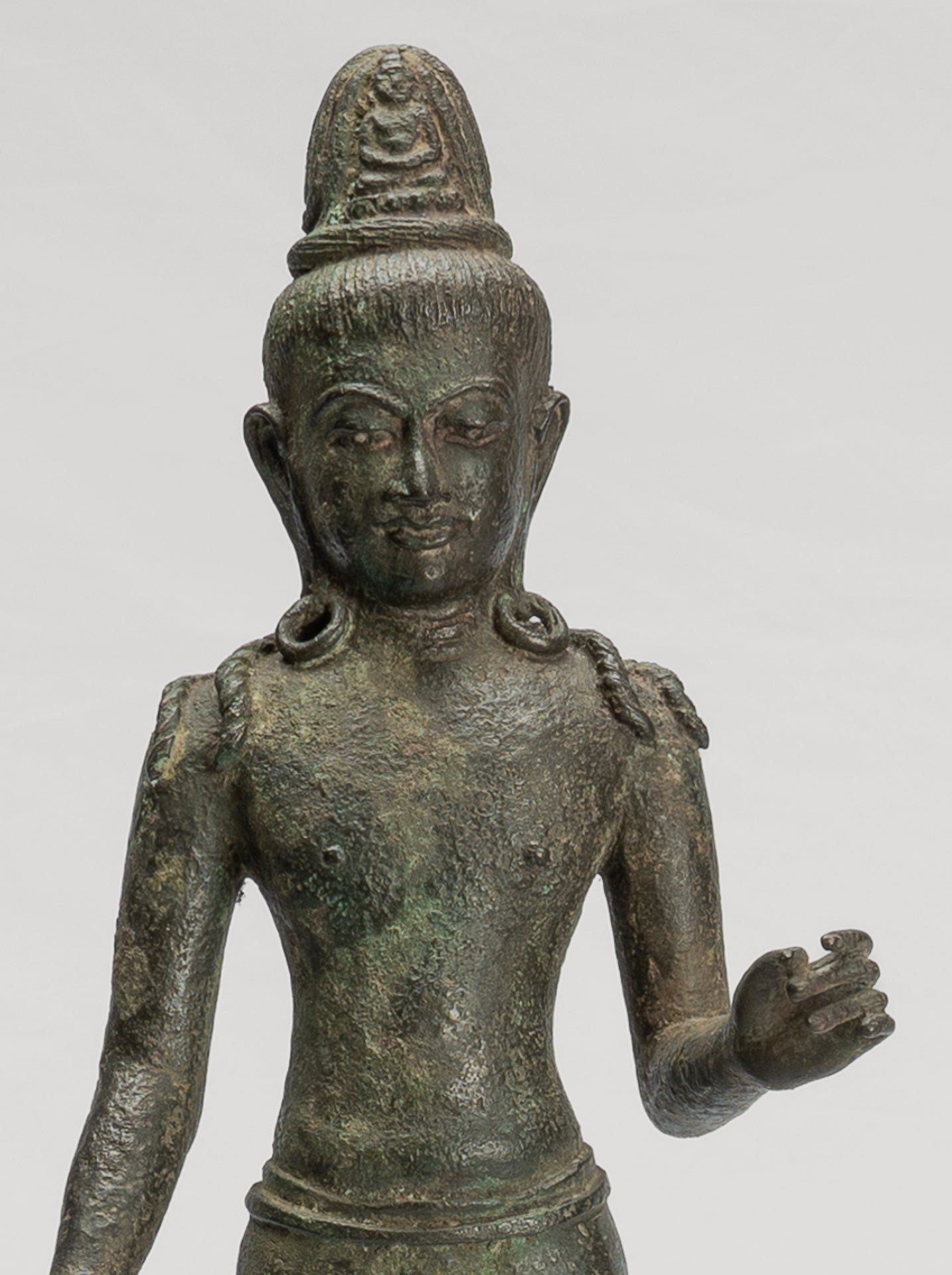
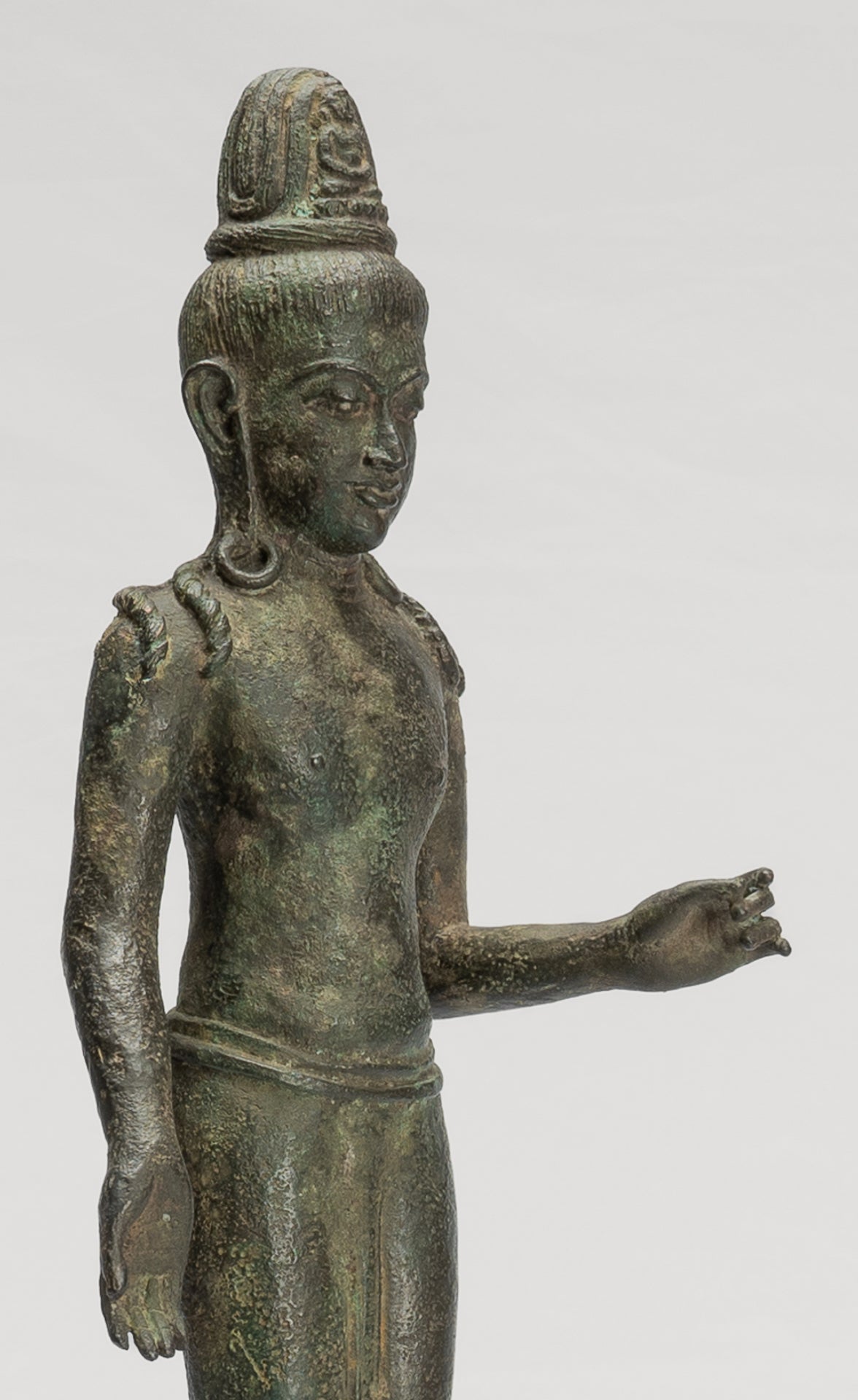
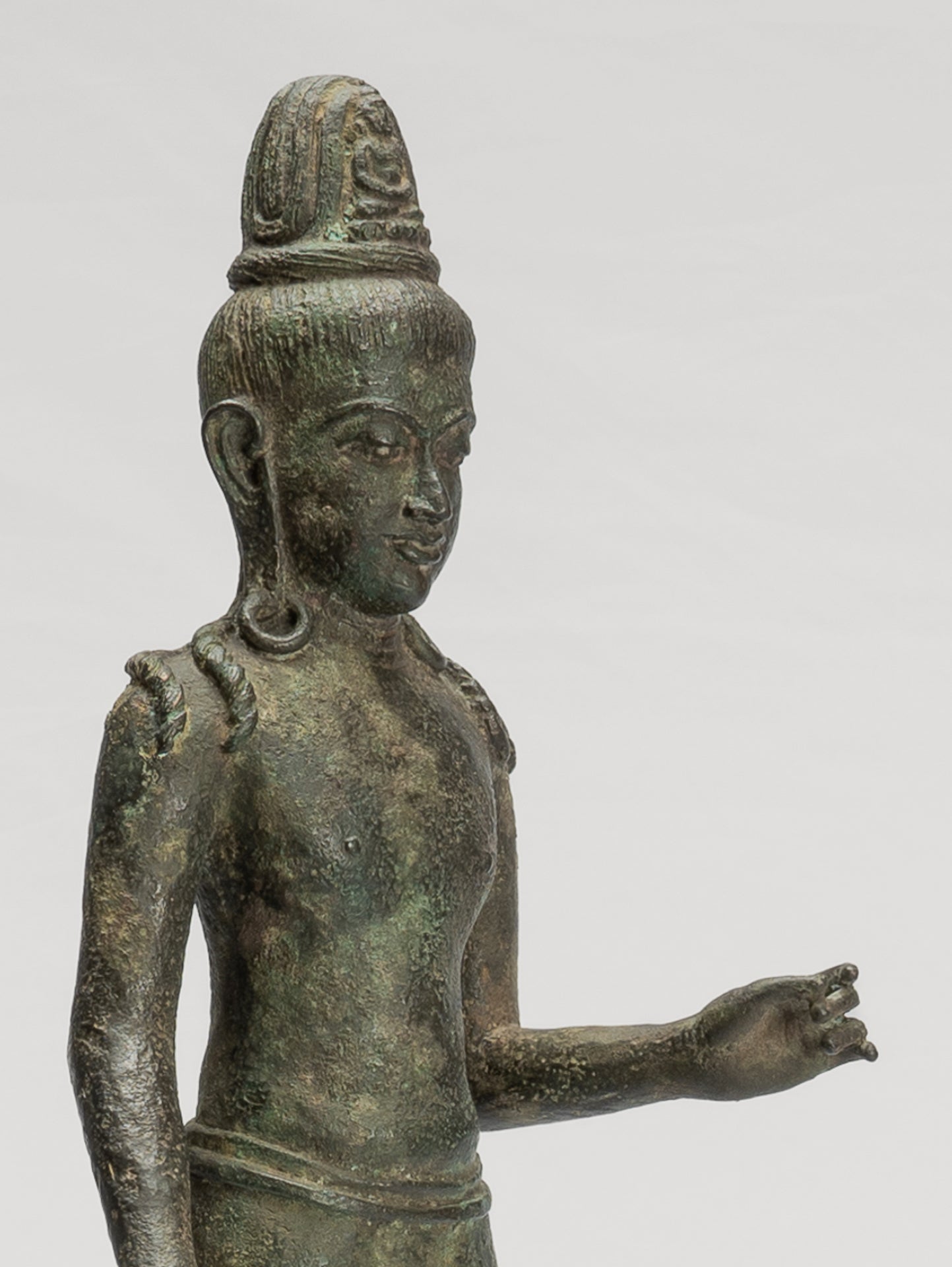
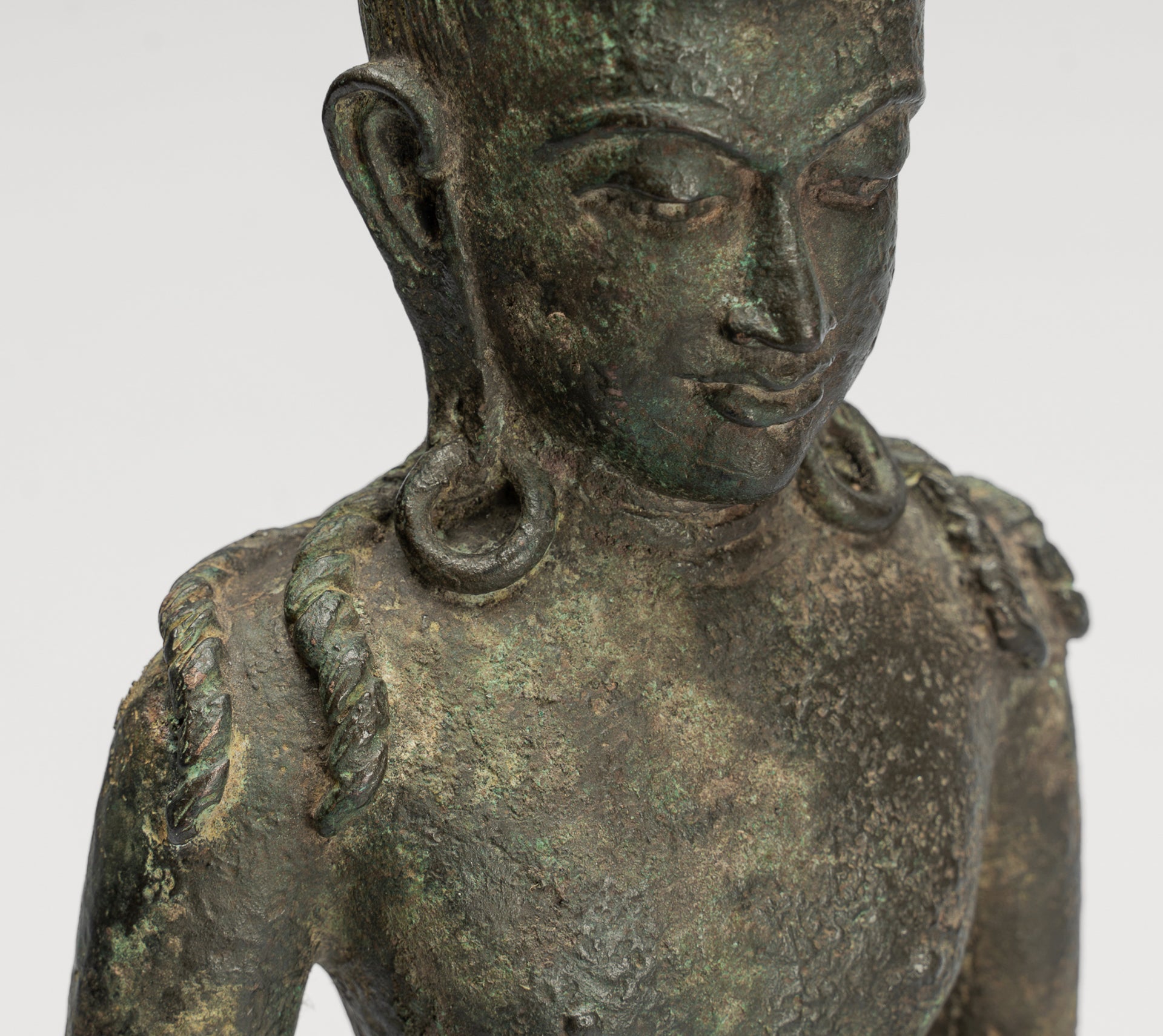
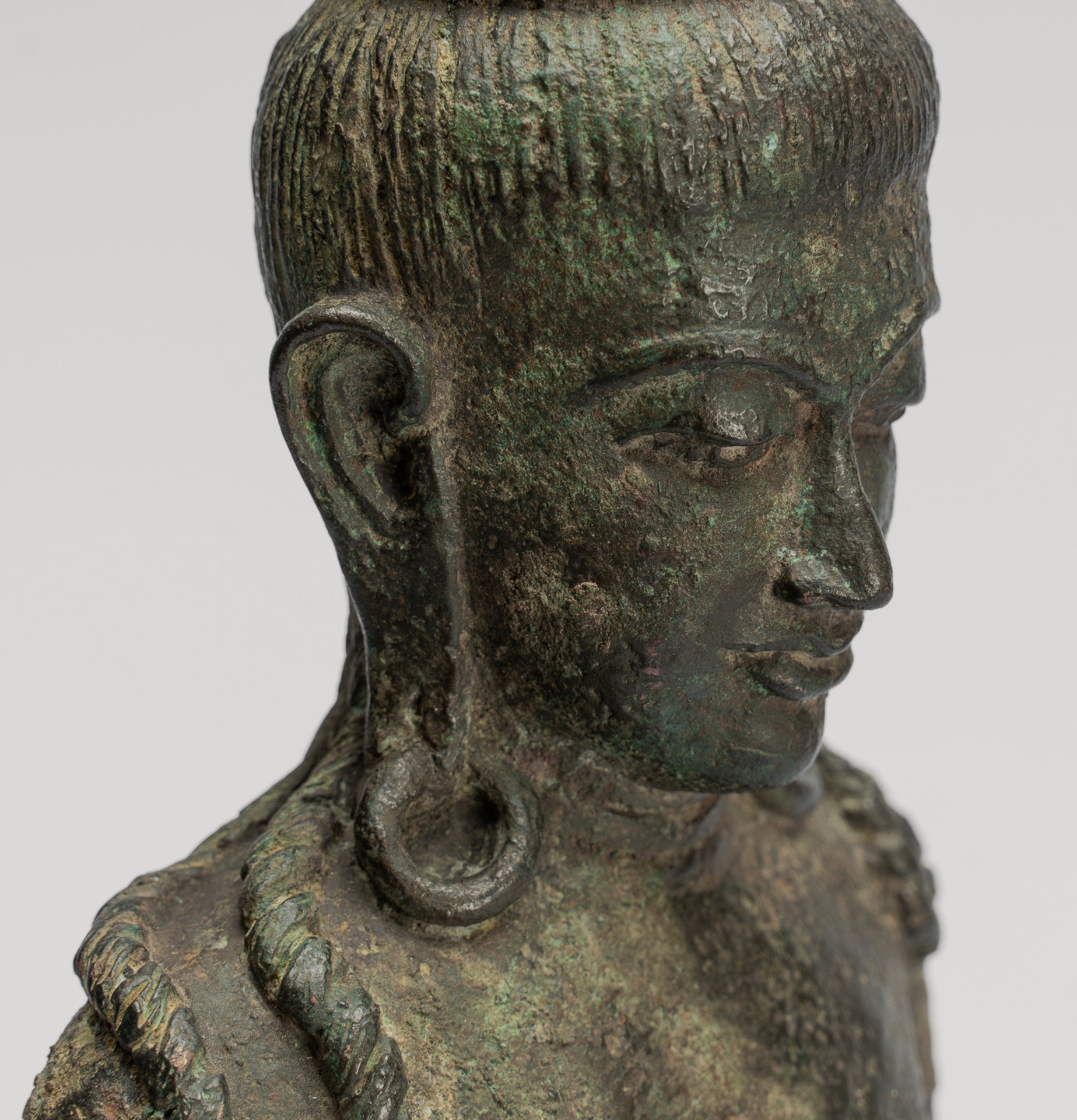
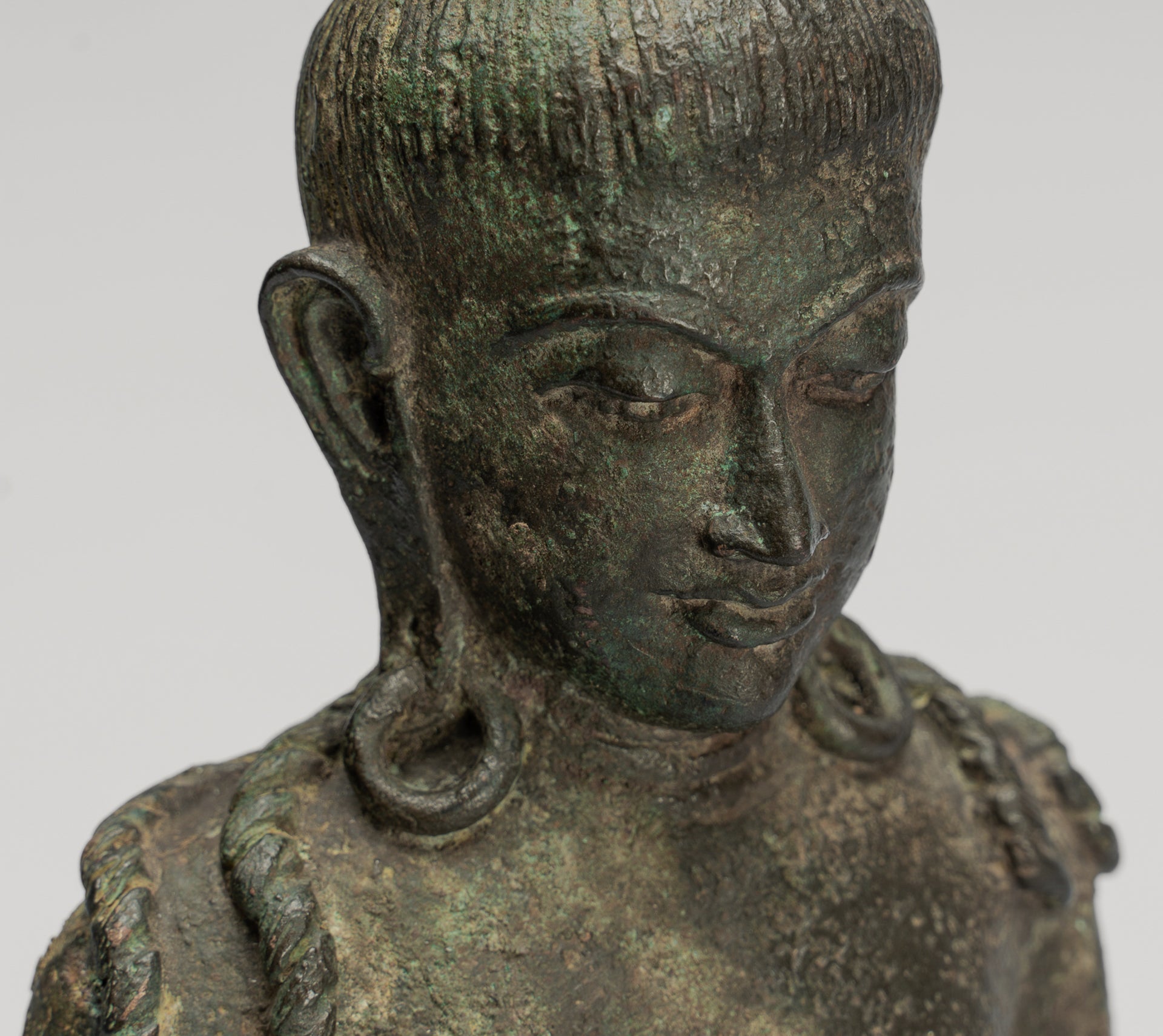
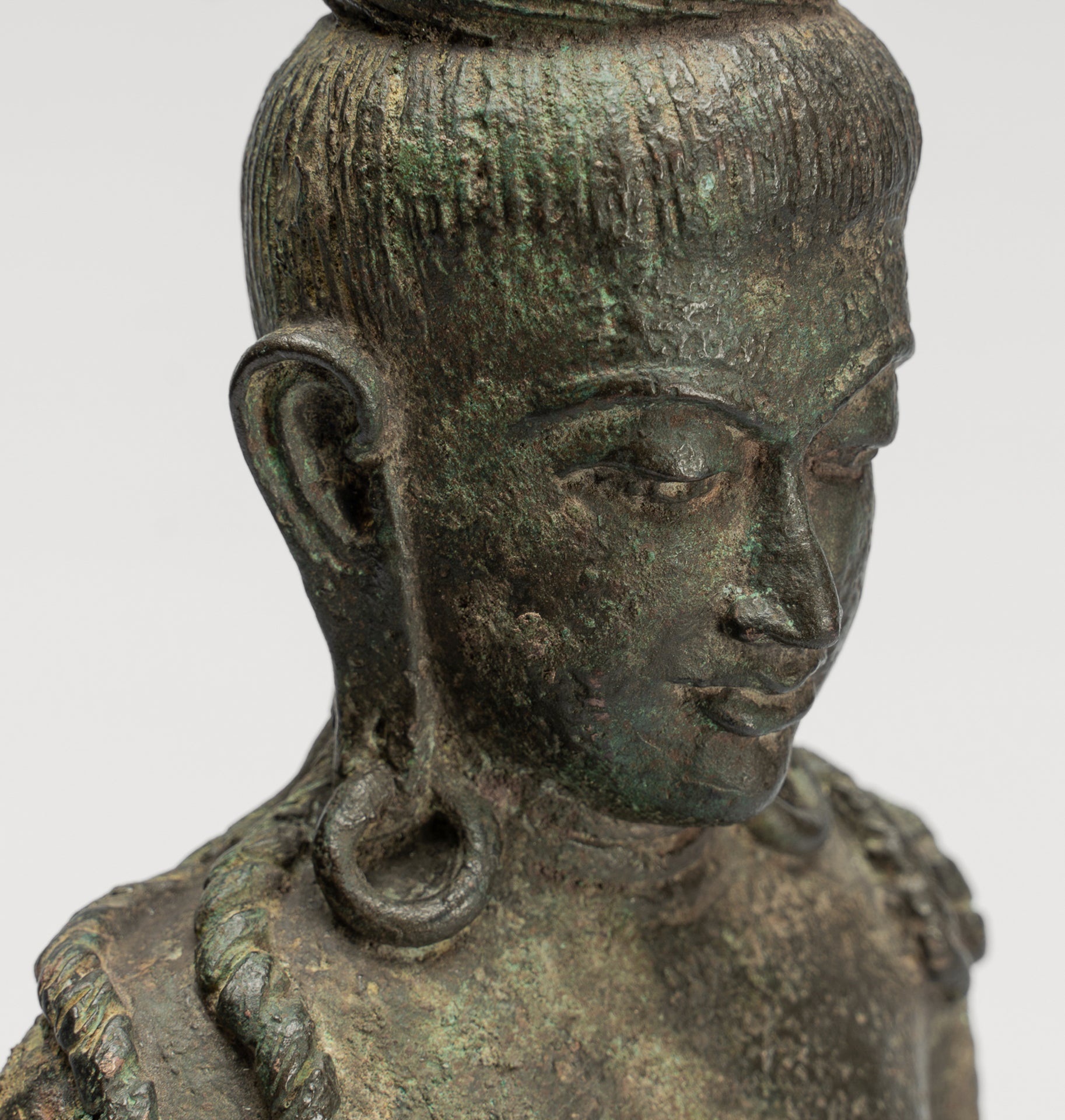
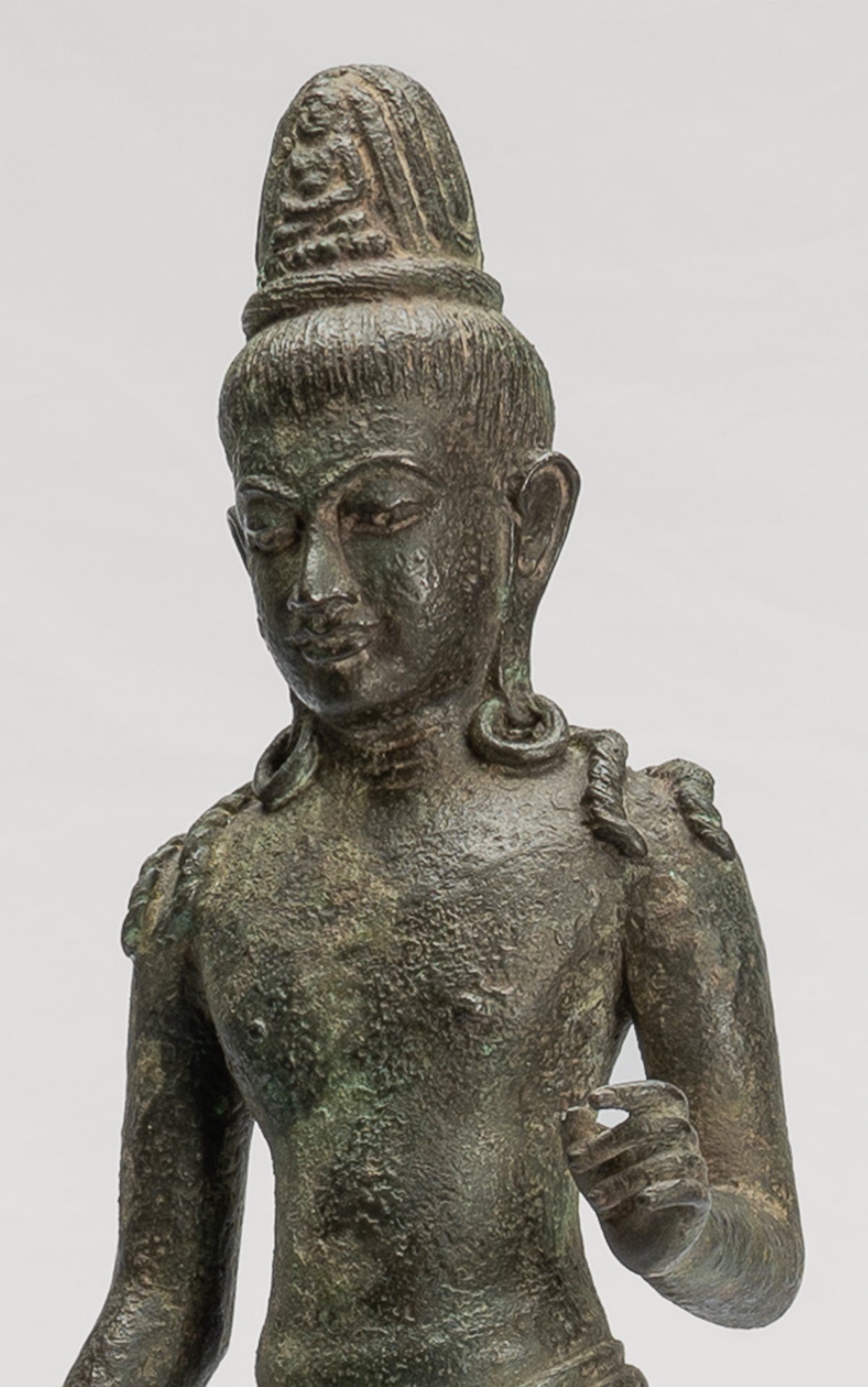
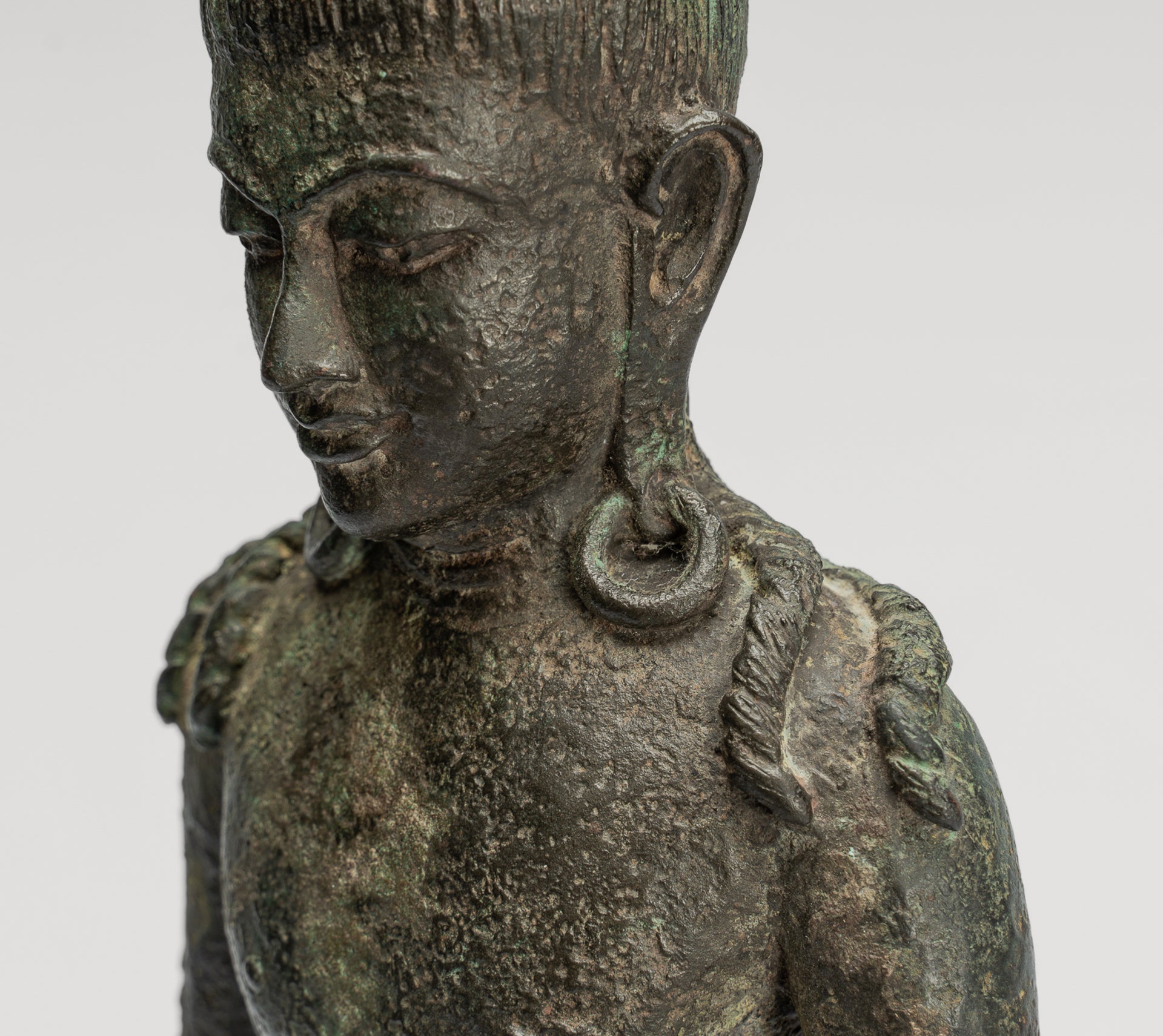
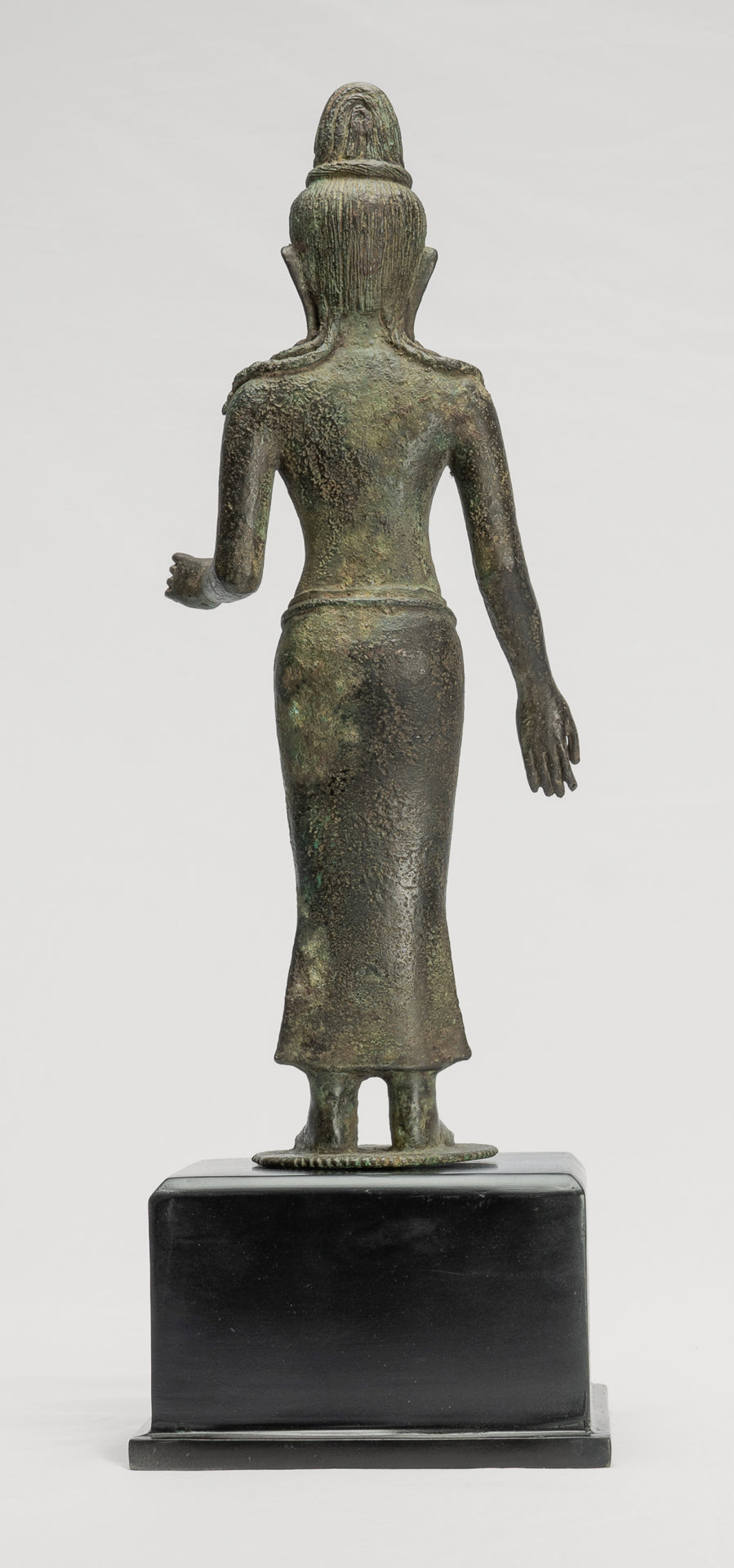
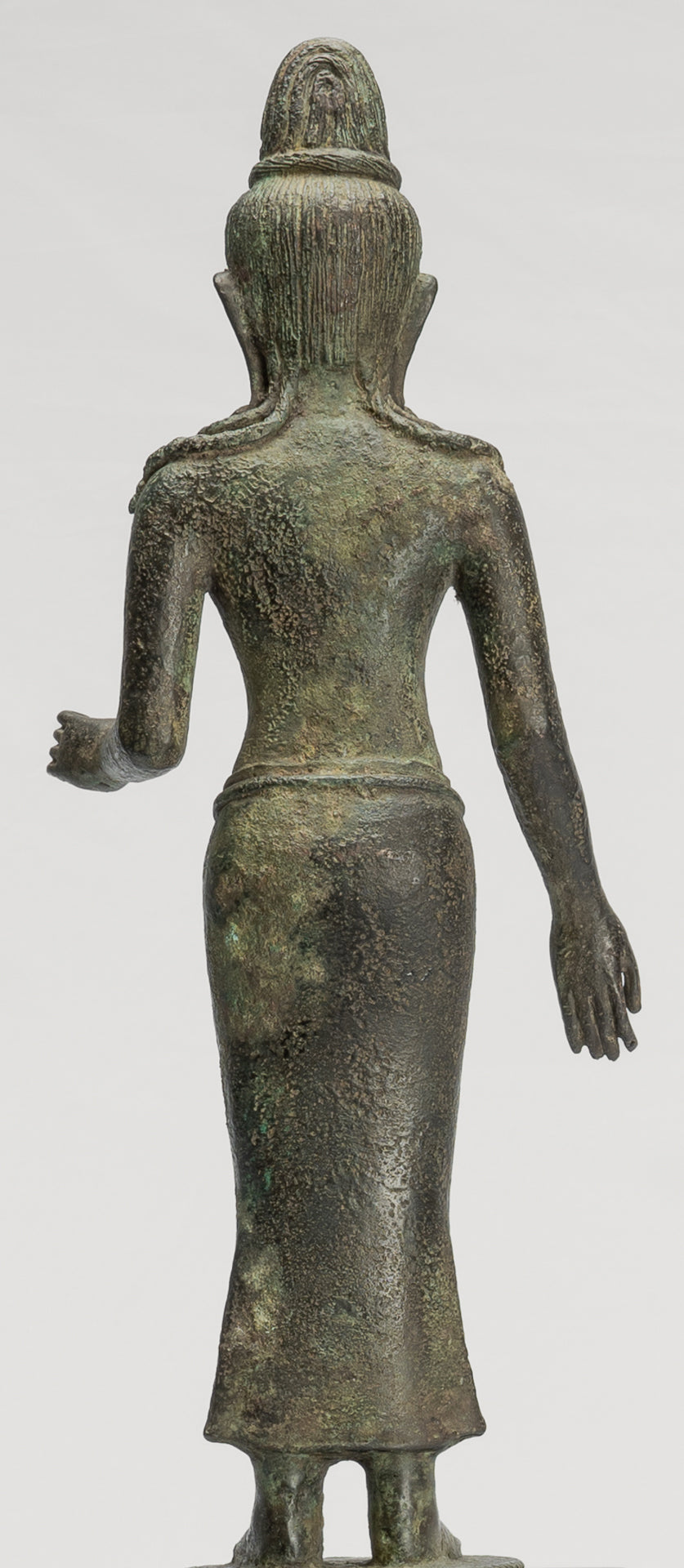
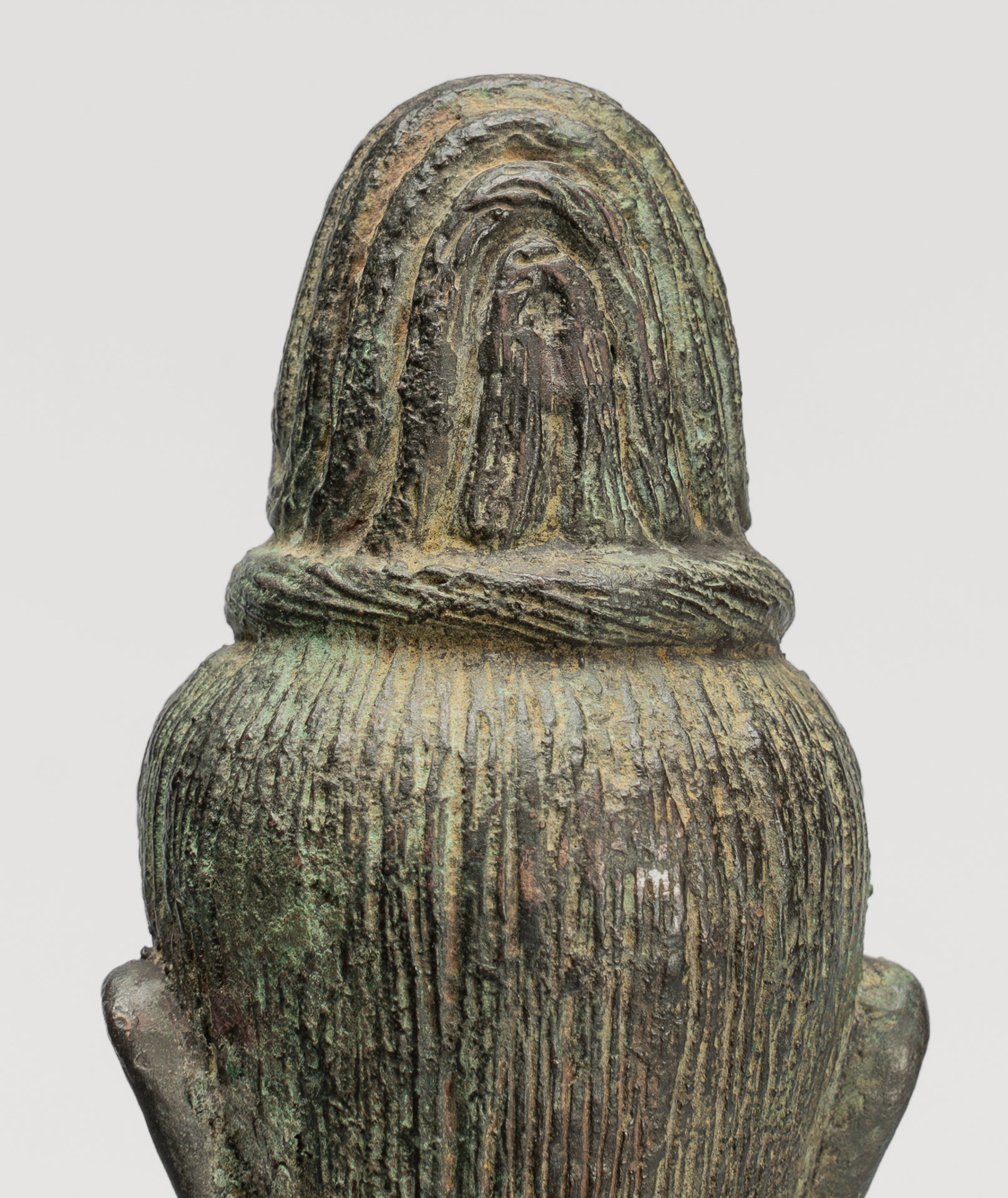
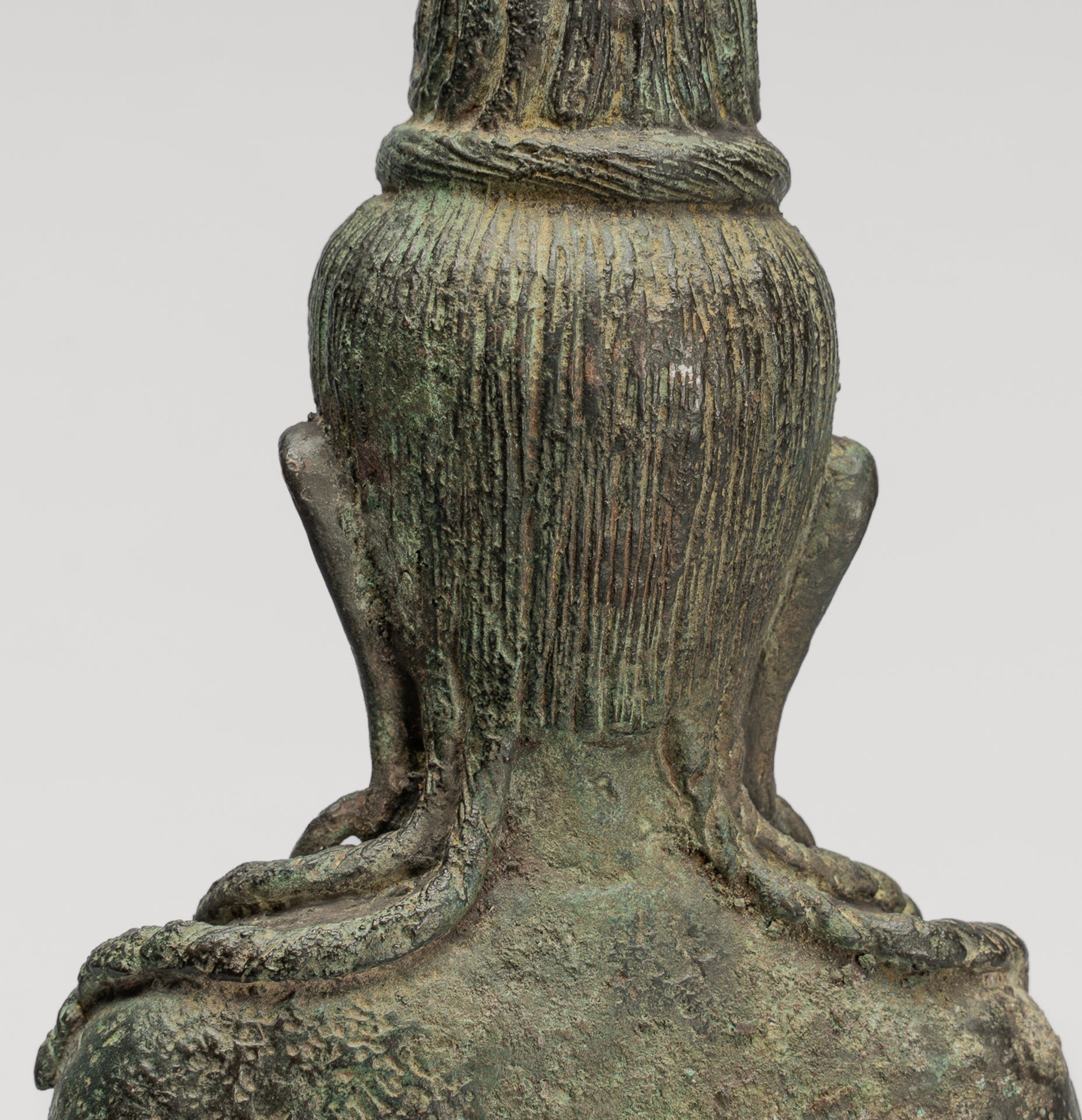
The face is sensitively modelled with arched brows, lowered eyes, a well-defined nose, and softly curved lips. Large circular earrings frame the neck, while carefully delineated strands of hair fall over the shoulders. A long, close-fitting lower garment descends toward the ankles, its central fold providing a quiet vertical emphasis that complements the upright body.
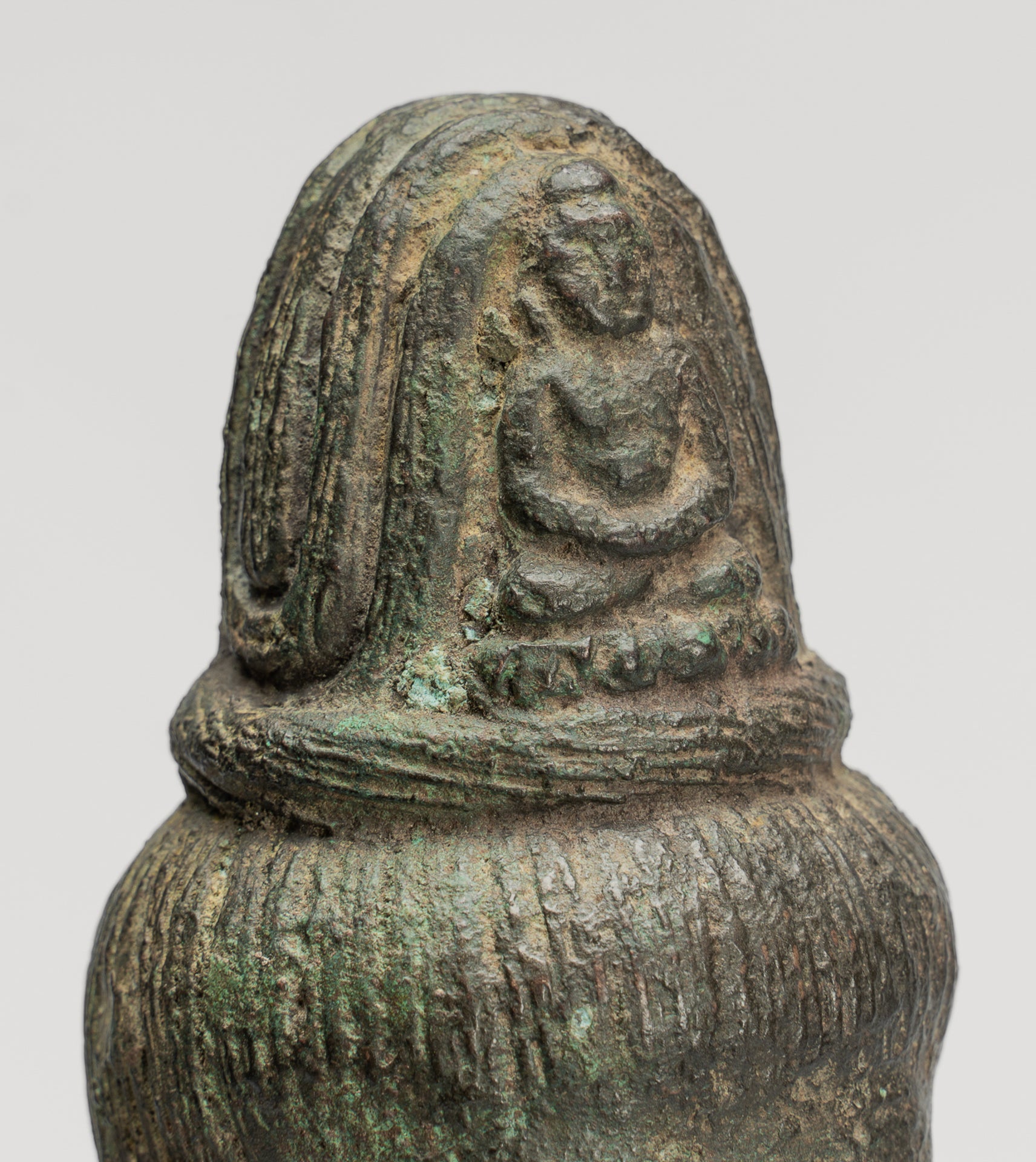
A tall, rounded hair arrangement rises above the head, surmounted by a small seated Buddha. This figure is conventionally identified as Amitabha, the Buddha of Infinite Light, whose presence in the headdress is a key identifying feature of Avalokiteshvara.
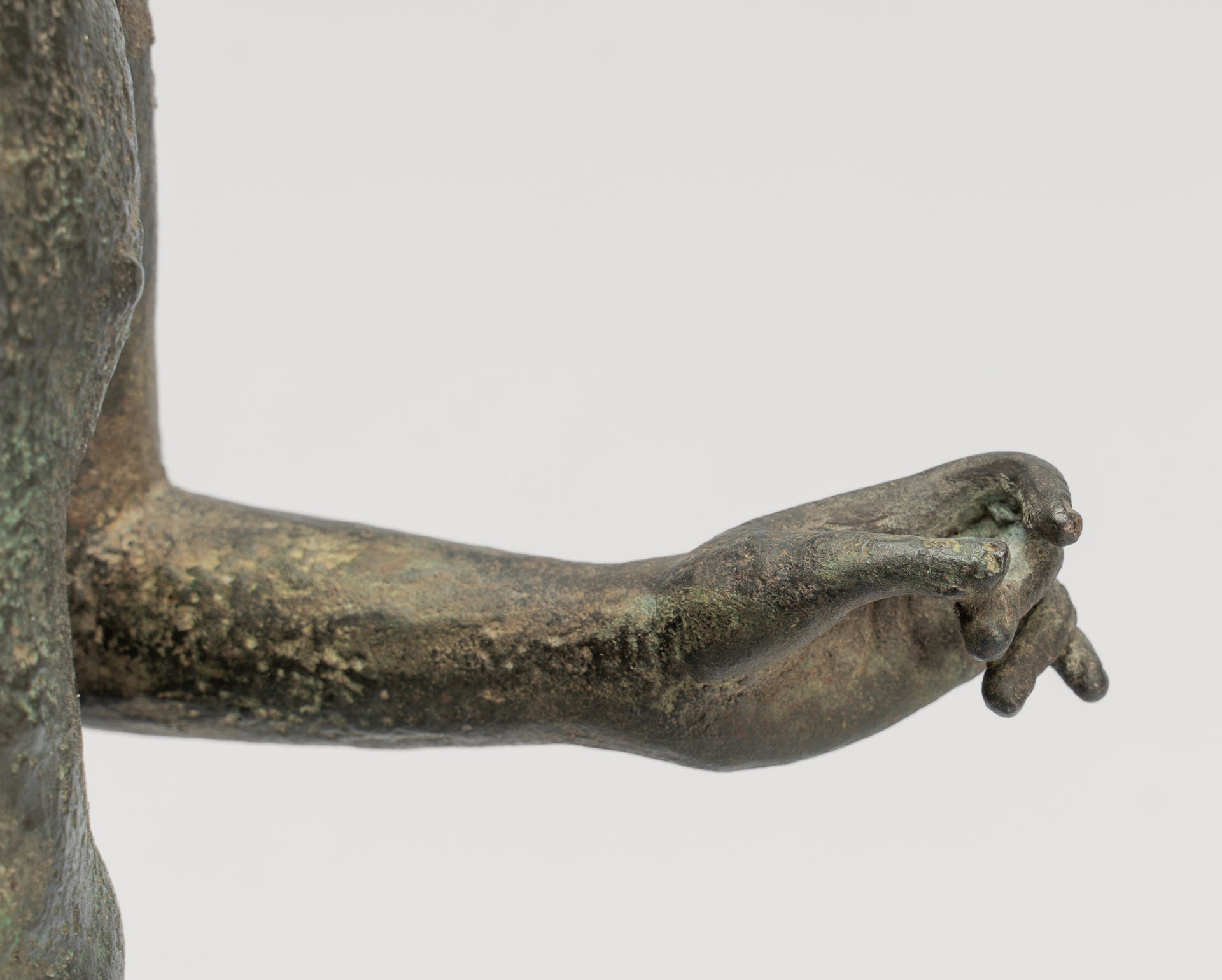
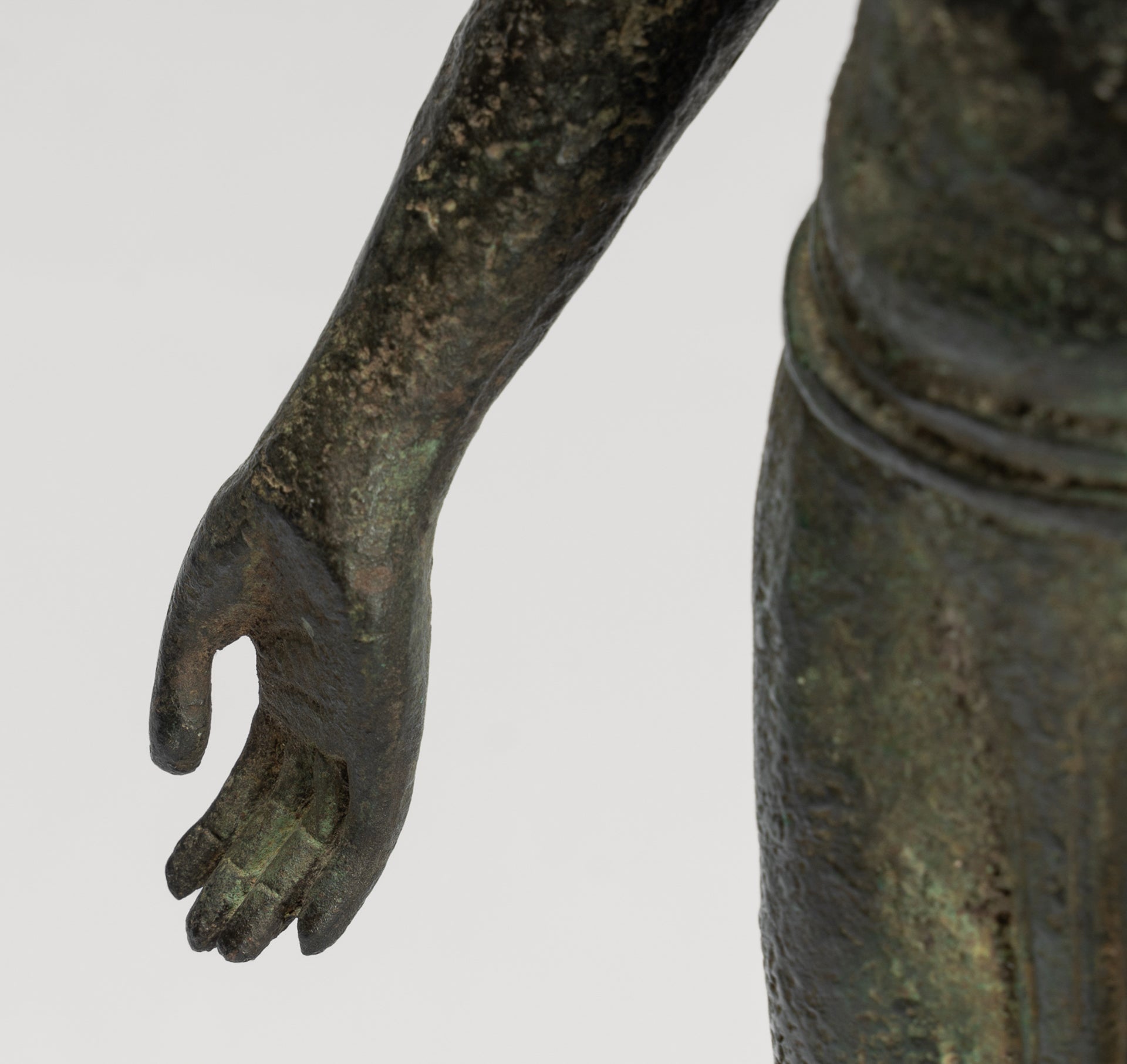
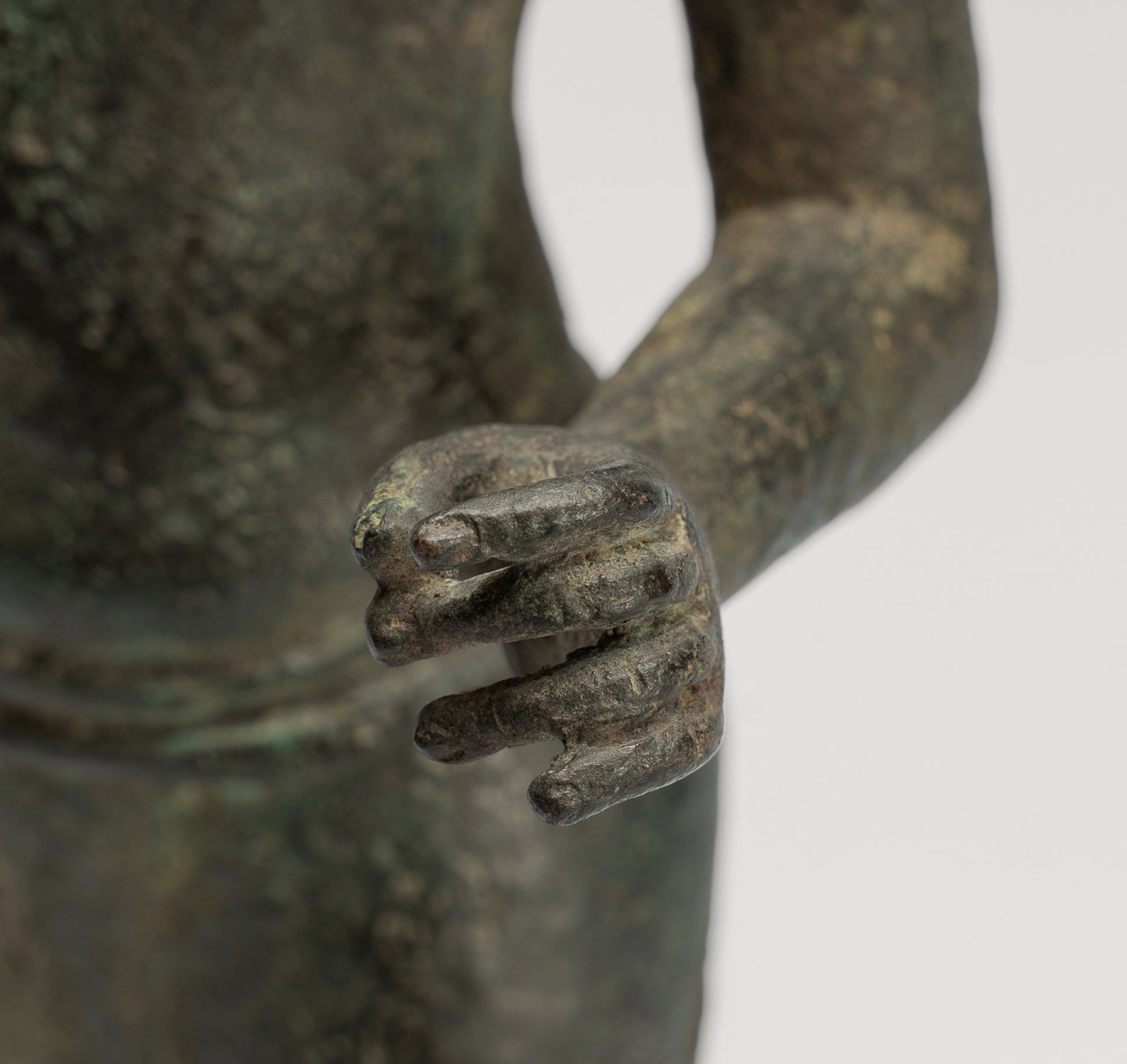
Lokeshvara’s right arm extends downward with the palm open in a gesture consistent with varada mudra, expressing generosity and the granting of boons. His left arm bends upward, the fingers forming a delicate, near-circular gesture that may suggest teaching or may originally have accommodated an attribute. The asymmetry of the arms brings a gentle liveliness to the otherwise composed stance.
The bronze displays a richly textured green-brown surface, with darker areas and lighter highlights defining the face, torso, hands, and garment. Loosely mounted on a later wooden display base, the sculpture offers a dignified focal point for a home, study, meditation room, or collection of Southeast Asian Buddhist art.
Lokeshvara: Compassion in Action
Lokeshvara is a widely used name for Avalokiteshvara, one of Mahayana Buddhism’s most revered bodhisattvas. He embodies compassion directed toward all sentient beings and the resolve to respond to suffering with wisdom and practical help. His imagery spread throughout Buddhist Asia, taking different regional forms while retaining this central compassionate identity.
The open right hand gives that ideal a visible expression. In comparable Southeast Asian images of Avalokiteshvara, the lowered hand performs the wish-granting varada mudra, presenting the bodhisattva as approachable and responsive to those seeking aid.
The small Amitabha above his head further distinguishes this image from a generic crowned deity. It places the figure within a recognisable Buddhist iconographic tradition, linking compassionate action with enlightened awareness.
Javanese and Majapahit-Style Character
The supplied attribution places the sculpture within the Javanese tradition and describes it as Majapahit style. Majapahit was established in eastern Java in 1293 and became a major political and cultural power, supporting a religious environment in which Hindu and Buddhist traditions coexisted.
This figure’s elongated proportions, long garment, shoulder-length hair, and restrained decoration evoke the broader heritage of Indonesian Buddhist metalwork.
Key Features
-
Antique Javanese-style bronze Lokeshvara, or Avalokiteshvara.
-
Supplied stylistic attribution: Majapahit manner.
-
Height approximately 44 cm / 17.3 inches.
-
Slender standing figure with a composed, frontal stance.
-
Gently lowered eyes and a restrained smile.
-
Tall hair arrangement containing a small seated Amitabha Buddha.
-
Large circular earrings and detailed hair falling over the shoulders.
-
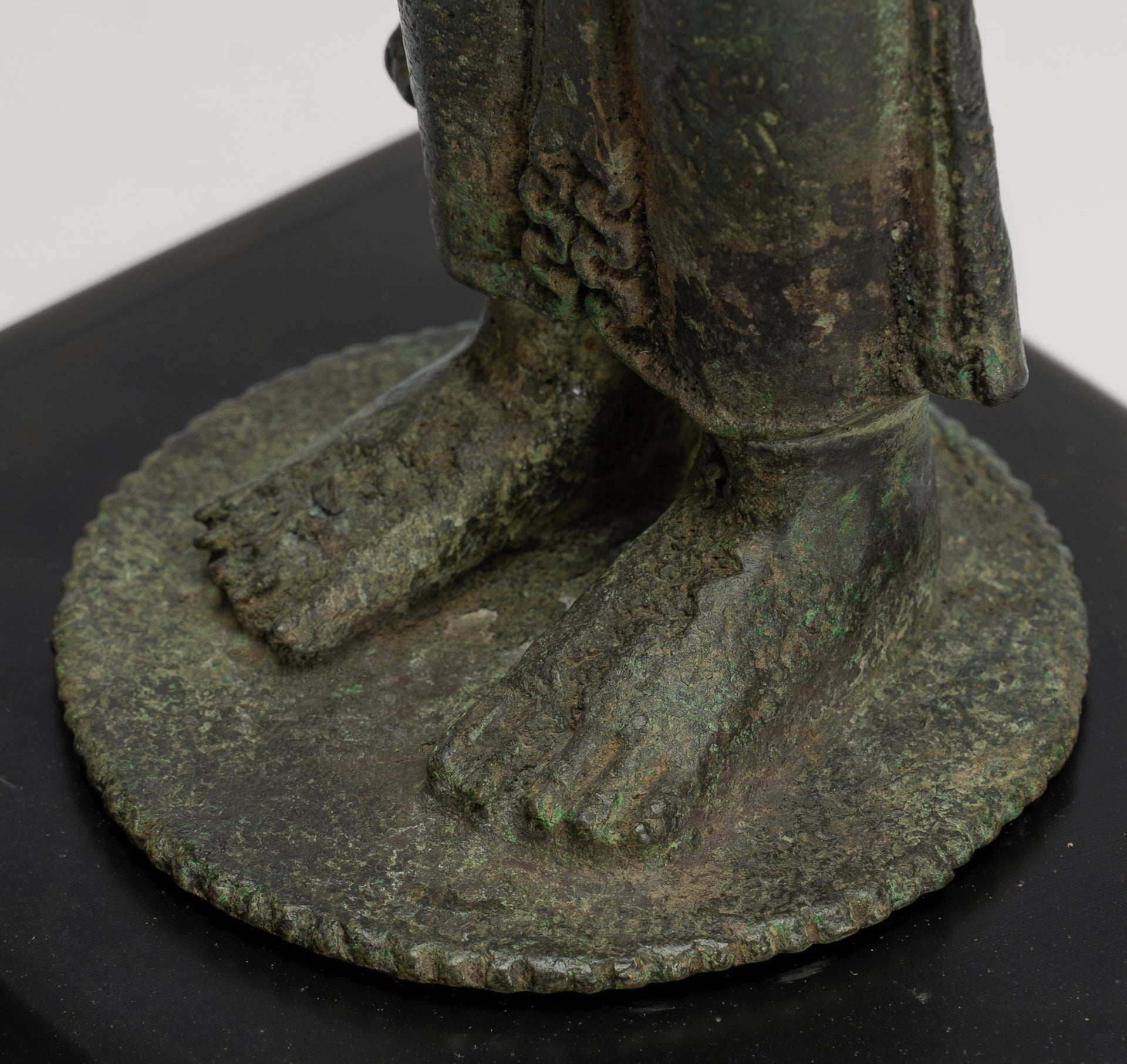
Long, close-fitting lower garment with a central fold.
-
Lowered right hand in a gesture consistent with varada mudra.
-
Raised left hand with delicately arranged fingers.
-
Small oval plinth beneath the feet.
-
Varied green-brown surface patination.
-
Loosely mounted on a later wooden display base.
-
Supplied provenance: Ex-private Singapore collection.
-
All items are guaranteed to be as described.
-
Certificate of Authenticity available on request.
Frequently Asked Questions
Who is Lokeshvara?
Lokeshvara is a name for Avalokiteshvara, the Mahayana Buddhist bodhisattva of compassion. He represents the compassionate response to suffering and the aspiration to assist others toward awakening.
What identifies this figure as Avalokiteshvara?
The small seated Amitabha Buddha in the headdress is the strongest identifying feature. Museums use this detail to distinguish Avalokiteshvara from other bodhisattvas whose standing posture and dress may otherwise be similar.
What does the lowered right hand mean?
The open, downward-reaching hand is consistent with varada mudra, the gesture of generosity or granting boons. Comparable regional Avalokiteshvara sculptures use this gesture to express the bodhisattva’s compassionate willingness to help.
Is the left hand definitely making a teaching gesture?
The raised hand resembles a teaching or discussion gesture, but the identification should remain qualified. Its fingers may also have held a stem or another separately made attribute. Close examination of the hand would help distinguish an intentional empty-handed gesture from an attribute-holding position.
Are Lokeshvara and Guanyin related?
Yes. Guanyin is the Chinese form of Avalokiteshvara, reflecting the adaptation of the bodhisattva’s compassionate identity within East Asian Buddhist traditions. The Javanese figure here belongs to a different regional artistic expression of that wider tradition.
Is the patina definitely azurite and malachite?
Those mineral names should not be confirmed without analysis. “Varied green-brown patina” accurately describes the visible surface without implying a scientific identification. Patina alone also cannot establish the sculpture’s age or authenticity.
Is the wooden base original?
No. The supplied description identifies it as a later display base. Because the bronze is loosely mounted, it should not be assumed to be permanently attached: support the sculpture independently when repositioning it and avoid lifting it by the head, arms, or hands.
SATISFACTION GUARANTEE - We have been offering SE Asian Art for many years and are proud of the reputation we have developed for fair and honest listings. However, if for any reason, whatsoever, you are unhappy with your purchase please just let us know and we will provide a full refund.
-
-
The majority of orders will be shipped with DHL. This is a secure, express and fully tracked service.
Items less than 2Kg we typically ship using Royal Mail.
Once we receive your order we try to ship all orders the same or next working day.
Large and/or fragile pieces requiring palletising, specialist crating and/or extra packaging may take a little longer. Palletised shipments will be delivered curbside.
All orders over 35 GBP will be shipped free of charge.

-
We genuinely hope that all purchases delight.
However, if they do not, regardless of reason, we will refund all orders upon receipt of the unwanted item. Just notify us within 14 days of receiving your order that you wish to make a return and send the piece back to us with 30 days of delivery.


