













-
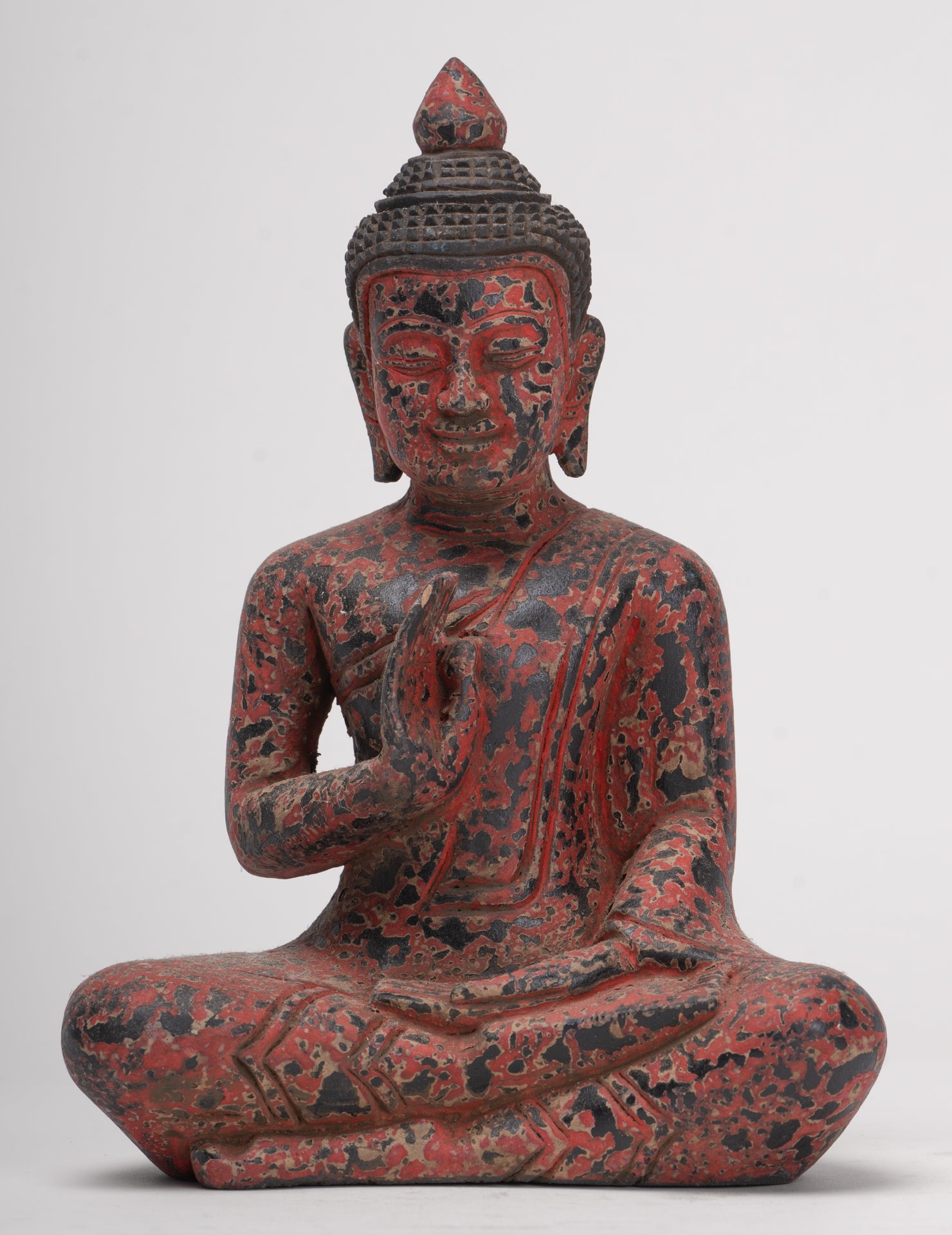
Antique Khmer Style Seated Wood Buddha Statue Teaching Mudra 19cm/8"
Measures (Height) 19cm/8"
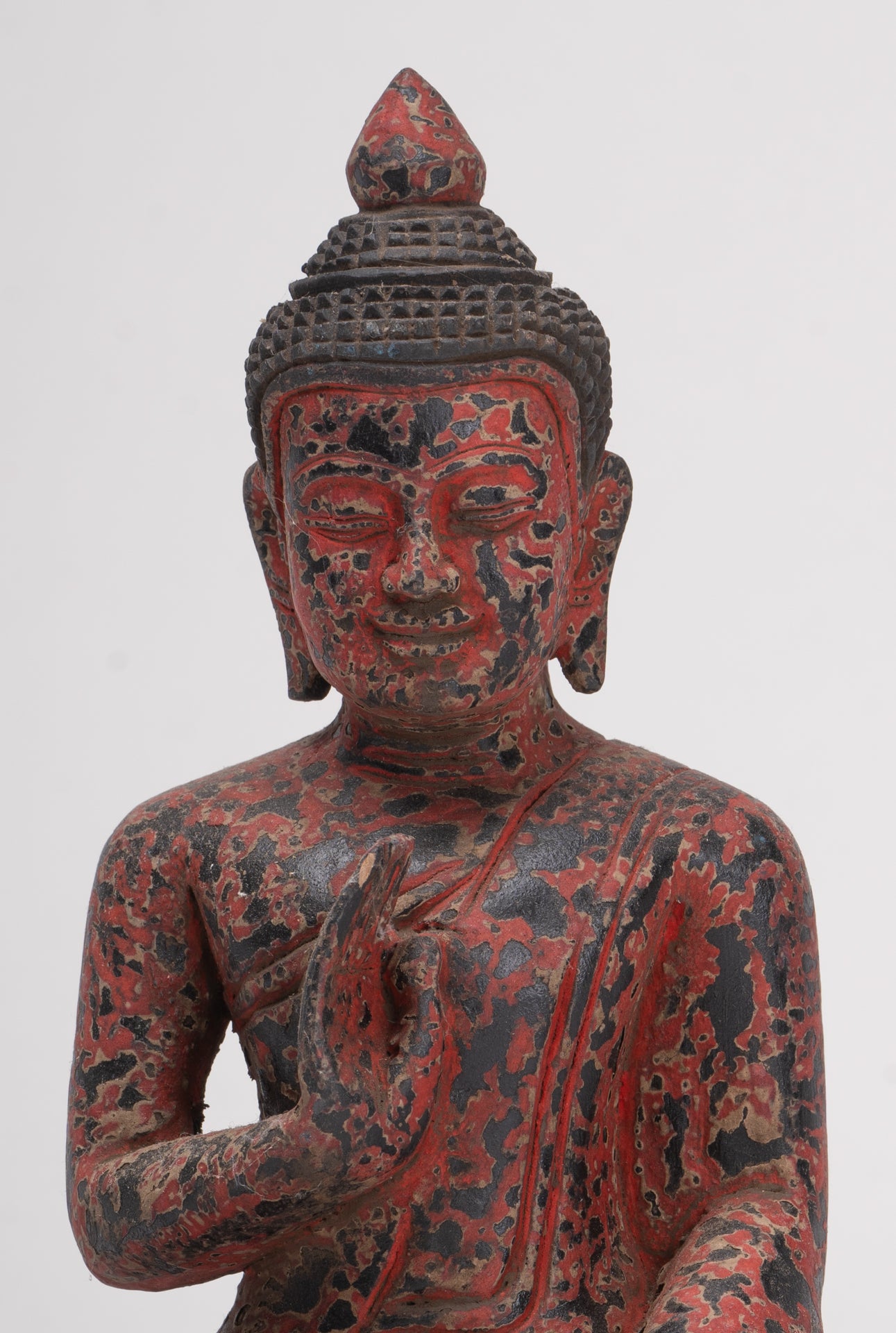
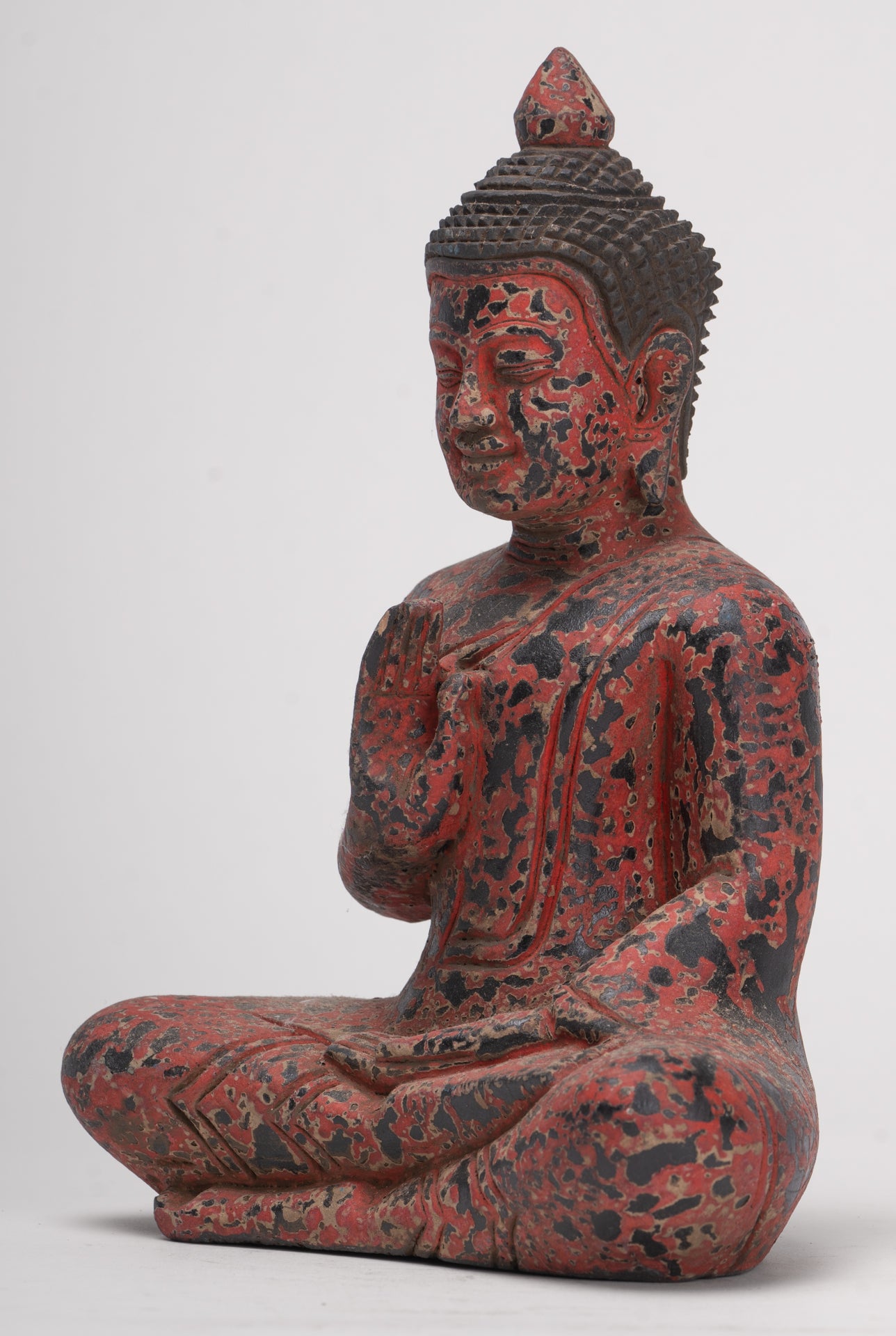
Antique Khmer style wood Buddha statue. The Buddha has a peaceful countenance with downcast introspective eyes and a firm brow.
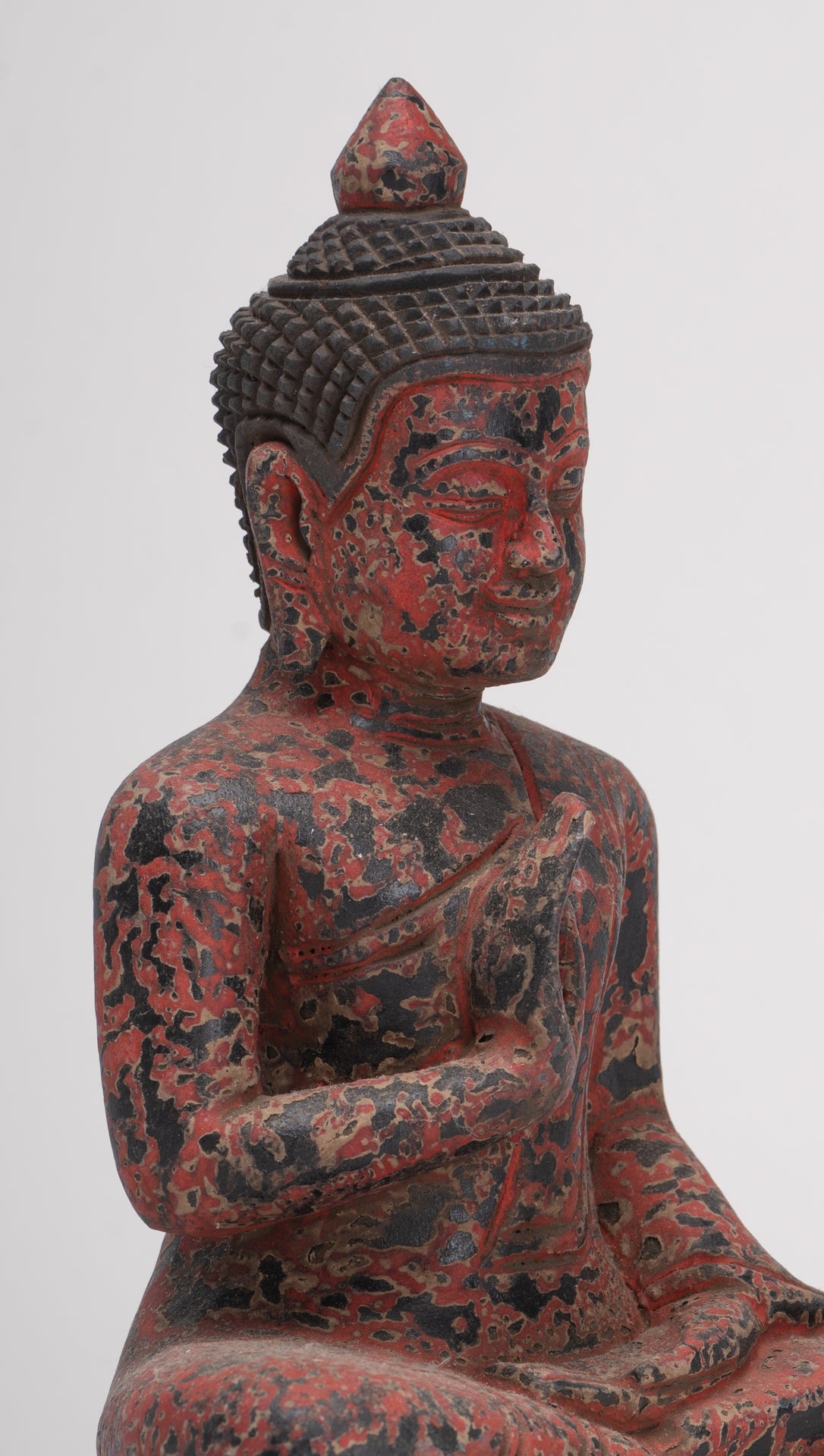
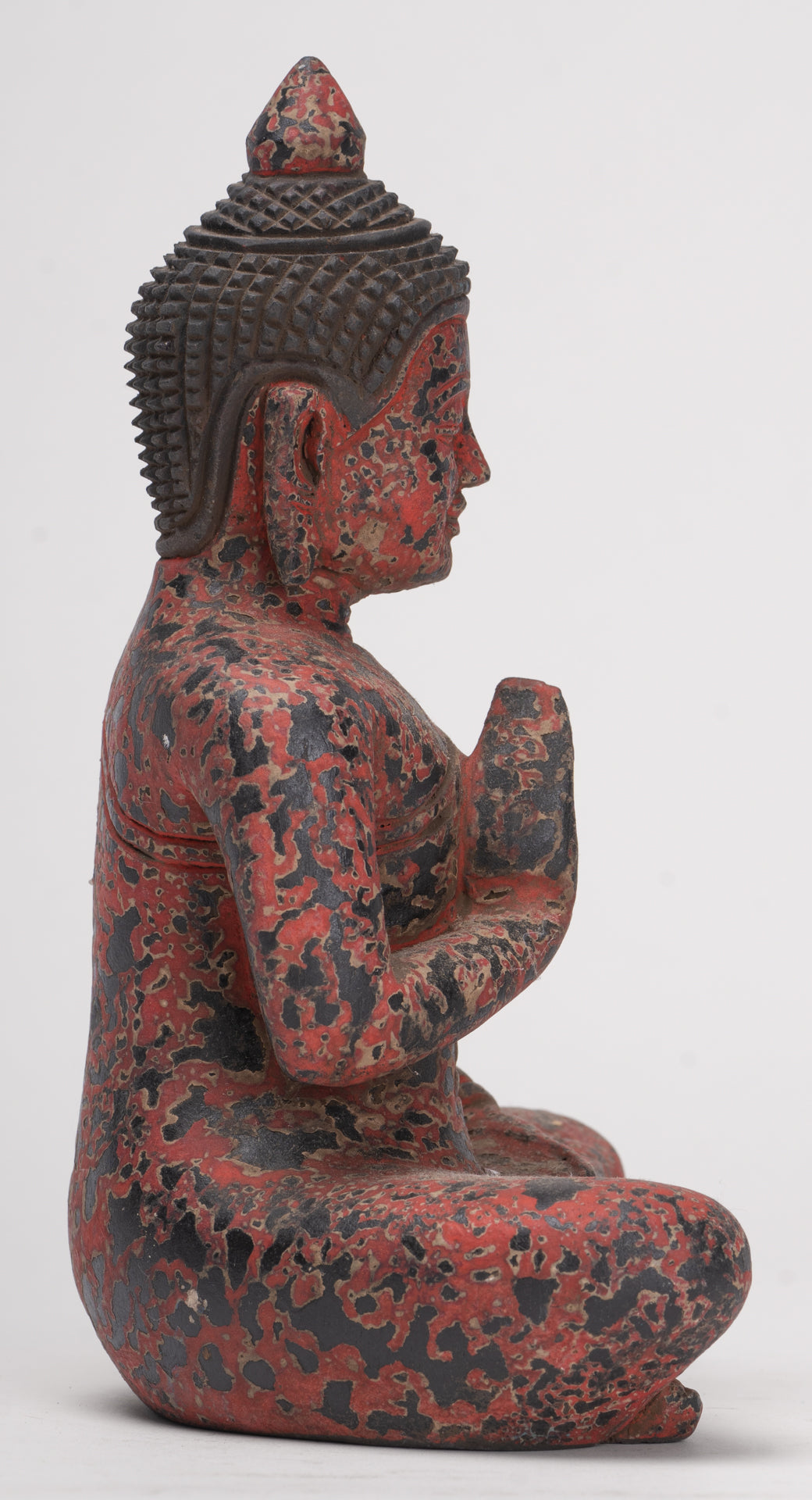
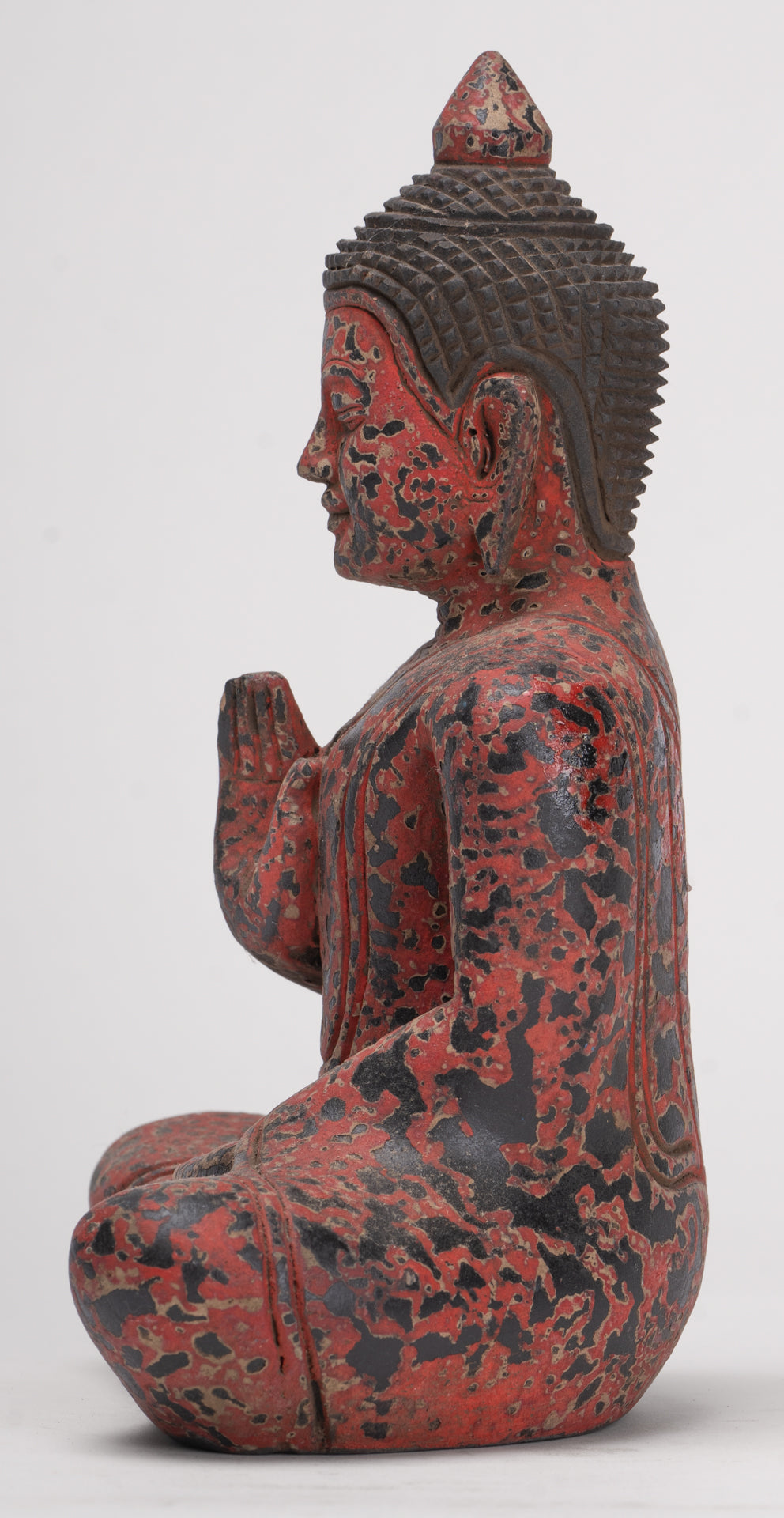
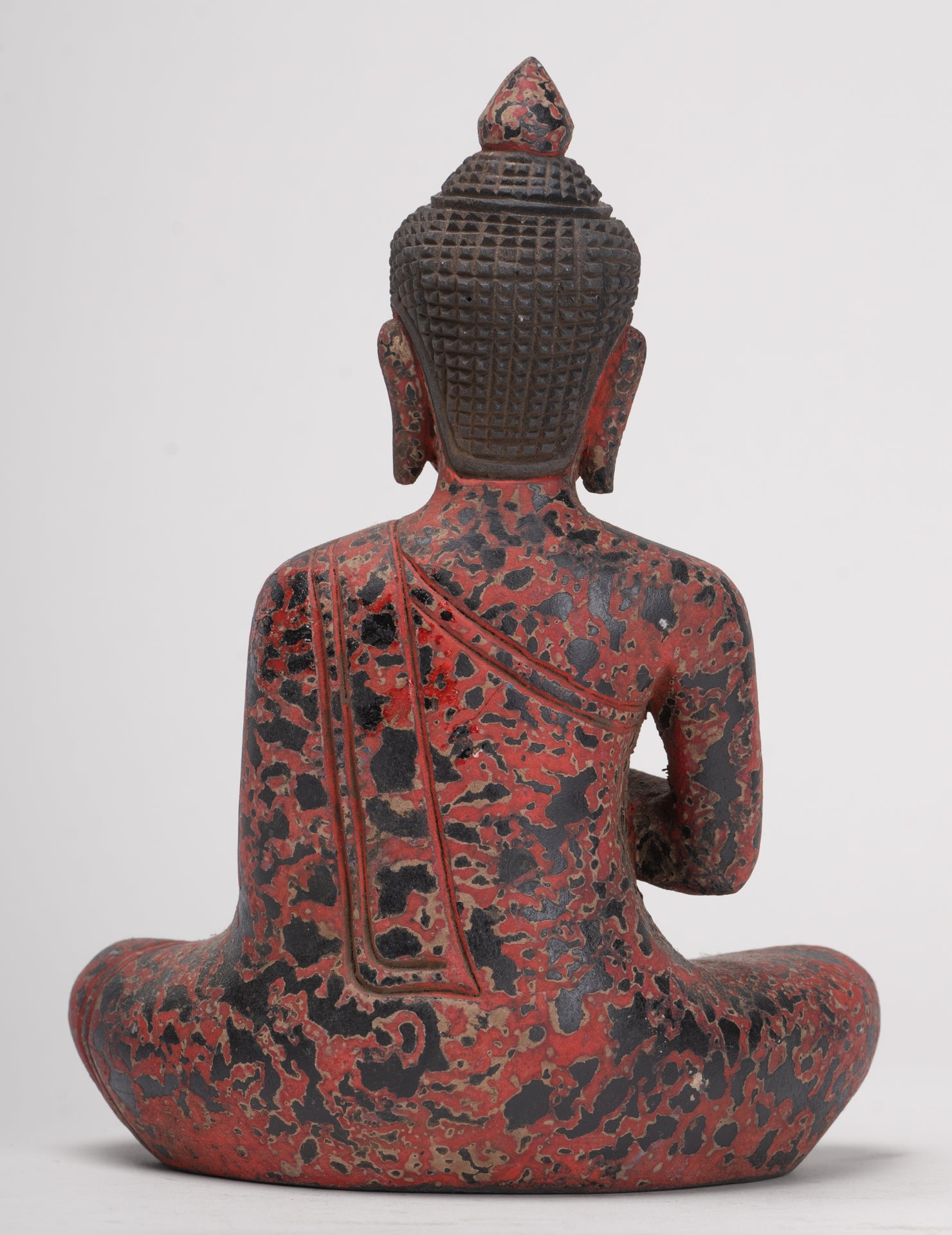
The bodies profile is with broad shoulders and slender waist, covered by a Sanghati robe worn diagonally over the left shoulder, and is graced by a heavily pleated flap draped to the navel. The right shoulder is left bare.
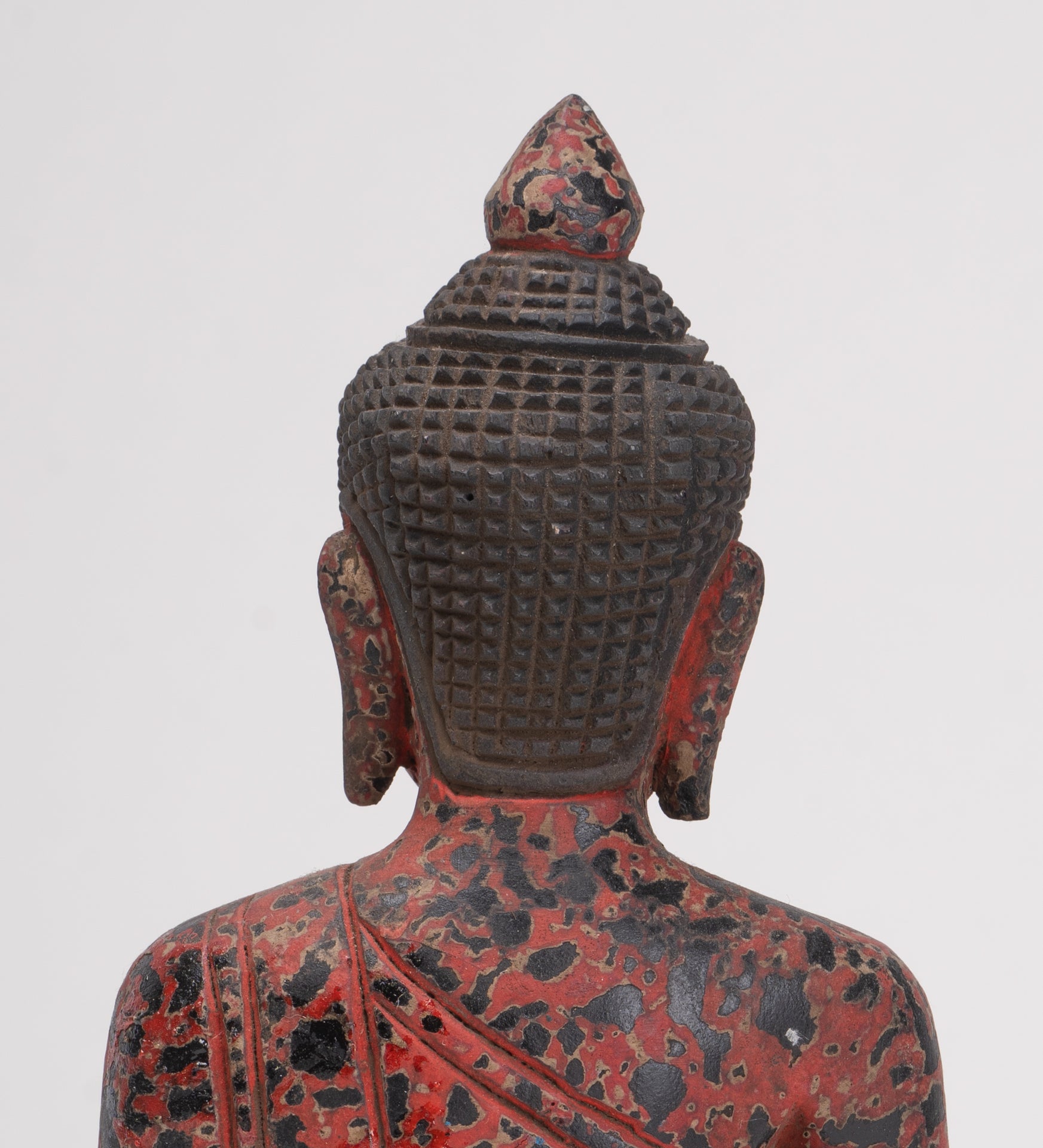
The Buddha features an oval shaped face, with almond shaped downcast eyes. Curved eyebrows meet above a prominent nose, and contoured lips with an exalted expression, appear smiling. The shell like curls of the hair form are surmounted by a lotus flower ushnisha, symbolising his high level of spiritual development. His earlobes are stretched long from a youth spent as a prince wearing heavy gold earrings.
The carving is beautiful as you can see in the fine details of the face. Each detail is rendered perfectly. The distinctive patina of the piece is also particularly delightful.
The Buddha is seated in the half lotus position with his right hand raised in front of his chest in the dharmachakra mudra. In sanskrit dharmachakra means the 'Wheel of Dharma'. This mudra symbolises one of the most important moments in the life of Buddha, the occasion when he preached to his companions the first sermon after his Enlightenment in the Deer Park at Sarnath. It therefore denotes the setting into motion of the Wheel of the teaching of the Dharma. In this mudra the thumb and index finger of both hands touch at their tips to form a circle. This circle represents the Wheel of Dharma, or in metaphysical terms, the union of method and wisdom.
The sculpture provides the perfect traditional in appearance Buddha to bring serenity and timeless style to your home, office or sacred space.
Key Features
-
Antique Khmer‑style wooden Buddha – A finely carved seated Buddha inspired by the elegant, contemplative forms of Cambodian sacred art.
-
Compact display size – Measures 19cm / 8" high, ideal for a bookshelf, desk, home altar, meditation corner or quiet office space.
-
Teaching Buddha iconography – Seated in a half‑lotus posture with the right hand raised in the Dharmachakra mudra, the gesture of turning the Wheel of Dharma.
-
First sermon symbolism – The Dharmachakra mudra recalls the Buddha’s first teaching at the Deer Park in Sarnath, when he began sharing the path to liberation.
-
Graceful sanghati robe – A monastic robe falls diagonally over the left shoulder, leaving the right shoulder bare, with a heavily pleated flap descending to the navel.
-
Serene Khmer‑style features – Broad shoulders, a slender waist, oval face, almond‑shaped downcast eyes, curved brows and a subtle smile create a calm and balanced presence.
-
Sacred Buddha attributes – Shell‑like hair curls rise to a lotus‑form ushnisha, while elongated earlobes symbolise renunciation and spiritual wealth.
-
Fine hand‑carved detail – Beautiful modelling in the face, robes and hand gesture demonstrates careful workmanship at an intimate scale.
-
Attractive aged patina – A distinctive, time‑softened surface brings warmth, depth and individual character to the wood.
-
A peaceful focal point – A meaningful Buddha for a home, study, office, meditation room or dedicated sacred space.
Frequently Asked Questions
Q: What does this Buddha represent?
A: This is a Teaching Buddha, shown making the Dharmachakra mudra—the gesture of turning the Wheel of Dharma. It commemorates the Buddha’s first sermon after his enlightenment, when he began sharing his understanding of suffering, its causes and the path beyond it.Q: What does “Dharmachakra” mean?
A: Dharmachakra is Sanskrit for “Wheel of Dharma” or “Wheel of Teaching.” It refers to the Buddha’s teachings as a force set in motion, guiding beings towards wisdom, compassion and liberation.Q: What is the meaning of the hand gesture?
A: In the Dharmachakra mudra, the fingers form or suggest a circular shape representing the Dharma Wheel. This circle also symbolises the union of method and wisdom—compassionate action joined with clear insight—at the heart of Buddhist practice.Q: Why is this mudra associated with Sarnath?
A: Buddhist tradition associates the gesture with the Buddha’s first sermon at the Deer Park in Sarnath, delivered after his enlightenment. There, he taught his first companions and set the Wheel of Dharma in motion.Q: What style is the Buddha?
A: The piece is made in an antique Khmer style, inspired by the sacred art of Cambodia. The broad shoulders, slender waist, calm oval face, robe arrangement and poised treatment of the hands are all consistent with the graceful, contemplative character associated with Khmer Buddhist sculpture.Q: Is this an original Khmer‑period sculpture?
A: It is described as an antique Khmer‑style wood Buddha. “Khmer‑style” identifies the artistic inspiration; it should not be read as confirmation that the sculpture itself dates to the historical Khmer Empire.Q: What material is the Buddha made from?
A: The statue is carved from wood. The organic material gives the figure warmth and a tactile quality that contrasts beautifully with the formal stillness of the Buddha’s posture.Q: What is a sanghati robe?
A: A sanghati is a traditional monastic outer robe. Here it is draped diagonally over the left shoulder, leaving the right shoulder bare, while a deeply pleated section falls to the navel. This robe treatment expresses simplicity, discipline and the Buddha’s renunciation of worldly status.Q: Why does the Buddha have a bare right shoulder?
A: The exposed right shoulder follows traditional monastic robe arrangements found in Buddhist art. It is a visual expression of the Buddha’s life as a renunciant and gives the sculpture an elegant asymmetry, balancing the more heavily folded fabric on the left side.Q: What do the long earlobes mean?
A: The elongated earlobes recall the Buddha’s youth as Prince Siddhartha, when heavy gold earrings stretched his ears. After he renounced royal luxury, they became a symbol of the contrast between outer wealth and inner wisdom.Q: What is the ushnisha on top of the head?
A: The raised ushnisha is a traditional mark of Buddhahood. It signifies elevated spiritual attainment, wisdom and enlightenment. Here it takes a lotus‑like form, reinforcing the Buddha’s connection with purity and awakening.Q: Why is the Buddha’s gaze downcast?
A: The lowered eyes convey deep contemplation and compassionate awareness. They suggest a mind that is calm and inwardly focused, while remaining attentive to the suffering and needs of the world.Q: What does the gentle smile symbolise?
A: The subtle smile expresses serenity, inner peace and compassionate confidence. It is not a worldly smile, but an indication of the calm and balanced state that the Buddha’s teachings invite us to cultivate.Q: Is this Buddha suitable for meditation?
A: Yes. The Teaching mudra makes this Buddha particularly fitting for a study, meditation space or personal altar. It can serve as a reminder to return to clear awareness, seek understanding and bring compassion into daily action.Q: How can I use the statue as a meditation focus?
A: Place the Buddha at eye level or slightly above, sit quietly before it and use the hand gesture as a reminder of the Dharma’s teachings. You might reflect on a question such as: “What would it mean to respond to this situation with greater wisdom and compassion?”Q: Is it suitable for non‑Buddhists to display?
A: Yes. People of many backgrounds appreciate Buddha images as symbols of mindfulness, peace and ethical wisdom. It is respectful to place the figure in a clean, stable, elevated position and avoid treating it as a casual floor‑level ornament.Q: Where is the best place to display it?
A: This compact 19cm / 8" Buddha is ideal for a shelf, desk, bedside table, small cabinet, meditation room, reading nook or office. A clean and uncluttered setting will allow the detailed face, robe folds and teaching gesture to be appreciated.Q: Can I place offerings near the Buddha?
A: Yes. Fresh flowers, a small bowl of water, incense, a candle or LED tealight can create a simple, respectful setting. Keep items lower than the Buddha and avoid allowing wax, ash or moisture to come into direct contact with the wood.Q: How should I care for a wooden Buddha statue?
A: Dust gently with a soft, dry cloth or soft natural‑bristle brush. Avoid soaking the wood, placing it in direct sunlight, using furniture sprays, oil, wax, harsh cleaners or abrasive products. Keep it away from radiators, fireplaces and persistently damp conditions.Q: Can it be displayed outdoors?
A: Indoor display is strongly recommended. Wood can respond to moisture, humidity changes, frost and direct sun by cracking, fading or warping, while an aged patina can be permanently altered by weather exposure.Q: Who would especially appreciate this piece?
A: This Khmer‑style Teaching Buddha is ideal for collectors of Southeast Asian art, Buddhist practitioners, students and teachers, meditators, therapists and anyone seeking a compact but meaningful image of wisdom, learning and inner stillness.SATISFACTION GUARANTEE - We have been offering SE Asian Art for many years and are proud of the reputation we have developed for fair and honest listings. However, if for any reason, whatsoever, you are unhappy with your purchase please just let us know and we will provide a full refund. We want you to be 100% happy with your purchase.
-
-
The majority of orders will be shipped with DHL. This is a secure, express and fully tracked service.
Items less than 2Kg we typically ship using Royal Mail.
Once we receive your order we try to ship all orders the same or next working day.
Large and/or fragile pieces requiring palletising, specialist crating and/or extra packaging may take a little longer. Palletised shipments will be delivered curbside.
All orders over 35 GBP will be shipped free of charge.

-
We genuinely hope that all purchases delight.
However, if they do not, regardless of reason, we will refund all orders upon receipt of the unwanted item. Just notify us within 14 days of receiving your order that you wish to make a return and send the piece back to us with 30 days of delivery.


