



-
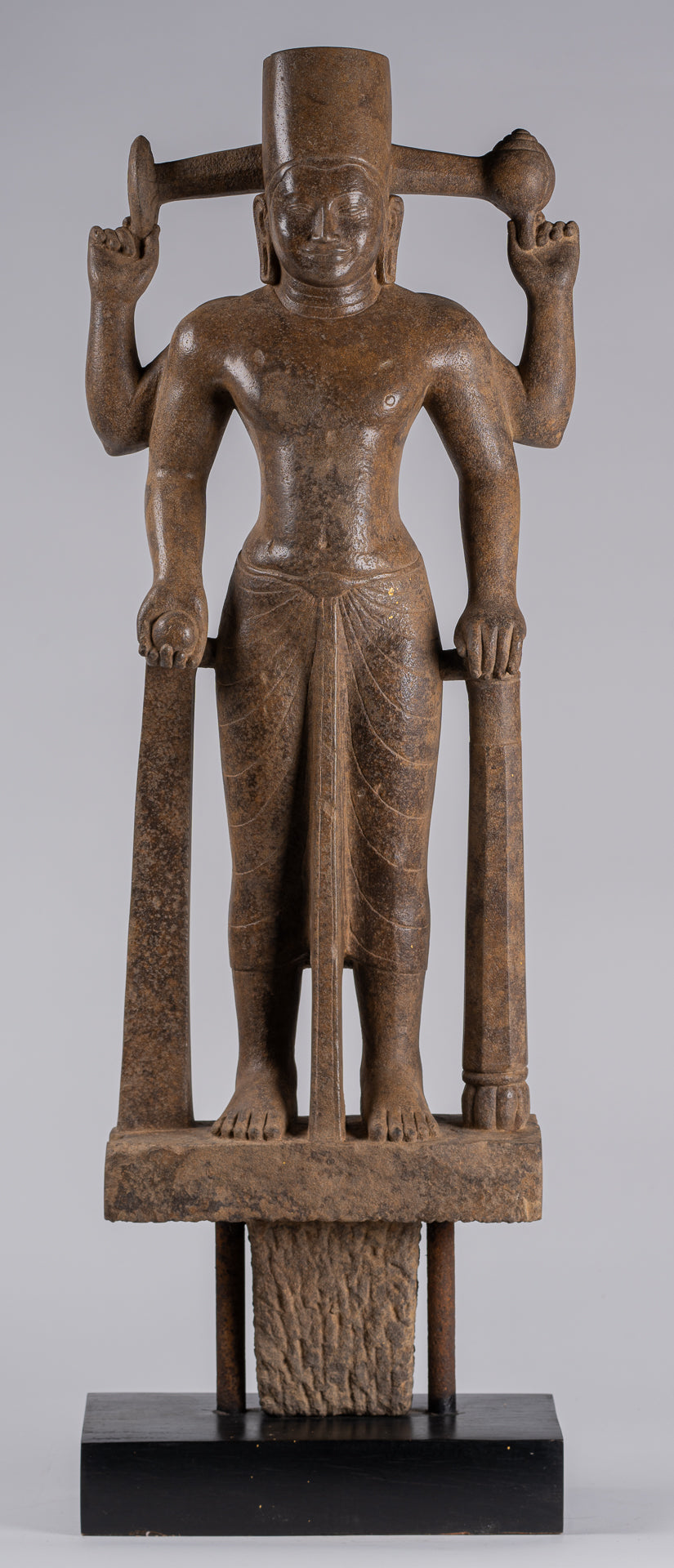
Antique Pre-Angkor Style Mounted Sandstone Vishnu Statue - 91cm/36"
Measurements - Height 91cm/36"
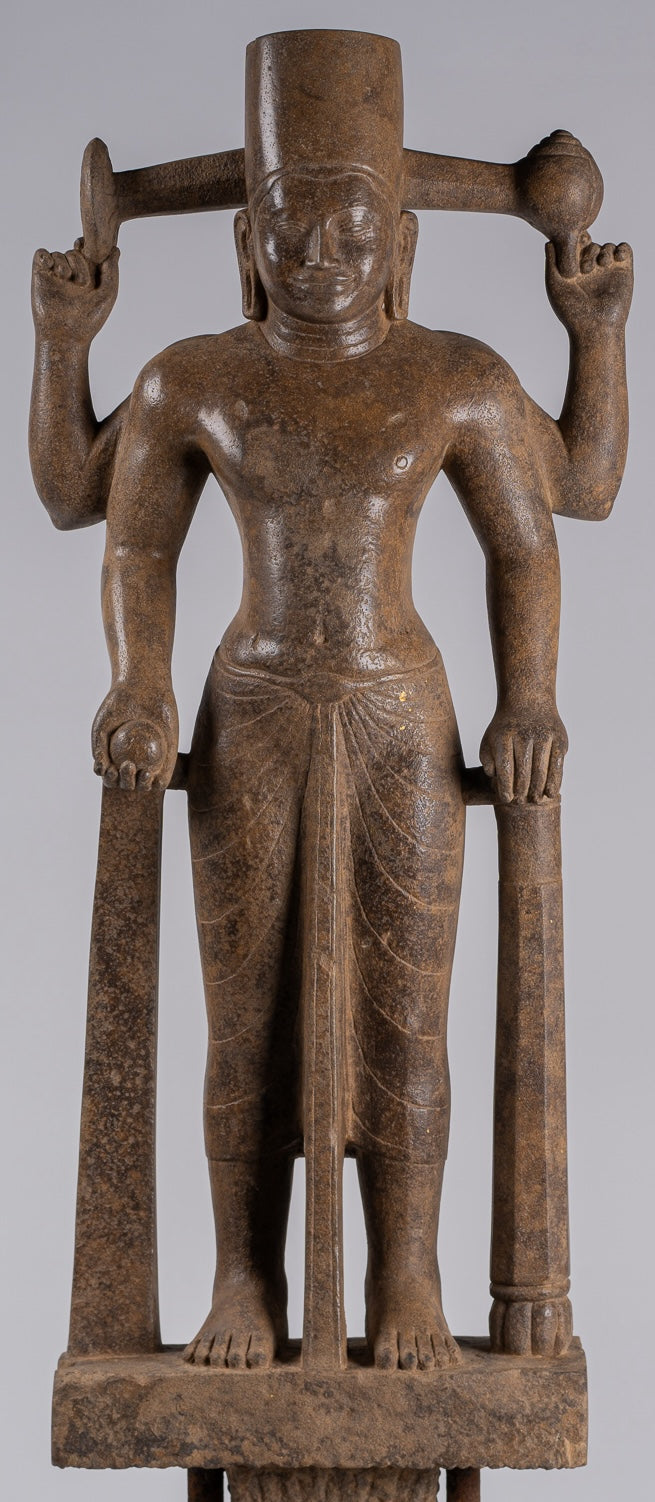
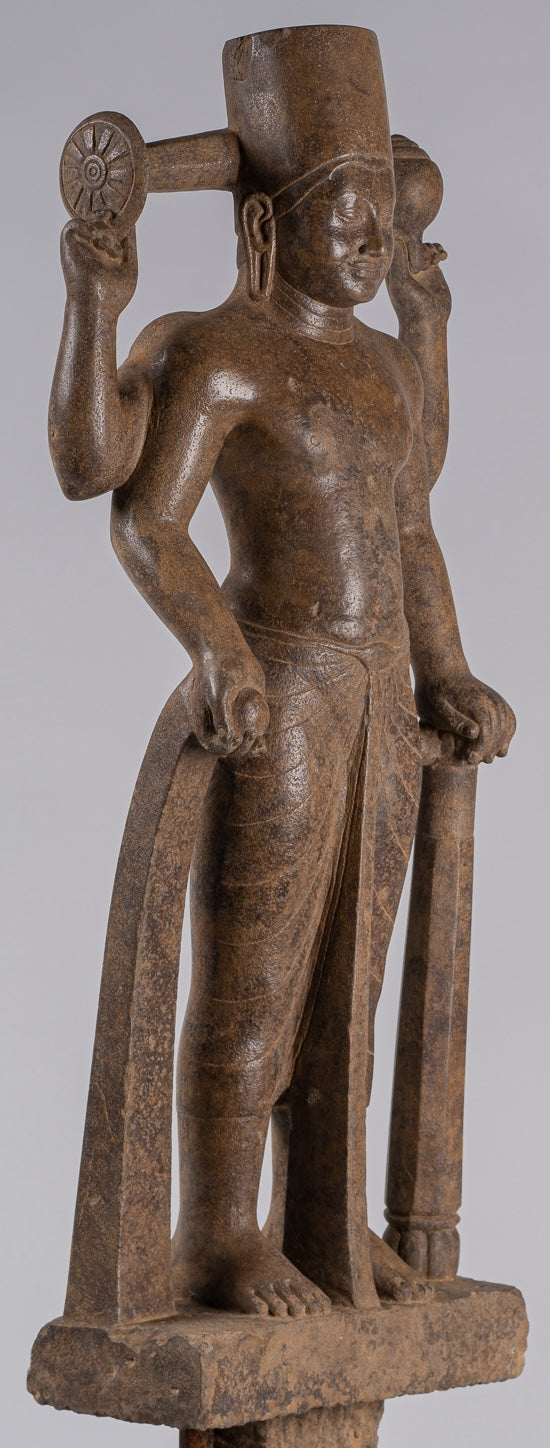
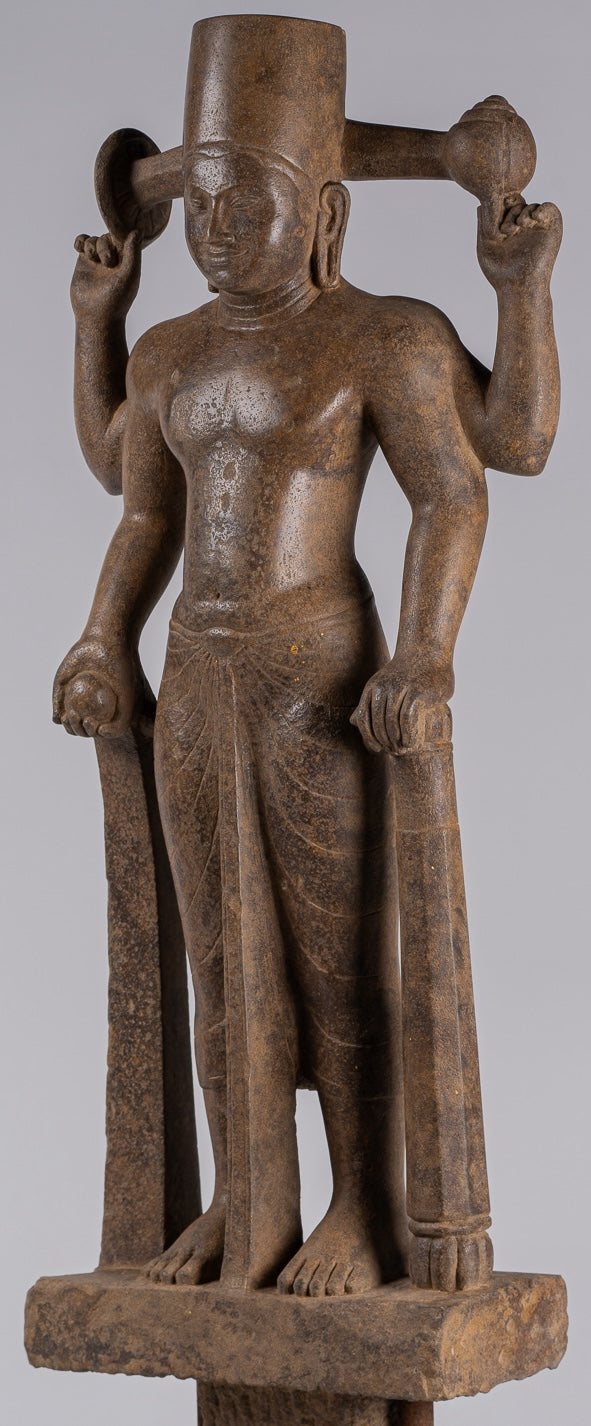
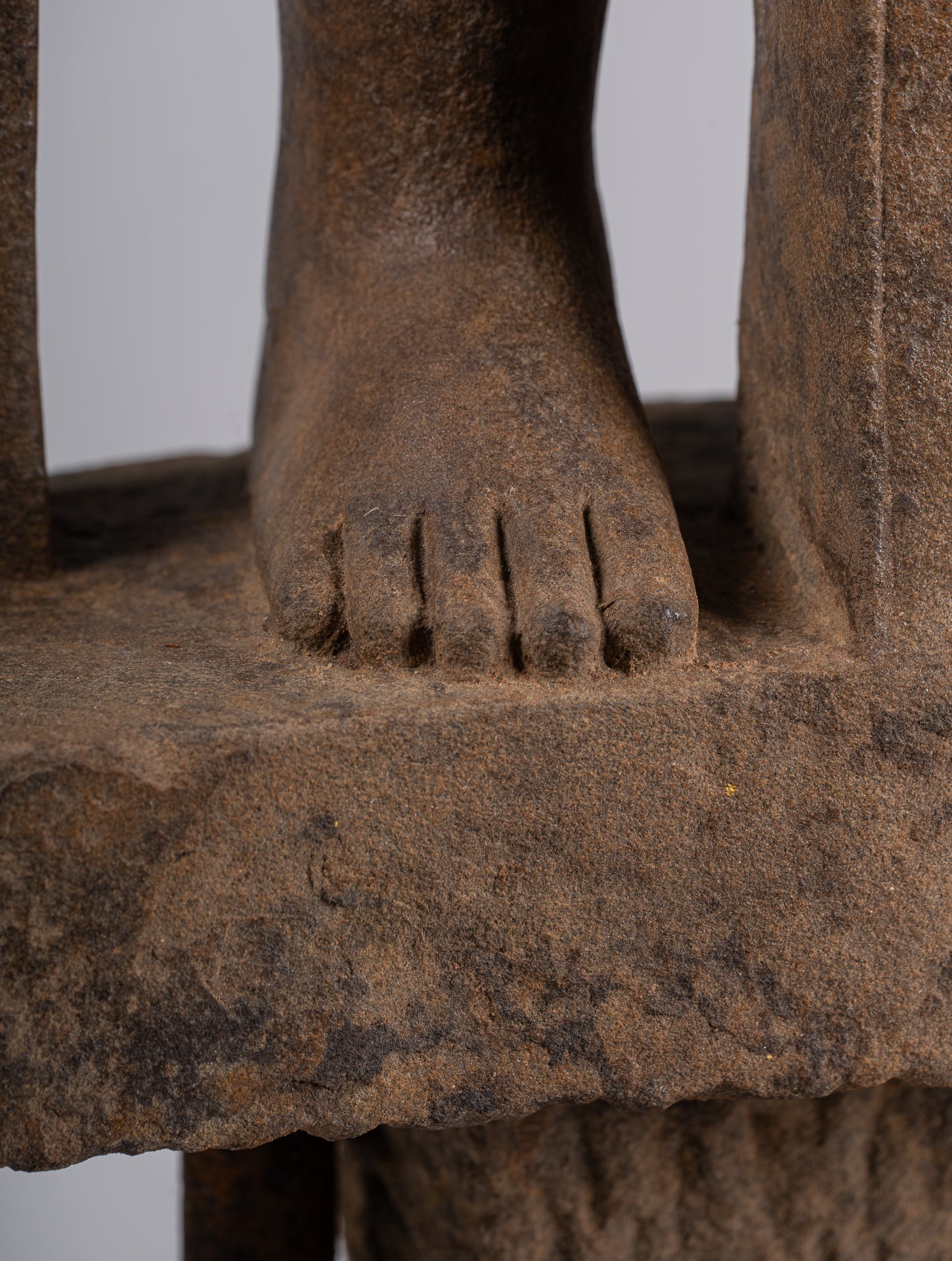
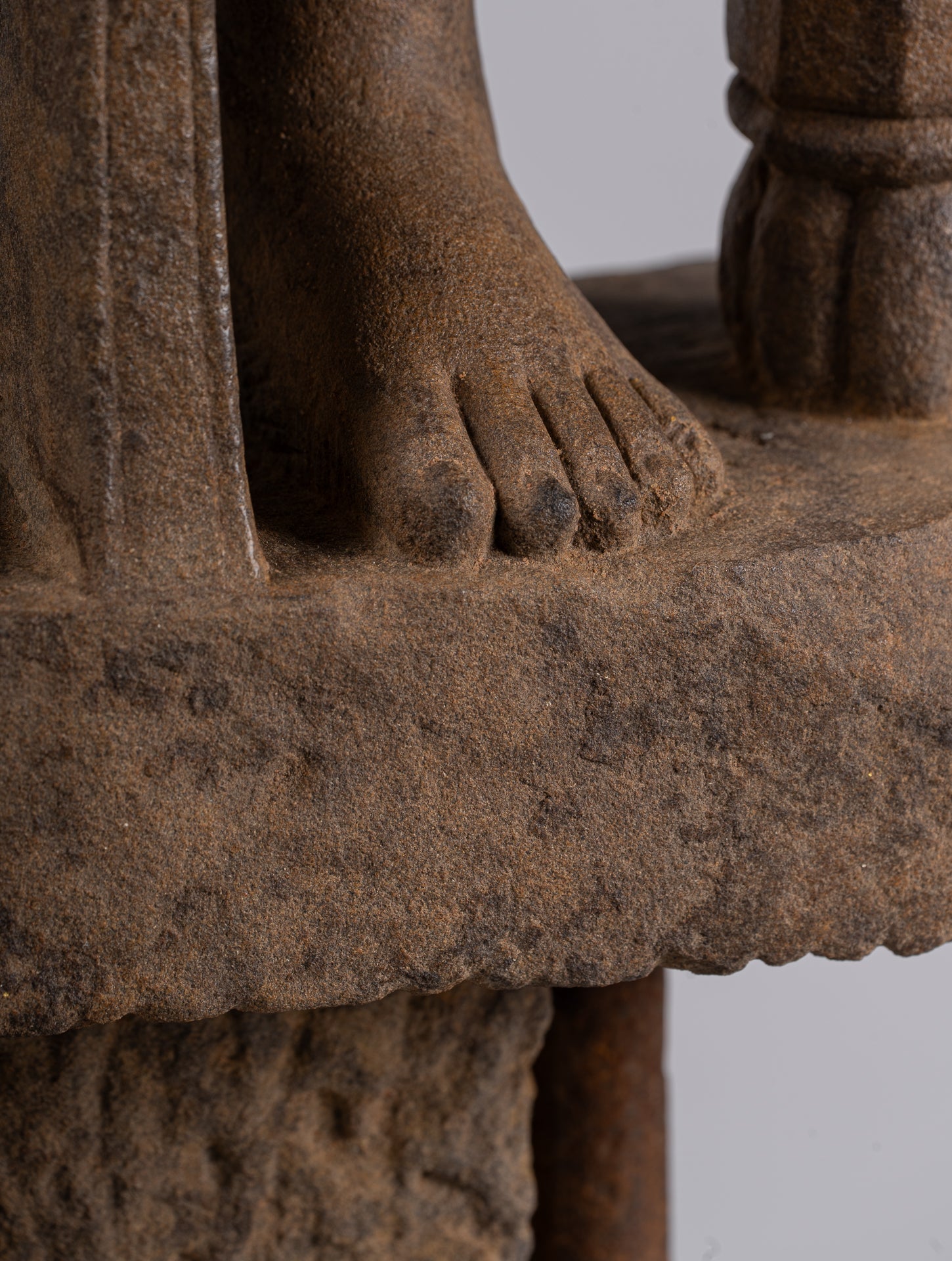
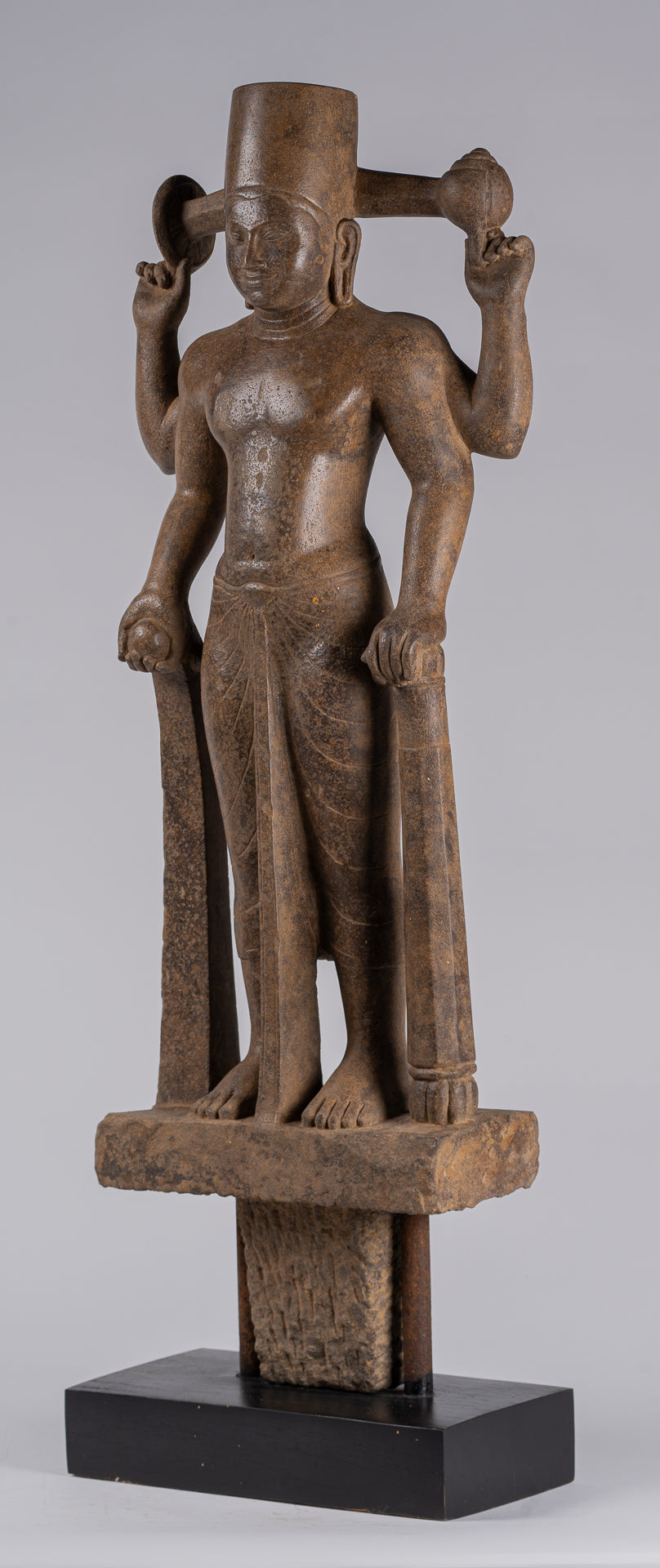
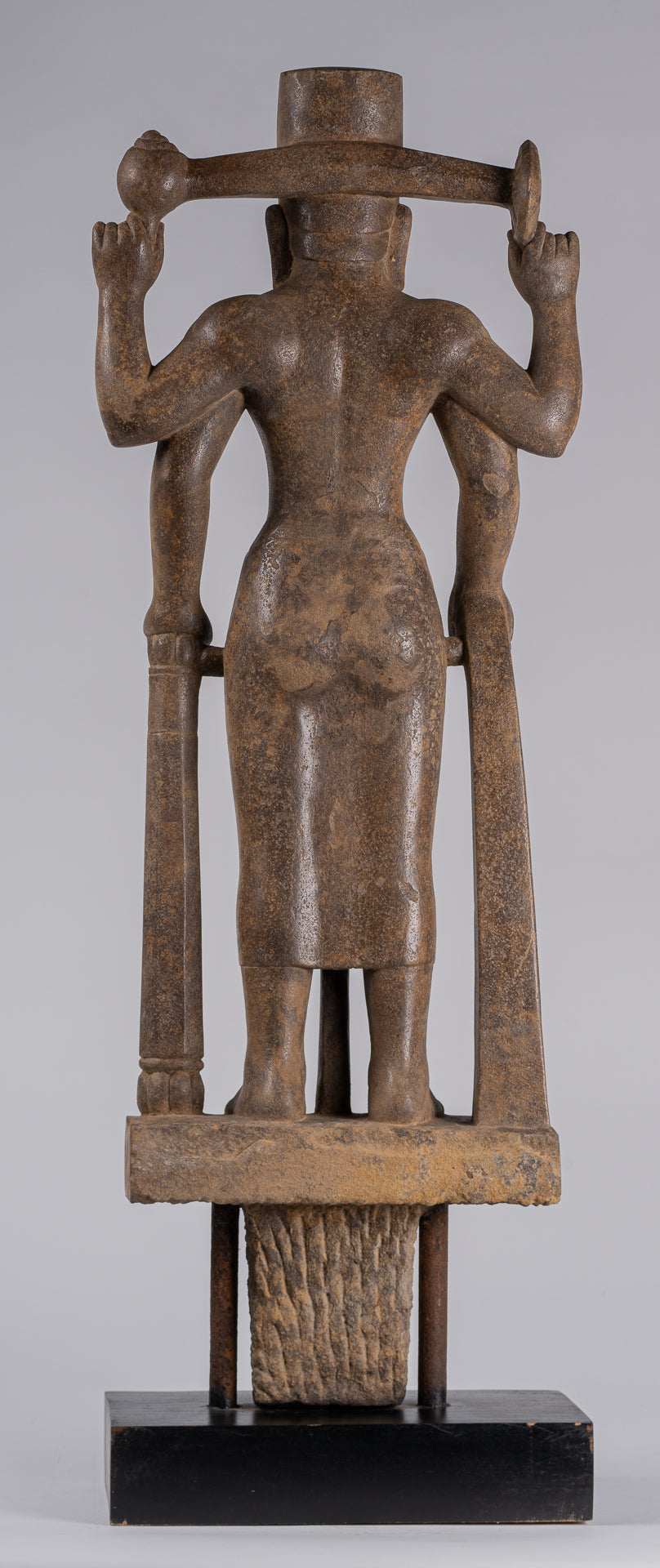
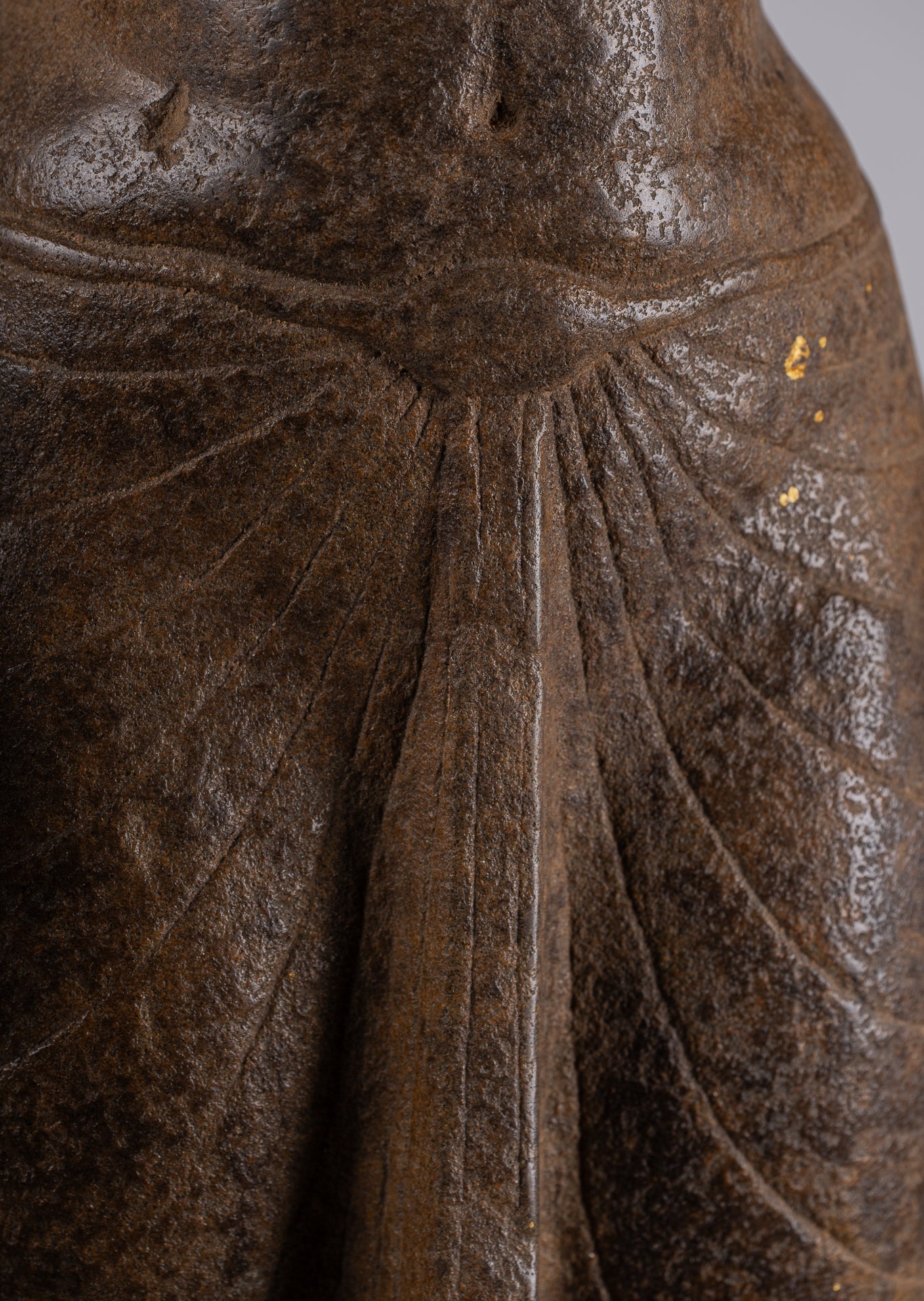
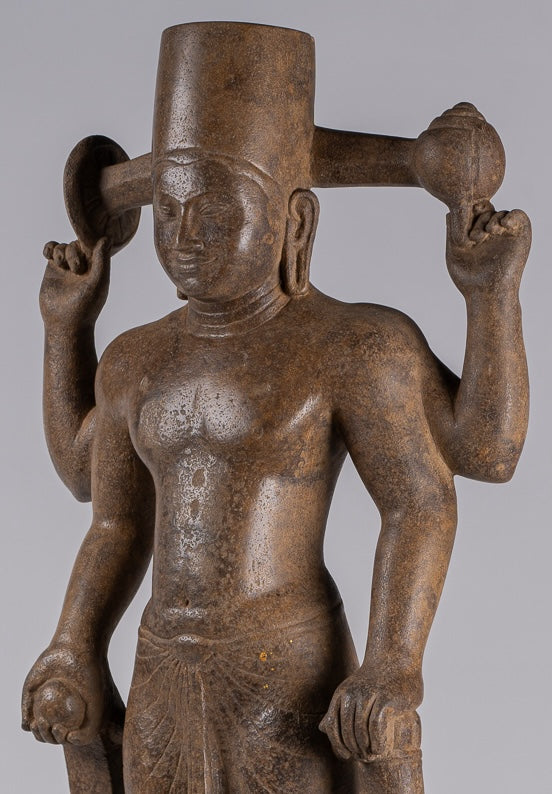
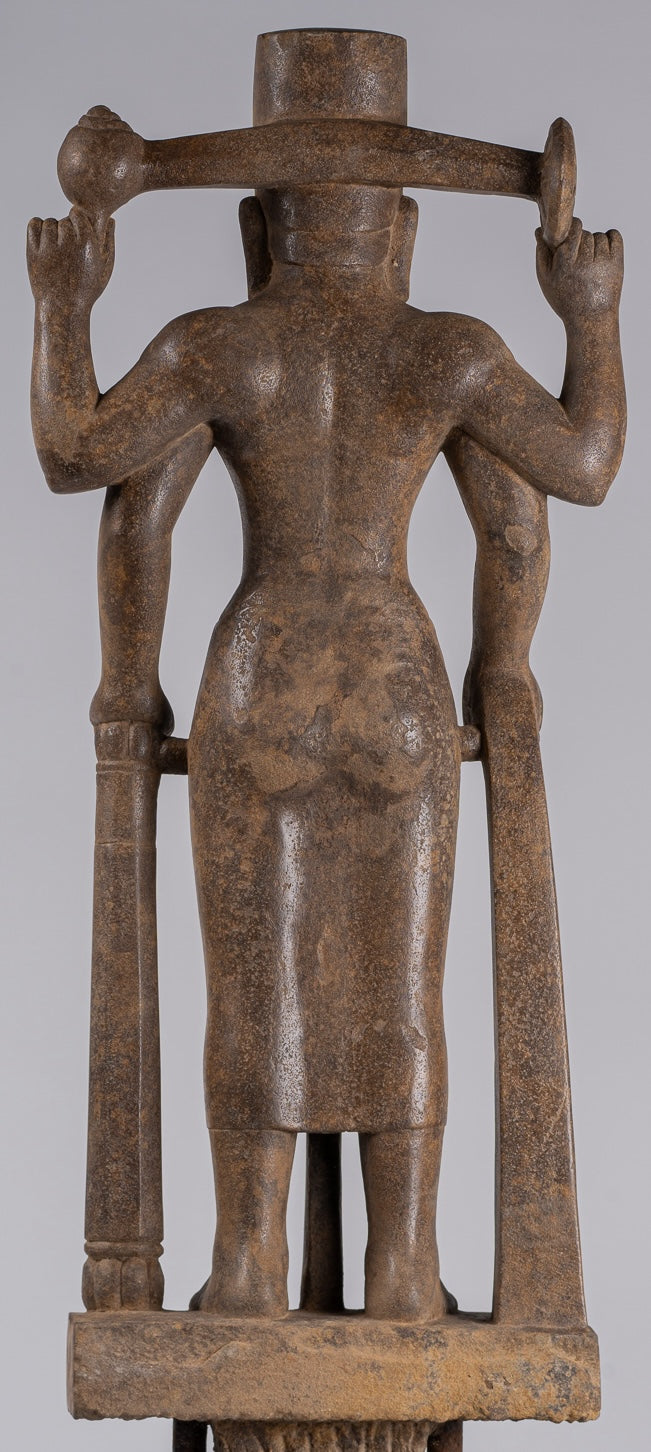
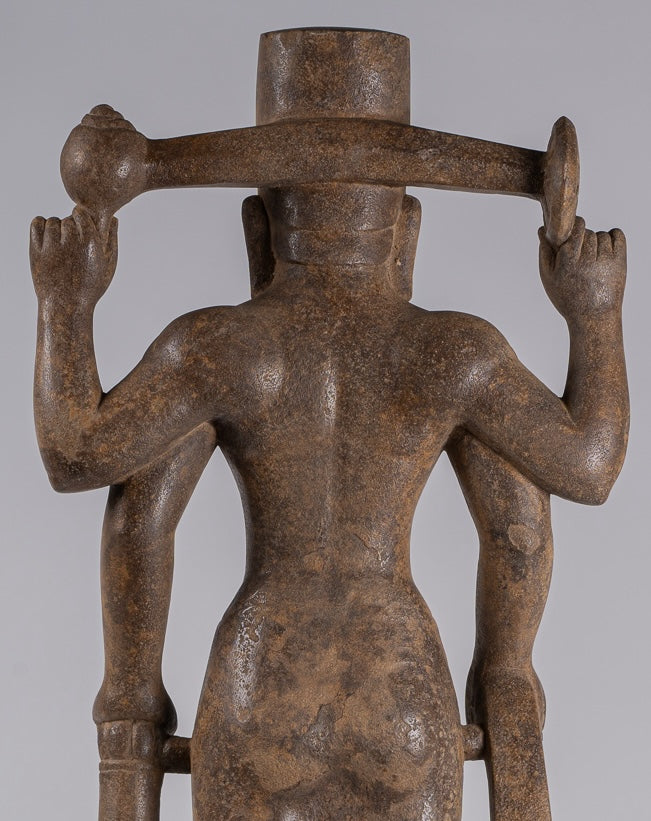
A pre-Angkor, late seventh to early eighth century style, polished brown sandstone, Vishnu sculpture, the Hindu deity of creation. The divine Hindu preserver and protector of human life, a role that provided natural analogies with earthly kingship for the Khmer.This muscular image of Vishnu is depicted standing samabhanga, straight-legged, on a rectangular base. The image is carved in the round with the back as carefully carved as the front. The image wears a high miter and a long clinging sampot knotted at the waist that reveals his powerful, muscular body above.
The Deities 'sampot can spin' and scarf are indicated by indented lines. The patterns created by the folded extremities of the scarf or scarves appear to anticipate the more complex patterns that were to become apparent later in this same period.
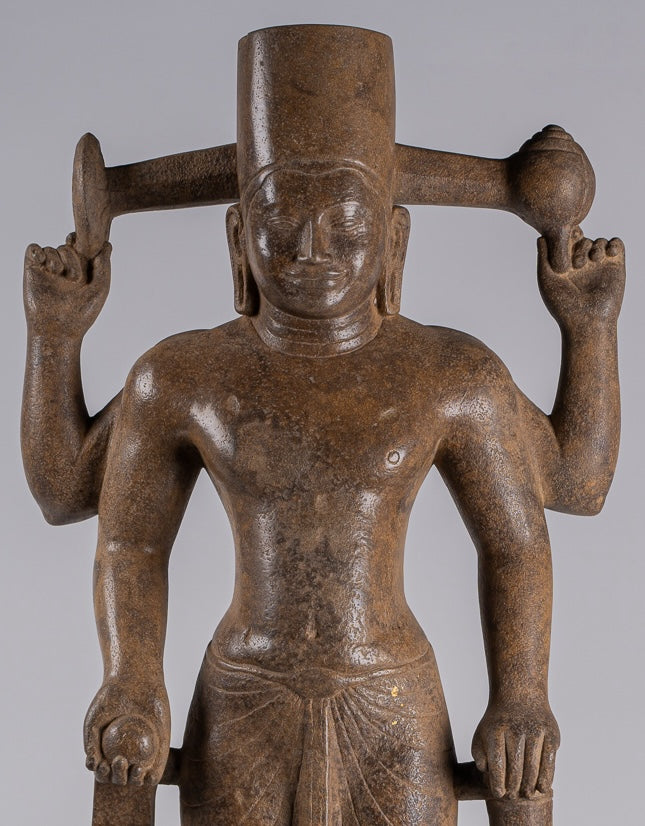
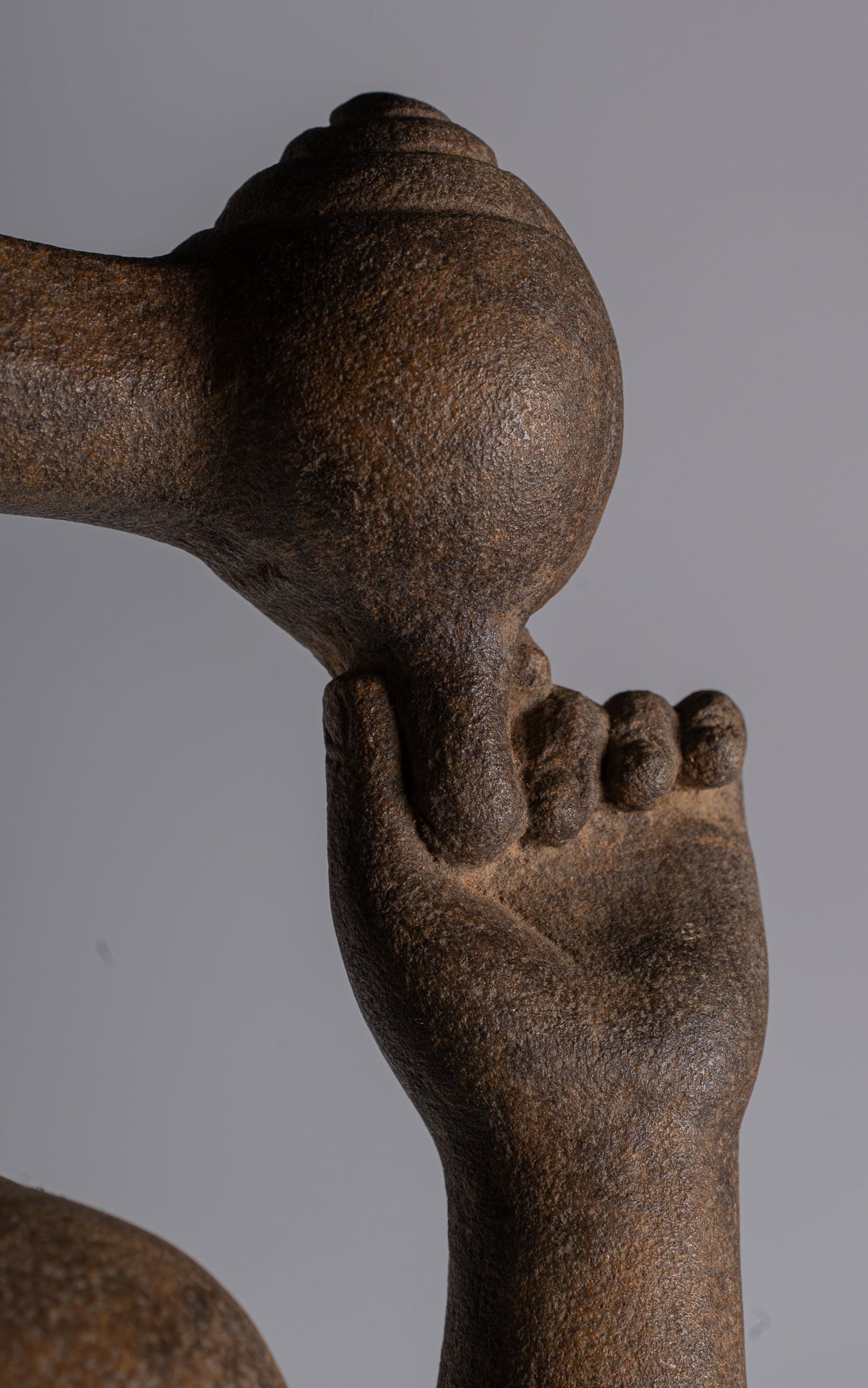
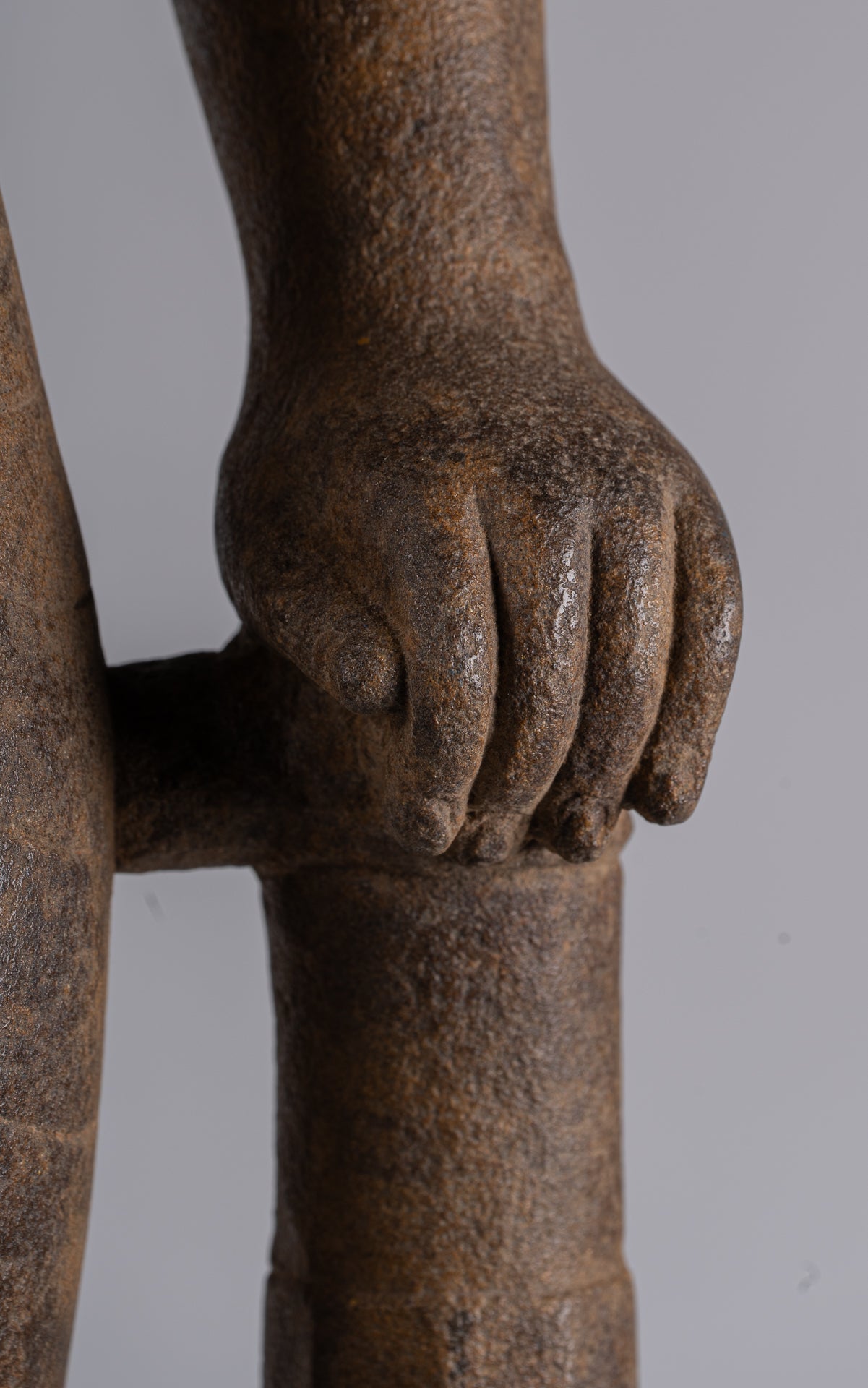
Vishnu is shown with four arms, one of his special attributes held in each hand. His lower left hand rests on the pommel of a mace, and his upper left hand holds a conch-shell trumpet by its longer end. Conch shells were extremely important in both Hindu and Buddhist rituals, and blowing a conch was believed to scare off evil spirits.
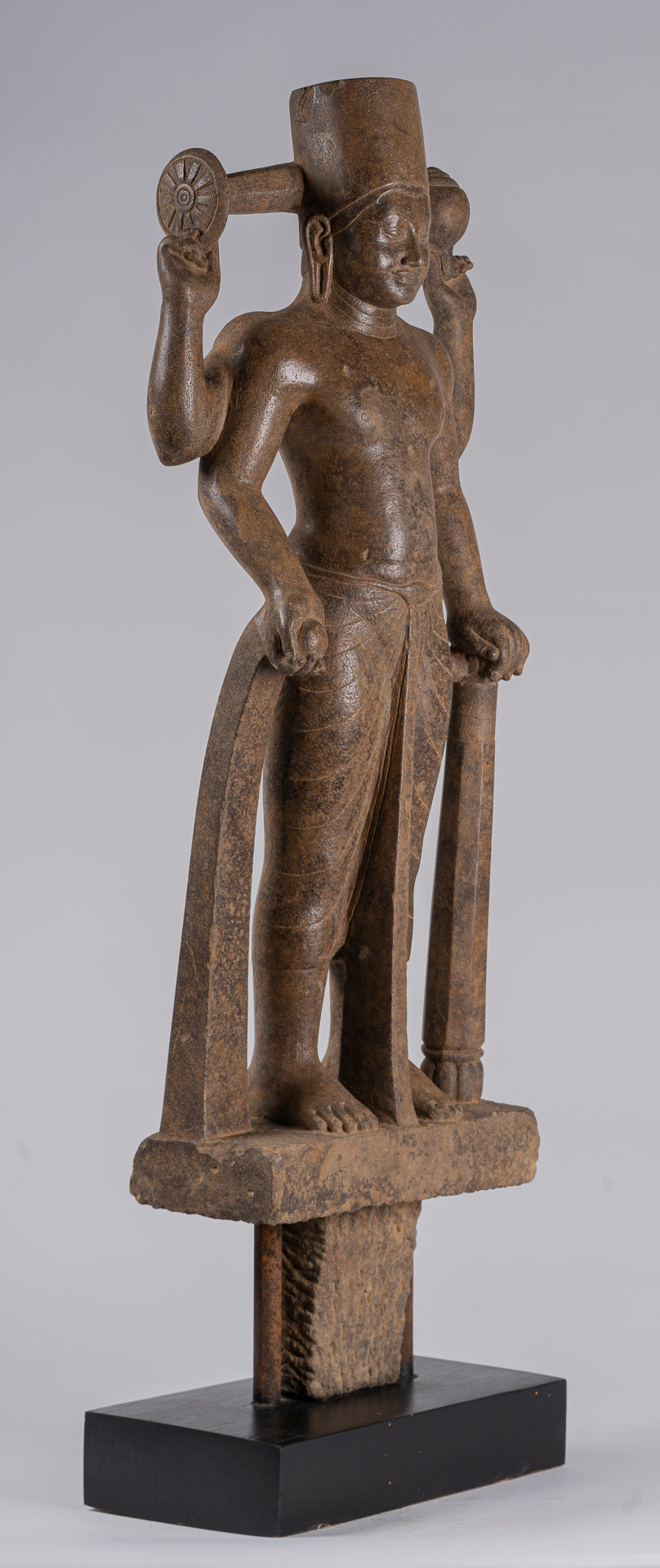
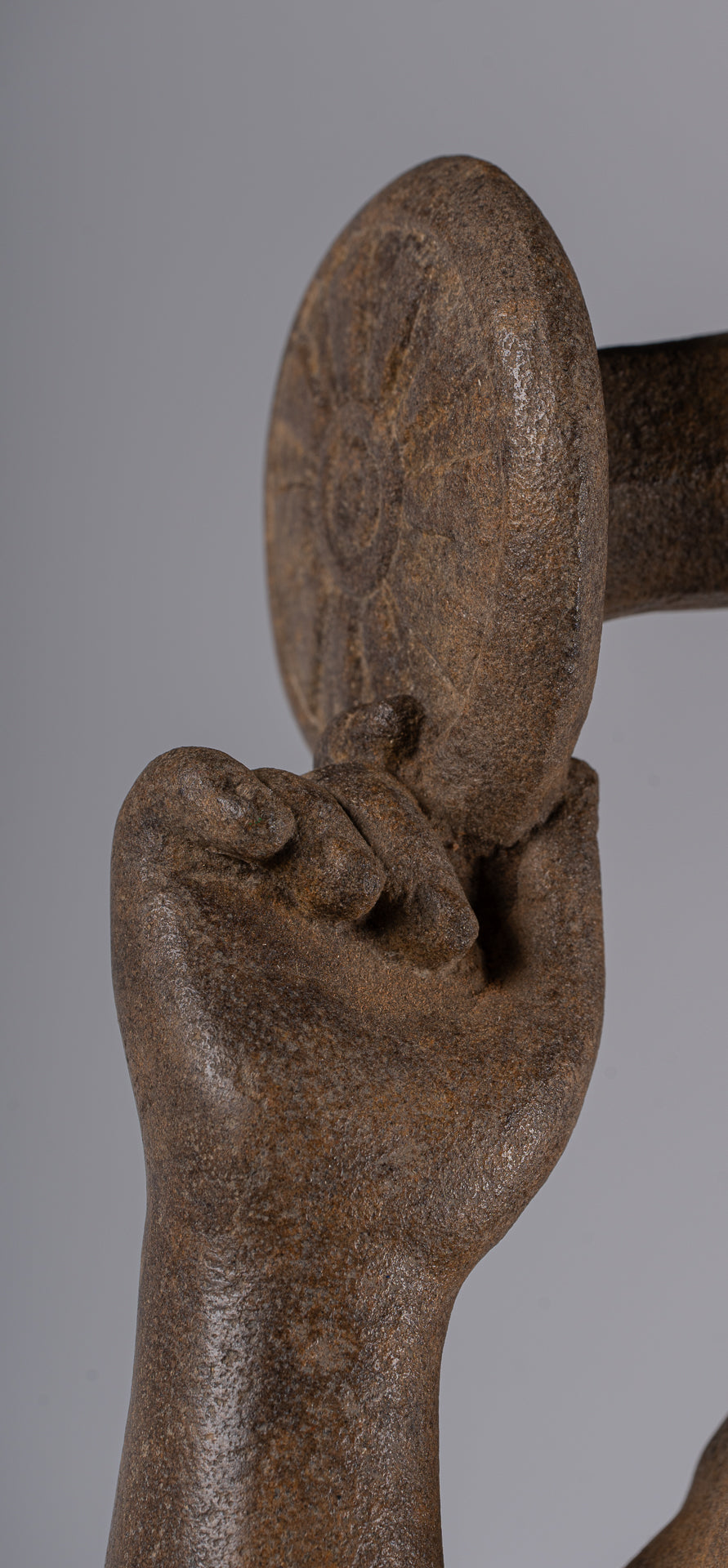
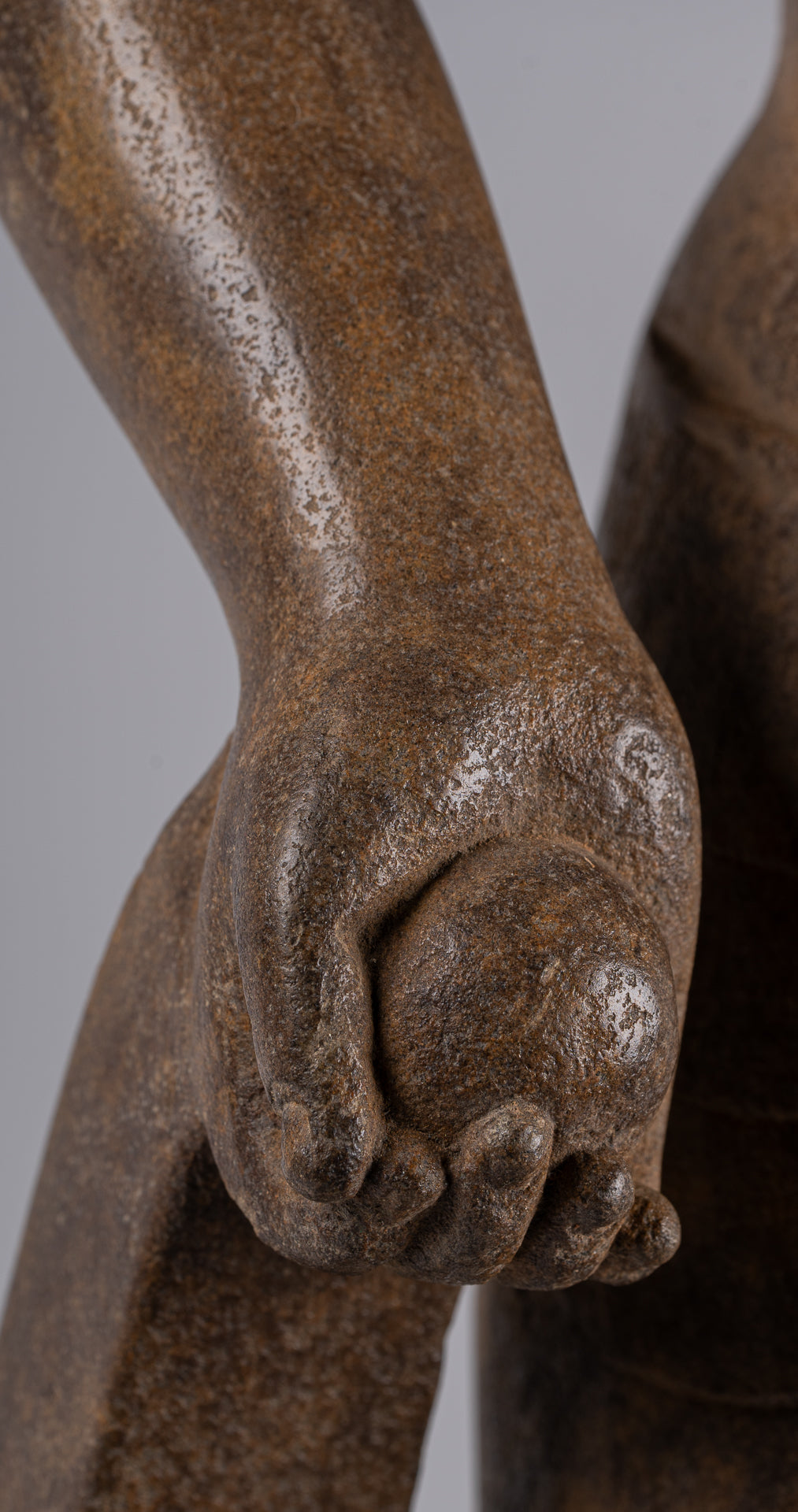
The upper raised right hand holds a chakra, a wheel-shaped thrown weapon with the properties of a boomerang that was associated with Vishnu as early as the Kushan period in India. The lower right hand holds a round object, which has been given several interpretations. It has been said to be a ball or a globe representing the earth, questionable since the earth was considered to be flat in the seventh century. Instead, it is likely that the attribute intended is a lotus that has become too abstracted to be recognizable.
Fourth-century Vishnu images in Gupta India hold a half-open lotus with incised petals that could easily be mistaken for a ball if the incised petal lines are omitted. In Vedic literature the lotus was associated with water and creation.
'The god Brahma, the Indian god of creation, was born in a lotus (growing from Vishnu's navel), and the lotus became an Indian metaphor for the created world.'
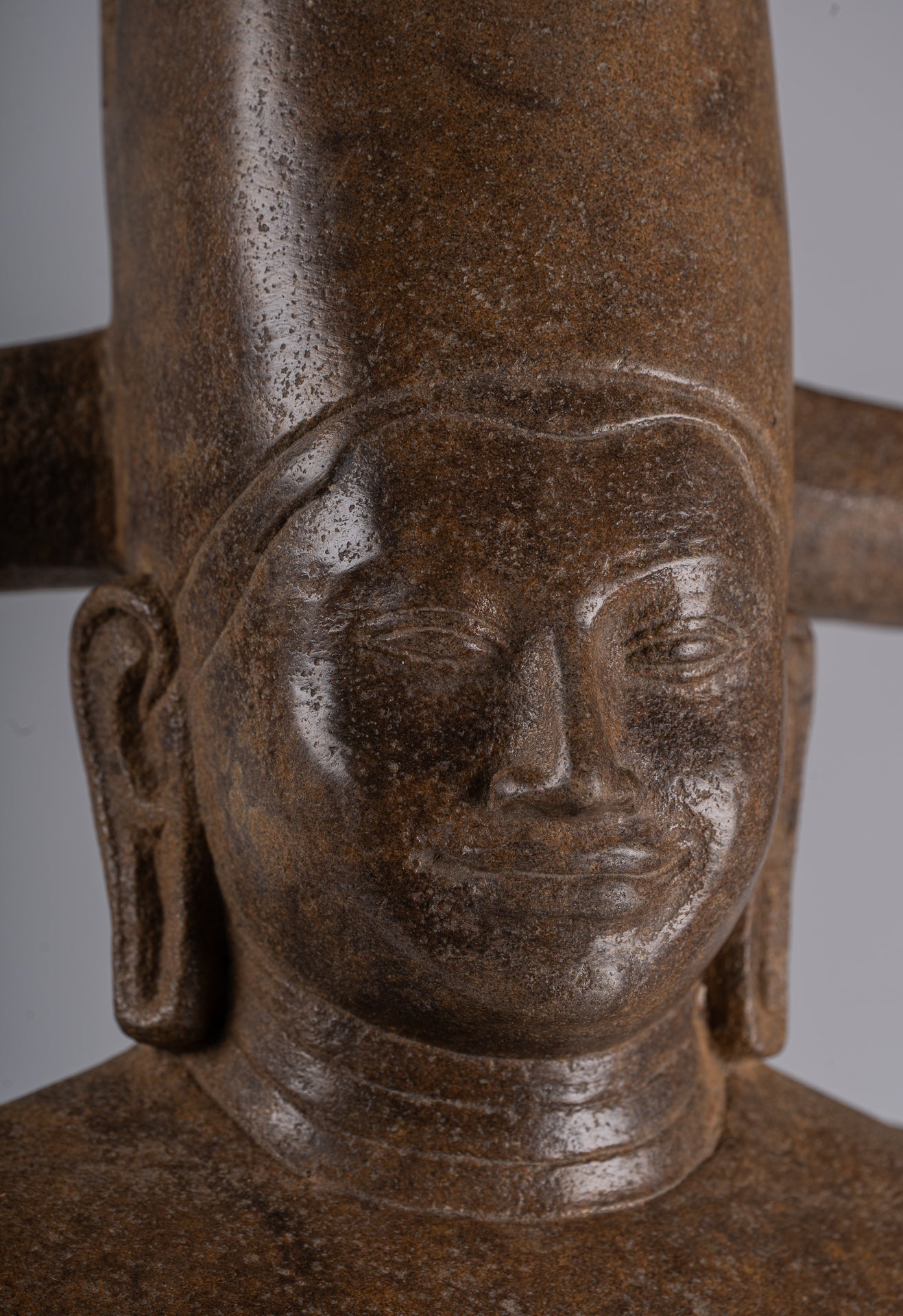
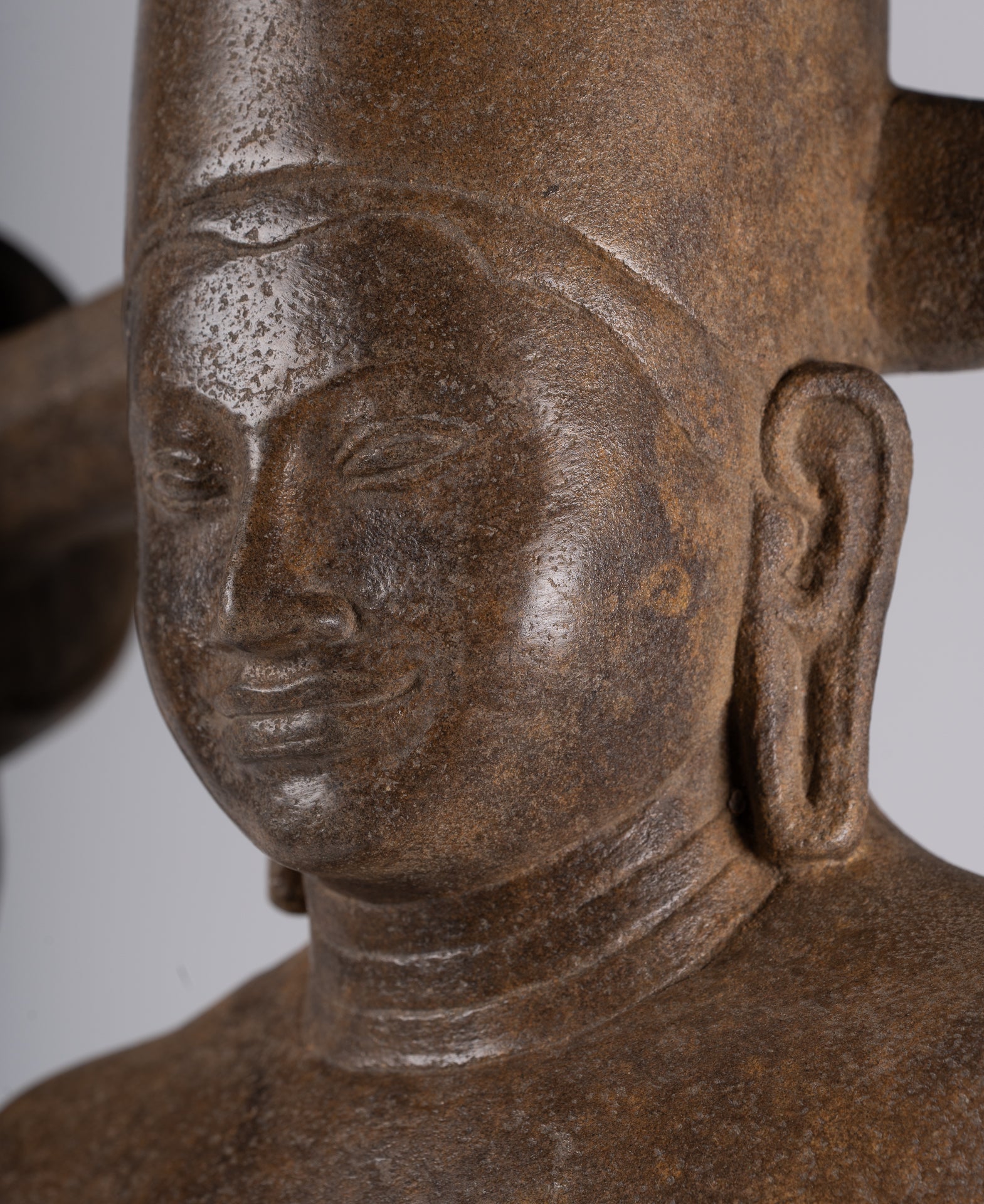
Early Khmer sculpture is carved in the round and often quite large, so artisans cleverly devised unobtrusive ways to support and stabilize the various appendages. Here the mace handle under the lower left hand and the vertical column supporting the lower right hand are designed to strengthen the sculpture. The long front panel of the ankle-length sampot gives added support to the ankles, and struts connect the upper arms to the head.Regional variations of this support system continued to be used throughout the seventh and into the early eighth century; by the end of the eighth century, the struts connecting the upper arms to the head and the center drapery panel had gone out of fashion.Lush lips, almond shaped eyes and an aquiline nose define his face. Distended earlobes may once have been adorned with real earrings.The Vishnu torso has a slender waist, broad hips and shoulders, not as muscular as earlier seventh century Khmer Vishnu images, but is far more graceful.
The present image lacks the rows of hair showing from beneath the miter in back on earlier Vishnu heads.
This is a particular temporal feature shared by late-seventh-century images in the National Museum in Phnom Penh that wear the earlier long sampot and also do not have hair projecting from under the miter, for example the Vishnu from Ba Sre, Angkor Borei, Takeo.The Vishnu torso is mounted on a wood base (later). The original stone locator for the sculpture is still visible.Scholarly Reference:
New York Metropolitan Museum Collection - Reference: 77664
Christie's Auction House - Sale 5080 (November 2003) - COLLECTION DE MR GEORGES HALPHEN
Radcliffe Collection, Published Dofflemyer, 1999
Provenance: Ex- private London Collection. All items are guaranteed to be as described. A Certificate of Authenticity will accompany all purchases upon request.
To aid with safe shipping your Vishnu will be wood crated before shipping. There is no additional cost for this packing, crating and shipping service.
Key Features
-
Large pre‑Angkor Vishnu sculpture – A monumental polished brown sandstone image of Vishnu, inspired by late 7th–early 8th‑century Khmer sacred art.
-
Impressive statement scale – Measures 91cm / 36" high, creating a significant focal point for a gallery‑style interior, private collection, entrance hall, office or sacred space.
-
Standing four‑armed Vishnu – Depicted in poised samabhanga, a balanced, straight‑legged standing posture that expresses stability, authority and divine composure.
-
Pre‑Angkor Khmer artistic language – Features a high cylindrical mitre, elongated sampot, slender waist, broad shoulders, softly modelled face and carefully carved front and reverse.
-
Traditional Vishnu attributes – Holds the shankha conch, chakra discus, gada mace and a rounded attribute likely intended as a lotus. These objects express creation, sacred sound, cosmic order, strength and protection.
-
Highly refined stone carving – The sculpture is carved in the round, with the back receiving the same care and attention as the front.
-
Ingenious structural supports – Integrated supports beneath the mace, lower right arm and upper arms reflect the technical intelligence of early Khmer stone sculpture.
-
Elegant sampot can spin – Long ankle‑length garment and scarf are indicated by fine incised lines, with a central front panel contributing both grace and structural stability.
-
Later wooden display base – The torso is mounted on a later wood base, while the original stone locator remains visible.
-
Documented collecting history – From an ex‑private London collection; a Certificate of Authenticity is available upon request.
-
Professional crating included – The Vishnu will be professionally packed and wood‑crated, with packing, crating and shipping included at no additional cost.
Frequently Asked Questions
Q: Who is Vishnu?
A: Vishnu is one of the principal deities of Hinduism and the preserver within the Hindu Trimurti. He is associated with sustaining the universe, protecting humanity, upholding moral order and restoring balance when disorder threatens dharma.Q: What does Vishnu represent in Khmer art?
A: In pre‑Angkor Cambodia, Vishnu was especially important because his role as divine preserver and protector provided a powerful model for kingship. Khmer rulers could be understood as earthly guardians of order, prosperity and stability under Vishnu’s cosmic protection.Q: What is the pre‑Angkor period?
A: The pre‑Angkor period refers broadly to Khmer art and culture before the emergence of the Angkor Empire, generally spanning from around the 6th to the 8th centuries. It includes some of Cambodia’s earliest surviving large‑scale stone images of Hindu deitiesQ: What is distinctive about late 7th–early 8th‑century Khmer sculpture?
A: Sculpture of this period often combines strong frontal presence with increasingly graceful proportions. Characteristic features include the cylindrical mitre, long fitted sampot, broad shoulders, slender waist, calm facial expression and careful carving in the round.Q: What is samabhanga?
A: Samabhanga is a balanced, upright standing posture in which the body’s weight is evenly distributed. It communicates stability, calm and divine authority, making it particularly suitable for Vishnu’s role as preserver of cosmic order.Q: Why does Vishnu have four arms?
A: Vishnu’s four arms express his divine capacity to act in multiple ways at once. They allow him to carry his characteristic attributes, each representing a distinct aspect of his power: sacred sound, cosmic order, strength, protection and spiritual guidance.Q: What is the conch shell, or shankha?
A: The shankha is Vishnu’s sacred conch. It represents primordial sound, often associated with the cosmic syllable Om, and symbolises the divine call to awaken from ignorance and follow the path of righteousness.Q: What does the chakra represent?
A: The chakra, often known as the Sudarshana Chakra, is Vishnu’s discus weapon. It represents time, the turning order of the universe, divine justice and the ability to remove obstacles or confront forces that threaten dharma.Q: What is the gada, or mace?
A: The gada, traditionally called Kaumodaki, represents strength, authority and the power to overcome harmful forces. It can also symbolise disciplined intelligence: power used to protect rather than dominate.Q: What is the rounded object in Vishnu’s lower right hand?
A: The attribute has been interpreted in different ways, including as a ball or a globe. However, it is more plausibly understood as an abstracted or worn lotus bud, an attribute associated with water, creation, purity and the unfolding of the universe.Q: Why would a lotus be associated with Vishnu?
A: The lotus is an important symbol of creation, purity and spiritual unfolding. In Hindu tradition, Brahma is born from a lotus growing from Vishnu’s navel, making the flower a powerful image of the created universe arising from divine potential.Q: What is the high mitre on Vishnu’s head?
A: The tall cylindrical mitre is a key feature of pre‑Angkor Khmer Vishnu imagery. It identifies the deity as a divine and royal being, while its form helps art historians distinguish earlier Khmer traditions from later Angkorian styles.Q: Why are there no rows of hair beneath the mitre?
A: The absence of hair emerging beneath the mitre is an important stylistic feature of some late 7th‑century Khmer Vishnu images. It helps place the sculpture’s design within a particular phase of pre‑Angkor artistic development, when the earlier convention of visible curls behind the head was being reduced or abandoned.Q: What is the sampot can spin?
A: The sampot can spin is a Khmer wrapped garment. It is worn around the waist, drawn between the legs and secured at the back, often with a long front panel. In this sculpture, the fitted, ankle‑length garment is indicated through delicate incised lines and contributes to the graceful vertical rhythm of the figure.Q: Why are there structural supports around the arms and legs?
A: Early Khmer sculptors worked out clever ways to stabilise large stone figures without compromising their appearance. Here, the mace handle supports the lower left arm, a vertical element reinforces the lower right hand, struts connect the upper arms to the head and the long sampot panel helps stabilise the ankles.Q: Is the sculpture carved on all sides?
A: Yes. The piece is carved in the round, meaning the rear was given as much attention as the front. This indicates that the image was conceived as a complete three‑dimensional sacred form, not simply a front‑facing relief.Q: What do the elongated earlobes signify?
A: The long earlobes are a sign of divine and royal status in South and Southeast Asian sacred art. They may once have been adorned with real earrings, and they reinforce Vishnu’s role as a majestic, transcendent figure.Q: Why is the sculpture mounted on a later wooden base?
A: The later wooden base provides stable, gallery‑style presentation for the torso. The original stone locator remains visible, which is an important reminder of how the image would originally have been secured in a temple or shrine setting.Q: What does the provenance mean?
A: The sculpture is recorded as coming from an ex‑private London collection, meaning it was formerly owned by a private collector in London. This forms part of its stated collecting history.Q: Is a Certificate of Authenticity available?
A: Yes. A Certificate of Authenticity can be supplied upon request. If you need the certificate to include specific details—such as measurements, title, collection history, condition statement or invoice information—it is best to request this before purchase.Q: Is this Vishnu suitable for a home shrine?
A: Yes. Vishnu is an especially meaningful deity for a home shrine, meditation area, study or office because he represents protection, stability, integrity and the restoration of balance. The sculpture also has strong presence as a collector’s work of early Khmer‑style art.Q: Is it appropriate for non‑Hindus to display this sculpture?
A: Yes. Vishnu is appreciated by collectors, historians, designers and people of many backgrounds as a symbol of guardianship, moral order and timeless sacred beauty. It should be displayed respectfully on a clean, stable and elevated surface.Q: Where should I place a 91cm / 36" Vishnu sculpture?
A: This substantial work is best displayed as a standalone focal point on a strong plinth, a robust console, a gallery pedestal or a secure floor‑level base. Allow ample surrounding space so the full silhouette, four arms, tall mitre and detailed sampot can be appreciated from multiple angles.Q: How should I care for the sandstone?
A: Dust gently with a soft dry brush or clean microfibre cloth. Avoid water, household cleaning chemicals, oils, waxes, sealants, abrasive pads and pressure washing, as these can stain or alter the stone surface. Seek advice from a qualified stone conservator before attempting any deeper cleaning or repair.Q: Can the sculpture be displayed outdoors?
A: Indoor display is recommended. Although stone is durable, rain, frost, pollution, direct sun and fluctuating temperatures can accelerate weathering and affect the surface. Outdoor display could also affect the later wooden mounting base.Q: How will the sculpture be shipped?
A: The Vishnu will be professionally packed and wood‑crated for safe transport. The stated price includes packing, crating and shipping, with no additional charge for this service.Q: What should I prepare before delivery?
A: Check access through doorways, stairs and corridors; ensure the final support can safely bear the weight; and arrange appropriate lifting assistance. Retain the crate and packaging until the sculpture has been fully inspected and securely installed.SATISFACTION GUARANTEE - We have been offering SE Asian Art, through our website, for many years and are proud of the reputation we have developed for fair and honest listings. However, if for any reason, whatsoever, you are unhappy with your purchase please just let us know and we will provide a full refund. We want you to be 100% happy with your purchase.
-
-
The majority of orders will be shipped with DHL. This is a secure, express and fully tracked service.
Items less than 2Kg we typically ship using Royal Mail.
Once we receive your order we try to ship all orders the same or next working day.
Large and/or fragile pieces requiring palletising, specialist crating and/or extra packaging may take a little longer. Palletised shipments will be delivered curbside.
All orders over 35 GBP will be shipped free of charge.

-
We genuinely hope that all purchases delight.
However, if they do not, regardless of reason, we will refund all orders upon receipt of the unwanted item. Just notify us within 14 days of receiving your order that you wish to make a return and send the piece back to us with 30 days of delivery.


