



-
Antique Java Style Majapahit Standing Bronze Kali or Mahakali Statue - 43cm/17"
Measurements Height 43cm/17"
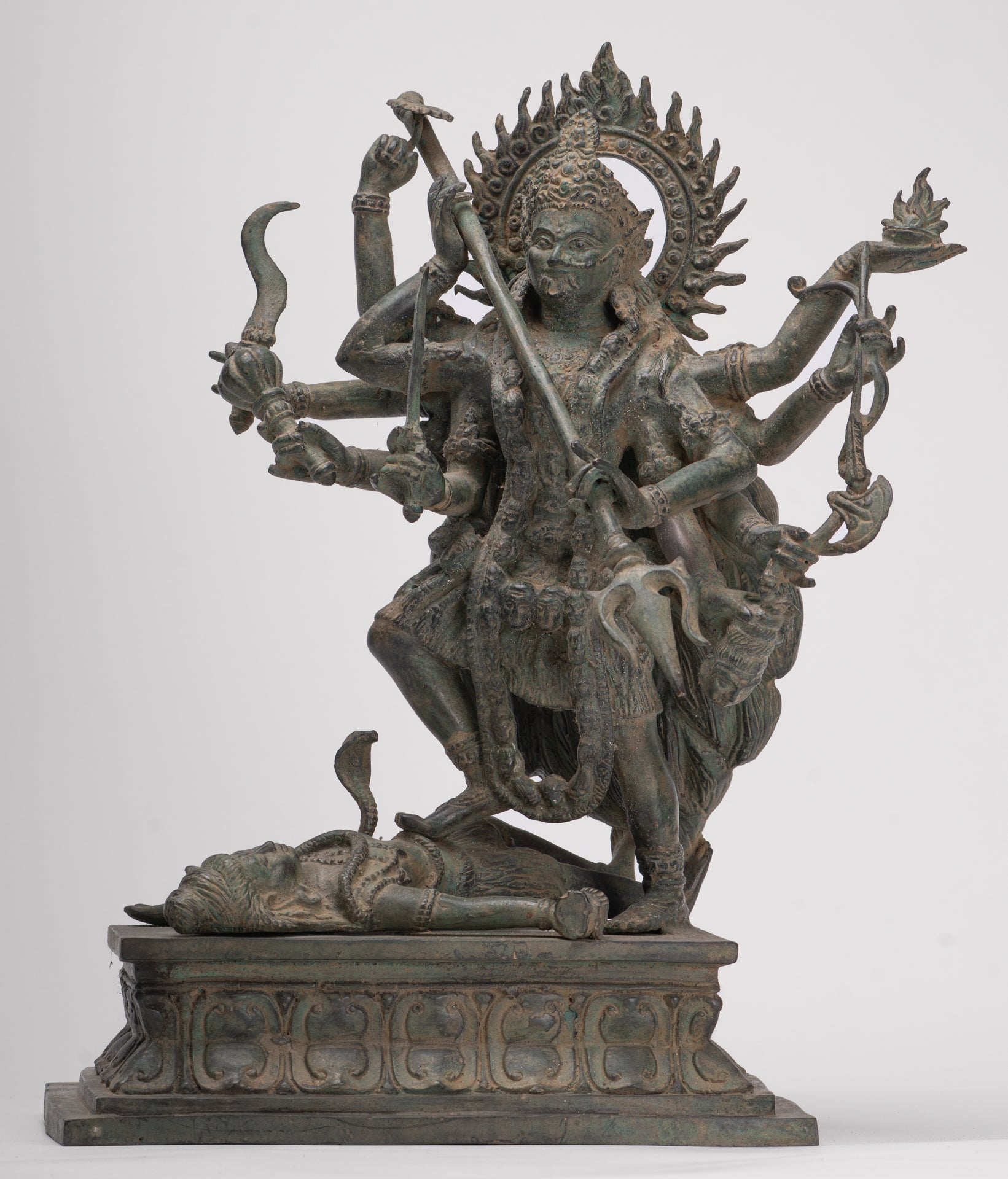
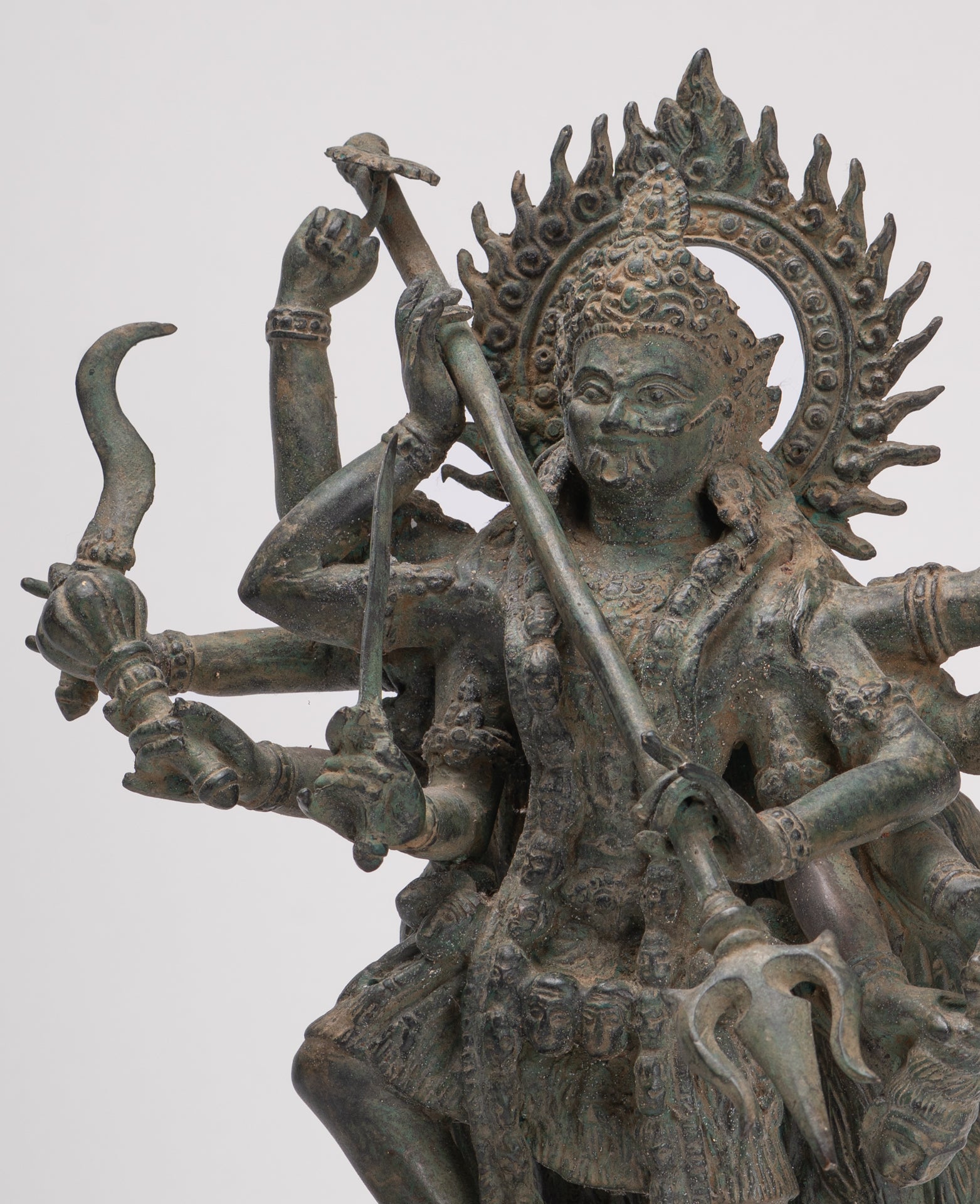
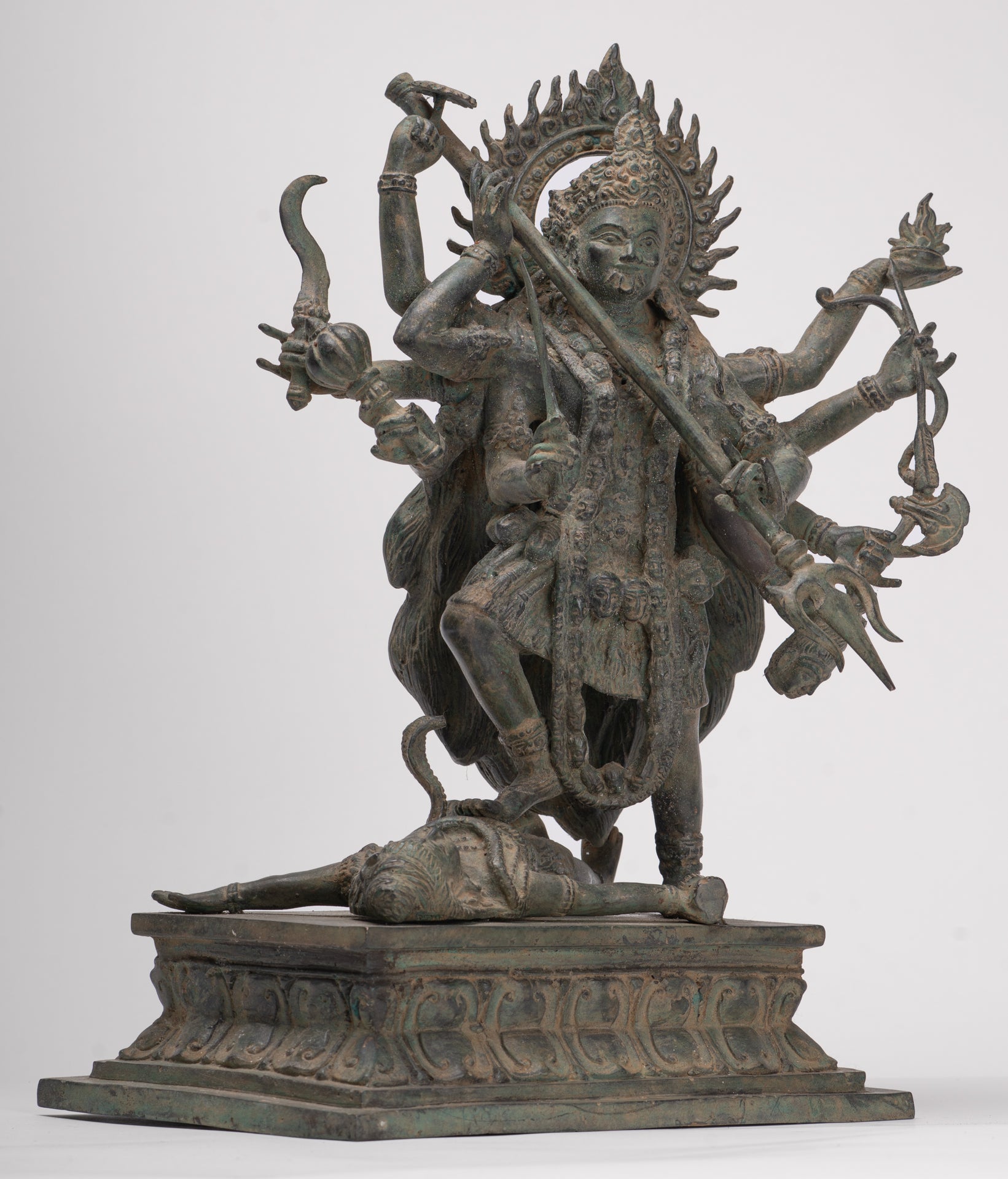
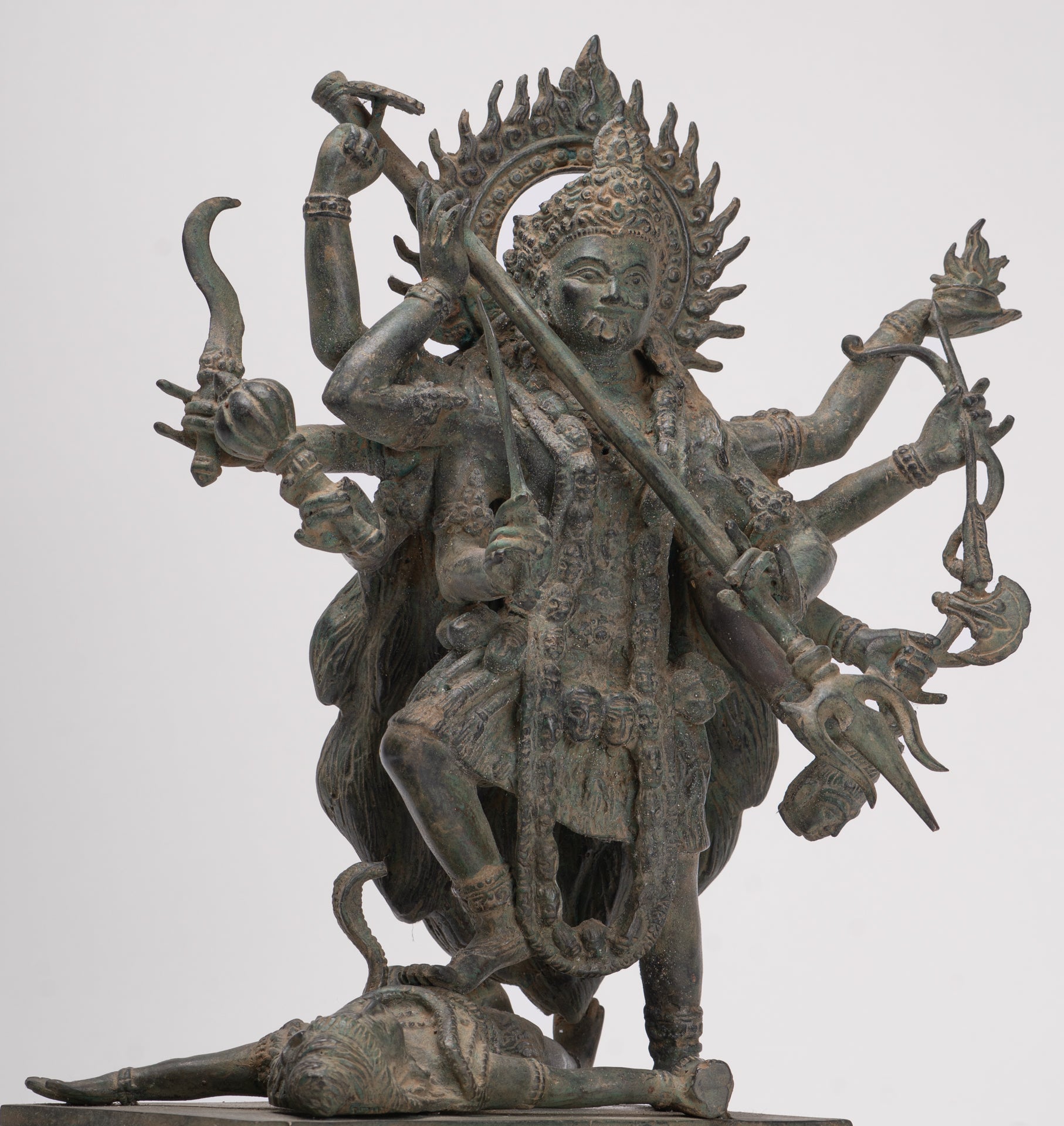
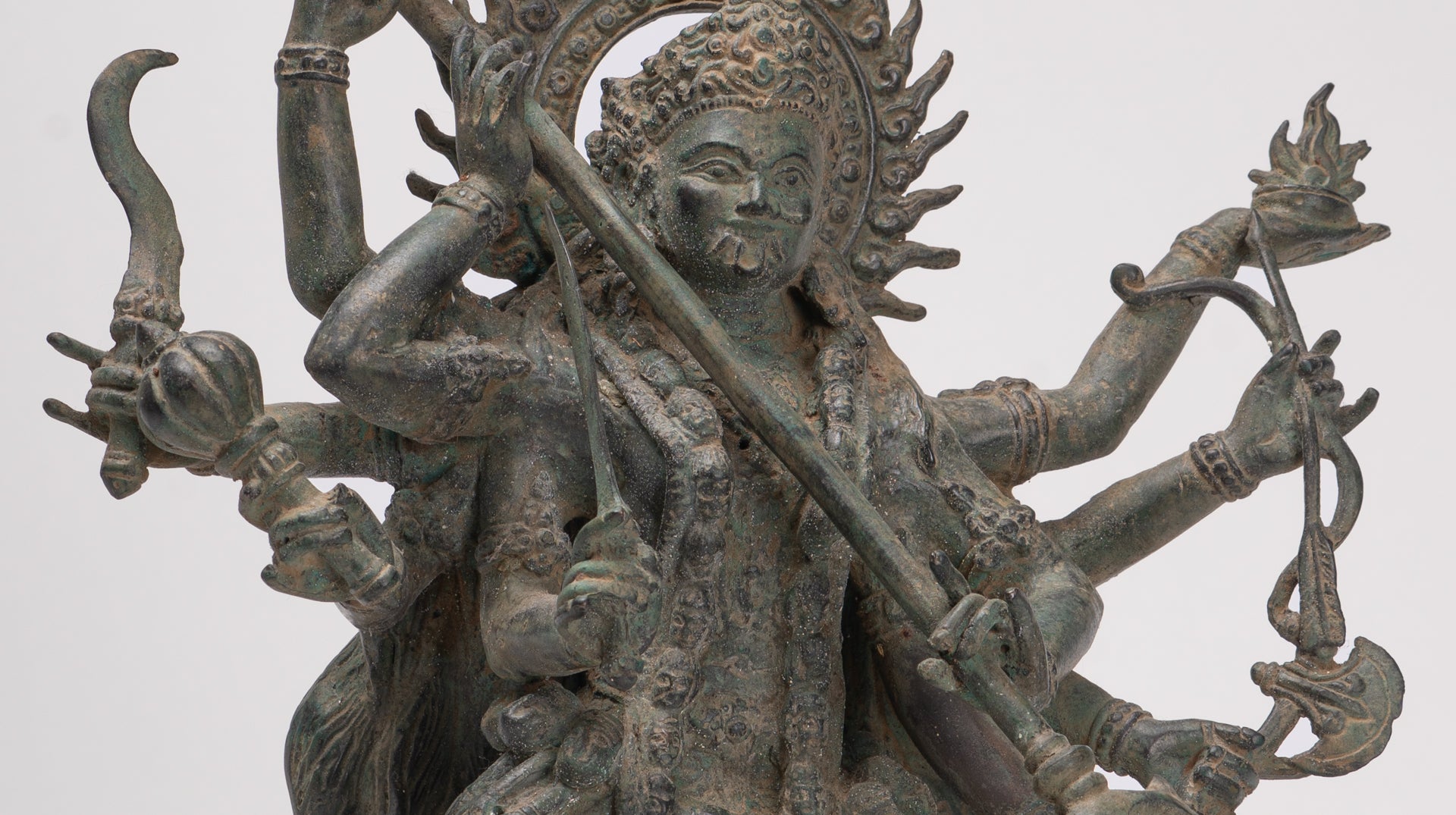
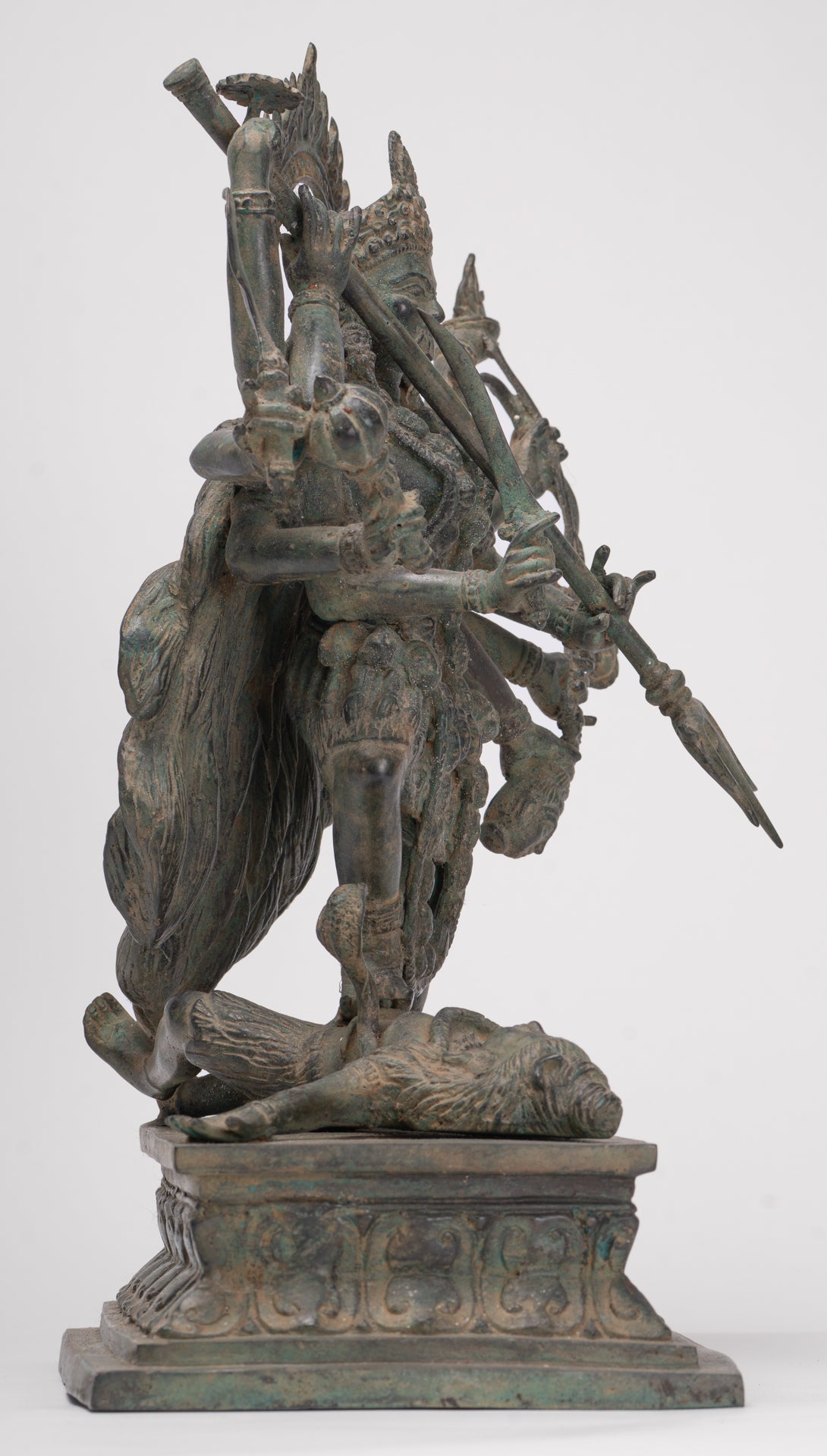
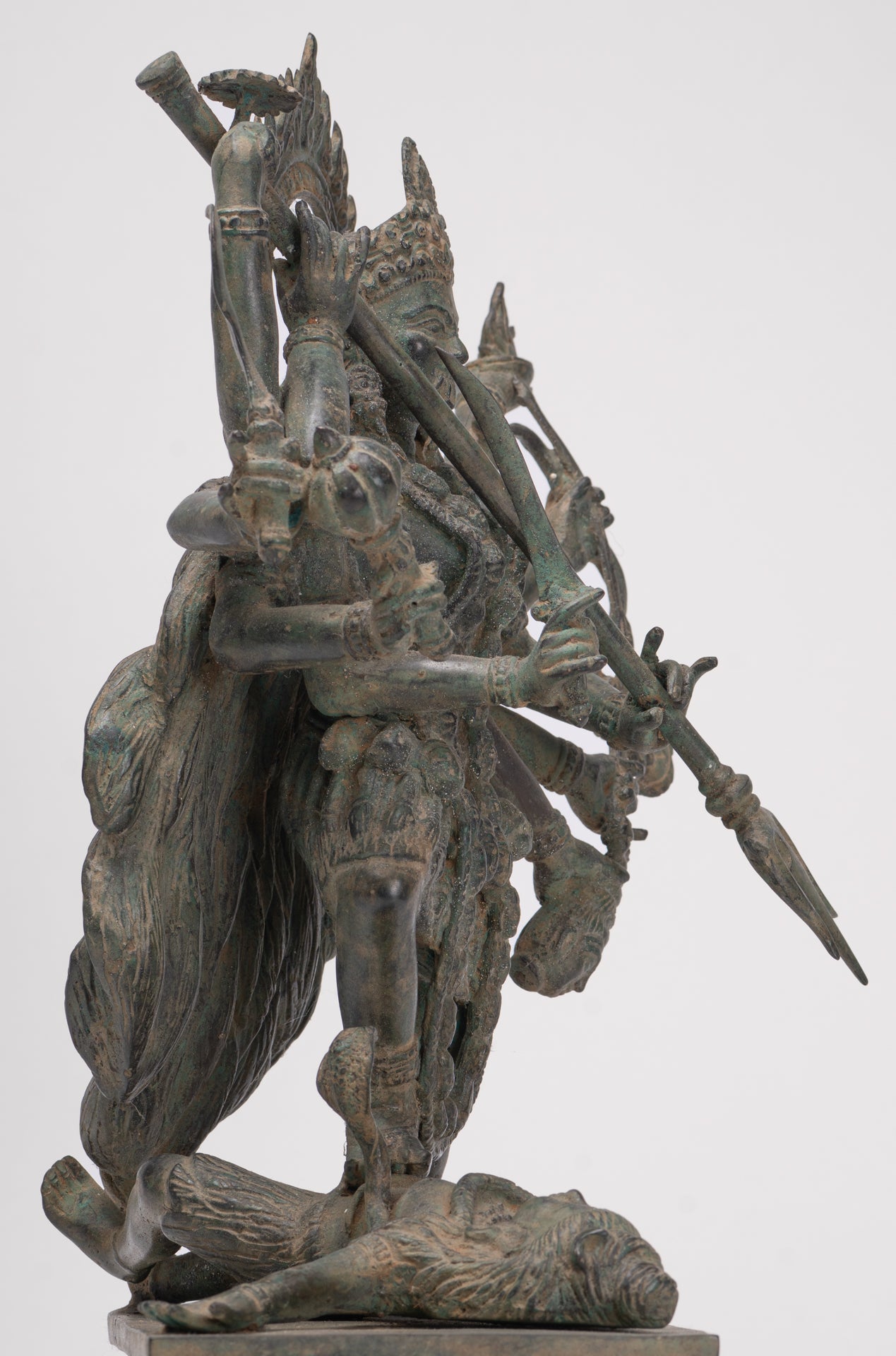
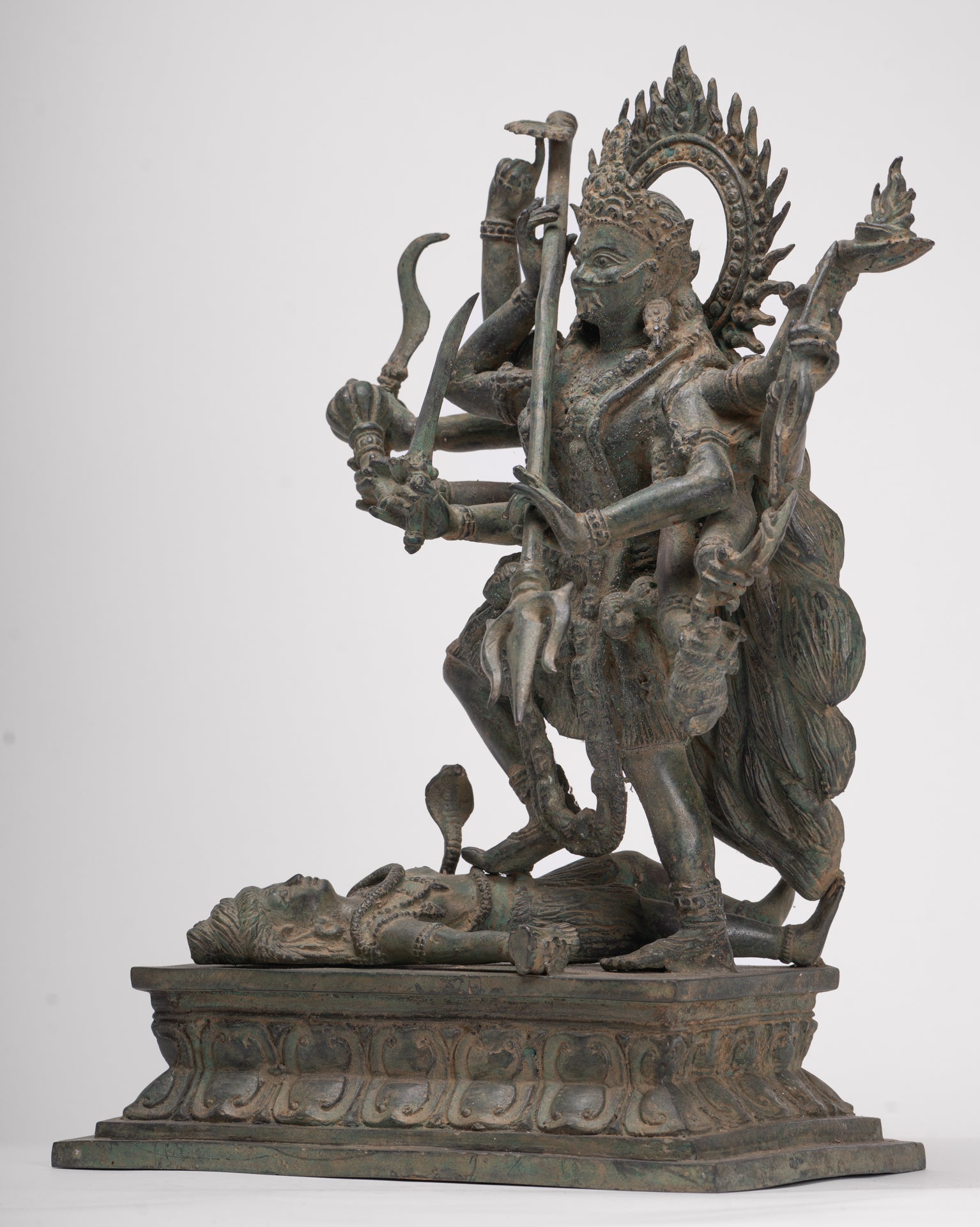
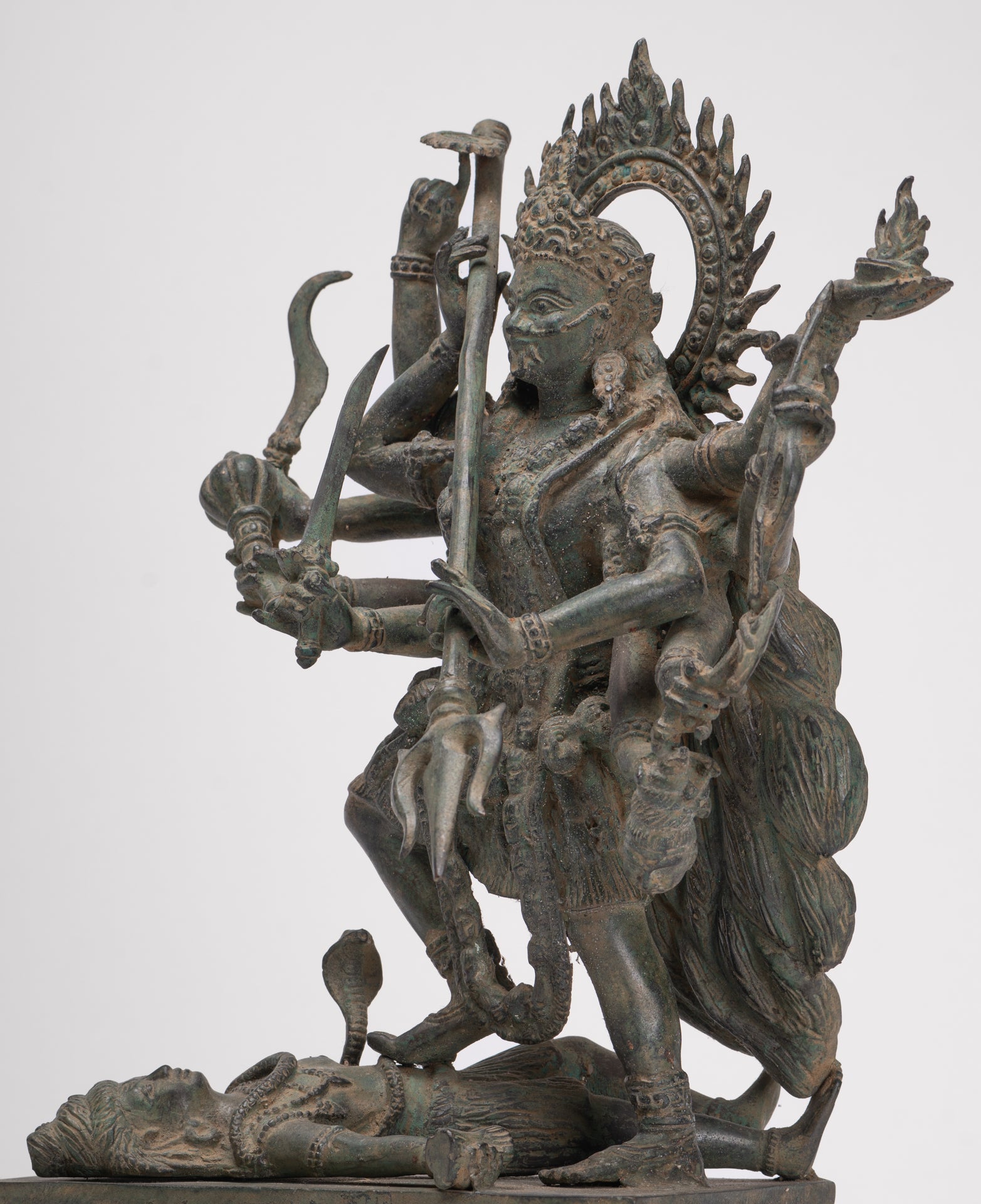
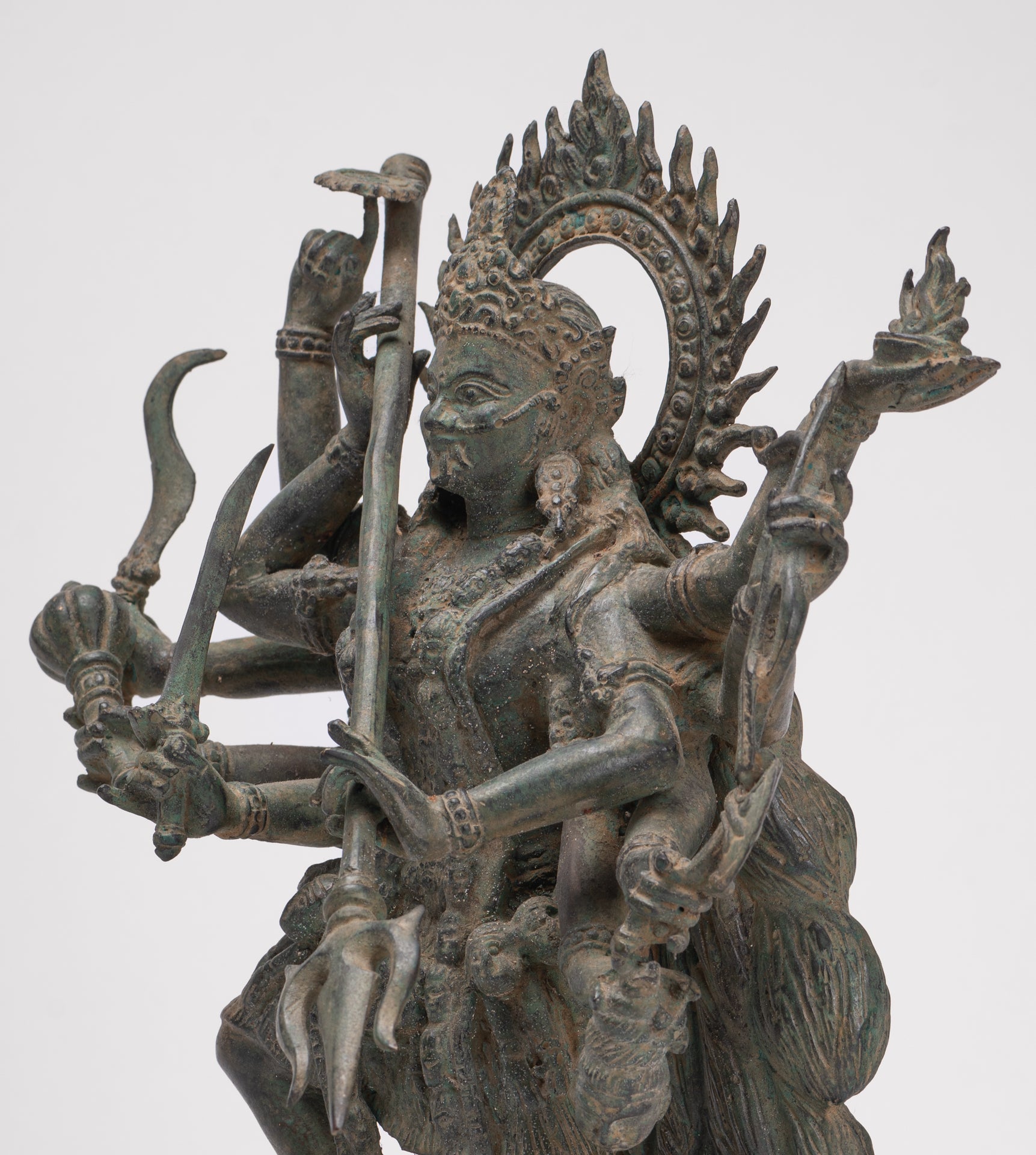
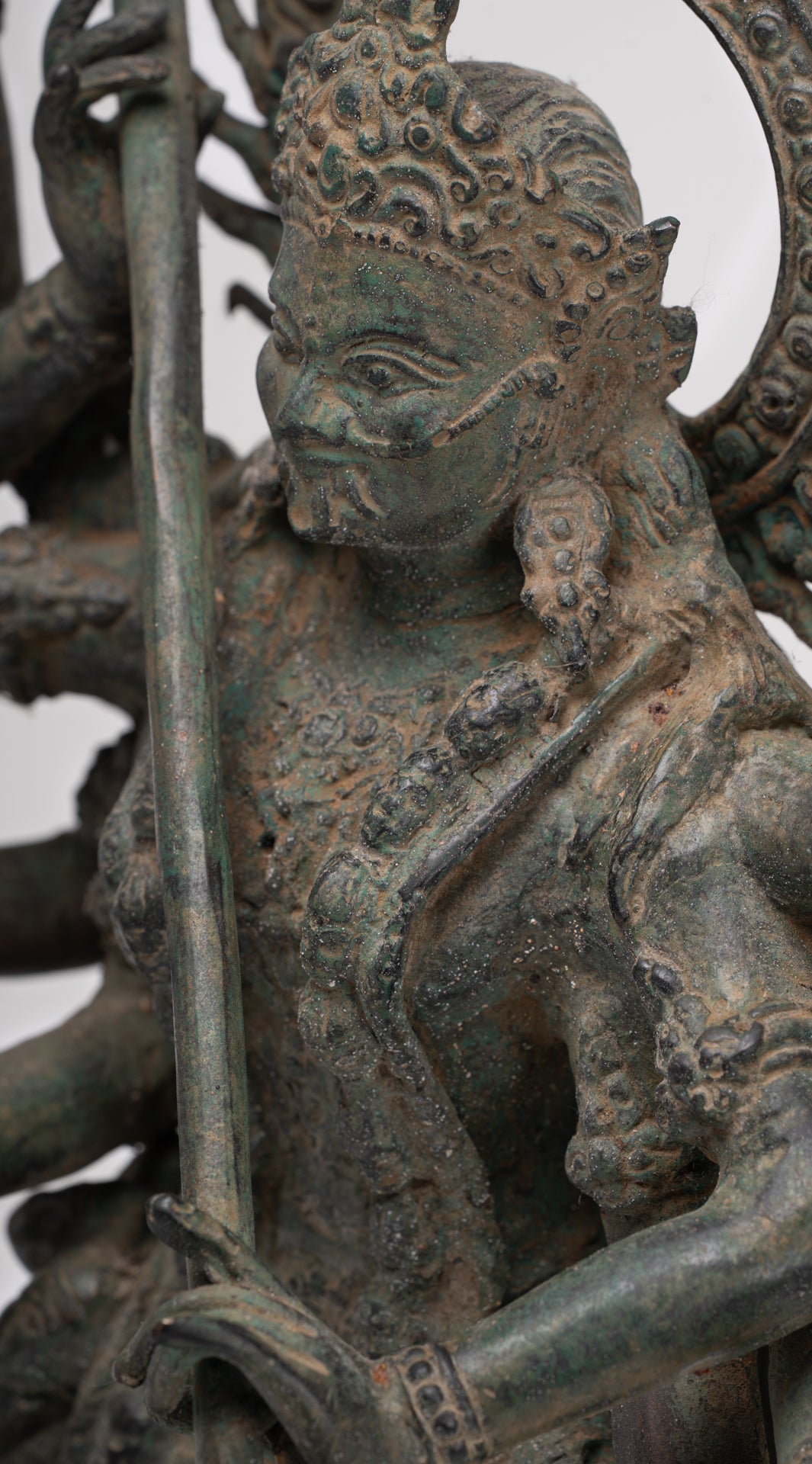
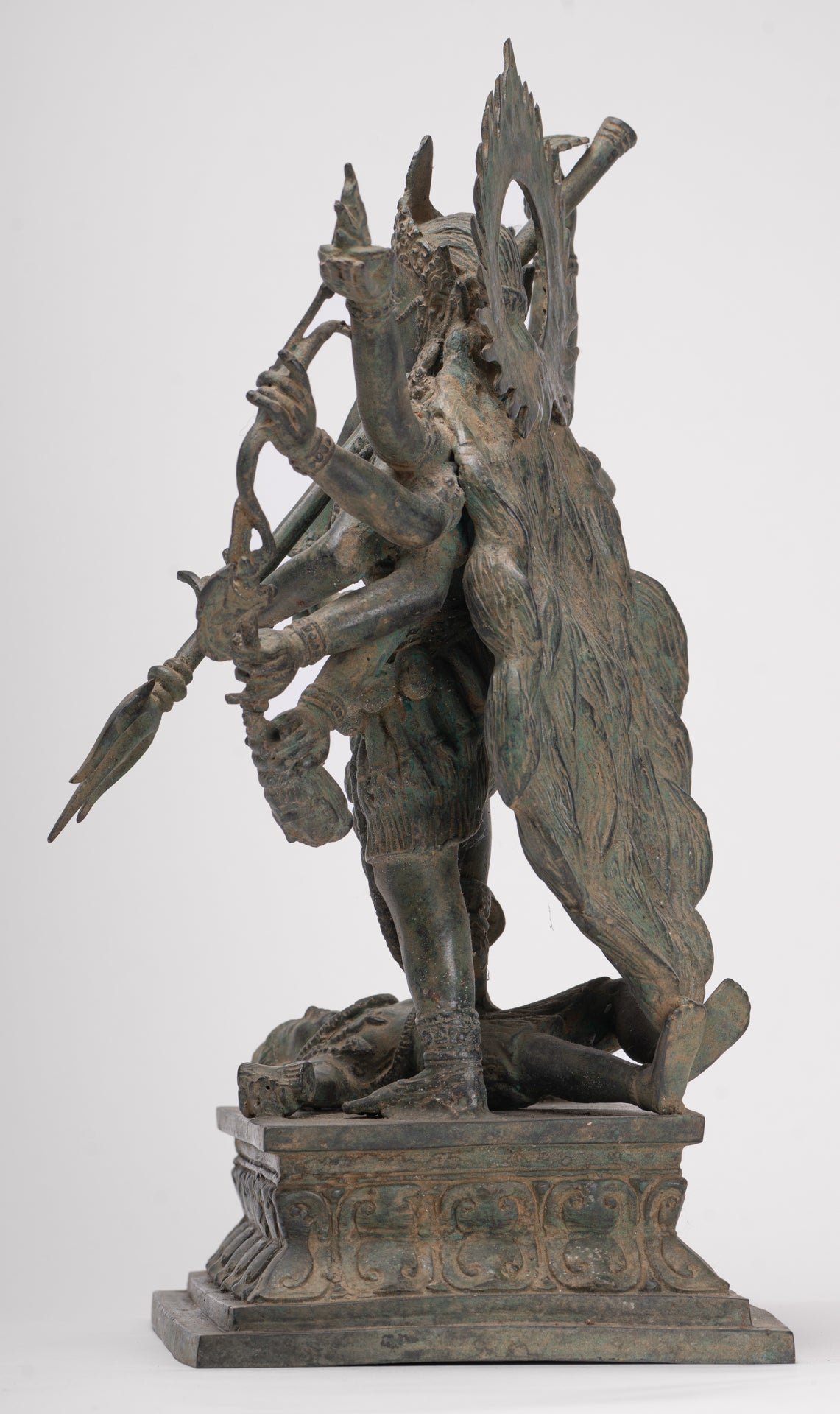
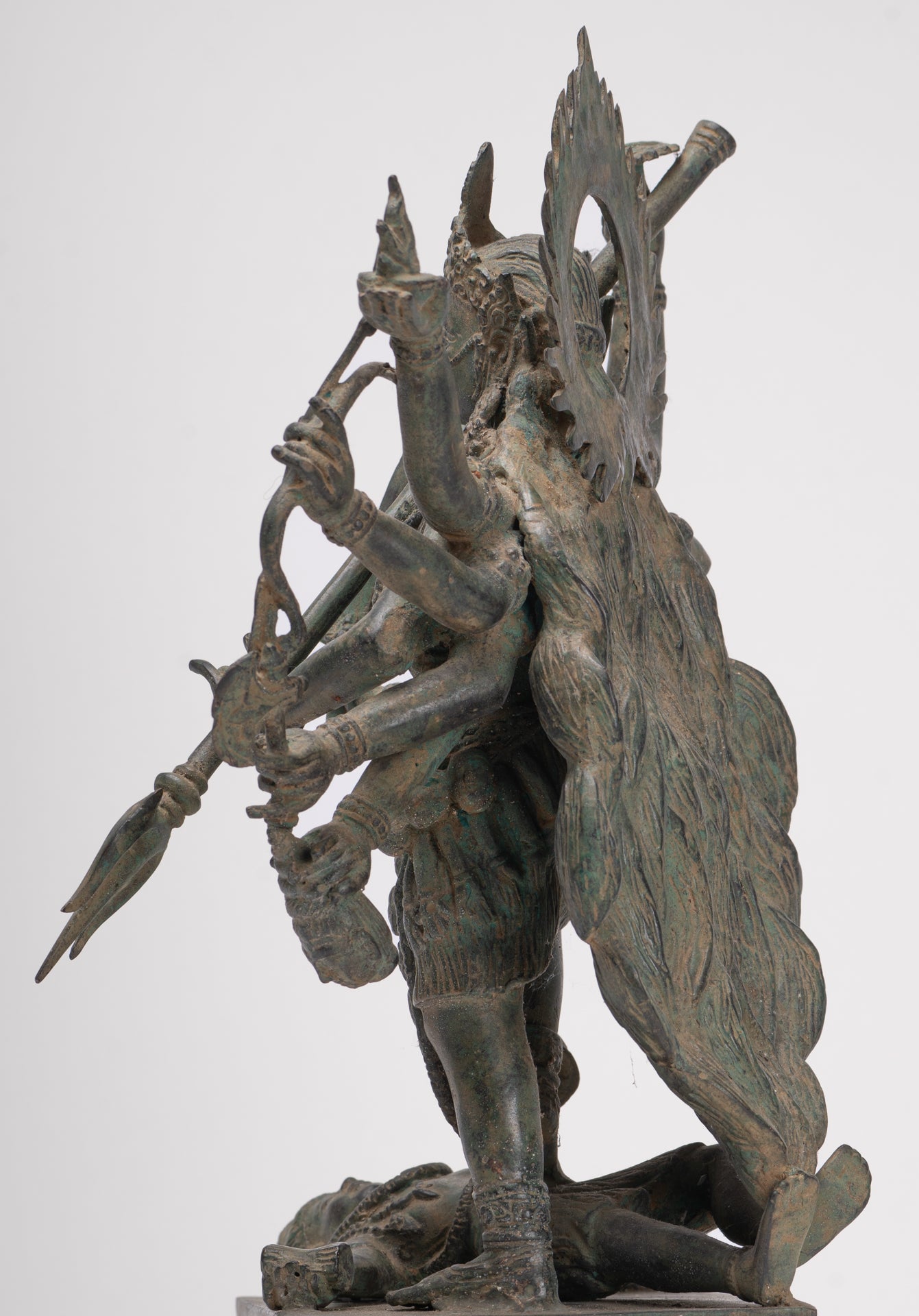
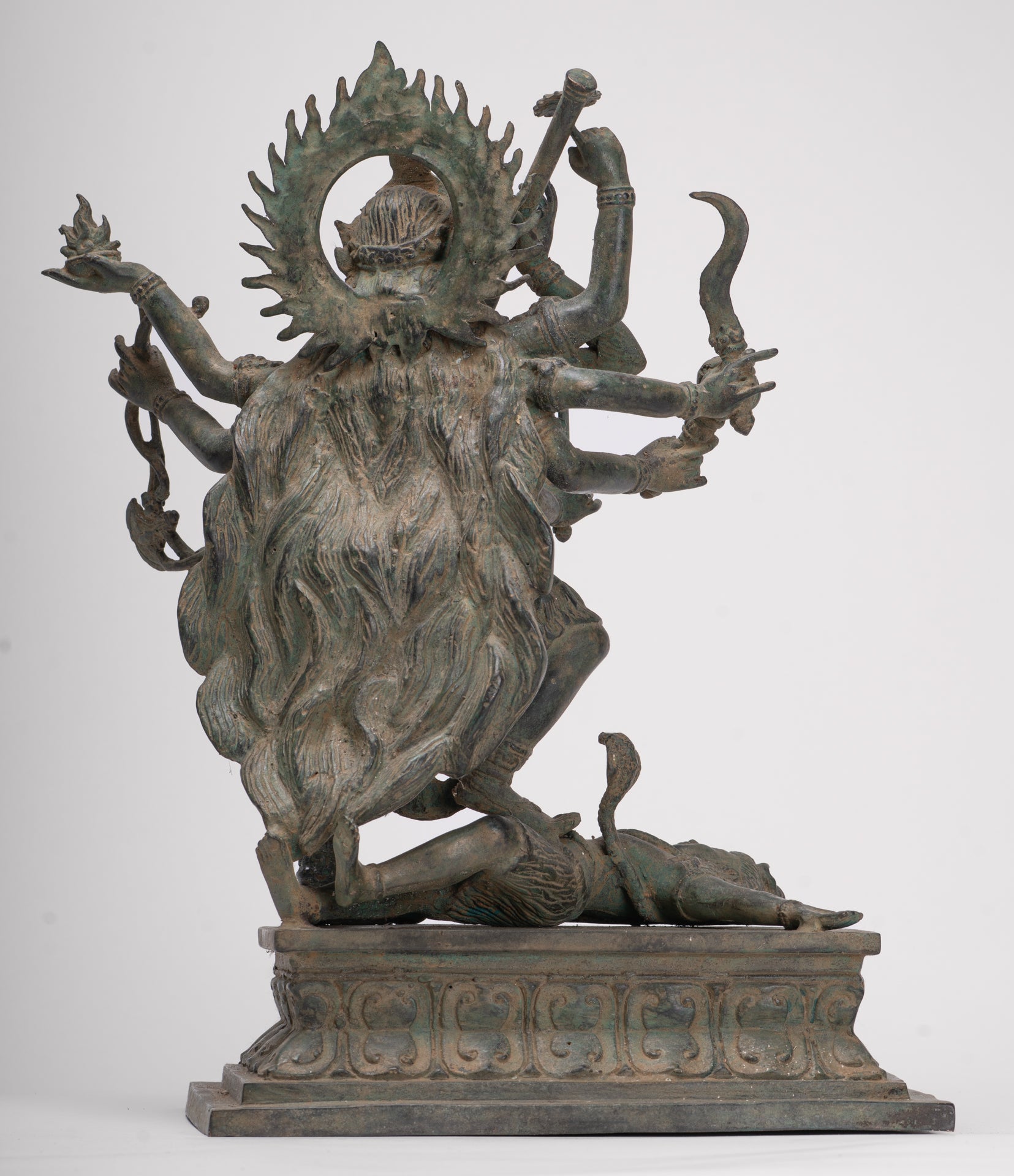
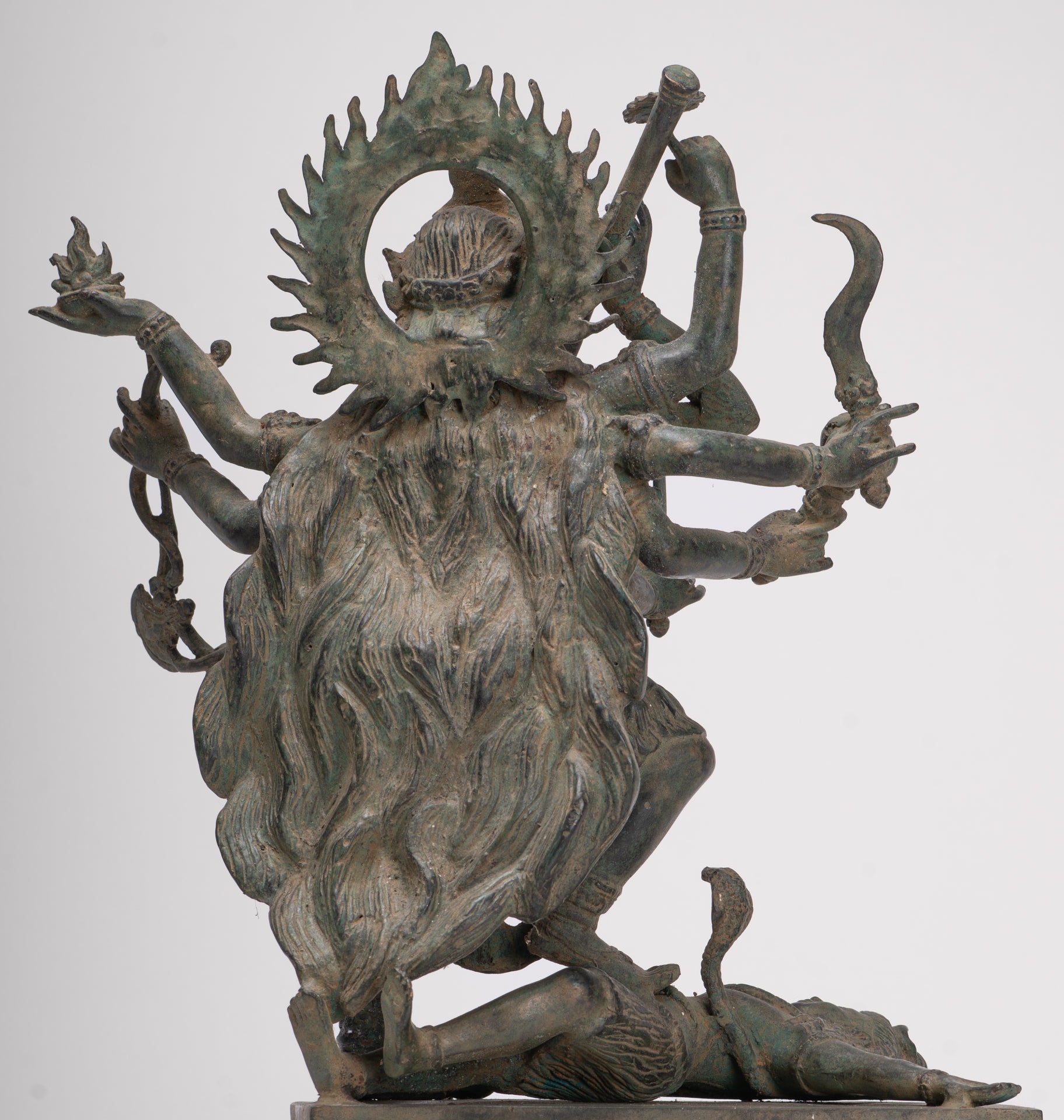
An antique Javanese‑style dancing bronze Kali (Mahakali) sculpture in the 13th‑century Majapahit tradition.
In the rich tapestry of Hindu mythology, Kali stands apart as a deity of fearsome beauty and profound compassion. With her dynamic dancing pose, potent attributes and intense presence, this bronze captures Kali not only as a goddess of destruction but as the ultimate force of transformation and liberation. The work channels the elegance and refinement of Majapahit Java, where Indian iconography was reinterpreted through a uniquely Southeast Asian lens.
Kali’s imagery is layered with symbolism. Her dark, almost shadow‑like presence evokes the primordial void—the boundless, formless ground from which all creation arises and into which all things ultimately return. This darkness is not mere terror, but the depth of cosmic potential, the womb of the universe. Her wild, untamed appearance speaks of the freedom that lies beyond social masks and conditioning: Kali invites us to strip away illusions and meet reality as it is.
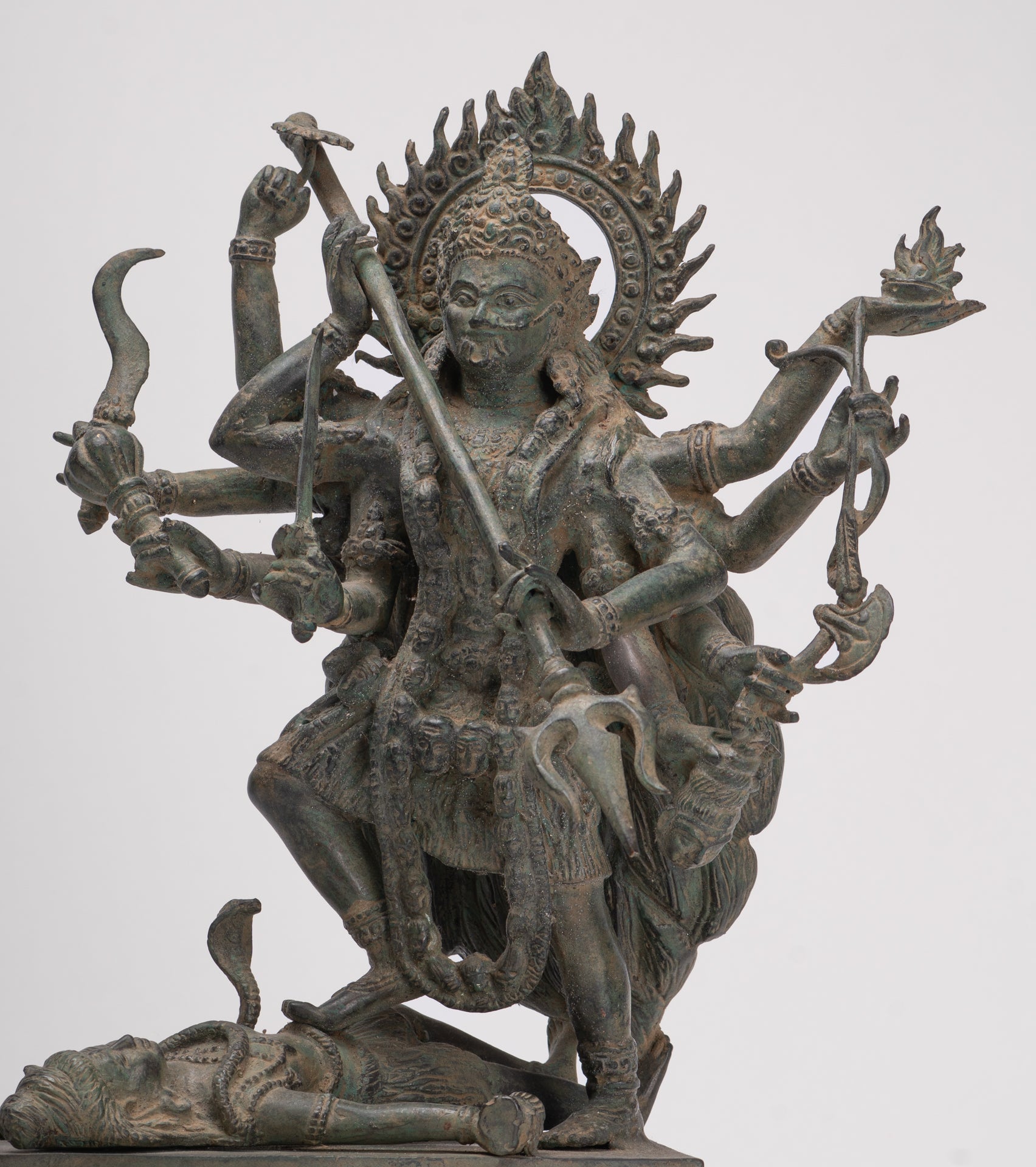
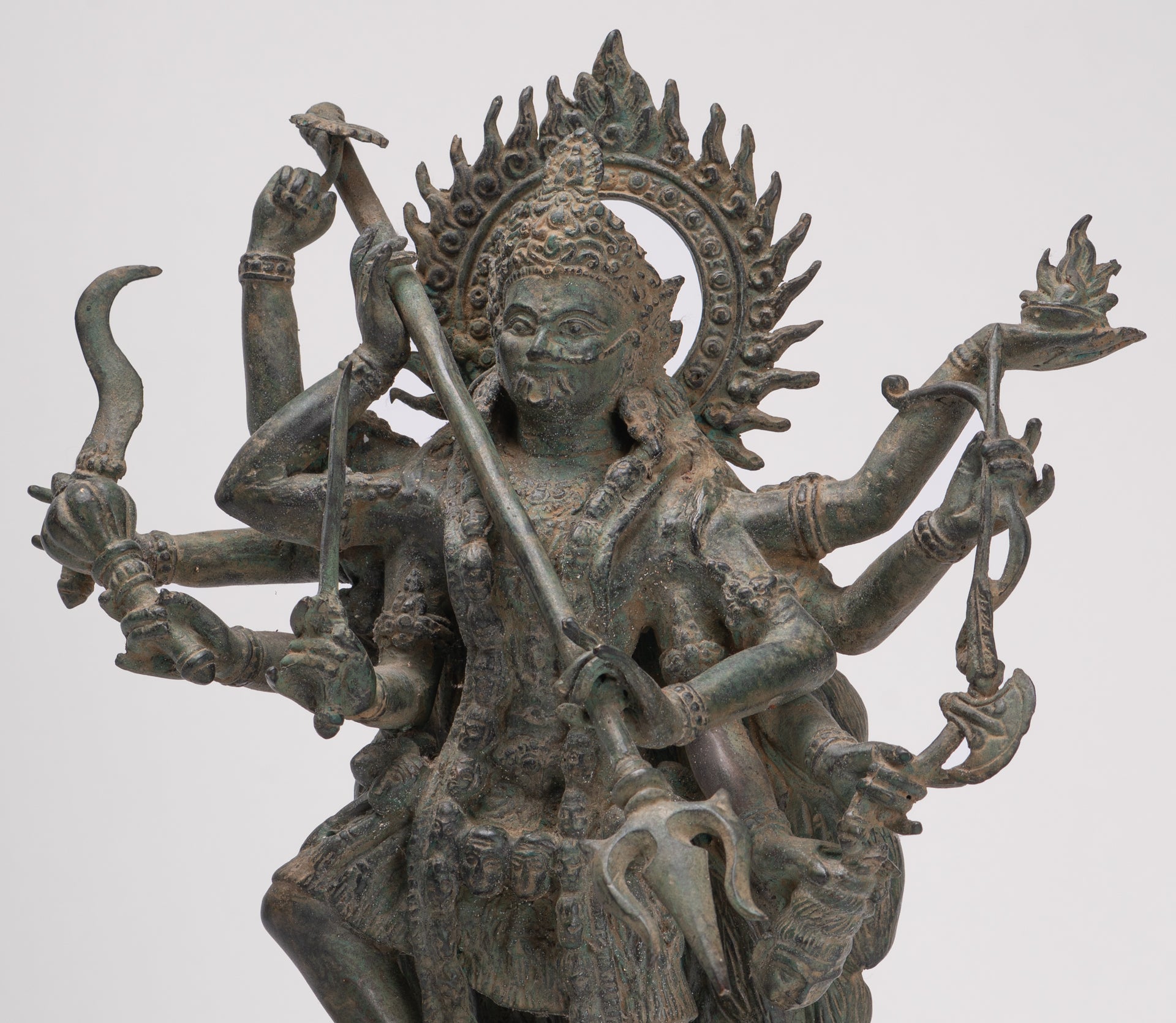
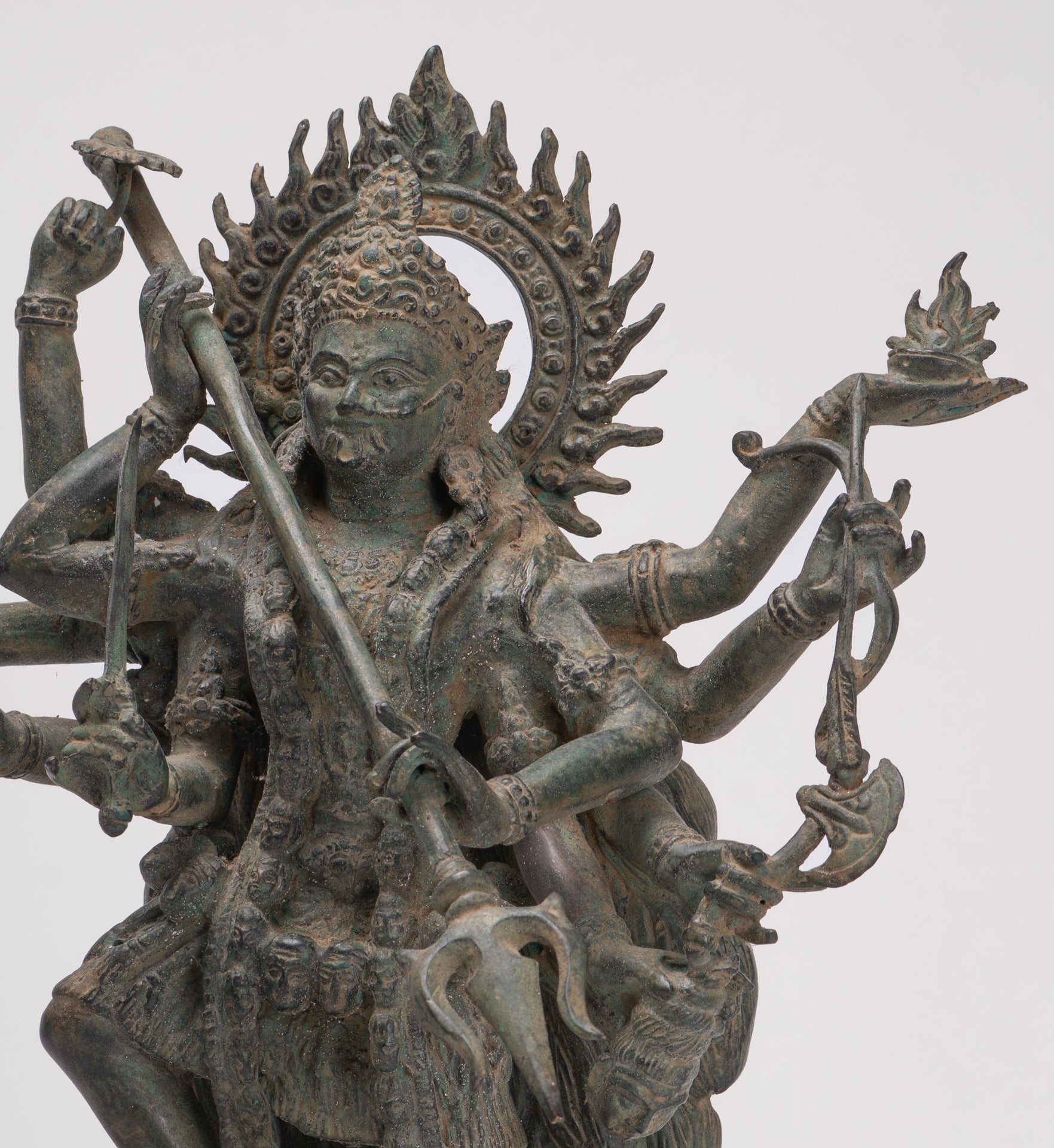
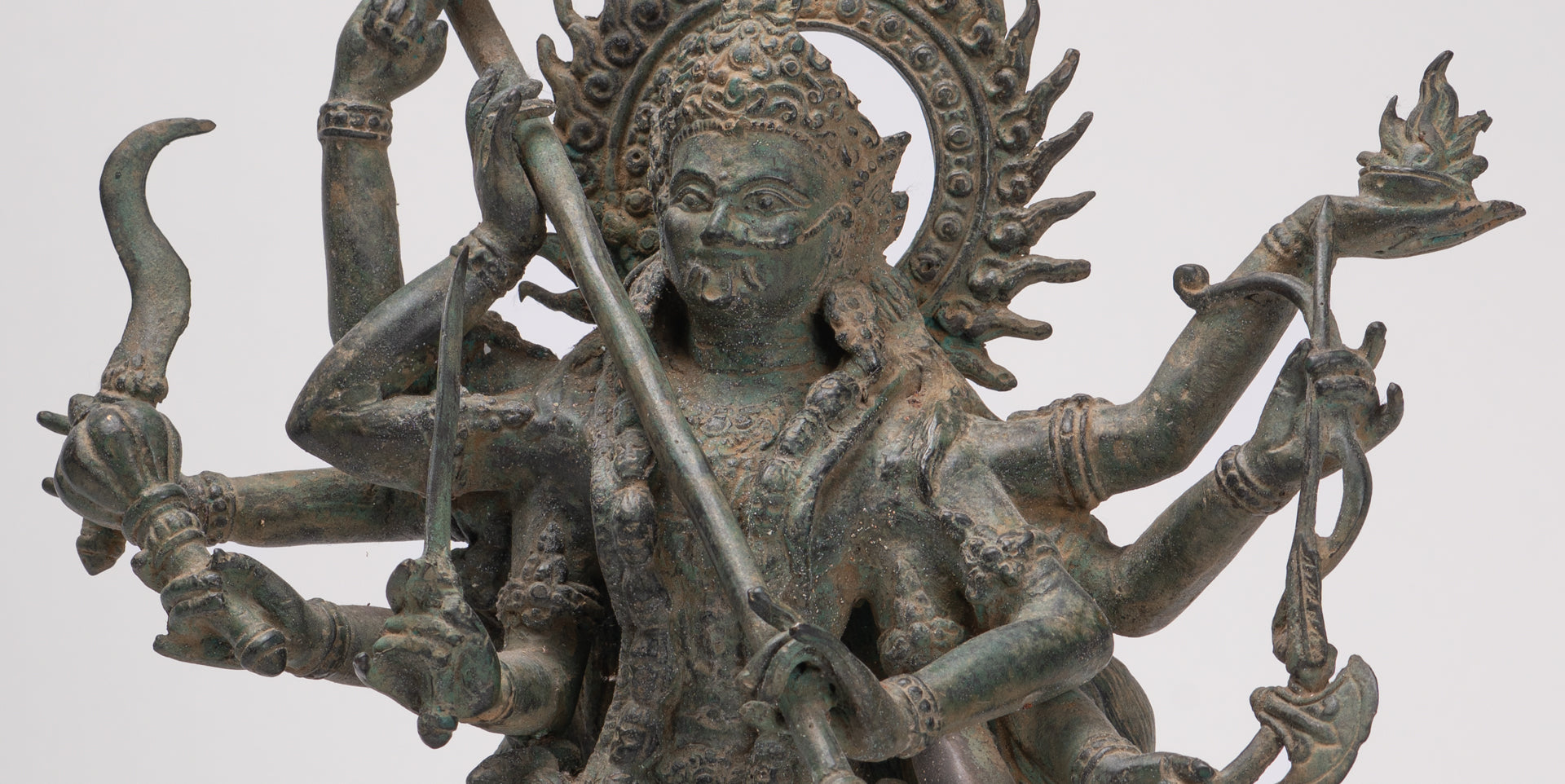
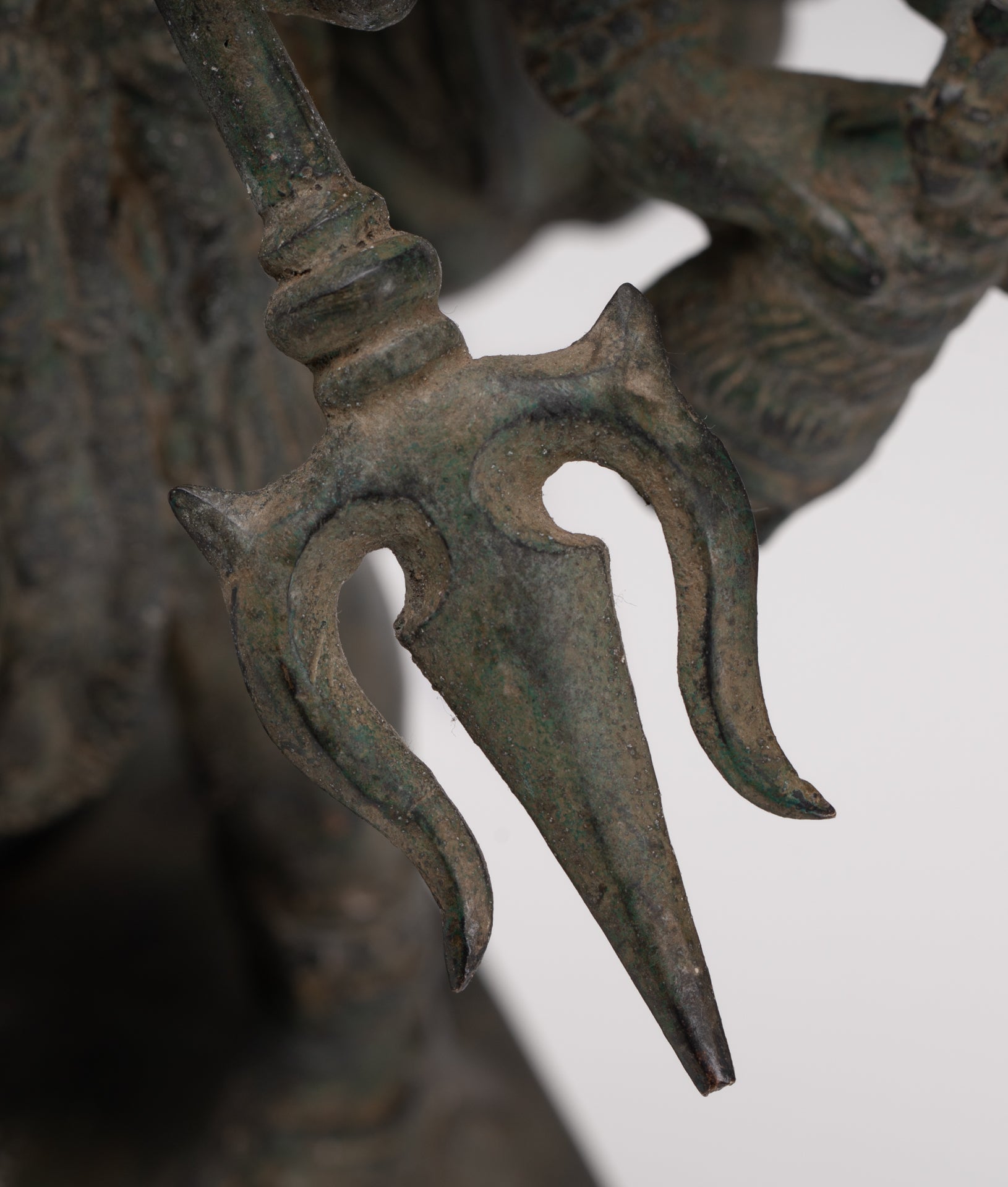
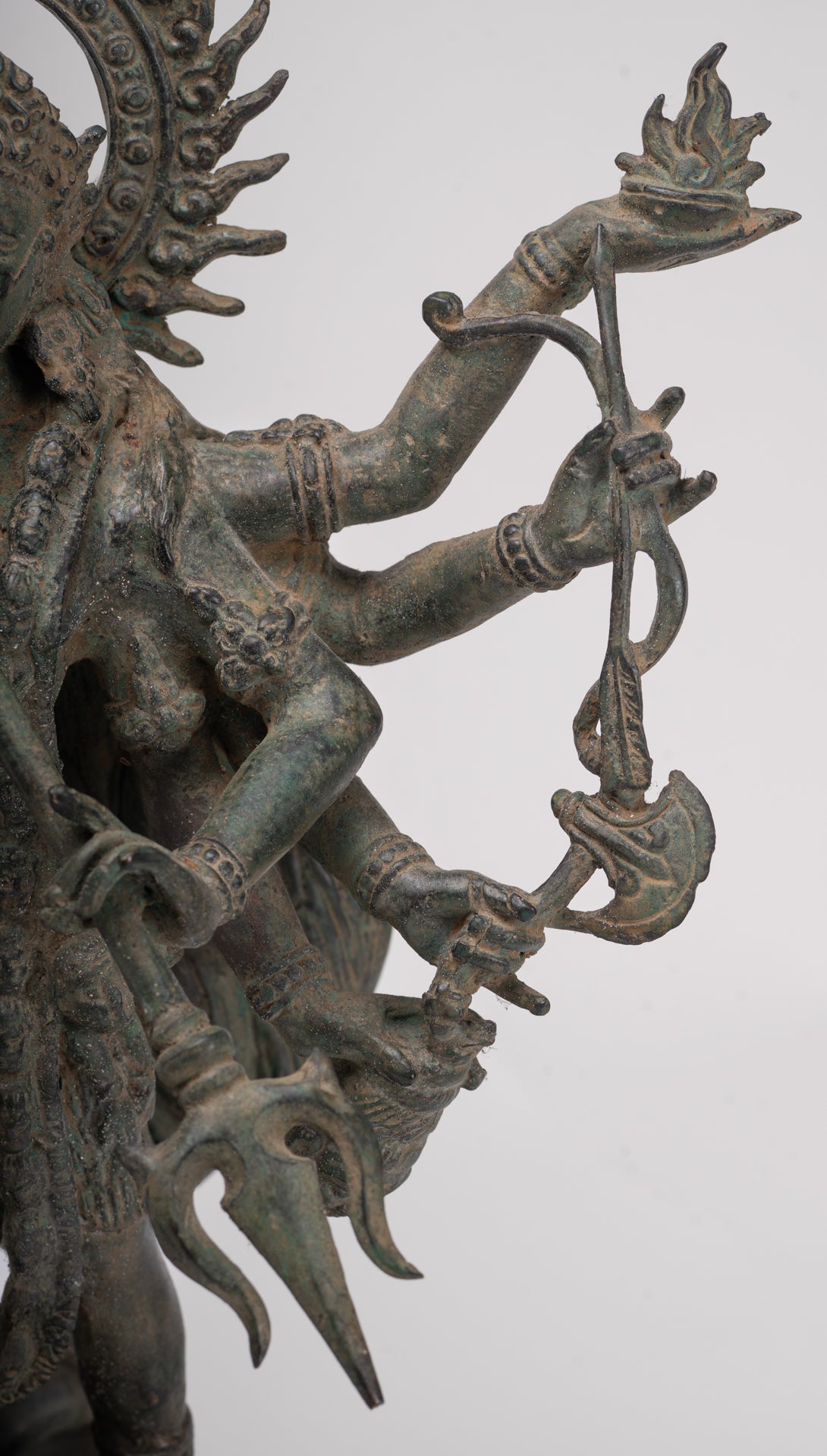
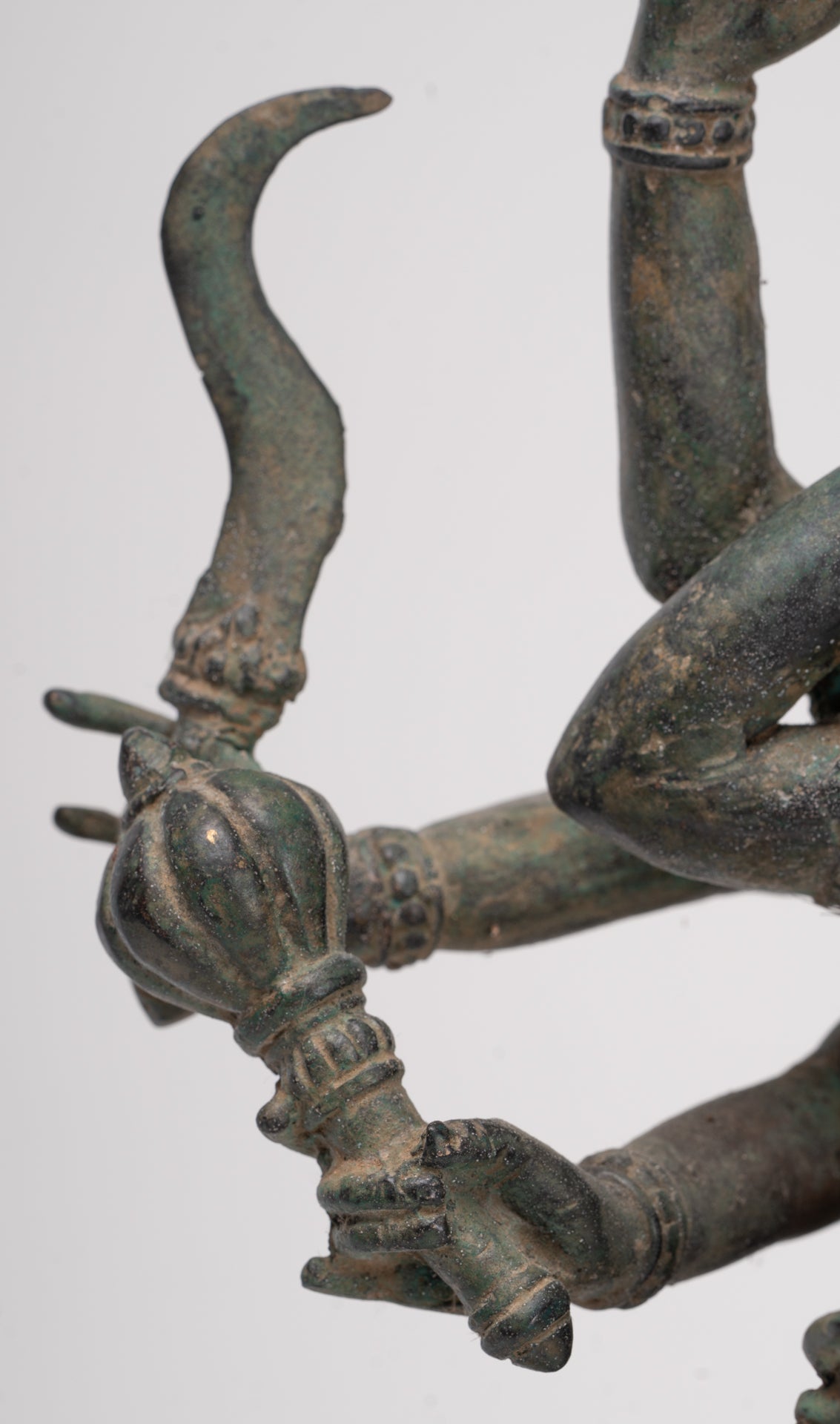
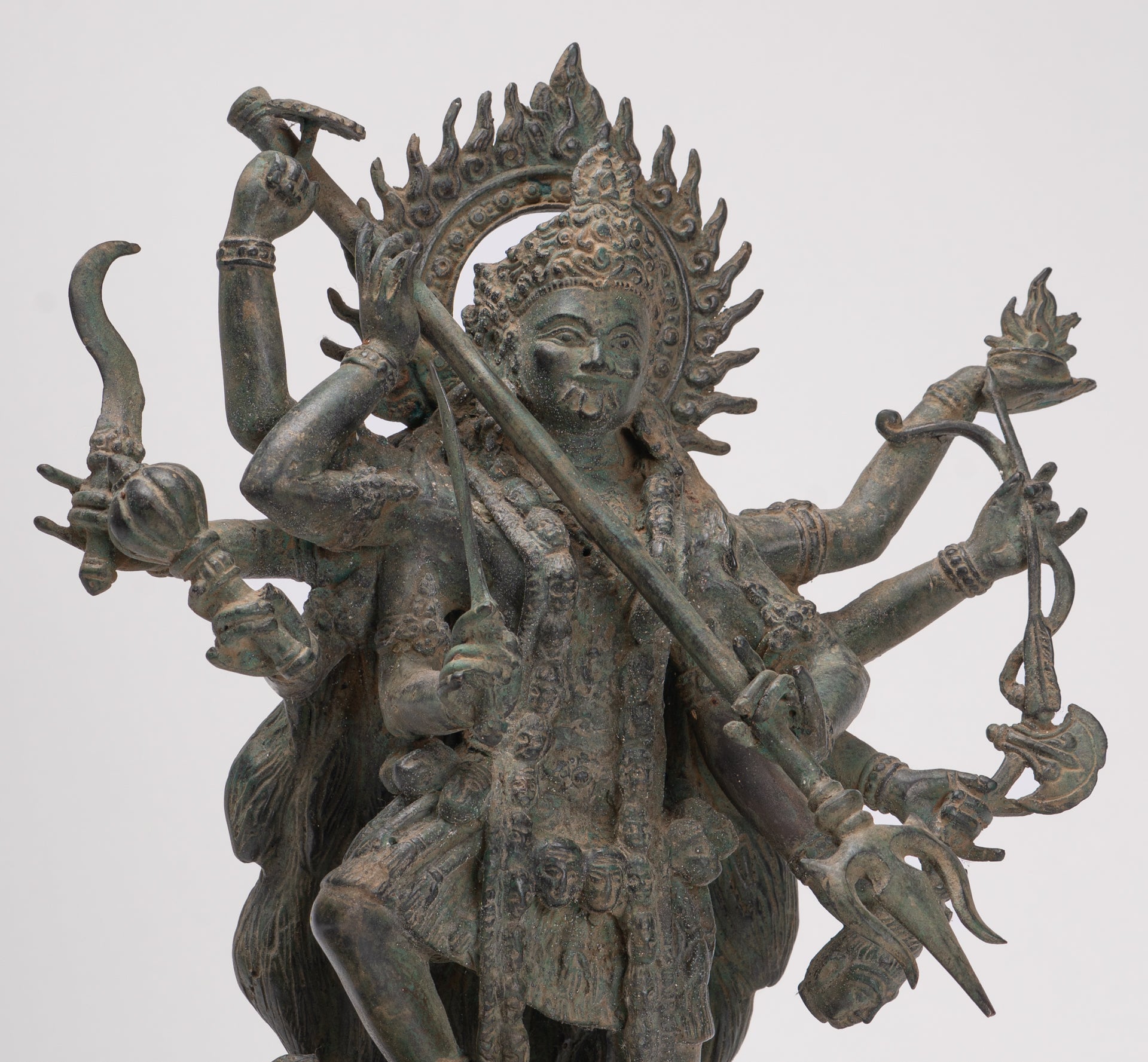
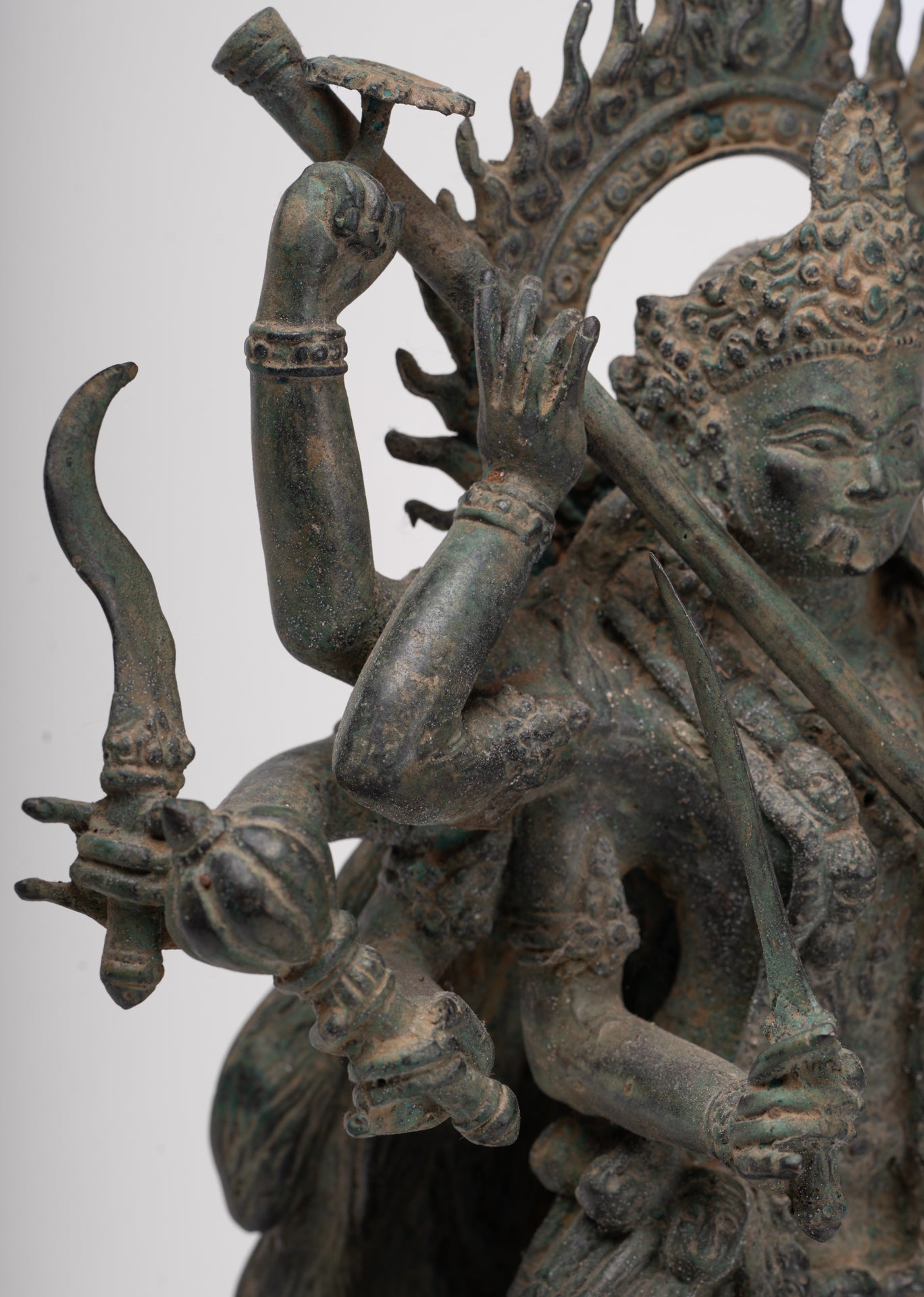
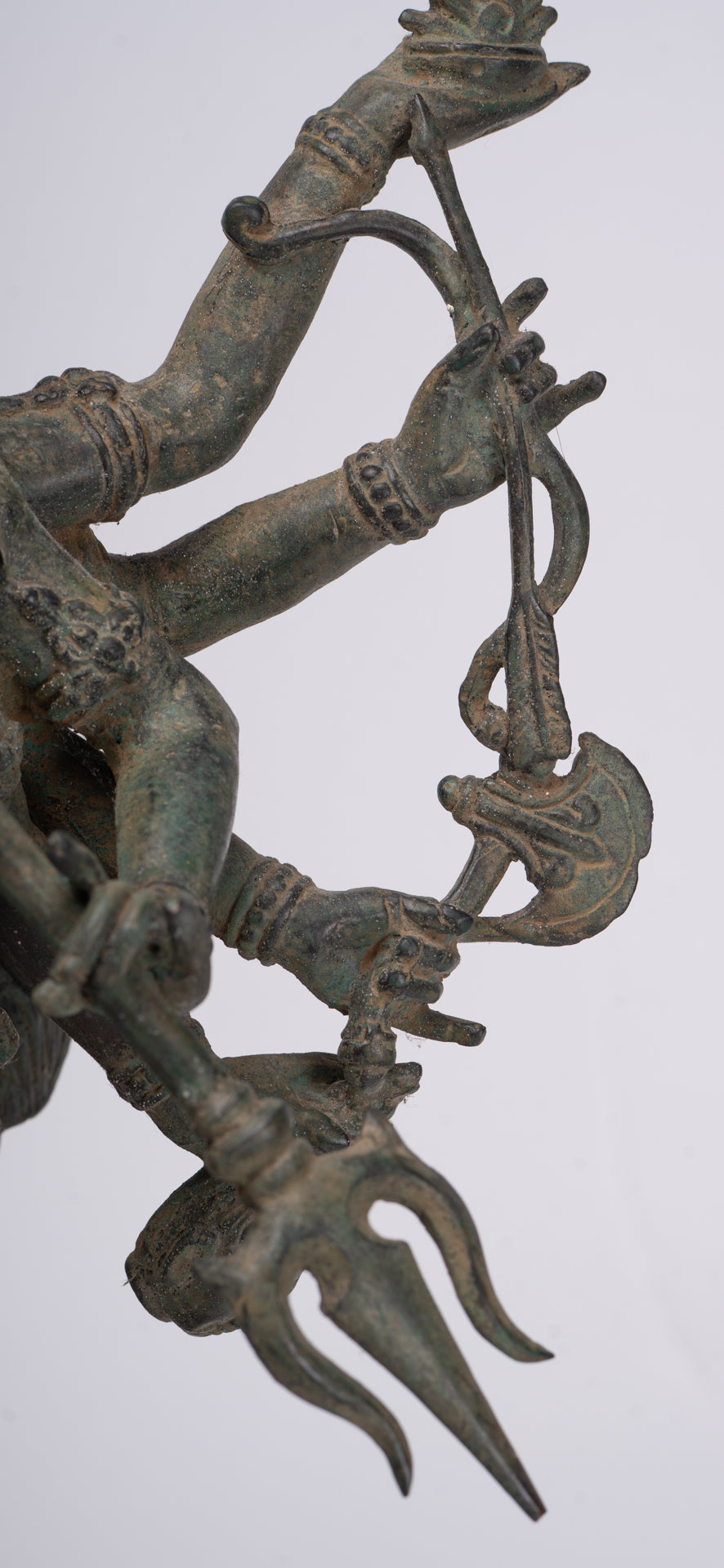
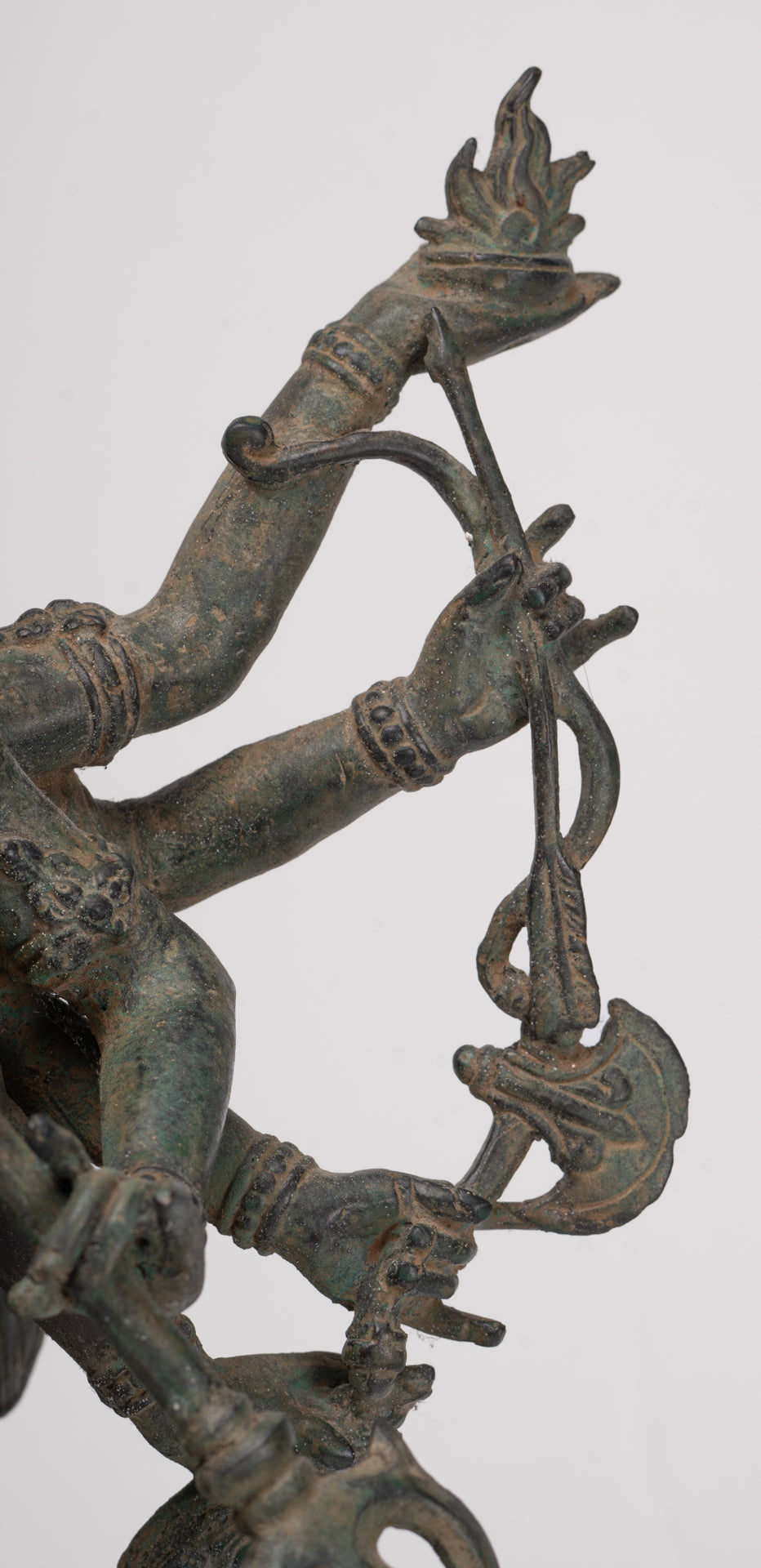
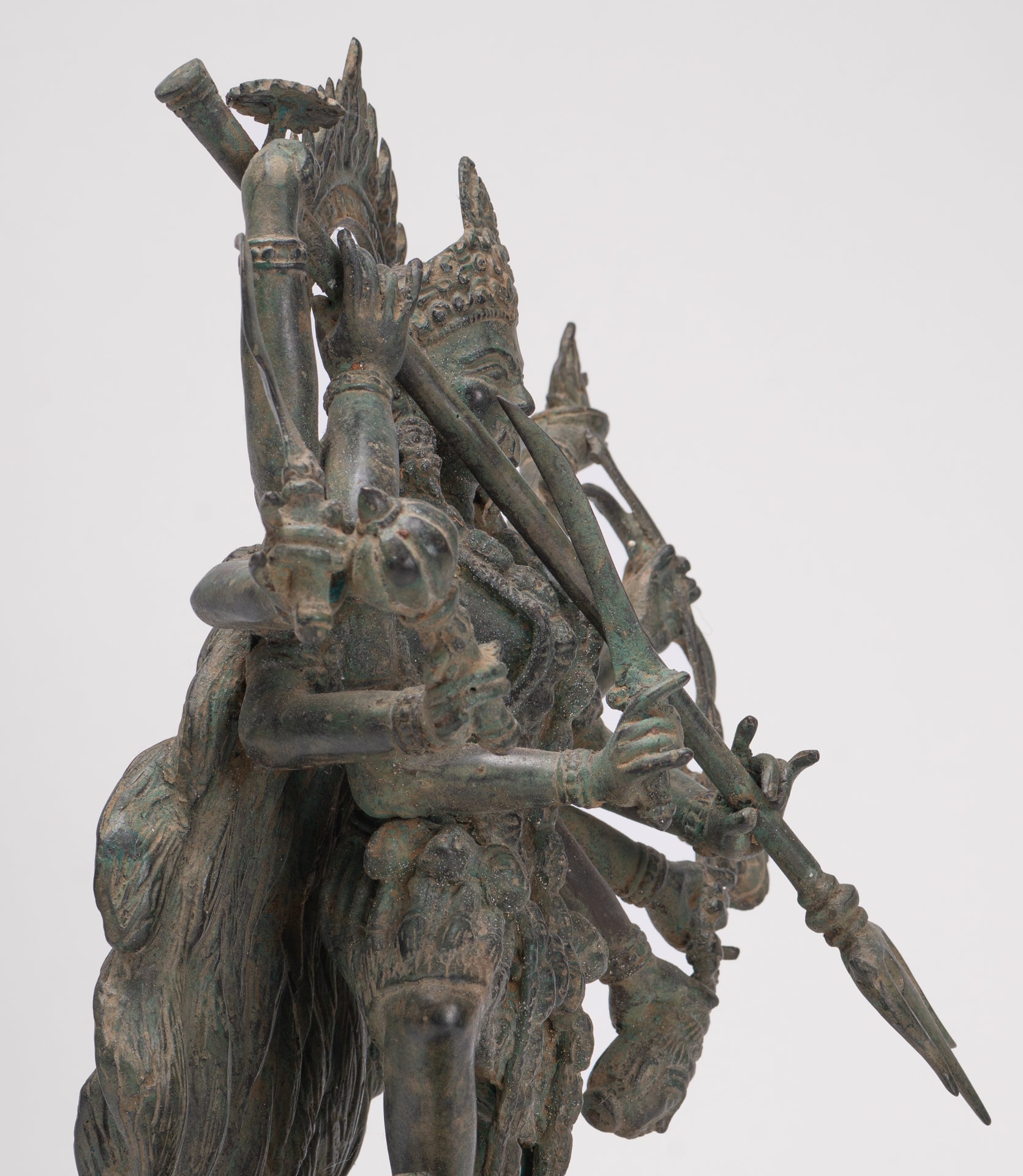
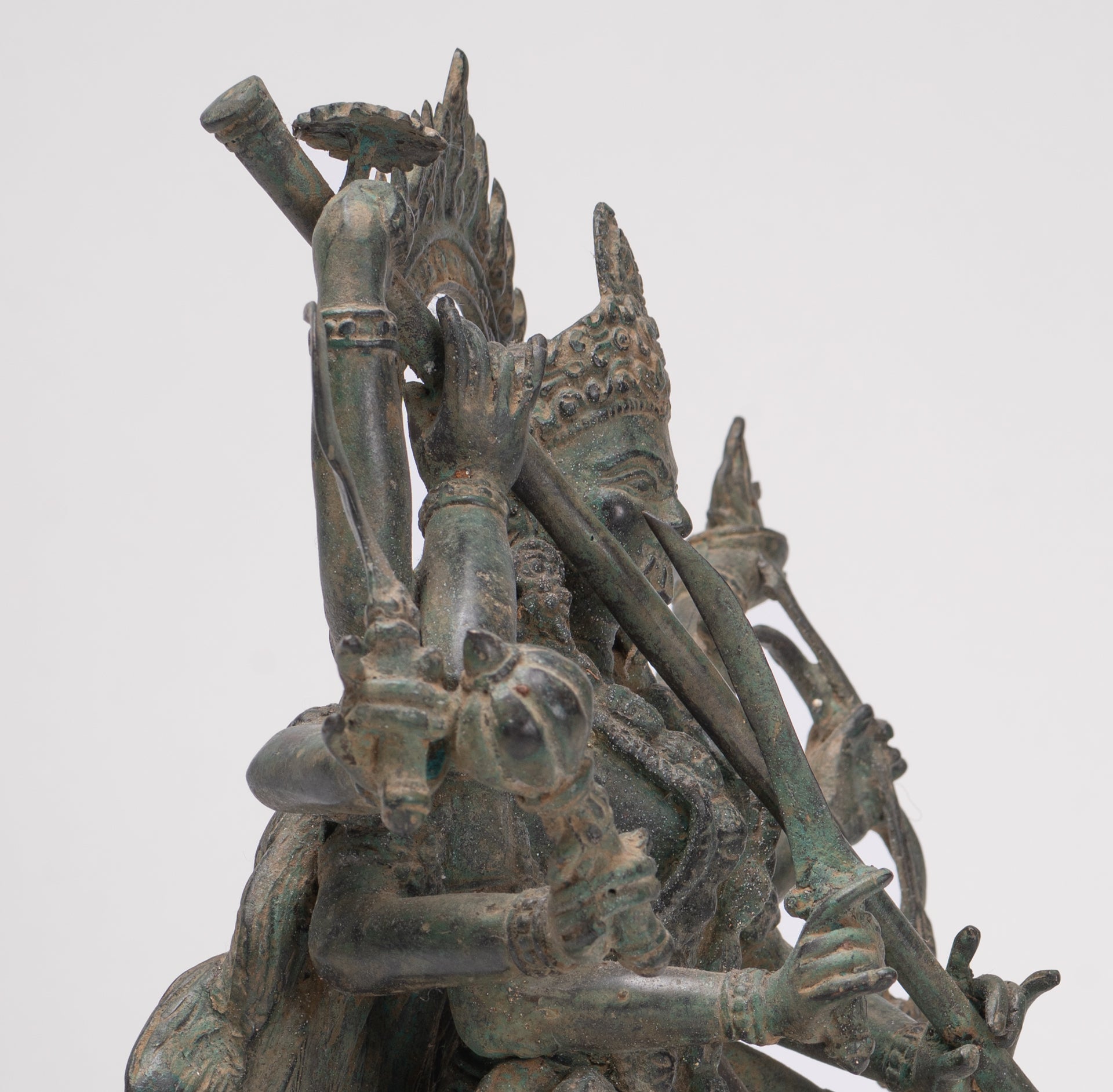
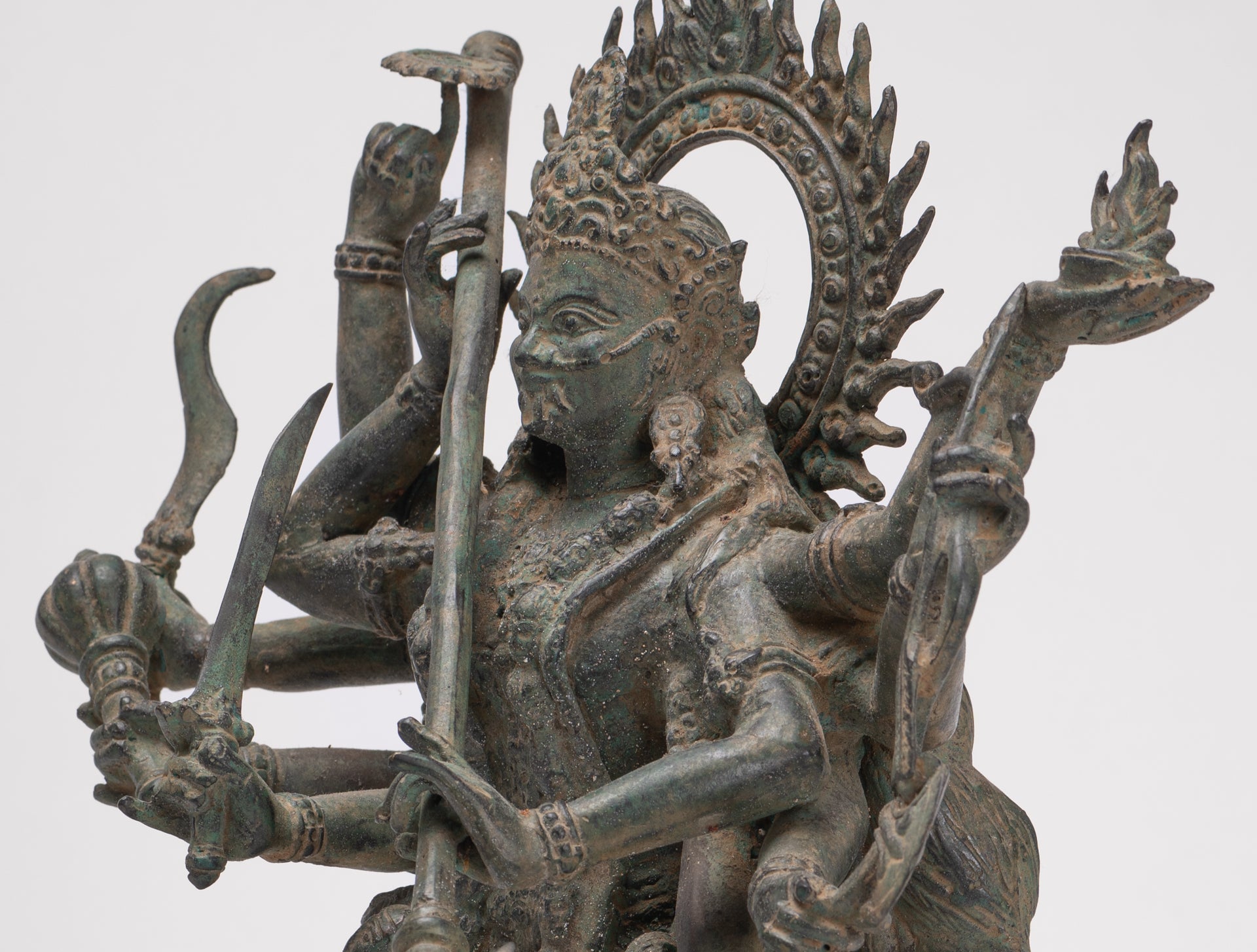
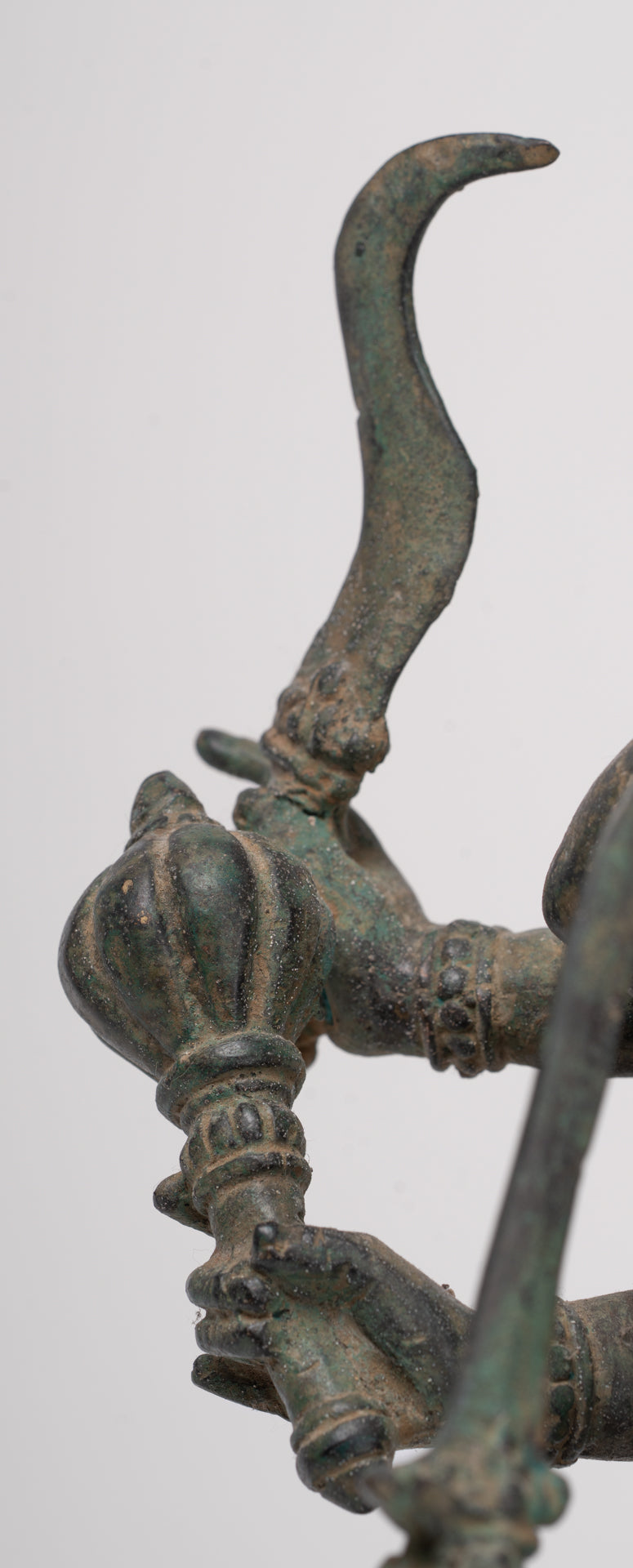
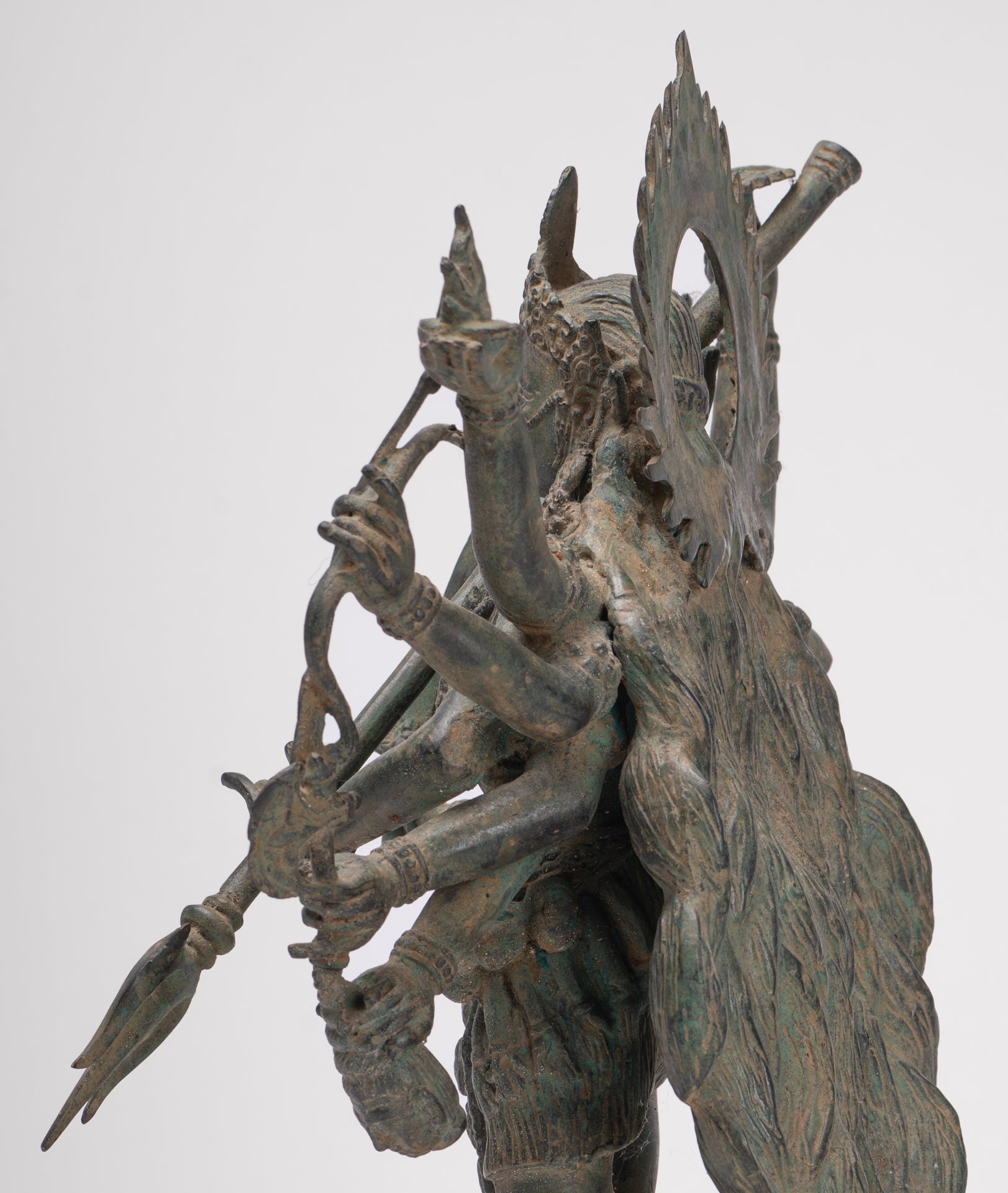
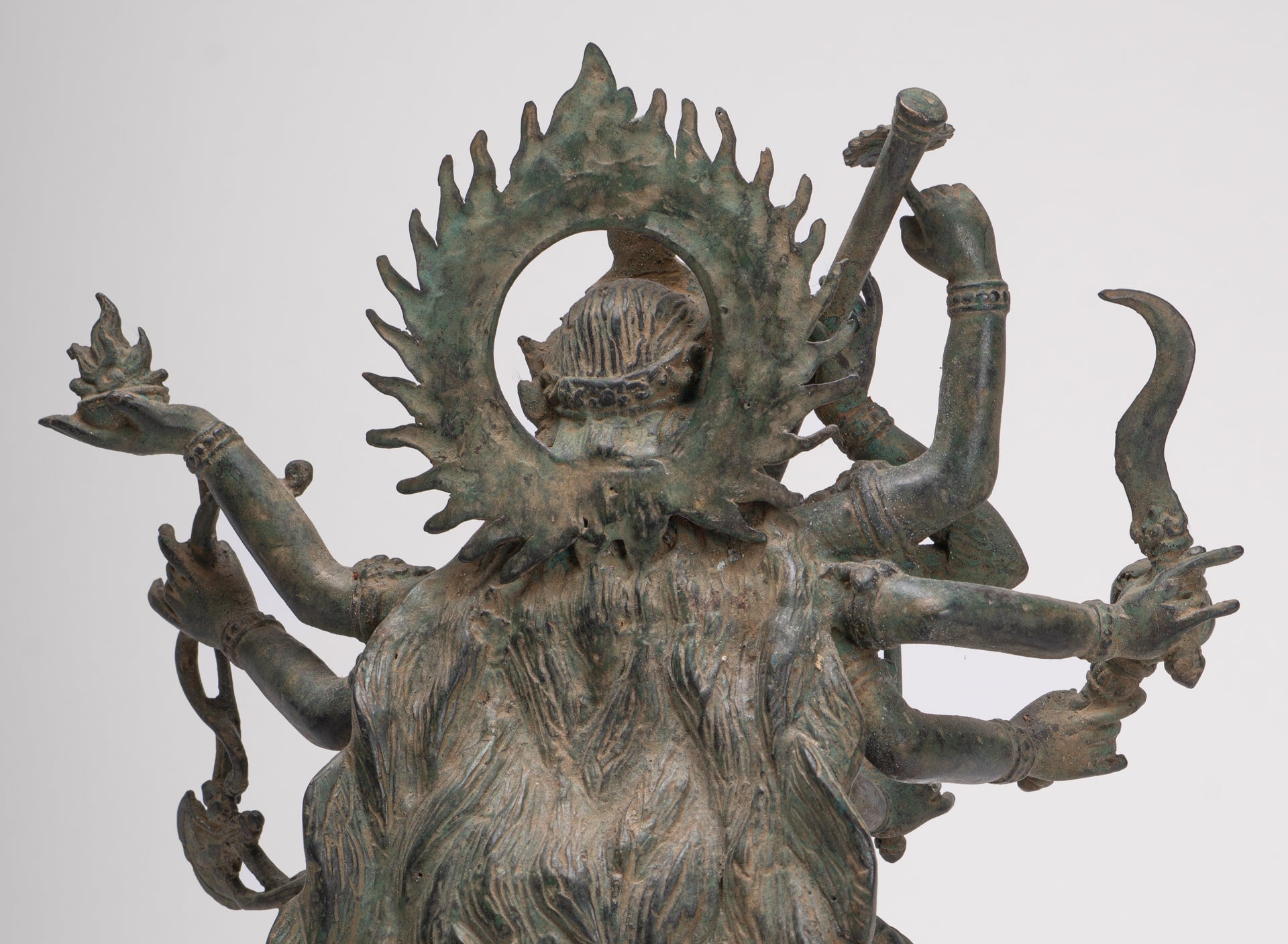
In this sculpture she dances with compelling energy, each limb alive with movement. In her hands she holds a trident, bow and arrow, axe, a sword, a lotus flower and a kalasha, combining fierce protection with the promise of renewal. The trident and sword cut through ignorance, ego and fear, severing the bonds that hold us to suffering. The lotus stands for purity and spiritual awakening arising from the “mud” of worldly experience. The kalasha—the ritual water vessel—appears in the Vedas as an “overflowing full vase,” a symbol of abundance, the source of life and the amrita or elixir of immortality. In Kali’s grasp, it signifies that even amid destruction, the seed of wisdom and new life is preserved.
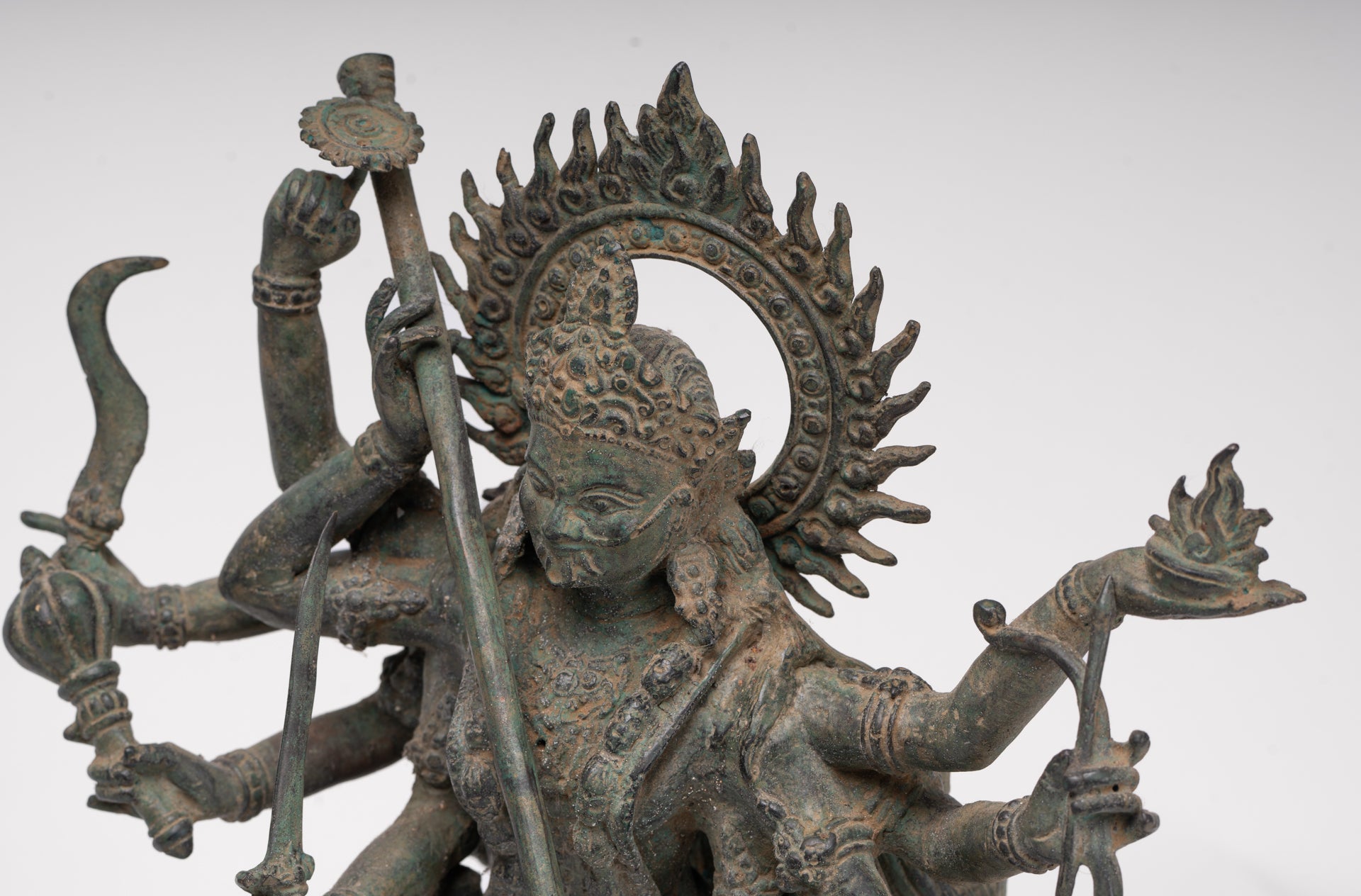
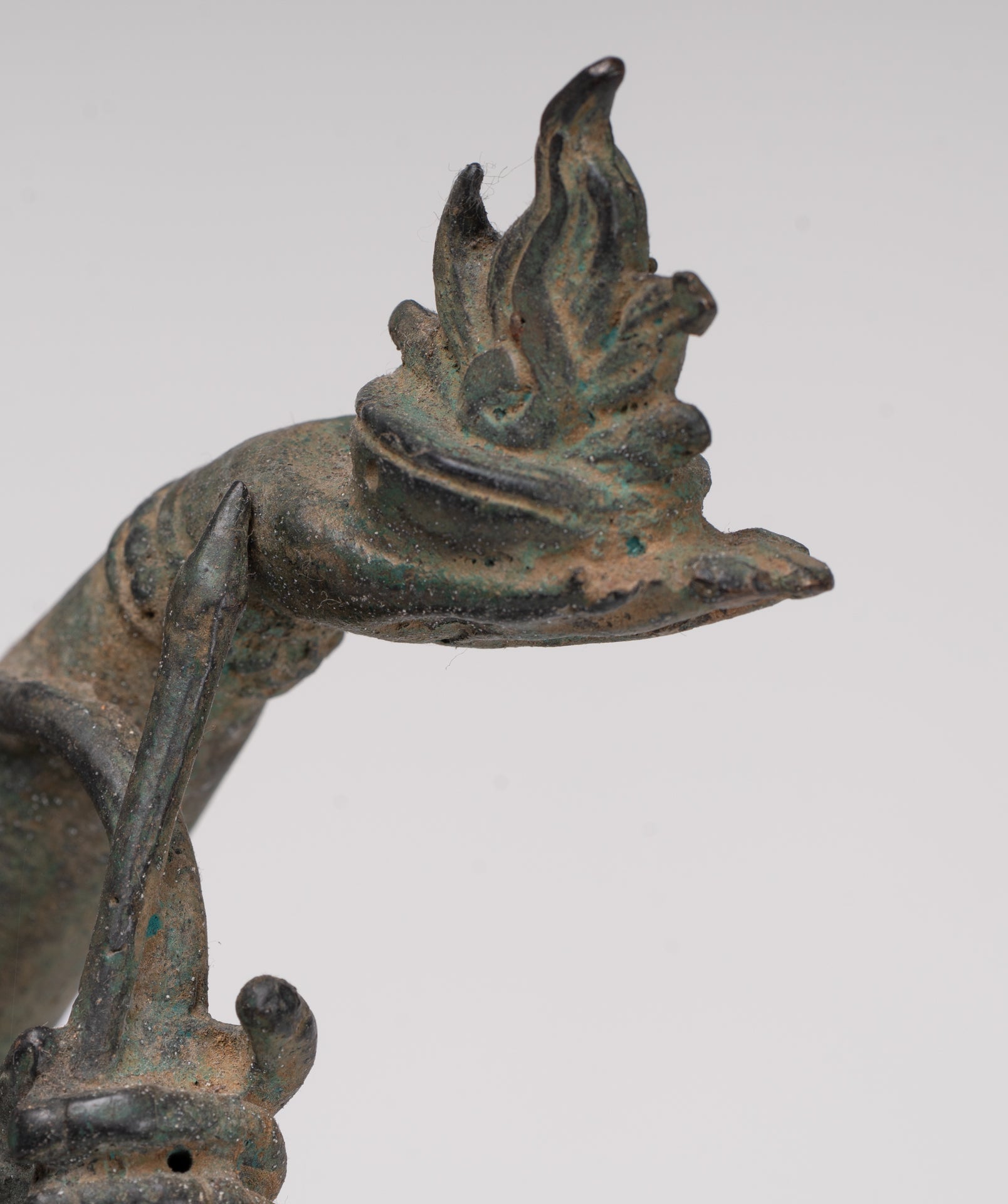
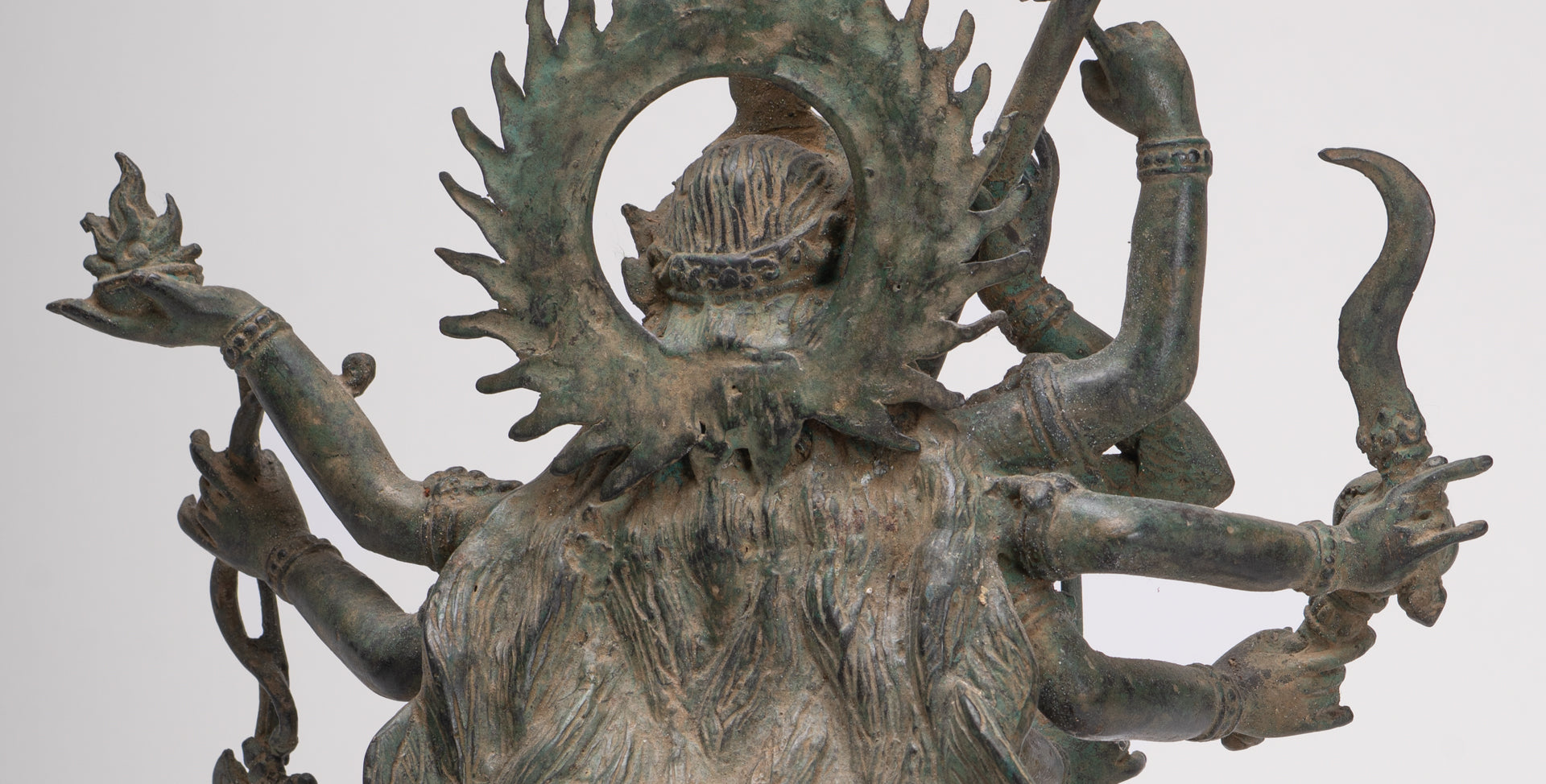
In this sculpture, the small flame that Kali holds in one of her left hands represents the fire of divine transformation. It is not ordinary fire; it symbolises the energy that burns away ignorance, negativity and stale patterns so that something truer and freer can emerge. In many Kali images, weapons cut through illusion while the flame purifies what has been released, turning fear and darkness into clarity and power. Held aloft in her hand, the fire becomes a reminder that destruction in Kali’s context is ultimately compassionate: she destroys only what limits us, illuminating the path to courage, honesty and spiritual liberation.
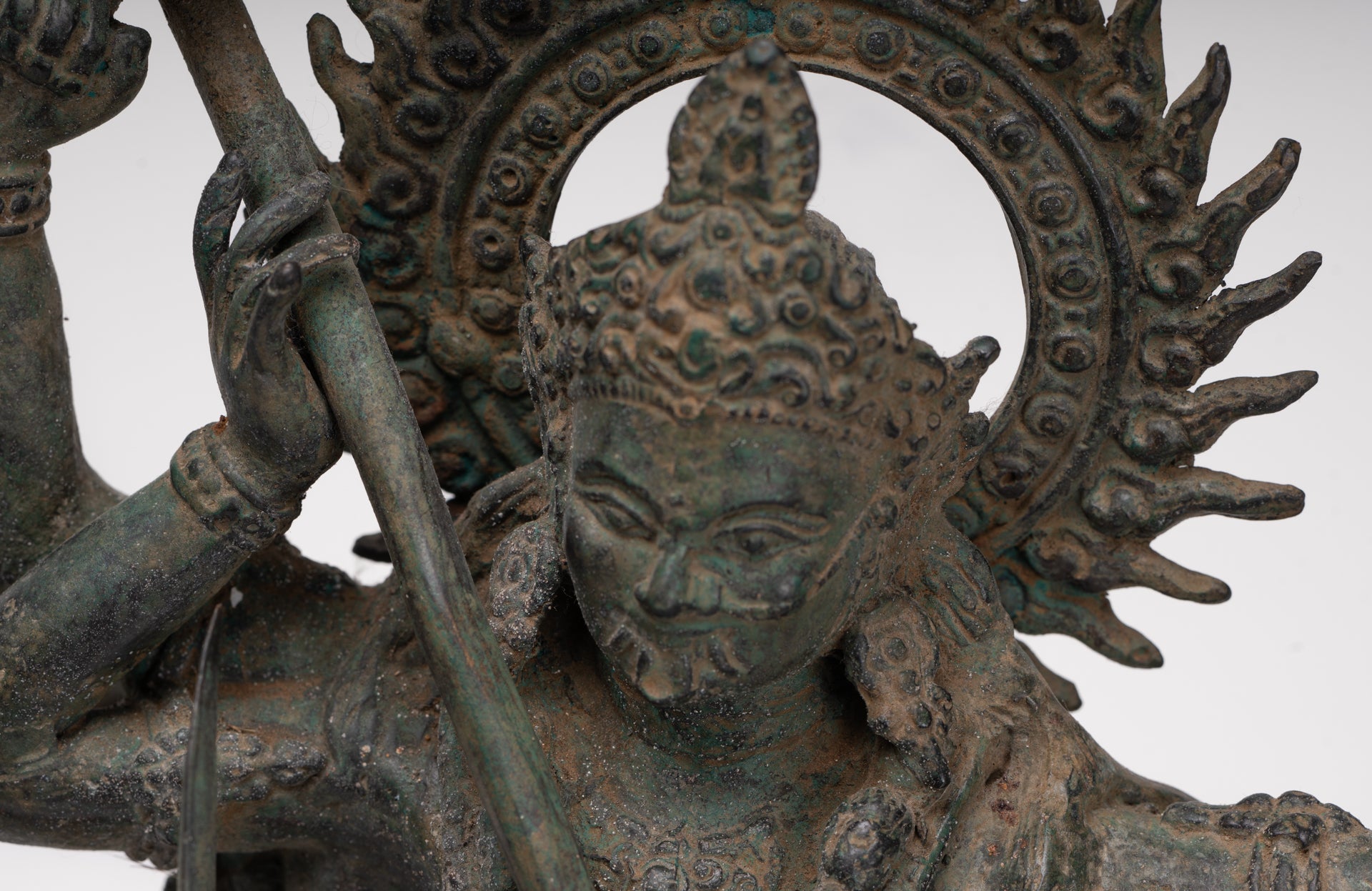
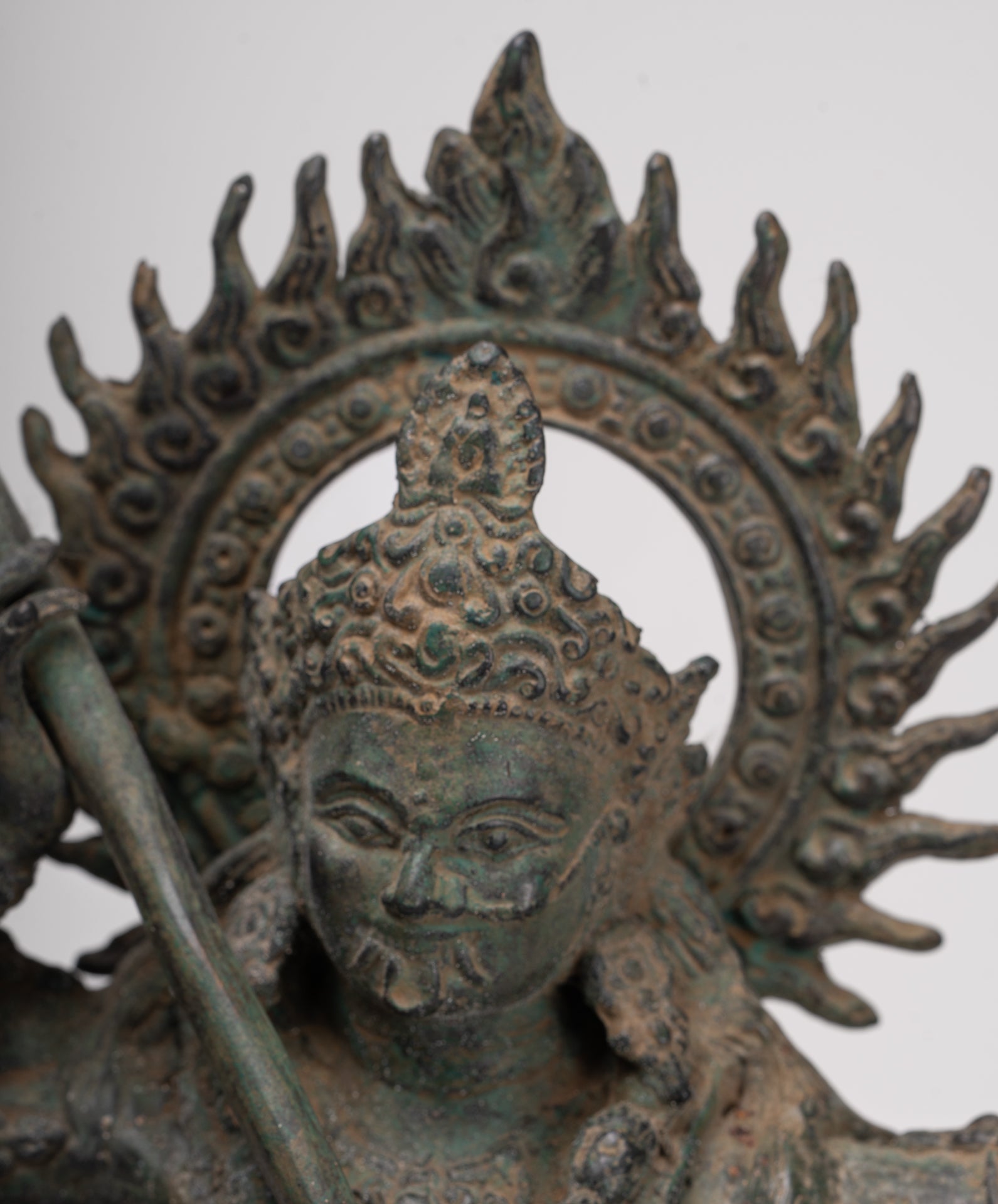
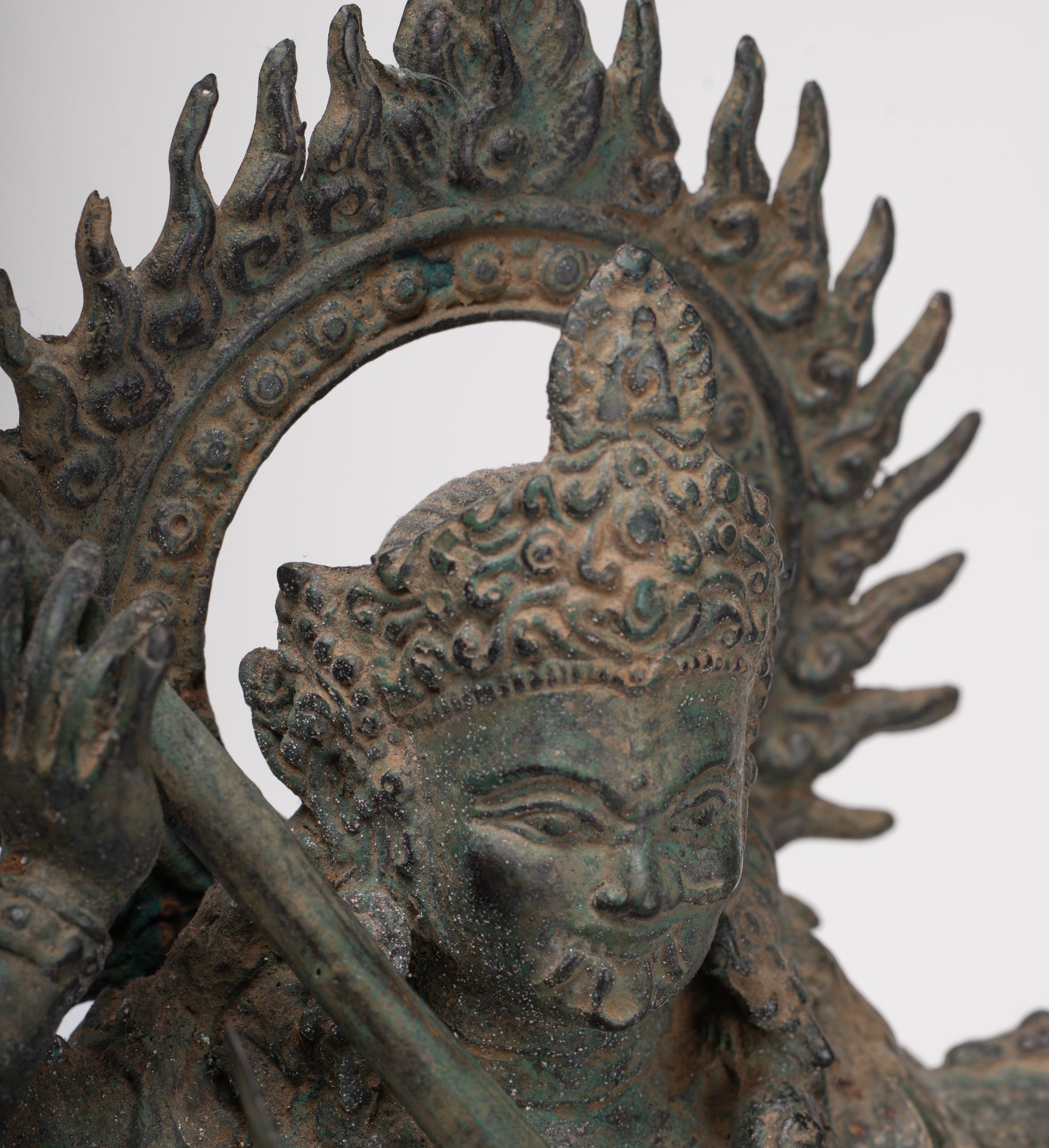
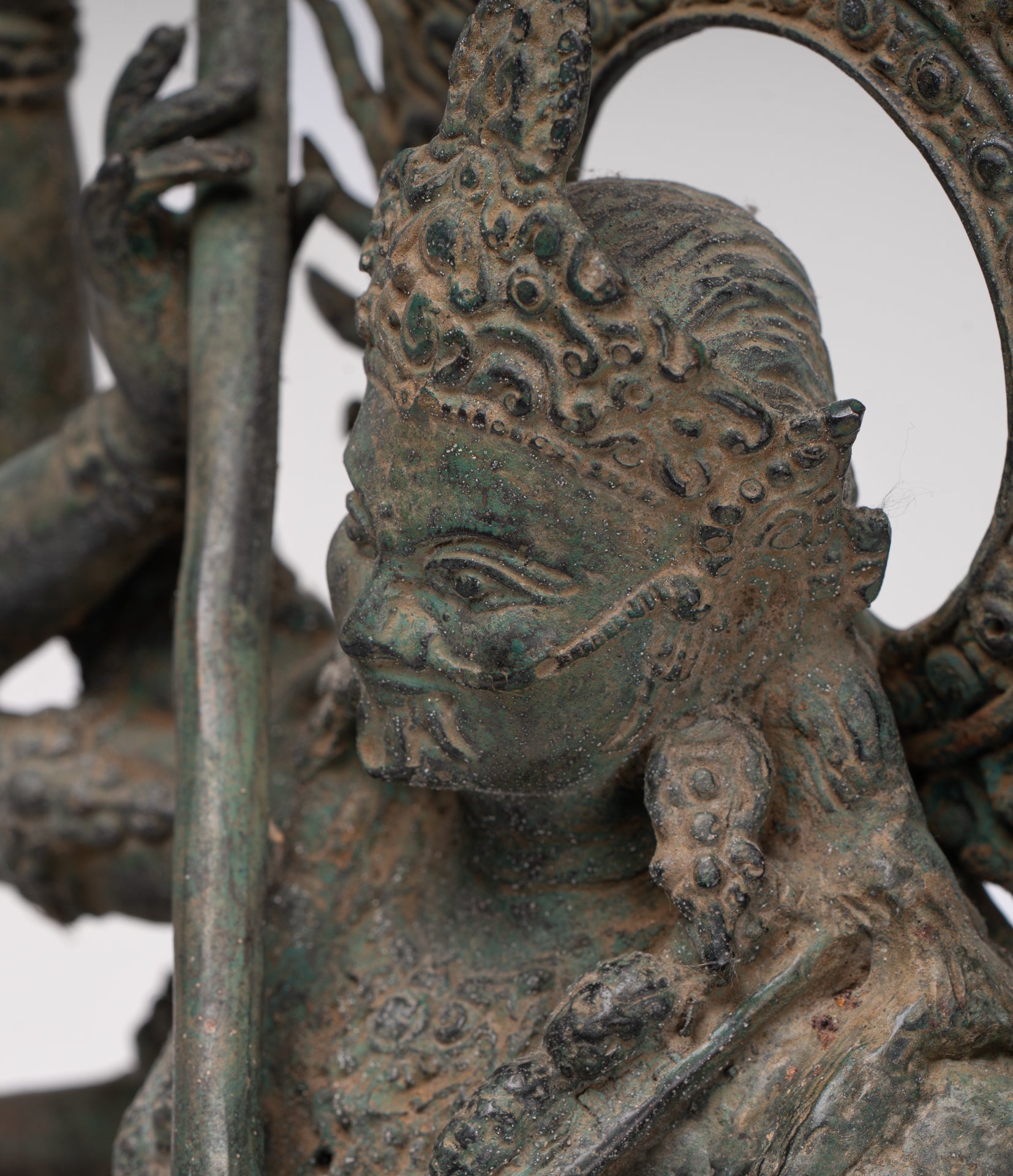
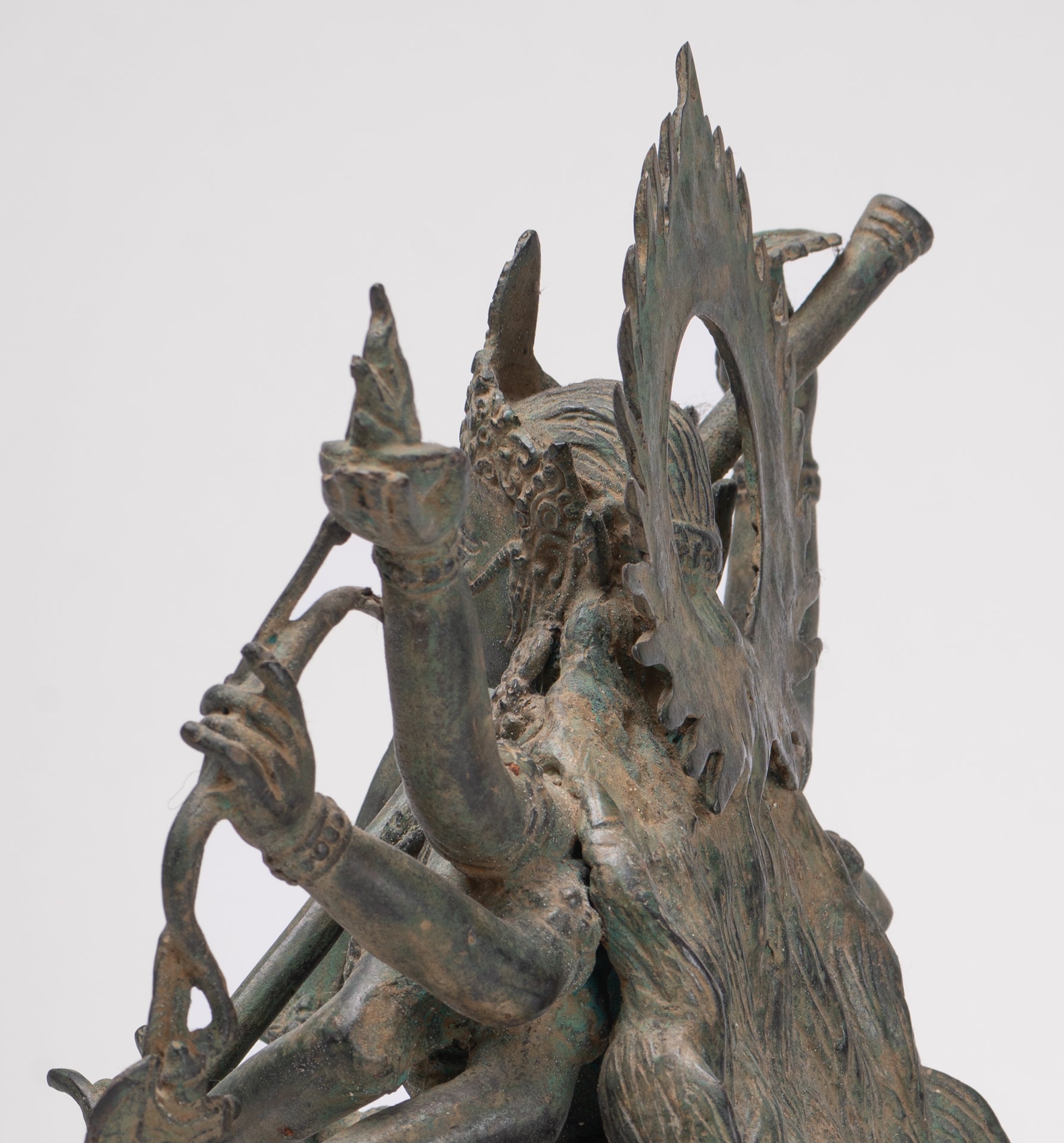
Her body is richly adorned. She wears an exquisitely detailed dhoti and sacred upavita, their surfaces alive with tiny patterns and beaded textures characteristic of Javanese bronze work. Upon her head rests a decorative Javanese tiara set before a tall kirita‑makuta, the conical crown associated with high divinity and sovereign power. This crowning ensemble can be read as a symbol of mastery over both positive and negative forces, a reminder that Kali rules the full spectrum of existence. On her brow, a finely indicated third eye or urna signifies heightened perception and inner vision beyond ordinary sight.
The face is beautifully modelled: an aquiline nose, elongated earlobes weighted with large earrings, and a gently downcast gaze that tempers her fierce energy with introspective calm. An aureole rises behind her head, framing the profile and clearly marking her as a radiant, transcendent being. Though the figure is dynamic, the expression suggests deep inner stillness—the paradox at the heart of Kali’s cosmic dance.
Here, Kali performs the Tandava, the cosmic dance of creation and dissolution. Each step and gesture speaks of the cyclical nature of existence, where endings are never final but give way to new beginnings. Her destructive aspect is not mindless wrath; it is the necessary clearing away of what is stale, false or harmful so that fresh life and insight can arise. In this sense, she is the fiercest face of compassion: the power that will overturn anything that keeps us bound.
Spiritually, Kali invites us to confront our fears rather than flee them. By facing the “darkness” within and without—our attachments, limiting beliefs and unacknowledged emotions—we discover resilience, clarity and freedom. Her dance teaches that genuine growth often requires loss, and that letting go is the gateway to a wider, more fearless life. Living with an image like this can be a daily reminder to meet change with courage and to trust the deeper pattern behind apparent chaos.
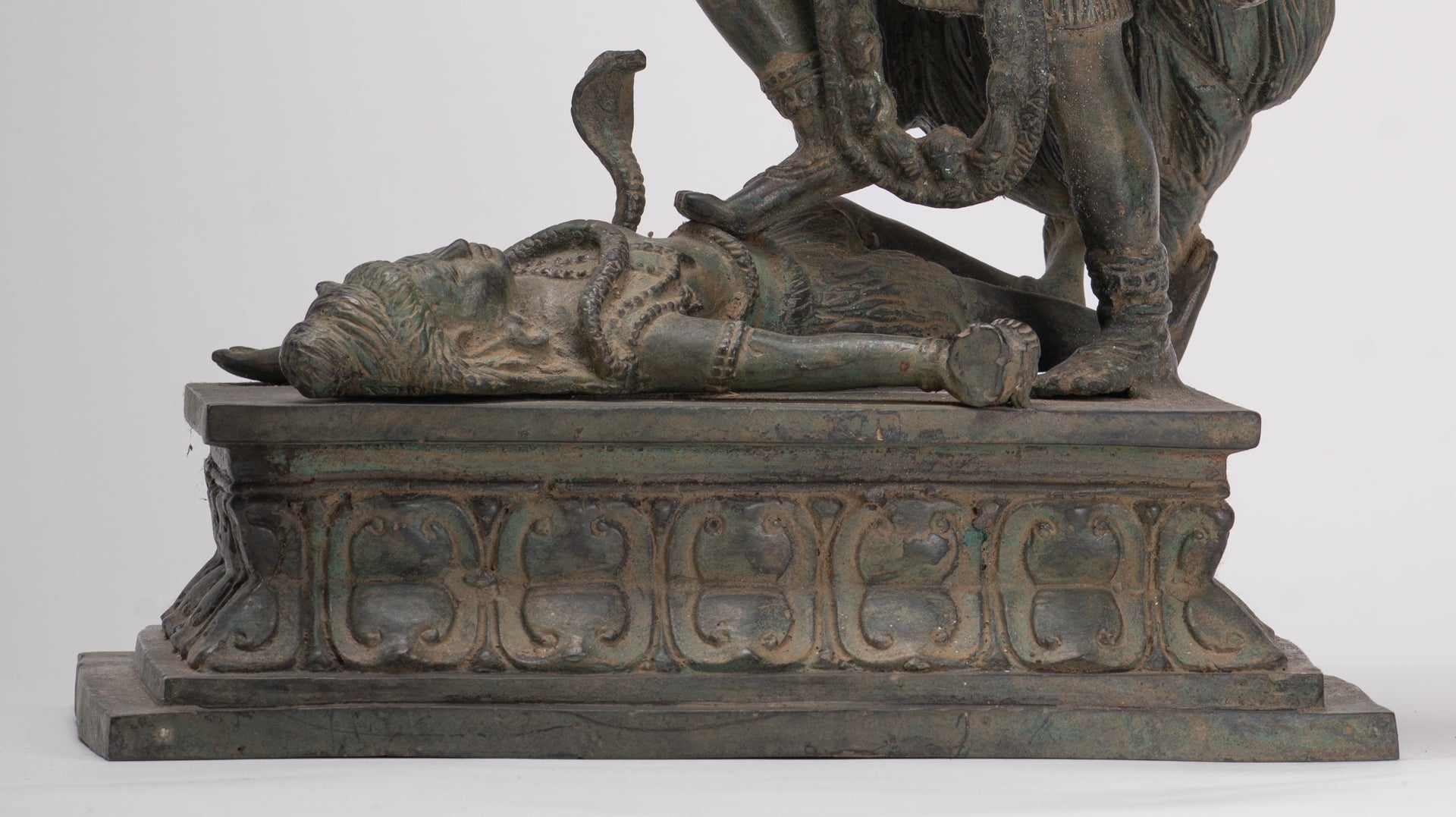
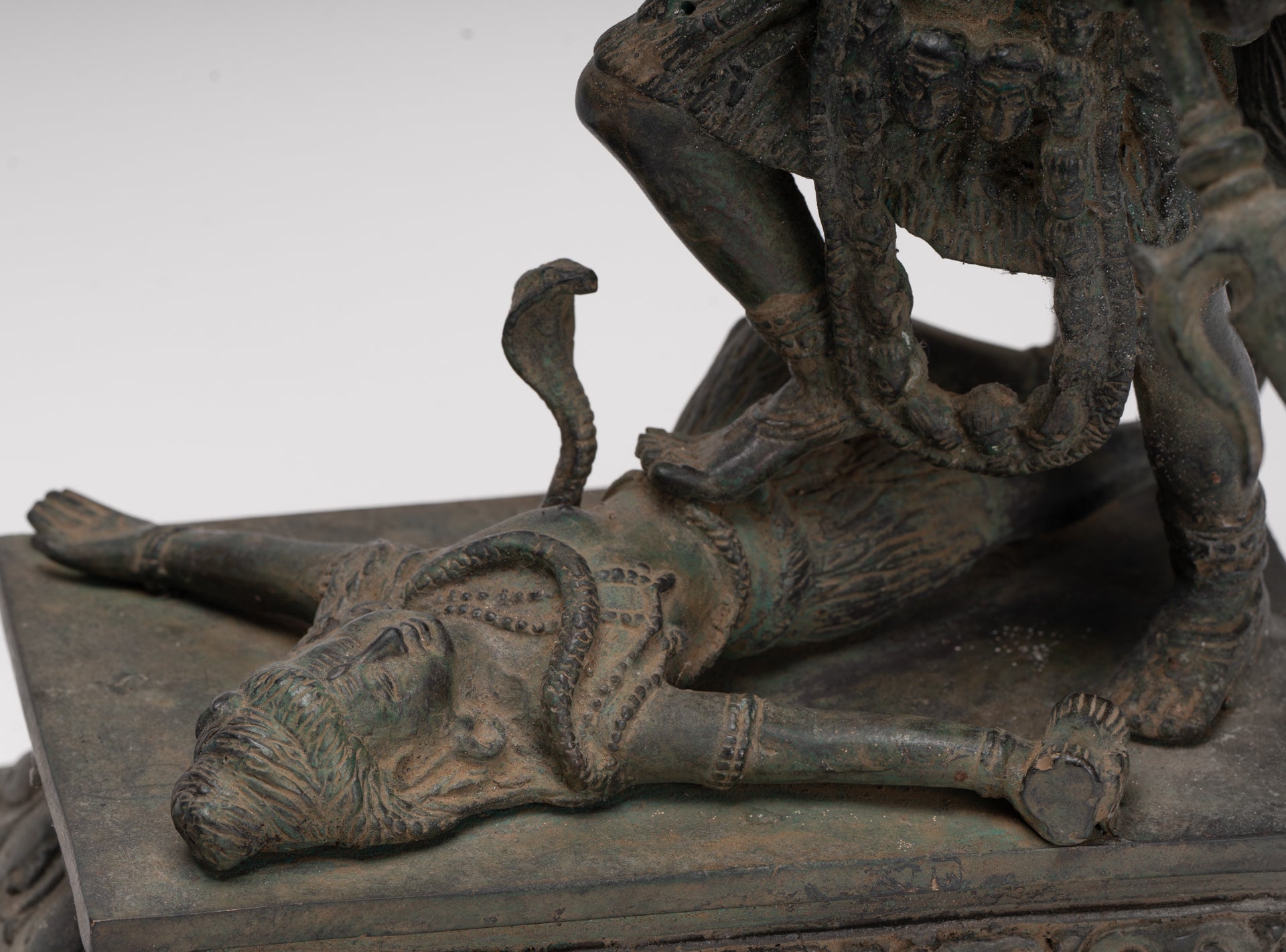
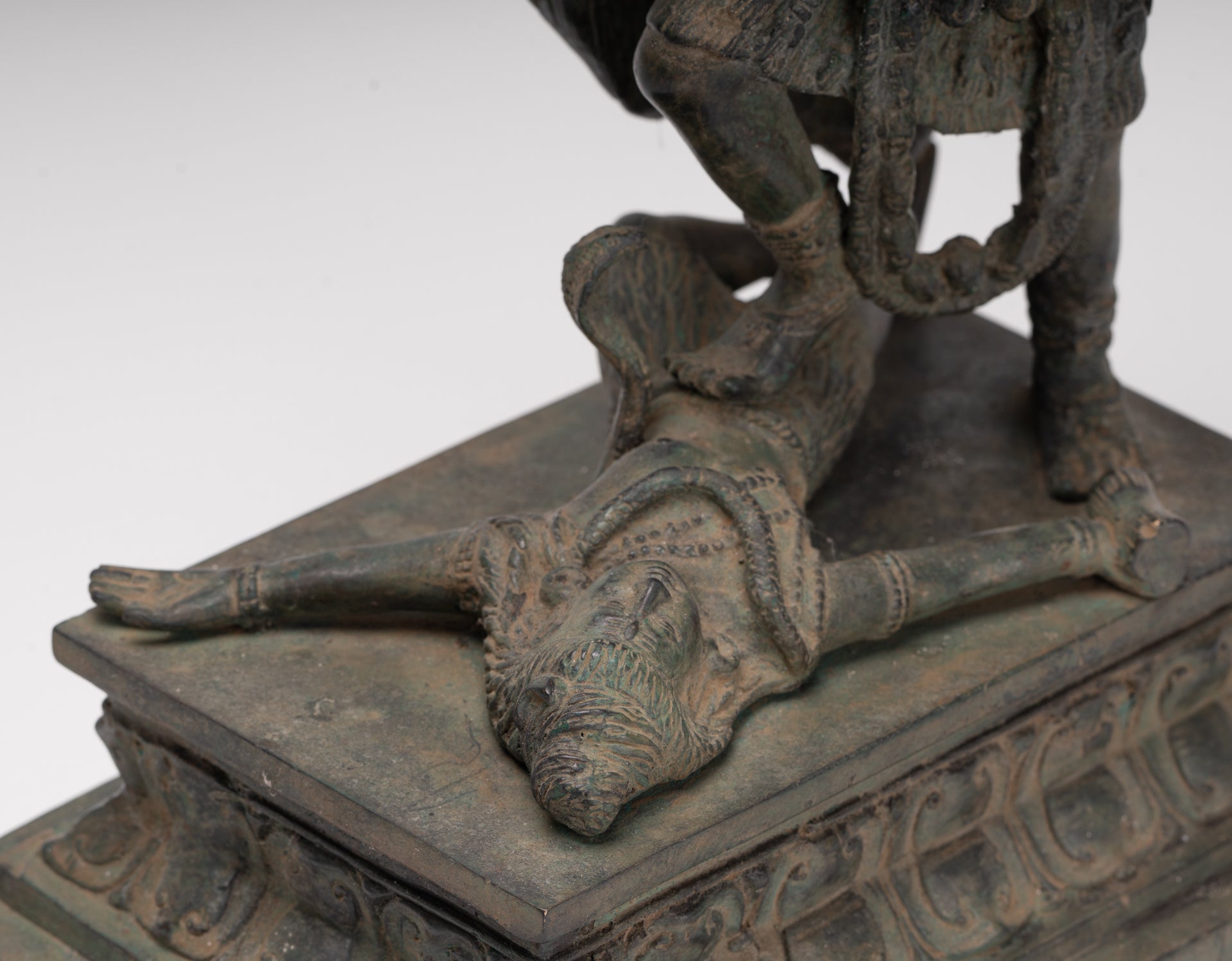
The bronze itself has developed a handsome, softly variegated azurite and malacite patina that emphasises the modelling of flesh, jewellery and textiles. Highlights catch on the raised edges of her adornments, while the recesses retain a deeper tone, giving the sculpture real visual depth and a sense of age. The surface quality enhances the impression of a venerable ritual object rather than a merely decorative piece.
Drawing on the same tradition of carefully sourced Southeast Asian bronzes found at specialist galleries such as HDAsianArt.com, this Majapahit‑style dancing Kali is both a powerful devotional image and an exceptional work of sculpture. Poised between ferocity and grace, she will bring a commanding, transformative presence to any collection, altar or contemplative space—an enduring embodiment of destruction as a pathway to renewal and ultimate liberation.
Key Features
-
Antique Javanese‑style Dancing Kali – A commanding bronze image of Kali / Mahakali, created in the refined 13th‑century Majapahit tradition of Java.
-
Impressive sculptural scale – Measures 43cm / 17" high, making it a substantial statement piece for a collection, home altar, library, study or contemplative interior.
-
Goddess of transformation – Kali represents the fierce yet compassionate power that dissolves ignorance, ego and limiting attachments so that renewal and liberation can arise.
-
Dynamic multi‑armed dance – The figure is shown in an energetic cosmic dance, expressing the cycles of creation, dissolution and rebirth.
-
Rich symbolic attributes – Holds a trident, bow and arrow, axe, sword, lotus, kalasha and flame—unifying protection, courageous action, purification, wisdom, abundance and awakening.
-
Fire of divine transformation – The flame represents the purifying energy that burns away negativity, fear and stale patterns, making space for clarity and freedom.
-
Majapahit‑style royal ornament – Detailed dhoti, sacred upavita thread, Javanese tiara, tall kirita‑makutacrown, jewellery and aureole create a richly layered sacred presence.
-
Third eye of insight – The finely indicated third eye or urna symbolises perception beyond ordinary appearances and the wisdom to see through illusion.
-
Fine, expressive casting – Aquiline nose, downcast gaze, elaborate earrings, crisp textile patterning and ornament demonstrate exceptional attention to sculptural detail.
-
Beautiful mineral‑toned patina – Softly varied azurite and malachite tones deepen the bronze surface and highlight the modelling of flesh, jewellery and flowing garments.
Frequently Asked Questions
Q: Who is Kali?
A: Kali, also called Mahakali, is a powerful Hindu goddess associated with time, change, destruction of ignorance and spiritual transformation. While her imagery can appear fierce, she is also understood as a profoundly compassionate force who clears away what is false, harmful or limiting.Q: Is Kali a goddess of destruction?
A: Kali is associated with destruction, but this should not be understood as mindless violence. Her destructive power is transformative: she destroys ignorance, ego, fear, attachment and harmful patterns so that renewal, courage and spiritual freedom can emerge.Q: Why is Kali shown dancing?
A: Kali’s dance expresses the ceaseless movement of life: creation, dissolution and rebirth. It reminds us that endings are not simply final; they can become the conditions from which new understanding, strength and life arise.Q: Is this truly a Tandava dance?
A: Tandava is most closely associated with Shiva’s powerful cosmic dance, though traditions also refer to forms of Kali or Shakti Tandava to express the inseparable energy of Kali and Shiva. In this sculpture, “Tandava” describes Kali’s dynamic, transformative cosmic dance, rather than a quiet or purely decorative pose.Q: What does Kali’s dark appearance symbolise?
A: Kali’s dark or shadow‑like nature is often understood as the boundless, formless ground from which all things arise and to which all things return. It evokes mystery, cosmic potential and a reality that exists beyond ordinary categories of beauty, fear, birth and death.Q: What does the trident mean?
A: The trident, or trishula, is an emblem of divine power and protection. Its three points can be interpreted in many ways, including creation, preservation and destruction; past, present and future; or body, mind and spirit.Q: What does the sword represent?
A: Kali’s sword represents the cutting of ignorance, false identity and spiritual delusion. It is a symbol of clear insight and the courage to sever attachments that prevent growth and freedom.Q: Why does Kali hold a flame?
A: The flame represents the fire of divine transformation. It purifies negativity, fear and old patterns, turning what has been released into clarity, strength and renewed possibility. In Kali’s hands, fire is destructive only in the sense that it burns away what obscures truth.Q: What does the lotus flower signify?
A: The lotus rises from muddy water yet opens into a pristine bloom. It represents purity, spiritual awakening and the potential for wisdom and beauty to emerge from the difficulties of worldly experience.Q: What is a kalasha?
A: A kalasha is a sacred ritual water vessel. It is traditionally associated with abundance, fertility, life‑giving water and the fullness of blessing. In many traditions it is also linked with amrita, the nectar of immortality; in Kali’s iconography it reminds us that destruction and renewal are inseparable.Q: Why does Kali carry weapons as well as peaceful symbols?
A: Kali’s iconography intentionally unites fierce and gentle attributes. The weapons show her ability to confront ignorance and harmful forces; the lotus and kalasha show that her ultimate purpose is wisdom, renewal, abundance and liberation. Together, they express fierce compassion.Q: What does the third eye mean?
A: The third eye, or urna, symbolises heightened spiritual perception. It represents seeing beyond surface appearances, ego and illusion—an inner vision that recognises what is true, necessary and liberating.Q: What is the aureole behind Kali’s head?
A: The aureole is a halo‑like arch that frames Kali as a radiant, transcendent being. It emphasises her divine presence, provides visual balance for the lively figure and creates a powerful temple‑icon silhouette.Q: What is the kirita‑makuta crown?
A: The tall conical kirita‑makuta is a crown associated with high divinity and royal authority. Together with the Javanese tiara and jewellery, it communicates Kali’s sovereignty over the full range of existence—creation and destruction, terror and compassion, ending and renewal.Q: What is the upavita thread across the body?
A: The upavita is a sacred thread traditionally associated with ritual discipline, learning and spiritual responsibility. In sculpture it also adds an important visual line across the torso, balancing the movement of the dhoti and arms.Q: What style is the sculpture?
A: The work is made in a Majapahit‑style Javanese tradition, inspired by the Hindu‑Buddhist art of East Java. Majapahit art is known for adapting Indian sacred iconography through a distinctive Indonesian visual language, often combining elaborate ornament, strong silhouettes and refined surface detail.Q: Is this an original 13th‑century Majapahit bronze?
A: The description identifies the work as an antique Javanese‑style Kali in the 13th‑century Majapahit tradition. The date reference describes its stylistic inspiration.Q: Is Kali suitable for a home or meditation space?
A: Yes, particularly for those drawn to Kali’s message of courage, truth and transformation. She can be a powerful focal point in a study, creative studio, meditation area or altar, reminding the viewer to meet change honestly and release what no longer serves.Q: Is Kali appropriate for non‑Hindus to display?
A: Yes. Kali is appreciated by collectors, artists, yoga practitioners and people of many backgrounds as a symbol of courageous transformation and the divine feminine. It is important to display her respectfully, in a clean and stable location that allows the intricate imagery to be appreciated.Q: Where should I place the sculpture?
A: At 43cm / 17" high, Kali is best displayed as a standalone focal point on a sturdy console, shelf, pedestal or altar. Give the sculpture sufficient surrounding space so that the aureole, multiple arms and dynamic silhouette can be viewed clearly from different angles.Q: How should I care for the azurite and malachite patina?
A: Dust gently using a soft, dry cloth or soft natural‑bristle brush. Avoid metal polish, water immersion, chemical cleaners, abrasive pads and waxes, all of which may damage or remove the distinctive blue‑green patina.Q: Can this sculpture be displayed outdoors?
A: Indoor display is recommended. Prolonged rain, frost, direct sun and fluctuating humidity can alter the bronze surface and accelerate corrosion, changing the carefully developed patina.Q: Who would especially appreciate this piece?
A: This Majapahit‑style Kali will appeal to collectors of Indonesian and Southeast Asian bronzes, devotees of the goddess, practitioners of yoga and meditation, interior designers, artists and anyone seeking a sculptural embodiment of courage, transformation and the renewal that can follow change.SATISFACTION GUARANTEE - We have been offering SE Asian Art for many years and are proud of the reputation we have developed for fair and honest listings. However, if for any reason, whatsoever, you are unhappy with your purchase please just let us know and we will provide a full refund. We want you to be 100% happy with your purchase.
-
-
The majority of orders will be shipped with DHL. This is a secure, express and fully tracked service.
Items less than 2Kg we typically ship using Royal Mail.
Once we receive your order we try to ship all orders the same or next working day.
Large and/or fragile pieces requiring palletising, specialist crating and/or extra packaging may take a little longer. Palletised shipments will be delivered curbside.
All orders over 35 GBP will be shipped free of charge.

-
We genuinely hope that all purchases delight.
However, if they do not, regardless of reason, we will refund all orders upon receipt of the unwanted item. Just notify us within 14 days of receiving your order that you wish to make a return and send the piece back to us with 30 days of delivery.


