



Pourquoi une statue antique est un cadeau significatif – expliqué
Pourquoi une statue antique est un cadeau significatif – expliqué
Une statue antique est un cadeau significatif car elle combine une présence physique durable, un symbolisme culturel à plusieurs niveaux et une invitation à l'intendance – trois qualités qu'aucun objet produit en série ne peut reproduire.
Des institutions telles que l'UNESCO reconnaissent le poids culturel des objets historiques, et des galeries spécialisées comme HDAsianArt documentent ce poids grâce à la recherche de provenance et à l'authentification d'experts. Même la Statue de la Liberté, cadeau diplomatique de la France aux États-Unis en 1886, démontre qu’une statue peut coder des valeurs partagées entre générations.
Trois raisons pour lesquelles ce cadeau a un sens :
- Durabilité et valeur patrimoniale. Le bronze, la pierre et le bois survivent à celui qui les donne. L'objet devient un marqueur visible de l'histoire personnelle.
- Profondeur culturelle et symbolique. Les statues ont exercé des fonctions religieuses, honorifiques et commémoratives dans toutes les grandes civilisations. Cette histoire voyage avec l'objet.
- Intendance et récit personnel. Donner une antiquité invite à la garde – le destinataire fait partie de l’histoire continue de l’objet.
Table des matières
- Ce que l'histoire nous dit sur les raisons pour lesquelles les statues ont été données et conservées
Comment les statues antiques sont porteuses de sens : matérialité, mémoire et affect
Les statues fonctionnent comme ce que les chercheurs appellent une technologie affective : des objets durables qui ancrent les émotions et les souvenirs dans le temps. Contrairement à une carte ou à un cadeau consommable, une statue reste visible au quotidien. Sa présence physique favorise la narration répétée et la mémoire soutenue, c'est pourquoi les statues uniques deviennent des sujets de conversation longtemps après l'occasion qui a motivé le cadeau.
Le matériel compte ici. Le bronze résiste à la corrosion au fil des siècles. La pierre porte le poids du temps géologique. Le bois sculpté porte les marques de la main d’un artisan. Ces matériaux transforment un cadeau en héritage – un témoin visible de l’histoire personnelle qui peut se transmettre d’une génération à l’autre.
Les antiquités ne sont pas un décor statique ; ils rassemblent des histoires et font partie de la vie rituelle du foyer. — La psychologie aujourd'hui
Recherche sur impact affectif des objets confirme que les sculptures véhiculent des expériences émotionnelles positives – sécurité, appartenance, calme – même lorsque le destinataire n’est pas familier avec les origines historiques précises de l’artefact. L'effet émotionnel ne dépend pas de l'expertise.
Lorsqu'on explique ce don à quelqu'un, ces points couvrent la logique émotionnelle :
- "C'est censé durer – ce sera toujours là longtemps après moi."
- "Il contient une histoire : d'où il vient, qui l'a fabriqué et pourquoi je l'ai choisi pour vous."
- "Cela marque un rôle ou une étape importante dans votre vie."
- "Il offre une présence constante – quelque chose vers lequel revenir."
- Le expression faciale dans les statues bouddhistes, par exemple, communique la sérénité sans mots.
Ce que l'histoire nous dit sur les raisons pour lesquelles les statues ont été données et conservées
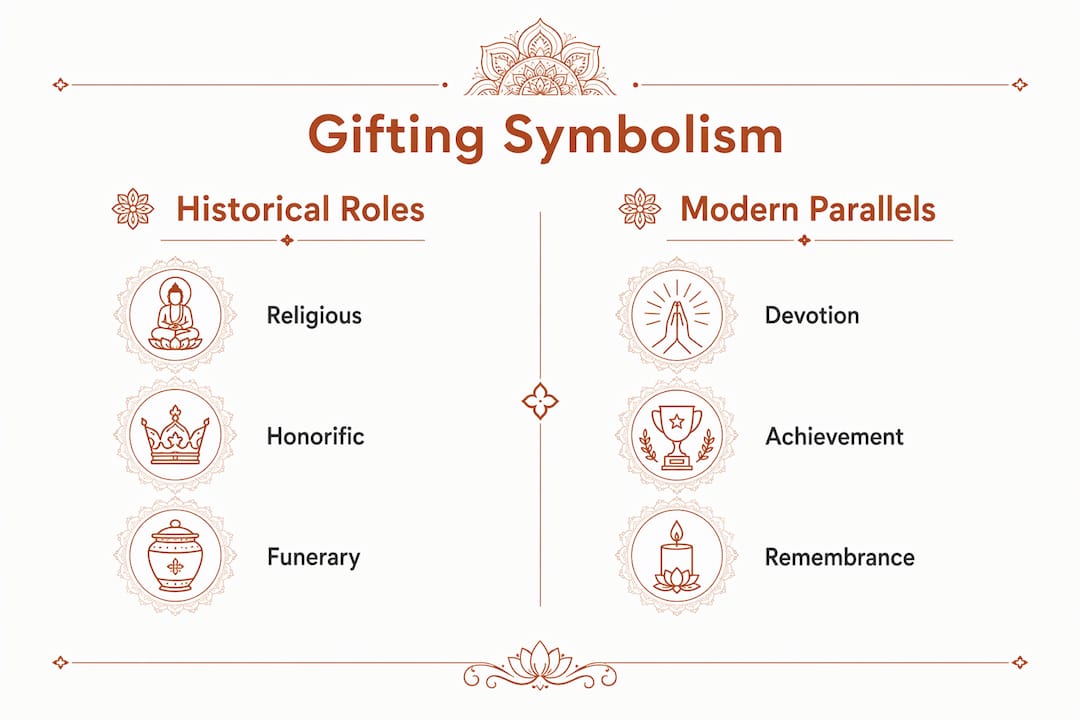
Les statues n’ont jamais été purement décoratives. Les cultures classiques leur ont attribué trois rôles sociaux qui se chevauchent, chacun ajoutant de la profondeur à un don moderne.
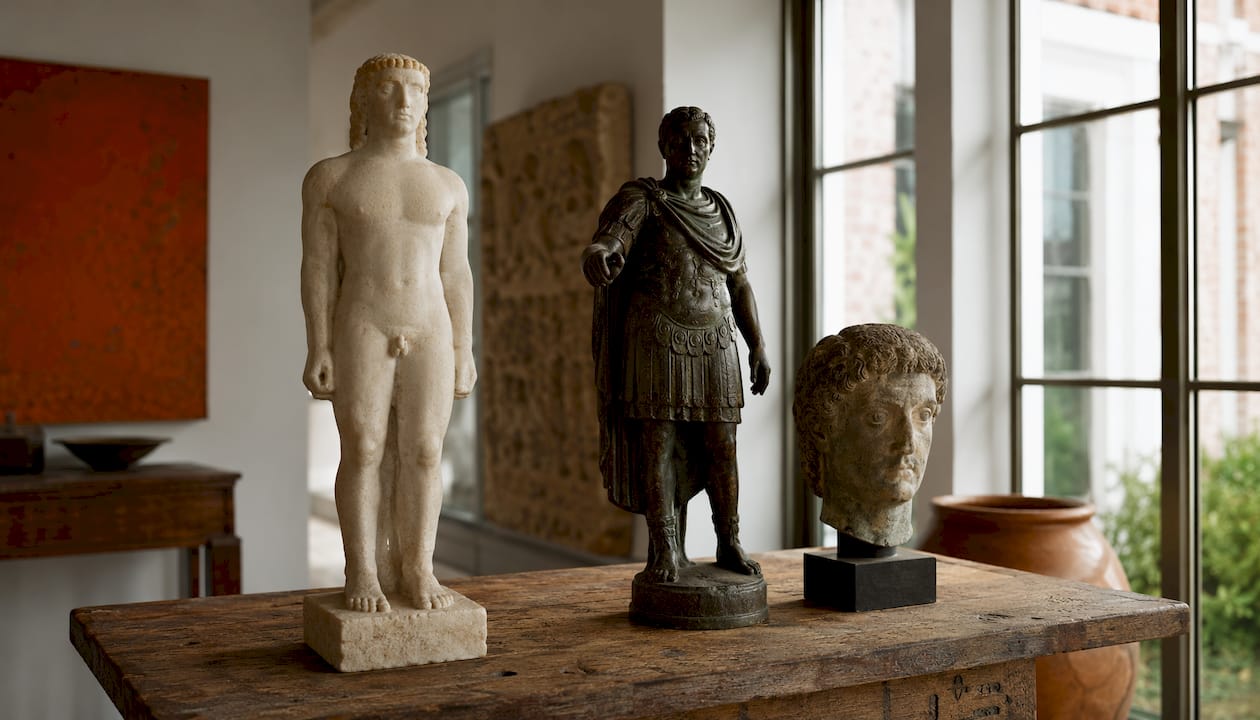
Religieux et votif. Les premières statues grecques étaient conservées dans des temples en tant qu'images de divinités, et les kouroi en pierre marquaient les tombes en guise d'offrandes aux dieux. Dans les traditions bouddhistes et hindoues asiatiques, Sculpture bouddhiste Theravada et Sculpture hindoue indonésienne remplissaient des fonctions votives parallèles - des objets placés dans un espace sacré pour inviter à la protection et au mérite.
Honorifique et commémoratif. Des statues de vainqueurs sportifs ont été érigées à Olympie et à Delphes. Les généraux romains remplissaient les basiliques publiques de portraits sculptés pour communiquer leur prestige et leur sophistication culturelle. La recherche scientifique relie le valeur perçue des sculptures antiques à leur lien avec l’héritage culturel de l’élite – un sentiment d’intemporalité et de continuité que les collectionneurs modernes recherchent toujours.
Funéraire et commémoratif. Les statues marquaient les tombes, commémoraient les morts et préservaient l'identité à travers le temps. Le Musée métropolitain d'art note que même dans l’espace privé, les statues conservaient une signification religieuse – elles n’étaient jamais simplement ornementales.
La Statue de la Liberté est l’exemple moderne le plus clair d’une statue comme cadeau diplomatique : la France l’a offerte aux États-Unis en 1886 pour coder des valeurs démocratiques partagées, et elle porte depuis lors cette signification. Une statue antique plus petite fonctionne selon la même logique : elle code les valeurs du donateur et la signification de la relation sous une forme qui persiste.
| Rôle historique | Fonction principale | Le parallèle des cadeaux modernes |
|---|---|---|
| Religieux / votif | Culte, protection, mérite | Offrir une statue de Bouddha ou de divinité pour une présence spirituelle |
| Honorifique / mémorial | Reconnaissance publique, prestige | Marquer une étape ou une réalisation de carrière |
| Funéraire / commémoratif | Mémoire, préservation de l'identité | Honorer une perte ou célébrer un héritage |
Thèmes symboliques courants que vous pouvez utiliser pour expliquer le cadeau
Le tableau ci-dessous donne une référence pratique des symboles. Chaque ligne comprend une phrase d'une ligne que le donneur peut utiliser dans une carte ou une explication verbale.
| Symbole | Signification | Exemple de phrase à utiliser |
|---|---|---|
| Paix/sérénité | Calme, tranquillité, clarté mentale | "J'ai donné ceci pour une réflexion tranquille dans votre espace." |
| Protection | Présence du gardien, sécurité | "Ce personnage veille sur des espaces comme le vôtre depuis des siècles." |
| Bonne fortune / chance | Abondance, résultats positifs | "Dans de nombreuses traditions, cette forme est conservée pour inviter la bonne fortune." |
| Souvenir | Honorer le passé, garder la mémoire vivante | "C'est une façon de tenir quelqu'un ou quelque chose près de soi." |
| Sagesse | Connaissance, discernement, perspicacité spirituelle | "Le geste ici – le mudra – signifie enseignement et sagesse." |
| Dévotion | Foi, dévouement, pratique spirituelle | "Ceci a été conçu pour un usage dévotionnel ; il porte cette intention." |
| Statut / prestige | Sophistication culturelle, héritage | « Collectionner des sculptures antiques a marqué le sérieux culturel pendant des siècles. » |
| Renouvellement / transformation | Changement, nouveaux départs | "De nombreuses traditions associent cette figure aux cycles de renouveau." |
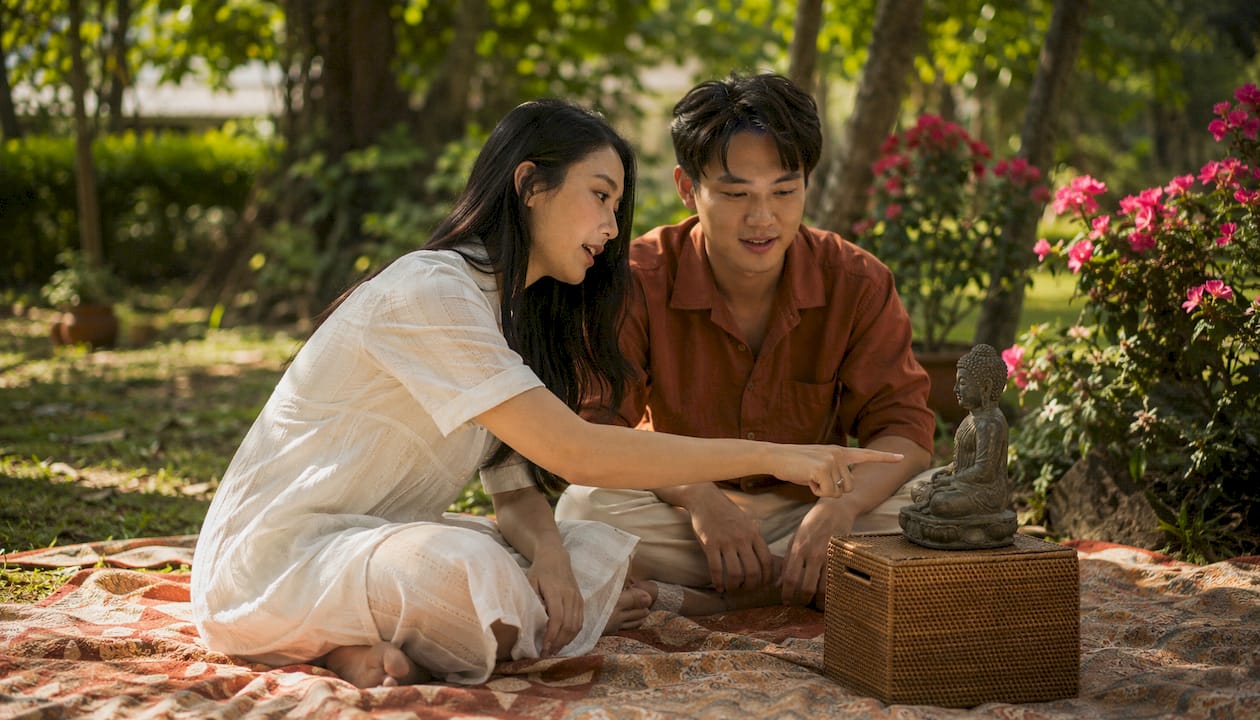
Une statue de Bouddha assis, par exemple, peut véhiculer simultanément la paix, la sagesse et la dévotion. Nommer le symbole spécifique que vous souhaitez rendre le cadeau plus personnel et plus facile à expliquer pour le destinataire aux autres.
Comment choisir une statue antique significative pour quelqu'un
Commencez par une courte liste de contrôle de décision avant de parcourir :
- Intérêts du destinataire. La personne collectionne-t-elle des œuvres d’art, pratique-t-elle une foi ou a-t-elle un lien avec une culture ou une région spécifique ?
- Occasion. Un départ à la retraite appelle un registre symbolique différent d'un mariage ou d'un mémorial.
- Sensibilité culturelle et religieuse. Une statue de divinité donnée à quelqu’un en dehors de cette tradition religieuse nécessite une conversation et non une hypothèse. L'étiquette des cadeaux dans toutes les cultures mérite d'être revue - un guide des cadeaux sociaux peut aider à naviguer dans les normes de présentation.
- Environnement domestique. Placement intérieur ou extérieur ? Surface disponible ? Exposition directe au soleil ou à l’humidité ?
- Capacité d'entretien. Le bronze, la pierre et le bois nécessitent chacun des soins différents. Faites correspondre le matériel à la volonté du destinataire de le conserver.
Une fois ces questions répondues, la séquence de sélection est la suivante :
- Choisissez le thème symbolique qui correspond à l'occasion et au destinataire.
- Sélectionnez le matériau adapté au contexte de placement et de maintenance.
- Vérifiez la provenance – demandez des documents au vendeur.
- Décidez de l'inscription ou de la présentation : un socle personnalisé, une carte de provenance encadrée ou une note manuscrite.
- Préparez de brèves instructions d’entretien à inclure avec le cadeau.
Conseil de pro : L’inclusion d’une note manuscrite qui relie l’histoire de la statue à la vie du destinataire – d’où elle vient, ce qu’elle représente et pourquoi vous l’avez choisie pour lui – transforme un objet coûteux en un cadeau narratif profondément personnalisé. Cette note devient souvent aussi précieuse que l’objet lui-même.
Authenticité, provenance et considérations éthiques lors du don d'antiquités
La provenance est l'historique de propriété documenté d'un objet. Pour une statue antique, il remplit trois fonctions : il confirme l’authenticité de la pièce, il établit l’autorisation légale de vente et d’exportation et il ajoute à la signification de l’objet en l’enracinant dans un passé vérifiable.
Avant d’acheter, posez directement ces questions au vendeur :
- À qui appartenait cette pièce avant vous, et jusqu'où remonte le registre de propriété ?
- Des permis d’exportation ou des documents douaniers sont-ils disponibles ?
- La pièce a-t-elle été restaurée ? Si oui, par qui et quand ?
- Existe-t-il des photographies d'avant les travaux de restauration ?
Les signaux d’alarme éthiques incluent une origine inconnue, des documents invérifiables et des signes d’exportation illicite. Le Liste rouge de l'ICOM identifie les catégories de biens culturels menacés de trafic par région. Si un vendeur ne peut pas répondre aux questions de base sur la provenance, arrêtez-vous et demandez l'aide d'un spécialiste. HDAsianArt's guide de recherche de provenance décrit à quoi ressemble une documentation approfondie pour la sculpture antique asiatique en particulier.
Une remarque supplémentaire : évitez de donner un objet à un usage religieux actif sans le consentement explicite du destinataire. Une statue conçue pour le rituel du temple comporte des attentes différentes de celle destinée à être exposée.
Conseil de pro : Demande documents d'authentification avant de finaliser tout achat. Une galerie réputée fournira en standard des rapports d’état, un historique des exportations et des photographies détaillées.
Entretien, présentation et gestion à long terme : que dire au destinataire
Le cadeau n’est pas complet sans instructions d’entretien. Ce que fait le destinataire au cours des premières semaines détermine si la pièce conservera son état pendant des décennies.
Par matière :
- Bronze. Épousseter avec un chiffon doux et sec. Évitez l’eau et les nettoyants acides. Tenir à l’écart de l’air salin et d’une humidité élevée. Une légère application de cire microcristalline une à deux fois par an protège la patine. Pour des conseils détaillés, le guide d'entretien des statues en bronze antiques couvre la maintenance au niveau du collecteur.
- Pierre. Évitez la lumière directe du soleil, qui blanchit les détails de la surface avec le temps. N'utilisez pas de nettoyants chimiques. Époussetez régulièrement. Consultez un restaurateur avant de tenter tout nettoyage au-delà du dépoussiérage à sec.
- Bois. Tenir à l’écart des sources de chaleur directes et des taux d’humidité extrêmes. Le bois sculpté peut se fissurer dans des environnements trop secs. Un restaurateur doit s’occuper de toutes les réparations structurelles. Pour des conseils de stockage, stocker en toute sécurité des sculptures anciennes en pierre et en bois applique les mêmes principes environnementaux.
Documentation à joindre au cadeau :
- Documents de provenance et historique de propriété
- Rapport de condition au moment du don
- Toutes notes de restauration et contacts du restaurateur
- Produits ou méthodes de nettoyage recommandés
Conseil de pro : Photographiez la pièce sous plusieurs angles avant de l’offrir, conservez une copie du reçu d’achat et informez l’assureur habitation du destinataire si la pièce a une valeur importante. Une seule photo et un seul reçu peuvent simplifier une réclamation d’assurance.
Pourquoi les statues bouddhistes et hindoues asiatiques antiques semblent souvent particulièrement significatives
"Les objets rituels fonctionnent comme des points d'ancrage pour la mémoire et la pratique. Une statue asiatique bien documentée ne représente pas seulement une tradition - elle en porte la preuve dans le matériau lui-même : la patine, l'iconographie, la méthode de moulage." —James, HDAsianArt.com
Trois marqueurs au niveau de la galerie identifient une statue asiatique véritablement significative :
- Iconographie authentique. Les gestes spécifiques de la main (mudras), les attributs (lotus, vajra, conque) et les canons proportionnels ne sont pas des choix décoratifs : ils codent une signification théologique précise. Le urne dans la sculpture bouddhiste, par exemple, il s’agit d’un élément iconographique spécifique qui identifie le statut spirituel du personnage. La précision iconographique indique que la pièce a été réalisée dans le cadre d’une tradition vivante et non comme une réplique.
- Provenance claire. Une pièce significative a une histoire traçable. Une patine conforme à l'âge, des pièces justificatives et un enregistrement de propriété crédible contribuent tous à l'authenticité.
- Marqueurs de matériaux et de savoir-faire. Le bronze à la cire perdue, la pierre sculptée à la main et le bois laqué laissent chacun des marques distinctives. Celles-ci ne sont pas interchangeables avec les méthodes de production modernes.
Lorsque vous vous adressez à une galerie spécialisée, demandez : des photographies détaillées sous plusieurs angles, un rapport d’état écrit et un historique d’exportation ou de propriété, le cas échéant. Le contexte autour de l’objet – sa région, sa période et sa tradition iconographique – augmente également la valeur perçue, car recherche sur le contexte de l'œuvre d'art confirme.
Conseil de pro : Demandez à la galerie d'identifier la tradition iconographique spécifique de l'œuvre : khmère, cingalaise, javanaise, etc. Cette spécificité donne au destinataire un langage pour expliquer la statue aux autres, ce qui approfondit la signification du cadeau au fil du temps.
Points clés à retenir
Une statue antique est un cadeau significatif car elle combine la durabilité des matériaux, une histoire culturelle documentée et une invitation active à une gestion responsable qu'aucun objet produit en série ne peut offrir.
| Point | Détails |
|---|---|
| La durabilité crée des héritages | Le bronze, la pierre et le bois survivent à celui qui donne et deviennent des marqueurs multigénérationnels de l’histoire personnelle. |
| L'histoire culturelle voyage avec l'objet | Les statues ont exercé des fonctions religieuses, honorifiques et commémoratives dans toutes les grandes civilisations. |
| La provenance transforme le cadeau | La documentation et une note personnelle transforment une antiquité en un récit partagé entre le donateur et le destinataire. |
| L'intendance fait partie du don | L'inclusion d'instructions d'entretien et de dossiers d'état donne au destinataire les outils nécessaires pour préserver la pièce. |
| HDAsianArt pour des pièces authentifiées | HDAsianArt fournit une documentation experte sur la provenance, des rapports d'état et une expédition assurée dans le monde entier pour les statues bouddhistes et hindoues asiatiques. |
Le point de vue d’un spécialiste sur le don et la garde
La plupart des donateurs se concentrent sur l’objet. La décision la plus importante est la documentation qui l’accompagne. Une statue sans note de provenance est un bel objet. Une statue avec une histoire écrite, une région nommée, un rapport de condition daté et une explication manuscrite de la raison pour laquelle elle a été choisie pour cette personne devient tout autre chose : un transfert de garde. Le destinataire ne reçoit plus seulement un cadeau ; ils acceptent une responsabilité.
Ce changement change la façon dont les gens se rapportent à l'objet au fil des années. Une pièce bien documentée est placée avec soin, signalée aux visiteurs et transmise délibérément. Un sans-papiers est déplacé sur une étagère et finalement oublié. La paperasse n'est pas bureaucratique. C'est le mécanisme par lequel le don reste significatif.
Statues asiatiques antiques authentifiées de HDAsianArt
HDAsianArt est une galerie spécialisée pour les collectionneurs, les designers et les propriétaires spirituels qui souhaitent une pièce authentifiée avec une documentation complète. Chaque statue de la collection est recherchée et décrite individuellement par des experts, avec une provenance détaillée, des rapports d'état et une expédition DHL assurée dans le monde entier. Durée des pièces Cambodge, Thaïlande, Indonésie, Sri Lanka, Le Vietnam et au-delà, couvrant les traditions iconographiques bouddhistes et hindoues en bronze, pierre et bois.
Pour les acheteurs qui souhaitent une option personnalisée, HDAsianArt propose également des cartes-cadeaux échangeables dans toute la collection de la galerie. Parcourez la gamme complète et demandez de la documentation pour n'importe quelle pièce sur HDAsianArt.com.
Lectures complémentaires suggérées et sources faisant autorité
| Source | Pourquoi c'est utile | Que chercher |
|---|---|---|
| Metropolitan Museum of Art — Contextes pour l'exposition des statues | Bourse primaire de musée sur les contextes d'exposition de statues historiques | Sections d'exposition religieuses, honorifiques et funéraires |
| Bryn Mawr Classical Review — Posséder le passé | Examen académique des raisons pour lesquelles les collectionneurs ont acquis des sculptures antiques et des fonctions sociales qu'elles remplissent | Sections sur le prestige, le statut et « l’histoire annexionnelle » |
| Cambridge Journal of Roman Archaeology — La culture des statues dans la Rome antique tardive | Analyse scientifique de la culture des statues et de la valeur de l'héritage culturel | Arguments d’intemporalité et de continuité |
| UNESCO — Patrimoine culturel | Normes internationales pour la protection et la provenance des biens culturels | Normes sur le trafic illicite et la documentation |
| Listes rouges de l'ICOM | Listes spécifiques aux régions des biens culturels menacés de trafic | Catégories asiatiques pertinentes pour la sculpture bouddhiste et hindoue |
| HDAsianArt — Comment authentifier des statues de Bouddha en bronze antique | Critères pratiques d'authentification des statues asiatiques en bronze | Patine, méthode de moulage, précision iconographique |
| HDAsianArt — Recherche de provenance pour la sculpture antique asiatique | Conseils étape par étape en matière de recherche de provenance pour les acheteurs de sculptures asiatiques | Liste de contrôle de la documentation et signaux d’alarme |
