



Statues de Bouddha assis ou debout : choisissez la vôtre
Statues de Bouddha assis ou debout : choisissez la vôtre
Table des matières
Signification des statues de Bouddha assis
Une statue de Bouddha assis représente la paix intérieure, la méditation et le voyage vers l'illumination à travers le calme et la réflexion. La posture elle-même communique un état méditatif, invitant le spectateur dans un espace d'introspection calme et d'éveil spirituel. Lorsque vous placez un Bouddha assis dans votre maison, vous ancrez un rappel visuel que la clarté intérieure et la pleine conscience sont toujours à votre disposition.
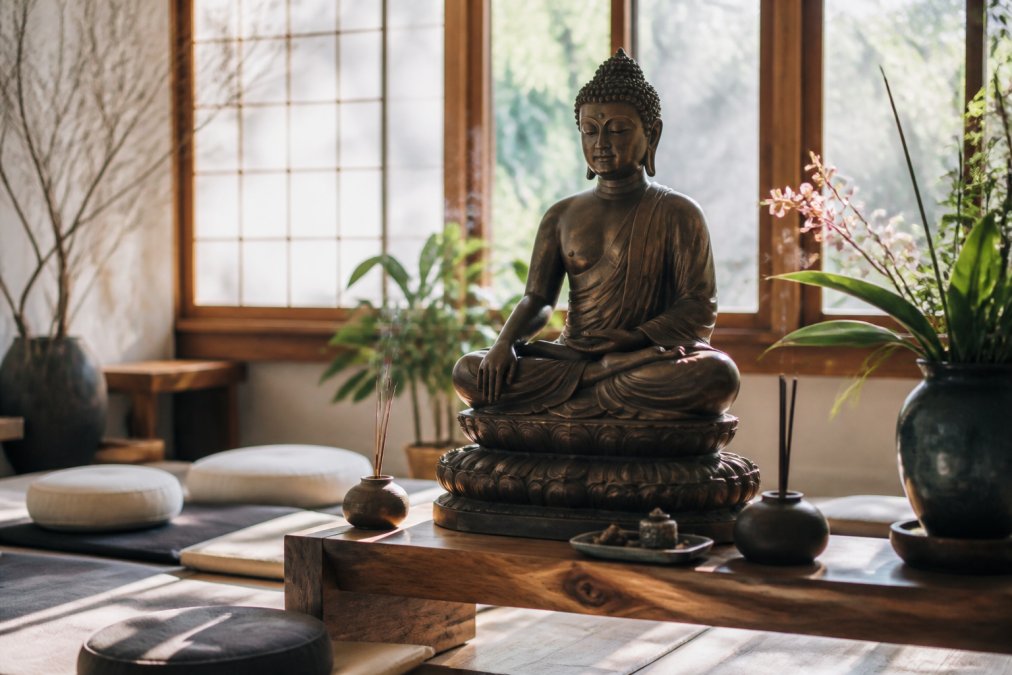
Les statues de Bouddha assis représentent généralement la figure en position du lotus ou dans une autre posture au sol, avec les mains souvent positionnées dans le Dhyana mudra, le geste de méditation. Cette iconographie parle de la pratique du repli sur soi, de l’apaisement du monde extérieur et de la culture de la stabilité intérieure. L’immobilité de la forme reflète l’immobilité recherchée par les pratiquants pendant la méditation. De nombreux collectionneurs et praticiens spirituels choisissent des statues assises spécifiquement pour salles de méditation ou autels personnels parce que le message visuel correspond à leur propre pratique consistant à s'asseoir tranquillement et à observer l'esprit.
Le symbolisme s'étend au-delà de la méditation. Un Bouddha assis représente l'état d'éveil lui-même, le moment d'illumination où Siddhartha s'est assis sous l'arbre Bodhi et a atteint une compréhension complète. En apportant cette image dans votre maison, vous ne décorez pas seulement un espace ; vous créez un point focal qui vous connecte à des siècles de tradition spirituelle et à la promesse de transformation par le travail intérieur.
Signification des statues de Bouddha debout
Une position Statue de Bouddha incarne le courage, la compassion active et la volonté de s'engager dans le monde à partir d'un fondement spirituel. Contrairement à l’immobilité introspective d’une figure assise, un Bouddha debout rayonne de présence extérieure et d’énergie protectrice. La posture suggère le mouvement, la bénédiction et la volonté d’avancer avec sagesse et compassion guidant chaque action.
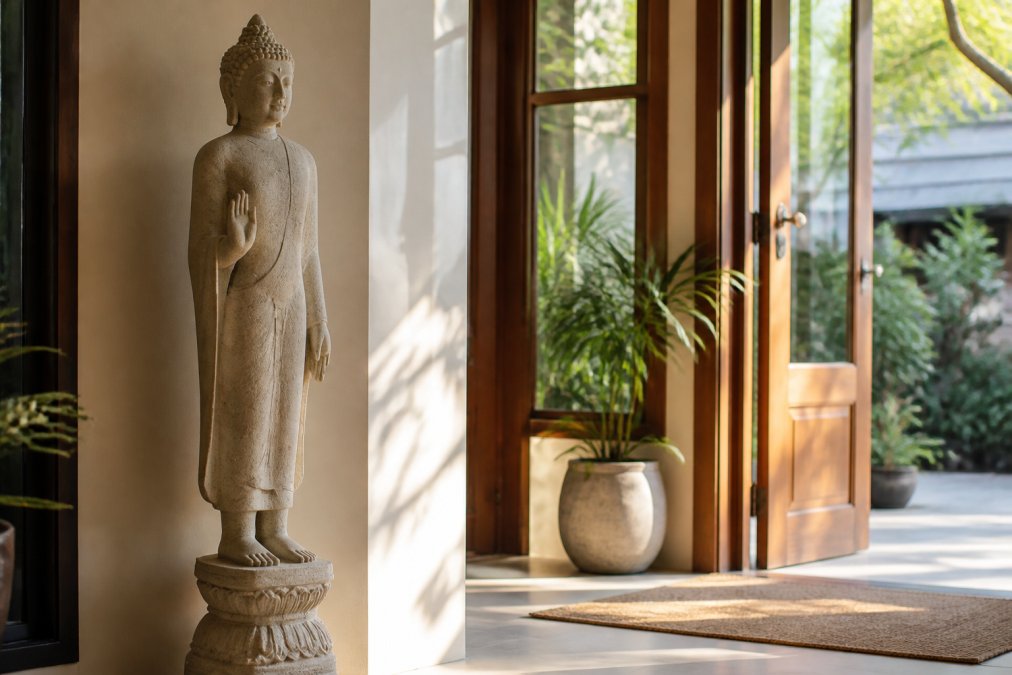
Les statues de Bouddha debout comportent souvent une ou les deux mains levées dans des mudras spécifiques qui communiquent protection, intrépidité ou bénédiction. Le personnage semble alerte et engagé, prêt à offrir des conseils ou à accueillir ceux qui entrent. Cette qualité dynamique rend les statues debout particulièrement efficaces à proximité des entrées, des salons ou des espaces où se réunissent la famille et les invités. La statue devient un gardien silencieux, une représentation visuelle de la force compatissante et du principe selon lequel la sagesse spirituelle devrait éclairer notre façon de nous déplacer dans le monde.
La posture debout indique également que l’on est prêt. Dans l'iconographie bouddhiste, cette position représente la volonté du Bouddha d'enseigner, de guider et de rester présent pour ceux qui recherchent l'illumination. Lorsque vous choisissez une statue debout, vous invitez cette énergie d’engagement actif et de bénédiction extérieure dans votre maison. C'est un message différent des statues assises, mais tout aussi profond : la paix intérieure ne signifie pas le retrait de la vie, mais plutôt le fondement à partir duquel nous agissons avec clarté et compassion.
Comprendre la signification des gestes de la main de Bouddha
Le positions des mains, ou mudras, chez Bouddha, la statuaire porte des significations spirituelles spécifiques qui approfondissent le message de la statue. Chaque geste communique un aspect distinct de l'enseignement et de la pratique bouddhiste. Comprendre ces positions symboliques vous aide à choisir une statue qui résonne avec vos propres intentions spirituelles et l'énergie que vous souhaitez cultiver dans votre espace.
Dhyana Mudra : Le geste de méditation
Le Dhyana mudra est le geste de méditation, le plus souvent observé dans les statues de Bouddha assis (recherche évaluée par des pairs). Dans cette position, les deux mains reposent sur les genoux, les paumes tournées vers le haut et une main posée doucement sur l’autre. Ce geste symbolise une profonde concentration, une concentration intérieure et un état de méditation parfaite. Il représente l'esprit au repos, pleinement absorbé dans la contemplation de la vérité ultime.
Lorsque vous voyez ce mudra, vous regardez une représentation visuelle directe de l’état méditatif lui-même. Les mains ne saisissent pas ou n'atteignent pas ; ils sont ouverts et réceptifs, suggérant de s'abandonner au moment présent. Ce geste invite le spectateur à relâcher les tensions, à calmer le bavardage mental et à s'installer dans un état de conscience paisible. Pour quiconque établit une pratique de méditation, une statue représentant le Dhyana mudra sert à la fois d'inspiration et d'instruction, un rappel de ce à quoi ressemble l'état méditatif et à quoi il ressemble lorsque l'esprit trouve le repos.
Abhaya Mudra : Le geste d'intrépidité
L'Abhaya mudra, ou geste d'intrépidité, apparaît généralement dans les statues de Bouddha debout, une main levée, la paume tournée vers l'extérieur à hauteur d'épaule (recherche évaluée par des pairs). Cette position communique la protection, le réconfort et la dissipation de la peur. La main levée n’est pas agressive ; c'est apaisant, comme si le Bouddha disait : « Il n'y a rien à craindre. Vous êtes en sécurité. Faites confiance au chemin.
Ce mudra a une signification profonde pour les pratiquants confrontés à l’incertitude ou aux difficultés. Le geste suggère que la sagesse spirituelle fournit un terrain stable à partir duquel nous pouvons faire face aux défis de la vie sans nous laisser submerger. Dans votre maison, un Bouddha debout avec le mudra Abhaya devient un point d'ancrage visuel pour le courage et la sécurité intérieure. Lorsque vous vous sentez anxieux ou incertain, la statue vous rappelle que la peur peut être affrontée avec compassion et clarté plutôt qu'avec résistance.
Règles de placement des statues de Bouddha pour votre maison
Un placement réfléchi transforme une statue de Bouddha d'un bel objet en un point focal spirituel actif. L'emplacement que vous choisissez affecte le fonctionnement de la statue dans votre espace et la manière dont son énergie influence votre expérience quotidienne. Les traditions bouddhistes offrent des conseils spécifiques sur le placement qui équilibrent les considérations esthétiques et l'intention spirituelle.
Placez votre statue de Bouddha assis dans un espace dédié à la méditation ou à la réflexion tranquille. Un coin chambre, une alcôve de bureau à domicile ou un coin salon fonctionnent bien si la zone est calme et tranquille. La statue doit être élevée sur une étagère, un autel ou un piédestal plutôt que posée sur le sol, ce qui honore la nature sacrée de la figure. Évitez de le placer dans des zones à fort trafic où il sera entouré de bruit et d'activités ; l'immobilité d'un Bouddha assis nécessite une immobilité correspondante dans son environnement.
Les statues de Bouddha debout prospèrent près des entrées, dans les foyers ou dans les espaces où les gens se rassemblent naturellement. Cet emplacement permet à l'énergie protectrice et accueillante de la statue d'accueillir les visiteurs et d'établir un sentiment de présence paisible lorsque les gens se déplacent dans votre maison. Certains pratiquants placent des bouddhas debout dans les salons où la famille se rassemble, créant ainsi un point focal qui influence subtilement le ton de ces espaces partagés vers plus de calme et de pleine conscience. choisir l'art pour la maison.
Évitez de placer une statue de Bouddha dans une salle de bain ou une chambre (sauf s'il s'agit d'une salle de méditation dédiée). La pratique traditionnelle considère ces espaces comme trop décontractés ou intimes pour les figures sacrées. De même, ne placez pas une statue là où elle sera bloquée par du désordre, des meubles, ou autre objets. La silhouette doit avoir des lignes de vue dégagées et un espace de respiration autour d'elle, permettant à sa forme et à sa présence d'être pleinement visibles et ressenties.
L’éclairage compte beaucoup. La lumière naturelle, particulièrement le doux soleil du matin ou du soir, rehausse l'attrait visuel de la statue et crée une atmosphère contemplative. Si la lumière naturelle n’est pas disponible, envisagez un éclairage artificiel chaleureux qui ne crée pas d’ombres dures. Le but est de rendre la statue invitante et paisible à regarder, et non dramatique ou théâtrale.
Choisir la bonne statue pour votre espace
Le choix d'une statue de Bouddha implique d'équilibrer l'intention spirituelle avec des considérations pratiques de taille, de matériau et d'ajustement esthétique. Le bon choix crée une harmonie entre l'énergie de la statue et votre cadre de vie.
Commencez par clarifier votre intention. Cherchez-vous un point focal pour la pratique de la méditation, une présence protectrice près de votre entrée ou un élément décoratif qui reflète vos valeurs spirituelles ? Un choix axé sur la méditation pourrait mettre l'accent sur une figure assise dans le mudra Dhyana, tandis qu'une personne souhaitant une énergie protectrice pourrait préférer une statue debout avec le mudra Abhaya. Votre intention façonne tout ce qui suit.
Considérez attentivement l’échelle de votre espace. Une grande statue en bronze peut submerger un petit appartement ou un coin de chambre, tandis qu'une petite statue peut disparaître dans un salon spacieux. Mesurez la zone où vous prévoyez de placer la statue et visualisez comment elle sera liée aux meubles et aux éléments architecturaux environnants. La statue doit se sentir proportionnée à son environnement, sans dominer ni se perdre. Pour les espaces compacts, les statues plus petites (12 à 18 pouces) fonctionnent souvent mieux ; les maisons plus grandes peuvent accueillir des pièces de 24 pouces ou plus.
Le choix des matériaux affecte à la fois la durabilité et l’impact esthétique. Statuettes en bronze développez une riche patine au fil du temps et travaillez bien dans les salles de méditation ou les espaces d'autel formels. Les statues en pierre offrent une qualité naturelle et ancrée qui complète les intérieurs contemporains ou minimalistes. Les statues en bois apportent chaleur et texture organique, même si elles nécessitent un entretien plus soigné dans les environnements humides. Chaque matériau porte sa propre présence visuelle et énergétique.
L'expression du visage de la statue et la position de ses mains devraient résonner en vous personnellement. Passez du temps à regarder différentes pièces, ne serait-ce qu'à travers des photographies. Remarquez lesquels attirent votre attention et créent un sentiment de calme ou d’inspiration. Cette réponse intuitive est importante ; vous vivrez quotidiennement avec cet objet, et il devrait être perçu comme un véritable compagnon spirituel plutôt que comme une obligation.
Considérations relatives aux matériaux, à l'échelle et à la durabilité
Les matériaux utilisés dans les statues de Bouddha affectent directement leur longévité, leurs besoins d'entretien et leur présence visuelle dans votre maison. Comprendre ces dimensions pratiques vous aide à faire un choix qui vous servira pendant des années.
Les statues en bronze font partie des options les plus durables, développant une patine protectrice à mesure qu'elles vieillissent (si.edu). Ils résistent aux intempéries et maintiennent leur intégrité structurelle pendant des décennies d'exposition. Le bronze nécessite un entretien minimal, un léger dépoussiérage occasionnel est généralement suffisant. La chaleur et la richesse visuelle du métal rendent les statues en bronze particulièrement frappantes dans les espaces de méditation formels ou les salons où elles deviennent des points focaux. Au fil du temps, la patine d'une statue en bronze s'approfondit, créant un sentiment d'histoire et d'authenticité apprécié par de nombreux collectionneurs.
Les statues en pierre, qu'elles soient sculptées dans du marbre, du calcaire ou d'autres matériaux, offrent une permanence et une qualité d'ancrage. La pierre est remarquablement durable et résiste parfaitement aux intempéries à l’intérieur. Ces statues fonctionnent particulièrement bien dans les espaces contemporains ou minimalistes où leur forme sculpturale devient l'élément visuel principal. La pierre nécessite une protection contre l’exposition directe à l’eau et aux fluctuations extrêmes de température, mais dans des environnements intérieurs stables, les statues de pierre peuvent durer des siècles avec une intervention minimale.
Les statues en bois apportent chaleur et caractère organique à un espace, même si elles nécessitent une attention plus particulière. Le bois est sensible à l’humidité, aux changements de température et à la lumière directe du soleil, ce qui peut provoquer des déformations, des fissures ou une décoloration. Dans les climats secs ou les maisons climatisées, les statues en bois restent stables. Dans les environnements humides comme les salles de bain ou les sous-sols mal ventilés, le bois devient vulnérable. Si vous choisissez une statue en bois, placez-la dans un espace climatisé et évitez de l'exposer à la lumière directe du soleil ou à l'humidité.
Les considérations d’échelle vont au-delà de l’ajustement visuel. Une grande statue nécessite un piédestal ou une étagère importante et attire l'attention dans une pièce. Certaines personnes trouvent cette présence centrée et puissante ; d’autres le ressentent comme accablant. Les statues plus petites offrent de la flexibilité, elles fonctionnent dans des espaces compacts et peuvent être déplacées plus facilement si vos besoins changent. Les statues de taille moyenne, généralement de 18 à 24 pouces, trouvent souvent un équilibre, offrant une présence sans dominer leur environnement.
Tenez compte du niveau d’humidité et du climat de votre maison. Les statues en bronze et en pierre s'adaptent bien à la plupart des conditions. Les statues en bois doivent être soigneusement placées dans des espaces secs et climatisés. Si vous vivez dans une zone côtière ou une région très humide, le bronze ou la pierre deviennent le choix le plus pratique. Les fluctuations de température sont également importantes ; les matériaux se dilatent et se contractent avec la chaleur et le froid, et certains matériaux supportent mieux cette contrainte que d’autres.
L'authenticité et le savoir-faire influencent directement la durabilité. Une statue bien conçue à partir de matériaux de qualité durera plus longtemps qu'une pièce produite en série. En examinant les statues de HD Asian Art, les descriptions détaillées des conditions et les spécifications des matériaux vous aident à comprendre exactement ce que vous achetez. Les pièces fabriquées à la main, en particulier celles créées à l'aide de techniques traditionnelles d'Asie du Sud-Est, font souvent preuve d'une durabilité supérieure, car les artisans ont compris comment les matériaux qu'ils avaient choisis vieilliraient et s'altéreraient au fil du temps.
Choisir entre des statues de Bouddha assises et debout revient en fin de compte à comprendre ce que chaque posture communique et comment ce message s'aligne avec votre pratique spirituelle et votre environnement familial. Un Bouddha assis vous invite à l'intérieur, à la méditation et à la clarté intérieure. Un Bouddha debout rayonne vers l’extérieur, offrant protection et compassion active. Tous deux sont de profondes expressions de la sagesse bouddhiste ; le choix reflète votre propre orientation spirituelle et l'énergie que vous souhaitez cultiver dans votre espace.
Lorsque vous êtes prêt à apporter un Statue de Bouddha dans votre maison, HD Asian Art propose une collection soigneusement organisée de pièces authentiques assises et debout. Chaque statue est accompagnée d'informations détaillées sur son matériau, son origine et son état, vous garantissant ainsi de comprendre exactement ce que vous achetez. Parcourez la collection pour trouver la pièce qui correspond à votre intention et complète votre espace de vie.
Foire aux questions
Quelle est la différence entre un Bouddha debout et un Bouddha assis ?
Les statues de Bouddha assis représentent la paix intérieure, la méditation et l'illumination par la réflexion intérieure. Ils incarnent la posture méditative et l’éveil spirituel. Les statues de Bouddha debout symbolisent le courage, la protection et la compassion active, représentant la volonté du Bouddha à guider et à bénir ceux qui l'entourent. La posture que vous choisissez dépend de si vous souhaitez un point focal de contemplation ou une présence qui rayonne de protection et de conseils extérieurs.
Quelle posture de Bouddha est la meilleure pour un espace de méditation ?
Les statues de Bouddha assis sont idéales pour les espaces de méditation. Leur posture méditative et leur connexion symbolique à la clarté intérieure et à la pleine conscience créent un point focal naturel pour la pratique spirituelle. La position assise encourage les spectateurs à ralentir, à respirer et à cultiver le même sentiment de conscience sereine que la statue incarne. De nombreux pratiquants placent un Bouddha assis à hauteur des yeux sur un autel pour approfondir leur intention méditative.
Où dois-je placer une statue de Bouddha chez moi ?
Placez les statues de Bouddha assis dans des positions calmes et surélevées, sur un autel, une étagère ou un coin de méditation, face à la pièce. Les statues de Bouddha debout fonctionnent bien près des entrées, des points focaux du salon ou des jardins extérieurs pour rayonner une présence protectrice. Évitez de placer une statue de Bouddha dans les salles de bains, les chambres ou sous le niveau des yeux, car ces endroits sont considérés comme irrespectueux. Assurez-vous que la statue a une vue claire et épurée et qu’elle est traitée comme un objet sacré et non comme une simple décoration.
Quels gestes de la main les statues de Bouddha ont-elles et que signifient-elles ?
Les mudras les plus courants sont le Dhyana Mudra (geste de méditation), où les deux mains reposent sur les genoux avec les paumes vers le haut, symbolisant la stabilité intérieure et la contemplation, et l'Abhaya Mudra (geste d'intrépidité), où une main est levée avec la paume vers l'avant, représentant la protection et la bénédiction. D'autres mudras incluent le geste Bhumisparsha (toucher la terre), symbolisant l'illumination, et le Varada Mudra (geste de cadeau), représentant la compassion et la générosité. Comprendre ces gestes de la main vous aide à choisir une statue alignée avec votre intention spirituelle.
