



Pratique de méditation sur la statue de la divinité : un guide de pleine conscience
Pratique de méditation sur la statue de la divinité : un guide de pleine conscience
La pratique de la méditation sur la statue de la divinité est une méthode consistant à utiliser des images sacrées comme ancrages physiques pour concentrer l'attention, cultiver la dévotion et intérioriser les qualités spirituelles. Le rôle de la pratique de la méditation sur les statues de divinités s'étend aux traditions bouddhistes et hindoues, où les statues de personnages comme Avalokitesvara, Ganesha et Amitabha ne servent pas d'objets de culte littéral mais d'outils pour développer la concentration et la transformation intérieure.
Cette approche est souvent comprise à tort comme un culte des idoles. En réalité, les images sacrées fonctionnent comme des miroirs reflétant les qualités que les praticiens aspirent à incarner. Pour quiconque explore la pleine conscience et la croissance spirituelle, comprendre cette distinction est le point de départ.
Comment les statues de divinités fonctionnent comme ancres de méditation
Les statues de divinités réduisent l'errance de l'esprit en donnant aux yeux et à l'attention un point fixe et significatif. Quand le regard se pose sur une statue, l’esprit la suit. C'est le mécanisme de base derrière Murti Puja, la pratique hindoue d'engagement dévotionnel avec une image de divinité, qui entraîne une concentration en un seul point connue sous le nom d'ekāgratā. La concentration répétée sur une forme développe le même muscle attentionnel que celui ciblé par la méditation sur la respiration abstraite, mais via une voie sensorielle plus accessible.
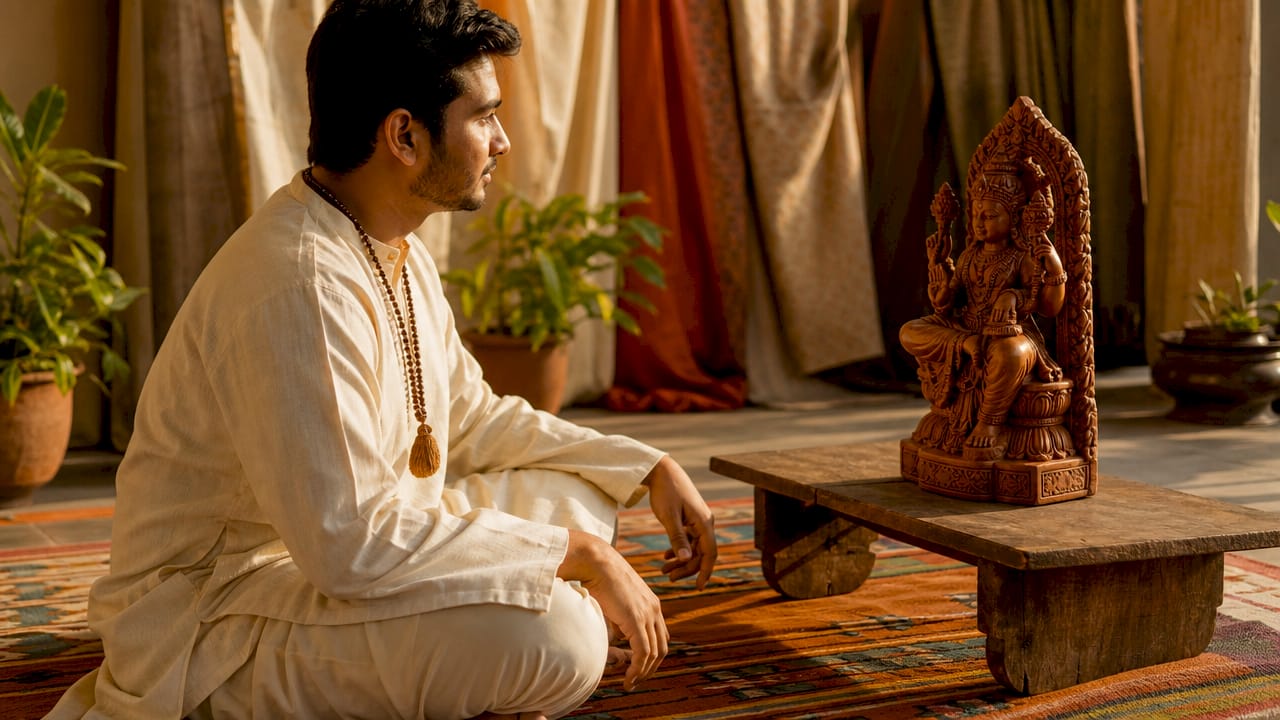
La différence entre la méditation abstraite et la méditation basée sur la forme est pratique et non philosophique. La méditation abstraite vous demande de garder à l’esprit un objet sans forme comme la respiration ou une sensation interne. La méditation basée sur la forme donne à l’esprit une image visible et symboliquement riche à laquelle revenir. Pour les praticiens aux prises avec l’errance mentale, une statue du Bouddha de la Médecine ou Shiva Nataraja fournit un point de référence concret qu’il est beaucoup plus facile de retrouver après distraction.
Les pratiques de visualisation étendent cela plus loin. Le Sutra de la visualisation du Bouddha de la vie infinie fournit des instructions d'imagerie méditative structurées, étape par étape, conçues pour soutenir le samādhi du souvenir de Bouddha. Les praticiens utilisent une statue physique comme image de départ, puis construisent la visualisation en interne à partir de là. La statue est la roue d'entraînement ; l'image interne est la destination.
- Pratique du regard : Posez doucement les yeux sur le visage ou les mains de la statue, permettant à l'esprit de s'installer sans forcer la concentration.
- Darshan : Le concept hindou de « voir et être vu » par la divinité crée un sentiment de présence qui approfondit la réflexion intérieure.
- Projection de qualité : Identifiez une qualité que représente la divinité, comme la compassion ou l'équanimité, et gardez cette qualité à l'esprit pendant la séance.
- Ancre de retour : Lorsque l’esprit vagabonde, utilisez la forme de la statue comme point de retour plutôt que comme compte de respiration.
Conseil de pro : Étudier le expressions faciales des statues bouddhistes avant votre séance. Chaque expression code une qualité spécifique. Savoir ce que vous regardez aiguise considérablement l’objet de méditation.
Qu’est-ce qui donne une signification spirituelle à une statue consacrée ?
Une statue consacrée n’est pas simplement de l’art. Le rituel prāṇa-pratiṣṭhā de la tradition agamique installe la force vitale divine en statue, le transformant d'un objet artisanal en une présence sacrée vivante. C'est le fondement théologique qui explique pourquoi les statues de temples semblent différentes des pièces de galerie pour les praticiens expérimentés. Le rituel n'est pas une superstition. Il s'agit d'une technologie structurée permettant d'établir et de maintenir une qualité spécifique de présence au sein d'une forme physique.
Le système Agamic considère le maintien rituel continu comme aussi important que la consécration initiale. Les cycles rituels quotidiens soutiennent la présence divine, encadrant le rôle du fidèle comme un serviteur aimant prenant soin d’une présence vivante plutôt que comme un pétitionnaire s’adressant à une figure de pierre. Cela recadre toute la relation de méditation. Vous n'exécutez pas une technique sur un objet. Vous entrez dans une relation de réciprocité avec une présence.
Trois distinctions séparent une image sacrée consacrée d'un objet décoratif :
- Installation rituelle : La cérémonie prāṇa-pratiṣṭhā établit formellement la présence de la divinité au sein de la forme à travers des rites védiques et agamiques exécutés par des prêtres qualifiés.
- Entretien courant : Les rituels quotidiens de puja, comprenant des offrandes de lumière, d'eau, de nourriture et d'encens, maintiennent la présence et maintiennent la relation active.
- Artisanat intentionnel : Les statues réalisées selon les spécifications iconométriques traditionnelles, les directives śilpa śāstra, portent des proportions et des gestes qui codent des significations spirituelles spécifiques.
"Les rituels de consécration expliquent pourquoi la même statue 'se sent différente' après la cérémonie, l'établissant comme une présence sacrée plutôt que comme un art." — Sanatana Dharma : La Maison Vivante du Divin
Pour les pratiquants n’ayant pas accès à la consécration formelle, le principe s’applique toujours. Une statue sélectionnée avec une intention authentique, placée avec soin et engagée de manière cohérente accumulera une qualité de présence au fil du temps. Le rituel est la version formelle de ce que la pratique sincère réalise progressivement.
Quels sont les bienfaits spirituels et psychologiques de la méditation sur la statue de la divinité ?
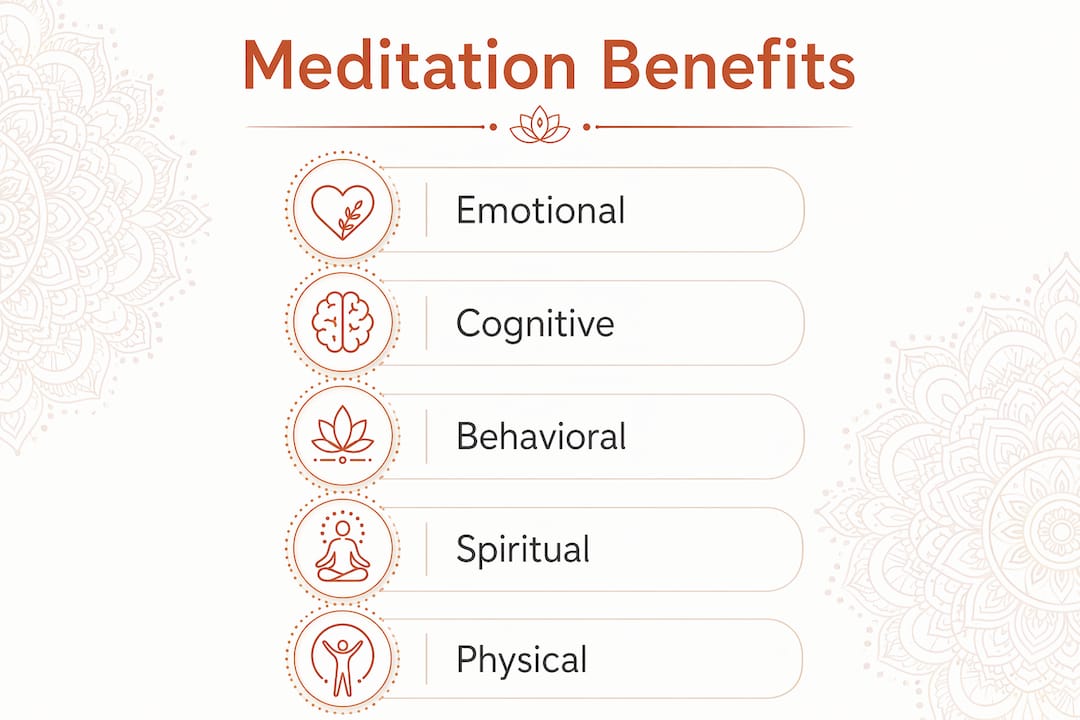
Les bienfaits de la méditation sur la statue de la divinité opèrent simultanément dans les dimensions émotionnelles, cognitives et comportementales. Les images sacrées nourrissent la bhakti, le terme sanscrit désignant la dévotion, en favorisant l'amour et le respect par le biais d'un engagement direct avec l'image. La Bhakti n'est pas un sentiment. Il s’agit d’une orientation émotionnelle spécifique qui réduit la pensée autoréférentielle et ouvre l’attention vers l’objet de dévotion. Ce changement est mesurable dans la pratique par une diminution de la rumination et une conscience accrue du moment présent.
La dimension multisensorielle de la méditation sur la statue de la divinité est l’une de ses caractéristiques les plus sous-estimées. Les rituels physiques de Murti Puja unifient la vue, l'ouïe, l'odorat et le toucher en un seul acte sacré, consolidant l'attention à travers les canaux sensoriels. Allumer de l’encens, sonner une cloche et offrir des fleurs ne sont pas des ajouts décoratifs. Ce sont des points d’ancrage attentionnels qui empêchent l’esprit de dériver en gardant plusieurs sens engagés vers le même point focal.
La pratique à long terme produit une internalisation. Les praticiens qui travaillent régulièrement avec une statue de Kuan Yin, le bodhisattva de la compassion, rapportent que la qualité de la compassion devient plus accessible dans la vie quotidienne, et pas seulement lors des séances formelles. La statue fonctionne comme une image d'entraînement pour un état psychologique. Au fil des mois et des années, l’État devient moins dépendant de l’image extérieure.
- Régulation émotionnelle : L'engagement dévotionnel avec une image de divinité réduit l'anxiété en déplaçant l'attention de l'inquiétude égocentrique vers un objet sacré externe.
- Modèles de pratique cohérents : L'interaction de routine avec les statues de divinités renforce la discipline spirituelle grâce à un rythme rituel structuré.
- Clarté intérieure : La réduction des distractions sensorielles pendant la pratique rituelle crée les conditions nécessaires à des états méditatifs plus profonds.
- Réalisation de qualité : La visualisation régulière des attributs spécifiques d’une divinité, tels que la sagesse de Mandjoushri ou la protection de Tara, façonne progressivement les propres schémas cognitifs et émotionnels du pratiquant.
Conseil de pro : Associez votre pratique de la statue à un technique de méditation sonore comme un bol chantant ou une récitation de mantra. La combinaison d’ancrages auditifs et visuels accélère la consolidation de l’attention.
Comment intégrer des statues de divinités dans votre pratique de méditation
Choisir la bonne statue est la première décision pratique. La tradition, le symbolisme et le savoir-faire comptent tous. Les statues authentiquement fabriquées avec dévotion véhiculent une présence perceptible que les pièces décoratives produites en série ne véhiculent pas. Statues en bronze de Cambodge ou Thaïlande, morceaux de pierre sculptés de Sri Lanka, et des sculptures en bois de Indonésie chacun porte des traditions iconographiques distinctes. Savoir quelle tradition résonne avec votre pratique réduit considérablement la sélection. HDAsianArt fournit une provenance détaillée et des descriptions iconographiques pour chaque pièce, ce qui rend cette recherche simple.
Pour obtenir des conseils sur choisir la bonne statue pour un espace de méditation, considérez d’abord la fonction symbolique de la divinité, puis le matériau et l’échelle.
Le tableau ci-dessous compare trois approches courantes de la méditation sur la statue de divinité, utiles pour les praticiens qui décident par où commencer.
| Approche | Idéal pour | Méthode clé | Limitation |
|---|---|---|---|
| Regard et retour | Des débutants à l'esprit vagabond | Regard doux sur la statue, revenez quand vous êtes distrait | Nécessite la présence d'une statue physique |
| Séquence de visualisation | Praticiens intermédiaires | Construire une image interne à partir d'une statue comme graine | Exige une concentration soutenue |
| Pratique rituelle de la puja | Praticiens de la dévotion | Cycle rituel sensoriel complet avec offrandes | Nécessite une connaissance de la tradition |
Le placement compte autant que la sélection. Une statue placée à hauteur des yeux dans un espace propre et dédié signale à l’esprit que cet endroit est destiné à une pratique ciblée. Le désordre autour de la statue rivalise pour attirer l'attention. Un simple autel avec la statue, une bougie et un objet d'offrande suffisent. Des configurations élaborées ne sont pas nécessaires et peuvent en fait augmenter la distraction pour les débutants.
L’erreur la plus courante est de traiter la statue comme un décor passif. La méditation avec des figures de divinités nécessite un engagement actif : un regard délibéré, une intention consciente et une idée claire de la qualité que vous cultivez au cours de la séance. Les praticiens laïcs qui ne sont pas attirés par les cadres de dévotion peuvent toujours utiliser les statues de divinités comme objets de concentration, en se concentrant sur les qualités formelles de l'image plutôt que sur son contenu théologique. Les avantages attentionnels sont disponibles quel que soit le système de croyance.
Points clés à retenir
La méditation sur la statue de la divinité fonctionne car elle donne à l'esprit une ancre fixe et symboliquement riche qui entraîne la concentration, cultive la dévotion et intériorise progressivement les qualités que représente la statue.
| Point | Détails |
|---|---|
| Des statues comme miroirs | Les statues de divinités reflètent des qualités à incarner, et non des dieux à adorer littéralement. |
| La consécration compte | Le rituel Prāṇa-pratiṣṭhā transforme une statue d’art en présence sacrée vivante. |
| Engagement multisensoriel | La puja rituelle unifie la vue, l’ouïe et l’odorat pour consolider l’attention méditative. |
| L'intériorisation au fil du temps | Une pratique cohérente avec une image de divinité spécifique façonne les propres qualités du pratiquant. |
| Accessible à tous les praticiens | Les méditants dévotionnels et laïcs bénéficient de méthodes de concentration basées sur la forme. |
Pourquoi je pense que la plupart des gens comprennent mal la méditation sur la statue de la divinité
La plupart des pratiquants qui rejettent la méditation sur la statue de la divinité ne l’ont jamais réellement essayée sérieusement. Ils voient une statue sur un autel et supposent que cette pratique concerne la croyance en un être surnaturel. Ce cadrage passe complètement à côté de l’essentiel. Ce que j'ai observé, à la fois personnellement et au cours de mes années de travail avec la sculpture bouddhiste et hindoue chez HDAsianArt, c'est que la statue fonctionne principalement comme un outil de précision pour entraîner l'attention.
L’idée fausse concernant le culte des idoles constitue le plus grand obstacle. Une fois que vous comprenez que les objets sacrés sont des moyens habiles pour cultiver des qualités intérieures plutôt que des fins en soi, la pratique devient accessible quels que soient vos engagements théologiques. Un méditant laïc et un fervent pratiquant hindou peuvent s’asseoir devant la même statue de Ganesha et chacun en tirer un véritable bénéfice grâce à des cadres totalement différents.
Ce qui surprend la plupart des débutants, c’est la rapidité avec laquelle la qualité de l’attention change lorsqu’une image significative est présente. L'esprit a quelque chose à retenir. Ce n'est pas une mince affaire. Pour les pratiquants qui luttent depuis des années contre la méditation sans forme, une statue bien conçue peut faire la différence entre une séance dispersée et une véritable immobilité.
Ma recommandation pour tous ceux qui débutent : choisissez une statue, apprenez en profondeur sa signification iconographique et travaillez avec elle exclusivement pendant au moins trois mois. La variété est l’ennemie de la profondeur dans cette pratique.
— Jacques, HDAsianArt.com
Explorez d'authentiques statues de divinités pour votre pratique
HDAsianArt est spécialisé dans les statues bouddhistes et hindoues antiques et traditionnelles provenant de Cambodge, Thaïlande, Indonésie, Sri Lanka, et le Viêt Nam. Chaque pièce de la collection est étudiée et décrite individuellement par des experts, en accordant une attention particulière à l'exactitude iconographique, à la qualité des matériaux et à la provenance spirituelle.
Pour les pratiquants sérieux dans la méditation sur la statue de divinité, la qualité et l’origine d’une statue affectent directement la profondeur de la pratique qu’elle soutient. Un Avalokitesvara en bronze du XIIe siècle Cambodge a un poids différent de celui d’une reproduction moderne. La collection de HDAsianArt comprend sculptures de qualité musée à travers les traditions bouddhistes et hindoues, chacune photographiée en détail et expédiée dans le monde entier via DHL assuré. Parcourez la collection complète pour trouver une pièce qui correspond à votre tradition de pratique et qui résonne avec votre intention de méditation.
FAQ
Quel est le rôle d’une statue de divinité dans la méditation ?
Une statue de divinité sert d’ancre visuelle qui entraîne la concentration, réduit l’errance de l’esprit et aide les pratiquants à intérioriser les qualités spirituelles que représente la figure. Il fonctionne comme un outil de méditation plutôt que comme un objet de culte littéral.
En quoi la méditation sur la statue de la divinité est-elle différente du culte des idoles ?
La méditation sur la statue de la divinité utilise les images sacrées comme moyen habile de développer des qualités intérieures, et non comme une fin en soi. La statue est un support de pratique, et non un être surnaturel recevant une supplication.
Une statue doit-elle être consacrée pour être efficace pour la méditation ?
La consécration par prāṇa-pratiṣṭhā installe formellement la présence divine et est considérée comme essentielle dans la tradition hindoue agamique. Pour la pratique personnelle de la méditation, une statue sélectionnée avec une intention réelle et utilisée de manière cohérente peut développer une qualité de présence comparable au fil du temps.
Quelles statues de divinités sont les plus couramment utilisées pour la méditation ?
Avalokitesvara (Kuan Yin), Amitabha Buddha, Ganesha, Tara et Manjushri font partie des figures les plus largement utilisées dans les traditions de méditation bouddhistes et hindoues, chacune étant associée à des qualités spécifiques telles que la compassion, la sagesse ou la protection.
Les pratiquants laïcs peuvent-ils bénéficier de la méditation avec des figures de divinités ?
Les praticiens laïcs peuvent utiliser les statues de divinités comme objets de concentration en se concentrant sur les qualités visuelles formelles de l’image plutôt que sur son contenu théologique. Les bienfaits de l’attention et de la pleine conscience sont disponibles indépendamment des croyances religieuses.
Recommandé
- Comment choisir une statue de Bouddha pour votre studio de yoga – HD Asian Art
- Le rôle de l’expression faciale dans les statues bouddhistes – HD Asian Art
- Guide des tailles de statue de Bouddha : Choisissez les bonnes dimensions – HD Asian Art
- Comment choisir un emplacement significatif pour la statue de Ganesh – HD Asian Art
