



Spiegazione delle statue di Buddha dello Sri Lanka: arte e simbolismo
Spiegazione delle statue di Buddha dello Sri Lanka: arte e simbolismo
Le statue di Buddha dello Sri Lanka sono definite come rappresentazioni scultoree sacre di Siddhartha Gautama prodotte nello Sri Lanka approssimativamente dal II secolo d.C. in poi, combinando l'iconografia buddista Theravada con un distinto artigianato regionale. Il termine accademico formale per questo corpus di opere è scultura buddista dello Sri Lanka, sebbene “statue di Buddha dello Sri Lanka” sia il collezionista standard e la scorciatoia storico-artistica.
Esempi famosi come il Buddha Avukana e il complesso Gal Vihara a Polonnaruwa dimostrano come la postura, il gesto delle mani, il materiale e le proporzioni portino tutti un preciso significato dottrinale. La comprensione di questi elementi trasforma una statua da oggetto in un testo leggibile. Questo articolo tratta posture, mudra, materiali, influenze storiche ed esempi iconici in modo che tu possa identificare e interpretare con sicurezza qualsiasi scultura del Buddha dello Sri Lanka.
Quali sono le posture e i mudra principali nelle statue di Buddha dello Sri Lanka?
Il tre posture principali delle statue di Buddha dello Sri Lanka sono in piedi, seduti e sdraiati, ciascuna delle quali codifica uno specifico stato spirituale. Lo stare in piedi rappresenta la protezione attiva dei fedeli. Seduto rappresenta la meditazione e il momento dell'illuminazione. La posizione reclinata rappresenta il Parinirvana, il passaggio finale del Buddha alla liberazione.
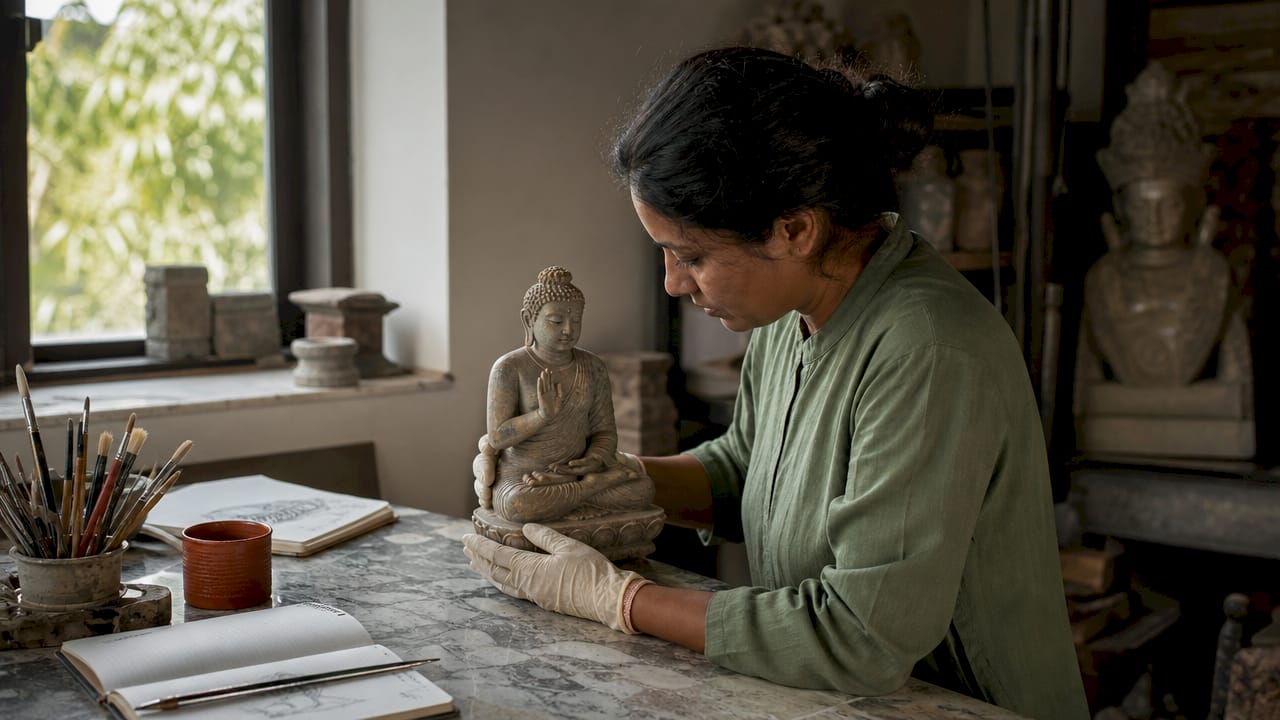
Queste posture non sono scelte decorative. Ognuno pone lo spettatore in una relazione definita con la narrativa spirituale del Buddha. Una statua in piedi all'ingresso del tempio segnala la protezione dello spazio. Una figura seduta in una stanza del santuario ancora la pratica della meditazione. Una figura sdraiata, come il Buddha sdraiato di 15 metri a Gal Vihara, segna un sito di profondo significato contemplativo.
I Mudra, i gesti delle mani, perfezionano ulteriormente quel significato. I quattro più comuni nell'iconografia dello Sri Lanka sono:
- Abhaya Mudra: La mano destra alzata, palmo rivolto verso l'esterno. Segnala protezione e coraggio.
- Dhyana Mudra: Entrambe le mani appoggiate sul grembo, con i palmi rivolti verso l'alto. Segnala una meditazione profonda.
- Asisa Mudra: Una variante di Abhaya specifica dello Sri Lanka, vista sul Buddha Avukana, dove la mano destra è alzata in un gesto di benedizione piuttosto che di pura protezione.
- Vitarka Mudra: Indice e pollice che si toccano, segnalano l'insegnamento e la trasmissione dottrinale.
Suggerimento professionale: Quando identifichi una statua di Buddha dello Sri Lanka, leggi il gesto della mano prima della postura. Il mudra ti dice cosa sta facendo spiritualmente il Buddha; la postura ti dice quando nella sua vita o nel ciclo di insegnamento si verifica quel momento.
La combinazione di postura e mudra crea una dichiarazione iconografica completa. Una figura in piedi con Abhaya Mudra comunica protezione attiva e presente. Una figura seduta con Dhyana Mudra comunica il ritiro nella quiete illuminata. Questa grammatica a strati è il fondamento di Scultura buddista Theravada in tutto il sud e il sud-est asiatico.
In che modo i materiali e l'artigianato definiscono gli stili delle statue di Buddha nello Sri Lanka?
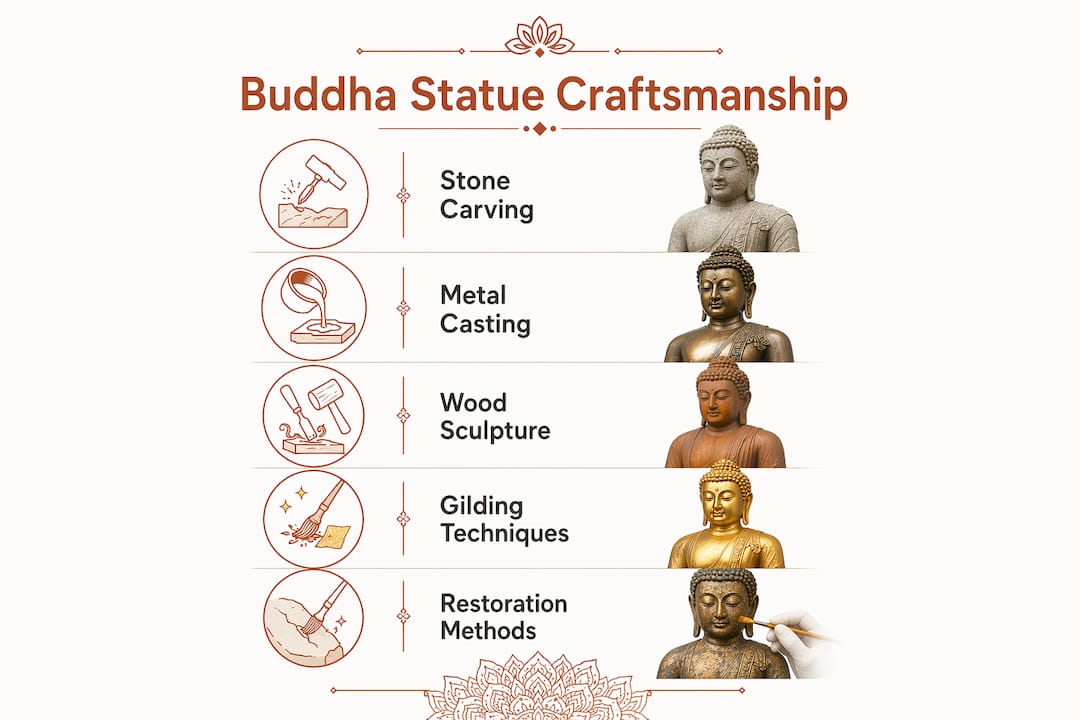
Gli scultori dello Sri Lanka lavoravano principalmente in granito e pietra calcarea, materiali che dettavano sia la scala che la qualità della superficie delle opere finite. Il Budda di Vallipuram, scolpito in pietra calcarea e datato al II secolo d.C., è tra i primi esempi sopravvissuti. Il calcare consentiva dettagli superficiali più fini rispetto al granito, il che spiega perché i pezzi di calcare spesso mostrano drappeggi e modelli facciali più delicati.
Il granito ha dominato la tradizione monumentale. Il Buddha Avukana, alto circa 14 metri, è stato scolpito direttamente da un unico affioramento granitico. Le decisioni tecniche prese ad Avukana rivelano una sofisticata intelligenza ingegneristica:
- Lo scultore ha lasciato a stretta striscia di roccia sul retro della figura, collegandola alla parete rocciosa madre per il supporto strutturale. Ciò ha impedito alla statua di ribaltarsi sotto il suo stesso peso.
- Le proporzioni sono state deliberatamente allungate nella parte superiore del corpo per correggere la distorsione sperimentata dagli spettatori quando guardano una grande figura dal livello del suolo.
- Le pieghe delle vesti erano scolpite con linee superficiali e precise che rimangono leggibili a distanza, una tecnica che richiedeva una profonda conoscenza di come la luce cade sulla pietra nelle diverse ore del giorno.
- Un piccolo disegno dello strumento dello scultore era scolpito all'interno della veste vicino alla base, una rara firma personale nell'antica arte dello Sri Lanka.
Suggerimento professionale: Quando esamini un grande Buddha di pietra dello Sri Lanka, fai un passo indietro di almeno 20 metri e guarda il viso verso l'alto. Le proporzioni che appaiono leggermente esagerate a distanza ravvicinata si risolveranno in un equilibrio naturale dalla distanza di visione prevista. Questa correzione prospettica è una decisione artigianale deliberata, non un difetto.
La moderna pratica di restauro in siti come Gal Vihara segue un protocollo rigoroso: la pietra sostitutiva viene mantenuta visivamente distinta dal materiale originale in modo che i futuri studiosi possano identificare quali sezioni sono antiche e quali sono riparate. Questo standard, ora comune nei siti riconosciuti dall’UNESCO, preserva l’autenticità storica senza interrompere il lavoro di conservazione.
Quali influenze storiche e artistiche hanno plasmato le statue del Buddha dello Sri Lanka?
La scultura buddista dello Sri Lanka è il prodotto di uno scambio artistico a lungo termine, non una tradizione isolata. Le due influenze esterne dominanti sono la scuola Amaravati dell'India meridionale e la tradizione Gupta dell'India settentrionale, che raggiunsero entrambe lo Sri Lanka attraverso rotte commerciali e reti monastiche tra il III e il VII secolo d.C.
| Influenza | Caratteristiche principali | Visibile nella scultura dello Sri Lanka |
|---|---|---|
| Scuola Amaravati | Figure dinamiche, intagli narrativi in rilievo, vesti sottili e aderenti | I primi Buddha in piedi, trattamento con la veste ad Avukana |
| Tradizione Gupta | Proporzioni idealizzate, espressione facciale serena, drappeggio formalizzato | Modellazione del viso ad Avukana, figure di meditazione sedute |
| Locale dello Sri Lanka | Scala monumentale scavata nella roccia, variante Asisa Mudra, supporto strutturale in roccia | Avukana, Gal Vihara, Polonnaruwa Vatadage |
Il Le pieghe della veste e i lineamenti del viso del Buddha Avukana illustrare direttamente questa sintesi. La veste aderisce al corpo alla maniera Amaravati, mentre il viso porta la calma idealizzazione del modello Gupta. Nessuna delle due tradizioni da sola spiega il risultato. Lo Sri Lanka ha assorbito entrambi e ha prodotto qualcosa di distinto.
Il periodo Polonnaruwa, all'incirca dall'XI al XIII secolo d.C., segna una svolta stilistica. Il Statue di Polonnaruwa Vatadage mostrano berretti per capelli lisci e abiti intagliati trasparenti non trovati in precedenti opere dello Sri Lanka. Le pietre di luna e le pietre di guardia del complesso mostrano l'evoluzione del simbolismo religioso, con alcune divinità protettive omesse rispetto ai precedenti programmi del tempio. Ciò riflette uno spostamento nell’enfasi teologica piuttosto che una perdita di competenze. Il contesto architettonico attorno a una statua è significativo quanto la statua stessa. Le omissioni nel programma iconografico di Polonnaruwa segnalano scelte dottrinali deliberate da parte dei committenti dell'opera.
Il periodo Kandyan, dal XVI al XIX secolo, introdusse un'estetica più decorativa con superfici dorate, elaborate basi del trono e ushnisha a forma di fiamma. Comprensione sviluppi stilistici attraverso i periodi aiuta collezionisti e studiosi a collocare qualsiasi pezzo dello Sri Lanka nel suo momento storico corretto.
Quali iconiche statue del Buddha dello Sri Lanka illustrano meglio queste caratteristiche?
Tre siti concentrano gli esempi più significativi della scultura del Buddha dello Sri Lanka: Avukana, Gal Vihara e Polonnaruwa Vatadage.
Budda Avukana è alto circa 14 metri e risale al V secolo d.C. sotto il regno del re Dhatusena. È l'esempio più chiaro della maestria tecnica dello Sri Lanka: scavato nella roccia, strutturalmente progettato, adattato proporzionalmente e iconograficamente preciso con il suo Asisa Mudra. La figura sta su un piedistallo di loto ed è fiancheggiata da un'aureola fiammeggiante scolpita in rilievo dietro la testa.
Gal Vihara a Polonnaruwa contiene quattro sculture in granito scolpite da un'unica parete rocciosa nel XII secolo d.C. sotto il re Parakramabahu I. Il gruppo comprende:
- Un Buddha seduto in meditazione alto circa 4,6 metri, considerato tra i migliori esempi di scultura buddista in Asia
- Un Buddha in piedi alto circa 7 metri nell'Abhaya Mudra
- A Buddha Parinirvana sdraiato lungo circa 15 metri
- Una figura seduta più piccola in una camera del santuario
Le proporzioni di Gal Vihara sono state regolate per una prospettiva di visione ottimale, una tecnica che richiede allo scultore di decodificare mentalmente le distorsioni della visione umana prima di tagliare una singola linea. Si tratta di ingegneria ottica avanzata incorporata nell'arte religiosa.
Polonnaruwa Vatadage è una casa di reliquie circolare contenente quattro statue di Buddha posizionate nei punti cardinali. Le cuffie per capelli lisci e il trattamento della veste trasparente rappresentano qui un'evoluzione stilistica specifica della scuola Polonnaruwa. Il complesso presenta anche pietre di luna sulle soglie d'ingresso, scolpite con fasce concentriche di animali simbolici che rappresentano il ciclo della rinascita.
Come funzionano le statue del Buddha dello Sri Lanka nell'arte e nella cultura buddista?
L'arte del tempio dello Sri Lanka, comprese statue e murali, funziona come liturgia visiva. Lo studioso John Clifford Holt descrive queste opere come agenti sociali che incorporano verità, regalità e narrazioni morali all'interno dello spazio fisico del tempio. Una statua non è semplicemente un oggetto di venerazione. È uno strumento didattico, una dichiarazione politica e un'ancora meditativa allo stesso tempo.
Le funzioni culturali delle statue del Buddha dello Sri Lanka operano su diversi livelli:
- Focus meditativo: Gli adoratori usano la postura e il mudra della statua per orientare la propria pratica. Una figura di Dhyana Mudra invita alla quiete; una figura dell'Abhaya Mudra invita al rifugio.
- Legittimità reale: I re commissionarono statue importanti per dimostrare la pietà buddista e l'autorità politica. Il complesso Gal Vihara fu costruito da Parakramabahu I come parte di un più ampio programma di consolidamento religioso e politico.
- Insegnamento narrativo: Le statue collocate all'interno di programmi murali, come quelle del tempio Degaldoruwa, lavorano insieme Dipinti di storie di Jataka per narrare le vite precedenti e gli insegnamenti morali del Buddha. La statua fissa la narrazione; i murales lo estendono.
- Meta del pellegrinaggio: I principali siti di statue funzionano come centri di pellegrinaggio attivi. Avukana e Gal Vihara ricevono ogni anno centinaia di migliaia di visitatori, sia pellegrini buddisti che turisti culturali.
Il espressioni facciali delle statue di Buddha dello Sri Lanka rafforzano questa funzione di insegnamento. I caratteristici occhi socchiusi e la leggera curvatura delle labbra verso l'alto comunicano uno stato oltre l'emozione ordinaria, accessibile allo spettatore come modello per la pratica contemplativa.
Punti chiave
Le statue del Buddha dello Sri Lanka codificano la postura, i mudra, i materiali e l'influenza storica in un sistema iconografico unificato che premia la lettura attenta.
| Punto | Dettagli |
|---|---|
| La postura porta dottrina | In piedi segnala protezione, seduto segnala meditazione, sdraiato segnala Parinirvana. |
| I mudra specificano il significato | I mudra Asisa, Abhaya e Dhyana comunicano ciascuno uno stato spirituale o un insegnamento distinto. |
| Scala a forma di materiali | Il granito ha consentito opere monumentali scavate nella roccia come Avukana; il calcare consentiva primi pezzi più fini come Vallipuram. |
| Le influenze sono state sintetizzate | Le tradizioni Amaravati e Gupta si sono fuse con le caratteristiche locali dello Sri Lanka per produrre un'identità scultorea distinta. |
| Il contesto è l'iconografia | L'ambientazione architettonica, le pietre di luna, le pietre di guardia e i murali fanno parte del significato della statua, non della decorazione dello sfondo. |
Perché la scultura buddista dello Sri Lanka merita un'attenzione maggiore di quella che la maggior parte delle persone le presta
La maggior parte dei visitatori di Avukana o Gal Vihara trascorrono circa dieci minuti a guardare e poi vanno avanti. Questo è un tempo sufficiente per registrare la scala e la bellezza della superficie, ma non abbastanza per leggere ciò che effettivamente dice la scultura. L'Asisa Mudra sul Buddha Avukana non è intercambiabile con un Abhaya Mudra standard. È una scelta iconografica specifica dello Sri Lanka e segnala una relazione tra il Buddha e lo spettatore che differisce dal gesto protettivo utilizzato altrove in Asia.
Anche la sintesi delle influenze Amaravati e Gupta nella scultura dello Sri Lanka è sottovalutata. La maggior parte dei corsi di storia dell'arte li tratta come tradizioni separate. Lo Sri Lanka è il luogo in cui sono stati deliberatamente combinati e il risultato non è un compromesso ma una terza cosa. Il Buddha Avukana non sembra indiano. Sembra dello Sri Lanka, perché gli artigiani che lo hanno realizzato hanno assorbito due tradizioni e da esse hanno costruito qualcosa di nuovo.
Per i collezionisti e gli appassionati d'arte, questo conta praticamente. Una figura in bronzo o pietra dello Sri Lanka porta con sé un vocabolario iconografico specifico. Sapere se il gesto della mano è Asisa o Abhaya, se il trattamento della veste è influenzato da Amaravati o dal periodo Polonnaruwa e se la cuffia è liscia o arricciata colloca il pezzo all'interno di una tradizione con una reale profondità storica. Quella conoscenza cambia ciò che vedi quando lo guardi.
— Giacomo, HDAsianArt.com
Esplora l'autentica arte dello Sri Lanka e buddista su HDAsianArt
HDAsianArt offre una selezione curata di autentiche statue buddiste provenienti dallo Sri Lanka e da tutta l'Asia, ciascuno ricercato e documentato individualmente da specialisti. La collezione comprende pezzi in bronzo, pietra e legno che abbracciano più periodi e tradizioni iconografiche, dai Buddha in piedi Theravada alle figure di meditazione sedute.
Ogni pezzo viene spedito in tutto il mondo con consegna DHL assicurata. Per i collezionisti che costruiscono una collezione seria o per gli appassionati che cercano un'unica opera significativa, il catalogo HDAsianArt fornisce i dettagli sulla provenienza e la documentazione iconografica che distinguono un'acquisizione significativa da un acquisto decorativo.
Domande frequenti
Quali sono le tre posture principali delle statue di Buddha dello Sri Lanka?
Le tre posture principali sono in piedi, seduti e sdraiati. Stare in piedi rappresenta la protezione, seduto rappresenta la meditazione e l'illuminazione e reclinato rappresenta il Parinirvana.
Come identifichi l'Asisa Mudra nella scultura dello Sri Lanka?
L'Asisa Mudra appare come la mano destra sollevata con il palmo rivolto verso l'esterno, simile all'Abhaya Mudra ma con una leggera variazione nella posizione delle dita che segnala la benedizione. È più chiaramente visibile sul Buddha Avukana.
Quali materiali sono stati utilizzati nelle statue storiche del Buddha dello Sri Lanka?
Granito e calcare erano i materiali principali. Il Buddha di Vallipuram, datato al II secolo d.C., è scolpito nella pietra calcarea, mentre opere monumentali come Avukana e Gal Vihara utilizzano il granito.
Cosa rende Gal Vihara significativo nella storia dell’arte buddista?
Gal Vihara contiene quattro sculture scolpite da un'unica parete rocciosa di granito, con proporzioni regolate per una prospettiva di visione ottimale. Il Buddha seduto in meditazione è considerato uno dei migliori esempi di scultura buddista in Asia.
In che modo le tradizioni artistiche indiane hanno influenzato le statue di Buddha dello Sri Lanka?
La scultura dello Sri Lanka sintetizzava il trattamento dinamico delle vesti della scuola Amaravati con la modellazione facciale idealizzata della tradizione Gupta, producendo uno stile regionale distinto visibile in opere come il Buddha Avukana.
