



Stili Khmer del Buddha: Bayon, Angkor Wat e Baphuon
Stili Khmer del Buddha: Bayon, Angkor Wat e Baphuon
Hai trovato una figura in pietra cambogiana, o forse stai pensando di acquistarne una, e la domanda che conta di più in questo momento è: a quale periodo Khmer appartiene? Identificare erroneamente un pezzo di Baphuon come Bayon, o confondere un Buddha in stile Angkor Wat con uno dei due, è un errore commesso anche dai collezionisti esperti.
Farlo bene influenza il tuo modo di fare prendersi cura della statua del Buddha materiali, come esponi il pezzo e, in definitiva, cosa stai effettivamente acquistando. Questa guida illustra ciascuno dei tre principali stili scultorei Khmer in termini pratici e specifici in modo che tu possa distinguerli con sicurezza e quindi preservare correttamente la scultura asiatica una volta che sai cosa hai.
Sommario
- Takeaway veloci
- Perché l'identificazione dello stile Khmer è importante
- Stile Baphuon: XI secolo
- Stile Angkor Wat: XII secolo
- Stile Bayon: XIII secolo
- Confronto tra i tre stili in breve
- Come prendersi cura e preservare le sculture Khmer
- Restauro d'Arte Antica per Pietre e Bronzi
- Domande frequenti
- Riferimenti
Takeaway veloci
|
Intuizione chiave |
Spiegazione |
|---|---|
|
I Buddha Baphuon sembrano giovani e magri |
Le figure dell'XI secolo hanno un torso snello, una linea sottile della veste e talvolta cavità di gemme negli occhi dove un tempo erano incastonate le pietre. |
|
Lo stile di Angkor Wat è il più decorato |
Pezzi del XII secolo presentano corone, collane, braccialetti e bracciali scolpiti che riflettono l'elevato status della figura del Buddha durante questo periodo ibrido indù-buddista. |
|
I volti di Bayon mostrano una calma meditativa |
Le figure del XIII secolo abbandonano tutti i gioielli e mostrano un'espressione serena e interiore con una linea della veste rialzata più prominente su tutto il corpo. |
|
La forma delle sopracciglia è uno strumento diagnostico rapido |
Le sopracciglia in stile Angkor Wat sono notevolmente più dritte e ravvicinate, distinguendole dal trattamento più morbido delle sopracciglia nei pezzi Baphuon e Bayon. |
|
Il tipo di materiale influisce sul metodo di conservazione |
La cura delle sculture in pietra differisce notevolmente dalla manutenzione delle statue in bronzo. Non applicare mai lo stesso detergente su entrambi, poiché la pietra è porosa e il bronzo sviluppa una patina protettiva. |
|
L'assenza di gioielli segnala un periodo successivo |
Se una figura di Buddha Khmer non ha alcun dettaglio ornamentale, è quasi certamente del periodo Bayon o successivo, non di un pezzo precedente spogliato o danneggiato. |
|
Esistono variazioni all'interno di ogni stile |
Non tutte le funzionalità saranno presenti in ogni esempio. Laboratori regionali e singoli intagliatori hanno prodotto sottili differenze nello stesso ampio periodo. |
Perché l'identificazione dello stile Khmer è importante
L'arte scultorea Khmer abbraccia circa cinque secoli del periodo di Angkor e i tre stili qui trattati, Baphuon, Angkor Wat e Bayon, rappresentano epoche religiose e politiche distinte. Ogni epoca ha prodotto figure con proporzioni, trattamenti superficiali e vocabolari simbolici veramente diversi. Trattarli come intercambiabili non è solo un errore estetico; influisce sulla valutazione dell'autenticità, sulle decisioni di conservazione e sull'integrità di una collezione.
Per i collezionisti che acquistano pezzi cambogiani tramite HD Asian Art o qualsiasi rivenditore specializzato, comprendere queste distinzioni è il fondamento di un acquisto informato. Un pezzo correttamente identificato come Stile Angkor Wat porta un lignaggio artistico diverso rispetto a una figura del periodo Bayon, anche se entrambi sono resi nella stessa arenaria. L'identificazione ti dice anche quale livello di dettaglio aspettarti sulla superficie, che a sua volta determina il modo in cui intendi preservare la scultura asiatica in un ambiente domestico o in una galleria.
Suggerimento da professionista: Quando esamini una figura Khmer per la prima volta, osserva tre cose in sequenza: la presenza o l'assenza di gioielli, il trattamento della linea della veste e l'espressione del viso. Questi tre indicatori da soli posizioneranno la maggior parte dei pezzi entro il periodo ampio corretto prima di esaminare i dettagli più fini.
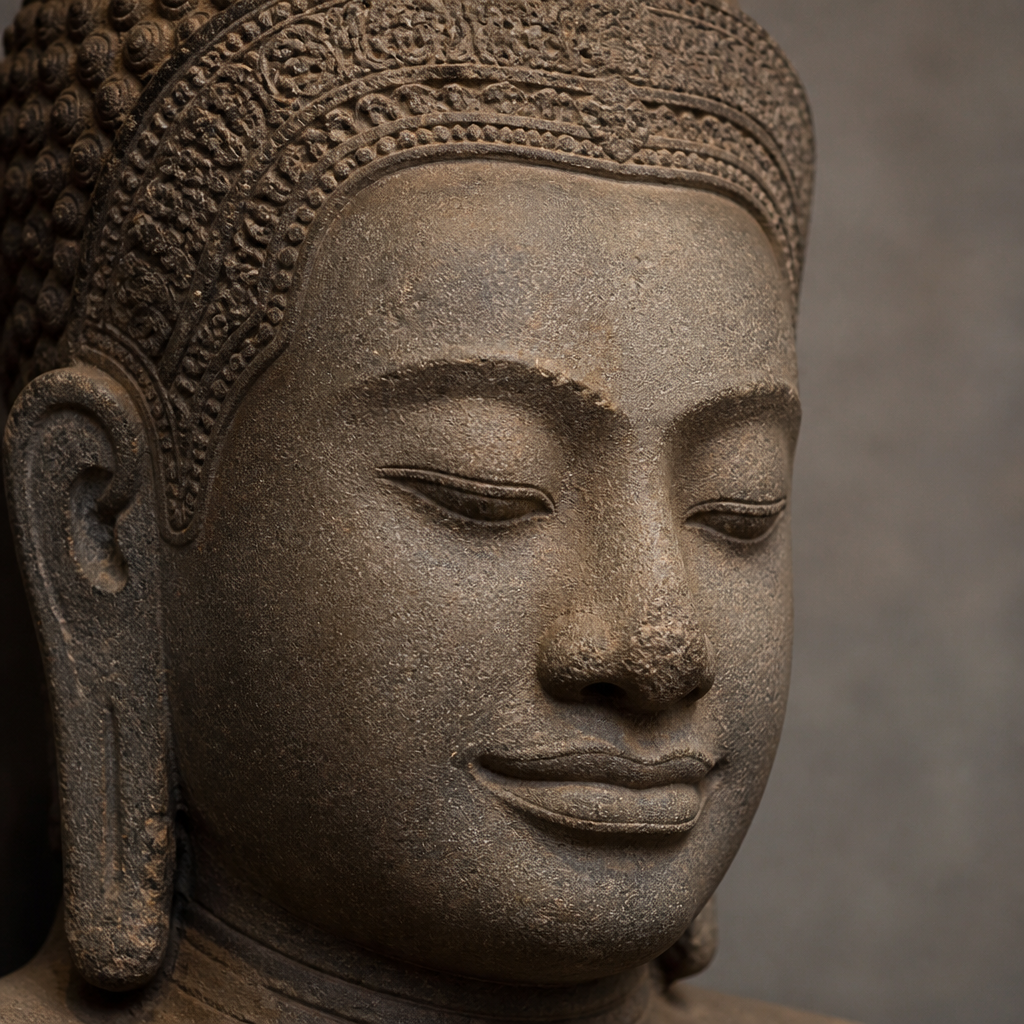
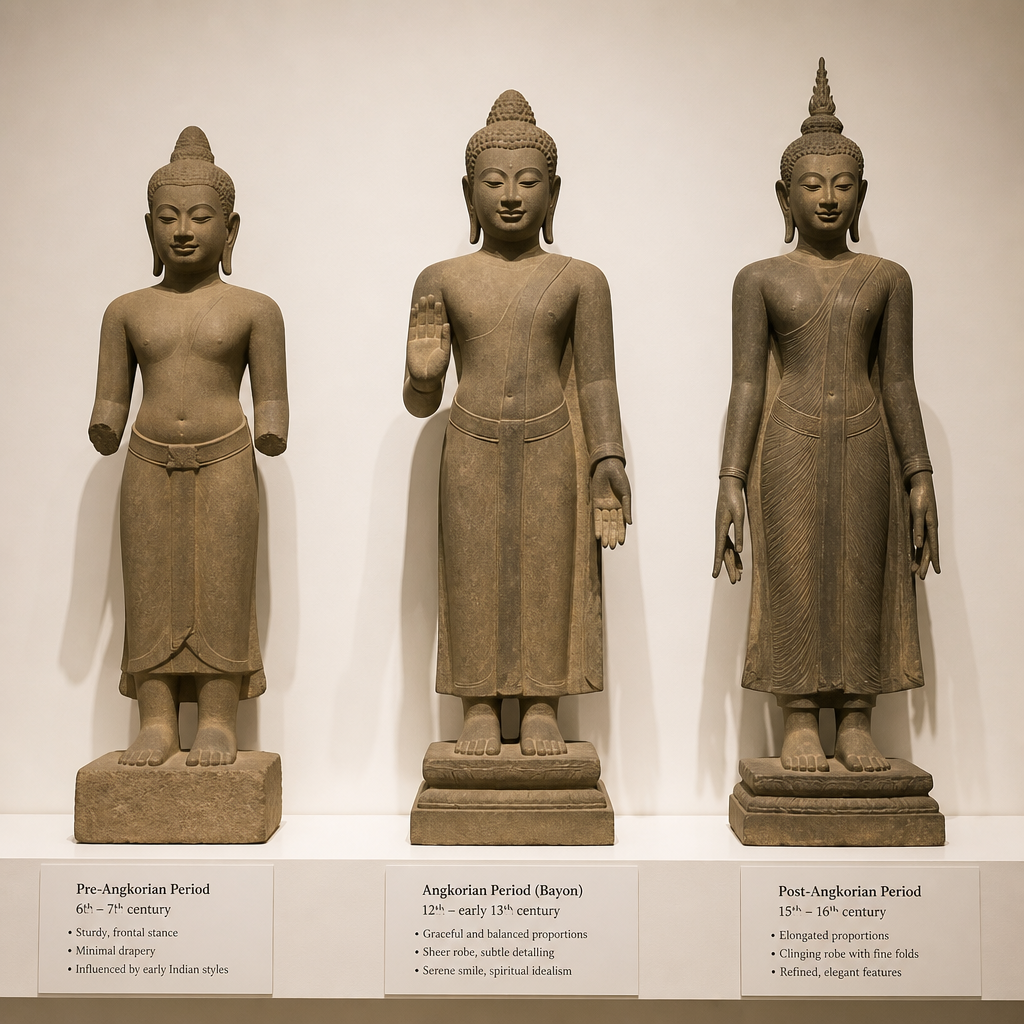
Stile Baphuon: XI secolo
Lo stile Baphuon prende il nome dal tempio Baphuon ad Angkor Thom, un importante monumento Khmer dedicato principalmente all'induismo shaivita. I Buddha prodotti in questo periodo portano con sé un carattere fisico specifico che è immediatamente riconoscibile una volta che si sa cosa cercare.
Proporzioni fisiche e dettagli della superficie
La qualità distintiva di un Buddha Baphuon è la giovinezza e la snellezza. La figura appare snella, quasi delicata, con il petto ben definito e la vita stretta. La veste, o sanghati, è indicata da una linea incisa estremamente sottile, quasi filiforme, piuttosto che da pesanti pieghe di panneggio. Questa moderazione nell'intaglio delle vesti è uno dei segni più chiari del periodo.
I capelli sono resi in piccoli riccioli strettamente a spirale o in un motivo a bocciolo di loto. La testa è senza corona. Una delle caratteristiche tecniche più distintive è la presenza di cavità oculari progettato per ospitare gemme intarsiate o inserti in pietra. Laddove questi inserti sono andati perduti, le orbite appaiono come depressioni poco profonde. Negli esempi in cui non erano state realizzate cavità, gli scultori compensavano scolpendo gli occhi in modo insolitamente sporgente, quasi sporgente, per simulare il peso visivo che una gemma intarsiata avrebbe fornito.
Contesto religioso e storico
L'XI secolo ad Angkor vide una significativa tensione religiosa tra l'induismo shaivita e il buddismo. Diverse sculture buddiste del periodo Baphuon mostrano danni coerenti con i successivi episodi iconoclastici avvenuti tra il XII e il XIII secolo. Un pezzo con rotture deliberate sulle mani o sul viso, combinato con le proporzioni snelle e la linea sottile della veste, potrebbe benissimo essere del periodo Baphuon. Quel danno non è un difetto da nascondere; fa parte della documentazione storica dell'oggetto.
Stile Angkor Wat: XII secolo
Il XII secolo ha prodotto quelle che molti considerano le figure buddiste Khmer visivamente più elaborate. Sebbene lo stesso Angkor Wat fosse concepito come un tempio indù, durante questo periodo fiorirono le immagini del buddismo Mahayana e le sculture risultanti riflettono una deliberata elevazione del Buddha a uno status paragonabile a quello di un re o di una divinità.
Ornamentazione come caratteristica distintiva
I gioielli sono l'indicatore più affidabile dello stile di Angkor Wat. Queste figure sono adornate con corone, collane, braccialetti e bracciali scolpiti. In alcuni casi, i documenti storici indicano che veri e propri gioielli in metallo venivano aggiunti a figure in pietra o bronzo. Questa opulenza distingue immediatamente i Buddha del XII secolo sia dal sobrio stile Baphuon che dall'austero stile Bayon che li racchiude.
Le sopracciglia nei pezzi in stile Angkor Wat sono notevolmente più dritte rispetto ad altri periodi Khmer e sono insolitamente vicine tra loro sopra il ponte del naso. Non ci sono cavità con intarsi di gemme negli occhi in questo stile. L'espressione facciale complessiva è formale e composta piuttosto che meditativa.
Perché i collezionisti spesso attribuiscono erroneamente questo stile
Gli ornamenti dei Buddha in stile Angkor Wat a volte portano i collezionisti a confonderli con figure di divinità indù, in particolare quando la corona è elaborata. La distinzione è importante: un Buddha incoronato è pur sempre un Buddha, identificabile dal mudra, dall'ushnisha sotto la corona e dal trattamento della veste. Una divinità indù dello stesso periodo porterà tipicamente attributi, armi o riferimenti vahana specifici che una figura buddista non ha.
Il Buddha del periodo di Angkor Wat, ornato di gioielli, riflette un momento in cui il buddismo e l'induismo ad Angkor non erano rivali ma espressioni parallele di sacra autorità. Lo stesso laboratorio scultoreo potrebbe aver prodotto sia figure di Buddha incoronati che Vishnu nello stesso decennio.
Stile Bayon: XIII secolo
Lo stile Bayon emerge nel XIII secolo sotto il regno di Jayavarman VII, che fece del Buddismo Mahayana la religione di stato dell'Impero Khmer. Questo cambiamento produsse un cambiamento drammatico nell’estetica scultorea: gli ornamenti furono completamente eliminati e lo stato spirituale interno del Buddha divenne il soggetto principale della scultura.
Il volto meditativo
Il volto di un Buddha del periodo Bayon è la caratteristica menzionata per prima dalla maggior parte degli scrittori e delle guide museali, e giustamente. L'espressione è di profonda calma interiore. Gli occhi sono tipicamente socchiusi o completamente chiusi, suggerendo la meditazione piuttosto che l’impegno con il mondo. Le labbra portano una curva sottile e composta verso l'alto che viene spesso descritta come il "sorriso di Bayon", sebbene questa frase si applichi anche alle monumentali torri frontali del tempio di Bayon stesso.
Non c'è corona. Non sono presenti gioielli di alcun tipo. I capelli conservano i riccioli a spirale dei periodi precedenti e l'ushnisha è presente, ma la superficie complessiva è semplice e non decorata. La linea della vestaglia, al contrario, diventa più prominente e rialzato in rilievo rispetto alla linea sottile del periodo Baphuon. Questo è uno dei pochi modi in cui lo stile Bayon è più enfatico piuttosto che più sobrio rispetto ai suoi predecessori.
Scelte materiali nel periodo Bayon
Le figure del periodo Bayon appaiono sia in arenaria che in bronzo. Gli esemplari in bronzo tendono ad essere più piccoli, forse destinati ad un uso devozionale privato, mentre le figure più grandi in arenaria erano prodotte per installazioni nei templi. Quando ci si prende cura degli esemplari di statue in bronzo di questo periodo, la patina accumulata dovrebbe essere trattata come un vantaggio, non come un difetto. La sua rimozione danneggia sia la superficie che la documentazione storica dell'oggetto.
Confronto tra i tre stili in breve
La tabella seguente riassume le caratteristiche più diagnostiche di ciascuno stile in un unico riferimento. Usalo insieme all'esame obiettivo, non come sostituto di esso. Ogni regola ha delle eccezioni e le variazioni all'interno di uno stile sono documentate nelle collezioni dei musei cambogiani.
|
Caratteristica |
Baphuon (XI secolo) |
Angkor Wat (XII secolo) |
Bayon (XIII secolo) |
|---|---|---|---|
|
Costruzione del corpo |
Snello, giovanile, delicato |
Regale, proporzionato per l'ornamento |
Solido, sereno, senza decorazioni |
|
Corona/gioielli |
Nessuno |
Corona elaborata, collane, braccialetti |
Nessuno |
|
Linea vestaglia |
Estremamente fine, quasi filiforme |
Presente ma secondario rispetto all'ornamentazione |
Prominente, rialzato in rilievo |
|
Trattamento degli occhi |
Cavità di gemme o occhi sporgenti intagliati |
Nessuna cavità nelle gemme, sopracciglia più dritte e ravvicinate |
Semichiuso o chiuso, meditativo |
|
Espressione facciale |
Giovanile, composto |
Formale, regale |
Profondamente meditativo, sereno |
|
Stile dei capelli |
Piccole spirali o forma di bocciolo di loto |
Nascosto sotto la corona in molti esemplari |
Piccole spirali, ushnisha prominente |
|
Materiale comune |
Arenaria, un po' di bronzo |
Arenaria, pietra con attacchi metallici |
Arenaria e bronzo |
Come prendersi cura e preservare le sculture Khmer
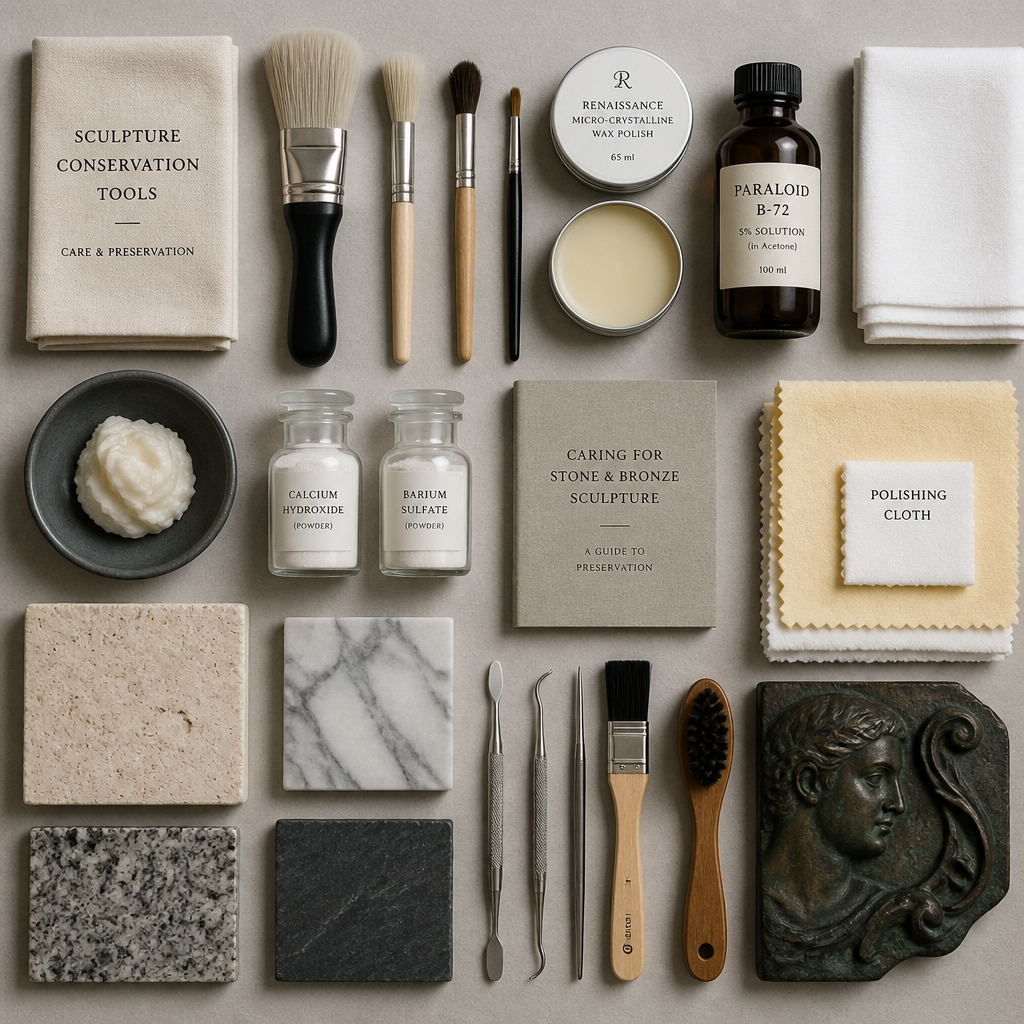
Una volta identificato lo stile e il materiale del tuo pezzo Khmer, la priorità diventa la conservazione a lungo termine. È qui che molti collezionisti commettono errori evitabili, solitamente attraverso una pulizia eccessiva o l'applicazione di prodotti inappropriati su superfici che richiedono solo un intervento minimo.
Cura delle sculture in pietra
L'arenaria è il materiale più comune nella scultura buddista Khmer. È poroso e relativamente morbido rispetto al granito o al marmo, il che significa che assorbe facilmente umidità, detergenti chimici e inquinanti atmosferici. L'approccio corretto a cura della scultura in pietra è quasi sempre di moderazione.
Spolverare la superficie con una spazzola morbida a setole naturali. Non utilizzare mai setole sintetiche, che possono lasciare micrograffi sui dettagli intagliati. Non utilizzare l'acqua direttamente sull'arenaria scolpita a meno che non si lavori con un conservatore. Se è necessario pulire una macchia sulla superficie, utilizzare la quantità minima di acqua distillata su un batuffolo di cotone e lasciare asciugare completamente l'area prima di riportare il pezzo nella sua posizione di esposizione. Tieni le figure in arenaria lontane dalla luce solare diretta e dall'umidità elevata, che accelerano la scheggiatura della superficie e l'efflorescenza salina.
Suggerimento da professionista: Non applicare mai cera, olio o vernice su una figura in arenaria Khmer nel tentativo di "proteggere" la superficie. Questi prodotti sigillano l'umidità nella pietra porosa e causano danni interni molto più distruttivi del normale invecchiamento superficiale.
Manutenzione della statua in bronzo
Le figure in bronzo Khmer sviluppano nel corso dei secoli una patina che funge da strato protettivo naturale. La manutenzione delle statue in bronzo dovrebbe concentrarsi sulla preservazione di questa patina, non sulla sua rimozione. Utilizzare un panno morbido e asciutto per rimuovere la polvere dalla superficie. Se un pezzo sviluppa la malattia del bronzo attiva, che appare come macchie polverose di colore verde brillante anziché la patina stabile verde scuro o marrone, consultare un restauratore professionista. La corrosione attiva è un segno di instabilità chimica in corso che i prodotti domestici non si risolvono e possono peggiorare.
Conservare i pezzi di bronzo lontano dall'aria salmastra, dall'elevata umidità e dal contatto con materiali acidi, inclusi alcuni tipi di legno. Gli espositori realizzati in legno duro non trattato possono rilasciare gas acidi che nel tempo attaccano le superfici in bronzo.
Restauro d'Arte Antica per Pietre e Bronzi
La conservazione di importanti pezzi Khmer va oltre le cure di routine. La conservazione dell'arte antica per oggetti di questa età e peso culturale implica comprendere l'intera storia delle condizioni di un pezzo prima di intervenire.
Documentare il tuo pezzo prima di qualsiasi trattamento
Prima di pulire, spostare o trattare qualsiasi scultura Khmer, fotografala da più angolazioni con una luce costante. Documentare eventuali danni esistenti, vecchie riparazioni o trattamenti superficiali. Questa registrazione ha un valore inestimabile se in seguito si lavora con un restauratore e fornisce una linea di base rispetto alla quale è possibile misurare i futuri cambiamenti della superficie.
Quando chiamare un conservatore professionista
Esistono chiare situazioni in cui la conservazione professionale è l’unica linea d’azione appropriata. Questi includono la malattia del bronzo attiva su pezzi di metallo, superfici di arenaria spolverate o sfaldate, vecchie riparazioni adesive che stanno fallendo o qualsiasi situazione in cui un elemento strutturale della figura è a rischio. Un conservatore rispettabile effettuerà una valutazione delle condizioni prima di raccomandare qualsiasi trattamento e fornirà un rapporto scritto. Questa non è una spesa facoltativa per un pezzo di autentico significato culturale e finanziario.
Suggerimento da professionista: Quando acquisti una scultura Khmer da uno specialista come HD Asian Art, chiedi se il pezzo ha qualche precedente trattamento di conservazione registrato. Sapere cosa è già stato fatto su una superficie ti dice come affrontare le cure in corso e cosa evitare di applicare in futuro.
Domande frequenti
Come posso distinguere un Buddha Bayon da un Buddha Baphuon senza una conoscenza specialistica?
Il controllo più veloce è la linea dell'accappatoio e il trattamento occhi. I pezzi di Baphuon hanno una linea di veste quasi invisibile e sottile e possono avere orbite vuote dove un tempo erano incastonate le gemme. I pezzi Bayon hanno una linea della veste più rialzata e visibile e occhi meditativi completamente scolpiti senza cavità. Nessuno dei due stili ha gioielli, che è ciò che li distingue dalle figure in stile Angkor Wat.
Sono tutti Buddha Khmer decorati e incoronati del periodo di Angkor Wat?
Non necessariamente. Le successive tradizioni scultoree cambogiane produssero anche figure di Buddha incoronato, in particolare nel periodo successivo ad Angkor. Tuttavia, tra i pezzi specificamente attribuiti al periodo classico del tempio di Angkor, lo stile di Angkor Wat è quello maggiormente associato ad ornamenti elaborati. La combinazione di corona, collana e braccialetti su una figura con le sopracciglia dritte e ravvicinate è un forte indicatore dello stile di Angkor Wat del XII secolo.
Qual è il modo migliore per prendersi cura delle statue di Buddha in arenaria a casa?
Conservare il pezzo in un ambiente stabile lontano dalla luce solare diretta, dall'elevata umidità e dalle variazioni di temperatura. Spolverare regolarmente con una spazzola morbida a setole naturali. Evitare detergenti liquidi, cere o oli. Se la superficie presenta segni di spolveramento o sfaldamento, smettere di maneggiare il pezzo e consultare un restauratore prima di fare qualsiasi altra cosa.
La manutenzione delle statue in bronzo differisce per i pezzi Khmer rispetto ai successivi bronzi asiatici?
I principi fondamentali sono gli stessi: proteggere la patina esistente, evitare l'esposizione all'umidità e alla salsedine e non utilizzare detergenti abrasivi. La differenza con i bronzi Khmer autenticamente antichi è che qualsiasi intervento comporta un rischio maggiore di danni irreversibili. I bronzi successivi del XIX o XX secolo sono generalmente più stabili e possono tollerare cure leggermente più attive. Per qualsiasi pezzo che ritieni veramente antico, l'approccio conservatore è sempre corretto.
Dove posso vedere insieme esempi di tutti e tre gli stili del Buddha Khmer?
Il Museo Preah Norodom Sihanouk-Angkor a Siem Reap, in Cambogia, conserva esempi di Buddha in stile Baphuon, Angkor Wat e Bayon esposti insieme, il che rende possibile un confronto diretto. Il Museo Nazionale della Cambogia a Phnom Penh conserva anche importanti collezioni di sculture Khmer, tra cui grandi esempi di bronzo del periodo Baphuon.
Può una statua del Buddha Khmer avere caratteristiche di più di uno stile?
SÌ. Variazioni di laboratori, centri di produzione regionali e periodi di transizione tra le principali epoche stilistiche hanno prodotto figure che non rientrano perfettamente in un'unica categoria. Una figura realizzata nel periodo di transizione tra i periodi Baphuon e Angkor Wat può mostrare proporzioni snelle associate allo stile precedente insieme agli inizi dei dettagli ornamentali. Questo non è un motivo per dubitare dell'autenticità; è una caratteristica documentata di come gli stili scultorei si evolvono nella pratica piuttosto che in teoria.
Se di recente hai maneggiato o identificato una scultura Khmer e hai trovato caratteristiche che non corrispondevano a nessuna singola categoria, condividi la tua esperienza qui sotto, aiuta davvero altri collezionisti a perfezionare il proprio processo di identificazione.
Ci piacerebbe il tuo feedback e qualsiasi intuizione che condivideresti con gli altri. Quale prospettiva aggiungeresti?
Riferimenti
