



Come posizionare un idolo di Ganesh per portare fortuna a casa
Come posizionare un idolo di Ganesh per portare fortuna a casa
Sommario
- Perché è importante il posizionamento di un idolo di Ganesh
- Significato della direzione del tronco dell'idolo di Ganesh
- La migliore direzione per una statua di Ganesha
- Dove posizionare Ganesha nel soggiorno
- Posizionamento in una stanza della Puja, in un ingresso o in un piccolo appartamento
- Errori comuni di posizionamento da evitare
- Conclusione
- Domande frequenti
Perché è importante il posizionamento di un idolo di Ganesh
Sapere come posizionare un idolo di Ganesh come portafortuna inizia con un principio: la direzione rivolta alla figura dovrebbe invitare alla stabilità anziché disperderla. Nella tradizione indù, Ganesha è colui che rimuove gli ostacoli e il posizionamento è considerato una forma di rispetto tanto quanto una pratica spirituale. Questa guida di HD Asian Art illustra la direzione del tronco, le regole di fronte e il posizionamento stanza per stanza in modo che la tua statua supporti l'atmosfera che desideri.
In HD Asian Art lavoriamo con collezionisti e professionisti che trattano queste sculture come punti focali per la meditazione e il rituale quotidiano, non come decorazioni passive. Una statua posizionata con noncuranza contro un muro disordinato si legge in modo diverso rispetto a una statua posta in un angolo pulito e deliberato. Il posizionamento è la differenza tra un oggetto e una presenza. La creazione di un tale santuario richiede un approccio ponderato mostrando decorazioni di fede che armonizza il significato spirituale della figura con gli elementi architettonici circostanti.
Significato della direzione del tronco dell'idolo di Ganesh
La direzione del tronco è il dettaglio più discusso nel significato della direzione del tronco dell'idolo di Ganesh, ed è la prima cosa da controllare prima di acquistare o posizionare una statua. La curva del tronco segnala il ruolo previsto dall'idolo e il tipo di culto a cui si addice.
Idoli del tronco sinistro (Vamamukhi).
Un tronco che gira a sinistra, chiamato Vamamukhi, è la forma più comune che si trova nelle case. Il lato sinistro è associato alla luna e alla dolcezza, quindi questi idoli si adattano al culto quotidiano, agli altari familiari e agli spazi abitativi. Se stai posizionando una statua per il benessere generale e la calma, una figura sul tronco sinistro è la scelta tradizionale.
Idoli del tronco destro (Siddhivinayak).
Un tronco che gira a destra, noto come Siddhivinayak, è più raro e trasporta un'energia più forte e più attiva. Tradizionalmente è riservato ai templi e ai praticanti che seguono un rigoroso rituale quotidiano. In una casa, un idolo del tronco destro chiede di più alla famiglia, quindi molte famiglie mantengono la forma del tronco sinistro a meno che non abbiano una pratica dedicata.
| Direzione del tronco | Nome | Uso tradizionale | Ideale per |
|---|---|---|---|
| Svolta a sinistra | Vamamukhi | Culto domestico quotidiano | La maggior parte delle famiglie, salotti |
| Svoltare a destra | Siddhivinayak | Templi, rituale rigoroso | Professionisti dedicati |
La migliore direzione per una statua di Ganesha
La direzione migliore per una statua di Ganesha è quella in cui la figura è rivolta a nord o est, con il fedele rivolto nella stessa direzione. Queste direzioni sono collegate alla luce, alla crescita e al sole nascente nella pratica tradizionale, e mantengono la statua orientata verso l’apertura piuttosto che verso un muro cieco.
Da che parte dovrebbe guardare l'idolo?
L'idolo dovrebbe essere rivolto a nord o ad est e la persona che prega dovrebbe essere rivolta verso l'idolo. Evitare di rivolgere la statua verso sud, che la tradizione associa a pesantezza e partenza. Se la disposizione di una stanza rende impossibile il nord o l'est, scegli la direzione che permetta alla figura di guardare nello spazio aperto piuttosto che in un angolo o nel muro del bagno.
Dove posizionare Ganesha nel soggiorno
Dove posizionare Ganesha nel soggiorno dipende dalla visibilità e dalla calma: un luogo dove la famiglia si riunisce ma dove la statua non viene passata con noncuranza. Una console, uno scaffale basso o una nicchia dedicata vicino all'area salotto funzionano bene, a condizione che la figura sia rivolta verso la stanza.
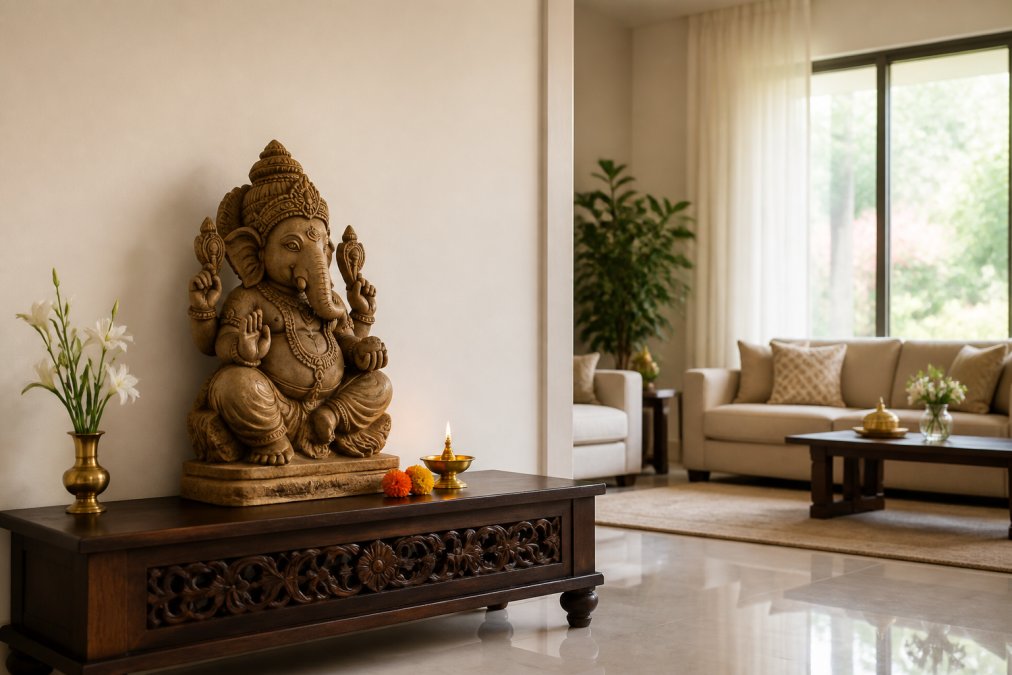
Mantenere la superficie pulita e ordinata. Evita di posizionare la statua direttamente accanto a un televisore, un carrello da bar o una scarpiera, poiché queste impostazioni minano il tono che la maggior parte delle persone desidera da un punto focale spirituale. Anche l'altezza conta: una statua all'altezza degli occhi o leggermente al di sopra quando è seduta si legge come intenzionale, mentre una sul pavimento si legge come immagazzinata piuttosto che posizionata.
Posizionamento in una stanza della Puja, in un ingresso o in un piccolo appartamento
Una stanza dedicata alla puja ti dà il massimo controllo, ma un ingresso o un piccolo appartamento l'angolo può funzionare altrettanto bene con alcune modifiche. L'obiettivo rimane lo stesso: un punto pulito, elevato e ben illuminato rivolto nella direzione giusta.
L'ingresso principale
È comune posizionare Ganesha vicino all'ingresso principale, poiché è associato all'accoglienza e all'eliminazione degli ostacoli prima che entrino. Tieni la statua a lato della porta anziché direttamente sul percorso del traffico pedonale e assicurati che non sia rivolta verso l'esterno, verso la strada. Una piccola mensola o una nicchia accanto all'ingresso funziona meglio di un punto in cui si accumulano scarpe e borse.
Camere da letto e pareti condivise
Molte famiglie evitano di posizionare un idolo di Ganesh in camera da letto, in particolare vicino al letto, per rispetto piuttosto che per rigoroso divieto. Se l'unica opzione è la camera da letto, tieni la statua su uno scaffale alto lontano dal letto ed evita di posizionarla contro un muro condiviso con un bagno. Un piccolo appartamento spesso significa compromesso, e un angolo pulito ed elevato in una zona giorno di solito serve meglio di un posto frettoloso in una camera da letto.
Errori comuni di posizionamento da evitare
La maggior parte dei problemi di posizionamento si riducono a una manciata di errori ricorrenti e ognuno è facile da risolvere una volta che sai cosa cercare.
- Rivolto verso la statua a sud o verso il muro del bagno
- Lasciando la superficie ingombra di oggetti non correlati
- Posizionare l'idolo sul pavimento o sotto l'altezza del ginocchio
- Posizionandolo direttamente accanto al televisore, al bar o al deposito di scarpe
- Scegliere un idolo dal tronco destro per una casa senza pratica quotidiana
- Lasciare che la figura sia rivolta verso un muro invece che verso uno spazio aperto
Conclusione
Ottenere la posizione giusta dipende meno da regole rigide e più da una questione di intenzioni: rivolgi l'idolo a nord o a est, mantieni la superficie pulita e scegli una direzione del tronco che corrisponda al modo in cui ti alleni effettivamente. HD Asian Art cura statue buddiste e indù, comprese sculture Khmer e del sud-est asiatico, per altari, spazi di meditazione e interni domestici raffinati. Ogni pezzo viene spedito gratuitamente e ognuno viene selezionato con cura per la maestria e la presenza che lo rendono un punto focale che vale la pena conservare. Sfoglia la collezione e trova la statua adatta al tuo spazio.
Domande frequenti
Quale direzione dovrebbe prendere un idolo di Ganesh per portare fortuna?
La maggior parte delle famiglie posiziona l'idolo rivolto a nord o est e lo posiziona in modo che l'adoratore sia rivolto verso est mentre prega. Rivolta verso est, la statua è allineata al sole nascente, mentre il nord è associato alla prosperità. Ciò che conta di più è che l'idolo non sia rivolto a sud e che guardi verso la stanza piuttosto che verso un muro. Se il tuo layout impone un compromesso, mantieni l'idolo pulito, elevato e visibile anziché ossessionarti su un singolo punto cardinale.
Il tronco dell'idolo di Ganesh dovrebbe essere girato a sinistra o a destra?
La direzione del tronco è la prima cosa da verificare al momento dell'acquisto. Un baule che gira a sinistra, chiamato vamamukhi, è la forma domestica di tutti i giorni e rappresenta la calma, il conforto e la buona fortuna in generale. Un tronco che gira a destra, chiamato siddhivinayak, è più raro e trasporta un'energia più severa e potente che tradizionalmente richiede un'attenzione rituale regolare. Per un altare domestico o un angolo di meditazione, un baule che gira a sinistra è la scelta più sicura e comune.
Posso tenere un idolo di Ganesh in camera da letto?
È possibile ma non ideale. Se la camera da letto è la tua unica opzione, posiziona l'idolo su uno scaffale o un comodino sopra l'altezza della vita, lontano dai piedi del letto e mai direttamente di fronte al materasso. Mantenere l'area in ordine ed evitare di riporre indumenti o oggetti disordinati attorno ad essa. Un piccolo angolo tranquillo da curare con cura funziona meglio di una grande statua schiacciata accanto alla biancheria o alle scarpe.
Dove dovrebbe essere posizionato un idolo di Ganesh all'ingresso principale?
L'ingresso è un buon posto perché Ganesha viene tradizionalmente invocato prima di entrare in uno spazio. Posiziona l'idolo su una console o una nicchia a un lato della porta, rivolto verso l'interno della casa anziché verso la strada, e tienilo sopra l'altezza del ginocchio. Evita di posizionarlo direttamente sotto una scarpiera, accanto a un cestino della spazzatura o dove la porta potrebbe sbattere. Per un ingresso è sufficiente una statua modesta con una piccola lampada o dei fiori freschi.
