



Cómo exhibir respetuosamente el arte budista religioso
Cómo exhibir respetuosamente el arte budista religioso
La exhibición respetuosa del arte religioso budista se define como la presentación intencional e informada de objetos, estatuas y pinturas sagrados de manera que honren su significado espiritual y cultural. Esta práctica se aplica igualmente a hogares privados, estudios de meditación e interiores públicos.
Ya sea que esté trabajando con un Avalokiteshvara de bronce de Camboya, un Buda dorado tailandés o un pergamino lacado vietnamita, los principios siguen siendo consistentes: ubicación limpia, conciencia iconográfica y respeto cultural genuino. Los diseñadores de interiores y coleccionistas que entienden estos principios crean espacios que funcionan como entornos de reflexión, no sólo de decoración.
Cómo exhibir respetuosamente el arte religioso budista: requisitos previos fundamentales
Antes de colocar una sola pieza, necesitas conocimientos básicos sobre lo que estás exhibiendo. Mudras, postura y expresión facial. conllevan un profundo significado simbólico que influye directamente en cómo y dónde se debe colocar una obra. Un Buda Dhyana mudra sentado indica meditación y pertenece a una zona tranquila y contemplativa. Una figura de Abhaya mudra de pie comunica protección y funciona bien cerca de una entrada o altar. Colocarlos sin entender su significado produce arreglos que parecen arbitrarios en el mejor de los casos e irrespetuosos en el peor.
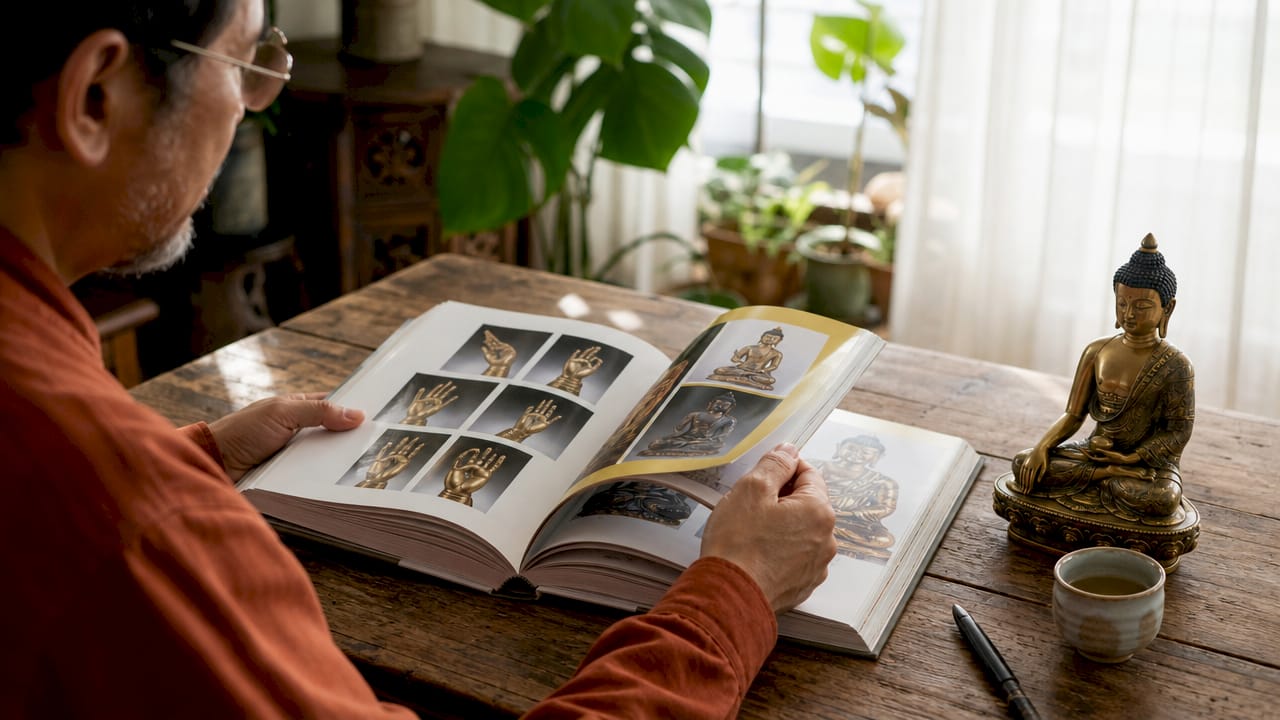
Los curadores profesionales destacan consulta de tradición e iconografía como primer paso antes de cualquier decisión de visualización. Esto significa investigar la tradición específica de la que se origina la obra de arte, ya sea Theravada, Mahayana o Vajrayana, ya que las costumbres de exhibición difieren entre estas escuelas. Consultar una fuente bien informada, un maestro budista, un especialista en museos o una galería acreditada como HDAsianArt le brindará un contexto preciso antes de comprometerse con una ubicación.
Las herramientas físicas para una exhibición respetuosa son sencillas:
- Una base estable y elevada o un altar especialmente diseñado en madera, piedra o acabado lacado.
- Iluminación LED indirecta que evita el daño de los rayos UV y las sombras intensas.
- Paños suaves y sin pelusa para una limpieza regular sin residuos químicos
- Porta incienso o pequeñas bandejas de ofrendas si se pretende un uso ceremonial.
- Un espacio dedicado libre de desorden, tráfico peatonal y objetos no relacionados.
Consejo profesional: Investigue el origen regional de su pieza antes de seleccionar un estilo de exhibición. Un bodhisattva jemer de piedra arenisca de Camboya exige un contexto de presentación diferente al de un buda birmano dorado, y mezclar convenciones regionales sin conciencia crea confusión visual y cultural.
Cómo seleccionar la mejor ubicación y ubicación para el arte budista
La ubicación es la decisión más importante en la presentación del arte budista. Mantener las estatuas de Buda alejadas del suelo y en posiciones limpias y estables se recomienda ampliamente en las tradiciones Theravada, Mahayana y Tibetana. La colocación del suelo indica un estatus bajo y una falta de respeto en la mayoría de las culturas budistas. La obra de arte siempre debe ocupar una posición al nivel de los ojos o por encima cuando esté sentado, que es la postura de visualización estándar durante la meditación o la oración.
Siga esta secuencia al seleccionar una ubicación:
- Identifique la función principal de la habitación. Las salas de meditación, las salas de estar con un rincón dedicado al altar y las áreas de recepción de los estudios califican. Los baños, las cocinas cerca de las superficies para cocinar y los pasillos de mucho tráfico no lo hacen.
- Elija una superficie elevada. Una mesa de altar dedicada, un estante montado en la pared a la altura del cofre o más arriba, o un pedestal especialmente diseñado, todo funciona. La superficie debe estar limpia y estable.
- Evaluar la luz. Iluminación indirecta y pantalla estable. Las áreas respetan tanto el significado cultural como el estado físico de la obra de arte. La luz natural procedente de una ventana orientada al norte es ideal. El sol directo de la tarde provoca decoloración y daños en la superficie con el tiempo.
- Verifique la orientación. En muchas tradiciones Theravada, las imágenes de Buda miran hacia el este, hacia la dirección de la iluminación del Buda. Esta es una preferencia, no una regla absoluta en el hogar, pero vale la pena observarla cuando la distribución de la habitación lo permita.
- Despeje el área circundante. Retire los objetos decorativos, electrónicos y cualquier cosa que compita visual o simbólicamente con la obra de arte que no estén relacionados.
Consejo profesional: Si está trabajando con un estudio de yoga o un espacio de bienestar, el Colocación de una estatua de Buda. al frente de la sala, de cara a los practicantes durante las sesiones, crea un punto focal que refuerza el propósito meditativo del espacio sin requerir una instalación completa del altar.
¿Cuáles son las formas correctas de presentar y cuidar el arte budista?
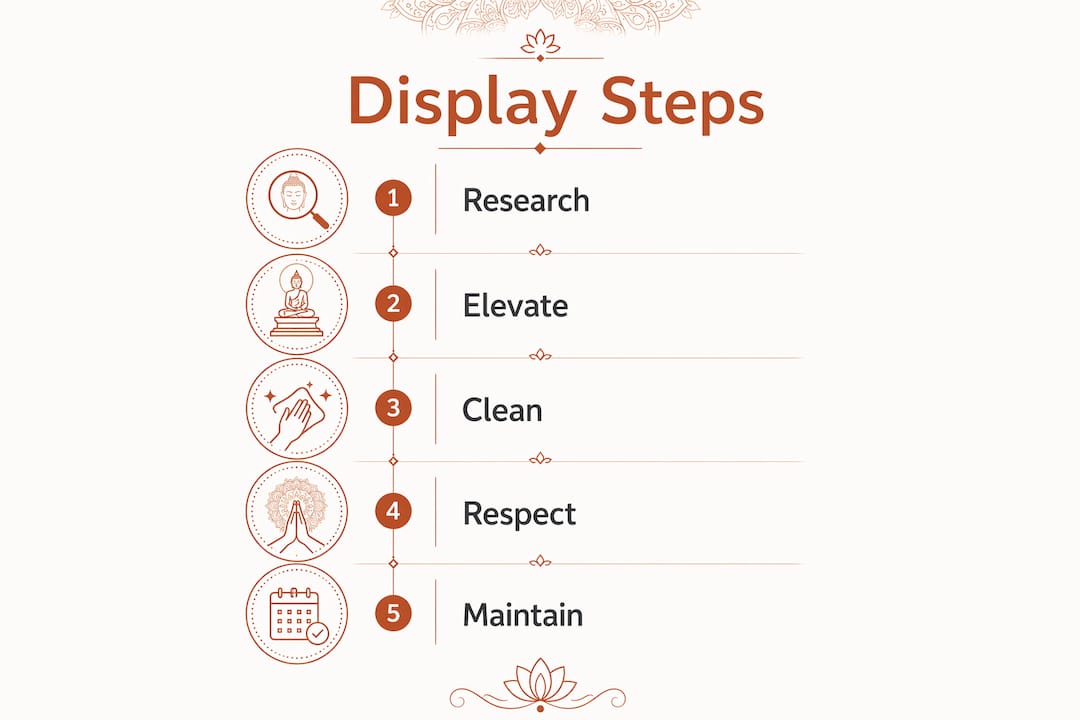
La correcta presentación comienza por la base. Un altar o soporte de exhibición limpio y estable no es negociable. La superficie debajo de la obra de arte debe cubrirse con un material natural, seda, lino o algodón limpio, en lugar de tela sintética o madera desnuda, que puede rayar las bases de piedra o bronce.
La atención regular sigue un protocolo simple:
- Saque el polvo semanalmente con un paño suave y seco. Para las estatuas de bronce, un cepillo de cerdas naturales elimina los residuos de las áreas empotradas sin rayar la pátina.
- Limpiar mensualmente con un paño ligeramente húmedo y sin limpiadores químicos. Los productos agresivos quitan los acabados de laca y corroen las superficies metálicas de las piezas antiguas.
- Evite manipular con las manos desnudas cuando sea posible. Los aceites para la piel aceleran la oxidación del bronce y empañan las superficies doradas. Los guantes de algodón son una práctica habitual para manipular obras antiguas.
- Reemplace las ofertas con regularidad si las usa. Las flores rancias, el incienso quemado o las ofrendas de comida viejas crean una atmósfera de abandono que contradice el propósito de una exhibición respetuosa.
Los profesionales de Harvard FAS CAMLab y LACMA describen El arte budista como entorno experiencial. para la reflexión más que para la mera decoración. Este encuadre tiene importancia práctica. Significa que el espacio alrededor de la obra de arte debe invitar a una pausa, no sólo a la apreciación visual. Un pequeño cojín de meditación, una sola vela o un recipiente con agua fresca colocados frente a una estatua indican un compromiso intencional. Estas adiciones no cuestan nada más que comunicar un respeto genuino.
La distinción entre decoración y devoción también es relevante para los coleccionistas no budistas. No es necesario practicar el budismo para exhibir el arte budista con respeto. Es necesario tratar los objetos como culturalmente significativos y no como accesorios estéticos.
Errores comunes y trampas culturales que se deben evitar
Los errores más frecuentes en la exhibición de arte budista se dividen en categorías predecibles:
- Colocación en suelo. Colocar una estatua de Buda o una pintura sagrada en el suelo se considera una falta de respeto en prácticamente todas las tradiciones budistas. Incluso se debe evitar la colocación temporal del piso durante la reorganización.
- Expositor de baño o cocina. Estos lugares asocian imágenes sagradas con funciones corporales y olores de cocina. Ambos se consideran inapropiados en contextos Theravada y Mahayana.
- Uso únicamente decorativo sin comprensión. El uso de símbolos budistas como mera decoración sin respetar su significado causa una ofensa cultural y es ampliamente considerado como espiritualmente dañino. Una figura sonriente de Budai colocada junto a un mueble bar es un ejemplo común de este error.
- Mezclar arte sacro con objetos inapropiados. Colocar una escultura de Bodhisattva junto a productos comerciales, decoraciones para fiestas o kitsch seculares socava la integridad de la exhibición.
- Ignorando la precisión iconográfica. Mostrar una deidad iracunda Vajrayana en la habitación de un niño, o una escultura de contexto funerario en el espacio de una boda, refleja una falta de comprensión de lo que representa la imagen.
"La falta de respeto a las imágenes religiosas se considera una falta moral y espiritual grave en todas las tradiciones budistas y es culturalmente insensible, independientemente de las creencias personales del espectador".
El desorden también es un problema práctico. Abarrotar una muestra con demasiadas piezas, independientemente de su calidad individual, diluye el impacto visual y espiritual de cada obra. La exposición 'Early Summer Lotus IX' en Vietnam, que presentó 58 obras de arte de 36 artistas a través de laca, óleo, seda y acuarela, tuvo éxito precisamente porque a cada obra se le dio espacio para comunicar su propio significado. El mismo principio se aplica en casa.
¿Cómo se puede integrar el arte budista en el diseño de interiores moderno?
Los interiores modernos y el arte budista son totalmente compatibles cuando la integración es deliberada. La clave es tratar las piezas budistas como puntos focales en lugar de elementos de relleno. Un solo gran Avalokiteshvara de bronce sobre un pedestal de piedra ancla una sala de estar de manera más efectiva que una docena de objetos más pequeños esparcidos por los estantes.
| Contexto de diseño | Enfoque recomendado |
|---|---|
| Interiores minimalistas | Una estatua de piedra o bronce de gran tamaño sobre un pedestal limpio; color de pared neutro detrás |
| Estudio de meditación o yoga. | Altar orientado al este con una única imagen de Buda, iluminación indirecta y materiales naturales. |
| Salón contemporáneo | Pintura montada en la pared o pergamino a la altura de los ojos, enmarcado con espacio negativo |
| Espacio comercial de bienestar | Agrupación curada de dos o tres piezas de la misma tradición regional. |
| Interior tradicional o ecléctico. | Visualización de medios mixtos usando diversos tipos de arte budista con elevación e iluminación consistentes |
La selección de materiales es importante en los contextos modernos. Las piezas de bronce, piedra y madera de Camboya, Tailandia, Indonesia y Sri Lanka tienen un peso visual inherente que fundamenta los espacios contemporáneos. Los medios más ligeros, las pinturas en seda, los rollos de acuarela y los paneles de laca funcionan bien en habitaciones donde una escultura pesada abrumaría la escala. comprensión Estilos de Buda tailandés o las convenciones escultóricas Theravada le ayudan a hacer coincidir el registro visual de la obra de arte con el carácter de la habitación.
Consejo profesional: Al encargar o comprar para un cliente, consulte a HDAsianArt o una galería especializada comparable antes de finalizar una selección. La procedencia, la precisión iconográfica y la autenticidad material afectan tanto la idoneidad cultural como el valor a largo plazo de la pieza.
Conclusiones clave
La exhibición respetuosa del arte budista requiere una ubicación elevada, conocimiento iconográfico y un ambiente limpio e intencional para honrar tanto el significado cultural como la función espiritual.
| Punto | Detalles |
|---|---|
| Colocación sobre el nivel del suelo. | Coloque siempre el arte budista en una superficie elevada y estable al nivel de los ojos de una persona sentada o por encima de ella. |
| Iconografía antes de la colocación. | Investigue los mudras, la postura y la tradición regional antes de decidir dónde y cómo exhibir una pieza. |
| Entorno limpio y minimalista. | Retire el desorden y los objetos no relacionados; el espacio alrededor de la obra de arte comunica tanto como la obra de arte misma. |
| Evite ubicaciones inapropiadas | Los baños, las cocinas y las posiciones a nivel del suelo se consideran universalmente una falta de respeto en todas las tradiciones budistas. |
| Consultar especialistas | HDAsianArt y galerías comparables brindan procedencia, contexto iconográfico y orientación de exhibición para piezas auténticas. |
Lo que me han enseñado años de trabajo con el arte budista
La mayoría de los errores de visualización que veo no son maliciosos. Provienen de tratar el arte budista de la misma manera que la gente trata cualquier objeto decorativo: encuentra un lugar, déjalo y sigue adelante. El problema es que un Bodhisattva de bronce de Camboya del siglo XII no es un objeto decorativo. Fue hecho para una función ritual específica, en una tradición iconográfica específica, para una comunidad específica. Ignorar esa historia no la borra.
Los coleccionistas y diseñadores que lo hacen bien comparten un hábito: reducen el ritmo. Leen sobre la pieza antes de colocarla. Preguntan de dónde viene, qué tradición representa y qué significa el gesto o expresión. Esa investigación lleva una hora. La exhibición dura años.
La simplicidad también se subestima constantemente. Una pieza bien elegida sobre una superficie limpia y con buena iluminación siempre supera a un altar lleno de gente. el Tradición escultórica Theravada, por ejemplo, premia la moderación tanto en la forma como en la presentación. Vale la pena honrar esa moderación en la forma en que exhibe el trabajo.
El valor espiritual y el valor estético del arte budista no están en competencia. Cuando exhibes una pieza con atención genuina a su significado, la habitación refleja esa atención. Los visitantes lo notan, incluso cuando no pueden nombrar a qué están respondiendo.
-Jaime, HDAsianArt.com
Explora el auténtico arte budista en HDAsianArt
HDAsianArt ofrece una colección curada de estatuas, esculturas y arte de templos budistas antiguos y tradicionales de Camboya, Tailandia, Indonesia, Sri Lanka, Vietnam y más allá. Cada pieza es investigada, fotografiada y descrita individualmente por especialistas con conocimiento directo de las tradiciones iconográficas regionales.
Para coleccionistas y diseñadores de interiores que buscan auténticas estatuas budistas Con procedencia verificada y guía de exhibición experta, HDAsianArt proporciona envío DHL asegurado a todo el mundo y documentación con calidad de museo para cada obra. Explore la colección completa para encontrar piezas que se alineen con su espacio, las necesidades de sus clientes y los estándares culturales que describe este artículo.
Preguntas frecuentes
¿Qué significa exhibir respetuosamente el arte budista?
Una exhibición respetuosa significa colocar el arte budista en un lugar limpio y elevado, comprendiendo su significado iconográfico, lejos de espacios inapropiados como baños o pisos. El objetivo es honrar el significado cultural y espiritual de la pieza en lugar de tratarla como una decoración genérica.
¿Dónde debería colocarse una estatua de Buda en casa?
Una estatua de Buda debe colocarse en una superficie elevada al nivel de los ojos de una persona sentada o por encima de ella, en un área limpia y tranquila, como un rincón de meditación o el altar de la sala de estar. La ubicación del piso y del baño se considera una falta de respeto en la mayoría de las tradiciones budistas.
¿Necesito ser budista para exhibir arte budista con respeto?
No. La exhibición respetuosa requiere conciencia cultural y ubicación intencional, no práctica religiosa personal. Comprender la iconografía, mantener la limpieza y evitar ubicaciones inapropiadas son prácticas que cualquier coleccionista o diseñador puede seguir.
¿Cómo puedo conocer la iconografía de una estatua budista antes de exhibirla?
Investiga el mudra, la postura y la tradición regional de la pieza utilizando recursos especializados. HDAsianArt proporciona descripciones iconográficas detalladas de cada obra y guías sobre Simbolismo del bodhisattva y la expresión facial ofrecen puntos de partida prácticos para tomar decisiones de visualización informadas.
¿Se puede integrar el arte budista en un interior moderno sin resultar irrespetuoso?
Sí. Los interiores modernos se adaptan bien al arte budista cuando las piezas se tratan como puntos focales con un espacio dedicado, una iluminación adecuada y un entorno limpio. La clave es la intencionalidad: una pieza bien colocada y bien entendida comunica más respeto que una disposición abarrotada de objetos que no coinciden.
Recomendado
- Arte raro de relicario budista: ejemplos para coleccionistas – Arte asiático en HD
- Cómo almacenar de forma segura una escultura budista de piedra antigua – Arte asiático HD
- Escultura budista Theravada explicada para estudiosos del arte – HD Asian Art
- Arte asiático HD | Arte asiático antiguo | Estatuas budistas | Esculturas Hindúes
