


Fecha del arte budista tailandés: 6 marcadores visuales para coleccionistas
Fecha del arte budista tailandés: 6 marcadores visuales para coleccionistas
El budismo entró en Tailandia a través de las comunidades Mon-Dvāravatī en el siglo VI y se consolidó en la práctica Theravada con fuertes vínculos con Sri Lanka en el período Sukhothai. Cada época dejó huellas visuales distintas: los relieves del Dharmachakra de Dvāravatī, la aureola de llamas y el Buda andante de Sukhothai, los bronces realzados de Ayutthaya.
Este artículo recorre esa línea de tiempo, los marcadores estilísticos que permiten a los investigadores fechar una pieza a la vista, los materiales y técnicas detrás de la producción, y las preguntas sobre procedencia que cualquier coleccionista serio necesita responder.
Características clave:
- La mayor parte del arte budista tailandés se puede datar con precisión mediante marcadores estilísticos específicos, como la aureola de llama en Sukhothai y las influencias jemeres en las obras de Lopburi.
- Las esculturas de bronce utilizan predominantemente fundición a la cera perdida, con marcas de herramientas, costuras y materiales centrales que sirven como pistas de autenticación para pintar el origen y el período de una pieza.
- El lenguaje visual de las imágenes de Buda (postura, mudras, halos y figuras que lo acompañan) conlleva significados doctrinales y políticos detallados que ayudan en la identificación del período.
- Las variaciones regionales reflejan esferas de influencia histórica, con estilos Lanna del norte, piezas del noreste con influencia jemer y talleres del centro de Tailandia que combinan características e influencias comerciales.
- La procedencia, los permisos de exportación documentados y el análisis técnico son esenciales para autenticar y recolectar legalmente objetos budistas tailandeses, que también están profundamente arraigados en un simbolismo religioso y político ancestral.
Tabla de contenidos
- La historia del budismo en Tailandia: una cronología período por período
- Leyendo los estilos: cómo luce realmente cada período budista tailandés
- Una guía práctica sobre posturas, mudrās y símbolos budistas tailandeses
- Fundición, tallado y evidencia física detrás de las citas
- Dónde ver la evidencia: templos, sitios y colecciones de museos
- Monarquía, reforma monástica y la política detrás de las imágenes
- Procedencia, reglas de exportación y autenticación para coleccionistas serios
- Raíces animistas e hindúes bajo la superficie budista
- En qué se diferencia el arte budista en las regiones de Tailandia
- Festivales, rituales y las imágenes que dieron forma
- Contacto colonial y mirada occidental sobre el arte budista tailandés
- Una visión editorial sobre la lectura de los objetos budistas como patrimonio vivo
- Fuentes
La historia del budismo en Tailandia: una cronología período por período
La historia del arte budista de Tailandia no comienza con un reino unificado. Comienza con ciudades-estado dispersas, potencias regionales en competencia y siglos de lenta absorción religiosa antes de que surja algo parecido a un estilo “tailandés”. Comprender esa secuencia es más importante que memorizar fechas, porque cada cambio político produjo un cambio correspondiente en la forma en que se representó al Buda en piedra, bronce y estuco.
La fase institucional más temprana es Mon-Dvāravatī, que a menudo data del siglo VI al XI. Los sitios Dvāravatī agrupados alrededor de Nakhon Pathom produjeron relieves de piedra y Ruedas de la Ley talladas con una franqueza que refleja Las influencias indias Gupta y Amaravati llegan a través de rutas comerciales y de peregrinación.. No se trataba tanto de un reino único como de una red de centros de habla mon vagamente unidos por instituciones religiosas compartidas, y la datación del período suele situarse entre los siglos VII y XI, según el lugar.
Más al sur y al oeste, la influencia marítima de Srivijayan trajo a escena las corrientes Mahayana, superponiendo imágenes del bodhisattva sobre la base Theravada ya presente en el centro de Tailandia. Alrededor de Lopburi, el dominio político y artístico jemer introdujo figuras más pesadas y arquitectónicas con la mandíbula cuadrada y el tratamiento de diadema familiar de la escultura angkoriana. En el norte, la tradición de Chiang Saen (que más tarde se fusionó en lo que los estudiosos llaman la escuela Lanna) desarrolló su propio lenguaje, produciendo a menudo budas sentados con caras más redondas y un torso más compacto que sus homólogos del centro de Tailandia.
El verdadero punto de inflexión llega con Sukhothai. Fundado en 1238, el reino absorbió directamente la práctica monástica de Sri Lanka. Las fuentes históricas describen la llegada de monjes de Sri Lanka alrededor de 1277, y la posterior adopción de los linajes de ordenación Lankavamsa remodelaron tanto la autoridad religiosa como el patrocinio artístico. Los escultores de Sukhothai hicieron algo que ningún taller tailandés anterior había logrado: crearon una imagen de Buda sin ningún prototipo directo indio o jemer. Esa síntesis original es la razón por la que los historiadores del arte habitualmente llaman a Sukhothai una edad de oro en lugar de simplemente una escuela regional competente.
Le siguió Ayutthaya, absorbiendo el marco religioso de Sukhothai pero redirigiendo el programa visual hacia la exhibición real. Los complejos de templos se hicieron más grandes y cosmopolitas, lo que refleja un reino que comerciaba con Persia, China, Japón y, finalmente, con las potencias europeas. Las imágenes de Buda de este período suelen llevar coronas ornamentales y fajines elaborados, un lenguaje visual tomado directamente de la ceremonia de la corte.
El período Rattanakosin, que comenzó en 1782 bajo Rama I, conservó y reformó lo que había antes. Las reformas del rey Mongkut a mediados del siglo XIX, que se analizan más adelante, introdujeron una estética más estricta y menos ornamentada en algunos contextos monásticos, incluso cuando el patrocinio real seguía encargando grandes obras devocionales.
Algunos marcadores estructurales ayudan a orientar toda la secuencia:
- Lun-Dvāravatī (siglos VI-XI): relieves en piedra, motivos de Dharmachakra, modelado facial derivado de Gupta
- Srivijaya/Lopburi (siglos VIII-XIII): Imágenes del bodhisattva mahayana en el sur, bronces con influencia jemer en el centro
- Chiang Saen/Lanna (siglos XI-XVI): caras norteñas redondeadas, posturas sentadas compactas
- Sukhothai (siglos XIII-XV): aureola de llama, Buda andante, consolidación de Lankavamsa Theravada
- Ayutthaya (siglos XIV-XVIII): ornamentación real, programas de templos cosmopolitas
- Rattanakosin (1782-presente): moderación de la era de la reforma junto con comisiones reales continuas
Leyendo los estilos: cómo luce realmente cada período budista tailandés
La atribución en el arte budista tailandés se reduce a leer consistentemente un puñado de señales formales. Una vez que sabes qué buscar, una pieza anuncia su época casi antes de que consultes una sola fotografía de referencia.
1. Convenciones de la piedra Dvāravatī. Los escultores Dvāravatī trabajaron principalmente en relieves de piedra y estuco en lugar de bronce independiente. El Dharmachakra, o Rueda de la Ley, aparece repetidamente, a menudo montado sobre un pilar y flanqueado por ciervos para señalar el primer sermón en Sarnath. El tratamiento facial tiende hacia rasgos amplios y algo aplanados, labios gruesos y una expresión serena pero estática. El Buda sentado en este período rara vez muestra la musculatura dinámica que favorecen los períodos posteriores.
2. Divergencia entre Srivijaya y Lopburi. El trabajo de Srivijayan del Sur se apoya en gran medida en figuras de bodhisattvas, particularmente Avalokiteshvara, lo que refleja las corrientes Mahayana que se mueven a través de las redes comerciales marítimas. El trabajo de Lopburi en el centro de Tailandia, por el contrario, muestra inconfundibles paralelos jemeres: caras cuadradas, cejas marcadas y diademas o coronas que marcan el estatus real o divino. Mientras que el arte Dvāravatī se siente devocional y comunitario, el arte de Lopburi se siente arquitectónico y político.
3. Firma morfológica de Sukhothai. Este es el período que todo investigador serio aprende a identificar instantáneamente. El Buda de Sukhothai presenta una cara ovalada, cejas arqueadas, una nariz aguileña y una sonrisa pequeña y serena que evita la rigidez de los estilos regionales anteriores. La aureola de llama (un remate ushnisha que se eleva hasta convertirse en una llama estilizada) se convierte en un marcador definitorio, junto con los lóbulos de las orejas alargados y el cabello muy rizado. Los talleres de Sukhothai también dieron origen al Buda andante, una postura sin precedentes en el mundo budista, que muestra la figura a medio paso con un talón levantado y las cortinas cayendo en pliegues rítmicos, casi líquidos. Los académicos llaman a ésta una edad de oro no por el volumen de producción sino porque representa Síntesis cultural genuina: fundamentos iconográficos indios reelaborados en algo claramente tailandés, en lugar de una variante regional derivada de un prototipo indio o jemer.
4. Rasgos transicionales de U Thong. El estilo U Thong une el trabajo de Lopburi con influencia jemer y el idioma emergente de Ayutthaya. Espere una cara más cuadrada que la de Sukhothai, una banda más pronunciada en la línea del cabello y túnicas que se ajustan más al cuerpo que el fluido tratamiento de Sukhothai.
5. Registro real de Ayutthaya. Los escultores de Ayutthaya heredaron la tipología básica de Buda de Sukhothai, pero con atributos reales: coronas, collares con joyas y fajas ornamentales extraídas directamente de la vestimenta de la corte. La escala también aumentó, con imágenes monumentales destinadas a grandes salones de templos y ceremonias estatales en lugar de devoción íntima.
6. Continuidad y moderación del Rattanakosin. Las primeras esculturas de Rattanakosin continuaron las tendencias ornamentales de Ayutthaya, pero la producción de la era de la reforma bajo el rey Mongkut introdujo tratamientos más simples en algunos contextos monásticos, un cambio que se analiza con más detalle en la sección sobre contexto religioso y político a continuación.
La comparación de estos rasgos con estudios académicos más amplios sobre la escultura budista tailandesa confirma la misma secuencia básica, aunque los estudios de museos primarios siguen siendo la fuente más confiable para una datación precisa.
Una guía práctica sobre posturas, mudrās y símbolos budistas tailandeses
Las posturas y los gestos con las manos conllevan un significado doctrinal específico, y conocerlos en frío es la forma más rápida de fechar e interpretar una imagen sin etiqueta.
- Bhumisparśa mudrā (tocar la tierra): la mano derecha se extiende hacia el suelo, invocando a la tierra como testigo de la iluminación. Extremadamente común en Sukhothai y en producción posterior.
- Vitarka mudra (gesto de enseñanza): el pulgar y el índice forman un círculo, señalando un discurso o explicación. Frecuente en figuras de Sukhothai de pie.
- Dharmachakra mudra (girando la rueda): ambas manos forman círculos entrelazados cerca del pecho, haciendo referencia al primer sermón. Un motivo característico de Dvāravatī.
- Pralambapadāsana (postura sentada con las piernas colgantes): ambos pies descansan en el suelo en lugar de estar doblados, una postura fuertemente asociada con las primeras imágenes reales o de enseñanza de Dvāravatī.
- Postura reclinada: Representa el parinirvana, el fallecimiento final de Buda, y aparece en cada período, aunque con diferentes escalas y escenarios.
Las formas de halo y aureola transmiten su propia señal. Un halo circular simple generalmente apunta a talleres regionales anteriores o más conservadores, mientras que el remate de llama alargada que se eleva sobre el ushnisha está cerca de una firma de Sukhothai y sus descendientes estilísticos directos. Los trabajos posteriores de Ayutthaya y Rattanakosin a veces exageran la llama hasta convertirla en una aguja más alta y ornamentada, lo que refleja el gusto de la época por la exhibición real sobre la elegancia sobria de la forma original de Sukhothai.
Las figuras asistentes añaden otra capa de significado. Las imágenes de Nāga (deidad serpiente) con frecuencia enmarcan al Buda en un papel protector, haciendo referencia a la historia de Mucalinda protegiendo al Buda meditando de una tormenta. Las figuras de Devas, extraídas de la cosmología hindú y absorbidas en el lenguaje visual budista, a menudo flanquean escenas de donaciones reales o aparecen en paneles narrativos en relieve que representan la historia de vida de Buda. Estas superposiciones brahmánicas no son ideas decorativas de último momento. Como se señala en los estudios sobre el período, la iconografía híbrida brahmánico-budista, como la representación de un rey como cakravartin (gobernante universal) junto con motivos budistas, cumplió funciones explícitas de arte de gobernar y debe leerse en su contexto político en lugar de tratarse como un ornamento genérico.
Consejo profesional: Cuando no puedas colocar inmediatamente una pieza solo por la cara, revisa los pies. La colocación del pie en la postura sumisa de Mara, junto con el patrón de rizo y la forma de aureola, tiende a considerarse un indicador del período más confiable que la expresión facial, que la erosión y la restauración posterior pueden distorsionar.
Fundición, tallado y evidencia física detrás de las citas
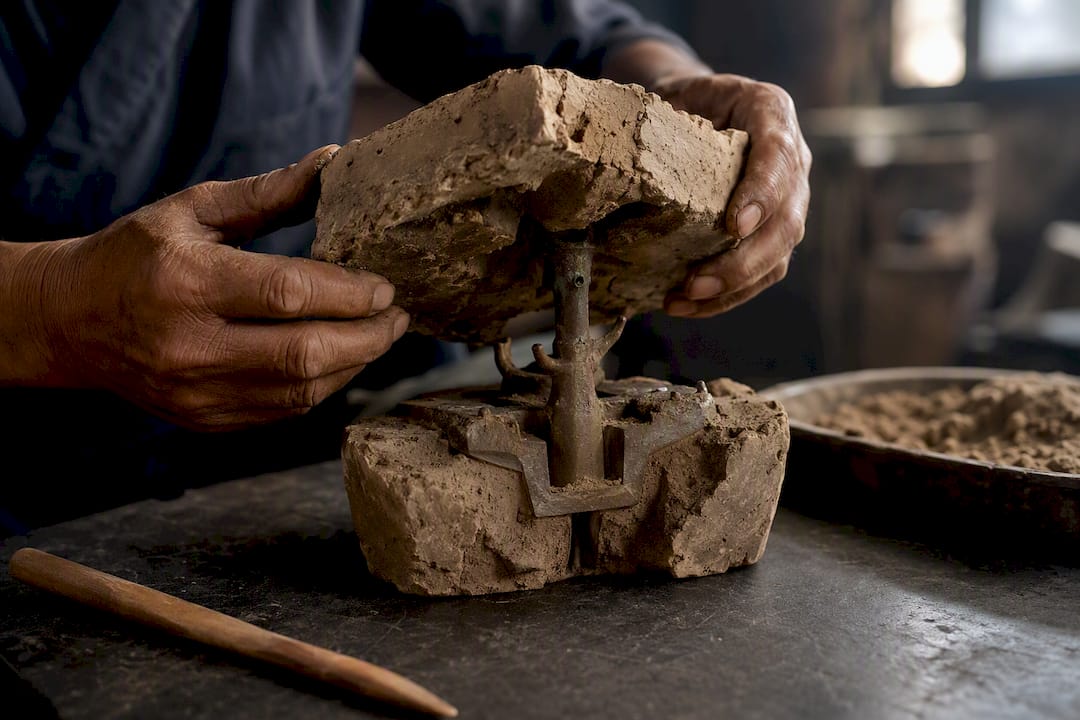
El bronce sigue siendo el medio dominante para la escultura budista tailandesa portátil, y casi todo se produjo mediante fundición a la cera perdida. Un modelo de cera, construido sobre un núcleo de arcilla, se encaja en otro molde de arcilla. El calor derrite la cera, el bronce fundido llena el vacío y el molde se rompe para revelar la figura terminada. La práctica del taller deja costuras reveladoras, bebederos de fundición y, a veces, material central retenido dentro de figuras huecas más grandes, todo lo cual los especialistas examinan al evaluar la autenticidad y el origen regional.
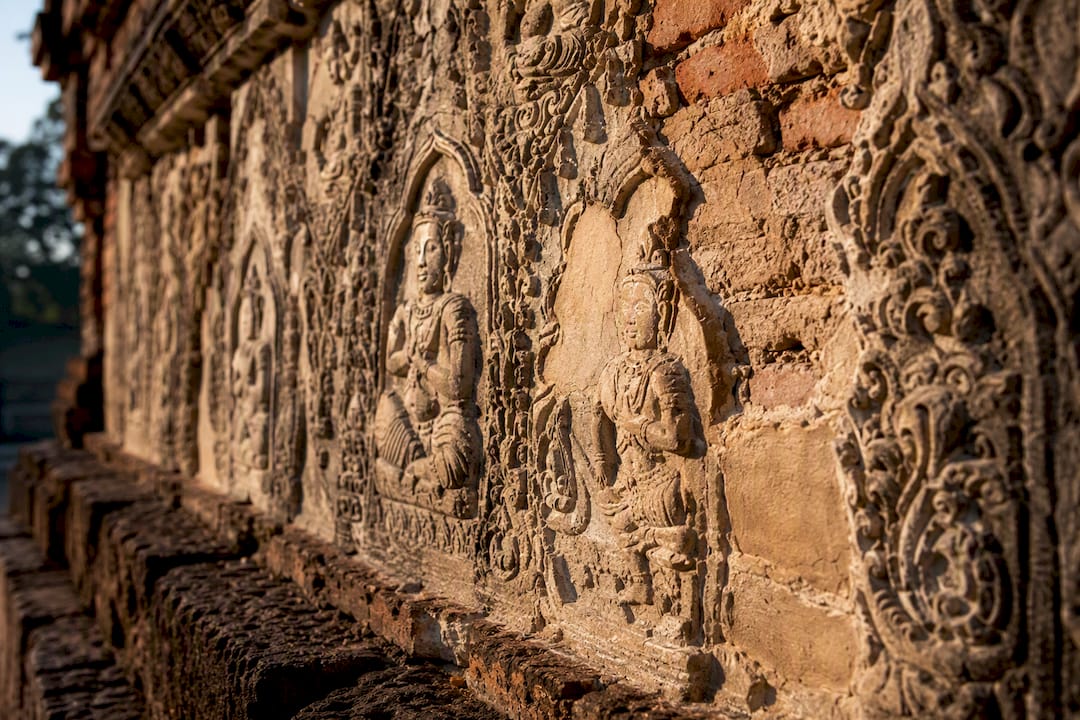
El tallado en piedra, dominante en el período Dvāravatī anterior, y la construcción de estuco sobre ladrillo, común en el exterior de los templos en múltiples períodos, presentan diferentes desafíos de diagnóstico. Las marcas de herramientas, la profundidad del tallado en relieve y el ladrillo subyacente o el núcleo de laterita ayudan a ubicar una pieza dentro de su era de producción. La decoración de estuco se desgasta de manera desigual y los retoques modernos y pesados a menudo muestran una falta de coincidencia de color o textura bajo la luz rasante.
La pintura mural siguió sus propias convenciones, generalmente aplicada a las paredes enlucidas de los templos utilizando pigmentos minerales unidos en medios locales, con ciclos narrativos que representan las vidas anteriores de Buda (los cuentos de Jataka) junto con diagramas cosmológicos.
Algunas pistas materiales en las que confían tanto los conservadores como los coleccionistas:
- Consistencia de la pátina en una superficie de bronce, ya que la pátina desigual o inducida artificialmente a menudo indica una reproducción moderna.
- Material del núcleo que queda dentro de las figuras huecas, útil para pruebas de termoluminiscencia o radiocarbono cuando sea accesible
- Profundidad y regularidad de las marcas de herramientas en el tallado en piedra, que varía significativamente entre piezas antiguas trabajadas a mano y copias modernas terminadas mecánicamente.
- Composición de pigmentos en murales, que a veces puede compararse con paletas de época conocidas.
Ninguno de estos controles funciona de forma aislada. Las atribuciones más fuertes combinan el análisis material con la lectura estilística y, dondequiera que exista, la historia de procedencia documentada.
Dónde ver la evidencia: templos, sitios y colecciones de museos
El estudio de primera mano siempre supera a las fotografías, y los principales sitios de Tailandia siguen siendo las mejores aulas disponibles para la atribución de períodos.
- Nakhon Pathom Conserva el material central de Dvāravatī, incluidos los relieves de piedra de Dharmachakra característicos de la región discutidos anteriormente.
- Parque histórico de Sukhothai ofrece acceso directo al Buda andante y a la tradición de la aureola de llamas en su entorno arquitectónico original, junto a las ruinas de Wat Mahathat.
- Los complejos de templos de Ayutthaya, en particular Wat Phra Si Sanphet y Wat Chaiwatthanaram, muestran la tradición real de bronce y estuco a escala monumental.
- Wat Chedi Luang y Wat Suan Dok en Chiang Mai ilustran la centralidad monástica de Lanna, con La construcción chedi original de Wat Chedi Luang que data de 1391 y las ampliaciones reales posteriores refuerzan su papel como ancla cosmológica de la ciudad..
- Los templos de Rattanakosin en Bangkok, incluido Wat Phra Kaew, demuestran la continuidad y los ajustes de la era de las reformas que se analizan en la sección de contexto político a continuación.
Los estudios occidentales sobre este material tienen una deuda considerable con la historia de las exposiciones del siglo XX. el La exposición itinerante de 1960 "Las artes de Tailandia" presentó al público estadounidense material que anteriormente había circulado principalmente en colecciones institucionales y reales tailandesas., y gran parte del material superviviente de mayor calidad sigue concentrado en los propios museos nacionales de Tailandia y no en instituciones occidentales. Los investigadores que trabajan fuera de Tailandia deberían tratar los ensayos del catálogo de la historia de esa exposición, junto con los estudios posteriores del museo, como un punto de partida y no como un sustituto del examen directo cuando el acceso lo permita.
Monarquía, reforma monástica y la política detrás de las imágenes
Las imágenes budistas en Tailandia nunca funcionaron puramente como arte devocional. Funcionó como una herramienta de legitimidad estatal desde los primeros períodos institucionales en adelante.
El patrocinio real utilizó constantemente la iconografía budista para enmarcar la realeza en términos cosmológicos. La representación recurrente de un gobernante como cakravartin, un monarca budista universal, dio a la autoridad política una base religiosa que sobrevivió a cualquier dinastía. Las comisiones de los templos funcionaron tanto como declaraciones públicas de legitimidad como actos de piedad, lo que explica por qué la escala y la ornamentación tienden a aumentar durante los períodos de consolidación política, de manera más visible en los grandes programas de los templos de Ayutthaya.
El siglo XIX trajo consigo una reforma genuinamente disruptiva. El rey Mongkut, que pasó décadas como monje antes de ascender al trono en 1851, fundó la orden Thammayut para corregir lo que consideraba laxitud doctrinal y exceso ritual dentro de la práctica monástica existente. Esa reforma repercutió directamente en el arte y la arquitectura:
- Los templos de Thammayut generalmente preferían salas de ordenación más simples a las construcciones de estilo Ayutthaya muy ornamentadas.
- La centralización de la sangha bajo Mongkut y sus sucesores estandarizó los linajes de ordenación, que a su vez estandarizaron ciertos tipos de imágenes asociadas con la práctica reformada.
- El patrocinio real continuó junto con la reforma, lo que significa que grandes encargos devocionales y una austera arquitectura monástica coexistieron en lugar de que uno reemplazara al otro.
El resultado es un período de Rattanakosin que se lee estilísticamente estratificado en lugar de unificado, lo que refleja una tensión genuina entre la moderación reformista y la continua exhibición real.
Procedencia, reglas de exportación y autenticación para coleccionistas serios
La ley tailandesa generalmente exige permisos para la exportación de imágenes de Buda, y su aplicación varía significativamente según la jurisdicción y la clasificación del objeto. El trabajo académico sobre el tema señala que La procedencia documentada y la certificación de exportación adecuada son lo que separan las transacciones legítimas de las legalmente expuestas., y esa brecha en la documentación es precisamente donde se originan la mayoría de las disputas sobre cobranza.
La autenticación se basa en evidencia estratificada y no en una prueba única. Las inscripciones, cuando están presentes, ofrecen la evidencia de datación más directa. El análisis metalúrgico de la composición de la aleación de bronce puede ayudar a ubicar una pieza fundida dentro de un rango de período plausible. El análisis de pátina, examinado junto con marcadores de conocimiento como el patrón de rizo y la colocación del pie en posturas sometidas de Mara, completa una atribución razonable. Ningún método debería conllevar por sí solo una decisión de compra.
Esté atento a un conjunto constante de señales de alerta:
- “Hallazgos recientes” indocumentados sin cadena de propiedad
- Trámites que cambian o se contradicen entre la consulta inicial y la venta final.
- Presión para completar una transacción fuera de los canales oficiales de exportación
- Vendedores que no estén dispuestos a proporcionar fotografías detalladas de detalles de construcción, costuras o patrones de desgaste.
Las galerías de renombre se encargan de esto documentando cada pieza individualmente, desde la fotografía hasta la historia de su procedencia, antes de que llegue al comprador. Vale la pena comparar ese estándar con el de HD Asian Art. guía para datar imágenes antiguas de Buda tailandés, que recorre los mismos marcadores visuales descritos anteriormente con más detalles específicos para los coleccionistas.
Consejo profesional: Solicite imágenes de alta resolución de la base, la cavidad interior si es hueca y cualquier inscripción antes de realizar una compra. Los vendedores acreditados ofrecen esto sin dudarlo; Los vendedores que se resisten te están diciendo algo.
Raíces animistas e hindúes bajo la superficie budista
La iconografía budista tailandesa nunca se desarrolló aislada de los sistemas de creencias animistas e hindúes que ya estaban presentes en la región antes de la llegada del budismo. Las casas de espíritus, todavía omnipresentes fuera de los hogares y negocios tailandeses en la actualidad, reflejan un marco animista prebudista que el budismo absorbió en lugar de reemplazar.
Las deidades hindúes entraron en el vocabulario visual mediante un proceso similar de acomodación. Brahma, Vishnu y, en particular, Indra aparecen regularmente en los ciclos de murales de los templos y como figuras guardianas en las entradas de los templos, coexistiendo con contenido narrativo explícitamente budista en el mismo espacio arquitectónico. El naga, una deidad serpiente con profundas raíces en la tradición animista e hindú regional, se convirtió en uno de los motivos protectores más persistentes del budismo tailandés, siendo el más famoso el que protegió al Buda meditando en el episodio de Mucalinda descrito anteriormente.
El ritual real absorbió esta síntesis de manera más visible. Las ceremonias de coronación y los ritos budistas estatales en Tailandia han incorporado históricamente a sacerdotes brahmánicos que realizan rituales junto con monjes budistas, una pareja que refleja siglos de acomodación más que contradicción doctrinal. Esta estratificación explica por qué un solo complejo de templos puede contener un santuario a un espíritu local, una estatua guardiana de origen hindú y una imagen de Buda en el mismo recinto amurallado sin ningún sentido de conflicto. Comprender esta superposición es importante para cualquiera que lea literalmente el arte budista tailandés, ya que un marco budista puramente doctrinal omite la mitad de lo que las imágenes realmente comunican.
En qué se diferencia el arte budista en las regiones de Tailandia
La diversidad regional de Tailandia produjo dialectos artísticos genuinamente distintos en lugar de un estilo nacional uniforme, y esa variación sigue estrechamente las esferas históricas de influencia descritas anteriormente.
La tradición Lanna del norte de Tailandia, centrada en Chiang Mai, conservó un tratamiento facial más redondo y proporciones corporales más compactas que el trabajo tailandés central, lo que refleja vínculos culturales más estrechos con Birmania y Laos que con el centro de influencia jemer. El noreste de Tailandia, históricamente dentro de la esfera cultural jemer, produjo esculturas con rasgos cuadrados y peso arquitectónico típicos de las obras del período Lopburi, y las torres prasat de estilo jemer todavía salpican el paisaje nororiental como evidencia física de esa influencia.
El centro de Tailandia, hogar de Dvāravatī, Ayutthaya y, finalmente, Bangkok, se convirtió en el centro estilístico dominante simplemente gracias a un poder político sostenido, lo que significó que los talleres reales allí marcaron las tendencias que las escuelas regionales a menudo adaptaron y no al revés. La proximidad del sur de Tailandia a las rutas comerciales marítimas mantuvo viva la influencia de Srivijayan Mahayana durante más tiempo que en el centro dominante Theravada, produciendo imágenes de bodhisattva asociadas a bodhisparśa que no tienen paralelo real más al norte.
Ninguna de estas escuelas regionales existía en estricto aislamiento. El comercio, las peregrinaciones y el control político cambiante movieron constantemente a artesanos, mecenas y objetos terminados a través de fronteras, razón exacta por la cual una sola colección puede contener piezas que combinan características de dos tradiciones regionales supuestamente separadas. Interpretar correctamente la variación regional significa tratar estos límites como porosos en lugar de fijos.
Festivales, rituales y las imágenes que dieron forma
La cultura visual budista tailandesa se desarrolló de la mano de un calendario ritual en evolución, y varios festivales importantes dejaron huellas directas en el arte del templo y la producción de imágenes.
Visakha Bucha, que conmemora el nacimiento, la iluminación y la muerte de Buda en un solo día, generó una demanda de paneles narrativos en relieve y ciclos de murales que representaran los tres eventos en secuencia, un desafío compositivo que aparece repetidamente en la decoración de los templos desde Sukhothai en adelante. Kathin, la ceremonia anual de ofrenda de túnicas que marca el final del retiro del monzón, reforzó la tradición de donar objetos físicos, incluidas nuevas imágenes de Buda, a los templos, lo que explica en parte el gran volumen de esculturas devocionales producidas a lo largo de siglos de práctica continua.
Songkran, el festival del Año Nuevo tailandés, incorpora el baño ritual de las imágenes de Buda, una práctica que dio forma al diseño de ciertas imágenes portátiles destinadas a ser procesadas y manipuladas en lugar de exhibidas como centros de mesa fijos del templo. Ese requisito funcional, una imagen construida para un manejo ritual en lugar de una veneración estática, a veces explica elecciones proporcionales y materiales que de otro modo parecen inusuales en comparación con las normas de la época.
Tratar estos objetos estrictamente como especímenes de la historia del arte pierde su vida funcional. Imágenes, murales y relicarios budistas operados dentro de economías rituales activas, no como decoración congelada en un solo momento. Una imagen procesional de Buda y la estatua devocional central de un templo pueden compartir un período y un estilo al mismo tiempo que cumplen funciones rituales completamente diferentes, y esa distinción es importante para cualquiera que intente leer correctamente el propósito original de un objeto.
Contacto colonial y mirada occidental sobre el arte budista tailandés
El estatus de Tailandia como única nación del sudeste asiático que evita la colonización europea directa le da a su historia del arte una trayectoria genuinamente diferente a la de sus vecinos, aunque el contacto occidental aún dejó una huella mensurable.
Los contactos diplomáticos y comerciales del siglo XIX bajo Rama IV y Rama V hicieron que las convenciones artísticas europeas tuvieran un contacto limitado con los encargos reales tailandeses, ocasionalmente visibles en técnicas de perspectiva o detalles arquitectónicos en los murales posteriores del templo de Rattanakosin. Esta influencia siguió siendo selectiva más que transformadora. La escultura religiosa tailandesa nunca adoptó las convenciones figurativas europeas de la misma manera que algunas tradiciones vecinas absorbieron la presión artística de la era colonial.
El impacto occidental más significativo llegó más tarde, a través de la erudición y las exhibiciones más que de la administración colonial. El interés académico del siglo XX, analizado anteriormente en relación con la exposición itinerante de 1960, estableció el marco que los museos y universidades occidentales todavía utilizan para categorizar y fechar el arte budista tailandés. Esa erudición aportó un verdadero rigor analítico, pero también importó sistemas de categorización desarrollados por observadores externos, que en ocasiones aplanaron los matices regionales que los propios académicos tailandeses habían entendido con mayor precisión durante generaciones. La historia del arte moderno corrige cada vez más ese desequilibrio ponderando los estudios institucionales tailandeses, incluido el propio trabajo histórico del Departamento de Bellas Artes, junto con fuentes académicas occidentales, en lugar de tratar los ensayos de catálogos occidentales como la autoridad por defecto.
Una visión editorial sobre la lectura de los objetos budistas como patrimonio vivo
Demasiados escritos sobre el arte budista tailandés lo tratan como un tema académico cerrado: fechas, estilos, hecho. Ese encuadre pasa por alto lo que realmente le importa a cualquiera que pase tiempo real con estos objetos. Un bronce de Sukhothai no es un espécimen congelado en una taxonomía. Es el residuo físico de las manos de un taller específico, de la vida ritual de un monasterio específico y, en la mayoría de los casos que se conservan, de décadas o siglos de uso devocional continuo antes de llegar a una colección.
HD Asian Art documenta piezas con ese contexto en mente: fotografía individual, investigación de procedencia y descripción honesta del estado y el historial de reparación, en lugar de un lenguaje de catálogo genérico. La alfabetización iconográfica no es un lujo para los coleccionistas. Es la diferencia entre comprar un objeto decorativo y comprender lo que realmente tienes. Cualquiera que cree una colección seria debe tratar las fuentes primarias y los catálogos institucionales, varios de los cuales aparecen a continuación, como material de referencia continuo en lugar de algo que se consulta una vez antes de realizar una compra.
- James, HDAsianArt.com
Fuentes
Para un estudio más profundo, comience con el ensayo del Museo Metropolitano sobre la tradición Mon-Dvāravatī y el tratamiento académico de la historia del arte tailandés de Indiana University Press. Por procedencia y contexto legal, el artículo académico sobre íconos y antigüedades es una lectura esencial. Los coleccionistas también deberían revisar las guías de HD Asian Art sobre Estilos de Buda tailandés y Características del estilo Sukhothai para obtener detalles prácticos de identificación, y los lectores que busquen referencias visuales cosmológicas como imágenes de mandalas pueden encontrar recursos generales a través de colecciones de artesanía y diseño también.
- Las artes de Tailandia (IUPress) — Contextos de Dvāravatī y Sukhothai
- La tradición Mon-Dvāravatī (ensayos del MetMuseum)
- Iconos, antigüedades y sitios mnemónicos (artículo académico)
- Departamento de Bellas Artes / contexto histórico y expositivo
Recomendado
- Explicación de los estilos de Buda tailandés: una guía para coleccionistas
- Características del estilo del Buda de Sukhothai: guía del coleccionista
- Cómo fechar imágenes antiguas de Buda tailandés: guía del coleccionista
- Explorando la magnificencia del Buda estilo Lopburi: un vistazo al arte tailandés
