



Arte budista de Camboya: estudios de caso de Met y Cleveland para coleccionistas
Arte budista de Camboya: estudios de caso de Met y Cleveland para coleccionistas
El budismo ha dado forma a la vida religiosa de Camboya desde al menos el siglo V, pasando de una antigua tradición cortesana Mahayana a la práctica Theravada que define al país en la actualidad. El programa de construcción del siglo XII de Jayavarman VII fijó al Buda entronizado por naga, Lokeshvara y Prajñāpāramitā como las imágenes definitorias de la época.
Leer el arte budista jemer significa leerlo históricamente, a través de registros de museos y estudios revisados por pares, en lugar de leerlo únicamente en la apariencia superficial.
Características clave:
- Las primeras esculturas budistas camboyanas siguen de cerca los prototipos indios de los períodos Gupta y Kuṣāṇa, lo que indica una producción local activa, no una importación pasiva.
- El reinado de Jayavarman VII introdujo monumentos budistas a gran escala con una iconografía que fusionaba la legitimidad política con imágenes religiosas, especialmente a través de budas entronizados en naga y figuras de Lokeshvara.
- El cambio del budismo mahayana al budismo theravada en Camboya fue un proceso gradual impulsado por vínculos monásticos con Sri Lanka, que puso énfasis en el Buda sobre los bodhisattvas y transformó las prácticas de los templos alrededor del siglo XIII.
- Los esfuerzos de recuperación posteriores a 1979 han reavivado la vida monástica y la restauración de templos, afirmando el papel del budismo como identidad nacional central incluso después de la casi destrucción durante la era de los Jemeres Rojos.
- Reconocer los motivos budistas jemeres requiere comprender su contexto religioso original, ya que las reinterpretaciones posteriores a menudo superpusieron nuevos significados, especialmente cuando los objetos fueron reutilizados para diferentes prácticas o períodos.
Tabla de contenidos
- Presencia temprana y evidencia anterior a Angkor en la historia budista de Camboya
- ¿Cómo transformó Jayavarman VII el arte budista jemer?
- ¿Cuándo pasó Camboya del budismo mahayana al budismo theravada?
- Desorganización colonial, destrucción de los Jemeres Rojos y resurgimiento de la posguerra
- ¿Cuáles son los motivos iconográficos clave del arte budista jemer?
- Lecturas detalladas: Buda entronizado por Naga, Lokeshvara y Prajñāpāramitā
- Materiales y estilos regionales en la escultura budista jemer
- Autenticidad, procedencia y coleccionismo de arte budista jemer
- ¿Cómo ha dado forma el budismo a la sociedad camboyana más allá del arte?
- ¿Cuál es la estructura de la sangha y los wats camboyanos?
- ¿Qué funciones rituales cumplen las imágenes budistas en la cultura jemer?
- ¿Cómo se compara la iconografía budista jemer con las tradiciones vecinas?
- Una visión editorial sobre la investigación del arte budista jemer
- Arte asiático en HD: escultura budista jemer documentada para coleccionistas
- Fuentes
Presencia temprana y evidencia anterior a Angkor en la historia budista de Camboya
El sitio arqueológico de Angkor Borei, en lo que una vez fue el reino de Funan y más tarde Chenla, ha producido algunas de las esculturas budistas datables más antiguas del sudeste asiático continental. Las excavaciones allí recuperaron imágenes de piedra cuyo tratamiento de vestimenta y proporciones corporales siguen de cerca las convenciones indias del período Gupta, el vocabulario artístico que dominó la escultura budista del norte de India entre aproximadamente los siglos IV y VI.
el “Protección de la ofrenda de Buda” del Museo Metropolitano de Arte ancla este período en el registro del objeto. Tallada en piedra arenisca en la segunda mitad del siglo VI, la figura muestra restos de laca y dorado y se encuentra en el abhaya mudra, el gesto de tranquilidad con la palma levantada que aparece en el arte budista temprano desde la India hasta Java. El Met lo cataloga como obra anterior a Angkor, y su deuda estilística con los prototipos de Gupta y Kuṣāṇa les dice a los estudiosos algo específico: Camboya no estaba recibiendo pasivamente estatuas terminadas enviadas desde la India. Los talleres locales absorbieron una gramática visual importada y la reprodujeron en piedra doméstica.
Esa distinción es importante para la forma en que los historiadores clasifican el material. Investigación publicada a través de la Siam Society sobre la escultura de Angkor Borei sostiene que el análisis morfológico, es decir, una medición detallada de la proporción del cuerpo, los pliegues de las cortinas y el modelado facial, revela agrupaciones locales distintas en lugar de un único estilo importado. En otras palabras, las esculturas se agrupan en tradiciones de taller con su propia lógica interna, lo que permite a los estudiosos construir cronologías relativas incluso sin inscripciones o fechas de excavación firmes.
Tres métodos dominan este trabajo de datación:
- Comparación estilística contra los prototipos conocidos de Gupta, Kuṣāṇa y más tarde Pala del subcontinente indio.
- Medición morfológica del número de pliegues de las cortinas, la proporción del torso y los rasgos faciales en una muestra de piezas relacionadas.
- Análisis material y técnico., incluidos el tipo de piedra y las marcas de herramientas, para separar la producción local genuina de las importaciones o reparaciones posteriores.
Este enfoque trata la escultura como evidencia primaria por derecho propio, no como ilustración de un registro escrito que apenas existe para este período. Camboya no conserva ninguna crónica del siglo VI que describa su vida religiosa con detalles útiles. Lo que sobrevive es la piedra. Los académicos sostienen cada vez más que las imágenes mismas, leídas cuidadosamente, cuentan una historia más confiable sobre la historia temprana del budismo camboyano que cualquier texto posterior de segunda mano.
Para cualquiera que rastree las raíces del arte budista jemer, Angkor Borei es el punto de partida precisamente porque demuestra algo que se pierde en las imágenes posteriores y más famosas de Angkor: Camboya tenía una tradición escultórica budista activa y técnicamente competente siglos antes de que existiera Angkor Wat.
¿Cómo transformó Jayavarman VII el arte budista jemer?
Jayavarman VII, que gobernó desde alrededor de 1181 hasta aproximadamente 1218, hizo más para dar forma a la identidad visual del budismo camboyano que cualquier otra figura en la historia jemer. Heredó un reino que se recuperaba de una invasión Cham y utilizó un ambicioso programa de construcción budista mahayana para reafirmar la autoridad real, incorporando iconografía religiosa directamente en la maquinaria del Estado.
Sus proyectos no fueron modestos. El templo de Bayon en el centro de Angkor Thom, Ta Prohm, Preah Khan y Banteay Chhmar datan de su reinado y todos despliegan imágenes budistas a una escala incomparable con cualquier predecesor. Las famosas caras de piedra de las torres de Bayón, ampliamente interpretadas como retratos compuestos del rey fusionados con el bodhisattva Lokeshvara, convirtieron todo un complejo de templos en una declaración de fusión religiosa y política.
Varios motivos se convirtieron en elementos característicos de este programa:
- Budas entronizados por Naga, que muestra al Buda sentado protegido o elevado por una serpiente de múltiples cabezas, una forma que tenía un peso tanto devocional como dinástico.
- Imágenes de Lokeshvara, que representa al bodhisattva de la compasión y frecuentemente vinculado a la semejanza real y al patrocinio real.
- Esculturas de Prajñāpāramitā, personificando la “Perfección de la Sabiduría” y a menudo asociado con mujeres reales y honores funerarios.
- Estelas de Buda radiantes, pequeñas imágenes de Buda multiplicadas dispuestas alrededor de una figura central, utilizadas en Preah Khan y en otros lugares para transmitir visualmente el alcance del patrocinio real budista.
el Buda entronizado por naga del siglo XII del Museo de Arte de Cleveland ofrece el estudio de caso más claro de cómo funcionó esto en la práctica. El propio registro de objetos del museo vincula la pieza directamente con la época de construcción de Jayavarman VII y encuadra la forma entronizada por los naga como si funcionara en dos registros simultáneamente: una imagen devocional para el culto en el templo y un emblema político que afirma la legitimidad cósmica del rey. La serpiente, en la ideología real jemer, conectaba al gobernante con mitos de origen indígena que eran completamente anteriores al budismo, por lo que el motivo fusionaba una figura budista con un reclamo de soberanía claramente camboyano.
El reinado de Jayavarman VII duró aproximadamente 37 años., e inscripciones de Preah Khan y Ta Prohm registran cimientos de hospitales, casas de descanso y personal del templo que se cuentan por miles, evidencia de que su programa budista se extendió mucho más allá de la escultura y llegó a la infraestructura pública. Esa escala de patrocinio es parte de la razón por la cual los historiadores del arte tratan su reinado como el punto de inflexión de la iconografía budista jemer en lugar de una fase entre muchas.
Lo que hace que este período sea realmente difícil de leer es que el mismo tipo de imagen puede tener un peso diferente según su ubicación. Un Buda entronizado por un naga ubicado dentro de un templo estatal como el Bayón hablaba de legitimidad real. La misma forma tallada para un santuario provincial más pequeño probablemente hablaba más directamente de la práctica devocional local, y el tono político se desvanecía a medida que la imagen se alejaba de la capital. Las notas curatoriales de Cleveland destacan un punto relacionado: las generaciones posteriores, trabajando bajo un marco Theravada, reinterpretaron el motivo naga alejándolo por completo de la política real, leyéndolo en cambio como una escena de la biografía histórica del Buda, en la que un rey serpiente lo protegió durante una tormenta. La imagen no cambió. Su significado sí.
¿Cuándo pasó Camboya del budismo mahayana al budismo theravada?
El cambio hacia el dominio Theravada se afianzó a lo largo de los siglos XIII y XIV, y no se produjo mediante una conquista o un levantamiento doctrinal repentino. Ocurrió a través de redes monásticas, linajes de ordenación y una lenta realineación de la función real de los templos.
La figura fundamental que se cita a menudo en esta transición es Tamalinda, un príncipe jemer que viajó a Sri Lanka para estudiar el canon pali y regresó con un linaje de ordenación Theravada arraigado en la tradición Mahavihara. Misiones como la suya conectaron a Camboya con un patrón más amplio del sudeste asiático, compartido con la consolidación Theravada contemporánea en Sukhothai y Birmania, en las que las líneas de ordenación de Sri Lanka tenían un enorme prestigio y remodelaron las jerarquías monásticas dondequiera que echaran raíces.
Este cambio religioso alteró la vida en los templos jemeres de manera concreta:
- Las prioridades de los íconos cambiaron lejos de las imágenes del bodhisattva Mahayana como Lokeshvara hacia imágenes del Buda histórico, particularmente la meditación sentada y las formas de enseñanza.
- La educación monástica reorganizada en torno al estudio de las escrituras pali en lugar del budismo cortesano con influencias sánscritas del período Angkor.
- Las relaciones laicos-monásticos se volvieron más localizadas, con los wats de aldea reemplazando al templo estatal centralizado como lugar principal de práctica religiosa.
- Ampliación de la práctica de generación de méritos, dando a los camboyanos comunes y corrientes, no sólo a la corte, acceso directo a la participación en rituales budistas.
La política regional aceleró todo esto. La presión de los reinos siameses hacia el oeste y más tarde de la expansión vietnamita hacia el este desestabilizó repetidamente la autoridad central de Angkor entre los siglos XIV y XIX. La capital de Camboya se trasladó al sur, alejándose de Angkor, y los enormes complejos de templos estatales que Jayavarman VII había construido perdieron su función institucional original. La estructura de Theravada, centrada en el monasterio y menos dependiente del capital, se adaptaba a un reino que ya no podía sostener proyectos de construcción real a escala de Angkor. como el Registro histórico más amplio sobre el budismo en Camboya. Como lo confirma, Theravada se había convertido en la tradición predominante del país en el siglo XIII, posición que ha mantenido desde entonces.
Desorganización colonial, destrucción de los Jemeres Rojos y resurgimiento de la posguerra
La administración colonial francesa, establecida en Camboya en 1863, ejerció nuevas presiones sobre las instituciones budistas mucho antes de la catastrófica ruptura que siguió en el siglo XX. Las autoridades coloniales reestructuraron la educación monástica, introdujeron la impresión moderna de los textos budistas y, al hacerlo, modernizaron y politizaron la sangha, sentando precedentes que los nacionalistas camboyanos aprovecharon más tarde cuando el budismo se enredó con los movimientos independentistas en las décadas de 1940 y 1950.
Nada en esa perturbación anterior se compara con lo que ocurrió entre 1975 y 1979. Los Jemeres Rojos trataron al budismo organizado como un enemigo de su programa revolucionario. Los monjes fueron desnudados, asesinados o forzados a ir a campos de trabajo, los monasterios fueron cerrados o destruidos y los textos y obras de arte religiosos fueron dañados o perdidos en una escala que Camboya nunca antes había experimentado. monografía de Ian Harris, Budismo camboyano: historia y práctica, documenta en detalle este colapso institucional casi total y lo trata como el punto más oscuro en la larga historia camboyana de la religión.
La recuperación comenzó casi inmediatamente después de la caída del régimen en 1979, aunque fue gradual e inicialmente limitada por la propia cautela del nuevo gobierno respaldado por Vietnam hacia la religión organizada. Siguieron hitos clave:
- Principios de la década de 1980: Los monjes comenzaron a regresar a los templos reabiertos bajo condiciones supervisadas por el estado.
- 1989: El budismo fue restablecido como religión estatal de Camboya.
- 1991: Los cambios constitucionales y políticos formalizaron aún más la libertad religiosa y la reorganización monástica a medida que el país avanzaba hacia los Acuerdos de Paz de París.
- Después de 1993: La reconstrucción se aceleró junto con la reconstrucción nacional más amplia, y los organismos patrimoniales internacionales ayudaron en la restauración de los templos.
Harris enmarca esta recuperación como evidencia de la resiliencia de la tradición, argumentando que el budismo camboyano reconstituyó formas institucionales prerrevolucionarias al mismo tiempo que se adaptaba a un panorama político cambiado. Hoy en día, el budismo funciona como un pilar central de la identidad nacional camboyana, y su práctica, tanto monástica como laica, constituye el núcleo de cómo el país entiende su propia supervivencia en la posguerra.
¿Cuáles son los motivos iconográficos clave del arte budista jemer?
Reconocer los motivos centrales del arte budista camboyano requiere más que memorizar formas. El contexto, es decir, quién encargó una imagen, dónde se encontraba y bajo qué marco religioso, cambia lo que comunica una forma determinada, a veces de manera dramática.
-
El Buda entronizado por naga. Una figura de Buda sentada elevada o protegida por una serpiente de múltiples cabezas. Bajo Jayavarman VII, esto tuvo un peso político dinástico ligado a mitos de origen indígena; Más tarde, los espectadores de Theravada lo releyeron como un episodio de la propia biografía del Buda.
-
Lokeshvara (Avalokiteśvara). El bodhisattva de la compasión, frecuentemente mostrado con múltiples brazos o un rostro coronado y benévolo. Las versiones del período Angkor a menudo llevan asociaciones de retratos reales, particularmente bajo el programa Bayon de Jayavarman VII.
-
Prajñāpāramitā. Una deidad femenina que personifica la “Perfección de la Sabiduría” central en la filosofía Mahayana. Las esculturas jemeres de esta figura servían con frecuencia funciones funerarias o conmemorativas, a veces modeladas con los rasgos de una reina fallecida o una mujer real.
-
El Buda de cuatro caras o la cara de la torre derivada de Brahma. Más conocido por las torres de Bayón, este motivo facial multiplicado combina retratos reales con omnipresencia religiosa, proyectando la vigilancia del gobernante en todo el reino.
-
Buda ofreciendo protección. El Buda de pie o sentado con la palma levantada en abhaya mudra. Este es el más antiguo de los cinco motivos en Camboya, documentado desde el período anterior a Angkor, y persistió prácticamente sin cambios en sus gestos a lo largo de cada cambio religioso posterior.
Lo que cambia estos significados es casi siempre el contexto institucional. Una Prajñāpāramitā tallada para el santuario interior de un templo estatal funcionó como una declaración conmemorativa real. Una versión más pequeña colocada en un santuario provincial probablemente funcionó como un simple objeto devocional, con su resonancia real atenuada o ausente por completo. Una misma forma física hacía un trabajo diferente dependiendo de dónde se encontraba.
Consejo profesional: Al examinar la iconografía de una escultura budista jemer, pregunte siempre qué marco religioso habría aportado el espectador en el momento en que fue tallada, no el marco que usted le aporta ahora. Un Buda entronizado como naga significaba algo diferente para un cortesano del siglo XII que para un monje Theravada del siglo XV, y esa diferencia es el objetivo de la lectura histórica de estos objetos.
Aquí es también donde los coleccionistas e investigadores suelen equivocarse. Las comunidades Theravada posteriores con frecuencia reinterpretaron imágenes Mahayana anteriores en lugar de descartarlas, superponiendo nuevas lecturas devocionales a formas antiguas. Una imagen catalogada hoy bajo un único significado fijo puede conllevar al menos dos interpretaciones históricas distintas, separadas por siglos y por un marco religioso completamente diferente.
Lecturas detalladas: Buda entronizado por Naga, Lokeshvara y Prajñāpāramitā
El Buda entronizado por naga del Museo de Arte de Cleveland recompensa la mirada lenta. La base se enrolla en capuchas de serpientes superpuestas detrás de la cabeza de la figura sentada, un dispositivo de composición que atrae la mirada hacia arriba desde la serpiente hasta Buda en una sola línea visual. Los materiales curatoriales de Cleveland describen que esto funciona simultáneamente como iconografía real bajo Jayavarman VII y, en lecturas anteriores, como un marcador de protección cósmica extendida al gobernante a través de la sanción budista.
El significado del Buda entronizado como naga nunca fue singular. Bajo Jayavarman VII afirmó la legitimidad real a través de un motivo de serpiente arraigado en el mito de origen jemer prebudista. Generaciones más tarde, los espectadores de Theravada releen la misma serpiente como el protector histórico de la tradición biográfica pali, transformando una imagen política en una devocional sin alterar una sola línea tallada.
Las esculturas de Lokeshvara funcionan a través de una estrategia visual completamente diferente. Múltiples brazos, cuando están presentes, irradian hacia afuera desde un torso central, y cada mano generalmente sostiene un atributo (un loto, un rosario, un pequeño Buda sentado) que expande el alcance compasivo de la figura a través de diferentes registros de necesidad. El rostro, particularmente en las piezas asociadas con Bayón, transmite una serenidad deliberada que los historiadores del arte han relacionado durante mucho tiempo con el retrato real del propio Jayavarman VII, una fusión que los constructores del rey parecen haber pretendido en lugar de una impuesta por una interpretación posterior.
Las esculturas de Prajñāpāramitā se leen más tranquilamente. Sentada en meditación con las manos a menudo sostenidas a la altura del pecho en un gesto relacionado con la sabiduría, la figura carece de la dramática multiplicidad de brazos de Lokeshvara, y esa moderación es parte de su función. Se entiende que varios ejemplos jemeres notables conmemoran a mujeres reales específicas, lo que significa que la escultura funcionó menos como un objeto devocional público y más como un monumento privado y honorífico, más cercano a un retrato encargado que a un ícono de templo destinado a la adoración masiva.
Tres cosas distinguen una lectura profunda y detallada de cualquiera de estas formas de una superficial:
- Comprobar si la ubicación original del objeto (templo estatal, santuario provincial, contexto funerario) está documentada o simplemente es una suposición.
- Comparar los gestos y atributos de las manos con comparaciones fechadas de forma segura en lugar de confiar en etiquetas generales de "estilo Angkor".
- Leer restauraciones posteriores o elementos agregados (pintura, joyas, dorado) por separado de la forma tallada original, ya que estas adiciones frecuentemente reflejan las prioridades devocionales de un período posterior, no el origen del objeto.
Para los lectores que quieran un desglose visual más profundo del motivo naga específicamente, Análisis de HD Asian Art del simbolismo del Buda naga recorre con mayor profundidad las cambiantes interpretaciones de la forma.
Materiales y estilos regionales en la escultura budista jemer
La arenisca, el bronce y la madera tienen diferentes tasas de supervivencia y diferentes características técnicas. La piedra arenisca domina el registro monumental porque resistió siglos de humedad tropical mejor que la madera, aunque la fundición de bronce produjo algunas de las imágenes budistas jemeres técnicamente más refinadas, particularmente íconos portátiles más pequeños destinados a templos o uso personal en lugar de instalaciones arquitectónicas.
La escuela estilística importa tanto como el material. El trabajo del período Bayon, vinculado a Jayavarman VII, favorece las expresiones faciales suavizadas y meditativas y el motivo de la torre de rostros multiplicados. La escultura de la era de Angkor Wat, del reinado anterior de Suryavarman II, se inclina hacia una ornamentación más nítida y lineal, apropiada para un templo construido principalmente bajo dedicación hindú antes de modificaciones budistas posteriores. Banteay Chhmar, otro proyecto de Jayavarman VII, comparte el compasivo tratamiento facial de Bayon, pero es particularmente conocido por sus extensos paneles narrativos en bajorrelieve junto a su escultura independiente.
Algunos marcadores técnicos ayudan a separar las obras genuinas de época de las reconstrucciones posteriores:
- Recuento y colocación de pliegues de cortinas, que siguen convenciones de períodos específicos que los estudiosos han catalogado ampliamente.
- Tipo de piedra y firma de cantera., ya que diferentes templos de la era Angkor se basaron en fuentes de arenisca identificables.
- Marcas de herramientas de superficie, que se diferencian entre la talla original de la época y los trabajos de restauración posteriores.
La restauración es donde la datación visual se vuelve realmente arriesgada. Las joyas aplicadas, el dorado posterior y las capas de pintura modernas pueden hacer que una escultura central mucho más antigua parezca engañosamente fresca o, por el contrario, hacer que una reproducción más nueva parezca envejecida artificialmente debido a la pátina aplicada. Arte asiático HD Desglose de la escultura de piedra arenisca de Camboya. Cubre estas distinciones materiales con más detalle técnico para los lectores que adquieren experiencia comparativa.
Autenticidad, procedencia y coleccionismo de arte budista jemer
Una investigación seria sobre una escultura budista jemer comienza con el mismo rastro de documentación que utilizan los museos, no con una suposición visual. El propio enfoque del catálogo del Museo Metropolitano privilegia los registros de acceso y las comparaciones estilísticas sobre la apariencia superficial, y esa jerarquía debería guiar también la investigación privada.
Una lista de verificación de procedencia laboral debe cubrir:
- Cualquier inscripción superviviente, incluso fragmentaria, y su lectura documentada.
- Registros de excavación o sitio de hallazgo, cuando existan.
- Historial de acceso al museo o propiedad institucional anterior.
- Un informe de estado escrito que indique la restauración, reparación o elementos reemplazados.
- Documentación de exportación e importación que confirme la transferencia legal a través de fronteras.
Los marcadores de autenticación estilística extraídos de Angkor Borei y la erudición del período Angkor, la forma de loto, el patrón de bandas enjoyadas, la presencia o ausencia de una corona, tienden a ser más confiables que la pátina superficial, que la restauración y el envejecimiento pueden falsificar y oscurecer.
Consejo profesional: Pregunte siempre directamente a un marchante o museo cualquier documentación existente, incluso parcial. Una galería que no puede producir un informe de estado o un historial de adquisiciones para una pieza reclamada del período Angkor le está diciendo algo importante solo con esa ausencia. Instituciones que mantienen estructuras estándares de gestión de colecciones Trate este tipo de documentación como una práctica básica, no como un extra opcional, y los coleccionistas privados deberían exigir a los comerciantes el mismo nivel.
¿Cómo ha dado forma el budismo a la sociedad camboyana más allá del arte?
El alcance del budismo en Camboya se extiende mucho más allá de la escultura de los templos y llega al ritmo del propio calendario nacional. Festivales como Chol Chnam (el Año Nuevo jemer), Pchum Ben (una celebración que honra a los antepasados), Meak Bochea y Visak Bochea estructuran el ciclo anual para la mayoría de los camboyanos, y cada uno se basa directamente en el ritual budista y la práctica de generar méritos en lugar de la tradición secular. Los calendarios de festivales documentados muestran que estas celebraciones funcionan como las ocasiones principales en las que los laicos camboyanos participan más activamente en la vida monástica.
La literatura lleva una huella budista paralela. Las obras literarias clásicas jemeres, las crónicas de la corte y las tradiciones narrativas derivadas de Jataka, así como relatos de las vidas anteriores de Buda, han circulado tanto a través de manuscritos escritos como de presentaciones orales durante siglos, dando forma a la educación moral mucho más allá de cualquier aula monástica formal. Las representaciones tradicionales de títeres de sombras y danzas dramáticas con frecuencia extraen su material narrativo de esta misma tradición Jataka.
El vocabulario ético budista también estructura el habla camboyana cotidiana y las expectativas sociales, desde conceptos de acumulación de méritos hasta el lenguaje utilizado en torno a las obligaciones familiares y el respeto a los mayores. Nada de esto depende de visitar un templo o contemplar una escultura. Opera a través de festivales, historias y conversaciones diarias, que es precisamente la razón por la que los historiadores del arte tratan la escultura budista camboyana como una expresión de un sistema cultural mucho más amplio y no como una tradición aislada. Eliminar las imágenes de ese tejido social más amplio, del calendario de festivales, de la tradición literaria y del vocabulario ético por igual dejaría incompleto cualquier análisis puramente visual.
¿Cuál es la estructura de la sangha y los wats camboyanos?
La sangha camboyana, la comunidad monástica, se organiza alrededor del wat, o recinto del templo, que funciona simultáneamente como lugar de culto, lugar de educación y, frecuentemente, punto de reunión comunitaria para la aldea circundante. Un complejo de wat típico incluye un salón de santuario principal que alberga la imagen principal de Buda, viviendas monásticas y, a menudo, un espacio escolar para los residentes más jóvenes.
Los monjes progresan a través de etapas definidas. La ordenación temporal, común para los hombres jóvenes en algún momento de sus vidas, difiere del compromiso monástico de por vida, y la tradición camboyana ha tratado históricamente incluso la ordenación a corto plazo como un acto significativo de generación de méritos tanto para el individuo ordenado como para su familia. La jerarquía monástica va desde los novicios recién ordenados hasta los abades mayores, y los wats urbanos más grandes generalmente cuentan con más autoridad institucional y recursos que los templos rurales más pequeños.
La reconstrucción de la sangha de posguerra, detallada ampliamente en los estudios de Ian Harris sobre las instituciones budistas camboyanas, reconstruyó esta estructura casi desde cero después del período de los Jemeres Rojos, restableciendo los linajes de ordenación y la educación monástica en gran medida siguiendo las líneas anteriores a 1975. Esa continuidad también importa históricamente al arte. Los wats siguen siendo el principal contexto de vida en el que las imágenes de Buda, ya sean centenarias o recientemente encargadas, reciben un uso devocional continuo en lugar de una exhibición estática en un museo. Comprender cómo funciona socialmente un wat es casi esencial para comprender por qué tantas esculturas budistas jemeres se hicieron para un uso ritual activo en lugar de una exhibición puramente estética.
¿Qué funciones rituales cumplen las imágenes budistas en la cultura jemer?
Una imagen de Buda en la práctica religiosa jemer rara vez es un objeto de arte pasivo. Los practicantes laicos se acercan a las esculturas con ofrendas, incienso y gestos devocionales estructurados destinados a generar mérito, un concepto central en la práctica budista camboyana ligado a la acumulación de resultados kármicos positivos a través de acciones rituales y éticas.
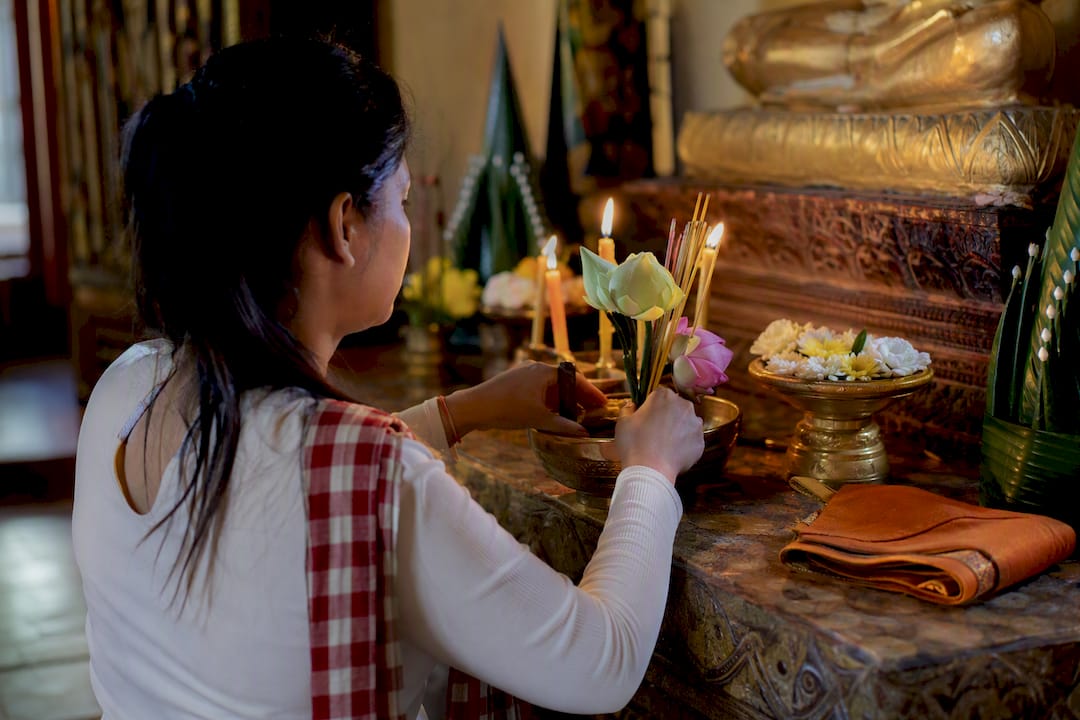
El ritual de consagración importa enormemente aquí. Una imagen recién encargada o restaurada suele pasar por una ceremonia formal antes de funcionar como objeto legítimo de adoración, un proceso que transforma un objeto tallado o fundido de artesanía decorativa en algo que los creyentes consideran espiritualmente activo. Esta distinción, consagrada versus no consagrada, es importante para comprender por qué formas escultóricas idénticas podrían cumplir funciones completamente diferentes dependiendo de su estatus ritual.
Los diferentes tipos de imágenes tienen diferentes usos típicos:
- Grandes budas del salón del templo ancla el culto diario y festivo para toda una comunidad wat.
- Imágenes portátiles más pequeñas apoyar la devoción personal en el hogar o viajar con practicantes individuales.
- Esculturas funerarias y conmemorativas., incluidos varios ejemplos de Prajñāpāramitā, conmemoran a individuos fallecidos específicos en lugar de servir al culto general.
Esta dimensión ritual es exactamente la razón por la que eliminar una imagen de su contexto original del templo, como sucede cada vez que una escultura ingresa a un museo o una colección privada, cambia algo real sobre cómo funciona ese objeto, incluso cuando su forma física permanece intacta. El propio marco del Museo de Arte de Cleveland de su Buda entronizado naga reconoce este cambio explícitamente, tratando el objeto como un artefacto histórico-artístico y un antiguo instrumento devocional cuya vida ritual original es anterior a su actual entorno museístico.
¿Cómo se compara la iconografía budista jemer con las tradiciones vecinas?
La iconografía budista jemer comparte profundas raíces con las tradiciones tailandesas, birmanas y más amplias del sudeste asiático indianizado, pero divergió en formas que recompensan la comparación directa. Las tres tradiciones se basaron en el mismo material fuente indio influenciado por Gupta que dio forma al Buda anterior a Angkor del Met, pero cada tradición regional filtró esa fuente a través de distintas prioridades políticas y religiosas.
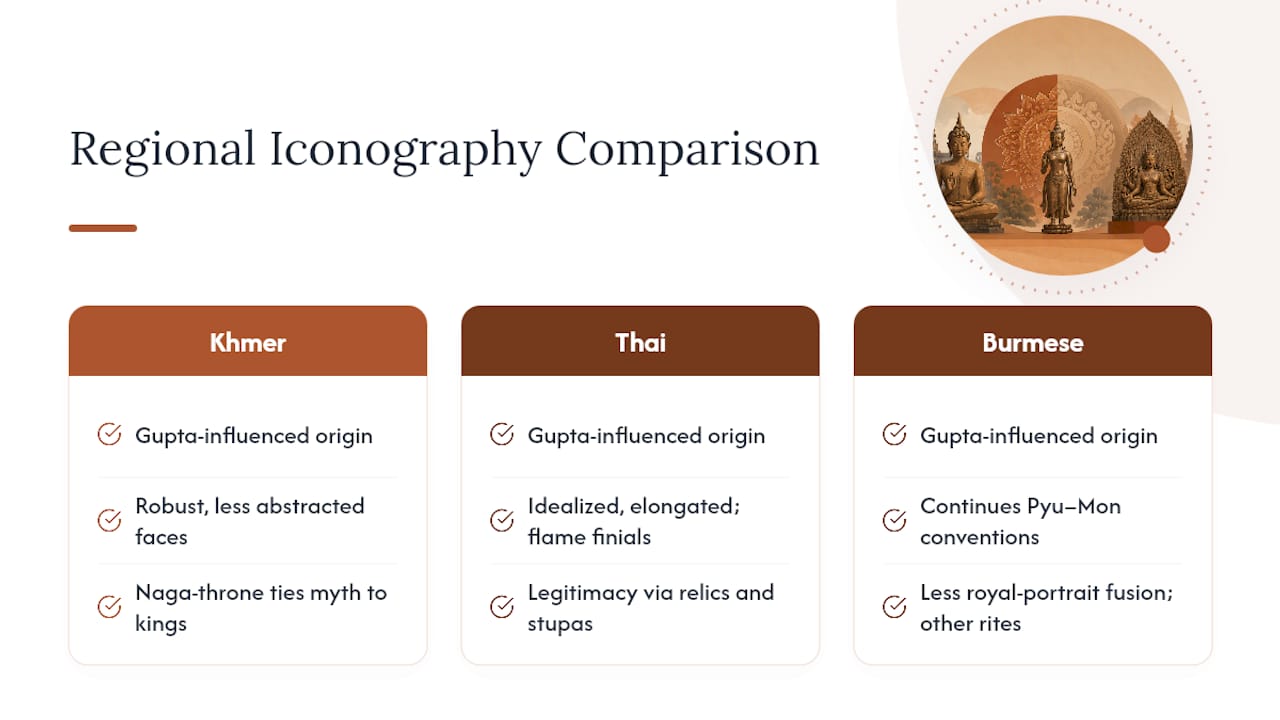
La escultura budista tailandesa, en particular las obras del período Sukhothai de los siglos XIII y XIV, desarrolló un estilo figurativo alargado y más idealizado con remates de llamas y un tratamiento facial más suave y abstracto que la escultura jemer típica de la misma época general. El arte budista birmano mantuvo una mayor continuidad con las convenciones de los períodos Pyu y Mon y muestra menos de la dramática fusión real-retrato que define específicamente el programa Bayon de Jayavarman VII.
El propio Buda entronizado como naga ilustra claramente el punto comparativo. Versiones de este motivo aparecen en otras partes del sudeste asiático, pero el peso dinástico específico que tuvo bajo Jayavarman VII, que vincula una imagen budista con un mito prebudista jemer de origen de serpiente, no tiene un paralelo exacto en las tradiciones vecinas. El budismo real tailandés y birmano generalmente construyó su legitimidad política a través de diferentes estrategias visuales, más a menudo a través de la consagración de reliquias y la arquitectura de estupas que a través de esta particular fusión de serpiente y trono.
Lo que une a la región a pesar de estas diferencias es el patrón subyacente: la iconografía budista en todo el sudeste asiático continental cumplió consistentemente funciones devocionales y políticas simultáneamente, y el equilibrio específico entre esas dos funciones varía según el reino, el período y la dinastía gobernante. La versión camboyana de ese patrón, tan concentrada en un reinado de construcción extraordinario, lo convierte en uno de los estudios de caso más claros en toda la región para observar la fusión de la política real y el arte religioso en tiempo real.
Una visión editorial sobre la investigación del arte budista jemer
Trabajar con material budista jemer en HD Asian Art ha reforzado una lección repetidamente: la atribución basada únicamente en la impresión visual falla constantemente, mientras que la atribución basada en registros de museos y estudios académicos revisados por pares se mantiene. Una superficie patinada se puede falsificar. Un patrón morfológico documentado en docenas de piezas catalogadas de Angkor Borei no puede falsificarse con tanta facilidad.
La tentación en este campo es alcanzar rápidamente una fecha o atribución segura, porque los coleccionistas y lectores quieren certeza. Resístelo. Verifique los registros de objetos de Cleveland y del Met, lea la historia institucional de Ian Harris para conocer el contexto y trate cada afirmación estilística como provisional hasta que sobreviva la comparación con comparanda documentada y fechada.
- James, HDAsianArt.com
Arte asiático en HD: escultura budista jemer documentada para coleccionistas
HD Asian Art investiga, fotografía y describe cada pieza individualmente, basándose en los mismos métodos estilísticos y de procedencia que se tratan a lo largo de este artículo, antes de que llegue a una colección o al estante de un académico.
Cada listado en el sitio incluye notas detalladas sobre el estado e información de procedencia disponible, y la galería acepta solicitudes directas de documentación adicional, informes de estado o referencias académicas antes de la compra. Una pieza como esta antigua estatua de bodhisattva de estilo javanés muestra el nivel de detalle descriptivo que los compradores pueden esperar, y el Buda predicador de bronce sentado demuestra el mismo estándar aplicado a un material y estilo regional diferentes. El envío asegurado por DHL a todo el mundo cubre todos los pedidos. Navega por el colección de arte asiático completa en alta definición y comuníquese con cualquier pregunta sobre autenticación o documentación antes de agregar una pieza a su propia biblioteca de investigación o exhibición.
Fuentes
- Buda ofreciendo protección - Museo Metropolitano de Arte
- Buda entronizado por Naga (base) - Museo de Arte de Cleveland
- Budismo camboyano: historia y práctica - University of Hawai'i Press
- Nueva luz sobre el budismo camboyano temprano: The Siam Society (Dowling)
- Budismo en Camboya - Wikipedia
Recomendado
- Escultura de arenisca camboyana: historia, arte y significado
- Serenidad en la escultura: explorando las estatuas de Buda de madera de Camboya
- El Buda docente del estilo Bayon: un vistazo al patrimonio espiritual y artístico jemer
- Maravillas majestuosas: exploración de las estatuas de Buda de madera de pie de Camboya
