



Buddha Statue Stone: Symbolism and Care Guide
Buddha Statue Stone: Symbolism and Care Guide
You're standing in a quiet corner of your home or garden, wondering if a Buddha statue stone piece you've seen online would really belong there, or if you'd be buying a decoration without understanding it. You're also unsure whether it would survive a wet UK winter, how to tell an older work from a reproduction, and what questions you should ask before you pay. Those uncertainties are normal, and they're exactly where careful looking begins.
Table of Contents
- Why a Stone Buddha Statue Captivates Collectors
- The Symbolism of White Buddha Representations
- Common Materials and Finishes Explained
- Displaying and Caring for Your Stone Buddha
- Evaluating Authenticity and Provenance
- Responsible Ownership and Cultural Context
- What Museum Records Teach Us About Stone Buddhas
- Bringing It All Together for Your Collection
Why a Stone Buddha Statue Captivates Collectors
A collector I often think of didn't start with a grand plan. She placed a small seated figure on a low shelf because the room felt restless, and only later noticed she was pausing there each morning. The weight of the stone, its cool surface, and the softened carving around the hands gave the object a steadiness that a lighter ornament didn't have. That experience is common, because stone doesn't ask for attention the way bright colour or polished metal can. It holds a room.
Part of the appeal is permanence. Stone connects a private interior to temple carving, cave shrines, and garden sculpture made to be lived with over long periods. When you choose a Buddha statue stone work, you're not only choosing a seated or standing form. You're choosing a material that carries tool marks, weathering, repairs, and sometimes traces of an earlier painted surface. Those details turn an attractive figure into an object with a biography.
More Than a Decorative Object
That biography matters for two different reasons. For a practitioner, a Buddha image can support meditation or devotional practice. For a collector or designer, it can be a serious work of regional art. The confusion starts when those roles get blurred and every stone figure is treated as generic décor. A thoughtful approach keeps both possibilities in view.
- Spiritual presence: Posture, gesture, and expression communicate a teaching or moment in the Buddha's story.
- Artistic value: Stone type, carving quality, and regional style tell you where and how a work was made.
- Physical responsibility: Porous, cracked, or coated stone needs different placement and care from dense, sound stone.
A stone Buddha rewards slow looking. Start with form and feeling, then ask what the material and history can support.
Understanding symbolism helps you choose a figure that fits your intention. Understanding materials helps you judge durability. Understanding provenance and UK care helps you protect what you've bought and avoid costly mistakes. When you put those layers together, you stop asking only whether a statue looks calm and start asking whether it's right for your space, your practice, and the climate it will live in. That's the shift from impulse purchase to informed collecting.
The Symbolism of White Buddha Representations
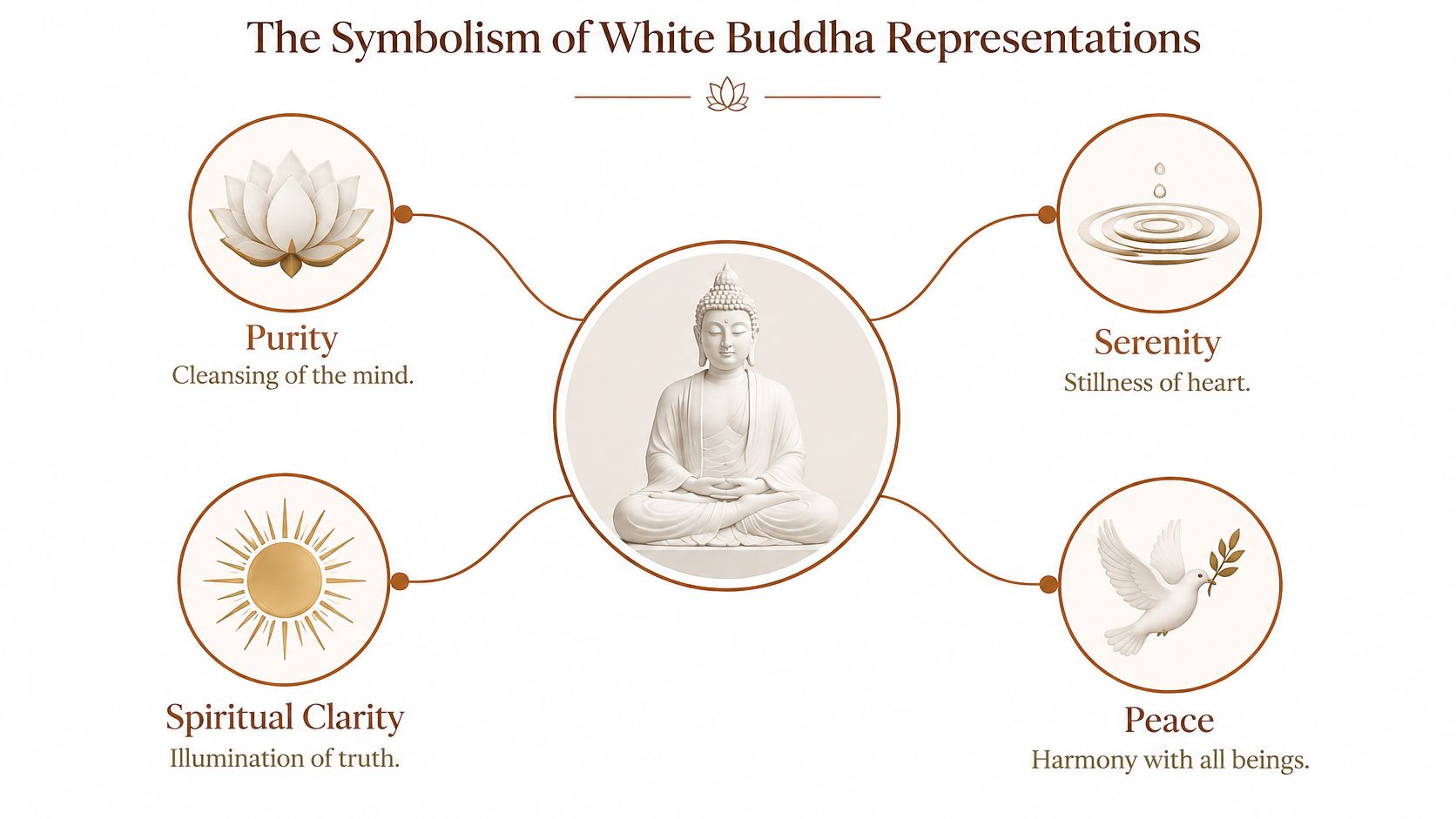
White is often read first, before posture or detail. In Buddhist art, a pale figure is commonly associated with purity, serenity, and spiritual clarity. Those aren't three versions of the same idea. Purity points to a mind cleared of distraction, serenity to stillness that isn't forced, and clarity to seeing things without confusion. When those qualities appear together in a white stone figure, the effect can feel restful without being empty.
If you're exploring this association further, a focused discussion of the meaning and placement of a white Buddha statue helps separate colour symbolism from simple interior styling. White can suit a light, minimal room, but its meaning doesn't depend on your décor. It's also why wear and darkening shouldn't automatically be treated as flaws. Age can soften brightness while leaving the intended calm intact.
Reading Gesture and Posture Together
The colour is only one layer. A seated Buddha with hands resting in the lap usually directs attention inward. A raised hand can suggest reassurance or teaching. A reclining figure points to release rather than rest. If you read colour alone, you'll miss what the body is doing.
A clear documented example comes from the University of Oxford. Its record describes a Burmese seated Buddha in white marble, partially lacquered, with the right hand making the earth-touching gesture, and notes that white marble or alabaster figures have been the most common types of Burmese stone Buddha images in recent centuries, as set out in the Oxford Cabinet record for the Burmese marble Buddha. That single entry shows why you should record gesture, stone, and finish together. The earth-touching hand recalls the Buddha calling the earth to witness his resolve, while the pale marble gives that moment a particular regional character.
Buyers often get confused here. They assume a white figure must always mean peace in a general sense, whatever the pose. In practice, the same pale stone can carry meditation, resolve, teaching, or protection depending on the hands, seat, and facial expression. Ask yourself what you want the figure to hold in your daily life. A meditation corner may call for stillness. An entrance may call for reassurance. A study may suit clarity. Choose the gesture first, then let the white surface support that intention rather than replace it.
Common Materials and Finishes Explained
Stone names sound reassuringly solid, but they behave differently. Marble, sandstone, limestone, and schist vary in grain, colour, hardness, and how readily they absorb water. Those differences affect how finely a sculptor can carve a robe fold, how a surface ages, and whether a statue belongs indoors or in a sheltered garden. If a seller only says stone, ask which stone. That's not pedantry. It's basic identification.
| Material | Characteristics | Historical Example |
|---|---|---|
| Marble | Pale, smooth, often used for Burmese images, can be partially lacquered | Burmese seated Buddha in white marble |
| Sandstone | Warm, granular, common in early Southeast Asian sculpture | Siamese Buddha head in pale buff sandstone |
| Limestone | Carves clearly, may retain gesso, paint, and gilding | Northern Chinese Buddha, about AD 550 to 577 |
| Schist | Dense and grey, allows strong, durable forms | Large standing Buddha dated to the 11th to 12th centuries |
Why Finish Changes the Object
Many buyers assume stone always looked bare. The V&A records a Northern Chinese seated Buddha in limestone dating to approximately 550 to 577 AD that retains traces of gesso, paint, and gilding, described in the V&A record for the Northern Qi limestone Buddha. That matters because a polychrome finish isn't dirt to be removed. Lacquer, gilding, and paint can be part of the original or later devotional surface, and they need gentler handling than exposed stone.
Surface words also need care. A polished area reflects light and shows fingerprints. A honed area feels smoother and more matte, which can soften facial features. If you're comparing finishes for a plinth or display surface at home, the guide for Melbourne renovators explains honed stone in practical, non-specialist terms that translate well to display choices. Don't transfer household stone treatments to an antique statue, though. Sealants and polishes meant for tiles can alter a historic coating irreversibly.
Schist offers a useful contrast. It's darker and denser in appearance than pale marble, and it has a long history in South Asian sculpture. Sandstone, by comparison, often feels warmer and more granular under the hand, and carved detail may soften where the grain is open. Limestone sits between those impressions and can preserve inscription and coating evidence that changes how you value a piece. When you compare two statues side by side, look at the base edges, the back, and any repaired joins as well as the face. Those less glamorous areas often tell you most about material, age, and condition.
Displaying and Caring for Your Stone Buddha
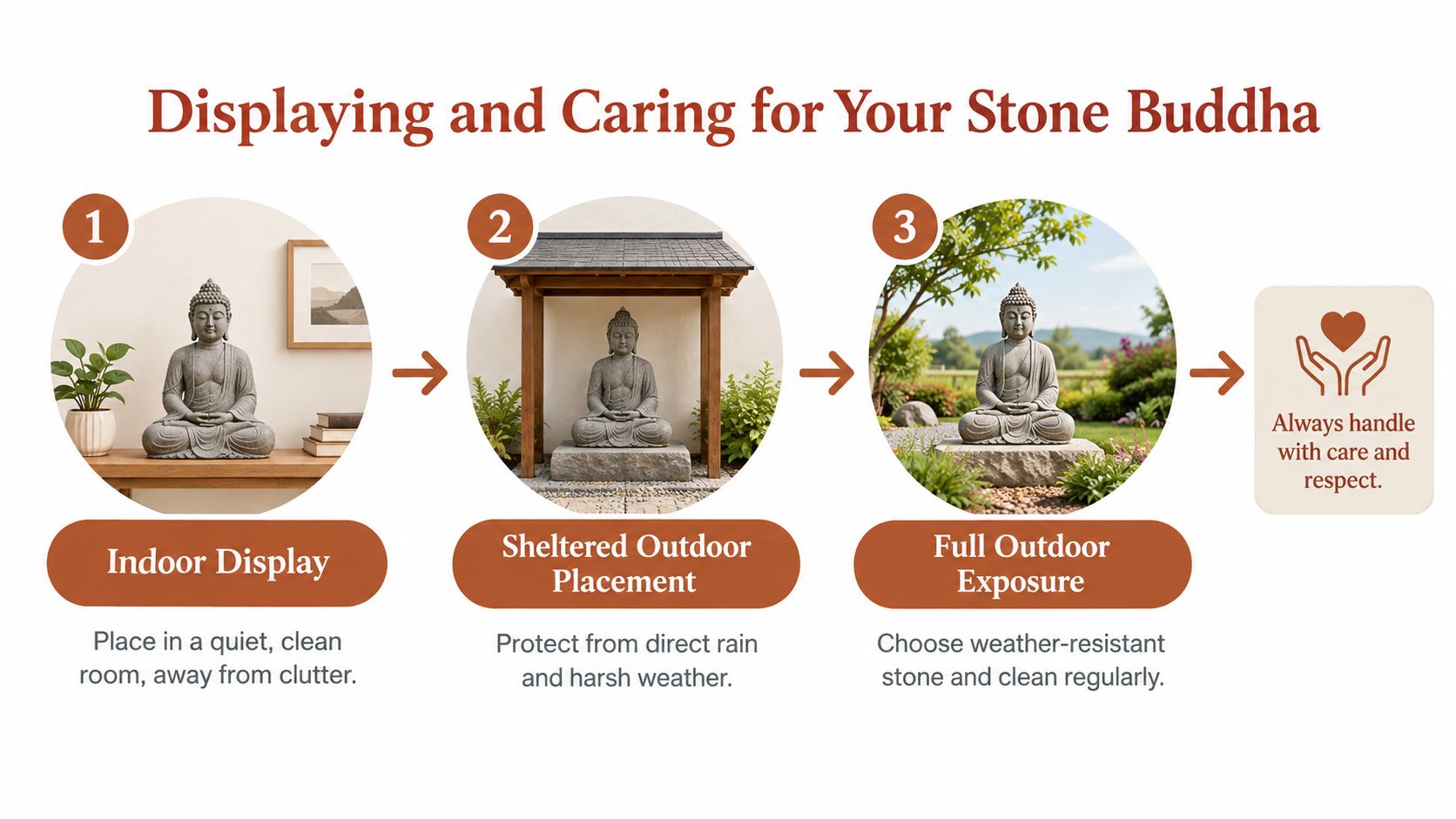
Stone isn't maintenance free in Britain. Rain, frost, pollution, and repeated wetting and drying can move soluble salts through porous stone until they crystallise and disrupt the surface. Water that enters hairline cracks can freeze and widen them. A statue that looks dense on the front may still be vulnerable at the fingers, nose, base, or an old repair. Before you decide on a spot, identify the stone and inspect those vulnerable points in good light.
Indoors Shelted Grounds and Fully Exposed Gardens
Indoors is usually the safest option for porous, cracked, lacquered, or gilded work. Keep the figure away from radiators, damp external walls, bathrooms, and places where condensation forms. A sheltered porch or covered terrace can work if rain doesn't drive in and the plinth stays dry. Fully exposed garden placement suits only sound stone in good condition, raised on a well drained plinth and never sitting directly on wet soil.
- Raise and drain: Use a plinth so the base doesn't wick ground moisture, following the drainage emphasis in the Historic England guidance on caring for outdoor monuments.
- Watch winter closely: Check for flaking, powdering, white salt deposits, and new cracks after freeze and thaw.
- Cover with care: A breathable winter cover is safer than plastic wrapping that traps condensation against the stone.
English Heritage testing discussed in its sculpture conservation evaluation of winter covers found insulated, water vapour permeable covers protected against freeze thaw cycles while keeping humidity comparatively stable. That finding corrects a common mistake, sealing a statue tightly for winter. You're trying to reduce saturation and freezing, not create a damp microclimate.
Cleaning should start dry. Use a soft brush to lift dust, working gently around fragile detail. Don't scrub moss or lichen off with a stiff brush, and don't use bleach or harsh household cleaners. Removal of growth can be specialist work, and it isn't always necessary. If you see active powdering, lifting lacquer, or a crack that's opening, stop and contact a conservator. For a practical starting routine, the detailed stone statue care guidance gives you a sensible baseline before you consider any treatment at all.
Evaluating Authenticity and Provenance
There's no single authenticity shortcut. A correct hand gesture doesn't prove age. A worn surface doesn't prove antiquity. A familiar stone doesn't prove regional origin. You need to assess the whole object together, posture, facial style, robe treatment, pedestal form, stone type, repairs, tool marks, and any inscription evidence. When one feature contradicts the others, that tension deserves explanation rather than a sales story.
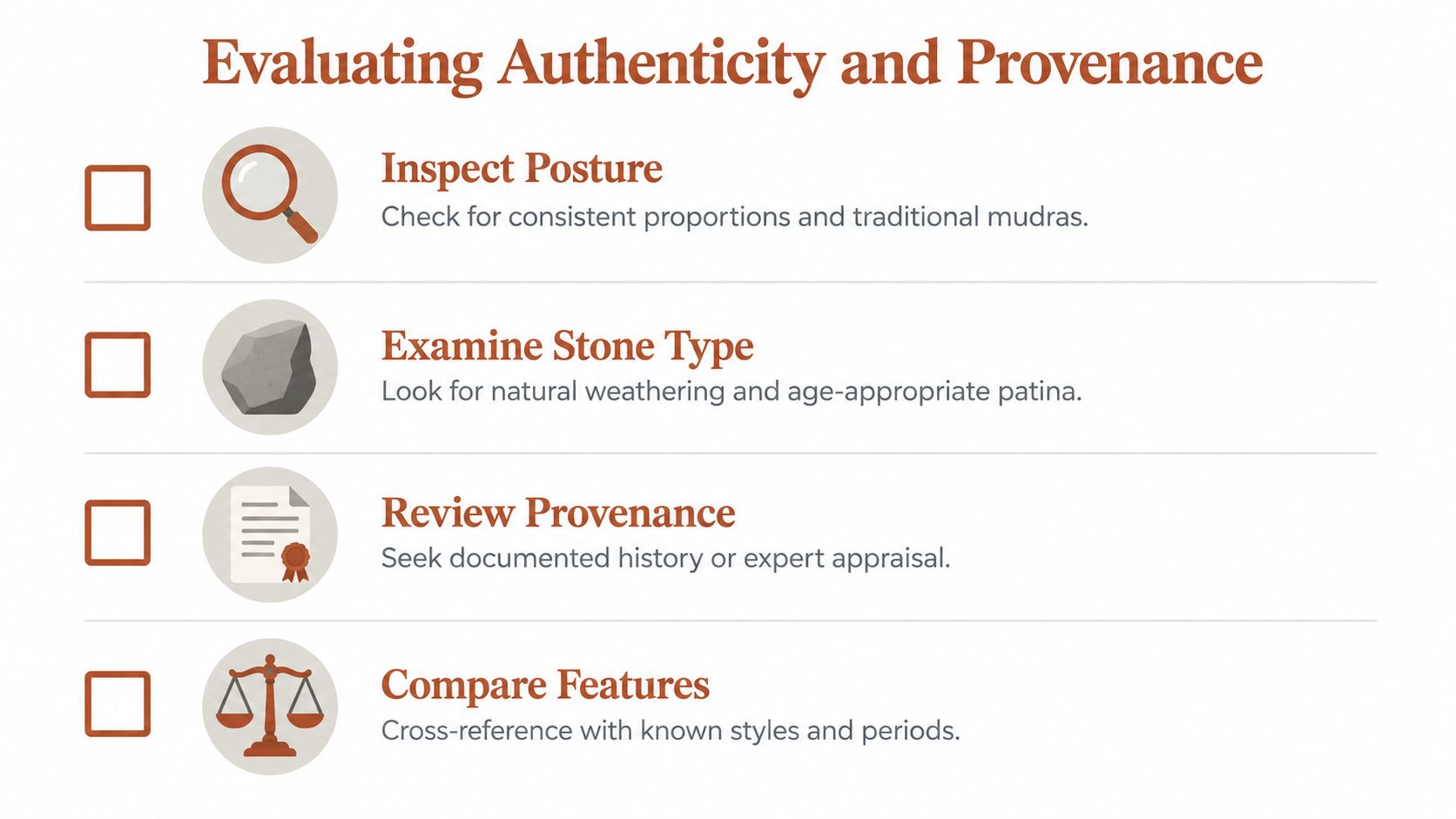
Start by slowing down your own looking. Photograph the front, back, sides, base, and details. Note dimensions and weight if you can handle the piece safely. Look for joins, replaced hands, recut features, cement residues, and areas where patina stops abruptly. Contemporary reproductions can be honest and suitable for devotion or decoration. The problem arises when a reproduction is described with an older history it doesn't have.
Documentation That Actually Helps
Useful paperwork answers specific questions. Who owned the statue before? Where was it bought? Has it been restored, and by whom? What evidence supports the date and region? A vague certificate using words like ancient or temple isn't evidence. Museum records show the standard to aim for, with a named material, date range, findspot or origin, dimensions, and a registration number that lets another person retrace the object.
A useful test: If you removed the word antique from the description, would the remaining facts still support the price?
That test protects you from attractive labelling. It also helps you compare sellers calmly. The practical questions in this guide to buying an antique Buddha statue with attention to patina and provenance are worth applying before you commit, especially where a dealer can't explain a gap in ownership. Gaps don't automatically mean wrongdoing, but they should be acknowledged openly. A devotional object, a modern copy, and an archaeological fragment each have a legitimate place, provided they're described truthfully. Your job as buyer is to insist on that clarity and to walk away when style, stone, condition, and paperwork don't align.
Responsible Ownership and Cultural Context
Collecting a Buddha image involves another person's religious tradition, not only your taste. That doesn't mean you shouldn't collect. It means you should collect with awareness of what the object is, where it came from, and how your display choices affect its dignity. Placing a sacred head on the floor as a doorstop, for example, isn't a neutral interior decision. Context changes meaning, and respectful placement is part of responsible ownership.
The UK audience for these questions isn't tiny. Census figures summarised in the overview of Buddhism in the United Kingdom record just under 290,000 Buddhists across the United Kingdom, including 272,508 in England and Wales from the 2021 census and 15,501 in Scotland from the 2022 census. Those numbers don't tell you how every person practises, and you shouldn't assume they do. They do show that Buddhist images have living significance for a substantial and diverse community here.
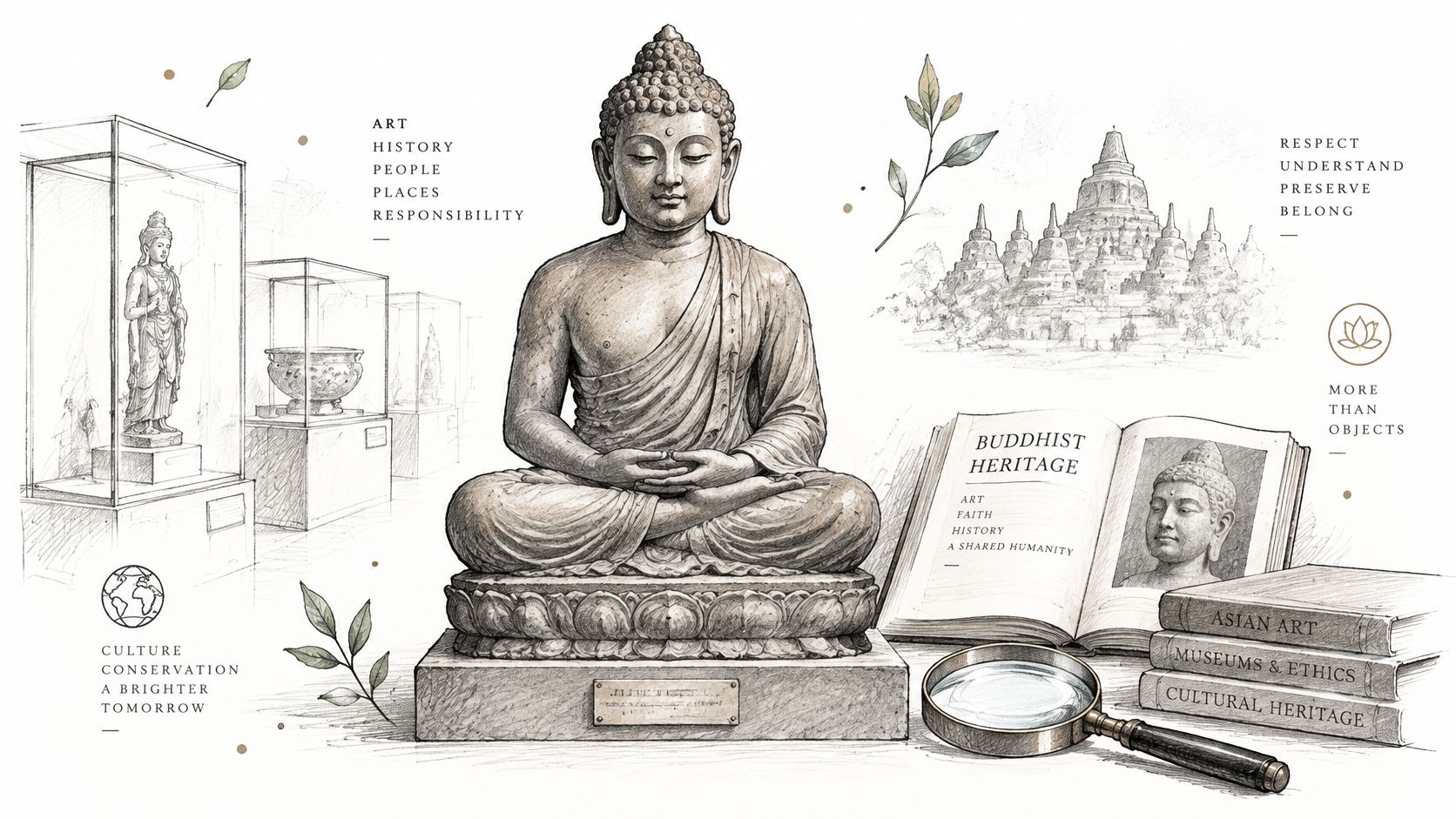
Responsible buying starts before display. Ask about prior ownership, export history, and restoration. Ask why a price is low and why a description relies on atmosphere rather than facts. A low price doesn't prove a problem, but it's never proof of legitimate history either. If provenance is thin, a seller should say so plainly.
You also need to decide what role the statue will play. A reproduction made for practice may be entirely appropriate on a home altar. An older fragment with archaeological importance may be better researched, conserved, and displayed with explanation. A decorative garden figure shouldn't be sold to you as a temple antiquity. Keeping those categories honest protects you, respects source communities, and preserves information that future owners will need. Stewardship is a practical habit, keeping invoices, photographs, condition notes, and correspondence together so the object's story doesn't thin out each time it changes hands.
What Museum Records Teach Us About Stone Buddhas
Museum catalogues can look dry until you realise what they're doing. They link a physical object to a date, a place, a material, and a chain of documentation. That discipline is directly useful when you're assessing a statue in a shop or private sale. You're learning to favour recorded facts over atmosphere.
The V&A documents a sandstone Buddha head from Siam dated to the 9th century AD, reportedly excavated in January 1924 at Wat Maha That in Lopburi, made of pale buff coloured sandstone and measuring about 33 cm high by 26.5 cm wide, in the V&A collection entry for registration I.M. 62-1927. Notice what's present there, dimensions, stone, style, findspot, date, and registration number. It also reminds you that Buddha statue can mean a surviving head or fragment, not only a complete figure.
UK collections widen the timeline. The British Museum records a large standing Buddha in dense grey schist dated to the 11th to 12th centuries, which entered the collection in 1872 after donation by the family of George Bridge, as shown in the British Museum record for the schist standing Buddha. Together with a V&A limestone head dated to AD 550 to 577 from the Xiangtangshan cave temple context and a limestone stele inscribed AD 544, these objects show Buddhist stone carving was already highly developed in China by the mid sixth century.
For your own notes, copy that museum habit. Record the stone as precisely as you can, measure height and width, photograph damage, and keep seller information. You'll make better buying decisions, and you'll give the next owner something reliable to work from.
Bringing It All Together for Your Collection
A good purchase usually satisfies four checks at once. The symbolism fits your intention, the material suits the place you've chosen, the condition matches the description, and the provenance is explained without evasion. If one check fails, don't let the other three rush you. A beautiful gesture won't compensate for a porous statue placed in saturated soil, and a rare stone won't repair a history that can't be explained.
Use a simple sequence when you look at your next Buddha statue stone candidate. First, read the body, posture, hands, face, robe, and pedestal. Second, name the material and finish, including any lacquer, paint, or gilding. Third, decide whether it'll live indoors, under shelter, or outside through a British winter. Finally, test the paperwork against the object in front of you.
Indoor Conditions Worth Checking
For indoor display, stability matters more than creating a perfect showcase. The British Museum position in its conservation policy on protecting collections through suitable conditions favours reducing deterioration risks across storage, handling, display, study, and transport. In a home, that translates to steady conditions away from damp and heat sources, with a hygrometer if you're concerned. A broad mixed collection target often cited in care guidance is 40 to 65% RH, without exceeding 65% RH, because mould, mildew, and pests become more likely.
You don't need museum equipment to collect responsibly. You need consistent attention, a soft brush, clear photographs, and the discipline to ask better questions. Whether you're buying your first small marble Buddha or adding a Khmer stone head to an established collection, treat the statue as both artwork and cultural object. That respect will guide your choice of seller, your placement at home, and your willingness to preserve the evidence that gives the piece meaning beyond its first impression.
If you're ready to compare documented stone Buddhas by region, material, and form, including Burmese marble, Khmer stone, and Thai examples for practice, interiors, and serious collecting, visit HD Asian Art to browse the current collection and supporting guides. Take your measurements, questions on provenance, and intended placement with you, and choose a piece you can care for well.
