



Guía de precios de estatuas budistas antiguas: valor y valoración
Guía de precios de estatuas budistas antiguas: valor y valoración
La guía de precios de estatuas budistas antiguas revela un mercado donde la autenticación, la procedencia y la composición del material determinan el valor mucho más que la sola edad. Los coleccionistas a menudo pagan de más por piezas que carecen de la documentación adecuada y al mismo tiempo subestiman esculturas excepcionales con sólidos registros históricos. Esta guía le guía a través del marco de valoración que separa las piezas de grado de inversión de las reproducciones decorativas.
Tabla de contenidos
Comprensión de la guía de precios de estatuas budistas antiguas
Las estatuas budistas antiguas cuestan desde unos pocos cientos de dólares hasta seis cifras, según la autenticación, la rareza, el estilo regional y la técnica de fundición. El mercado ha madurado significativamente y los coleccionistas serios ahora exigen informes detallados sobre el estado y documentación de procedencia. Comprender cómo se valoran estas esculturas requiere saber qué buscan realmente los marchantes, las casas de subastas y los museos; la diferencia entre una estatua de 500 dólares y una de 50.000 dólares a menudo se reduce a detalles que los ojos inexpertos pasan por alto por completo.
Cómo identificar estatuas budistas antiguas: conceptos básicos de autenticación
Identificar auténticas estatuas budistas antiguas exige prestar atención a la técnica de fundición, las características del material y los marcadores estilísticos que revelan la edad y el origen. La fundición a la cera perdida deja patrones superficiales específicos, mientras que las esculturas talladas a mano muestran marcas de herramientas consistentes con su período histórico. Las reproducciones suelen mostrar superficies sospechosamente uniformes o elementos estilísticos anacrónicos.
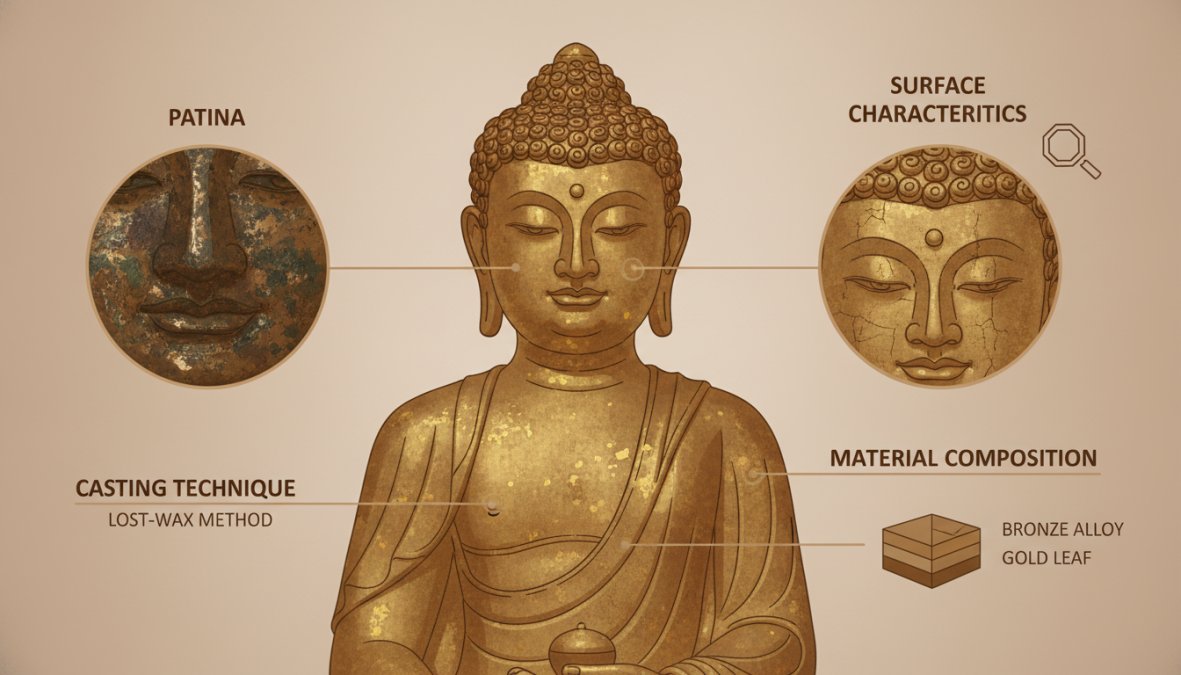
Lista de verificación de identificación visual
Examine estos marcadores específicos al evaluar la autenticidad:
- Consistencia de la pátina: La edad genuina crea patrones de oxidación desiguales. Las pátinas modernas parecen uniformes y manufacturadas.
- Construcción de bases: Las bases antiguas muestran marcas de acabado a mano. Comprueba si la base coincide con el material y la edad de la estatua.
- Costuras de fundición: Las piezas de cera perdida muestran costuras sutiles en uniones específicas. Su ubicación revela la metodología de casting.
- Marcas de herramientas: La madera y la piedra talladas a mano muestran marcas direccionales de cincel o cuchillo consistentes con técnicas de la época.
- Patrones de desgaste: El desgaste natural se concentra en los puntos altos y en las áreas que se tocan repetidamente. El envejecimiento artificial crea un desgaste aleatorio.
- Precisión iconográfica: La posición del mudra, las proporciones faciales y los elementos simbólicos deben alinearse con el estilo y período regional reivindicado.
- Orificios de montaje: Las piezas antiguas muestran oxidación alrededor de los puntos de montaje. Los nuevos agujeros aparecen brillantes y limpios.
Materiales comunes y sus características
Bronce dorado Representa el material más común para valiosas estatuas antiguas. El bronce dorado genuino muestra oro brillante en las áreas protegidas, oxidación más oscura en las grietas y una pátina verde característica debajo del dorado desgastado. La capa dorada debe mostrar un desgaste natural consistente con la edad, no un adelgazamiento uniforme.
Esculturas de madera, particularmente del sudeste asiático y el Tíbet, revelan la edad a través de la apariencia de la veta de la madera y las características del acabado. La madera antigua muestra patrones naturales de cuadros y grietas. El tipo de madera es muy importante: el sándalo, la teca y el palo de rosa tienen precios diferentes según su rareza y su importancia regional.
Esculturas de piedra en mármol, piedra caliza o granito muestran patrones de desgaste que son casi imposibles de falsificar de manera convincente. La edad genuina crea microfracturas, depósitos minerales y sutiles cambios de color. Las reproducciones a menudo muestran un color uniforme y un "desgaste" creado artificialmente.
Acabados dorados y lacados en piezas de madera debe presentar un desgaste selectivo. Los acabados originales crean patrones de descamación específicos donde la capa subyacente queda expuesta. Los intentos de replicación modernos a menudo pasan por alto las sutiles variaciones de color de la laca envejecida.
Factores que afectan los precios de las estatuas antiguas: el marco de un coleccionista
Múltiples factores interconectados determinan la guía de precios de las estatuas budistas antiguas. Comprender este marco evita pagar de más por piezas con un potencial de apreciación limitado.
| factores | Impacto en el valor | Qué evaluar |
|---|---|---|
| Edad y período | más alto | Los siglos XVII y XVIII dominan la prima; verificar a través del estilo |
| Procedencia | Crítico | La historia del museo o de la colección documentada añade entre un 30% y un 50% |
| Materiales | Alto | Bronce dorado > madera > piedra; la rareza material importa |
| Condición | moderado | La restauración reduce significativamente el valor; preservación de la pátina esencial |
| Estilo Regional | Alto | Las piezas del Tíbet y China suelen valorarse más que las del sudeste asiático |
| Tamaño | moderado | Las piezas más grandes generan primas si las proporciones son correctas |
| Iconografia | moderado | Mudras raros o deidades específicas aumentan el interés de los coleccionistas |
Edad, período y significado histórico
Las piezas de los siglos XVII y XVIII tienen precios sustancialmente más altos que los ejemplos del siglo XIX, incluso con una artesanía superior. Esta prima refleja rareza: sobreviven menos piezas de períodos anteriores. Las estatuas tibetanas de la dinastía Qing (1644-1912) ocupan un nivel de precios distinto con un trabajo dorado superior y una precisión iconográfica. Las esculturas budistas chinas de la dinastía Ming (1368-1644) representan otra categoría premium, especialmente si muestran características de taller imperial.
Las piezas del sudeste asiático, incluidas las esculturas jemeres y tailandesas, siguen una lógica de valoración diferente. La edad importa menos que el mérito artístico y la importancia regional. Un Buda de piedra jemer del siglo XIX con proporciones excepcionales puede alcanzar precios más altos que una pieza tibetana más antigua pero dañada.
Procedencia, artesanía y rareza
La documentación de procedencia añade un valor mensurable a las estatuas budistas antiguas. Las piezas con historia de museo documentada, registros de exposiciones publicados o cadenas de propiedad claras se venden por entre un 30% y un 50% de prima en comparación con piezas similares que carecen de documentación. Esta prima refleja tanto la garantía de autenticidad como la importancia cultural.
La calidad de la artesanía separa las piezas de calidad de inversión de las estatuas decorativas. Una técnica de fundición superior, detalles iconográficos precisos y proporciones refinadas indican piezas creadas por maestros artesanos. Examine cómo se representa el mudra; piezas excepcionales muestran una posición anatómicamente correcta de la mano con una sutil articulación de los dedos.
La rareza dentro de un estilo regional o la representación de una iconografía específica impulsa la demanda de los coleccionistas. Las estatuas que representan deidades budistas menos comunes o que muestran combinaciones inusuales de mudras atraen a coleccionistas serios dispuestos a pagar primas.
Evaluación de la condición e impacto de la restauración
La evaluación del estado influye fundamentalmente en la guía de precios de las estatuas budistas antiguas. Una pieza que muestra una pátina original con una restauración mínima normalmente se vende entre un 40 y un 60 % más que una estatua similar que ha sido sometida a una restauración exhaustiva. Esta preferencia refleja tanto una apreciación estética por el envejecimiento auténtico como preocupaciones prácticas de que el trabajo de restauración pueda enmascarar daños estructurales o problemas de autenticidad.
El impacto de la restauración varía según el tipo de material. Las piezas de madera que han sido reacabadas pierden un valor significativo, la laca original y los acabados dorados son casi imposibles de replicar auténticamente. Las esculturas de piedra con grietas rellenas o secciones retalladas muestran un valor reducido proporcional a la extensión del trabajo.
Los daños menores normalmente reducen el valor entre un 10% y un 20%. El daño estructural que compromete la integridad o requiere una restauración invasiva reduce el valor en un 50% o más.
Estilos regionales y valor de mercado: Tíbet, China, Sudeste Asiático
El origen regional influye profundamente tanto en la apreciación estética como en el precio de mercado de las estatuas budistas antiguas. Las piezas tibetanas alcanzan los precios más altos por unidad de peso, lo que refleja la demanda de coleccionistas, museos y practicantes espirituales. Las piezas de los talleres imperiales chinos ocupan una categoría distinta con precios determinados por la dinastía, las marcas imperiales y la procedencia documentada.
estatuas tibetanas muestran marcadores estilísticos distintivos: posturas sentadas frontales, tocados elaborados en ciertas deidades y trabajos dorados superiores. Los mejores ejemplos muestran dorado a base de cobre aplicado mediante técnicas tradicionales que crearon acabados luminosos y duraderos. Las piezas tibetanas del siglo XVIII representan el pico de mercado de este estilo regional.
Esculturas budistas chinas. de las dinastías Ming y Qing muestran diferentes prioridades estéticas. Las piezas anteriores muestran proporciones más naturalistas, mientras que los ejemplos posteriores de Qing a menudo enfatizan la elaboración decorativa. Las piezas de taller imperial gozan de premios que reflejan su importancia histórica y su artesanía.
Esculturas del sudeste asiático, incluidas piezas jemeres, tailandesas y birmanas, siguen dinámicas de mercado distintas. Los budas jemeres de piedra del período Angkor representan la categoría más rara, con ejemplos autenticados que alcanzan precios comparables a los de las principales piezas chinas. Los budas de bronce tailandeses de los períodos Sukhothai y Ayutthaya muestran una fuerte demanda de coleccionistas a pesar de ser más recientes que los ejemplos tibetanos o chinos.
Tasación de estatuas budistas antiguas: proceso de valoración profesional
La tasación profesional proporciona la base para las decisiones de gestión de seguros, ventas y cobros. El proceso de tasación combina autenticación, evaluación del estado, investigación de mercado y análisis comparativo.
Cuándo y por qué buscar una tasación profesional
Los coleccionistas deben obtener tasaciones profesionales cuando adquieran piezas valoradas en más de $2000, cuando aseguren colecciones importantes, antes de vender piezas en una subasta o cuando las piezas estén destinadas a ser bienes patrimoniales. Los tasadores profesionales aportan experiencia en autenticación que protege contra errores costosos y proporciona la documentación que requieren las compañías de seguros y las casas de subastas.
Las tasaciones de seguros documentan el valor de reposición, el costo de adquirir una pieza equivalente en el mercado actual. Esto difiere de las estimaciones de las subastas, que normalmente son entre un 20% y un 30% inferiores a los valores de los seguros. Los tasadores especializados en arte budista asiático cobran tarifas superiores, normalmente entre 150 y 300 dólares por hora o tarifas fijas que oscilan entre 500 y 2.000 dólares por pieza, dependiendo de la complejidad.
Qué esperar de un informe de condición
Los informes de condición profesionales documentan las características físicas, los materiales, la técnica de construcción y los problemas de condición en un lenguaje estandarizado. Un informe exhaustivo incluye fotografías desde múltiples ángulos, primeros planos de cualquier daño o restauración y descripciones escritas detalladas de los métodos y materiales de construcción.
El informe debe especificar si la pieza muestra pátina original o evidencia de limpieza, anotar cualquier trabajo de restauración con descripciones de los materiales utilizados y evaluar la integridad estructural. Los informes de calidad incluyen análisis comparativos de mercado con referencias a piezas similares vendidas en subasta u ofrecidas por comerciantes, con un contexto de precios que explica el valor tasado.
Mantenimiento y preservación: protegiendo su inversión
Un mantenimiento adecuado preserva tanto las cualidades estéticas como el valor financiero de las antiguas estatuas budistas. La conservación preventiva cuesta mucho menos que la restauración y evita el deterioro del valor.
Control ambiental es lo más importante para la preservación a largo plazo. Mantenga niveles estables de temperatura y humedad; las condiciones ideales oscilan entre 65 y 70 grados Fahrenheit con una humedad relativa del 45 al 55 %. Evite la luz solar directa, que decolora los acabados dorados y puede hacer que la madera se cuartee y se agriete.
Protocolos de manejo evitar daños accidentales. Apoye las piezas desde la base en lugar de desde la cabeza o las extremidades al moverlas. Utilice guantes de algodón cuando manipule piezas de bronce para evitar que los aceites de la piel aceleren la corrosión. Nunca intentes limpiar la pátina del bronce ni eliminar la oxidación de los acabados de madera.
Consideraciones de visualización equilibrar la apreciación estética con la preservación. Muestre las piezas lejos de las rejillas de calefacción, las unidades de aire acondicionado y las ventanas. Evite colocar piezas sobre superficies inestables o en áreas de mucho tránsito donde podrían volcarse.
Prevención de plagas Protege las piezas de madera del daño de los insectos. Esté atento a los signos de insectos perforadores de la madera y utilice métodos apropiados de control de plagas que no involucren productos químicos tóxicos. Quitar el polvo suavemente con cepillos suaves elimina el polvo de la superficie sin dañar la pátina ni los acabados. Nunca utilices productos de limpieza comerciales, agua o materiales abrasivos en piezas antiguas.
Tendencias actuales del mercado y resultados de la subasta
El mercado de estatuas budistas antiguas muestra distintas tendencias determinadas por la demanda de los coleccionistas, las adquisiciones institucionales y los factores económicos. Los resultados documentados de subastas de casas importantes, incluidas Christie's y Sotheby's, revelan que las piezas de bronce dorado tibetano de los siglos XVII y XVIII alcanzan constantemente precios iguales o superiores a las estimaciones de preventa. Las piezas con procedencia excepcional, particularmente aquellas con historia de exhibición en museos, se venden entre un 20 y un 40% por encima de las estimaciones conservadoras.
Las esculturas de piedra del sudeste asiático muestran un creciente interés por parte de los coleccionistas, en particular las piezas jemeres autenticadas. Los precios de los budas de piedra de calidad del período Angkor han aumentado entre un 15% y un 25% anual durante los últimos tres años. Las piezas de bronce tailandesas del período Sukhothai muestran una demanda constante por parte de los coleccionistas centrados en el arte del sudeste asiático.
La debilidad del mercado aparece en piezas que carecen de procedencia clara o que muestran una restauración significativa. Reproducciones y piezas de origen incierto no se venden en subastas o se venden con importantes descuentos. Esta tendencia refuerza la importancia de la autenticación y la documentación, el mercado premia cada vez más las piezas con registros históricos claros.
Consideraciones legales y restricciones de exportación
Los coleccionistas deben navegar por complejas regulaciones internacionales que rigen el comercio de estatuas budistas antiguas. Muchos países restringen o prohíben la exportación de piezas del patrimonio cultural, y la compra de piezas con estatus legal cuestionable genera responsabilidad y riesgo financiero.
convenciones de la unesco regular el comercio de bienes culturales, y los países signatarios restringen la exportación de piezas que cumplan criterios específicos de edad e importancia. Las piezas creadas antes de 1970 enfrentan un escrutinio particular. Los distribuidores acreditados proporcionan documentación que confirma el estado legal de exportación y el cumplimiento de las importaciones.
Restricciones específicas de cada país varían ampliamente. Nepal restringe la exportación de piezas creadas antes de 1853. China limita la exportación de piezas anteriores a 1795. Tailandia restringe la exportación de piezas que cumplen ciertos criterios de edad y materiales. La compra de piezas restringidas crea complicaciones legales para los compradores.
Requisitos de documentación para el movimiento internacional incluyen permisos de exportación del país de origen y permisos de importación para el país de destino. Los distribuidores acreditados se encargan de estos requisitos y proporcionan la documentación con las piezas. Comprar a comerciantes sin la documentación de exportación adecuada crea el riesgo de que las piezas sean confiscadas en la aduana.
debida diligencia cuando adquirir piezas implica verificar las credenciales del vendedor, solicitar documentación de propiedad anterior y confirmar que las piezas carecen de restricciones. Los catálogos de las casas de subastas proporcionan información detallada sobre la procedencia. Los comerciantes privados deben proporcionar documentación comparable para piezas valoradas en más de 2.000 dólares.
HD Asian Art mantiene estándares rigurosos para el cumplimiento legal, asegurando que todas las piezas de nuestra colección cuenten con la documentación adecuada y cumplan con las regulaciones de comercio internacional. Nuestra selección curada de estatuas budistas e hindúes, esculturas jemeres y piezas del sudeste asiático incluye solo piezas con estatus legal verificado y registros de procedencia claros. Explore nuestra colección con la confianza de que cada pieza cumple con los más altos estándares de autenticidad y cumplimiento legal.
La guía de precios de las estatuas budistas antiguas refleja en última instancia un mercado que premia el conocimiento, la documentación y la toma de decisiones informadas. Los coleccionistas que entienden los métodos de autenticación, los estilos regionales y los factores de valoración crean colecciones que se aprecian con el tiempo y evitan errores costosos. Ya sea que esté adquiriendo su primera pieza o administrando una colección establecida, una evaluación adecuada y una orientación profesional protegerán tanto su inversión como su disfrute de estas extraordinarias obras de arte.
Preguntas frecuentes
¿Cómo saber si una estatua budista es antigua?
Las auténticas estatuas budistas antiguas muestran marcadores específicos: pátina natural en superficies de bronce o piedra, variaciones visibles en la técnica de fundición, patrones de desgaste consistentes con la edad e iconografía apropiada para el período declarado. Compruebe si hay detalles grabados a mano, desgaste desigual del dorado en superficies doradas y composición del material apropiada para la edad. Examine la base, la parte posterior y la parte inferior en busca de marcas de fabricante o indicadores de períodos históricos. La documentación de procedencia y la evaluación profesional proporcionan una autenticación definitiva más allá de la simple inspección visual.
¿Qué factores determinan el valor de una estatua budista antigua en la guía de precios?
El valor depende de múltiples factores interconectados: edad y período histórico (las piezas tibetanas del siglo XVII tienen precios elevados), material (el bronce dorado generalmente vale más que la piedra fundida), origen regional (las esculturas del Tíbet y el Sudeste Asiático tienen mercados distintos), documentación de procedencia, calidad de la artesanía, rareza y condición. La iconografía y la especificidad del mudra también importan; las representaciones de Guanyin y el Buda infantil han establecido una demanda entre los coleccionistas. La tasación profesional considera todos estos elementos para establecer el valor justo de mercado dentro del mercado de antigüedades coleccionables.
¿Son las estatuas budistas antiguas una buena inversión?
Las estatuas budistas antiguas pueden apreciarse si se compran cuidadosamente a distribuidores acreditados. La rareza, la procedencia documentada y el excelente estado respaldan la retención del valor a largo plazo. Sin embargo, el mercado es especializado y poco líquido en comparación con los artículos de colección convencionales. El éxito de la inversión requiere conocimiento de los estilos regionales, experiencia en autenticación y comprensión de los resultados de las subastas actuales. Las piezas con un claro significado histórico y valor de patrimonio cultural tienden a tener mejor valor que las reproducciones o los ejemplos muy restaurados. Considere tanto la apreciación estética como el posible retorno financiero.
¿Cómo obtengo una tasación profesional para mi antigua estatua budista?
Póngase en contacto con casas de subastas especializadas en arte asiático, anticuarios certificados o tasadores independientes con experiencia en arte budista. Proporcione fotografías detalladas, dimensiones, información del material y cualquier documentación de procedencia. Los tasadores evaluarán la autenticidad, la edad, la condición y los comparables del mercado para emitir un informe de valoración formal. Espere pagar una tarifa de tasación basada en el valor estimado de la estatua. Elija tasadores con credenciales en historia del arte asiático e iconografía budista para obtener informes precisos sobre el estado y una evaluación del valor de mercado.
