



How to Clean Antique Stone Sculptures
How to Clean Antique Stone Sculptures
Table of Contents
Identifying Your Stone Type Before Cleaning
The first step in learning how to clean antique stone sculptures is determining what material you're working with. Different stones have vastly different porosity levels, chemical sensitivities, and preservation needs. Misidentifying your stone type can lead to irreversible damage, acidic cleaners on marble, for instance, will etch the surface permanently.
Examine your sculpture under natural light. Marble typically has visible veining and a smooth, crystalline appearance. Limestone is more porous with a chalky texture and shows weathering readily. Granite is extremely hard and dense with visible mineral flecks. Sandstone feels grainy and shows significant porosity and erosion patterns.
Perform a simple test: place a small drop of diluted white vinegar on an inconspicuous area. If it fizzes, you have a carbonate-based stone like limestone or marble, which means you must avoid acidic cleaners entirely. Consider the sculpture's age and origin, Southeast Asian Buddhist and Hindu sculptures from the Khmer period were carved from local stones that vary by region. Understanding this geological context helps inform appropriate care methods. Many collectors at HD Asian Art understand this connection between provenance and proper maintenance.
Essential Tools and pH-Neutral Cleaning Solutions
Successful cleaning depends on using the right tools and solutions. You'll need a soft-bristled brush with natural horsehair or soft synthetic bristles. Avoid wire brushes or anything abrasive that can scratch the surface. A microfiber cloth is essential for gentle wiping and drying without lint or water spots.
For cleaning solutions, pH-neutral soap is non-negotiable. Look for products labeled as pH-neutral or designed for stone care. Household cleaners often contain acidic or alkaline ingredients that damage stone over time. Distilled water is your best choice for rinsing because it lacks minerals that can leave residue or staining.
Prepare your cleaning area with a bucket of distilled water for rinsing, a container for mild detergent solution, clean towels for drying, and ideally a shaded area where the sculpture can air dry completely. Avoid direct sunlight during drying, as rapid evaporation can stress the stone. Non-ionic detergents are preferable to soap-based cleaners because they're gentler and less likely to leave film. A simple solution of a few drops of mild dish soap in a gallon of distilled water works well for most situations. Never use pressure washers on antique stone, the force can damage the surface, especially on softer stones or pieces with delicate carved details.
Step-by-Step Process for Cleaning Antique Stone Sculptures
Preparation and Initial Debris Removal
Before applying any liquid, remove loose debris with a soft brush to sweep away dust, dirt, and loose particles. This prevents grinding debris into the stone surface during wet cleaning. Pay special attention to crevices, carved details, and areas where moss or lichen might be growing.
Inspect the sculpture for existing damage, cracks, loose pieces, or active deterioration. If you find significant damage, consult a professional conservator before proceeding. Position your sculpture in a shaded area where water runoff won't damage surrounding surfaces. If outdoors, work on an overcast day when temperatures are moderate.
Gentle Surface Cleaning with Mild Detergent
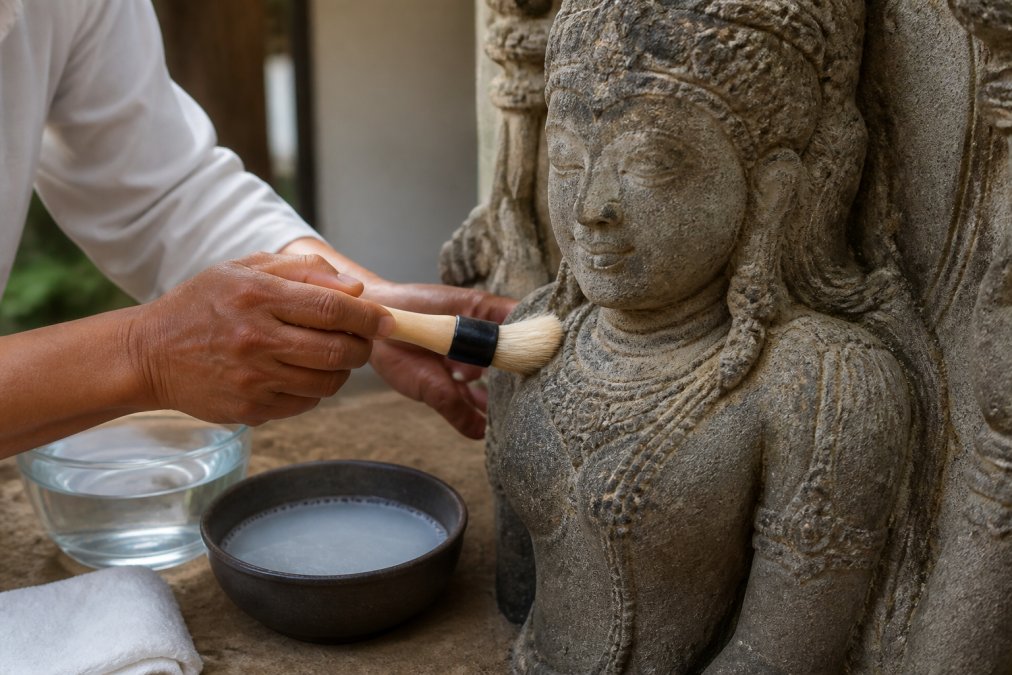
Mix your pH-neutral cleaning solution in a bucket with just a few drops of mild dish soap in distilled water. Test the solution on an inconspicuous area first to ensure it doesn't cause discoloration. Dip your soft-bristled brush into the solution and gently scrub in circular motions, working methodically from top to bottom. Let gravity help rinse the solution downward. Don't apply excessive pressure; let the brush and solution do the work. For heavily soiled areas, repeat gently rather than scrubbing aggressively.
Pay particular attention to carved details and recessed areas where dirt accumulates. Use a softer touch in these zones to avoid damaging fine details.
Rinsing Thoroughly and Air Drying
Rinsing thoroughly is critical. Any residue from the cleaning solution left on the stone can eventually cause staining or chemical damage. Use clean distilled water and rinse multiple times until the water runs clear. For complex sculptures with many crevices, this step may require patience and several rinses.
After rinsing, use clean microfiber cloths to gently pat the sculpture dry. Don't rub aggressively; patting removes excess water while minimizing friction. Allow the piece to air dry completely in a shaded location, which may take 24-48 hours depending on humidity and stone type. Never use heat sources like hair dryers or fans to speed drying, as rapid moisture loss can stress the stone.
Removing Moss and Biological Growth from Stone Sculptures
Moss, lichen, and algae growth on stone sculptures is common, especially for outdoor pieces or those in damp environments. These growths trap moisture against the stone surface, accelerating deterioration and frost damage. However, removing them requires a different approach than general cleaning.
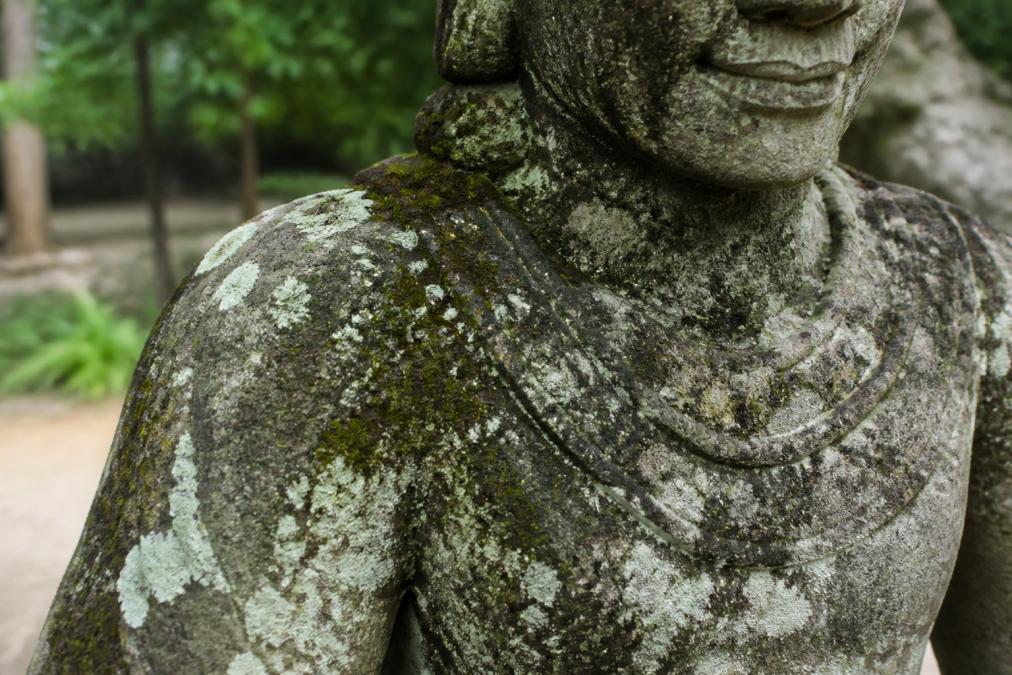
Begin by gently brushing away loose moss with a soft brush. For stubborn growth, soak the affected area with your pH-neutral cleaning solution for 15-20 minutes to soften the biological material. For more persistent lichen or moss, some conservators recommend a dilute solution of non-ionic detergent with distilled water. Apply this solution and let it sit for 20-30 minutes before gently scrubbing. Avoid commercial moss killers or bleach-based products, which can damage stone and leave chemical residue that accelerates future deterioration.
After removing biological growth, rinse thoroughly and allow the sculpture to dry completely. Multiple gentle treatments are always safer than one aggressive approach. If growth returns quickly, your sculpture is likely in an environment that's too damp. Consider improving air circulation or adjusting the display location to reduce moisture retention.
How to Maintain Stone Garden Statues Long-Term
Maintaining stone garden statues focuses on managing moisture and environmental stress. The biggest threat to long-term preservation is water penetration into the stone's pores, which leads to freeze-thaw cycles, salt crystallization, and biological growth. Your maintenance routine should prevent these issues before they develop.
Inspect your sculptures regularly, at least quarterly for outdoor pieces. Look for new cracks, failing repairs, or signs of biological growth. Early detection allows you to address problems when they're small. Keep the sculpture clean and free of debris that traps moisture with light brushing every few months.
Position outdoor sculptures where they receive good air circulation and sunlight exposure. Shaded, damp locations accelerate moss growth and water retention. Orient the sculpture so water runs off rather than pooling in crevices. For pieces displayed indoors, maintain moderate humidity levels, ideally between 45-55 percent relative humidity. Position it away from direct heat sources, air conditioning vents, and windows where temperature swings are most extreme. cleaning granite surfaces.
Document your sculpture's condition with photographs taken from the same angles annually. This record becomes invaluable if you ever need to consult a professional conservator or consider restoration work.
Preventing Frost Damage on Stone Statues
Frost damage is one of the most destructive forces acting on stone sculptures in regions with freezing winters. When water enters the stone's pores and freezes, it expands with tremendous force, about 9 percent volume increase. This expansion creates internal stress that can cause spalling, cracking, and structural failure if repeated over many freeze-thaw cycles.
Prevention starts with keeping your sculpture as dry as possible during winter months. Position the sculpture where it receives some sun exposure, which helps dry moisture. Avoid low spots where water collects or areas where snow melt concentrates.
For valuable pieces in harsh climates, consider temporary winter protection. A simple shelter that sheds water while allowing air circulation can dramatically reduce frost damage risk. For particularly vulnerable pieces, you might move them indoors during winter months. The slight inconvenience of seasonal relocation is far outweighed by preservation benefits.
Sealing is sometimes recommended for stone preservation, but this is controversial among conservators. A breathable sealant may help reduce water penetration, but it can also trap moisture if not applied correctly. Before sealing any valuable piece, consult with a professional conservator. For most antique sculptures, particularly those with historical or spiritual significance, focusing on placement and moisture management is the safer approach.
Cleaning Mistakes to Avoid
The most common mistake is using acidic or alkaline cleaners on stone sculptures. Vinegar, commercial stone cleaners, and bathroom cleaners contain acids that etch carbonate-based stones like marble and limestone. Stick strictly to pH-neutral solutions.
Never use pressure washers on antique stone sculptures. The force can gouge soft stones, destroy delicate carved details, and force water deep into the stone's pores where it causes internal damage. Abrasive scrubbing with wire brushes, steel wool, or stiff brushes will scratch and damage the surface. Once scratched, these marks become focal points for water infiltration and further deterioration.
Avoid using sealers without professional guidance. Many commercial stone sealers are designed for new stone or heavily trafficked interior floors. On antique sculptures, the wrong sealer can trap moisture and accelerate damage. Don't ignore drainage and water management around outdoor sculptures. Simple adjustments like slightly tilting the sculpture or improving ground drainage can prevent years of damage.
Finally, resist the urge to over-clean. Your sculpture doesn't need to look brand new. A light patina and weathering are normal and often desirable, they're part of the piece's history and character. Aggressive cleaning to achieve a pristine appearance often causes more harm than the dirt ever could.
Preserving Patina and Stone Character
One of the most important concepts in caring for antique stone sculptures is understanding the difference between dirt and patina. Patina is the subtle coloration, weathering patterns, and surface changes that develop over decades or centuries. It's part of the sculpture's authenticity and historical significance. Dirt is surface accumulation that obscures rather than enhances the piece.
When cleaning your sculpture, aim to remove dirt while preserving the patina underneath. You're not trying to make the piece look new; you're revealing its authentic character while removing harmful accumulation. This philosophy is particularly important for pieces with spiritual or cultural significance, like many of the Buddhist and Hindu sculptures offered by HD Asian Art.
Surface oxidation on stone tells the story of the sculpture's age and exposure history. These marks shouldn't be removed. Your cleaning should be conservative enough that you leave these character marks intact. If you're uncertain whether something is dirt or patina, err on the side of leaving it.
Biological growth like lichen actually protects the underlying stone in some cases by creating a barrier against further weathering. When growth becomes heavy, it traps moisture and accelerates damage. The goal is to manage biological growth, keeping it light and controlled, rather than eliminating it completely.
Document your sculpture's appearance before and after cleaning. These records help you track whether your maintenance approach is working. Over time, you'll develop an intuitive sense of how your particular piece responds to its environment and what maintenance schedule works best.
The long-term preservation of antique stone sculptures depends on understanding that these pieces are living documents of history. Your role as a caretaker is to maintain them thoughtfully, removing threats while respecting their character and authenticity. This approach ensures that your sculpture will survive for generations to come, retaining both its physical integrity and its spiritual or aesthetic significance.
Proper care for antique stone sculptures requires patience, the right tools, and a commitment to gentle, conservative cleaning methods. Whether you're maintaining a cherished piece in your meditation space or preserving a garden statue for future generations, these techniques protect your investment while honoring the craftsmanship and history embedded in the stone. For collectors seeking authentic Southeast Asian Buddhist and Hindu sculptures, understanding how to properly care for these pieces is essential to preserving their value and spiritual significance. Browse HD Asian Art's carefully curated collection of antique and contemporary stone sculptures, each selected for quality and authenticity, and discover pieces worthy of thoughtful, long-term stewardship.
Frequently Asked Questions
Can I use a pressure washer to clean antique stone sculptures?
No. Pressure washers damage the structural integrity of antique stone by forcing water into pores and micro-fractures. The high pressure erodes the surface and accelerates weathering. Instead, use a soft-bristled brush with pH-neutral soap and distilled water. This gentler approach preserves the stone's original character while removing dirt safely.
What is the best non-abrasive cleaner for antique stone sculptures?
pH-neutral soap or mild non-ionic detergent mixed with distilled water is safest. Avoid acidic cleaners, vinegar, and bleach, which dissolve calcium carbonate and damage patina. A solution of mild dish soap and distilled water works well for most stone types. Test any cleaner on an inconspicuous area first to confirm it won't etch or discolor the surface.
How often should I clean my antique stone sculptures?
Clean as needed, typically once or twice yearly, depending on environmental exposure. Sculptures in shaded areas accumulate less debris and biological growth. Outdoor pieces in humid climates may need more frequent attention. Regular light cleaning prevents heavy buildup that requires aggressive scrubbing. Focus on removing debris and biological growth rather than pursuing a pristine appearance, which can strip valuable patina.
What should I do if my antique stone sculpture has frost damage or cracks?
Do not attempt to repair cracks yourself. Frost damage occurs when water enters the stone's porosity, freezes, and expands. Prevent future damage by sealing with a breathable sealant designed for stone conservation and moving vulnerable pieces to sheltered locations during winter. For existing cracks or structural concerns, consult a professional stone conservator to assess whether intervention is needed.
