



Beginner Guide to Identifying Buddhist Art Styles
Beginner Guide to Identifying Buddhist Art Styles
Table of Contents
- Buddhist Art History for Beginners
- Types of Buddhist Art and How They Differ
- Buddhist Art Styles by Region
- Buddhist Statues and Their Features
- A Practical Workflow for Identifying Buddhist Art
- Common Beginner Misidentifications
- Frequently Asked Questions
Buddhist Art History for Beginners
Buddhist art emerged over 2,000 years ago as a visual language for spiritual practice. The earliest Buddhist sculptures appeared in regions where Buddhism spread from India outward, into Central Asia, Southeast Asia, East Asia, and Tibet. Each region developed its own artistic traditions, influenced by local cultures, materials, and religious interpretations.
Understanding Buddhist art begins with recognizing that these sculptures and paintings are not decorative objects. They serve as focal points for meditation, teaching tools for spiritual concepts, and representations of enlightened beings. When you learn to identify Buddhist art styles, you're learning to read a visual language built on centuries of tradition.
At HD Asian Art, we understand that recognizing authentic pieces involves understanding the visual markers that define each tradition. The differences between regional styles are not subtle; they reflect distinct philosophies, materials, and artistic purposes that can help you understand where a piece comes from and what it represents.
Types of Buddhist Art and How They Differ
Buddhist art takes two primary forms: sculpture and painting. Each serves different purposes and uses different materials depending on the region and era.
Sculpture Versus Painting
Sculpture dominates Buddhist art traditions across Asia. Stone, bronze, and wood statues serve as objects of veneration in temples and meditation spaces. They offer three-dimensional presence that paintings cannot match, you can walk around them, observe details from multiple angles, and feel their physical weight and materiality.
Painting, particularly in Tibetan traditions, creates portable spiritual narratives. Thangkas (scroll paintings) depict complex scenes with multiple figures, symbols, and layers of meaning. Paintings allow artists to show relationships between beings and to illustrate Buddhist teachings through storytelling. Where a sculpture represents a single moment of enlightenment, a painting can unfold an entire spiritual journey.
Materials and Regional Preferences
Different regions favor different materials based on available resources and cultural traditions. Southeast Asian sculptors worked primarily in stone and sandstone because of abundant local quarries. East Asian artists preferred bronze and wood, which allowed for finer detail work. Tibetan traditions emphasize bronze casting, often combined with gold leaf and semi-precious stones.
The material tells you something important: stone sculptures are typically older and heavier, suggesting they remained in temple settings. Bronze pieces could be transported more easily, making them suitable for traveling monks or portable altars. Wood sculptures, common in East Asia, required specialized carving techniques that became distinctive to each region's artistic schools.
Buddhist Art Styles by Region
Identifying Buddhist art styles by region is the most practical approach for beginners. Each geographic tradition developed recognizable visual characteristics that remain consistent across centuries.
Tibetan Buddhist Art
Tibetan Buddhist art is immediately recognizable by its ornate detail and symbolic complexity. Tibetan statues typically feature elaborate crowns, multiple layers of robes, and richly decorated bases. The figures often hold ritual objects, bells, thunderbolts (dorjes), or ritual daggers, that identify specific deities or bodhisattvas.
Tibetan paintings (thangkas) use bright mineral pigments on cotton or silk. The compositions are densely packed with symbolic imagery. A central figure sits surrounded by smaller figures, clouds, mountains, and ritual objects arranged in precise symbolic positions. Gold leaf highlights important elements, creating visual hierarchy that guides the viewer's eye to the most spiritually significant details.
Tibetan art emphasizes movement and dynamic energy. Figures often twist or lean, their robes flowing dramatically. This reflects the Tibetan Buddhist emphasis on active compassion and dynamic spiritual practice, contrasting with the stillness of Southeast Asian traditions.
Southeast Asian Traditions
Southeast Asian Buddhist art, particularly from Cambodia, Thailand, and Laos, emphasizes serene stillness. Khmer sculptures from Cambodia show Buddha figures in meditation poses with calm, symmetrical faces. The style is minimalist compared to Tibetan work, simple robes, no elaborate crowns, and restrained hand gestures.
Stone is the dominant material in Southeast Asian traditions. Sandstone and limestone allowed sculptors to carve smooth, flowing forms. The surfaces often show weathering and lichen growth, which can be markers of age.
Southeast Asian Buddha faces follow consistent proportions: elongated earlobes (symbolizing the Buddha's royal past before renunciation), downcast eyes, and serene expressions. The body remains still and centered, reflecting Buddhist teachings about mental stillness and inner peace.
East Asian Styles
East Asian Buddhist art, from China, Japan, and Korea, combines influences from both Indian and local traditions. Bronze became the preferred material, allowing for delicate details and smaller, portable pieces suitable for home altars.
East Asian Buddhas often appear more refined and elegant than their Southeast Asian counterparts. The faces are more expressive, with subtle variations in expression. Robes drape more naturally, with flowing lines that suggest movement even in seated figures. Crowns and ornaments appear more frequently than in Southeast Asian work, but less elaborately than in Tibetan pieces.
Japanese Buddhist sculpture developed distinctive regional characteristics. Faces became increasingly naturalistic over time. Standing Buddhas appear more frequently than in other traditions, and hand gestures grew more varied and expressive.
Buddhist Statues and Their Features
Learning to identify Buddhist art styles means understanding the visual language of Buddhist iconography. Three elements carry the most meaning: hand gestures (mudras), body position, and symbolic objects.
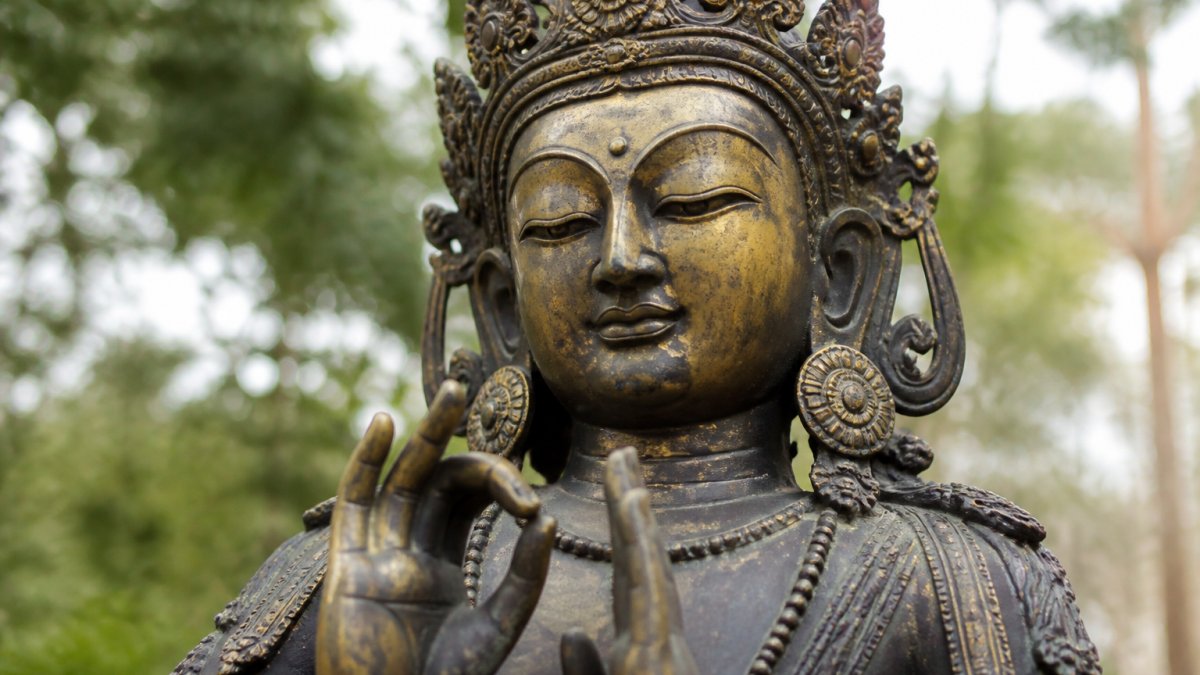
Mudras: Hand Gestures and Their Meanings
Mudras are hand positions that communicate specific spiritual meanings. Each mudra appears consistently across all Buddhist traditions, making them reliable identification tools.
The most common mudra is the Bhumisparsha Mudra, the right hand points downward with palm inward, fingers extended. This represents the Buddha calling the earth to witness his enlightenment.
The Dhyana Mudra shows both hands resting in the lap, palms upward. This represents meditation and inner contemplation. Figures in this pose appear deeply calm and inward-focused.
The Abhaya Mudra raises the right hand to shoulder height with palm facing outward, fingers extended. This gesture means "fear not" or protection. It appears in standing Buddhas across all traditions.
The Varada Mudra extends the right arm downward with palm facing outward. This represents compassion and the granting of blessings. Often paired with another mudra in the opposite hand.
Recognizing mudras helps you identify not just the style of a piece, but its specific spiritual purpose. A statue in Bhumisparsha Mudra serves as a focal point for meditation on enlightenment. One in Abhaya Mudra emphasizes protection and fearlessness.
Posture, Halos, and Visual Markers
Body position conveys meaning as clearly as hand gestures. Seated Buddhas in meditation pose (legs crossed, feet visible) represent inner stillness and enlightenment already achieved. This is the most common posture across all traditions.
Standing Buddhas appear less frequently but carry different meaning, they represent the Buddha actively moving through the world, teaching and helping others. Standing figures often appear more dynamic, with slightly turned bodies or varied hand positions.
Halos (aureoles) frame the head or entire body, emphasizing spiritual radiance. A simple circular halo behind the head is common in Southeast Asian work. Tibetan and East Asian pieces often feature elaborate halos with radiating flames or geometric patterns. The halo size and complexity can suggest the figure's spiritual rank, more elaborate halos indicate higher spiritual attainment.
The ushnisha (crown or knot of hair on top of the head) appears on most Buddha figures. It represents wisdom and spiritual attainment. The size and shape vary by region and tradition. Southeast Asian Buddhas show subtle ushnishas. Tibetan and East Asian pieces often display prominent, ornate crowns.
Attributes and Symbols
Objects held in the Buddha's hands or placed near the figure carry symbolic weight. Understanding these attributes helps you identify which Buddha or bodhisattva you're viewing.
The lotus flower represents purity and spiritual awakening. It appears in sculptures and paintings across all traditions. A Buddha seated on a lotus pedestal emphasizes the achievement of enlightenment despite worldly challenges, the lotus blooms from muddy water, symbolizing spiritual purity emerging from worldly confusion.
The begging bowl appears in the Buddha's hands or at the base of statues. It represents the Buddha's renunciation of wealth and his dependence on the generosity of others.
In Tibetan traditions, ritual objects carry specific meanings. A dorje (thunderbolt) represents indestructible spiritual power. A bell symbolizes wisdom. A ritual dagger represents the cutting away of ignorance. These objects appear consistently in Tibetan deity sculptures, making them reliable identification markers.
A Practical Workflow for Identifying Buddhist Art
When you encounter a Buddhist sculpture or painting, follow this systematic approach.
Step 1: Observe the Material. Is it stone, bronze, wood, or painted on cloth? Stone suggests Southeast Asian origin and likely significant age. Bronze suggests East Asian or Tibetan work.
Step 2: Examine the Face and Crown. Southeast Asian faces show serene stillness, downcast eyes, and subtle features. East Asian faces are more expressive with naturalistic proportions.
Step 3: Identify the Hand Gestures (Mudras). Look at the hand positions. Bhumisparsha (hand pointing down) indicates an enlightenment scene. Dhyana (hands in lap) indicates meditation.
Step 4: Note the Body Position. Is the figure seated in meditation pose or standing? Seated figures emphasize spiritual achievement. Standing figures emphasize active compassion and teaching.
Step 5: Look for Symbolic Objects. What is the figure holding or what objects surround it?
Step 6: Consider the Overall Aesthetic. Does the piece emphasize ornate detail (Tibetan), serene simplicity (Southeast Asian), or refined elegance (East Asian)? This final observation confirms your regional identification.
Common Beginner Misidentifications
New collectors often make predictable mistakes when identifying Buddhist art. Awareness of these errors helps you avoid them.
Confusing Bodhisattvas with Buddhas. A Bodhisattva is an enlightened being who delays final enlightenment to help others. Bodhisattvas often wear crowns and jewelry, marks of their retained connection to the material world.
Mistaking Regional Styles for Different Traditions. A serene, stone-carved figure might be Southeast Asian Buddhist work, not Hindu sculpture. The downcast eyes and meditation pose are Buddhist markers.
Assuming Ornate = Older. Many beginners believe elaborate Tibetan pieces must be ancient. In reality, Tibetan Buddhist art maintained consistent styles for centuries.
Overlooking Mudras as Identification Tools. Beginners often focus on the overall appearance while missing the specific hand gestures. Mudras are the most reliable single identifier.
Identifying Buddhist art styles opens a deeper appreciation for the spiritual traditions that created these works.
At HD Asian Art, we understand that collectors and spiritual practitioners need more than beautiful objects. You need pieces with authentic provenance, genuine craftsmanship, and spiritual resonance.
Frequently Asked Questions
How can beginners identify different Buddhist art styles?
Start by observing three key elements: the posture (seated, standing, or reclining), the hand gestures or mudras, and the regional style markers like clothing and ornamentation. Tibetan art typically features ornate crowns and detailed robes, while Southeast Asian styles emphasize serene simplicity. East Asian traditions often show more elaborate halos and symbolic objects. Compare your piece against reference images organized by region to narrow down its origin and meaning.
What are the main visual features to look for in Buddhist statues and their features?
Focus on mudras (hand positions that convey spiritual meaning), the figure's posture, facial expression, and any objects held in the hands. Look for a halo or aureole behind the head, which indicates enlightenment. Notice the style of robes, crown, and jewelry. These elements combined tell you which Buddha or bodhisattva you're viewing and which region created the piece. Seated figures often represent meditation, while standing figures suggest teaching or blessing.
How did Buddhist art styles change as Buddhism spread across Asia?
As Buddhism traveled from India through Tibet, Southeast Asia, and East Asia, each region adapted the visual tradition to reflect local aesthetics and materials. Tibetan art became more ornate and symbolic, incorporating Hindu influences. Southeast Asian traditions simplified forms and emphasized graceful proportions. East Asian styles developed distinctive painting techniques and architectural integration. These regional variations make it possible to date and locate a piece by recognizing its stylistic characteristics and cultural context.
What materials are commonly used in Buddhist art?
Bronze, stone, wood, and paint are the primary materials across traditions. Tibetan and Southeast Asian sculptors favored bronze and stone, while East Asian artists worked extensively with wood and created detailed painted thangkas. The material choice often reflects regional resources and spiritual function. Bronze pieces tend to show fine detail and were used for portable altars, while stone sculptures were created for temples and outdoor spaces. Understanding materials helps you assess authenticity and regional origin.
