



Asian Sculpture Market Value: A Collector's Guide
Asian Sculpture Market Value: A Collector's Guide
Art market value for Asian sculptures is defined as the price a willing buyer pays a willing seller in an open, competitive market at a specific point in time. This figure shifts constantly, driven by provenance, condition, rarity, and documented legal compliance. Asia’s total fine art auction sales reached $2.2 billion in 2025, down from $5.4 billion in 2021.
That contraction tells collectors something critical: the market has matured, and understanding what is art market value for Asian sculpture now requires more than tracking headline numbers. Appraisers distinguish three core value types: auction value, insurance value, and probate value. Each serves a different purpose and produces a different number for the same object.
What factors determine the market value of Asian sculptures?
Provenance is the single most powerful driver of value in the Asian sculpture market. A documented ownership history connecting a piece to a reputable collection, a museum exhibition, or a pre-1970 export record can multiply its price several times over. Without that paper trail, even a visually stunning bronze or stone figure struggles to attract serious buyers.
Condition and age indicators follow closely. Physical signs of age such as authentic patina, oxidation, and natural wear are prioritized over certificates, which can be forged. Over-restoration actively harms value. A Khmer sandstone deity with original surface texture commands more than a heavily cleaned version of the same subject.
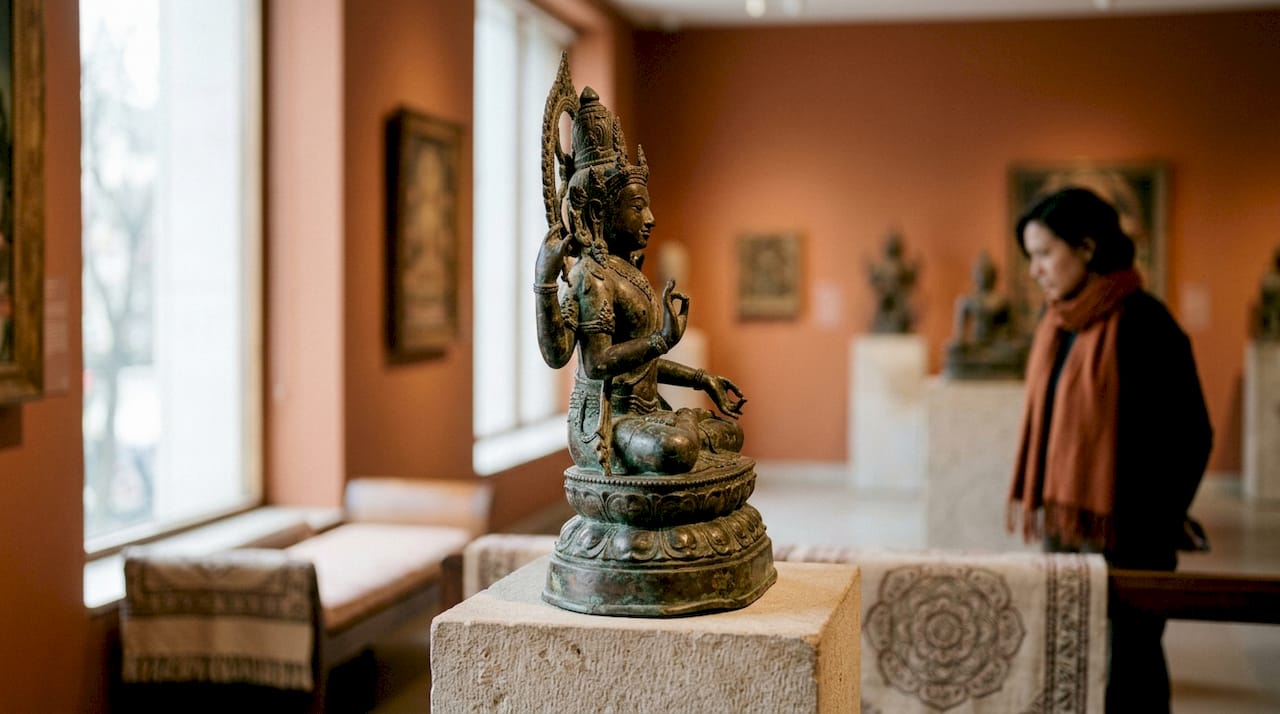
Rarity and historical significance add another layer. Sculptures from specific regional workshops, dynastic periods, or iconographic traditions with limited surviving examples carry premiums. A Javanese bronze Bodhisattva from the Sailendra period is rarer than a 20th-century reproduction of the same form, and the market prices them accordingly.
Legal compliance is non-negotiable. Collectors must confirm that pieces were legally exported before applicable cultural heritage laws took effect. Without this documentation, a sculpture becomes an illiquid asset. No reputable auction house, insurer, or institutional buyer will engage with a work that lacks a clean legal history.
Material and craftsmanship quality round out the core factors. Bronze, stone, and wood each carry different market expectations. Understanding stone material types and their regional origins helps collectors assess whether a piece meets the quality threshold that serious buyers demand.
- Provenance: Documented ownership history, ideally pre-1970 export records
- Condition: Authentic patina and age wear; avoid over-restored pieces
- Rarity: Limited surviving examples from specific periods or workshops
- Legal compliance: Verified export documentation before heritage law enactment
- Material quality: Bronze, stone, and wood assessed by regional craftsmanship standards
Pro Tip: Request a condition report and provenance file before any purchase. If a seller cannot produce both, treat the asking price as speculative.
How have recent trends shaped Asian sculpture prices?
The Asian art market has undergone a significant correction since its 2021 peak. Average hammer prices dropped from $81,000 per lot in 2021 to $36,000 in 2025. That shift does not signal a dying market. It signals a market that has shed speculative excess and is now rewarding quality over hype.
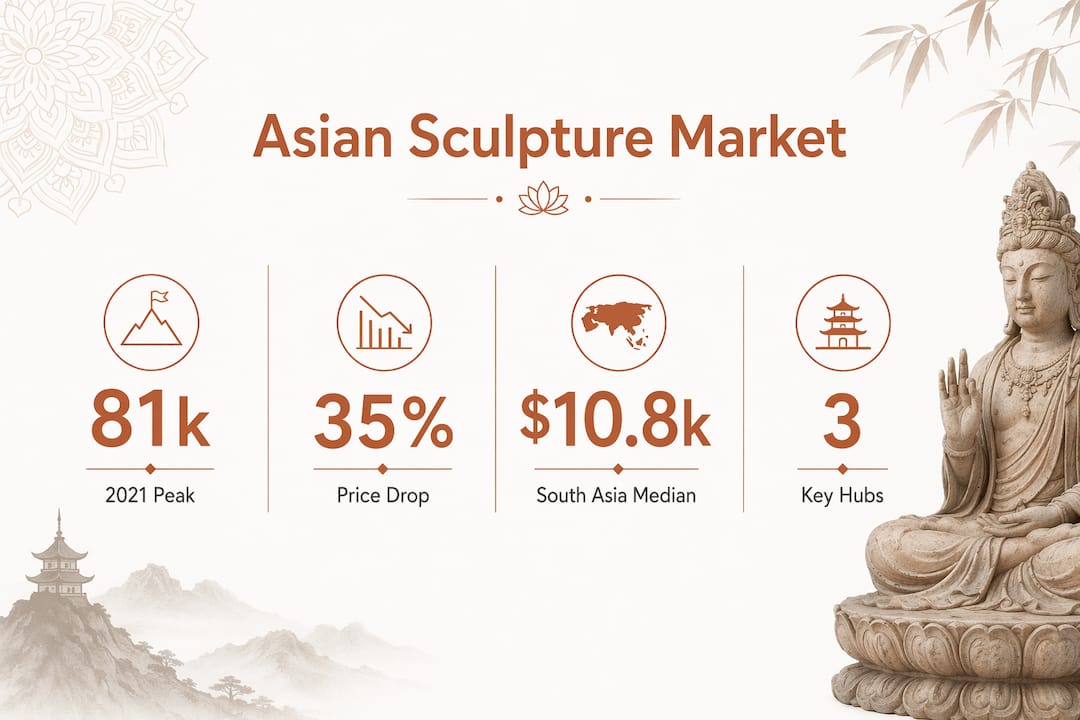
South Asia stands out as the strongest regional performer. India recorded a median hammer price of $10,864 and a sell-through rate of 89% in 2025, the highest among major Asian regions. A 89% sell-through rate means nearly every lot offered found a buyer. That is exceptional liquidity for any art category.
| Region | 2025 Median Hammer Price | Sell-Through Rate |
|---|---|---|
| India | $10,864 | 89% |
| Asia overall | $36,000 (avg) | Declining from 2021 peak |
| Hong Kong | Not publicly listed | Rebounding in 2026 |
At Art Basel Hong Kong 2026, strong sales across market segments confirmed a solid rebound. Hong Kong retains its position as the regional market leader, with buyers showing a positive outlook across price points.
“Asian art buyers have become more level-headed, favoring quality and provenance over recent speculative pricing bubbles. Selective and patient buyers now prioritize documented provenance and historical significance, while museum-quality antiques remain actively sought after.” Art Basel market analysis
Singapore and Japan have also grown as key market hubs, attracting international collectors who previously focused exclusively on Hong Kong and mainland China. This geographic spread creates new pricing benchmarks and new opportunities for collectors who track regional auction results closely.
What are the standard methods for appraising Asian sculptures?
Professional Asian sculpture appraisal follows three distinct valuation types, each producing a different number for the same object. Auction value reflects what a piece would realistically sell for at public sale. Insurance value runs 20–50% higher than market value to cover replacement cost. Probate value is used for estate and tax purposes and typically aligns closely with fair market value.
Professional appraisers follow USPAP standards (Uniform Standards of Professional Appraisal Practice), the recognized benchmark for institutional and tax scrutiny in the United States. A USPAP-compliant appraisal carries weight with the IRS, insurance underwriters, and courts. An informal opinion from a dealer does not.
The appraisal process for Asian sculptures typically follows these steps:
- Submit photographs and dimensions for a preliminary assessment. Most professional appraisers can provide an initial range from high-resolution images of all sides, the base, and any inscriptions.
- Physical examination of the object in person. The appraiser checks patina, casting seams, tool marks, and wear patterns consistent with age.
- Provenance review. The appraiser examines all available documentation: purchase receipts, exhibition catalogs, import records, and prior appraisal reports.
- Market comparison. The appraiser references recent comparable auction results for similar works by region, period, material, and iconography.
- Written report delivery. The final report states the valuation type, effective date, methodology, and the appraiser’s qualifications.
Pro Tip: Always specify the valuation type you need before commissioning an appraisal. Asking for “what it’s worth” produces an ambiguous answer. Asking for “fair market value for insurance purposes” produces a document you can actually use.
Authenticating antique bronze statues requires the same physical scrutiny. Certificates of authenticity alone do not satisfy professional standards. Physical evidence of age always takes precedence.
How can collectors maximize the value of their Asian sculpture investments?
Collectors who achieve the best results treat documentation as an asset equal in importance to the object itself. A well-documented sculpture with clear provenance, a current appraisal, and verified export compliance sells faster and at higher prices than an undocumented piece of equal visual quality.
Authentication and dating are the first practical steps. Learning how to date Thai Buddha images and other regional forms by iconographic and stylistic markers gives collectors an independent baseline before engaging a paid appraiser. This knowledge also protects against overpaying for later reproductions presented as antiques.
- Build a provenance file from day one. Collect purchase receipts, correspondence with sellers, exhibition records, and any prior appraisal documents.
- Commission a USPAP-compliant appraisal before insuring, selling, or donating any piece valued above a threshold your insurer specifies.
- Time sales to market cycles. Major auction seasons in Hong Kong, New York, and London set pricing benchmarks. Selling outside these windows reduces competitive bidding.
- Avoid over-cleaning or restoration. Original surface condition, including patina and minor wear, adds authenticity and value. Aggressive cleaning removes evidence of age that appraisers rely on.
- Verify export compliance before purchase. Ask for documentation showing the piece left its country of origin before relevant cultural heritage legislation took effect. This single step prevents the most common and costly legal problem in Asian art collecting.
Expert-level appraisals guard against fraud and market overvaluation, particularly in cross-border transactions where buyers and sellers operate under different legal frameworks. A formal appraisal report also supports pricing negotiations, insurance claims, and estate planning with objective, defensible numbers.
The Southeast Asian bronze tradition spans centuries and multiple regional styles. Collectors who understand this history make better purchasing decisions and can identify undervalued works that the broader market has not yet recognized.
Key Takeaways
The market value of an Asian sculpture is determined primarily by provenance, legal compliance, and physical condition, not by visual appeal alone.
| Point | Details |
|---|---|
| Provenance drives price | Documented ownership history, especially pre-1970 export records, multiplies value significantly. |
| Three valuation types exist | Auction, insurance, and probate values serve different purposes and produce different numbers. |
| Market has corrected | Average hammer prices fell from $81,000 to $36,000 per lot between 2021 and 2025. |
| South Asia leads performance | India’s 89% sell-through rate in 2025 signals the strongest regional liquidity in the market. |
| Condition beats certificates | Authentic patina and age wear increase value; over-restoration and forged certificates do not. |
What I’ve learned about valuing Asian sculptures after years in the market
The most common mistake I see collectors make is treating visual beauty as a proxy for market value. A stunning gilded Thai Buddha with no provenance file and an aggressive restoration job will consistently underperform a plainer, rougher Khmer bronze with a clean legal history and original surface. The market has become more sophisticated, and buyers who once chased aesthetics are now asking hard questions about documentation first.
The correction from 2021 to 2025 was healthy. Speculative buyers who paid peak prices for contemporary Asian works without proper due diligence absorbed real losses. Collectors focused on museum-quality antiques with verified provenance held their value far better. That pattern is not new. It repeats across every art market cycle.
What has changed is the geographic spread of serious buyers. Singapore and Japan now generate pricing data that matters. Collectors who only watch Hong Kong and New York miss regional signals that can identify undervalued categories before they move. I track auction results from these hubs quarterly, not annually.
The legal provenance question is the one I cannot stress enough. A piece without documented pre-heritage-law export history is not just legally risky. It is practically unsellable to any institutional buyer, major auction house, or sophisticated private collector. That restriction makes it illiquid regardless of its artistic merit. Build a confident collection by resolving this question before purchase, not after.
— James, HDAsianArt.com
HDAsianArt’s collection for serious collectors
HDAsianArt specializes in antique Buddhist and Hindu sculptures from Cambodia, Thailand, Indonesia, Sri Lanka, Vietnam, and beyond. Every piece in the collection is individually researched, photographed, and described by experts, with full attention to provenance and legal compliance.
Collectors researching antique Asian sculptures will find bronze, stone, and wood works selected for museum-quality craftsmanship and long-term collectability. Each listing includes detailed condition notes and iconographic context. HDAsianArt ships worldwide with insured DHL delivery. For collectors seeking a specific period, region, or iconographic type, the team provides direct guidance on availability and current market positioning.
FAQ
What is art market value for an Asian sculpture?
Art market value is the price a willing buyer and willing seller agree on in an open market at a specific date. For Asian sculptures, this figure is shaped by provenance, condition, rarity, and legal export compliance.
How does insurance value differ from auction value?
Insurance value runs 20–50% higher than auction value because it covers replacement cost rather than likely sale price. Always specify which valuation type you need before commissioning an appraisal.
Why does provenance matter so much for Asian sculpture values?
Legal provenance documentation confirms a piece was legally exported before cultural heritage laws took effect. Without it, the sculpture cannot be sold through reputable channels, making it effectively illiquid regardless of artistic quality.
What do professional appraisers look for in Asian sculptures?
Appraisers following USPAP standards prioritize physical signs of age such as patina and casting wear over certificates, which can be forged. Condition, comparable auction results, and documented provenance form the core of any credible appraisal.
Which Asian art markets are performing best right now?
India recorded an 89% sell-through rate and a median hammer price of $10,864 in 2025, making it the strongest regional performer. Hong Kong showed a solid market rebound at Art Basel Hong Kong 2026, confirming its continued regional leadership.
