



5 Buddha Statue Poses for Peaceful Home Decor
5 Buddha Statue Poses for Peaceful Home Decor
Table of Contents
When you walk into a home with thoughtfully placed Buddha statues, something shifts. The energy feels different, calmer, more intentional. The 5 buddha statue poses for peaceful home decor each carry distinct spiritual meanings and aesthetic purposes that transform how a space feels.
At HD Asian Art, we've worked with countless clients seeking to create sanctuaries within their homes, and we've learned that understanding the symbolism behind each pose is just as important as where you place it.
The real challenge isn't finding a Buddha statue, it's finding the RIGHT one for your space and understanding how to honor it properly. This guide breaks down the five essential poses, explains what each one represents, and shows you exactly how to integrate them into your home in ways that feel authentic and beautiful.
Understanding Buddha Statue Poses and Their Meanings
Different Buddha statue poses represent different aspects of the spiritual path. Each mudra, or hand gesture, tells a specific story about enlightenment, protection, teaching, and peace. When you understand what each pose symbolizes, placing a statue becomes an intentional act rather than mere decoration.
The 5 Essential Buddha Statue Poses for Home Decor
Pose 1: The Meditating Buddha (Dhyana Mudra)
The Meditating Buddha sits in deep contemplation with both hands resting in the lap, palms facing upward, one hand placed gently over the other. This pose represents inner focus, mindfulness, and the pursuit of enlightenment through meditation.
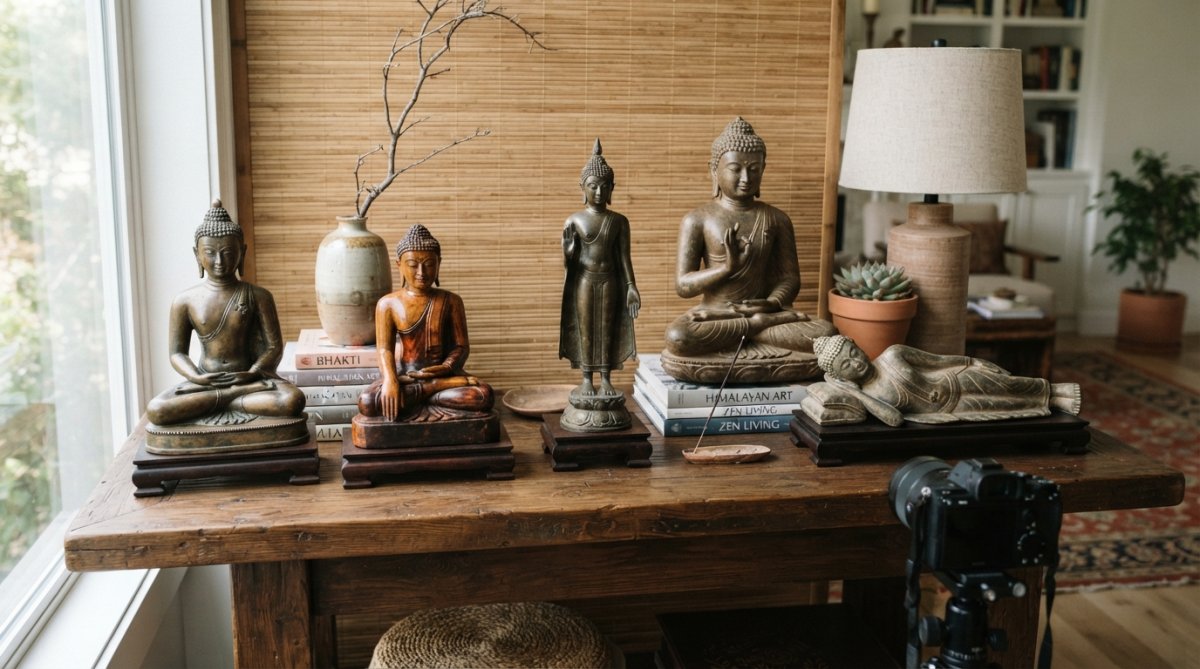
This statue works exceptionally well in meditation rooms, bedrooms, and quiet corners of your home. According to research on meditation spaces and environmental design, physical objects that symbolize peace significantly enhance the effectiveness of meditation practice. Position the Meditating Buddha at eye level or slightly above, facing into the room rather than toward a wall.
Pose 2: The Earth-Touching Buddha (Bhumisparsha Mudra)
In this pose, the Buddha sits with his right hand reaching down to touch the earth while his left hand rests in his lap. This gesture represents the moment Buddha called upon the earth itself to witness his enlightenment, symbolizing stability, grounding, and the triumph of enlightenment over obstacles.
The Earth-Touching Buddha carries powerful energy for anyone seeking stability or protection from negative influences. Position this statue in a grounded location, a low shelf, meditation altar, or corner of your living room. Unlike the Meditating Buddha which works well elevated, this pose benefits from being positioned lower, closer to the ground.
Pose 3: The Laughing Buddha (Hotei)
The Laughing Buddha, also called Hotei in Japanese tradition, is often depicted with a round belly, a broad smile, and sometimes carrying a sack. This figure represents joy, contentment, abundance, and the lightness of enlightenment. Unlike the historical Buddha, the Laughing Buddha reminds us that enlightenment includes joy.
The Laughing Buddha brings levity and abundance into a space. It's perfect for entryways, living rooms, and any space where you want to invite good fortune and happiness. Small gold-finished resin versions are affordable and durable, making them ideal for apartments or smaller spaces.
Pose 4: The Reclining Buddha (Parinirvana)
The Reclining Buddha lies on his side, head resting on his hand, in a pose of complete peace and final rest. This statue depicts the moment of parinirvana, the Buddha's final release from the cycle of rebirth and suffering. It represents ultimate peace and the completion of the spiritual journey.
This pose carries profound meaning but requires thoughtful placement. The Reclining Buddha works beautifully in living rooms, meditation spaces, or garden areas where it creates a sense of serene completion. Placement near windows works well with this pose, as natural light emphasizes the peaceful, restful quality.
Pose 5: The Teaching Buddha (Dharmachakra Mudra)
In this pose, both hands are raised at chest level, with the thumbs and index fingers forming circles while the other fingers extend upward. This mudra represents the moment Buddha first taught the dharma, symbolizing the transmission of wisdom and teaching.
The Teaching Buddha radiates outward energy. While the Meditating Buddha draws you inward, the Teaching Buddha broadcasts wisdom and compassion into your space. This pose works beautifully in home offices, libraries, or any space dedicated to learning and communication.
| Buddha Pose | Best Location | Symbolism | Ideal Size |
|---|---|---|---|
| Meditating | Meditation room, bedroom | Inner peace, mindfulness | 8-12 inches |
| Earth-Touching | Living room, altar | Grounding, stability | 10-14 inches |
| Laughing | Entryway, office | Joy, abundance | 6-10 inches |
| Reclining | Garden, living room | Peace, completion | 18-24 inches |
| Teaching | Office, entryway | Wisdom, communication | 10-16 inches |
Buddha Statue Meaning and Placement Principles
Position Buddha statues at or slightly above eye level when possible. This creates a natural relationship between you and the statue. Avoid placing statues on the floor or in low corners where they might be stepped over or treated casually.
Never place a Buddha statue in a bathroom if possible. Bathrooms are considered spiritually unclean in Buddhist tradition. Face the statue toward the room's interior rather than toward a wall, allowing the statue's energy to flow into your living space.
Feng Shui Buddha Placement for Positive Energy
In feng shui philosophy, Buddha statues are powerful tools for inviting specific energies into different areas of your home. The Laughing Buddha belongs in the wealth corner of your home (the far left corner of any room or your entire home). The Meditating Buddha works beautifully in the center of your home, representing harmony and balance. The Teaching Buddha in your office or study area supports clear communication and the flow of knowledge.
Material matters in feng shui too. Stone and ceramic statues ground energy, making them ideal for stability-focused areas. Brass and metal statues amplify and project energy outward, working well in entryways and living spaces.
Room-by-Room Placement Guide
Living Room: The Laughing Buddha works beautifully here, inviting joy and abundance. A Teaching Buddha also works well, creating an energy of openness and communication.
Bedroom: Keep bedroom statues small and intentional. A Meditating Buddha on a nightstand supports restful sleep and peaceful dreams.
Home Office or Study: The Teaching Buddha is ideal here, supporting clear communication and the flow of ideas. An Earth-Touching Buddha also works well, providing grounding stability during focused work.
Entryway: A Laughing Buddha welcomes people with warmth and abundance. A Teaching Buddha creates an impression of wisdom and openness.
Meditation Space or Altar: The Meditating Buddha truly shines here. Create a dedicated corner with a small table, your statue, perhaps a candle or incense holder, and nothing else.
Small Space Solutions for Apartments
Apartment living doesn't mean you can't create a meaningful Buddha statue display. Choose ONE pose that resonates with your primary intention. Vertical placement becomes crucial in small spaces. Use wall shelves or tall narrow shelving units to position your statue at eye level without consuming floor space. Mini brass statues (1-2 inches) work beautifully on desks, nightstands, or bookshelves in tight quarters.
Choosing the Right Buddha Statue: Materials and Styles
The material of your statue affects both its aesthetic and its energetic quality.
Material Considerations: Stone, Resin, Wood, and Brass
Stone and Crushed Stone: These materials ground energy and create a sense of permanence. Hand-cast crushed stone statues have authentic weight and presence and develop a beautiful patina over time.
Resin: Cold-cast resin is affordable, durable, and versatile. Resin pieces can replicate the appearance of stone or other materials while remaining lightweight and easy to place.
Wood: Wooden statues connect to growth, warmth, and natural beauty. Hand-carved wood pieces carry the energy of the artisan and the tree they came from.
Brass and Metal: These materials amplify and project energy outward. Brass statues have a bright, warm quality that catches light beautifully.
Budget-Friendly vs. Premium Options
You don't need to spend a fortune on a meaningful Buddha statue. A quality 8-inch resin or stone piece serves your spiritual practice just as effectively as a premium hand-carved wood or antique piece. What matters is that the statue resonates with you and that you treat it with respect. Premium pieces carry the energy of master craftsmanship, while budget-friendly options work beautifully for apartment dwellers or anyone exploring their practice.
Cultural Sensitivity and Respectful Display
Buddha statues aren't decorative objects, they're sacred representations of spiritual practice. Treating them with respect means understanding a few key principles.
Do's and Don'ts for Displaying Buddha Statues
Do: Place statues at or slightly above eye level. Do: Face statues toward the interior of rooms. Do: Keep statues clean and dust them regularly. Do: Choose a stable, secure placement where the statue won't be knocked over.
Don't: Place statues in bathrooms or other spaces considered spiritually unclean. Don't: Position statues below eye level where people might step over them. Don't: Use Buddha statues as decorative accents without intention. Don't: Treat Buddha statues as magical objects that will change your life without your participation. They're tools for spiritual practice and reminders of enlightenment, not talismans. Don't: Ignore the cultural and religious significance of these figures. While Buddha statues have become mainstream in Western home decor, they originate from Buddhist spiritual practice and deserve that respect.
Care and Maintenance by Material Type
Stone statues need occasional dusting with a soft cloth. Avoid harsh chemicals or abrasive cleaners. If your statue is outdoors, bring it inside during harsh weather.
Resin pieces are low-maintenance. Dust them regularly and wipe with a slightly damp cloth if needed. Avoid placing them in direct sunlight for extended periods.
Wood statues benefit from occasional dusting and should be kept away from excessive moisture or direct heat.
Brass and metal pieces develop a natural patina over time. If you prefer the bright finish, polish them occasionally with appropriate brass cleaner.
Creating Your Peaceful Home Sanctuary
A Buddha statue is most powerful when it's part of a larger intentional space. The statue becomes the anchor for a sanctuary, a place in your home dedicated to peace, reflection, and spiritual practice.
Start with one statue in one location. Choose the pose that resonates most strongly with you and the room where you spend the most quiet time. Around your chosen statue, create simplicity. Clear the immediate area of clutter. A small table, shelf, or dedicated corner becomes your sacred space. You might add a candle, a small plant, or a cushion for sitting.
The statue itself becomes a visual reminder. Each time you see it, you're reminded of your intention. The Meditating Buddha reminds you to pause and breathe. The Earth-Touching Buddha reminds you that you're supported and grounded. The Teaching Buddha reminds you to communicate with wisdom. The Laughing Buddha reminds you that joy is part of the path.
Over time, your relationship with your statue deepens. It becomes less about the object and more about what it represents in your life. The statue holds your intention and reflects your commitment to creating a peaceful, meaningful home.
Creating a peaceful home sanctuary doesn't require expensive renovations or elaborate altars. It begins with understanding the 5 buddha statue poses for peaceful home decor, choosing one that resonates with your spiritual practice, and placing it with intention and respect.
At HD Asian Art, we specialize in carefully curated Buddhist and Hindu statues that transform meditation spaces and home interiors into refined spiritual sanctuaries. Our hand-picked collection of antique and contemporary pieces, including authentic Khmer and Southeast Asian sculptures, brings temple-inspired decor directly into your personal space.
Whether you're seeking a Meditating Buddha for your practice, an Earth-Touching Buddha for grounding, or a Laughing Buddha for abundance, our curated selection combines authentic craftsmanship with the spiritual depth your home deserves. Browse our collection and discover the statue that calls to you.
Frequently Asked Questions
What do the different Buddha statue poses mean for home decor?
Each Buddha statue pose carries distinct spiritual symbolism. The Meditating Buddha represents inner peace and mindfulness, perfect for meditation spaces. The Earth-Touching Buddha symbolizes enlightenment and grounding energy. The Laughing Buddha brings joy, abundance, and positive energy to your home. The Reclining Buddha represents the Buddha's final state of peace and tranquility. The Teaching Buddha embodies wisdom and spiritual guidance. Understanding these meanings helps you select the right pose for your home's energy and your personal intentions.
Where should I place a Buddha statue in my home for maximum positive energy?
According to Feng Shui principles, place Buddha statues at eye level or slightly above in calm, clean spaces. Living rooms work well for Laughing Buddha statues to invite joy and prosperity. Meditation rooms benefit from Meditating Buddha poses for enhanced focus. Avoid bathrooms, kitchens, and cluttered areas. In small apartments, use elevated shelves or corners to honor the statue's spiritual significance. Ensure the statue faces into your home rather than toward a wall, allowing energy to flow throughout your space naturally.
Is it disrespectful to display a Buddha statue in my home if I'm not Buddhist?
Displaying a Buddha statue respectfully is appropriate regardless of your religion. Treat the statue as a symbol of peace, mindfulness, and tranquility rather than as a religious object requiring worship. Place it in a dignified location, never on the floor, in a bedroom, or bathroom. Keep the area clean and free from clutter. Many people of all faiths appreciate Buddha statues for their aesthetic beauty and the calm, spiritual atmosphere they create. Respectful appreciation of the symbolism honors the cultural and artistic traditions behind these meaningful pieces.
What materials are best for Buddha statues, and how do I care for them?
Common materials include stone, resin, wood, and brass. Stone and crushed stone statues are durable and weather-resistant, ideal for long-term display indoors or outdoors. Resin statues are lightweight, affordable, and easy to clean with a soft cloth. Wooden statues add warmth but require occasional dusting and protection from moisture. Brass pieces develop patina over time and benefit from gentle polishing. Regardless of material, keep your statue dust-free, away from direct sunlight to prevent fading, and in a stable, respectful location. Handle with care during cleaning to preserve fine details.
How do I choose the right Buddha statue pose for my specific room or meditation space?
Consider your room's purpose and the energy you want to cultivate. For meditation spaces, choose the Meditating Buddha to deepen focus and inner peace. Living rooms suit the Laughing Buddha for warmth and positivity. Bedrooms work with the Reclining Buddha for restful, calming energy. Entryways benefit from the Teaching Buddha to welcome wisdom and guidance. Also consider size, larger statues make bold focal points in spacious rooms, while smaller pieces work beautifully on shelves or desks in apartments. Match the statue's aesthetic (minimalist, ornate, traditional) to your existing decor for visual harmony.
