



Vietnamesische buddhistische Skulpturentraditionen: Ein Leitfaden für Gelehrte
Vietnamesische buddhistische Skulpturentraditionen: Ein Leitfaden für Gelehrte
Vietnamesische buddhistische Skulpturentraditionen stellen eine der markantesten künstlerischen Errungenschaften Südostasiens dar: eine kreative Transformation indischer Prototypen, die durch chinesischen Einfluss, indigene Geisterverehrung und jahrhundertelange dynastische Veränderungen geprägt sind. Das Ergebnis ist ein skulpturaler Kanon, der seine Quellen weder imitiert noch ignoriert, sondern sie aufnimmt und in etwas erkennbar Vietnamesisches uminterpretiert.
Zu den wichtigsten charakteristischen Merkmalen dieser Tradition gehören:
- Ursprünge in Artefakten aus Funanese und Phu Nam, wobei der buddhistische Einfluss zwischen dem 2. und 7. Jahrhundert n. Chr. seinen Höhepunkt erreichte
- Indische stilistische Wurzeln stammen sowohl aus der Gandhāra- als auch aus der Mathurā-Schule und wurden eher selektiv angepasst als direkt kopiert
- Ästhetische Überlagerungen von chinesischem Tang und Lied absorbiert während des Jahrtausends der nördlichen Herrschaft (111 v. Chr.–939 n. Chr.)
- Ikonographie des Mahayana-Buddhismus vermischt mit daoistischem Denken und lokaler Geisterverehrung
- Primärmaterialien: Holz (Ta-khian-Holz), Sandstein, Kalkstein und Bronze
- Signaturtechniken: direkt Bronzeguss im Wachsausschmelzverfahren, Vergoldung, Lackierung und Perlmutt-Intarsien
- Stilistische Höhepunkte während der Lý- und Trần-Dynastie, die allgemein als das klassische Zeitalter der Tradition angesehen wird
Inhaltsverzeichnis
Wie sich die vietnamesischen buddhistischen Bildhauertraditionen im Laufe der Jahrhunderte entwickelten
Die Geschichte beginnt in Oc Eo im Mekong-Delta, dem archäologischen Herzen des alten funanischen Gemeinwesens. Handelsrouten entlang der maritimen Seidenstraße brachten den indischen Buddhismus schon früh in diese Gemeinden, und die skulpturale Reaktion war unmittelbar. Hölzerne Buddhastatuen aus dem 2. bis 4. Jahrhundert zeigen die Tribhanga-Pose, eine dreifach gebeugte Haltung, die aus der Amaravati-Schule des Südens stammt Indien, mit schlanken Körpern und figurbetonten Gewändern, die bereits von ihren indischen Vorbildern abweichen.
Im 5. und 6. Jahrhundert verlagerten sich die Holzstatuen von Phu Nam in Richtung der steiferen Abhanga-Haltung und dann zu völlig aufrecht stehenden Figuren, was den Übergang vom stilistischen Einfluss von Amaravati zu Gupta verfolgte. Ein besonders aufschlussreiches Artefakt aus Trung Dien in der Provinz Vinh Long ist eine ursprünglich hinduistische Vishnu-Statue, die Mahayana-Anhänger in einen Maitreya umgestalteten: Die Kappe wurde in geflochtene Locken umgeformt, die Weltkugel durch einen Lotus ersetzt, das Schneckenhaus gegen ein Buch ausgetauscht. So etwas ikonografische Modifikation ist kein Vandalismus. Es ist ein Beweis für eine lebendige Synthese.
Die Zeit der chinesischen Herrschaft führte zur Ästhetik der Tang-Dynastie und der Sechs-Dynastien, sichtbar in Artefakten aus Thanh Hóa. Nach der Unabhängigkeit im Jahr 939 n. Chr. brachten die Lý- und Trần-Dynastien das hervor, was die meisten Kunsthistoriker als den Höhepunkt der Tradition betrachten: längliche Figuren mit sanftem Lächeln, fließenden Gewändern und einer gelassenen Autorität, die die Eleganz der Song-Chinesen mit einer lokalen Sensibilität verbindet. Die folgenden Stilphasen, die von der Orthodoxie der Ming beeinflusste Lê-Strenge und die dekorative Verfeinerung der Nguyễn mit Schwerpunkt auf Huế, spiegeln jeweils die sich verändernden politischen Beziehungen Vietnams zu Vietnam wider China und seine eigenen regionalen Kulturen.
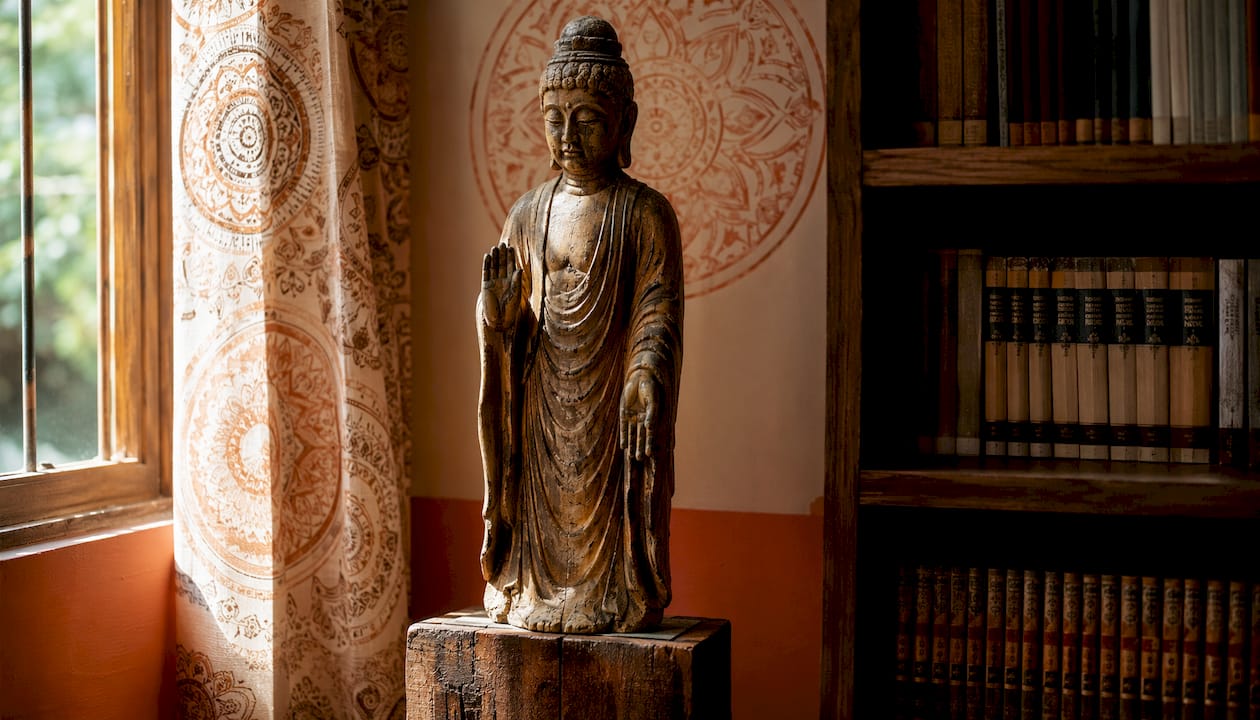
Die Cham-Zivilisation in Zentral- und Südvietnam trug eine parallele Tradition bei. Champa erlebte seine Blütezeit zwischen etwa 500 und 1500 n. Chr. und stellte Sandsteinskulpturen sowohl in freistehender als auch in Reliefform her, die Hinduismus, Buddhismus und indigene Kulte vereinten. Cham-Bildhauer zeichneten sich durch Hautreliefs aus, eine Technik mit weitaus größerer Tiefe und Unterhöhlung als das anderswo in Südostasien übliche Flachrelief.
Welche Materialien und Techniken zeichnen traditionelle vietnamesische Skulpturen aus?
Vietnamesische Kunsthandwerker arbeiteten in drei primären Materialkategorien und jede prägte die ästhetischen Ergebnisse auf unterschiedliche Weise.
Materialien im Überblick:
| Material | Allgemeiner Gebrauch | Bemerkenswerte Websites |
|---|---|---|
| Ta-khian-Holz | Stehende Buddha-Figuren, Altar-Ensembles | Dorfpagoden, Mekong-Delta |
| Sandstein / Kalkstein | Tempelstatuen, Reliefschnitzereien | Bút-Tháp-Tempel, Mỹ Sơn |
| Bronze (Kupferlegierung) | Andachtsfiguren, Bodhisattvas | Pagoden aus der Lý-Zeit, Huế |
| Lackiertes Holz | Altarensembles, Innenfiguren | Zitadelle von Huế, nördliche Pagoden |
Während der Ly-Dynastie erreichte der Bronzeguss seinen Höhepunkt. Vietnamesische Bronzefiguren wurden im direkten Wachsausschmelzverfahren hergestellt, einem Verfahren, das ein einziges, unwiederholbares Original ohne Duplikate ergibt. Wo Rohstoffe knapp waren, wie es oft in der Mekong-Delta-Region der Fall war, entwickelten Kunsthandwerker lokale Alternativen, die sowohl den Stil als auch die Technik veränderten. Mit anderen Worten: Materielle Knappheit war ein kreativer Treiber.
Veredelungstechniken fügten Schichten spiritueller Bedeutung hinzu. Die Vergoldung verstärkte die mit der Erleuchtung verbundene Leuchtkraft. Lackieren Sie geschützte Holzskulpturen und schaffen Sie gleichzeitig satte, tiefe Oberflächen. Perlmutt-Intarsien, insbesondere in Werken aus der Nguyễn-Ära, führten zu einer dekorativen Eleganz, die die Hofproduktion im Süden von der schlichteren Dorftradition im Norden unterscheidet. Der tausendarmige Avalokiteshvara im Bút-Tháp-Tempel gilt als das berühmteste Beispiel des klassischen Lý-Trần-Stils: ruhig, langgestreckt und technisch außergewöhnlich.
Stilmerkmale über die Epochen hinweg:
- Phu Nam-Zeit: Tribhanga- und Abhanga-Posen, schlanke Formen, dünne Gewänder, Amaravati- und Gupta-Einfluss
- Lý-Trần-Klassik: längliche Figuren, sanftes Lächeln, fließende Drapierungen, Song-chinesische Raffinesse
- Lê-Zeit: strengere, hieratische Kompositionen, Ming-Orthodoxie
- Nguyễn-Zeit: dekorative Eleganz, volkstümliche Motive, höfische Raffinesse in der Thiên-Mụ-Pagode
Wie nördliche und südliche buddhistische Sekten die Ikonographie unterschiedlich prägten
Die buddhistische Landschaft Vietnams teilt sich entlang einer klaren geografischen und doktrinären Achse. Nordvietnam wird vom Mahayana-Buddhismus dominiert, der über kam China und prägte die ikonografischen Programme der meisten großen Pagoden von Hanoi nach Norden. Südvietnam erhielt den Theravada-Buddhismus vor allem durch die Khmer-Gemeinschaft des Mekong-Deltas, eine Tradition, die sich nach dem 14. Jahrhundert mit dem Niedergang des Angkor-Reiches vertiefte.
Diese konfessionellen Unterschiede führen zu sichtbar unterschiedlichen skulpturalen Programmen:
| Funktion | Nördliches Mahayana | Südliches Theravada (Khmer) |
|---|---|---|
| Gottheit in der Haupthalle | Mehrere Buddhas und Bodhisattvas | In erster Linie Shakyamuni Buddha |
| Brahmanische Götter | Integriert in das buddhistische Pantheon | Vorhanden, aber anders benannt und arrangiert |
| Ikonografische Komplexität | Hoch: Quan Am, Maitreya, Manjusri | Unten: konzentriert auf Shakyamuni |
| Räumliche Anordnung des Tempels | Mehraltarisch, hierarchisch | Einachsig, zentriert auf Buddha |
| Regionale Konzentration | Nord- und Zentralvietnam | Mekong-Delta, Südwestprovinzen |
Nördliche Mahayana-Tempel umfassen Figuren wie Quan Am (Avalokiteshvara), Maitreya und Manjusri sowie brahmanische Gottheiten, die in den buddhistischen Rahmen integriert sind. Khmer-Theravada-Tempel wie die Quy-Nong-Pagode in der Provinz Tra Vinh integrieren Schutzgottheiten wie König Chan Krong Kriep, die aus der brahmanischen Kosmologie stammen, aber die Anordnung und Benennung unterscheidet sich von der thailändischen Praxis. Die Khmer-Gemeinschaft im Mekong-Delta unterhält derzeit 450 Theravada-Pagoden, wobei die Provinz Tra Vinh mit 142 die größte Konzentration aufweist.
Die sektiererische Geographie prägte auch die Ikonographie der Cham-Tradition. Der esoterische Buddhismus, der im Campā-Königreich während der Vijaya-Zeit (11.–13. Jahrhundert) praktiziert wurde, brachte Skulpturen transzendenter Buddhas hervor, die durch präzise Handgesten identifiziert wurden: das Abhaya-Mudrā für Amoghasiddhi, das Bodhyāgrī-Mudrā für Vairocana. Diese Werke, die heute im Đà Nẵng-Museum für Cham-Skulptur und im Museum der Schönen Künste in Ho-Chi-Minh-Stadt untergebracht sind, stellen ein anspruchsvolles esoterisches Programm dar, das in nordvietnamesischen Tempeln nicht zu finden ist.
Authentizität, Symbolik und die zeitgenössische Relevanz dieser Werke
Um vietnamesische buddhistische Skulpturen zu authentifizieren, müssen die physischen Beweise kultureller Anpassung gelesen werden. Das Neuschnitzen von Frisuren und symbolischen Attributen, wie es bei Konvertierungen von Phu Nam Vishnu zu Maitreya zu sehen ist, dient als Herkunftsindikator. Der direkte Wachsausschmelzguss hinterlässt kein Duplikat, sodass das Fehlen von Gießereinachweisen oder identischen Kopien eine frühe Datierung stützt. Dies sind die Markierungen, die Spezialisten untersuchen, wenn sie beurteilen, ob ein Stück tatsächlich aus der Lý-Trần-Zeit stammt oder eine spätere Reproduktion ist.
Die Authentifizierung vietnamesischer buddhistischer Skulpturen erfordert eine detaillierte Untersuchung kultureller Anpassungsmerkmale wie ikonografische Modifikationen hinduistischer Skulpturen, die einen komplexen Synkretismus offenbaren, der für das vietnamesische Erbe einzigartig ist.
Das symbolische Vokabular in der vietnamesischen buddhistischen Kunst ist dicht und konsistent. Der Lotussockel signalisiert Reinheit und spirituelles Auftauchen. Die Ushnisha, der Schädelvorsprung am Scheitel des Kopfes, steht für transzendente Weisheit. Die flammende Mandorla, die eine Figur umgibt, repräsentiert erleuchtete Energie. Handgesten oder Mudras haben doktrinäre Bedeutung: Die Dhyana-Geste signalisiert Meditation, Varada signalisiert Schenken und Abhaya signalisiert Schutz. Lokale Interpretationen integrieren manchmal daoistische Figuren oder vergöttlichte Nationalhelden, insbesondere in Dorfpagoden, wo die Grenze zwischen buddhistischer Hingabe und Ahnenverehrung fließend bleibt.
Profi-Tipp: Wenn Sie einen vietnamesischen Bronze-Buddha auf Echtheit prüfen, achten Sie auf Asymmetrien, die mit dem direkten Wachsausschmelzguss übereinstimmen. Perfekt symmetrische Oberflächen mit gleichmäßiger Wandstärke weisen oft auf einen späteren indirekten Guss oder eine Reproduktion hin.
Herausragende Sammlungen befinden sich im Geschichtsmuseum der Ho-Chi-Minh-Stadt (Oc Eo- und Cham-Artefakte), im Phật Tích-Tempel (steinerne Dharma-Wächter) und im Bút Tháp-Tempel (der berühmte tausendarmige Avalokiteshvara). Die Geschichte und Symbole Die in diese Werke eingebetteten Werke verankern weiterhin die lebendige religiöse Praxis in ganz Vietnam, von den Hanoi-Pagoden bis zu den Gemeinden im Mekong-Delta. Die Konservierung bleibt eine anhaltende Herausforderung: Lackiertes Holz ist anfällig für Feuchtigkeit, Bronze korrodiert unter tropischen Bedingungen und Sandsteinreliefs an Außenstandorten wie Mỹ Sơn sind ständiger Verwitterung ausgesetzt.
HDAsianArt: authentifizierte vietnamesische und asiatische buddhistische Skulptur für ernsthafte Sammler
Für Sammler und Wissenschaftler, die vom Studium zum Erwerb übergehen möchten, bietet HDAsianArt eine kuratierte Auswahl antiker und traditioneller asiatischer buddhistischer Skulpturen, darunter Stücke aus Vietnam, Kambodscha, Thailand, und darüber hinaus. Jedes Werk der Sammlung wird individuell von Experten recherchiert, fotografiert und beschrieben, mit Provenienzhinweisen zum Material, zur Epoche und zum ikonografischen Programm. Der Schwerpunkt der Galerie liegt auf Traditionen des Bronzegusses und Mahayana-Ikonographie macht es zu einer praktischen Ressource für jeden, der eine Sammlung mit historischem Tiefgang aufbaut. Weltweiter versicherter DHL-Versand ist Standard. Durchsuchen Sie die gesamte Kollektion unter HDAsianArt um authentifizierte Stücke mit dokumentiertem kulturellen Kontext zu finden.
Wichtige Erkenntnisse
Vietnamesische buddhistische Skulpturentraditionen lassen sich am besten als kreative Transformation indischer und chinesischer Prototypen verstehen, die durch lokale Materialien, sektiererische Geographie und zwei Jahrtausende dynastischen Wandels geprägt sind.
| Punkt | Einzelheiten |
|---|---|
| Indische Wurzeln, lokale Anpassung | Gandhāra- und Mathurā-Modelle wurden gezielt neu interpretiert und nicht kopiert, wodurch eine deutlich vietnamesische Ästhetik entstand. |
| Material bestimmt den Stil | Die Knappheit an Rohstoffen führte zu lokalen Alternativen, die die Guss- und Schnitzstile in den verschiedenen Regionen veränderten. |
| Die sektiererische Geographie ist wichtig | Die nördlichen Mahayana- und südlichen Theravada-Traditionen bringen sichtbar unterschiedliche Pantheons, Tempelgrundrisse und ikonografische Programme hervor. |
| Wachsausschmelzguss als Echtheitsnachweis | Direkter Bronzeguss im Wachsausschmelzverfahren ergibt keine Duplikate; sein Vorhandensein ist ein Schlüsselindikator für frühe, authentische vietnamesische Bronzen. |
| HDAsianArt für authentifizierte Stücke | HDAsianArt bietet individuell recherchierte vietnamesische und asiatische buddhistische Skulpturen mit fachkundiger Herkunftsdokumentation und weltweitem Versand. |
Empfohlen
- Theravada-buddhistische Skulptur für Kunstwissenschaftler erklärt – HD Asian Art
- Leitfaden für buddhistische Kunstsammlungen: Mit Zuversicht aufbauen – HD Asian Art
- Thailändische Buddha-Stile erklärt: Ein Leitfaden für Sammler – HD Asian Art
- Skulptur aus der Sukhothai-Zeit: Ein kunsthistorischer Leitfaden für Gelehrte – HD Asian Art
