



Guanyin-Statue: Avalokitesvara in asiatischen Kulturen
Guanyin-Statue: Avalokitesvara in asiatischen Kulturen
Die meisten Menschen, die zum ersten Mal einer Guanyin-Statue begegnen, gehen davon aus, dass sie es mit einer Göttin zu tun haben. Diese Annahme ist verständlich und zeigt in gewisser Weise, wie vollständig diese Figur in die Kulturen aufgenommen wurde, die sie adoptiert haben.
Die Realität ist reicher und interessanter: Die heitere, oft weibliche Form, die man in der chinesischen, japanischen und südostasiatischen Kunst sieht, begann ihre Reise als männlicher indischer Bodhisattva namens Avalokitesvara, und die Transformation, die sich über etwa zwei Jahrtausende vollzog, ist eine der bemerkenswertesten Geschichten in der Geschichte der religiösen Kunst. Für Sammler und Praktiker, die sich für ein entscheiden Avalokitesvara-Skulptur oder Guanyin-Statue, verstehend, dass Geschichte nicht nur intellektuell befriedigend ist. Es verändert die Art und Weise, wie man jedes Stück betrachtet.
Inhaltsverzeichnis
Schnelle Imbissbuden
|
Wichtige Erkenntnisse |
Erklärung |
|---|---|
|
Avalokitesvara hat seinen Ursprung in Indien als männlich |
Im indischen Mahayana-Buddhismus gelten Bodhisattvas als geschlechtslos oder männlich. Avalokitesvara wurde als fürstlicher junger Mann mit einer Lotusblume oder einem Wassergefäß dargestellt, oft neben Amitabha Buddha. |
|
Der Name „Guanyin“ hat eine genaue Bedeutung |
Guanyin ist die Abkürzung für Guanshiyin und bedeutet „Derjenige, der die Geräusche der Welt wahrnimmt“. Der Name selbst definiert die Rolle des Bodhisattvas: Er hört jedes Gebet und jeden Hilferuf. |
|
Das Geschlecht änderte sich, als die Figur hineinzog China |
Als der Mahayana-Buddhismus entlang der Seidenstraße reiste, stellte sich die chinesische Kultur Avalokitesvara nach und nach als weiblich vor und betonte dabei mütterliches Mitgefühl, Eleganz und Schutz. |
|
Guanyin ist ein Bodhisattva, keine Göttin |
Entgegen der weit verbreiteten Meinung ist Guanyin keine Gottheit. Sie ist ein erleuchtetes Wesen, das geschworen hat, auf der Welt zu bleiben, um anderen bei der Befreiung zu helfen. |
|
Die Ikonographie variiert je nach Region erheblich |
Eine kambodschanische Avalokitesvara-Skulptur sieht überhaupt nicht wie eine chinesische Guanyin-Statue aus. Die Kenntnis der regionalen Konventionen hilft Sammlern, zu erkennen, was sie betrachten, und die Echtheit zu beurteilen. |
|
Symbole sind Ihr Leseführer |
Eine Vase, ein Weidenzweig, ein weißer Papagei, eine Lotusblume, eine kleine Amitabha-Figur in der Krone. Jedes Attribut signalisiert eine bestimmte kulturelle Tradition und ein ikonografisches Programm. |
|
Jesuitenmissionare trugen zum ikonografischen Wandel bei |
Jesuitenmissionare verteilen Bilder der Jungfrau mit dem Kind in China beeinflusste die Songzi Guanyin-Variante, die Guanyin zeigt, wie sie ein Kind auf ihrer Hüfte trägt. |
Die Ursprünge von Avalokitesvara im indischen Mahayana-Buddhismus
Avalokitesvara entwickelte sich erstmals im Jahr 2010 zu einem der bedeutendsten Bodhisattvas des Mahayana-Buddhismus Indien, Wissenschaftler führen die Figur auf etwa das 1. bis 2. Jahrhundert n. Chr. zurück. Sein Sanskrit-Name wird im Allgemeinen als „Der Herr, der nach unten blickt“ interpretiert, ein Ausdruck, der sein charakteristisches Merkmal widerspiegelt: ein aufmerksamer, nach unten gerichteter Blick, der auf das Leiden aller Lebewesen gerichtet ist. Er verkörpert das unendliche Mitgefühl aller Buddhas, das auch gewöhnlichen Praktizierenden zugänglich gemacht wird.
In der indischen Kunst und in indischen Texten erscheint Avalokitesvara als eleganter junger Mann, geschmückt und gekleidet wie ein Prinz. Normalerweise hält er eine Lotusblume oder ein Wassergefäß in der Hand und wird meist daneben stehend dargestellt Amitabha Buddha, mit dem er eine tiefe doktrinäre Verbindung in den Traditionen des Reinen Landes teilt. Die Figur ist im indischen Kontext geschlechtslos oder männlich, ein Punkt, der wichtig wird, wenn man nachvollzieht, wie dramatisch sich die Ikonographie verändert, wenn der Buddhismus nach Osten vordringt.
Was Avalokitesvara im Mahayana-Buddhismus so zentral macht, ist insbesondere die Lehre, dass Bodhisattvas ihr eigenes endgültiges Nirvana aufschieben, um allen Wesen zu helfen. Avalokitesvara ist die Verkörperung dieses Gelübdes. Er zieht sich nicht von der Welt zurück. Er bleibt präsent und reaktionsschnell, und genau das ist der Grund, warum sein Name in so vielen Kulturen und Sprachen zum Synonym für mitfühlendes Eingreifen geworden ist.
Profi-Tipp: Achten Sie bei der Untersuchung einer Avalokitesvara-Skulptur im indischen Stil auf eine kleine sitzende Amitabha-Figur in der Krone. Dies ist einer der zuverlässigsten ikonografischen Identifikatoren für regionale Traditionen, von Südasien bis nach Asien Kambodscha und Thailand.
Wie Avalokitesvara zu Guanyin wurde: Die kulturelle Transformation
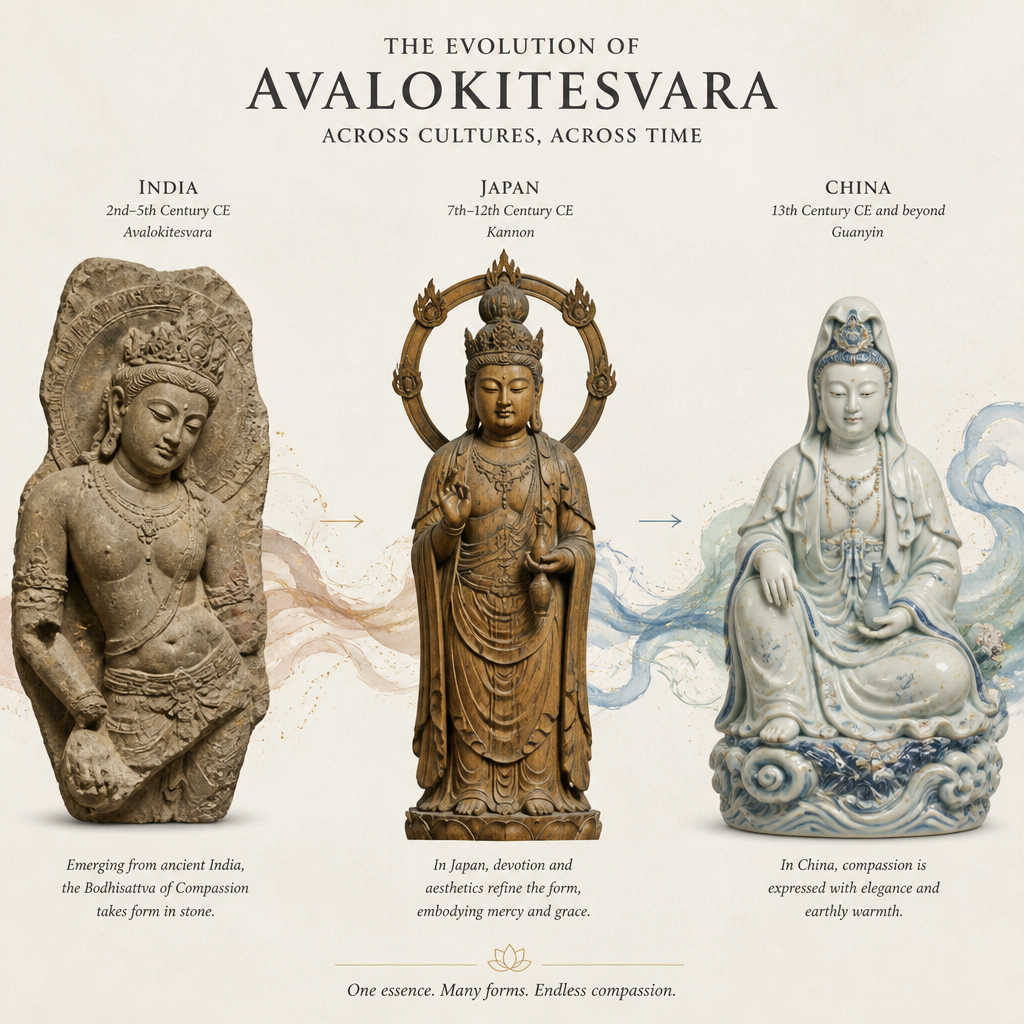
Die Reise von Avalokitesvara nach Guanyin folgte der Seidenstraße und es war keine saubere oder plötzliche Veränderung. Der Buddhismus begann sich darüber hinaus auszubreiten Indien Er wanderte etwa ab dem 1. Jahrhundert n. Chr. nach Ostasien und mit ihm kamen die Texte, Bilder und Konzepte, die mit dem Bodhisattva des Mitgefühls verbunden sind. Was dann geschah, war keine Fehlübersetzung. Es handelte sich um eine aktive kulturelle Anpassung, wie sie religiöse Vorstellungen fast immer durchlaufen, wenn sie sprachliche und soziale Grenzen überschreiten.
Zu dem Zeitpunkt, als die Figur Wurzeln schlug China, etwas hatte sich verändert. Die chinesische Kultur mit ihrer starken Betonung mütterlicher Tugend und weiblicher Barmherzigkeit begann, den Bodhisattva als weiblich darzustellen. Guanyin, kurz für Guanshiyin, bedeutet übersetzt „Derjenige, der die Geräusche der Welt wahrnimmt“, und diese Bedeutung erwies sich als perfekt geeignet für eine fürsorgliche, mütterliche Figur, die den Schreien der Leidenden lauscht. Die weibliche Guanyin dominierte die chinesische Volksreligion, wo sie gleichzeitig im Buddhismus, Taoismus und der chinesischen Volksreligion verehrt wird.
Eine zusätzliche Ebene der Komplexität kam mit der Ankunft jesuitischer Missionare hinzu China. Sie verbreiteten Bilder der Jungfrau Maria, die das Christkind trug, und dieses ikonografische Modell beeinflusste die Entwicklung einer spezifischen chinesischen Guanyin-Variante namens „Guanyin“. Songzi Guanyin, dargestellt mit einem Kind auf der Hüfte. Dies ist ein eindrucksvolles Beispiel dafür, wie religiöse Bilder gleichzeitig Einfluss aus mehreren Richtungen absorbieren.
Die Verwandlung von Avalokitesvara in die weibliche Figur von Guanyin ist eines der klarsten Beispiele dafür, wie sich spirituelle Ideale über Kulturen hinweg anpassen, ihre Kernbedeutung beibehalten und gleichzeitig die Werte und Formen jedes neuen Kontexts, in den sie treten, absorbieren.
In Japan, die Figur wurde Kannon. In Korea, Gwaneum. In Vietnam, Quan Am. In Thailand, Die Figur behielt die männliche Avalokitesvara-Form stärker bei. Jede Version trägt den gleichen mitfühlenden Auftrag. Der Name, das Geschlecht und die visuellen Details unterscheiden sich, weil die Kulturen unterschiedlich sind.
Profi-Tipp: Wenn Sie eine Sammlung aufbauen, die mehrere asiatische Traditionen umfasst, betrachten Sie das Geschlecht einer Statue als kulturellen Marker und nicht als Widerspruch. Ein männlicher Avalokitesvara aus Kambodscha und eine weibliche Guanyin aus China sind dieselben Bodhisattvas, gefiltert durch Jahrhunderte unterschiedlicher künstlerischer und religiöser Entwicklung.
Kulturübergreifende Ikonographie: Worauf Sie bei einer Guanyin- oder Avalokitesvara-Skulptur achten sollten
Lesen a Guanyin-Statue oder Avalokitesvara-Skulptur richtig auszuführen, ist eine Fähigkeit, die besondere Aufmerksamkeit belohnt. Jede regionale Tradition hat ihr eigenes visuelles Vokabular, und sobald Sie dieses Vokabular kennen, sehen Sie keine generische „Buddha-Figur“ mehr und sehen stattdessen eine spezifische kulturelle und doktrinäre Aussage in Stein, Bronze oder Holz.
Chinesische Guanyin-Ikonographie
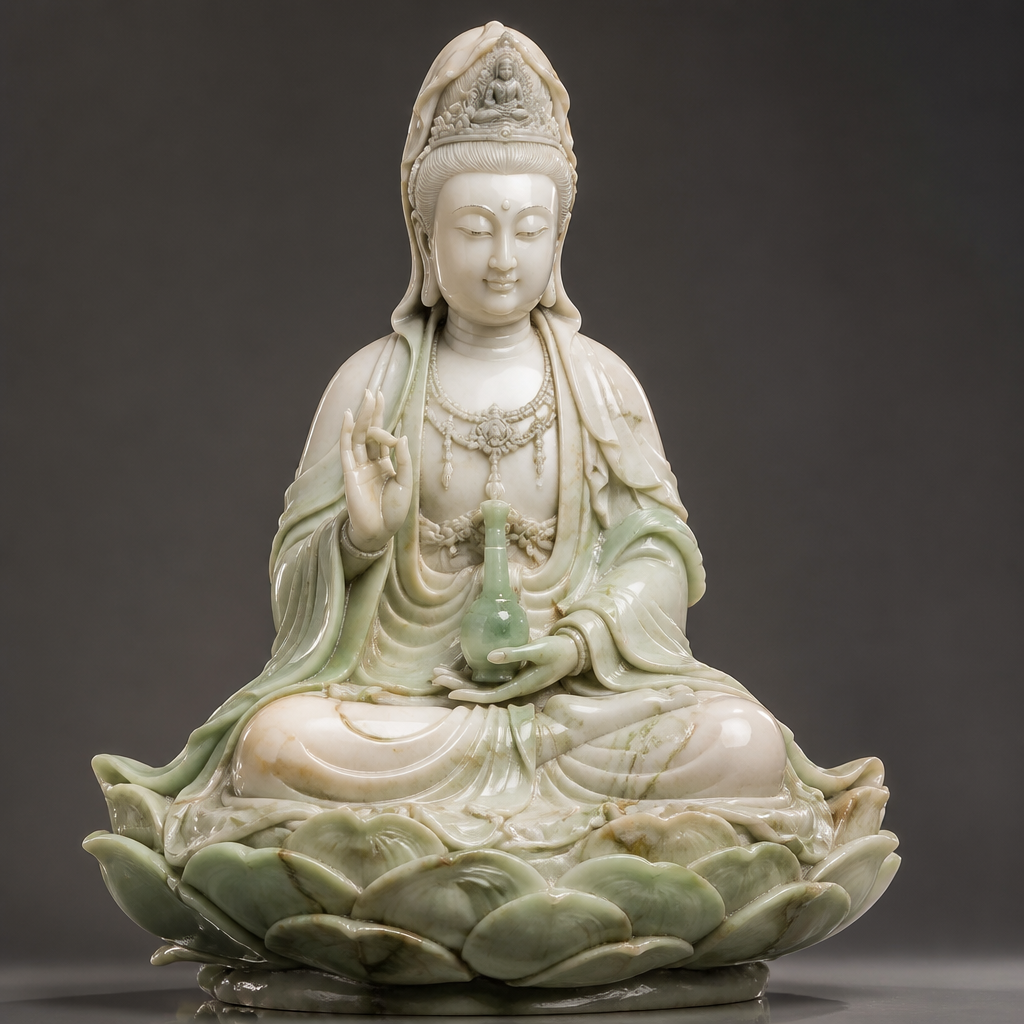
Chinesische Guanyin-Skulpturen sind am häufigsten weiblich und in fließende weiße Gewänder gekleidet, obwohl frühere Darstellungen der Tang-Dynastie gelegentlich eine eher androgyne oder männliche Form zeigen. Die bekanntesten Attribute sind eine Vase (oft mit reinem Wasser oder Weidenzweigen), ein separat gehaltener Weidenzweig und ein weißer Papagei. Mount Putuo, eine Insel im Osten China Das Meer gilt in der chinesischen religiösen Tradition als ihr heiliger Aufenthaltsort. Eine gängige Variante zeigt sie in der „Royal Ease“-Haltung sitzend, ein Knie angehoben und friedlich nach unten schauend.
Südostasiatische und südasiatische Avalokitesvara-Ikonographie
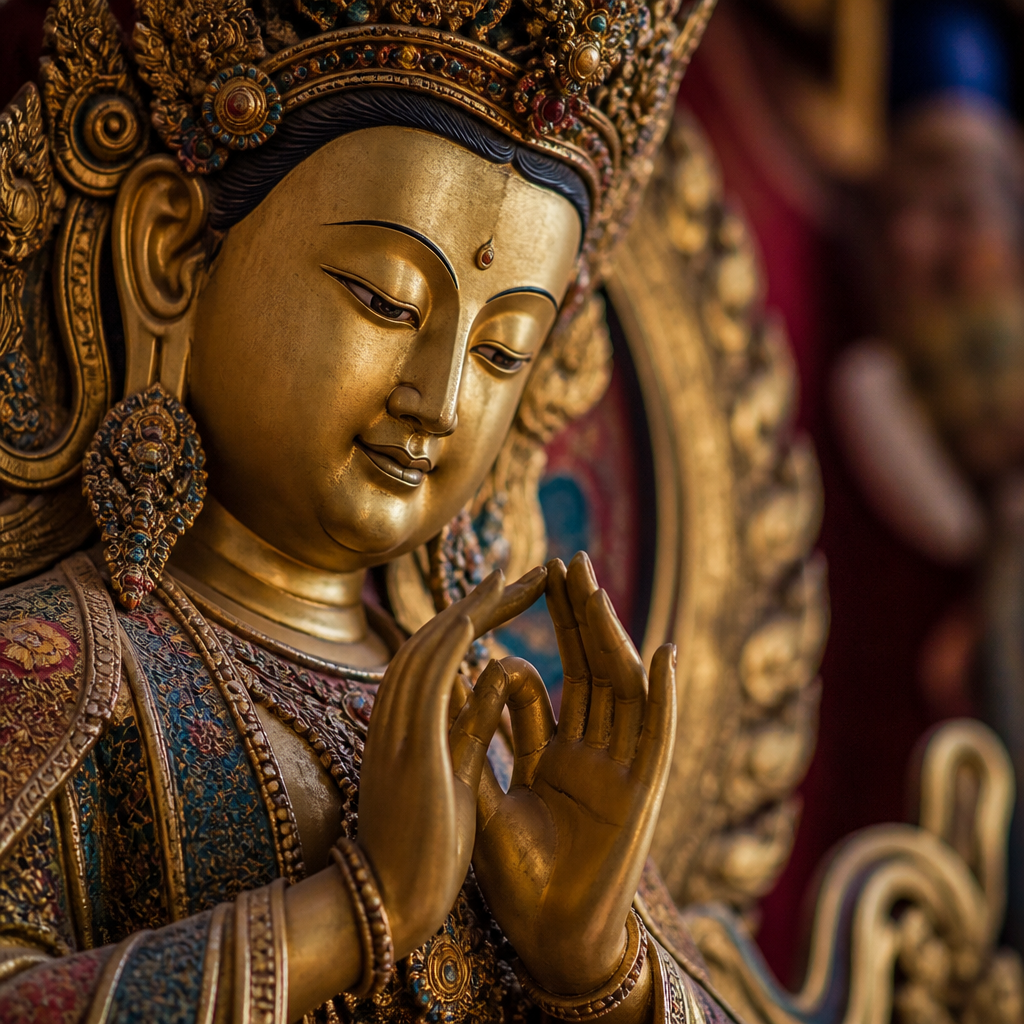
In Kambodscha, Thailand, Sri Lanka, und Indonesien, Die Figur bleibt überwiegend männlich und folgt Konventionen, die eher dem ursprünglichen indischen Modell ähneln. Die kleine Amitabha-Figur, die in der Krone sitzt, ist in diesen Traditionen ein einheitliches Erkennungszeichen. Besonders markant sind die Avalokitesvara-Skulpturen aus der kambodschanischen Khmer-Zeit, die in späteren tantrischen Erscheinungsformen oft ein breites, heiteres Gesicht mit dem charakteristischen Khmer-Lächeln, einer hohen Krone und mehreren Armen zeigen. Indonesische Beispiele, insbesondere aus der javanischen Tradition, zeigen ähnlich fürstliche männliche Formen mit aufwändigem Schmuck und dem Amitabha-Kronenornament.
Japanische Kannon-Ikonographie
Japanische Kannon-Statuen umfassen ein enormes Spektrum, von einfachen einarmigen Formen bis hin zum berühmten tausendarmigen Kannon (Senju Kannon), der die Fähigkeit des Bodhisattvas darstellt, alle leidenden Wesen gleichzeitig zu erreichen. Die japanische Ikonographie tendiert zu raffinierten, präzisen Details in Holz und Bronze, mit kunstvollen Flammenhöfen, die in früheren Perioden üblich waren. Der elfköpfige Kannon (Juichimen Kannon) ist eine weitere Hauptform, wobei jeder Kopf einen anderen Aspekt des mitfühlenden Bewusstseins zum Ausdruck bringt.
Vergleich: Regionale Formen des Bodhisattva des Mitgefühls
Sammler fragen oft, auf welche regionale Tradition sie sich konzentrieren sollten. Die ehrliche Antwort ist, dass es darauf ankommt, was Ihnen am meisten zusagt, aber wenn Sie die Unterschiede verstehen, können Sie eine gezielte und keine willkürliche Entscheidung treffen. Die folgende Tabelle fasst die wichtigsten Unterschiede zwischen drei großen Traditionen zusammen.
|
Regionale Tradition |
Name und Geschlecht |
Wichtige ikonografische Merkmale |
|---|---|---|
|
Chinesisch |
Guanyin, typischerweise weiblich |
Weiße Gewänder, Vase, Weidenzweig, weißer Papagei, „königliche Leichtigkeit“-Sitzhaltung, Songzi-Variante hält ein Kind |
|
Kambodschanisch / Khmer |
Avalokitesvara (Lokesvarak auf Khmer), männlich |
Amitabha mit Krone, fürstlichen Ornamenten, breitem Khmer-Lächeln, mehreren Armen in tantrischen Formen, Stein oder Bronze |
|
Japanisch |
Kannon, das Geschlecht variiert je nach Form |
Einarmig (Sho Kannon), Tausendarmig (Senju Kannon), Elfköpfig (Juichimen Kannon), flammende Heiligenscheine, raffinierte Holz- oder Bronzeschnitzerei |
Wählen Sie eine Guanyin-Statue oder Avalokitesvara-Skulptur für Ihre Sammlung oder Ihren Altar
Die erste Frage, die man sich stellen muss, ist nicht „Welches sieht am schönsten aus“, sondern „Was soll dieses Stück bewirken?“ Ein Praktiker, der einen Hausaltar aufstellt, hat andere Bedürfnisse als ein Sammler, der eine Übersicht über südostasiatische buddhistische Kunst erstellt. Beides ist legitim, und die Antwort prägt alles, von der regionalen Tradition, die Sie auswählen, bis hin zum Material und Maßstab, der Sinn ergibt.
Für spirituelle Praxis und Hausaltäre
Guanyin gehört zu den Bodhisattvas, die am häufigsten für persönliche Hingabe beschworen werden, und ihre Statuen sind auf Altären in buddhistischen, taoistischen und synkretistischen chinesischen Volksreligiösen Traditionen zu finden. Ein Guanyin aus weißem Porzellan oder Harz im chinesischen Stil in der königlichen Ruhehaltung eignet sich gut für einen häuslichen Altar, da die Ikonographie sofort erkennbar ist und der ruhige Blick nach unten zu meditativer Konzentration einlädt. Praktizierende mit Theravada-beeinflusstem Hintergrund bevorzugen möglicherweise eine südostasiatische Avalokitesvara-Skulptur, die die männliche, fürstliche Form beibehält und eher an frühere Mahayana-Traditionen erinnert.
Für Kunstsammler und Antiquitätenliebhaber
Sammler sollten den Stilen regionaler Epochen große Aufmerksamkeit schenken und die „Guanyin-Statue“ nicht als eine einzige Kategorie behandeln. Ein Khmer Avalokitesvara in Museumsqualität von Kambodscha, ein burmesischer lackierter Guanyin und eine chinesische Holzschnitzerei aus der Song-Dynastie sind drei grundsätzlich unterschiedliche kunsthistorische Objekte, die zufällig ein gemeinsames Thema haben. Provenienz, Material und Zeitkonsistenz enorm wichtig. Ein Stück, das ikonografische Elemente aus zwei verschiedenen regionalen Traditionen vermischt, ist entweder ein synkretistisches Werk, das für einen bestimmten Zweck geschaffen wurde, oder eine spätere Reproduktion, und das Wissen, um welches es sich handelt, ist sowohl für den Wert als auch für die Bedeutung von Bedeutung.
Bei HD Asian ArtDie Sammlung umfasst Skulpturen aus Birma, Kambodscha, China, Indonesien, Japan, Sri Lanka, und Thailand, Das bedeutet, dass Sie an einem Ort echte vergleichende Studien über diese regionalen Traditionen durchführen können. Diese Breite ist im Fachhandel wirklich selten und ermöglicht es, die ikonografischen Unterschiede nicht nur theoretisch, sondern konkret auf Objektebene zu verstehen.
Ein häufiger Fehler, den es zu vermeiden gilt
Ein häufiger Fehler unter Erstkäufern besteht darin, eine Guanyin-Statue ausschließlich aus ästhetischen Gründen auszuwählen, ohne die Größe im Verhältnis zur beabsichtigten Umgebung zu berücksichtigen. Ein großer stehender Guanyin, insbesondere in der Tausendarmigen Form, erfordert großzügigen vertikalen Raum und eine klare Sichtlinie. In einer kompakten Altarumgebung liest ein sitzender Guanyin in königlicher, entspannter Haltung oder eine kleinere stehende Figur bequemer und fesselt die visuelle Aufmerksamkeit effektiver als ein übergroßes Stück, das den Raum überfüllt.
Häufig gestellte Fragen
Was ist der Unterschied zwischen Avalokitesvara und Guanyin?
Avalokitesvara ist der Sanskrit-Name für den Bodhisattva des Mitgefühls, wie er im indischen Mahayana-Buddhismus verstanden wird, wo die Figur als männlich oder geschlechtslos dargestellt wird. Guanyin ist der chinesische Name für denselben Bodhisattva, abgeleitet von Guanshiyin, was „Derjenige, der die Töne der Welt wahrnimmt“ bedeutet. Als der Buddhismus reiste Indien In Ostasien wurde Guanyin zunehmend als Frau dargestellt, was chinesische kulturelle Werte rund um mütterliches Mitgefühl und Barmherzigkeit widerspiegelte. Die beiden Namen beziehen sich auf dasselbe erleuchtete Wesen, ausgedrückt durch zwei unterschiedliche kulturelle Linsen.
Ist Guanyin ein Buddha oder ein Bodhisattva?
Guanyin ist ein Bodhisattva, kein Buddha. Ein Bodhisattva ist ein Wesen, das die Erleuchtung erlangt hat, sich aber geschworen hat, der Welt zugänglich zu bleiben, anstatt ins endgültige Nirvana zu gehen, um allen leidenden Wesen zur Befreiung zu verhelfen. Obwohl Guanyin in chinesischen, taoistischen und volksreligiösen Kontexten weit verbreitet als eine Göttin gilt, ist der doktrinäre Status im Buddhismus der eines Bodhisattvas. Diese Unterscheidung ist wichtig dafür, wie Sie die Rolle einer Guanyin-Statue in der Andachtspraxis interpretieren.
Wie kann ich erkennen, aus welcher regionalen Tradition eine Guanyin- oder Avalokitesvara-Skulptur stammt?
Die zuverlässigste Methode besteht darin, die Kombination aus Geschlecht, Körperhaltung, Attributen und Materialien zu betrachten. Eine weibliche Figur in weißem Gewand mit Vase und Weidenzweig ist mit ziemlicher Sicherheit chinesisch. Eine männliche Figur mit einem kleinen sitzenden Amitabha-Buddha in der Krone, fürstlichem Schmuck und einem breiten Lächeln ist wahrscheinlich Khmer oder Südostasiat. Japanische Kannon sind oft an ihrem äußerst raffinierten Schnitzstil und an den spezifischen mehrarmigen oder mehrköpfigen Formen zu erkennen, wie zum Beispiel der tausendarmige Kannon oder der elfköpfige Kannon. Wenden Sie sich im Zweifelsfall an einen Fachhändler mit Fachkenntnissen in regionaler asiatischer buddhistischer Kunst.
Warum wird Guanyin manchmal gezeigt, wie er ein Kind trägt?
Die Songzi-Guanyin-Variante, die Guanyin zeigt, wie sie ein Kind auf der Hüfte trägt, entstand teilweise durch den Einfluss jesuitischer Missionare, die Bilder der Jungfrau Maria und des Christuskindes in Umlauf brachten China. Dadurch entstand eine interkulturelle Anleihe, die eine neue ikonografische Form innerhalb der chinesischen Guanyin-Tradition prägte. Mit dem Songzi Guanyin sind vor allem Gebete für Fruchtbarkeit und den Schutz von Kindern verbunden.
Welche Materialien werden traditionell für Guanyin- und Avalokitesvara-Skulpturen verwendet?
Das Material variiert erheblich je nach Region und Zeitraum. Chinesische Guanyin-Statuen gibt es aus weißem Porzellan, Holz, Bronze und Jade. Khmer Avalokitesvara-Skulpturen bestehen am häufigsten aus Sandstein oder Bronze. Japanische Kannon werden häufig aus Holz geschnitzt, oft mit lackierter und vergoldeter Oberfläche. Burmesische Beispiele können Lacktechniken beinhalten, die reich verzierte Oberflächen erzeugen, die für diese Tradition charakteristisch sind. Die Wahl des Materials ist selbst Teil der ikonografischen und kulturellen Identität eines Stückes.
Kann eine Guanyin-Statue von Praktizierenden verwendet werden, die keine Buddhisten sind?
Guanyin wird bereits in buddhistischen, taoistischen und chinesischen volksreligiösen Traditionen verehrt, daher gehörte die Figur schon immer zu einer breiteren Andachtswelt als dem streng orthodoxen Buddhismus. Viele Menschen, die nicht offiziell Buddhisten sind, nutzen eine Guanyin-Statue als Meditationsschwerpunkt, als Symbol des Mitgefühls im häuslichen Umfeld oder einfach als Kunstwerk mit tiefer kultureller Bedeutung. Dafür gibt es kein doktrinäres Hindernis, und historisch gesehen hat die Anziehungskraft der Figur immer sektiererische Grenzen überschritten.
Wenn Sie eine Guanyin-Statue oder Avalokitesvara-Skulptur in Ihrem Zuhause oder Ihrer Sammlung haben, würden wir wirklich gerne wissen, aus welcher regionalen Tradition sie stammt und was Sie zu dieser besonderen Form hingezogen hat.
Referenzen
