



Bewertung des Zustands antiker Steinstatuen
Bewertung des Zustands antiker Steinstatuen
Inhaltsverzeichnis
Verstehen, was die Zustandsbeurteilung aussagt
Bewertung des Zustands von antike Steinstatuen erfordert eine systematische visuelle Beobachtung, Strukturanalyse und das Verständnis, wie verschiedene Materialien altern. Eine gründliche Bewertung deckt die Authentizität, den historischen Kontext und den Erhaltungsbedarf der Statue auf.
Der Zustand wirkt sich direkt auf den Wert, die Langlebigkeit und die Eignung für Ihren Raum aus. Vor dem Kauf oder der Entscheidung über Pflegestrategien ist es wichtig, den Unterschied zwischen natürlicher Patina und aktivem Verfall zu verstehen.
Visuelle Inspektion: Oberflächenablagerungen und Patina ablesen
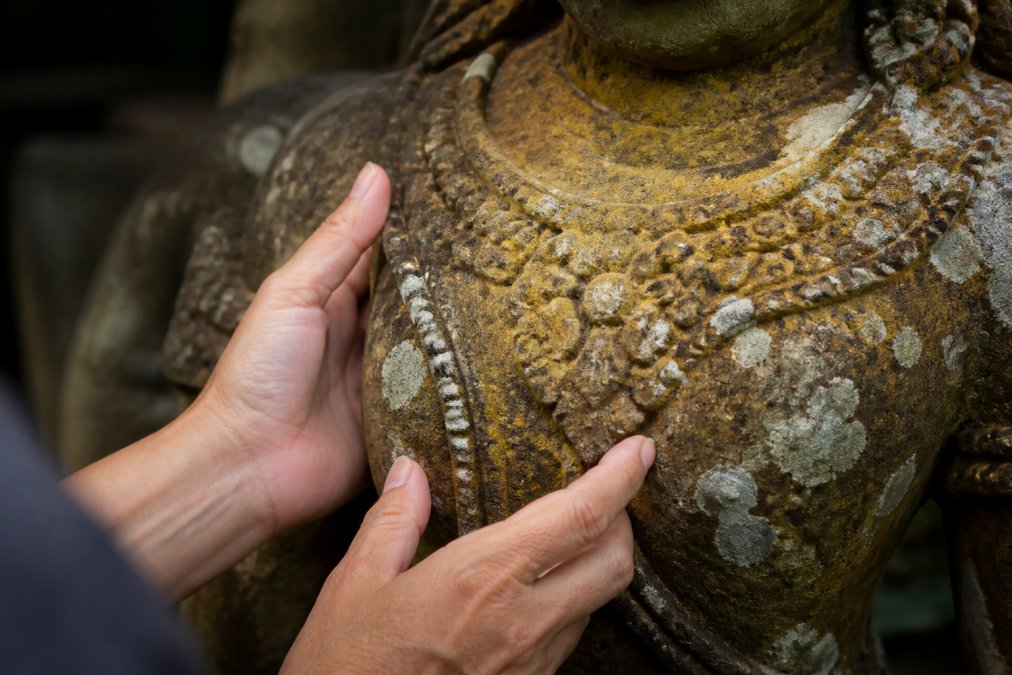
Der erste Schritt bei der Beurteilung des Zustands antiker Steinstatuen besteht in einer sorgfältigen visuellen Untersuchung der Oberfläche. Patina, die Schicht aus Oxidation und angesammelten Ablagerungen auf Stein, entwickelt sich über Jahrzehnte oder Jahrhunderte und wird zum Zeichen der Authentizität.
Unterscheidung zwischen natürlichem Altern und aktivem Schaden
Durch die natürliche Alterung entsteht auf Steinoberflächen eine Schutzschicht. Stabile Patina erscheint als eine gleichmäßige, harte Schicht, die mit dem darunter liegenden Stein verbunden ist. Sie kann je nach Steinart und Umgebung braun, grau oder grünlich sein und blättert bei sanfter Berührung nicht ab oder blättert ab. Aktive Schäden zeigen loses Material, anhaltende Abplatzungen oder Bereiche, in denen die Oberfläche aktiv abbricht.
Häufige Anzeichen natürlicher Alterung sind Oberflächenverfärbungen, kleinere Unregelmäßigkeiten und eine matte Oberfläche. Zu den aktiven Schäden zählen sichtbare Risse, die sich im Stein fortsetzen, fehlendes Material in Brocken und Oberflächen, die sich bei leichter Berührung weich oder pudrig anfühlen.
Identifizieren von biologischem Wachstum und Witterungseinflüssen
Biologisches Wachstum, Flechten, Moos und Algen, besiedeln Steinoberflächen im Freien oder in feuchten Umgebungen. Obwohl es kurzfristig nicht grundsätzlich schädlich ist, kann es Feuchtigkeit einschließen und mit der Zeit die Verwitterung beschleunigen. Bei antiken Steinstatuen dient biologisches Wachstum oft als Hinweis auf Alter und Außeneinwirkung.
Witterungseinflüsse variieren je nach Material und Klima. Sandstein, der Frost-Tau-Zyklen ausgesetzt ist, entwickelt Oberflächenerosion und verliert feine geschnitzte Details. Marmor erfährt in sauren Umgebungen eine chemische Auflösung. Granit weist eine subtilere Verwitterung durch oberflächliche Korntrennung und geringfügige Abplatzungen auf. Diese Muster werden auf authentischen antiken Stücken erwartet und tragen zu deren Herkunft bei.
Strukturelle Beurteilung: Risse und Risse erkennen
Die strukturelle Integrität bestimmt, ob eine Statue sicher ausgestellt, bewegt oder im Freien gelassen werden kann. Bei dieser Beurteilung wird der innere Zustand des Steins über das äußere Erscheinungsbild hinaus untersucht.
Mikrorisse, Abplatzungen und Delamination
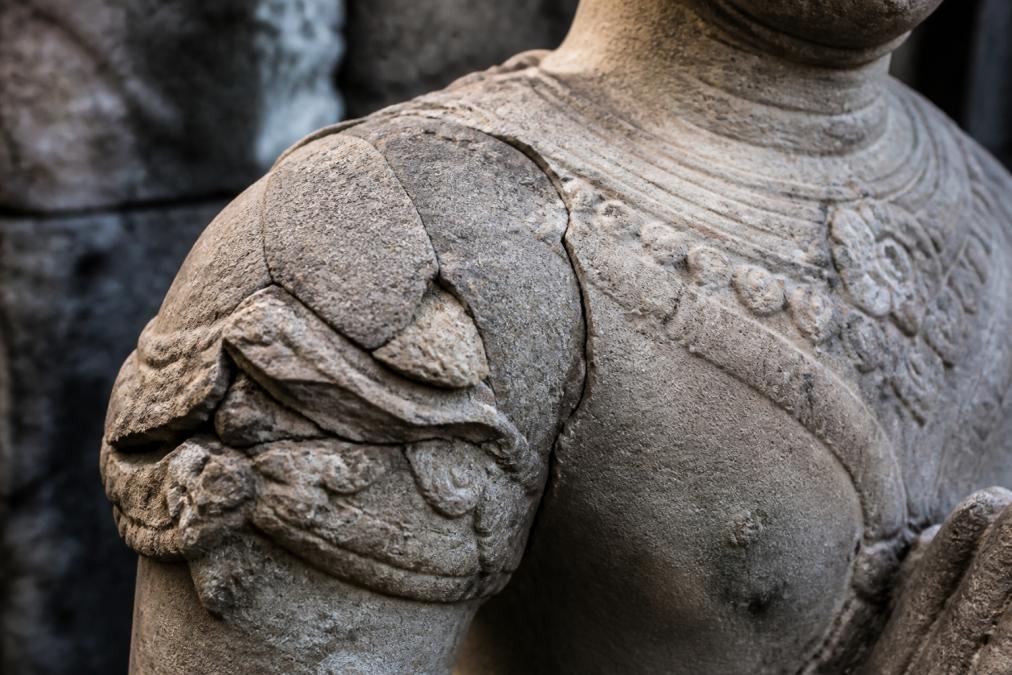
Mikrorisse sind Haarrisse, die bei genauer Betrachtung sichtbar sind und oft von Spannungspunkten ausgehen oder der natürlichen Maserung folgen. Diese kommen bei antiken Stücken häufig vor und deuten nicht unbedingt auf einen drohenden Ausfall hin, sondern deuten darauf hin, dass der Stein durch Temperaturschwankungen, Feuchtigkeitsinfiltration oder strukturelle Setzungen beansprucht wurde.
Abplatzungen treten auf, wenn die Oberflächenschicht in Flocken oder Brocken abbricht, typischerweise durch eindringendes Wasser, Gefrieren und Ausdehnung. Sobald die Abplatzung begonnen hat, schreitet sie fort, sofern die Feuchtigkeitsquelle nicht behoben wird.
Delaminierung ist die Trennung von Steinschichten, die am häufigsten bei Sedimentgesteinen wie Sandstein auftritt. Der Stein scheint sich entlang der natürlichen Schichtungsebenen abzulösen. Dies weist darauf hin, dass der Stein an Zusammenhalt verliert und ein ernstes strukturelles Problem darstellt.
Materialspezifische Schwachstellen in Marmor, Granit und Sandstein
Marmor ist relativ weich und anfällig für chemische Angriffe durch saure Verbindungen. Saurer Regen, Salznebel und saure Reinigungsmittel lösen Marmoroberflächen auf. Marmorstatuen weisen chemische Schäden auf, die sich in Form einer Ausdünnung der gesamten Oberfläche, dem Verlust scharfer Kanten an geschnitzten Details und einem kreidigen Aussehen zeigen.
Granit ist extrem hart und witterungsbeständig. Granitschäden treten typischerweise in Form von Korntrennung, geringfügigen Abplatzungen und Oberflächenverfärbungen auf. Risse im Granit sind seltener, aber schwerwiegender, da sie auf eine erhebliche Belastung hinweisen.
Sandstein ist porös und anfällig für verschiedene Schädigungsformen. Frost-Tau-Wechsel verursachen Abplatzungen und Oberflächenerosion. Das Eindringen von Wasser führt zur Auswaschung von Mineralien und zur Salzkristallisierung, wodurch Sandstein schnell zerstört werden kann. Sandsteinstatuen, die Erosion feiner Details, Oberflächenstaub oder großflächige Abplatzungen aufweisen, waren wahrscheinlich längere Zeit Feuchtigkeit und Temperaturwechseln ausgesetzt.
So reinigen Sie antike Gartenstatuen aus Stein sicher
Die Reinigung ist eine der häufigsten Methoden, mit denen Sammler antike Steinstatuen beschädigen. Durch eine aggressive Reinigung wird Patina entfernt, die Oberfläche beschädigt und Feuchtigkeit eingetragen, die zu einer inneren Beschädigung führt. Beginnen Sie mit der sanftesten Vorgehensweise: Entfernen Sie losen Schmutz mit einer weichen Naturborstenbürste. Bei hartnäckigen Ablagerungen verwenden Sie destilliertes Wasser und ein weiches Tuch. Verwenden Sie niemals Leitungswasser, das Mineralien und Chlor enthält, die Ablagerungen hinterlassen oder chemische Reaktionen hervorrufen können.
Identifizierung chemischer und mechanischer Schäden während der Reinigung
Chemische Schäden entstehen, wenn Reinigungsmittel den Stein selbst auflösen oder verändern. Saure Reiniger greifen Marmor und Kalkstein an. Alkalische Reiniger können bestimmte Sandsteine beschädigen. Produkte auf Chlorbasis oxidieren Oberflächenmineralien. Diese Schäden sind oft irreversibel.
Mechanische Schäden entstehen durch physikalische Gewalt: Schrubben mit steifen Bürsten, Hochdruckreinigung oder Schleifen. Dadurch wird Oberflächenmaterial abgetragen und der Stein kann brechen. Achten Sie bei der Beurteilung bereits gereinigter Statuen auf unnatürliche Farbveränderungen, kalkige oder pudrige Oberflächen oder fehlende Details. Mechanische Schäden zeigen sich in Form von Kratzern, polierten Stellen oder abgenutzten Teilen.
Wenn eine Reinigung erforderlich ist, verwenden Sie nur destilliertes Wasser und weiche Bürsten. Tragen Sie niemals handelsübliche Steinreiniger, säurehaltige Produkte oder Versiegelungen ohne professionelle Anleitung auf. Viele Sammler beschädigen Statuen, indem sie Steinversiegelung auftragen, die Feuchtigkeit im Inneren einschließen und den inneren Verfall beschleunigen kann.
Anzeichen struktureller Instabilität in Steinstatuen
Kippen oder Neigen ist ein sofortiges Warnsignal. Wenn eine Statue nicht gerade auf ihrem Sockel steht, wird das Gewicht nicht gleichmäßig verteilt und die Spannung konzentriert sich in bestimmten Bereichen, was die Rissausbreitung beschleunigt. Eine gekippte Statue sollte nicht ohne professionelle Beurteilung bewegt werden.
Lose Teile, Arme, Köpfe oder Gliedmaßen, die sich bei sanfter Berührung bewegen, weisen auf fehlerhafte Befestigungspunkte hin. Dies geschieht, wenn der Stein an der Verbindungsstelle gebrochen ist oder wenn sich der Kleber verschlechtert hat. Lose Teile können herunterfallen und weiter brechen, wodurch das Innere dem Eindringen von Feuchtigkeit ausgesetzt wird.
Weiche oder pudrige Stellen auf der Oberfläche deuten auf eine tiefe innere Schädigung hin. Wenn Sie den Stein mit leichtem Druck mit dem Fingernagel eindrücken können, hat das Material seine strukturelle Integrität verloren.
Risiken des Eindringens von Feuchtigkeit und der thermischen Ausdehnung
Wasser ist die Hauptursache für den Steinverfall. Feuchtigkeit dringt durch Risse, Poren und Fugen ein und verursacht dann durch Frost-Tau-Zyklen Schäden: Wasser gefriert im Stein, dehnt sich aus und bricht das umgebende Material. In Klimazonen mit erheblichen Temperaturschwankungen wiederholt sich dieser Zyklus hunderte Male pro Jahr.
Die Wärmeausdehnung erfolgt, wenn sich Stein bei täglichen und saisonalen Temperaturschwankungen erwärmt und abkühlt. Verschiedene Mineralien dehnen sich unterschiedlich schnell aus und erzeugen innere Spannungen, die zur Ausbreitung von Mikrorissen und schließlich zu sichtbaren Brüchen und Abplatzungen führen.
Feuchtigkeit führt auch zu einer chemischen Schädigung. Salzhaltige Feuchtigkeit ist besonders zerstörerisch: Wenn Wasser verdunstet, bilden sich Salzkristalle in den Poren des Steins, deren Wachstum das umgebende Material zerstört. Stellen Sie bei Statuen im Freien sicher, dass der Sockel das Wasser ableitet und nicht sammelt. Halten Sie in Innenräumen eine stabile Luftfeuchtigkeit zwischen 45 und 55 % aufrecht, um Feuchtigkeitsschwankungen zu minimieren.
Professionelle Schätzung und Bewertung von Steinskulpturen
Ein professionelles Wertgutachten kombiniert Zustandsbeurteilung mit Authentifizierung und Marktanalyse zur Wertermittlung. Dies ist wichtig für Versicherungen, Nachlassplanung oder den Verkauf eines bedeutenden Stücks.
Wie sich Patina vs. Vernachlässigung auf den Marktwert auswirkt
Patina verleiht antiken Steinstatuen einen Mehrwert, da sie Hinweise auf Alter und Umweltgeschichte liefert. Eine Statue mit gleichmäßiger, gut entwickelter Patina verlangt einen Premiumpreis, da es schwierig ist, Patina überzeugend herzustellen.
Vernachlässigung mindert den Wert. Eine Statue, die Anzeichen von aktivem Verfall, schlechter Lagerung oder Schäden durch mangelnde Pflege aufweist, ist weniger wünschenswert als eine, die erhalten geblieben ist. Der Unterschied ist subtil: Eine Statue mit stabiler Patina und geringen altersbedingten Gebrauchsspuren ist wertvoller als ein gereinigtes, poliertes Stück ohne Patina.
Dokumentation von Provenienz und künstlerischem Wert
Provenienz, die dokumentierte Besitz- und Standortgeschichte, wirkt sich erheblich auf den Wert aus. Eine Statue mit eindeutiger Herkunftskette, Ausstellungsgeschichte oder wissenschaftlicher Dokumentation erzielt Spitzenpreise.
Zu den künstlerischen Werten gehört die Bewertung der Schnitzqualität, der bei der Ausführung gezeigten Fähigkeiten und der Bedeutung des Künstlers oder der Werkstatt. Eine mit außergewöhnlichen Details geschnitzte Statue ist wertvoller als ein Gebrauchsgegenstand. Die Identifizierung des Bildhauers, der Werkstatt oder der kulturellen Tradition bietet einen erheblichen Mehrwert.
Die Dokumentation sollte hochwertige Fotos aller Oberflächen, detaillierte Zustandsnotizen, Messungen, Materialidentifikationen sowie etwaige Markierungen oder Unterschriften umfassen. Bei bedeutenden Stücken verbessern professionelle Konservierungsdokumentation und wissenschaftliche Analysen die Herkunft und rechtfertigen eine hohe Bewertung.
Bei HD Asian Art, Wir führen für unsere kuratierte Sammlung eine detaillierte Provenienzdokumentation und sind uns bewusst, dass Sammler Wert auf Transparenz über die Geschichte und Authentizität eines Stücks legen.
Checkliste für die Bewertung „DIY“ vs. „Professional“.
Die Entscheidung, ob Sie eine Statue selbst beurteilen oder einen Fachmann beauftragen, hängt vom Wert, dem Zustand und Ihrem Erfahrungsniveau des Stücks ab.
| Bewertungsaufgabe | DIY-Fähigkeit | Von Fachleuten empfohlen, wenn |
|---|---|---|
| Visuelle Oberflächeninspektion | Ja, mit Sorgfalt | Der Zustand ist unklar oder das Stück ist hochwertig |
| Identifizierung von Rissen und Abplatzungen | Ja, bei sichtbaren Schäden | Es gibt ausgedehnte Risse, es wird vermutet, dass es sich um innere Schäden handelt, oder Teile sind selten |
| Materialidentifikation | Teilweise (nur visuell) | Präziser Materialtyp, der für die Erhaltungsplanung benötigt wird |
| Patina-Bewertung | Ja, mit Recherche | Die Authentizität steht in Frage oder es bedarf einer Wertung |
| Feuchtigkeitsbewertung | Begrenzt | Die Statue weist Anzeichen eines Wasserschadens auf oder wird im Freien ausgestellt |
| Strukturelle Stabilitätsprüfung | Nein, es besteht Beschädigungsgefahr | Die Statue ist locker, schief oder weist Anzeichen von Instabilität auf |
| Wertschätzung und Herkunft | Nein | Versicherungs-, Verkaufs- oder Nachlasszwecke |
| Naturschutzplanung | Nein | Es liegt eine aktive Verschlechterung vor oder das Teil ist unersetzlich |
DIY-Bewertungsschritte:
- Untersuchen Sie die Oberfläche bei guter Beleuchtung und achten Sie auf die Farbe und Konsistenz der Patina sowie auf etwaige Verluste oder Beschädigungen.
- Achten Sie auf sichtbare Risse, Abplatzungen und Delaminationen. Fotografieren Sie Problembereiche aus mehreren Blickwinkeln.
- Identifizieren Sie den Steintyp anhand des Aussehens, der Härteprüfung und des Gewichts im Verhältnis zur Größe.
- Überprüfen Sie die Gelenke und Gliedmaßen vorsichtig auf lose Teile oder Bewegungen.
- Untersuchen Sie die Basis auf Kippen, Absetzen oder Beschädigungen.
- Dokumentieren Sie Ihre Erkenntnisse mit Fotos und schriftlichen Notizen.
Wann Sie einen Fachmann engagieren sollten:
Beauftragen Sie einen Restaurator oder Gutachter, wenn die Statue von hohem Wert ist, Anzeichen eines aktiven Verfalls aufweist, unklare Herkunft hat oder wenn Sie umfangreiche Restaurierungsarbeiten in Betracht ziehen. Professionelle Restauratoren verfügen über Werkzeuge für nicht-invasive Tests und Materialanalysen. Für Stücke, die als Mittelstücke in Meditationsräumen oder als bedeutende Sammlungsinvestitionen gedacht sind, professionelle Beurteilung bietet Dokumentation und Fachwissen, das die Kosten rechtfertigt.
Die Beurteilung des Zustands antiker Steinstatuen ist eine Fähigkeit, die sich mit der Praxis entwickelt. Patina verstehen, Strukturschäden erkennen und materialspezifische Schwachstellen erkennen sind erlernbare Grundlagen. Wenn Sie über eine größere Anschaffung nachdenken oder eine Langzeitpflege planen, zahlt sich eine ordnungsgemäße Beurteilung aus. HD Asian ArtDie kuratierte Sammlung von verfügt über eine detaillierte Zustandsdokumentation und Herkunftsinformationen, die den Sammlern Vertrauen in ihre Anschaffungen gibt. Ganz gleich, ob Sie ein Meditationsheiligtum bauen oder eine ernsthafte Sammlung erweitern: Wenn Sie wissen, was Sie erwerben, bleiben Ihre antiken Steinstatuen auch für kommende Generationen schön und stabil.
Häufig gestellte Fragen
Wie können Sie feststellen, ob eine antike Steinstatue authentisch ist?
Die Authentizität hängt von mehreren Faktoren ab: Untersuchen Sie das Zeichen oder die Einritzungen des Bildhauers auf Übereinstimmung mit der Zeit, beurteilen Sie die Tiefe und Verteilung der Patina (die echte Alterung ist ungleichmäßig), prüfen Sie, ob Anzeichen früherer Restaurierungsversuche vorliegen, und überprüfen Sie die Herkunftsdokumentation. Auch materialspezifische Eigenschaften spielen eine Rolle: Marmor weist andere Verwitterungsmuster auf als Sandstein oder Granit. Fordern Sie eine detaillierte Zustandsdokumentation an und wenden Sie sich bei größeren Investitionen an einen professionellen Restaurator, der nicht-invasive Tests zur Bestätigung von Alter und Herkunft durchführen kann.
Was ist der Unterschied zwischen natürlicher Patina und Strukturschäden bei antiken Steinstatuen?
Natürliche Patina ist eine schützende Oberflächenschicht, die sich über Jahrzehnte durch Witterungseinflüsse, Mineralienauswaschung und biologisches Wachstum wie Flechten und Moos entwickelt. Es steigert den Charakter und den Wert. Zu den strukturellen Schäden zählen aktive Risse, Abplatzungen (Abblättern der Oberfläche), Delaminierung (Ablösung von Schichten) und Risse, die die Integrität beeinträchtigen. Patina fühlt sich stabil an und trägt zur Authentizität bei; Schäden gefährden das Überleben des Stücks. Bei einem professionellen Gutachten wird zwischen beiden unterschieden: Patina erhöht den Wert, während Schäden ihn mindern und ggf. konservierungsbedürftig sind.
Wie wirkt sich die Witterung auf den Wert antiker Steinstatuen aus?
Durch die Verwitterung entsteht eine authentische Patina, die Sammler sehr schätzen. Sie beweist das Alter und die Einwirkung natürlicher Elemente. Starke Witterungseinflüsse, die zu Abplatzungen, Porositätsschäden oder Mineralverlusten führen, mindern jedoch den Wert erheblich. Der Schlüssel liegt im Gleichgewicht: Geringfügiger Oberflächenverschleiß und Flechtenwachstum sind wünschenswert; Starke Erosion, strukturelle Kompromisse oder frühere Restaurierungsversuche durch Amateure schädigen den Schätzwert. Versicherungsbewertungen und -bewertungen hängen von der Unterscheidung zwischen ästhetischer Alterung und funktioneller Verschlechterung ab. Eine professionelle Begutachtung quantifiziert diese Auswirkungen.
Wann sollten Sie einen professionellen Restaurator für die Steinrestaurierung konsultieren?
Suchen Sie professionelle Hilfe auf, wenn Sie aktives Eindringen von Feuchtigkeit, sichtbare Risse, sich verschlimmernde Abplatzungen, Delamination oder Anzeichen einer früheren fehlgeschlagenen Restaurierung feststellen. Wenn die Statue wertvoll ist oder einen bedeutenden historischen Kontext hat, ist vor jeder Reinigung oder Reparatur eine professionelle Beurteilung unerlässlich. Restauratoren verwenden nicht-invasive Tests, um den Zustand zu beurteilen, ohne das Stück zu beschädigen. Bei Teilen im Außenbereich trägt die jährliche professionelle Inspektion dazu bei, Schäden durch thermische Ausdehnung und biologisches Wachstum frühzeitig zu erkennen und so kostspielige strukturelle Ausfälle zu verhindern.
