



Chola Bronze Sculpture: South Indian Masterworks Explained
Chola Bronze Sculpture: South Indian Masterworks Explained
Few bronzes from India carry as much weight as those produced under the Cholas. From the late ninth century until the late thirteenth, the dynasty's workshops produced an enormous number of Hindu bronze images, and many still survive in temples, museums and private collections. If you are looking at a Chola bronze sculpture for the first time, the polished surface can be misleading. The real story lies in why these figures were made, how they were cast, and why their basic design still guides South Indian bronze art today.
Table of Contents
- Quick Takeaways
- The Chola Dynasty and Its Reach
- Why Temples Needed Bronzes to Move
- The Lost Wax Method in Practice
- Shiva, Nataraja and Chola Iconography
- Dressing the Bronzes for Worship
- Comparing Chola Bronzes With Other Forms
- The Lasting Influence on Later Bronze Making
- Collecting and Caring for Chola-Style Bronzes
- Frequently Asked Questions
- References
Quick Takeaways
|
Key Insight |
Explanation |
|---|---|
|
Chola bronzes were made to move |
Many were carried through streets and temple grounds during festivals, so their bases were built to take poles. Check the base before you judge the face. |
|
Lost wax casting drives the detail |
The technique explains the crisp jewellery, fine drapery and fluid figure lines that collectors praise. Each mould is broken to free the casting, so each piece carries its own surface record. |
|
Shiva dominates the surviving corpus |
Most Chola bronzes depict Shiva, so a Shiva image is the clearest starting point for understanding the style and its purpose. |
|
Worship dress changes the look |
Images were covered in silk, garlands and jewels. A bare bronze in a museum case shows the form but not the context in which it was used. |
|
Modern casts follow the same canon |
Many contemporary pieces copy Chola proportions and iconography. A Chola-style bronze is not the same as a Chola-period bronze, and the price should reflect that difference. |
|
Ask for provenance before you pay |
Documentation, a clear description of the base and an honest dating statement matter more than a dramatic patina. Walk away from sellers who avoid these questions. |
The Chola Dynasty and Its Reach
The Cholas came to power in the late ninth century and ruled until the late thirteenth. Their homeland lay near Thanjavur (Tanjore) on the southeastern coast of India, and from there they governed most of south India, Sri Lanka, the Maldive Islands and parts of the Indonesian island of Java.
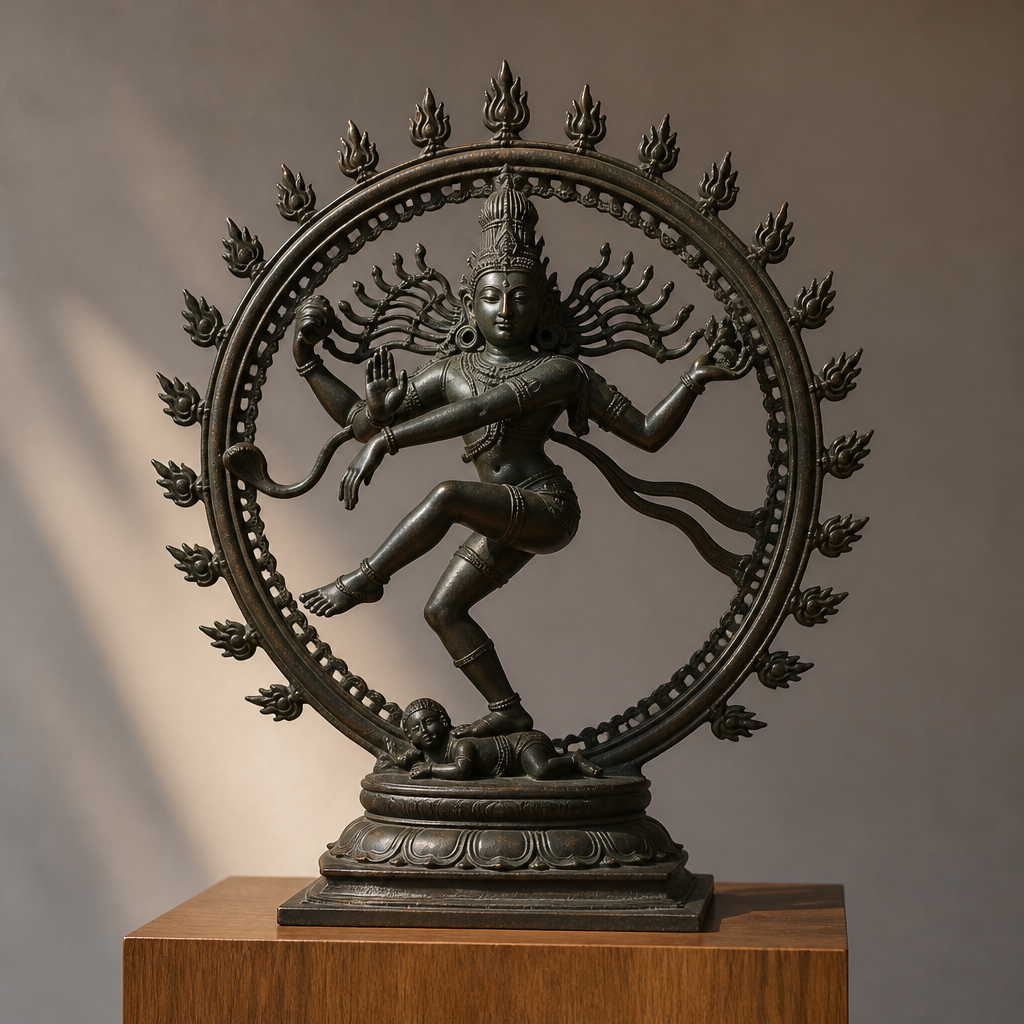
The dynasty was not only a military power. Chola rulers maintained diplomatic ties with Burma (Myanmar), China and Malaysia, and they backed poetry, drama, music and dance. Scholars often describe the period as one in which culture and religion were tightly bound to royal power, and the bronzes sit right at the centre of that relationship.
The best Chola bronzes were not made as decorations. They were made to carry the presence of a god into the public life of a kingdom.
A Court That Paid for Stone and Metal
The Chola kings built enormous stone temple complexes, decorated inside and out with painted and sculpted images of the Hindu gods. These temples were the visible proof of royal devotion, and they required a huge workforce of masons, painters and metalworkers. The bronzes were commissioned for these temples, which means they were part of a planned religious programme rather than isolated luxury goods.
That connection matters when you evaluate a piece today. A bronze made for a temple usually has a clear religious function, and its form reflects the rules of that worship. Pieces with no such function often lack the same structure, and buyers should notice the difference.
What Recent Scholarship Adds
In November 2022, the art historian Vidya Dehejia spoke at the Center for South Asian Studies at the University of Michigan about her book The Thief Who Stole My Heart. Her research describes the Chola dynasty as the dominant cultural, artistic, religious and political force in south India, Sri Lanka and the Maldive Islands for around 400 years. She also estimates that the dynasty produced thousands of Hindu statues from the ninth through the thirteenth century.
In her talk, Dehejia described an unnamed master sculptor from a small coastal village along the Bay of Bengal, and a masterpiece from 1011 showing Shiva, made for a military general. Her comparison of that artist to two of the most celebrated names in European art is the kind of claim that shows how highly these bronzes are now regarded by specialists.
Why Temples Needed Bronzes to Move
Stone temples were built to stay in place. The main image in the inner sanctum, along with the sculpted walls, remained fixed for centuries, and that stability was part of their power.
Changing religious ideas in the tenth century asked the deities to take on public roles similar to those of a human monarch. As a result, large bronze images were made to leave the temple for daily rituals, processions and festivals, and that change in role shaped their design.
Processional Images and Their Bases
The round lugs and holes on the bases of many Chola bronzes were made to take poles, which were used to carry these heavy images. This is one of the most useful practical clues you will find, because the base reveals how the piece was used long before you think about its style.
Pro tip: Before you judge a bronze by its face, look at the base, weigh the piece in your hand and check for wear on the lugs. Genuine processional use usually leaves marks that a decorative cast rarely shows.
Festivals, Towns and Public Display
Chola bronzes were adorned with jewels and paraded through towns during festivals. A figure built to be seen from a distance by a moving crowd has bold silhouettes and clear, readable forms, and that is why the best examples still hold their presence at home.
Many buyers assume a bronze is meant to be looked at up close on a shelf. The Chola workshops made them to be seen from the street, and that intention should guide how you display one in your own space.
The Lost Wax Method in Practice
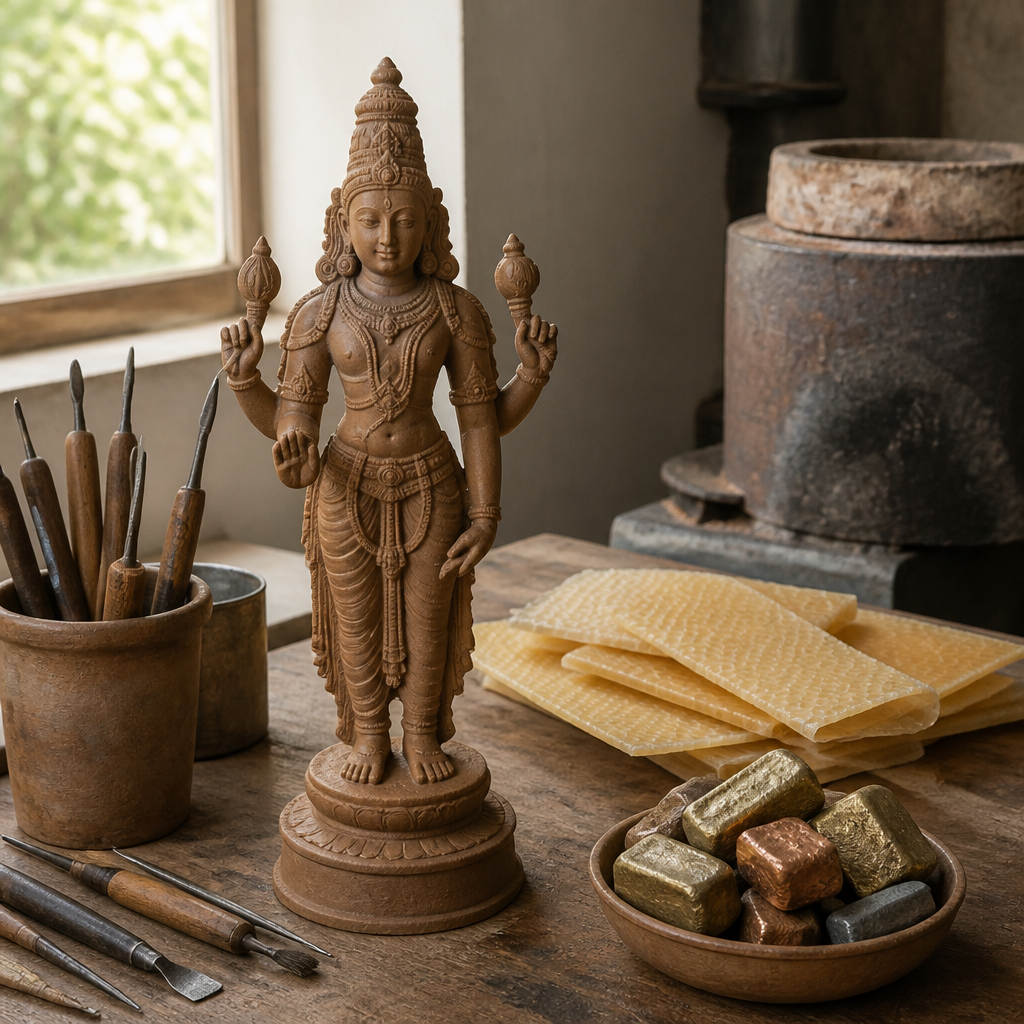
Chola-period bronzes were made using the lost wax technique. Collectors admire them for the sensuous depiction of the figure and for the detailed treatment of clothing and jewellery, and that finish comes directly from the casting method.
Bronze casting had a long history in south India before the Cholas, but a much larger number of bronzes was cast during their period. That increase in both scale and output shows how central metal images had become to temple life.
From Wax Model to Finished Cast
In broad terms, the sculptor first models the figure in wax, then encloses that model in a clay mould. Heat melts the wax out, leaving a cavity, and molten metal fills the space. Once the metal cools, the mould is broken to release the casting.
Because the mould is destroyed to free the piece, each casting is individual. Two bronzes made from the same wax model will still show small differences in their surface, edges and finish. That individuality is one reason serious collectors look closely at the surface rather than only at the overall shape.
What Fine Detail Tells a Collector
Crisp jewellery and fine drapery are the hallmarks people expect from Chola work, but they are not proof on their own. Modern casting can reproduce sharp detail, so a sharp face is a starting point, not a conclusion. Look at how the detail sits within the overall structure, and whether the edges and hollows look consistent with a hand-finished casting.
Pro tip: Compare the detail on the figure's ornaments with the detail on the base and inside openings. Mismatched finishing levels across these areas can signal a later restoration or a modern piece presented as older.
Shiva, Nataraja and Chola Iconography
Most surviving Chola bronzes depict Shiva, and this is the single most useful fact for a buyer to remember. Dehejia's research describes thousands of bronzes from the ninth through the thirteenth century, with Shiva as the main subject, and those bronzes were adorned with jewels and paraded during festivals.
Shiva's images in this period range from single standing or seated forms to scenes showing him with his consort Parvati. The variety of forms shows how the workshops answered the needs of different temples and festivals.
Reading the Nataraja
The Nataraja, Shiva as the cosmic dancer, is the most famous image associated with the Chola tradition. In his dance, Shiva is linked with creation and with the cycles of the cosmos, and the figure is among the most recognised images in Indian art.
Look for the standard elements when you examine a Nataraja. These include the ring of flame that frames the figure, the small drum in one of the upper hands, and the dwarf figure beneath the raised foot. Each element carries meaning, and the way the artist balances them tells you a great deal about the workshop's skill.
Shiva Stories in Bronze
Dehejia's book takes its title from a hymn by the child-saint Sambandar, which opens by hailing Shiva as "the thief who stole my heart." Understanding that devotional context helps explain why the bronzes are so emotionally direct, even when their scale is modest.
When you read a Shiva image as a devotional object rather than a décor piece, its gestures and attributes become easier to interpret. This approach also makes it simpler to spot a figure whose iconography has been mixed or misunderstood by a modern maker.
Dressing the Bronzes for Worship
When bronzes are in worship, they are covered in silk cloths, garlands and jewels. Outside a religious context, they do not appear as they do in a museum or on a shop shelf, and that difference is easy to forget.
Many collectors form their opinion of a bronze from a bare photograph. That view is incomplete, because the original object was designed to be dressed, and the dress was part of the sculpture's meaning.
A Chola bronze was never only a sculpture. It was a body that was dressed, carried and worshipped, and its surfaces were shaped by that use.
Silk, Garlands and Jewels
Silk cloth, garlands and jewellery would have covered parts of the surface during worship. This means some areas that look bare to a modern viewer may once have been hidden, and wear patterns on the shoulders, base and lugs can reflect long periods of dressing and carrying.
Be cautious with loose ornaments that come with a bronze. A detachable crown or necklace may be a later addition, so ask the seller whether these pieces belong to the original object or were sourced separately.
Why Bare Bronzes Can Mislead Buyers
A bronze photographed without dress can look more worn than it is, or more polished than it should be. Heavy polishing removes the fine surface history that helps with dating, so a bright, uniform finish is worth questioning.
In practice, a museum-style presentation shows the form clearly but hides how the piece was used. When you evaluate a bronze, ask for close photographs of the base, the lugs and the surface, rather than a single flattering image.
Comparing Chola Bronzes With Other Forms
A useful way to understand Chola bronzes is to compare them with the stone sculpture that shared their temples. The two forms served related religious goals but worked in very different ways, and the differences give you practical clues for identification.
|
Feature |
Chola processional bronze |
Stone temple image |
|---|---|---|
|
Material and making |
Metal cast using the lost wax technique |
Carved from stone |
|
Role in temple life |
Carried out for rituals, processions and festivals |
Remained fixed in the sanctum or on temple walls |
|
Key physical clue |
Round lugs and holes on the base for carrying poles |
Tool marks, weathering and carved architectural setting |
|
Typical dress or display |
Covered in silk, garlands and jewels during worship |
Decoration is carved directly into the stone |
|
Dating approach for collectors |
Compare casting quality, base wear and patina |
Compare style, stone type and architectural context |
The table shows why a buyer should never judge a bronze with the same checklist used for stone. The base, the casting and the wear pattern tell a different story from the carved surface of a temple image, so each object needs its own method of assessment.
The Lasting Influence on Later Bronze Making
The Chola workshops set a standard that later makers still study. Proportions, iconography and the way a figure is posed remain points of reference for many South Indian bronze artists, and that continuity is part of why the tradition feels alive rather than historical.
Modern Casts and the Chola Canon
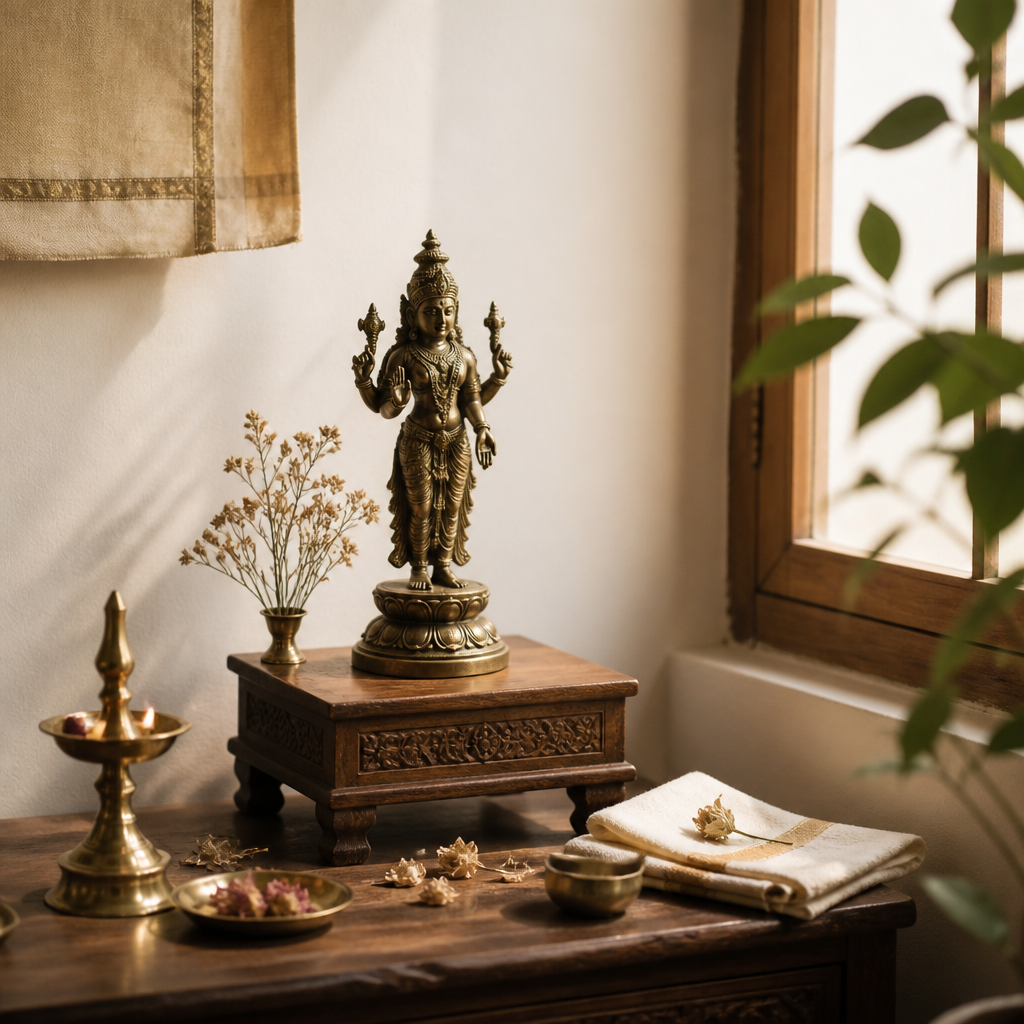
In practice, many modern casts copy Chola models. Some are made with real care and skill, while others use the look of the style without its structure or finish. A modern piece may be a fine object in its own right, but it should not be priced as if it were a Chola-period bronze.
The honest way to describe these pieces is Chola-style or inspired by the Chola tradition. That wording tells the buyer what they are getting, and it prevents disappointment when a piece is later assessed by someone who knows the period.
Why the Tradition Still Draws Buyers
Interest in Chola bronzes has grown among collectors, practitioners and home altar decorators who want authentic South Indian work. Dehejia's book, and her 2022 talk at the University of Michigan, brought the story of these bronzes to a wider audience, and that attention has shaped what people look for.
Buyers who understand the history tend to ask better questions. They look at the base before the price tag, and they accept that a fine modern piece can be a sound purchase when it is described honestly.
Collecting and Caring for Chola-Style Bronzes
Buying a Chola-style bronze is a question of evidence, not only of taste. A good seller will be able to explain the piece, describe its condition and say what can and cannot be claimed about its age.
Telling a Chola-Period Bronze From a Chola-Style Cast
Start with the base. Look for round lugs and holes, check how the metal has worn, and note whether the surface looks consistent with long handling. Then examine the casting quality, the edges of the figure and any signs of repair or added metal.
Ask for documented provenance and a clear statement of dating. If a seller cannot provide either, treat the piece as a modern or uncertain object and price it that way. Also check the rules on importing antiquities in your own country before you commit to an older piece.
Display and Handling at Home
Handle bronzes with clean, dry hands, and avoid abrasive polishes that can strip the surface and remove the patina that collectors value. A soft cloth is usually enough for routine dusting.
If you use a bronze on a home altar, keep it away from damp, direct heat and strong sunlight. Dress it respectfully if your practice calls for it, and remove any loose ornaments before you move the piece, so that small parts are not lost. You can browse our range of Hindu deity statues at HD Asian Art, where orders over £35 ship free within the UK.
Frequently Asked Questions
What is a Chola bronze sculpture?
A Chola bronze sculpture is a metal figure made during the Chola dynasty, which ruled from the late ninth century until the late thirteenth. Most of these bronzes depict Hindu deities, especially Shiva, and many were made for processions and festivals.
When were Chola bronzes made?
Chola bronzes were made during the period of Chola rule, from the late ninth century until the late thirteenth. The production was especially large during this time, with a far greater number of bronzes cast than in earlier periods of south Indian bronze casting.
Why do Chola bronzes have holes in their bases?
The round lugs and holes on the bases were used to take poles, which allowed the heavy images to be carried out of the temple during rituals, processions and festivals. Checking for these features is one of the most reliable ways to understand how a bronze was used.
Is the lost wax technique still used for South Indian bronzes?
Yes, the lost wax method remains part of the process used by many modern bronze makers. A finished modern piece can be well made, but buyers should look for honest descriptions of how the object was produced and whether it is old or new.
What is a Nataraja?
A Nataraja is a depiction of Shiva as the cosmic dancer, a form linked with creation and the cycles of the cosmos. It is one of the most famous images associated with the Chola tradition, and its standard elements include a ring of flame and a small drum.
How can I tell an old Chola-style bronze from a modern cast?
Examine the base for processional wear and the lugs and holes that suggest carrying, then assess the casting quality and surface history. Ask for documentation, and be cautious of any seller who describes a modern piece as older without clear evidence.
Tell us what detail first drew you to a South Indian bronze, whether you noticed it on a home altar, in a museum or in your own collection.
We would love your feedback and any insights you would share with others. What perspective would you add?
References
-
Asia Society Museum overview of Chola period bronze sculpture
-
University of Michigan report on Vidya Dehejia's talk about Chola bronzes
-
Paper on the evolution of bronze sculptures in the Chola period (PDF)
