



Protect Stone Sculpture: Conservator Backed Cleaning for Collectors
Protect Stone Sculpture: Conservator Backed Cleaning for Collectors
Dust first, always, and only move to low-moisture cleaning after you’ve spot-tested a pH-neutral product on a hidden area. Skip acids, bleach, pressure washers, and any scrubbing that bites into the surface. Outdoor pieces need regular rinsing; indoor pieces need frequent gentle dusting and occasional wet cleaning.
If the stone flakes, powders, or feels soft under a fingernail, stop and call a conservator before you do anything else.
Key Features:
- Use dry dusting with soft brushes or microfiber cloths regularly on indoor and outdoor sculptures to prevent dirt buildup without causing damage.
- Always test cleaning products on a hidden area and avoid acids, bleach, scrubbing, or abrasive tools that can etch, discolor, or scratch the stone.
- Marble and limestone demand extra caution since they react with acids, while granite withstands cleaning better; identify the stone before choosing your method.
- For stubborn stains, use tested poultices or chelators with professional guidance, and avoid escalating treatment without proper testing to prevent surface loss.
- Professional conservators should be consulted if signs of flaking, powdering, active salt crystallization, or persistent staining appear after careful cleaning.
Table of Contents
- Quick Checklist: Supplies, Safety, and What to Avoid
- Identify the Stone and Check Condition Before You Start
- Tools and Cleaners That Are Safe, and Those That Cause Damage
- Step-by-Step: Cleaning Indoor Stone Sculptures Safely
- Step-by-Step: Cleaning Outdoor Stone Sculptures Safely
- Stubborn Stains, Biological Growth, and Poultices: How to Test and Escalate
- Rinse, Dry, Finish, and a Simple Maintenance Schedule
- When to Stop and Call a Conservator
- Conservative Care for Collectible Stone Sculpture
- Browse or Contact HDAsianArt for Authenticated Stone Sculpture
- Sources
Quick Checklist: Supplies, Safety, and What to Avoid
You don’t need a cabinet full of specialty products to clean stone sculpture the right way. Gather soft natural or synthetic bristle brushes, microfiber cloths, a spray bottle, a bucket, cotton swabs, bamboo skewers for tight carving, and clean dry towels.
Before touching the stone, put on gloves, take off rings or bracelets that could scratch the surface, and set up a stable ladder or platform if the piece is tall. Rushing this step is how chips happen.
Some tools belong nowhere near your statue:
- Pressure washers, which force water into pores and joints
- Vinegar, lemon juice, or any acidic solution
- Chlorine bleach
- Scouring pads, steel wool, or wire brushes
- Aggressive scrubbing motions of any kind
Pro Tip: A bamboo skewer works better than a metal pick for clearing packed dust out of deep carving. It won’t scratch the stone the way metal will.
Identify the Stone and Check Condition Before You Start
Not every stone behaves the same way under water and cleaner, so identification comes before cleaning. Granite is hard, dense, and speckled, and it tolerates cleaning fairly well. Marble and limestone are softer, calcite-based stones that react to acids and can etch or dull if you’re careless. Sandstone is porous and grainy, prone to surface loss if you scrub it, and alabaster is soft enough to scratch with a fingernail.
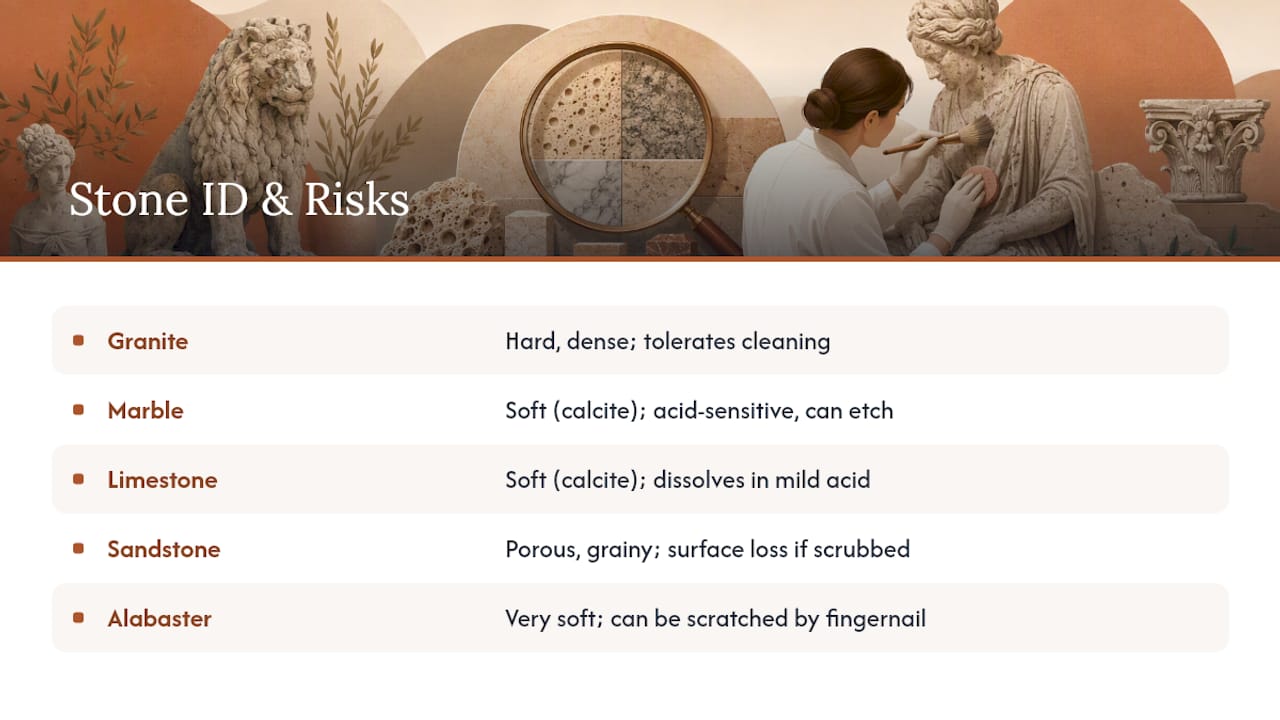
Marble and limestone statues, along with the sandstone often seen on stone Buddha figures exposed to weather, demand more caution than granite because their mineral structure dissolves in mildly acidic conditions that granite shrugs off.
Before cleaning anything, walk the piece and look for cracks, flaking, powdery patches, or old repairs. Then pick a small, inconspicuous spot, ideally on the base or back, and test your cleaner there first, waiting to see if any color change, dulling, or residue appears. Understanding the types of stone used in Asian sculptures makes this identification step far faster the next time you’re facing an unlabeled piece.
Tools and Cleaners That Are Safe, and Those That Cause Damage
A pH-neutral stone or marble cleaner, distilled or clean tap water, soft-bristle brushes, and microfiber cloths handle the vast majority of cleaning jobs on collectible and garden statuary. Recent marble-cleaning guidance consistently points to the same formula: minimal moisture, a neutral cleaner applied to the cloth rather than the stone, short dwell times, and immediate drying.
For stains that won’t lift with water alone, conservators sometimes use poultices, absorbent pastes that draw contaminants out of the stone, or chelating agents that bind to mineral stains. These require testing and precise formulation, and they’re not a first resort for a home collector.
Household products cause damage through three mechanisms, and it’s worth knowing which is which:
- Acidic cleaners (vinegar, lemon juice, some bathroom sprays) etch calcite in marble and limestone on contact
- Bleach and ammonia-based cleaners can bleach or discolor stone and react badly with old repairs
- Abrasive pads and gritty cleaners leave fine scratches that trap dirt and worsen over time
Step-by-Step: Cleaning Indoor Stone Sculptures Safely
Interior pieces, including stone Buddha statues kept in a home shrine or living room, respond best to a slow, dry-first approach.
- Dust from top to bottom using a vacuum with a soft brush attachment, holding the nozzle about an inch from the surface as you sweep debris into the suction. This dry-dusting method comes straight from National Park Service conservation guidance, and it’s the single most effective habit for preventing scratches from ground-in grit.
- Use bamboo skewers or a soft brush to loosen dust packed into carved recesses, ears, folds of drapery, or lotus petals.
- If dusting isn’t enough, dampen a microfiber cloth (not the stone itself) with a diluted pH-neutral cleaner and wipe one small section at a time.
- Follow with a barely damp cloth to lift residue, then dry immediately with a clean towel.
Gilded areas, painted details, and inlays need extra restraint. Test cleaner nowhere near them, and when in doubt, dust only and leave wet cleaning to a conservator.
Pro Tip: Work in sections no larger than a hand span. It’s slower, but it keeps you from missing a spot where cleaner has started to dry unevenly.
Step-by-Step: Cleaning Outdoor Stone Sculptures Safely
Outdoor statues fight a different battle: algae, lichen, bird droppings, mineral salts, and whatever blows in on the wind. Clear the area first, protect nearby plants and any painted or gilded finishes with plastic sheeting, and check your footing before you set up a ladder near an electrical outlet or hose bib.
- Start dry. Brush off loose debris, cobwebs, and moss with a soft bristle brush before any water touches the stone.
- Rinse top to bottom with a gentle hose jet. GSA maintenance guidance for outdoor sculpture explicitly calls for a forceful spray rather than a pressure washer, which drives water into joints and cracks it can’t escape.
- For heavier grime, mix a diluted pH-neutral detergent, spot-test it, apply with a soft brush, and rinse thoroughly within minutes.
- Dry any pooled water in crevices, bases, or drapery folds with a towel where you can reach it.
Keep these habits in mind between deep cleanings:
- Rinse outdoor stone periodically, more often in high-pollen or high-soiling environments, per GSA guidance
- Remove bird droppings and de-icing salts as soon as you spot them, since prolonged contact accelerates permanent staining
- Never let a hose nozzle sit on jet or turbo setting near carved detail
Stubborn Stains, Biological Growth, and Poultices: How to Test and Escalate
Lichen and moss can often be lifted mechanically with a wooden or plastic scraper once the stone is damp, working carefully so you’re not gouging the surface underneath. Biocides exist for persistent growth, but they only belong on stone after you’ve read the product’s specific stone-safe directions and tested it on an inconspicuous area first.
Poultices and chelating agents sit at the far end of the escalation ladder, and conservators reach for them only after milder methods fail. A postprint review of marble cleaning case studies found that some chelators, EDTA among them, can damage calcitic stone unless carefully buffered and tested. That same research documented conservators deliberately moving from dry cleaning, to aqueous solutions, to chelators, monitoring the surface at every stage rather than jumping straight to the strongest option.
- Always test on a hidden spot before treating a visible area
- Watch for color shift, dulling, or texture change during the test, not just after
- Photograph the test spot and note the product, dilution, and dwell time
If a stain survives a properly tested mild treatment, that’s your stop point. Escalating further without professional guidance risks permanent surface loss.
Rinse, Dry, Finish, and a Simple Maintenance Schedule
Trapped moisture is the quiet villain in most post-cleaning regrets. Porous stone that isn’t fully rinsed and dried can pull detergent residue and minerals to the surface as it dries, leaving a blotchy stain you didn’t have before you started cleaning.
Rinse from top to bottom with clean water until no suds or cleaner residue remains, then dry immediately with absorbent towels, blotting rather than rubbing. For deep folds or recesses, a hair dryer on a cool, low setting can help chase out residual dampness.
A simple schedule keeps you out of “emergency cleaning” territory entirely:
- Indoor pieces: dust regularly depending on your home’s dust levels
- Outdoor pieces: rinse periodically, inspect regularly for new growth, stains, or cracking
- Both: do a full condition check every time you clean, not just when something looks wrong
When to Stop and Call a Conservator
Certain signs mean the cleaning conversation is over and the professional-help conversation starts. Watch for flaking or powdering on the surface, active salt crystals forming (a white, crusty bloom), any loose or shifting element, and staining that persists after a full dry-out.
A conservator will typically run solubility tests to see how the stone reacts to different solvents, may apply a poultice under controlled conditions, and can recommend consolidation treatments for structurally weak areas that no amount of careful home cleaning will fix.
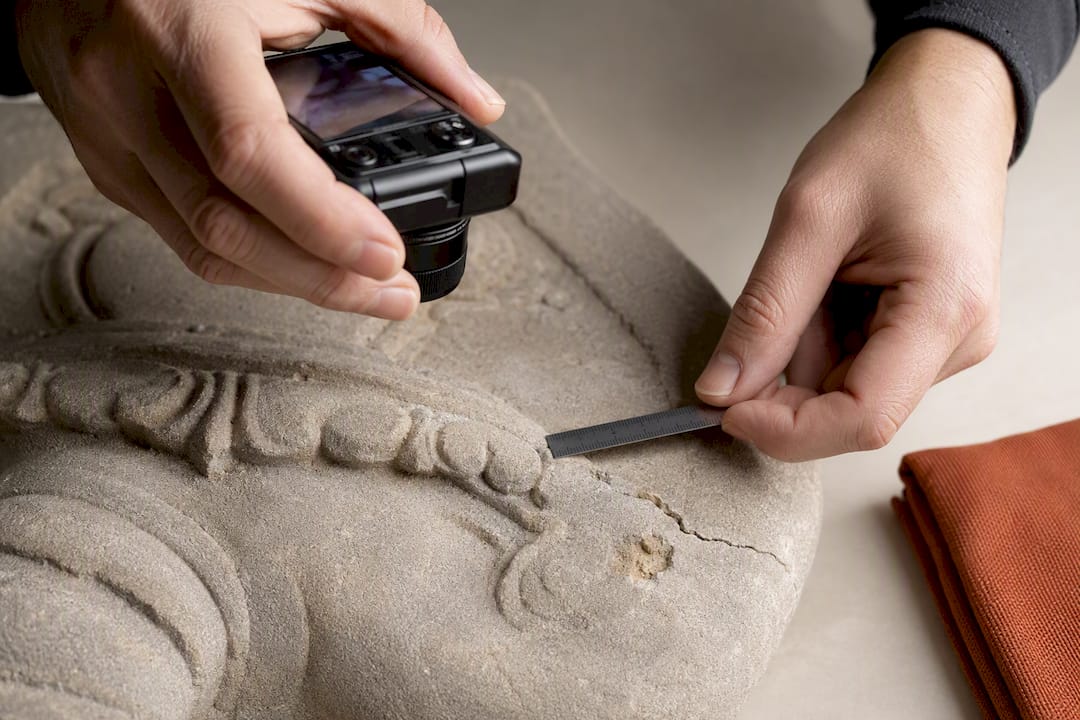
Before you make that call, document what you’re seeing. Photograph the area in good light from multiple angles, measure any cracks or losses, and write down when you first noticed the change. A museum-grade photography checklist makes this record far more useful to whoever ends up assessing the piece, and it’s the same habit worth building before you buy a stone sculpture in the first place, not just after something goes wrong.
Conservative Care for Collectible Stone Sculpture
Minimal intervention protects value more reliably than any cleaning product on the market. This is a principle often recommended by conservation literature: dust often, wet-clean rarely, and test before you touch.
Collectors chasing a pristine surface sometimes do more damage than the decades of dust they were trying to remove. If you’re unsure whether a stain is cosmetic or structural, document it and wait rather than reaching for a stronger cleaner. The same discipline applies before a purchase, not just after one; know the stone’s condition before you own the problem.
— James, HDAsianArt.com
Browse or Contact HDAsianArt for Authenticated Stone Sculpture
Collectors often look for source galleries offering stone Buddha, Hindu deity, or temple carvings that have been vetted, researched, and described by experts familiar with how these pieces age. Stone pieces that come with provenance details and condition notes help collectors make informed decisions about cleaning or conservation.

If you’re building a collection or replacing a damaged piece you finally decided to retire, browse the current stone sculpture collection at HDAsianArt to see what’s authenticated and ready to ship worldwide with insured DHL delivery. Have a question about a specific carving or its care needs before you buy? Reach out directly and our team will walk you through what the piece needs, before it ever reaches your doorstep.
Sources
- Conserve O Gram 15/2: Dusting Guidelines for Stone Objects (National Park Service)
- GSA Fine Arts: Sculpture maintenance guidance
- Conservation case studies on marble cleaning (conference postprints)
- How to Clean Marble Sculpture: Safe Steps for a Stunning Finish - CleaningBro
