


Explicación de la iconografía de las estatuas budistas: una guía visual
Explicación de la iconografía de las estatuas budistas: una guía visual
La iconografía de las estatuas budistas se define como el lenguaje visual estructurado de posturas, gestos con las manos y símbolos sagrados utilizados para comunicar cualidades espirituales como la iluminación, la compasión y la impermanencia. Cada elemento de una estatua budista tiene un significado.
La postura de meditación sentada, el gesto de la mano que toca la tierra, el trono de loto bajo los pies de una figura: ninguna de estas son opciones decorativas. Son enseñanzas comprimidas. Esta guía cubre los principales símbolos de la iconografía budista, sus orígenes históricos y cómo leerlos en las tradiciones Theravada, Mahayana y tibetana.
¿Cuáles son las principales posturas de las estatuas budistas y sus significados?
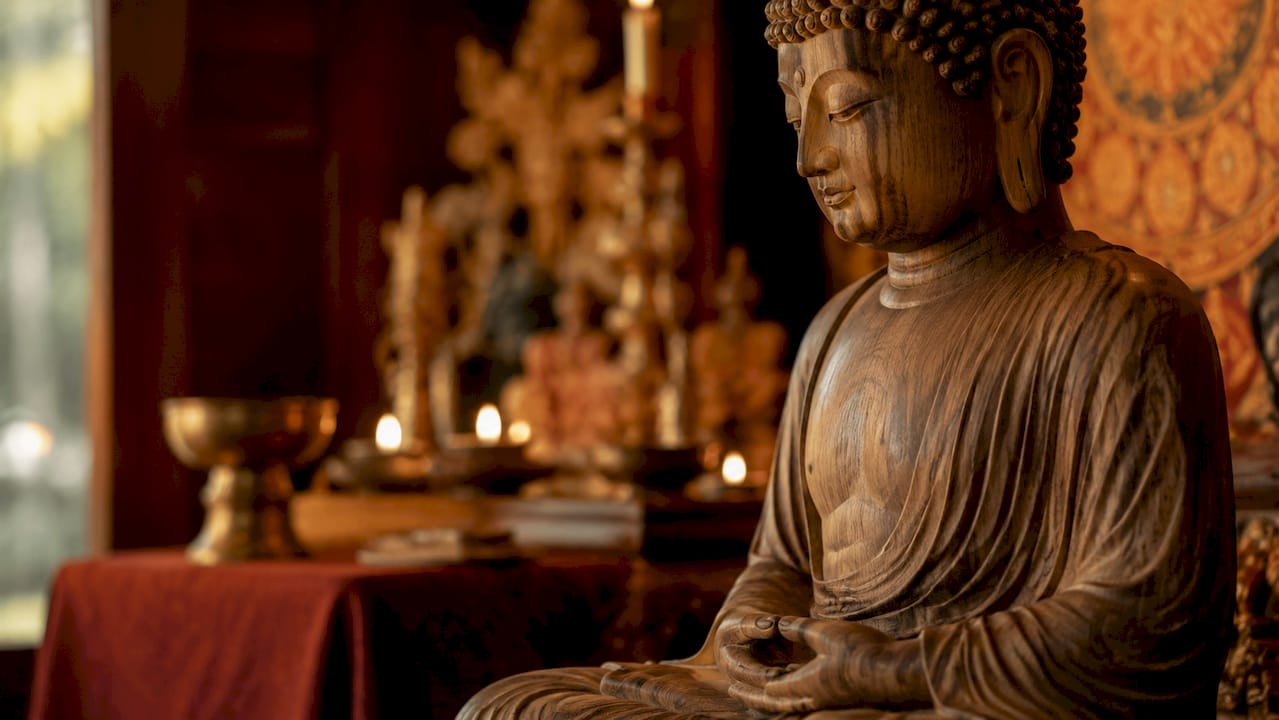
La postura es lo primero que se lee en una estatua budista. Las figuras sentadas sugieren meditación, estabilidad y cultivo interior. Las figuras de pie transmiten compasión, enseñanza o protección activa. Las estatuas reclinadas hacen referencia al parinirvana de Buda, su fallecimiento final, y señalan la realidad de la impermanencia y la paz. Las figuras andantes representan un progreso dinámico a lo largo del camino espiritual.
Estas posturas son indicadores sólidos, no reglas rígidas. El contexto siempre da forma al significado. Una figura de pie en la tradición Theravada de Sri Lanka a menudo señala el momento justo después de la iluminación, mientras que un Avalokiteshvara de pie en la iconografía Mahayana señala la compasión en movimiento. La misma posición del cuerpo tiene un peso diferente según la tradición, la deidad representada y el entorno.
Aquí hay un desglose de las cuatro posturas principales:
- Sentado (Dhyana Asana): Con las piernas cruzadas y las manos en el regazo. Señala meditación, quietud interior y el camino hacia la iluminación.
- De pie (Samabhanga): Erguido, peso distribuido uniformemente. Señala enseñanza, protección o acción compasiva.
- Reclinado (Parinirvana): Acostado sobre el lado derecho. Señala el fallecimiento final del Buda y la aceptación de la impermanencia.
- Caminando: Un pie adelante, el peso cambiando. Señala un movimiento activo a lo largo del Óctuple Sendero.
Consejo profesional: Cuando te encuentras con una estatua que no puedes identificar de inmediato, comienza con la postura, luego pasa a las manos y luego a la cara. Esa secuencia refleja cómo los propios iconógrafos analizan las figuras.
La variación regional importa aquí. Las estatuas tailandesas de Buda andante, por ejemplo, son un desarrollo claramente local sin paralelo en el arte indio o tibetano. el Estilos de Buda tailandés La tradición codificó el caminar en una categoría iconográfica formal durante el período Sukhothai, aproximadamente entre los siglos XIII y XV d.C.
¿Cómo los mudras y las expresiones faciales dan forma a la iconografía budista?
Los mudras son gestos con las manos. utilizado en estatuas y pinturas para comunicar estados de ánimo, funciones y estados espirituales. Funcionan como enseñanzas del lenguaje corporal, aclarando lo que hace o representa una figura de un vistazo.
Los cuatro mudras más comunes que encontrarás son:
- Dhyana Mudra (Meditación): Ambas manos descansan en el regazo, con las palmas hacia arriba, una encima de la otra. Señala una profunda absorción meditativa.
- Bhumisparsha Mudra (Tocar la Tierra): La mano derecha se extiende hasta tocar el suelo. Éste es el gesto que hizo el Buda Shakyamuni en el momento de la iluminación, llamando a la tierra a ser testigo.
- Dharmachakra Mudra (Enseñanza): Ambas manos se levantan a la altura del pecho, con los dedos formando una rueda. Señala el primer giro de la Rueda del Dharma después de la iluminación.
- Abhaya Mudra (Tranquilización): Mano derecha levantada, con la palma hacia afuera. Señala valentía, protección y concesión de seguridad.
Las expresiones faciales funcionan junto con los mudras para completar el mensaje. Los rostros de las estatuas budistas transmiten serenidad, compasión y sabiduría. Los ojos entrecerrados señalan la concentración. Una leve sonrisa indica felicidad sin apego. Estas no son preferencias estilísticas. Son códigos visuales estandarizados refinados a lo largo de siglos de tradición artística.
Leer toda la figura en conjunto le dará la interpretación más clara. Es casi seguro que una figura sentada con el bhumisparsha mudra y una expresión serena representa al Buda Shakyamuni en el momento de la iluminación. Una figura de pie con el abhaya mudra y una expresión compasiva es más probable que sea Avalokiteshvara o una deidad protectora.
Consejo profesional: La iconografía tibetana a menudo superpone múltiples mudras a lo largo de una deidad de múltiples brazos. Cada brazo representa una cualidad o función diferente. Lea cada mano por separado, luego considere lo que la combinación comunica como una enseñanza unificada.
¿Qué representan los símbolos clave de las estatuas budistas?
Los símbolos budistas condensan enseñanzas complejas en formas visuales simples. Sirven como recordatorios prácticos de atención plena, compasión y sabiduría en lugar de códigos místicos que requieren iniciación para comprenderlos.
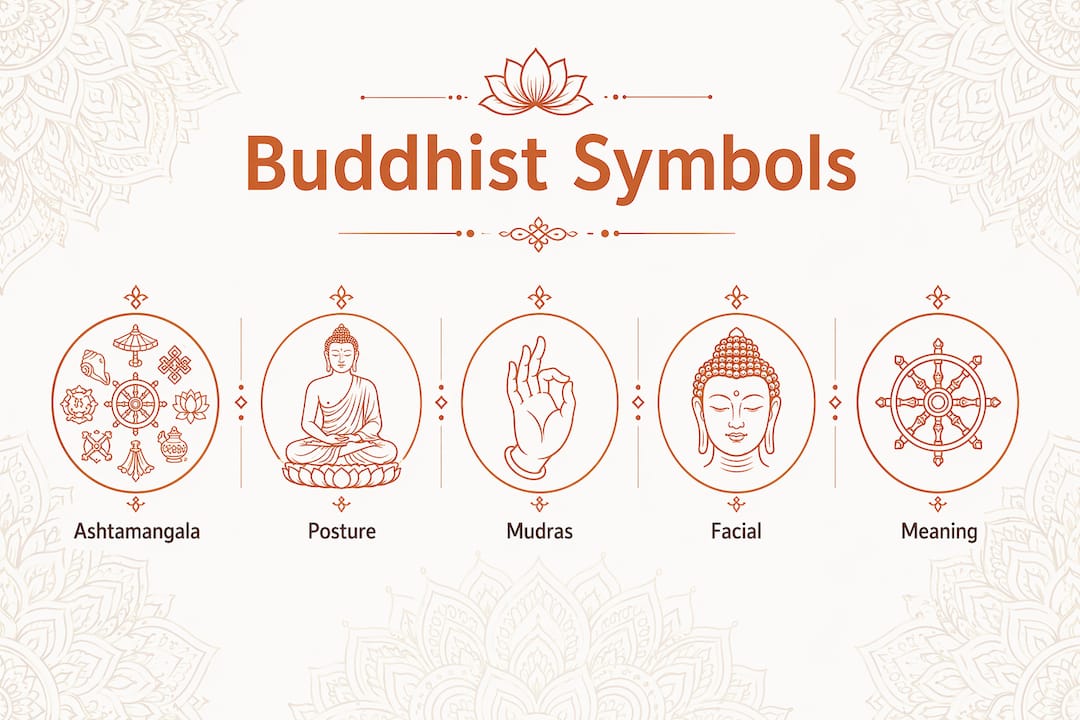
El sistema de símbolos más organizado del arte budista es el Ashtamangala, o Ocho símbolos auspiciosos. Estos aparecen en estatuas, tronos, pedestales y paredes de templos en las tradiciones tibetanas, del Himalaya y de Asia oriental.
| Símbolo | Significado espiritual |
|---|---|
| sombrilla | Protección contra el sufrimiento y las fuerzas dañinas. |
| pez dorado | Libertad del océano de sufrimiento y miedo. |
| Jarrón del tesoro | Abundancia de riqueza espiritual y material. |
| loto | Pureza que surge de condiciones difíciles. |
| Concha de caracola | El llamado a escuchar y difundir el Dharma |
| Nudo sin fin | Interdependencia de todos los fenómenos. |
| Estandarte de la victoria | Triunfo de la sabiduría sobre la ignorancia |
| Rueda del Dharma | El Noble Óctuple Sendero y las enseñanzas del Buda |
La Rueda del Dharma es el símbolo budista más antiguo y universal. Sus ocho radios representan el Noble Óctuple Sendero, la guía práctica para una vida ética y una comprensión profunda. Lo encontrará tallado en bases de estatuas, fundido en pedestales de bronce y pintado en los techos de los templos en todas las tradiciones budistas.
Las tradiciones simbólicas anteriores son anteriores al Ashtamangala. Antes de que aparecieran figuras humanas en el arte budista, los artistas usaban huellas, tronos vacíos, el árbol Bodhi y estupas para representar a Buda. Estos símbolos anicónicos todavía aparecen en estatuas posteriores como elementos decorativos secundarios, llevando su significado original como referencias a momentos clave de la vida de Buda.
El contexto da forma significativa al significado simbólico. El mismo símbolo de loto sobre la base de una estatua indica pureza y emergencia espiritual. El mismo loto sostenido en la mano de una deidad indica que la deidad encarna esas cualidades. La ubicación, el entorno y los elementos que lo acompañan cambian la lectura.
¿Cómo se desarrolló la iconografía de las estatuas budistas a lo largo de la historia y las regiones?
El arte budista temprano era anicónico hasta aproximadamente el siglo I-II d.C. Los artistas representaron a Buda a través de símbolos: huellas de pies, un asiento vacío bajo el árbol Bodhi, una rueda o una sombrilla. La figura humana se consideraba demasiado limitada para contener las cualidades de un ser iluminado.
Eso cambió en las regiones de Gandhara y Mathura en los actuales Pakistán e India. La escultura de Gandhara muestra una clara influencia helenística, con cabello ondulado realista, cortinas naturalistas y proporciones idealizadas tomadas de las convenciones artísticas griegas. La escultura Mathura se desarrolló de forma independiente, produciendo formas más redondas y claramente indias. Ambas tradiciones establecieron el vocabulario visual que se extendió por Asia.
| Región / Tradición | Características estilísticas clave |
|---|---|
| Gandhara (siglos I-V d.C.) | Realismo helenístico, cabello ondulado, túnicas drapeadas. |
| Mathura (siglo I-III d.C.) | Naturalismo indio, túnicas finas, formas redondeadas. |
| Theravada (Sri Lanka, Tailandia, Birmania) | Rasgos alargados, ushnisha de llama, mudras formales |
| Mahayana (China, Corea, Japón) | Rasgos más suaves, tronos elaborados, diversidad de bodhisattvas. |
| Tibetano / Himalaya | Deidades de múltiples brazos, colores ricos, integración Ashtamangala |
el Tradición visual mahayana amplió dramáticamente la gama iconográfica. Mientras que el arte temprano se centraba casi por completo en el Buda Shakyamuni, las tradiciones Mahayana introdujeron a Bodhisattvas como Avalokiteshvara, Manjushri y Tara, cada uno con sus propios códigos iconográficos distintos. Esto multiplicó el número de figuras, gestos y símbolos en circulación.
Escultura budista Theravada desarrolló sus propias convenciones estrictas. Las tradiciones de Sri Lanka y Tailandia, por ejemplo, codificaban proporciones específicas, tipos de coronas y estilos de túnicas que identifican el período y la escuela de una estatua de un vistazo. el Tradición de Sri Lanka es particularmente notable por sus primeras esculturas de piedra que establecieron estándares regionales a los que todavía se hace referencia en la actualidad.
Cada tradición regional adaptó la iconografía a la estética local y los énfasis espirituales sin abandonar la gramática visual central. Esa coherencia a lo largo de 2.000 años y docenas de culturas es lo que hace que la iconografía de las estatuas budistas sea un lenguaje visual genuinamente unificado.
Conclusiones clave
La iconografía de las estatuas budistas es un lenguaje visual unificado construido a partir de posturas, mudras, expresiones faciales y símbolos sagrados que comunican enseñanzas espirituales específicas en todas las tradiciones.
| punto | Detalles |
|---|---|
| La postura señala el significado central | Las figuras sentadas indican meditación; las figuras de pie indican compasión o enseñanza; Las figuras reclinadas indican parinirvana. |
| Los mudras aclaran la función. | Los mudras bhumisparsha, dhyana, dharmachakra y abhaya comunican cada uno un estado o acción espiritual distinta. |
| Ocho símbolos auspiciosos | El Ashtamangala proporciona un conjunto estandarizado de ocho símbolos que se encuentran en el arte budista tibetano, del Himalaya y de Asia oriental. |
| Las raíces históricas importan | La iconografía pasó de símbolos anicónicos a figuras humanas en Gandhara y Mathura durante los siglos I y II d.C. |
| El contexto cambia de significado | El mismo símbolo se lee de manera diferente según la ubicación, la tradición y los demás elementos presentes en la figura. |
Leer estatuas budistas más allá de la lista de verificación
He pasado años buscando, investigando y catalogando estatuas budistas de Camboya, Tailandia, Sri Lanka y más allá. El error más común que veo en nuevos coleccionistas y entusiastas es tratar la iconografía como un ejercicio fijo de decodificación. Buscan el mudra, identifican la postura, relacionan el símbolo con una lista y consideran comprendido el trabajo.
Ese enfoque le ayuda a empezar. No te lleva muy lejos.
El marco más útil es tratar los símbolos como punteros en lugar de etiquetas. Un loto sobre la base de una estatua no sólo significa “pureza”. Le pide que considere lo que significa la pureza en el contexto de una figura que surge de condiciones difíciles. El nudo interminable no significa sólo “interdependencia”. Es un argumento visual sobre la naturaleza de la realidad que la filosofía budista tardó siglos en desarrollar.
La variación cultural enriquece esto en lugar de complicarlo. Un Buda jemer camboyano del siglo XII y un Buda tailandés de Sukhothai del siglo XIV comparten la misma gramática iconográfica central, pero la hablan con acentos completamente diferentes. Reconocer esos acentos es donde comienza la verdadera comprensión.
Mi consejo práctico: dedique tiempo a figuras enteras antes de aislar símbolos. Mirar el rostro, la postura, el gesto, la base y el entorno juntos. El significado vive en la relación entre esos elementos, no en una sola característica leída de forma aislada.
-Jaime, HDAsianArt.com
Explora auténticas estatuas budistas en HDAsianArt
HDAsianArt se especializa en estatuas budistas antiguas y tradicionales de Camboya, Tailandia, Indonesia, Sri Lanka, Vietnam y más allá. Cada pieza de la colección es investigada y descrita individualmente por expertos, con notas detalladas sobre iconografía, período y tradición regional.
Ya sea que esté creando una colección o profundizando su comprensión del simbolismo del arte budista, HDAsianArt ofrece piezas con calidad de museo con envío DHL asegurado a todo el mundo. Explora el completo colección de estatuas budistas para encontrar obras autenticadas en bronce, piedra y madera con documentación iconográfica completa. Cada listado se conecta directamente con el lenguaje visual que cubre esta guía.
Preguntas frecuentes
¿Qué representa una estatua budista?
Una estatua budista representa cualidades espirituales específicas como la iluminación, la compasión o la sabiduría a través de la postura, los gestos con las manos y los símbolos sagrados. Cada elemento visual conlleva un significado definido dentro de la tradición de la que proviene.
¿Cuál es el gesto con la mano más común en las estatuas budistas?
The bhumisparsha mudra, where the right hand reaches down to touch the earth, is among the most recognized. Representa el momento de la iluminación del Buda Shakyamuni y aparece en las tradiciones Theravada, Mahayana y tibetana.
¿Cuáles son los ocho símbolos auspiciosos del arte budista?
The Ashtamangala consists of the Parasol, Golden Fish, Treasure Vase, Lotus, Conch Shell, Endless Knot, Victory Banner, and Dharma Wheel. Cada símbolo representa una cualidad espiritual específica y aparece ampliamente en el arte budista tibetano y del Himalaya.
¿Cuándo empezaron las estatuas budistas a representar la forma humana?
Las representaciones humanas de Buda surgieron alrededor del siglo I-II d.C. en las regiones de Gandhara y Mathura en los actuales Pakistán e India. Antes de eso, el arte budista utilizaba símbolos anicónicos como huellas y tronos vacíos para representar a Buda.
¿Cómo puedo saber de qué tradición proviene una estatua budista?
El estilo regional, el tipo de túnica, el diseño de la corona y las convenciones iconográficas específicas identifican la tradición de una estatua. Las estatuas tailandesas suelen presentar una extensión de corona en forma de llama llamada ushnisha, mientras que las figuras tibetanas incorporan con frecuencia formas de múltiples brazos y los símbolos Ashtamangala.
Recomendado
- El papel de la expresión facial en las estatuas budistas – Arte asiático HD
- Escultura budista Theravada explicada para estudiosos del arte – HD Asian Art
- Explicación de las estatuas de Buda de Sri Lanka: arte y simbolismo – Arte asiático HD
- El papel del bodhisattva Avalokiteshvara en el arte budista – HD Asian Art
