



Guía de integración de jardines al aire libre de esculturas asiáticas
Guía de integración de jardines al aire libre de esculturas asiáticas
La integración de esculturas asiáticas en jardines al aire libre es la práctica de colocar estatuas, linternas y arte en piedra de importancia cultural dentro de paisajes residenciales para crear espacios que sean visualmente impactantes y espiritualmente fundamentados. Las estatuas de Buda, las linternas de piedra, las figuras de Guanyin y las esculturas de dragones son las formas más comunes que se utilizan hoy en día en los jardines occidentales.
Las ventas de estatuas para exteriores de inspiración asiática crecieron un 28% año tras año en 2025, impulsado por propietarios que buscan piezas resistentes a la intemperie y de bajo mantenimiento. Ese crecimiento refleja un cambio real: los jardines ya no son sólo espacios plantados. Son ambientes diseñados con intención.
1. ¿Cuáles son las principales esculturas asiáticas ideales para la integración en un jardín al aire libre?
Los diez tipos de esculturas que aparecen a continuación cubren toda la gama de arte de jardines asiáticos al aire libre, desde anclajes espirituales hasta acentos funcionales. Cada uno tiene un propósito visual y simbólico distinto.
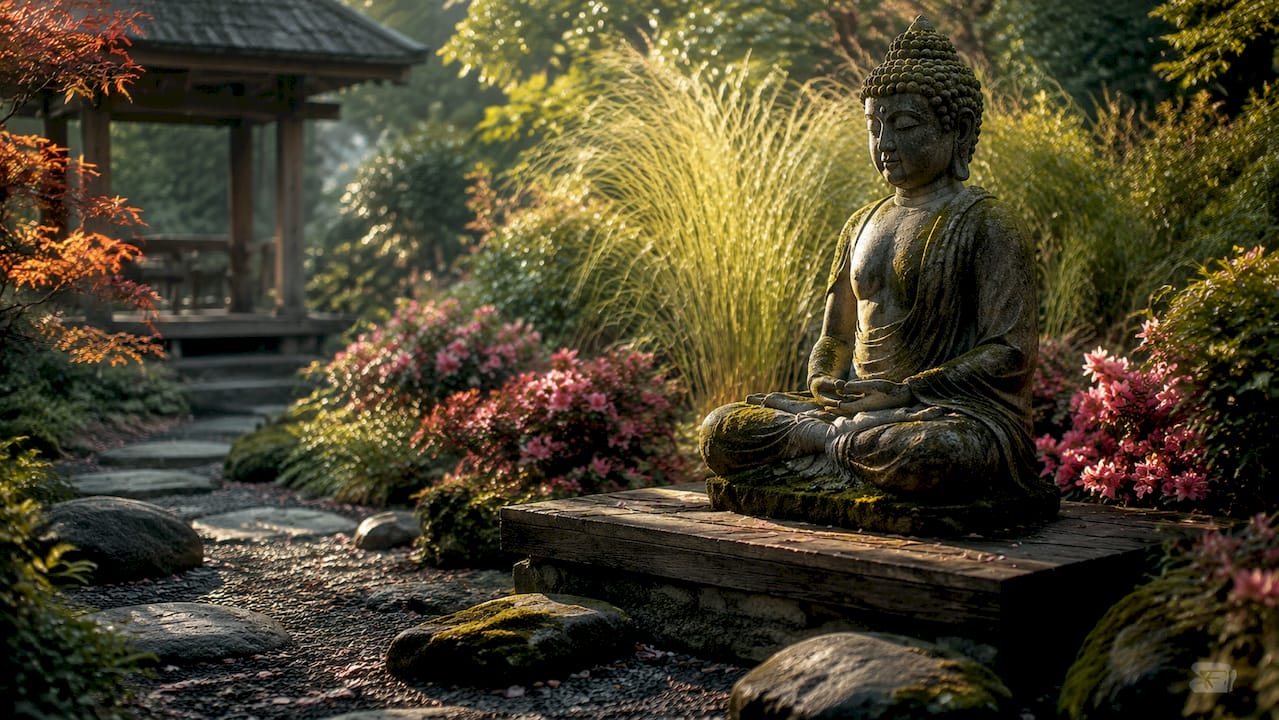
estatuas de buda Las estatuas de Buda son la forma más reconocida de escultura de jardín asiática en los paisajes occidentales. Los budas sentados en el mudra Dhyana (meditación) funcionan mejor como puntos focales de jardín, colocados al final de un camino o al lado de una fuente de agua. Una única estatua de Buda bien situada crea un ancla intencional en un rincón del jardín en lugar de una decoración aleatoria. Esa distinción importa: la colocación con un propósito produce un efecto calmante que la colocación aleatoria nunca logra.
estatuas de pagoda Las estatuas de pagoda brindan un acento vertical en jardines planos o con plantas bajas. Su estructura escalonada atrae la atención hacia arriba y crea un contraste arquitectónico con la plantación a nivel del suelo. Las pagodas de piedra u hormigón fundido se mantienen bien en la mayoría de los climas y casi no requieren mantenimiento.
estatuas de dragones Las esculturas de dragones transmiten un simbolismo protector en las tradiciones china, japonesa y vietnamita. Un dragón enroscado junto a la puerta de un jardín o al estanque indica protección. El bronce y la piedra fundida son los materiales preferidos para las piezas de dragón de exterior porque resisten la decoloración por rayos UV y la humedad.
Faroles de piedra (estilo Tachi-Gata) Las linternas de piedra japonesas cumplen funciones tanto estéticas como funcionales. Las linternas de piedra ganan belleza gracias a la interacción con el entorno natural, particularmente cuando se contrasta con el musgo y la grava blanca. Ese contraste enfatiza la silueta de la linterna y crea la cualidad de “perfecta imperfección” central en el diseño de jardines japoneses.
esculturas de guanyin Guanyin, el bodhisattva budista de la compasión, es una de las esculturas de deidades al aire libre más solicitadas en jardines residenciales. Los expertos recomiendan estatuas de Guanyin de entre 2 y 6 pies de altura para entornos residenciales, prefiriéndose piedra grande o GRC (hormigón reforzado con vidrio) para climas húmedos. Un Guanyin colocado cerca de un estanque o fuente refuerza su asociación con el agua y la misericordia.
Estatuas de perros Foo Los perros Foo, también llamados leones guardianes, tradicionalmente flanquean las entradas en parejas. En entornos de jardín, funcionan igualmente bien flanqueando una puerta, la entrada de un camino de jardín o la escalera de una terraza. Las versiones de piedra y resina están ampliamente disponibles, aunque la piedra desarrolla una apariencia envejecida más auténtica con el tiempo.
Taburetes de jardín de cerámica Celadon Los taburetes de jardín Celadon funcionan como asiento y escultura. Su superficie acristalada y su forma de barril añaden color y textura a una terraza o patio sin requerir un espacio de exhibición dedicado. Combinan naturalmente con muebles de ratán y pastos ornamentales bajos.
Tablillas de piedra talladas Las tablillas de piedra talladas con inscripciones en sánscrito, chino o pali añaden profundidad cultural a las paredes y bordes de los jardines. Funcionan mejor montados a la altura de los ojos en una valla o pared de jardín, donde el detalle tallado es visible y legible.
Réplicas modernas de resina y piedra fundida. Las réplicas de resina y piedra fundida hacen que la decoración de jardines asiáticos sea accesible a precios más bajos. La resina es liviana y fácil de reposicionar, lo que es ideal para inquilinos o jardineros que reorganizan sus diseños según la temporada. La compensación es la longevidad: La piedra natural desarrolla pátina y musgo con el tiempo., que se considera deseable envejecer, mientras que la resina se desvanece o se agrieta y eventualmente necesita reemplazo.
Cabezas de Buda de estilo tailandés Las cabezas de Buda tailandesas, en particular las de estilo Sukhothai o Ayutthaya, funcionan como puntos focales contemplativos en pedestales, paredes de jardines o jardineras elevadas. Sus rasgos faciales refinados y su ushnisha (corona) en forma de llama los hacen reconocibles incluso para los espectadores que no están familiarizados con la iconografía budista.
2. Cómo seleccionar materiales y tamaños para esculturas de jardín asiáticas duraderas
La elección del material determina el aspecto de una escultura después de cinco años al aire libre, no sólo cinco días después de su instalación. El material adecuado depende de su clima, presupuesto y de cuánto valora la autenticidad por encima de la conveniencia.
Piedra y GRC son las mejores opciones para climas húmedos o lluviosos. El granito y el GRC resisten la humedad, los ciclos de congelación y descongelación y la exposición a los rayos UV. También desarrollan la pátina natural que hace que una escultura de jardín parezca que pertenece a ella y no como si acabara de ser entregada. En cuanto al tamaño, el rango de altura de 2 a 6 pies cubre la mayoría de las escalas de jardines residenciales sin abrumar los parterres ni las líneas de visión.
resina se adapta a compradores e inquilinos preocupados por su presupuesto. Es más ligero, más barato y más fácil de mover. La desventaja es que la resina se desvanece con la luz solar directa y puede agrietarse con heladas fuertes. Si elige resina, colóquela en sombra parcial y planee reemplazarla dentro de cinco a diez años.
Bronce es la opción premium para exteriores. Es pesado, duradero y desarrolla una pátina verde que muchos coleccionistas encuentran más atractiva que el acabado original. El bronce es el material estándar para piezas con calidad de museo de Camboya, Tailandia e Indonesia, las regiones en las que se especializa HDAsianArt.
Para obtener orientación sobre el tamaño específico de las estatuas de Buda, el guía de tallas de estatuas en HDAsianArt cubre cómo la altura se relaciona con la escala del jardín y la distancia de visualización. La información detallada sobre los tipos de piedra está disponible en el guía del coleccionista de tipos de piedra para lectores que desean detalles a nivel de material antes de comprar.
Consejo profesional: Antes de encargar cualquier escultura, corte un trozo de cartón del alto y ancho exactos de la pieza y colóquelo en el lugar previsto. Los diseñadores de jardines utilizan maquetas de cartón. para probar la escala y las líneas de visión antes de la instalación permanente. Este único paso evita el error de tamaño más común: comprar una pieza que se ve bien en línea pero que se lee demasiado pequeña o demasiado grande en el jardín real.
3. ¿Cuáles son las estrategias de colocación efectivas para las esculturas de jardín asiáticas?
La ubicación es donde la mayoría de los propietarios cometen sus mayores errores. Esparcer múltiples esculturas en un jardín sin un plan claro produce ruido visual en lugar de calma.
El enfoque más eficaz trata cada escultura como un punto focal que ancla una zona específica. Siga estos principios de colocación:
- Asigna una escultura por zona. Un jardín dividido en un rincón de meditación, un área de fuente de agua y un camino de entrada necesita una pieza de anclaje por zona, no tres piezas compitiendo en el mismo rincón.
- Alinear con las líneas de visión. Coloque las esculturas donde sean visibles desde la zona de asientos principal o desde la ventana principal de la casa. Una pieza escondida tras una densa vegetación pierde su función visual.
- Utilice elementos de agua como socios. Las estatuas de Buda y Guanyin colocadas cerca de estanques o fuentes adquieren resonancia simbólica. El sonido y el movimiento del agua amplifica la calidad contemplativa de la escultura.
- Contrasta con texturas naturales. Las linternas de piedra ganan poder visual cuando se contrastan con el musgo y la grava blanca. El mismo principio se aplica a cualquier escultura de piedra: rodéala con texturas suaves y orgánicas para resaltar la forma tallada.
- Pruebe antes de comprometerse. Utilice una maqueta de cartón o espuma en el lugar exacto planificado durante al menos dos días. Pase por delante a diferentes horas del día para comprobar cómo la luz y las sombras afectan el peso visual.
- Limite las piezas tradicionales al 20% de la decoración total. Limitar los elementos asiáticos tradicionales al 20% de la decoración exterior. mantiene el equilibrio y evita una apariencia demasiado temática que parece un parque temático en lugar de un jardín.
Consejo profesional: Verifique la orientación de su escultura al amanecer y al atardecer, no solo al mediodía. La luz rasante a primera hora de la mañana y al final de la tarde revela detalles tallados en piedra y bronce que la luz plana del mediodía oscurece. La mejor ubicación es colocar una escultura de modo que capte esa luz direccional al menos una vez al día.
Para una lectura más profunda sobre cómo la colocación intencional crea espacios contemplativos, el artículo de HDAsianArt sobre centros de mesa de jardín de Buda de piedra Cubre la lógica espacial en detalle.
4. Cómo combinar esculturas asiáticas con muebles y plantas de jardín modernos
El mayor riesgo al integrar esculturas asiáticas en un jardín contemporáneo es pasar de “inspiración cultural” a “temática”. La solución es proporción y moderación.
La proporción de diseño 80/20 es la regla más clara disponible: 80% muebles y materiales contemporáneos, 20% acentos asiáticos tradicionales. Un proyecto de resort de 2024 que utilizó este índice logró altas puntuaciones de satisfacción de los huéspedes en sus espacios al aire libre. La proporción funciona porque permite que la escultura se lea como una elección deliberada más que como un tema dominante.
La selección de plantas refuerza o socava este equilibrio. El bambú, el pino negro, los pastos ornamentales y el musgo comparten la silueta limpia y estructural que complementa la escultura asiática sin competir con ella. Evite las plantas perennes en flor ocupadas directamente alrededor de una escultura. Desvían la atención de la pieza y crean desorden visual.
Los accesorios funcionales, como taburetes de jardín y tablillas de piedra, son el punto de entrada más fácil para los propietarios que desean arte de jardín asiático sin comprometerse con una estatua grande. Un taburete de jardín de celadón junto a un banco de teca moderno agrega textura cultural sin requerir un área de exhibición dedicada. Se lee primero como mueble y luego como arte, lo que mantiene el espacio general con una sensación actual.
El color de los muebles también importa. Los tonos neutros en carbón, gris cálido y teca natural crean un marco que permite que una escultura de bronce o piedra mantenga la atención visual. Los muebles de exterior de colores brillantes compiten con la escultura y reducen su impacto.
Consejo profesional: Utilice una paleta de plantación moderada de tres especies como máximo alrededor de cualquier escultura. Más de tres tipos de plantas alrededor de una sola pieza crean competencia por la vista. Una planta estructural (bambú o pino negro), una cobertura del suelo (musgo o grava blanca) y un acento estacional es la fórmula que funciona de manera consistente.
Para los lectores interesados en cómo la escultura asiática añade una dimensión más profunda a los espacios al aire libre, el artículo de HDAsianArt sobre energía espiritual en espacios de jardín Cubre el razonamiento cultural detrás de las elecciones de ubicación.
Conclusiones clave
La integración exitosa de las esculturas asiáticas en el jardín al aire libre depende de la durabilidad del material, la ubicación intencional y el equilibrio 80/20 entre los muebles contemporáneos y el arte tradicional.
| punto | Detalles |
|---|---|
| El material determina la longevidad. | Elija piedra o GRC para climas húmedos; reserve la resina para lugares sombreados y con bajas temperaturas de congelación. |
| Rango de tamaños para jardines residenciales. | Las esculturas de entre 2 y 6 pies de altura se adaptan a la mayoría de las escalas de jardines residenciales sin abrumar el espacio. |
| Un punto focal por zona | Asigne una sola escultura a cada zona del jardín para evitar el desorden visual y mantener la calma. |
| Relación de diseño 80/20 | Mantenga las piezas asiáticas tradicionales en un 20% de la decoración total; llene el 80% restante con muebles y plantas contemporáneos. |
| Pruebe antes de comprar | Utilice una maqueta de cartón en la ubicación exacta planificada para verificar la escala y las líneas de visión antes de comprar. |
Lo que he aprendido tras años colocando esculturas asiáticas en jardines
El error más común que veo es tratar una escultura como el último elemento agregado a un jardín terminado. Los propietarios compran una pieza que les encanta y luego buscan un lugar para colocarla. Esa secuencia produce una ubicación incómoda cada vez. La escultura debe ser parte del plan espacial del jardín desde el principio, con una zona dedicada, una línea de visión clara y un esquema de plantación que la enmarque.
El segundo error es comprar demasiadas piezas. Tres esculturas en un pequeño jardín no crean el triple de impacto que una. Crean competencia. Una pieza bien elegida, colocada con intención, aporta más a la atmósfera de un jardín que una colección de seis esparcidas por los parterres.
También descubrí que el envejecimiento de la piedra es una de las cualidades más subestimadas en la escultura de jardín. Un granito Guanyin recién instalado se ve limpio y nítido. Cinco años después, con una fina capa de musgo en la base y un ligero oscurecimiento de la piedra, parece que ha estado ahí siempre. Esa cualidad de pertenencia es lo que separa un jardín que se siente diseñado de uno que se siente cuidado. La resina nunca lo logra.
También vale la pena tomar en serio la dimensión cultural. Una estatua de Buda no es sólo un objeto decorativo. Tiene un significado iconográfico: la posición de la mano, la postura y el estilo comunican ideas específicas dentro de la tradición budista. Saber lo que significa una pieza no hace que un jardín sea más académico. Hace que la elección sea más deliberada, y las elecciones deliberadas producen mejores jardines.
-Jaime, HDAsianArt.com
Auténticas esculturas de jardines asiáticos en HDAsianArt
HDAsianArt ofrece una selección curada de auténticas esculturas de bronce, piedra y madera procedentes de Camboya, Tailandia, Indonesia, Sri Lanka y Vietnam. Cada pieza es investigada y fotografiada individualmente, con descripciones de expertos que cubren la iconografía, el origen y el material. El envío por DHL asegurado a todo el mundo es estándar en cada pedido.
Para los propietarios que estén dispuestos a añadir un verdadero punto focal a su jardín, el Estatua javanesa del Bodhisattva Avalokiteshvara y esto Gran Buda docente al estilo de Laos. son fuertes puntos de partida. La colección completa en HDAsiáticoArte cubre estatuas de deidades, budas sentados y figuras de pie en múltiples tradiciones regionales y rangos de tamaño.
Preguntas frecuentes
¿Cuál es la mejor escultura asiática para un jardín pequeño?
Una estatua de Buda sentado de entre 2 y 3 pies de altura funciona mejor en jardines pequeños. Proporciona un punto focal claro sin un espacio limitado abrumador.
¿Qué materiales duran más en exteriores?
La piedra y el GRC (hormigón reforzado con vidrio) duran más en exteriores. La piedra natural también desarrolla una pátina deseable con el tiempo, mientras que la resina se desvanece y se agrieta en unos pocos años.
¿Cuántas esculturas debo colocar en un jardín?
Una escultura por zona de jardín definida es el enfoque más eficaz. Colocar varias piezas en una sola área crea competencia visual y reduce el efecto calmante que tendría cada pieza por sí sola.
¿Qué plantas combinan mejor con las esculturas de jardín asiáticas?
El bambú, el pino negro, los pastos ornamentales y el musgo son las opciones más fuertes. Comparten una silueta limpia y estructural que enmarca una escultura sin competir con ella.
¿Puedo mezclar esculturas asiáticas con muebles de jardín modernos?
Sí. La proporción 80/20 funciona bien: 80% muebles y materiales contemporáneos, 20% acentos asiáticos tradicionales. Este equilibrio mantiene el espacio con una sensación actual y al mismo tiempo le da a la escultura espacio para registrarse como una elección de diseño deliberada.
Recomendado
- Por qué funcionan los centros de mesa de jardín de Buda de piedra: explicado - Arte asiático HD
- Por qué la escultura asiática agrega energía espiritual a su espacio – HD Asian Art
- Tipos de piedra utilizados en esculturas asiáticas: una guía para coleccionistas – HD Asian Art
- Escultura budista Theravada explicada para estudiosos del arte – HD Asian Art
