



Khmer Art: Cambodia's Golden Age Buddha & Hindu Sculptures
Khmer Art: Cambodia's Golden Age Buddha & Hindu Sculptures
Most people who encounter a Khmer Buddha statue notice its serene half-smile and assume it is decorative. They miss the point entirely. Khmer art from Cambodia's Angkor period represents one of the most sophisticated sculptural traditions in human history, a fusion of Indian religious philosophy, indigenous Mon-Khmer aesthetics, and extraordinary technical mastery in stone and bronze.
Between the 9th and 15th centuries, Cambodian sculptors produced works that still challenge modern craftspeople to replicate. If you are building a collection or a home altar, understanding this tradition changes everything about how you choose and display these pieces.
Table of Contents
Quick Takeaways
|
Key Insight |
Explanation |
|---|---|
|
Khmer art spans six major style periods |
From Preah Ko (879 AD) to Bayon (late 12th to early 13th century), each period has distinct iconographic and technical signatures that determine authenticity and value. |
|
Hindu and Buddhist imagery coexisted at Angkor |
Khmer kings alternated between Shaivism, Vaishnavism, and Mahayana Buddhism, so a single temple complex often features both Shiva lingas and Bodhisattva figures. |
|
The Naga is the defining motif of Khmer sculpture |
The multi-headed serpent appears on Buddha thrones, temple causeways, and architectural friezes. Its presence signals Cambodian origin versus Thai or Burmese work. |
|
Sandstone and bronze are the primary Khmer media |
Most architectural sculpture used local grey sandstone. Portable cult images were cast in bronze using lost-wax techniques introduced from South India. |
|
Bayon-style faces are a collector benchmark |
The broad, downward-looking face with a mysterious smile associated with Jayavarman VII is the most recognized Khmer aesthetic and a key reference when evaluating modern reproductions. |
|
Cambodian sculpture influenced all of Southeast Asia |
Thai, Lao, and even early Burmese sculptural traditions borrowed directly from Khmer iconography, making regional comparison essential for collectors. |
|
Reproduction quality varies enormously |
Museum-quality reproductions capture the proportional canon and surface finish of originals. Low-quality reproductions distort facial ratios and omit iconographic details that carry spiritual meaning. |
What Is Khmer Art and Why Does It Matter
Khmer art refers to the visual and architectural tradition produced by the Khmer Empire, which dominated mainland Southeast Asia from approximately 802 AD to 1431 AD. At its height, this empire covered present-day Cambodia, Thailand, Laos, and parts of Vietnam. The sculptural output of this period is defined by religious intensity, technical precision, and a symbolic language drawn from both Hindu and Buddhist cosmology.
The reason Khmer art matters to collectors and spiritual practitioners today is not purely aesthetic. These sculptures were never decorative objects. They were cult images, consecrated vessels for divine presence, and political symbols of royal legitimacy. Understanding this changes how you position a piece in your home or on an altar. A Khmer Buddha statue placed without context is just stone. Understood as a Dharmachakra-mudra figure from the Angkor Wat style period, it becomes a specific theological statement about the Buddha's first teaching.
The Metropolitan Museum of Art and the Musée Guimet in Paris both maintain permanent Khmer collections precisely because this tradition sits at the intersection of world religious history and sculptural excellence. That institutional recognition matters when you are making decisions about what to collect and why.
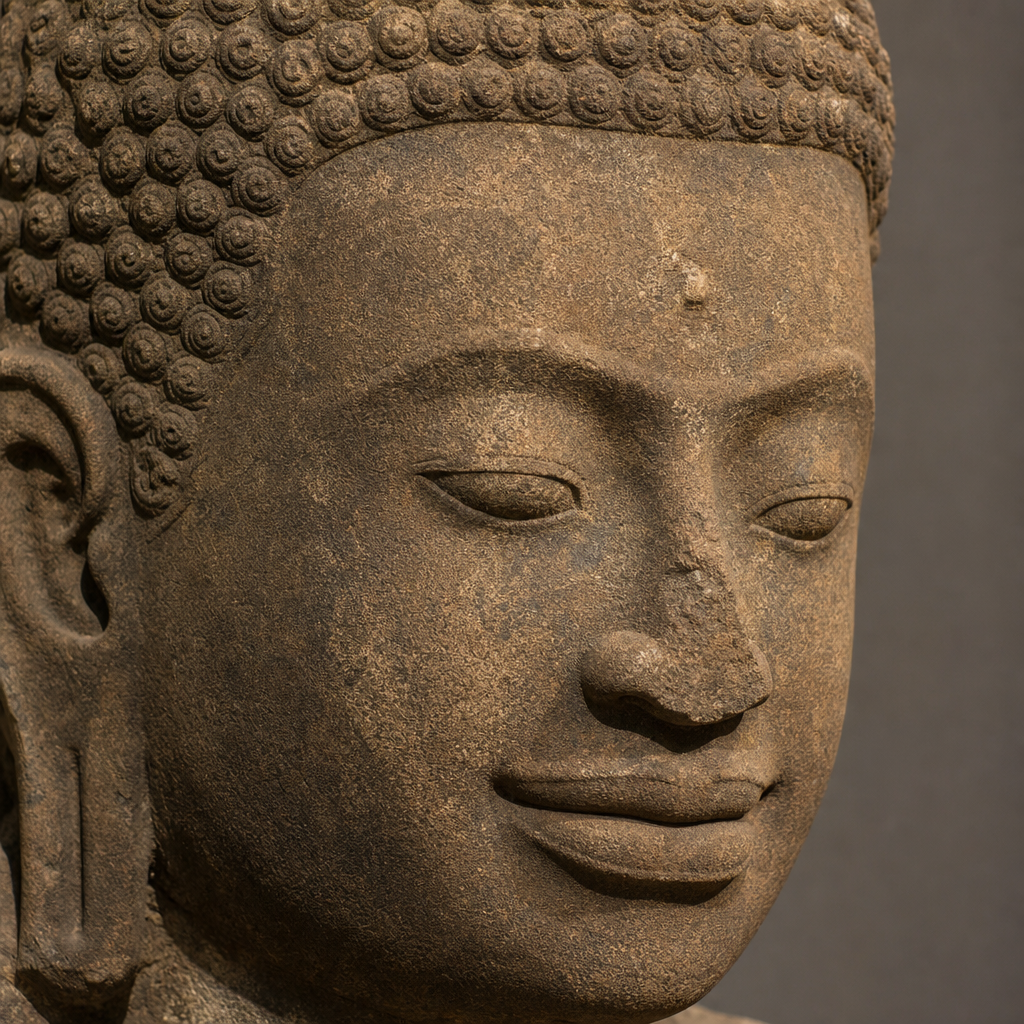
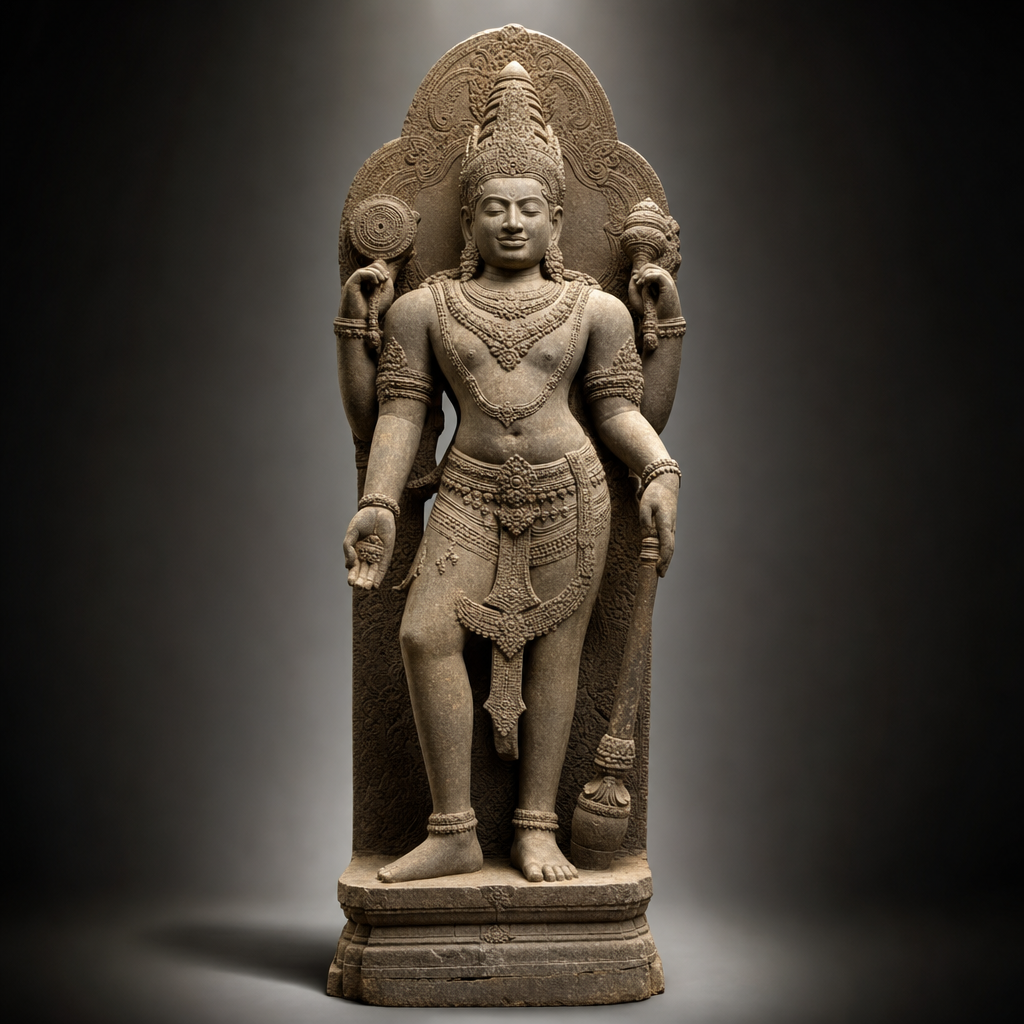
Pro tip: When researching a Khmer-style piece, always identify which style period it references before purchasing. The Baphuon style (mid-11th century) features a slim torso and gentle smile, while the Bayon style (late 12th century) shows a broader face and more elaborate crown. These are not interchangeable aesthetics; they carry different iconographic meanings.
Angkor Art History: The Timeline of Cambodia's Golden Age
Angkor art history is typically divided into named style periods, each corresponding to a major temple construction phase or royal reign. Scholars at the École française d'Extrême-Orient, who conducted systematic study of Angkor from the late 19th century onward, established this periodization. It remains the standard reference framework used by auction houses, museums, and serious collectors worldwide.
The Pre-Angkor Foundations: Funan and Chenla
Before the Angkor period proper, the Funan and Chenla polities (roughly 1st to 8th centuries AD) established the sculptural vocabulary that Angkor would refine. Funan maintained direct maritime trade with India, and early Cambodian sculpture from this period shows strong Gupta-period Indian influence, particularly in the treatment of drapery and the idealized proportions of the body. The Phnom Da style (6th to 7th century) produced free-standing stone sculptures of Vishnu and Krishna that remain among the most technically accomplished works in Southeast Asian art history.
The Classic Angkor Period: 9th to 13th Centuries
The foundation of the Angkor capital by Jayavarman II in 802 AD marks the beginning of the classic period. The key style periods within this era include:
Preah Ko style (875 to 893 AD): Characterized by heavy ornamentation, cylindrical mitres on male deities, and a still formal facial expression inherited from Chenla precedents.
Bakheng style (893 to 925 AD): A transitional period where sculptors began softening facial features and reducing the rigidity of the body. Figures gain a sense of organic weight.
Angkor Wat style (1100 to 1175 AD): The apex of Khmer architectural sculpture. The bas-reliefs of Angkor Wat, stretching nearly 800 meters in total length, depict scenes from the Mahabharata, Ramayana, and the Churning of the Ocean of Milk with a narrative ambition unmatched anywhere in Southeast Asia.
Bayon style (1177 to 1230 AD): Associated with the reign of Jayavarman VII and the shift to Mahayana Buddhism as the state religion. The Bayon style produces the most recognizable Khmer face in popular imagination, broad, composed, and turned slightly downward in meditative absorption.
"The smile of Angkor is not a decorative convention. It is a theological claim, the expression of a mind that has seen through the veil of suffering and rests in permanent equanimity." - Philippe Stern, art historian and former curator of the Musée Guimet, Paris, writing on the Bayon style.
The Late and Post-Angkor Transition
After the Thai sack of Angkor in 1431, the Khmer court relocated southward and sculptural production continued, but with reduced scale and increasing Thai stylistic influence. This post-Angkor period is critical for collectors because many pieces on the market blend Khmer and Thai iconographic elements, and distinguishing between them requires close attention to crown shape, mudra, and body proportion.
The Khmer Buddha Statue: Iconography and Spiritual Meaning
The Khmer Buddha statue is distinct from Thai, Burmese, or Sri Lankan Buddha images in several specific ways. Once you learn to read these differences, you cannot unsee them, and your appreciation of any piece from this region deepens considerably.
The Naga-Enthroned Buddha
The most iconic Khmer Buddha image shows the historical Buddha Shakyamuni seated in meditation on the coiled body of the naga king Mucalinda, whose seven heads fan out above as a protective canopy. This iconographic type does not appear in Theravada Thailand or Sri Lanka with the same frequency or elaboration. In the Khmer tradition, the naga throne symbolizes the Buddha's sovereignty over the natural world and his protection by the forces of the earth during his enlightenment. This image type is strongly associated with the Bayon period and with Jayavarman VII's promotion of Mahayana Buddhism.
Mudras and What They Communicate
Khmer Buddha statues use a limited but precise set of hand gestures. The bhumisparsha mudra (earth-touching gesture) is the most common, referencing the moment of enlightenment. The dhyana mudra (meditation gesture, hands resting in the lap) appears frequently in naga-enthroned figures. The dharmachakra mudra (teaching gesture) is rarer in Khmer sculpture than in Thai or Indian work, which itself tells you something about the theological emphasis of Khmer Buddhism on contemplation over doctrine.
Pro tip: If you are sourcing a Khmer-style Buddha for a home altar dedicated to meditation practice, the naga-enthroned dhyana mudra figure is the most contextually appropriate choice. It references protection, inner stillness, and the earth's witness to awakening simultaneously.
The Ushnisha and Crown
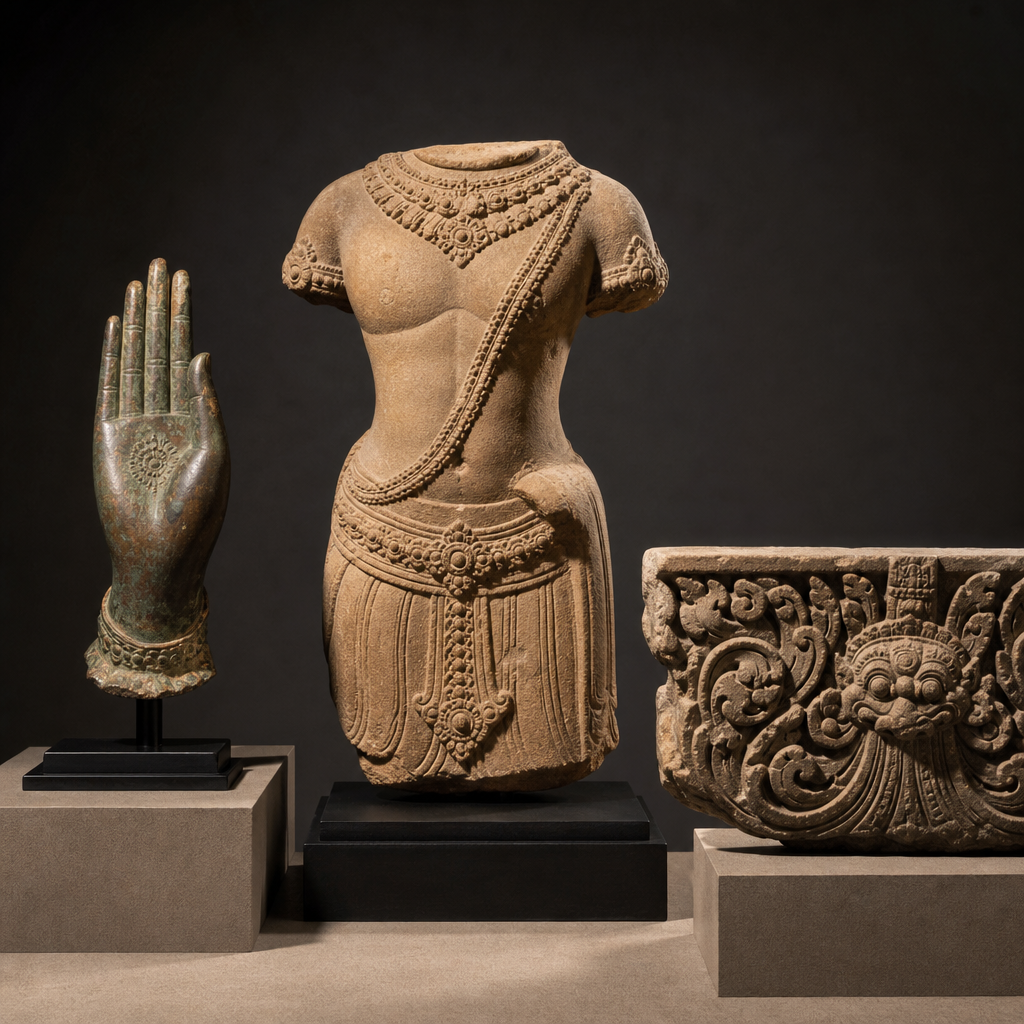
In Khmer sculpture, the Buddha's ushnisha (the cranial protuberance symbolizing wisdom) is often rendered as a flame-tipped or lotus-bud form and may be topped with a decorative finial not found in Theravada traditions. Some Khmer Buddha images wear ornate crowns, reflecting the Devaraja concept where the Buddha or a Bodhisattva was also understood as a royal deity. This crowned Buddha type confused early Western collectors who assumed ornamentation indicated a Hindu deity rather than the Buddha.
Hindu Sculptures from Cambodia: Vishnu, Shiva, and the Devaraja Cult
The Khmer Empire was not Buddhist for its entire history. The early Angkor kings were predominantly Shaivite, worshipping Shiva as the supreme deity and identifying the royal linga as the axis of the kingdom's cosmic power. The Devaraja cult, literally the cult of the god-king, placed the Khmer monarch as an earthly manifestation of Shiva or Vishnu, making royal sculpture and temple imagery inseparable from political authority.
Vishnu in Khmer Iconography
Vishnu images from Cambodia are among the most sophisticated in Southeast Asian art. The Cambodian Vishnu typically holds four attributes: the conch, the discus, the mace, and the lotus. Early examples from the Phnom Da style show Vishnu in a frontal standing position with heavy cylindrical arms, a treatment that differs markedly from the more relaxed contrapposto of Indian Gupta Vishnu figures. By the Angkor Wat period, Vishnu images had gained greater movement and surface detail, with elaborate jewelry rendered in relief.
Shiva and the Linga Tradition
Shiva was worshipped in both anthropomorphic form and through the linga, the abstract phallic symbol representing creative energy. Khmer anthropomorphic Shiva images often appear as Uma-Maheshvara groups (Shiva with his consort Uma), seated together in a pose of divine union. These domestic deity groups were placed in temple sanctuaries and, in contemporary practice, make deeply meaningful centerpieces for Hindu home altars. The quality of the modeling in Uma's jewelry and the treatment of Shiva's matted hair are the primary markers of quality in these pieces.
The Cambodian sculpture tradition produced Shiva images that combine austerity and regal power in a way that Indian sculpture rarely achieves. The Khmer Shiva has a stillness that reflects both the god's role as the cosmic destroyer and his deeper nature as the supreme meditator.
Cambodian Sculpture Styles Compared: Bakheng to Bayon
For collectors and practitioners making purchasing decisions, the practical question is always: which style period does this piece reference, and what does that mean for its quality and meaning? The table below compares three major Khmer style periods across the criteria that matter most for informed acquisition.
|
Style Period |
Key Visual Characteristics |
Primary Religious Context |
|---|---|---|
|
Bakheng Style (893 to 925 AD) |
Softened facial features, transitional body proportions, less rigid drapery than Preah Ko, cylindrical mitre on male deities beginning to evolve toward tiered forms |
Predominantly Shaivite; royal linga cult central; Vishnu imagery also present at major sanctuaries |
|
Angkor Wat Style (1100 to 1175 AD) |
Slim, elongated torsos, highly refined surface carving especially in jewelry and drapery, figures show subtle movement and weight shift, bas-reliefs reach narrative complexity |
Vaishnava dominance under Suryavarman II; Angkor Wat dedicated to Vishnu; Hindu cosmological narrative at the core of all iconography |
|
Bayon Style (1177 to 1230 AD) |
Broader, rounder face, downward gaze, mysterious smile, more elaborate crowns on royal and deity figures, naga motifs proliferate, Buddha imagery becomes dominant |
Mahayana Buddhist state religion under Jayavarman VII; Avalokiteshvara and crowned Buddha images predominate; Hindu elements persist in syncretic forms |
In practice, the Bayon style is the most immediately recognizable and the most sought after by first-time collectors because of its emotional accessibility. The Angkor Wat style appeals more to collectors with deeper art historical knowledge who appreciate the restraint and technical refinement of its surface work. Neither is superior; they serve different aesthetic and spiritual purposes.
Collecting Khmer Art: What Serious Collectors Need to Know
A common mistake among new collectors is treating all Southeast Asian Buddhist sculpture as interchangeable. A Thai Sukhothai walking Buddha, a Burmese Mandalay seated figure, and a Khmer Bayon-style naga-enthroned Buddha are as different from each other as a Donatello bronze is from a Bernini marble. The traditions share a subject matter but diverge dramatically in technique, proportion, and symbolic content.
Provenance and the Ethics of Collecting
The looting of Cambodian temples during and after the Khmer Rouge period (1975 to 1979) and throughout subsequent decades of civil conflict remains a serious ethical issue in the Khmer art market. Several major international auction houses have repatriated pieces to Cambodia following pressure from the Cambodian government and advocacy organizations. A responsible collector always asks for documented provenance when acquiring any piece represented as antique.
For most collectors, high-quality contemporary reproductions made by skilled craftspeople using traditional techniques are the ethically sound and legally straightforward choice. These pieces carry the iconographic integrity of the tradition without the ethical and legal complications of the antiquities market.
What Museum-Quality Reproduction Actually Means
The term "museum-quality" is often used loosely, but it has a specific meaning when applied to Khmer-style sculpture. A genuinely museum-quality reproduction accurately replicates the proportional canon of the original style period, uses appropriate materials (stone, bronze, or resin with authentic surface treatment), renders iconographic details correctly including mudra, ushnisha form, jewelry, and naga configuration, and achieves a surface finish consistent with the aesthetic character of the period referenced.
HD Asian Art's collection of Cambodian-tradition Buddha statues and Hindu deity sculptures is sourced with these criteria in mind, distinguishing it from retailers who prioritize novelty over iconographic fidelity. When you are building a home altar or a serious collection, the difference between a correctly proportioned Bayon-style Buddha and a generic "Asian-looking" figure matters enormously, both spiritually and aesthetically.
Pro tip: Before purchasing any Khmer-style piece, compare its facial proportions to a documented museum example from the same style period. The Musée Guimet's online collection database and the Metropolitan Museum of Art's online catalog both provide high-resolution reference images at no cost.
Displaying Khmer Sculpture in a Home Context
Khmer sculpture was designed for temple environments with specific spatial relationships to architecture and to the worshipper's body. In a domestic setting, the key principle is elevation. Traditional Khmer sanctuary images were raised on platforms so the deity's gaze met or slightly exceeded the standing worshipper's eye level. Reproducing this relationship at home, even approximately, communicates respect and creates the spatial dynamic these images were made to inhabit.
For Hindu home altars incorporating Khmer-style Vishnu or Shiva, the eastern orientation of the altar face is the conventional standard, with the image facing west so the devotee faces east during worship. For Buddhist practitioners using a Khmer naga-enthroned Buddha, the image placed slightly above seated meditation height creates the most contextually coherent altar arrangement.
Frequently Asked Questions
What distinguishes Khmer art from Thai Buddhist sculpture?
The most reliable distinctions are in facial proportion, crown type, and naga treatment. Khmer faces tend to be broader with a more composed, inward-turning expression, while Thai Sukhothai-style faces are narrower with a more elongated flame ushnisha. Khmer naga hoods are almost always depicted with an odd number of heads (five or seven) fanned in a flat arc, while Thai naga representations show more variation. The jewelry treatment also differs: Khmer pieces typically show more elaborate, lower-relief decoration compared to the bolder, higher-relief ornament common in Thai sculpture from the Ayutthaya period onward.
Were the Khmer primarily Hindu or Buddhist?
The Khmer Empire practiced both traditions across its history, often simultaneously. The early Angkor kings were predominantly Shaivite Hindus. Suryavarman II, who built Angkor Wat in the 12th century, was Vaishnava. Jayavarman VII in the late 12th and early 13th century promoted Mahayana Buddhism as the state religion. At the popular level, syncretic practice was the norm throughout, and temples frequently contained both Hindu and Buddhist imagery. This religious pluralism is one reason Khmer sculpture is so iconographically rich and why a single collection can encompass both traditions authentically.
What is the significance of the Naga in Khmer sculpture?
The naga, a divine serpent from Hindu and Buddhist cosmology, carries multiple meanings in the Khmer context. As a throne for the meditating Buddha, it represents protection and the earth's support of enlightenment. On temple causeways, the naga balustrade separates the profane world from the sacred temple mountain, functioning as a cosmic bridge. In Hindu imagery, the naga appears beneath Vishnu as Shesha, the primordial cosmic serpent on which the universe rests between creation cycles. The naga's prevalence in Khmer art beyond its frequency in Indian, Thai, or Burmese sculpture makes it the single most reliable regional identifier for Cambodian artistic tradition.
How do I identify a high-quality Khmer-style Buddha reproduction?
Start with the face. A correctly rendered Bayon-style Buddha has a specific facial geometry: the distance from the hairline to the brow equals the distance from the brow to the base of the nose, which equals the distance from the base of the nose to the chin. Distortions in these proportions immediately signal a low-quality reproduction. Then examine the ushnisha: it should rise clearly from the cranium and be topped with a finial or flame appropriate to the style period. Check the naga heads: they should be individually differentiated, not blurred together. Finally, assess the hands: the finger lengths and the angle of the mudra should follow the iconographic canon, not a sculptor's convenience.
Is it appropriate for non-Buddhists or non-Hindus to display Khmer religious sculpture at home?
This question deserves a direct answer: yes, with intention and respect. Khmer Buddhist and Hindu sculpture has been collected and displayed by non-practitioners since the late 19th century, and many pieces in major Western museum collections have been viewed by millions of people outside these traditions. The meaningful distinction is between display that acknowledges the spiritual dimension of these objects and display that treats them as purely decorative novelties. If you understand what a Khmer Buddha statue represents, position it with appropriate elevation and care, and engage with it as an object of contemplative quality rather than mere decoration, the cross-cultural relationship is respectful and enriching.
What is the Devaraja concept and how does it affect Khmer sculpture?
Devaraja means "god-king" in Sanskrit and refers to the Khmer royal cult in which the king was understood as an earthly manifestation of a Hindu deity, typically Shiva or Vishnu. This concept, introduced by Jayavarman II at the beginning of the Angkor period, meant that the royal linga placed at the center of the capital was simultaneously the king's divine essence and a Shiva linga. The practical effect on sculpture was that royal portrait figures and deity images became conceptually merged: a Khmer Shiva may also be a specific king, and a royal portrait may show the king with divine attributes. This fusion of political and religious imagery gives Khmer sculpture its unusually charged presence compared to purely devotional traditions.
Have you had a personal experience with Khmer-style sculpture in your collection or on your altar that shifted your understanding of this tradition? Share your story in the comments below.
References
