



Is a Shiva Nataraja Statue Worth It for Home?
Is a Shiva Nataraja Statue Worth It for Home?
Table of Contents
What Makes a Nataraja Statue Worth Considering
A Shiva Nataraja statue is worth it for home when you seek a piece combining spiritual significance with artistic excellence. This represents cosmic transformation and divine dance, captivating spiritual practitioners and art collectors for centuries.
The real question is whether this form aligns with your home's spiritual purpose and aesthetic vision. A well-chosen statue becomes a meditation focal point, conversation piece, and investment in authentic craftsmanship. Unlike mass-produced pieces, genuine statues carry cultural integrity and artistic depth that elevates any interior space.
At HD Asian Art, we recognize that serious collectors and practitioners approach this decision thoughtfully. They want authenticity, durability, and a piece that genuinely resonates with their practice. Understanding what makes a Nataraja statue truly valuable helps you make an informed choice.
The investment depends on three factors: your spiritual commitment to the form, your appreciation for authentic craftsmanship, and your ability to provide proper placement and care. A statue from a reputable source like HD Asian Art, which specializes in carefully curated Buddhist and Hindu sculptures, ensures you're acquiring something that will endure both physically and spiritually.
The Symbolism and Iconography of Nataraja
Understanding the Cosmic Dance
Nataraja represents Shiva performing the Cosmic Dance, expressing creation, preservation, and destruction in eternal cycle. This symbolizes the continuous transformation of existence, where destruction enables renewal and nothing remains static.
The Cosmic Dance carries deep spiritual meaning transcending cultural boundaries. It speaks to impermanence and the dynamic nature of reality. When you keep a Nataraja statue in your home, you invite this reminder of constant transformation and spiritual balance into your daily environment.
The iconography resonates across spiritual traditions because it captures something universal: change is the only constant. For practitioners, meditating on this form deepens understanding of spiritual transformation. For collectors, it represents one of humanity's most sophisticated artistic expressions of philosophical truth.
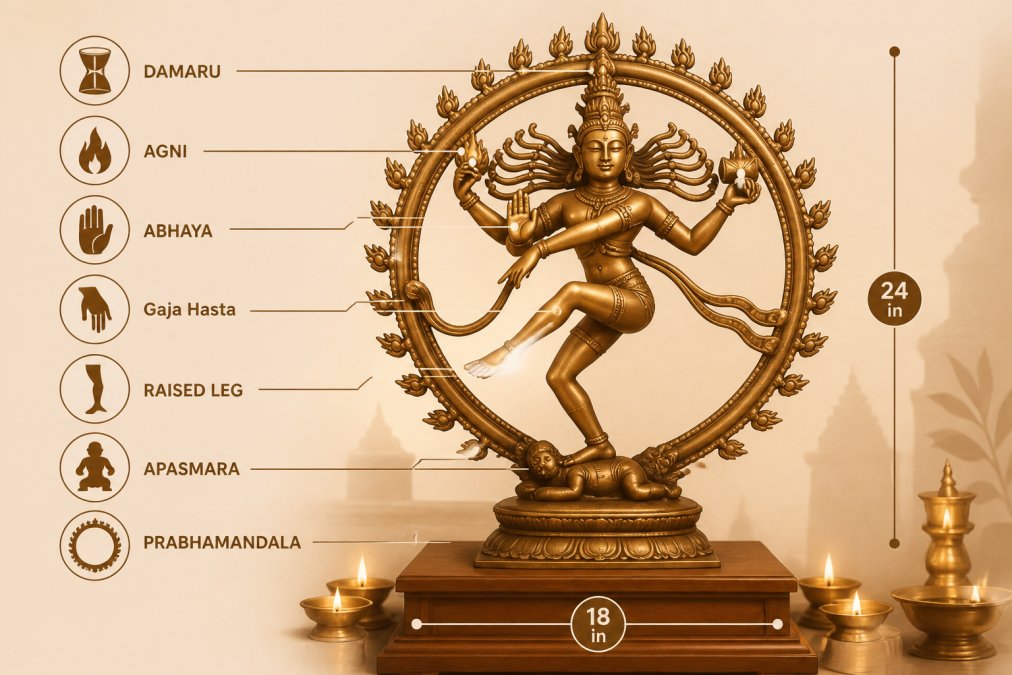
Iconographic Elements Explained for Beginners
Understanding individual elements enriches your appreciation and deepens spiritual connection. Each component carries specific meaning.
The Dancing Pose: Shiva's body curves in a dynamic S-shape with one leg raised in a powerful arc, representing eternal creation and dissolution. The raised foot symbolizes liberation, while the grounded foot anchors the dancer to earthly existence.
The Drum (Damaru): Held in the upper right hand, the drum represents sound and creation, the cosmic sound from which all existence emerges.
The Flame (Agni): Held in the upper left hand, fire symbolizes destruction and purification. This is necessary transformation, consuming the old to make space for the new.
The Apasmara Demon: Beneath Shiva's feet lies a figure representing ignorance. By dancing upon it, Shiva symbolizes enlightenment's triumph over ignorance.
The Arch of Fire: The circular frame surrounding the figure represents the cosmic cycle and the boundary between material and spiritual realms.
The Third Eye: Often depicted as a vertical mark on Shiva's forehead, this represents inner vision and spiritual insight.
For beginners, every element serves a purpose within a coherent spiritual narrative. A quality statue from HD Asian Art renders these details with clarity, allowing you to discover new layers of meaning with each observation.
Nataraja vs. Meditating Shiva Statue: Which Form Is Right for You
The choice between Nataraja and meditating Shiva depends on your spiritual practice and what you seek from the statue's presence.
Nataraja embodies dynamic energy, transformation, and cosmic action. This form speaks to those understanding the universe's active principles and constant creation-dissolution flow. If your practice involves movement, dance, or active spiritual engagement, Nataraja resonates deeply.
Meditating Shiva represents stillness, introspection, and inner peace. Often depicted in seated lotus position with closed eyes, this form appeals to practitioners focused on quietude and inner silence. If your path emphasizes meditation and contemplative practice, this form aligns better with your needs.
Nataraja's dynamic pose creates visual energy and activates a space. A meditating Shiva encourages stillness and serene withdrawal. Consider your daily practice: Do you engage in active spiritual work, or primarily meditate in silence? Your answer points toward the form supporting your spiritual life authentically. Many practitioners eventually own both, placing them in different rooms.
Nataraja Statue Placement Vastu: Location and Energy Flow
Best Placement Areas in Your Home
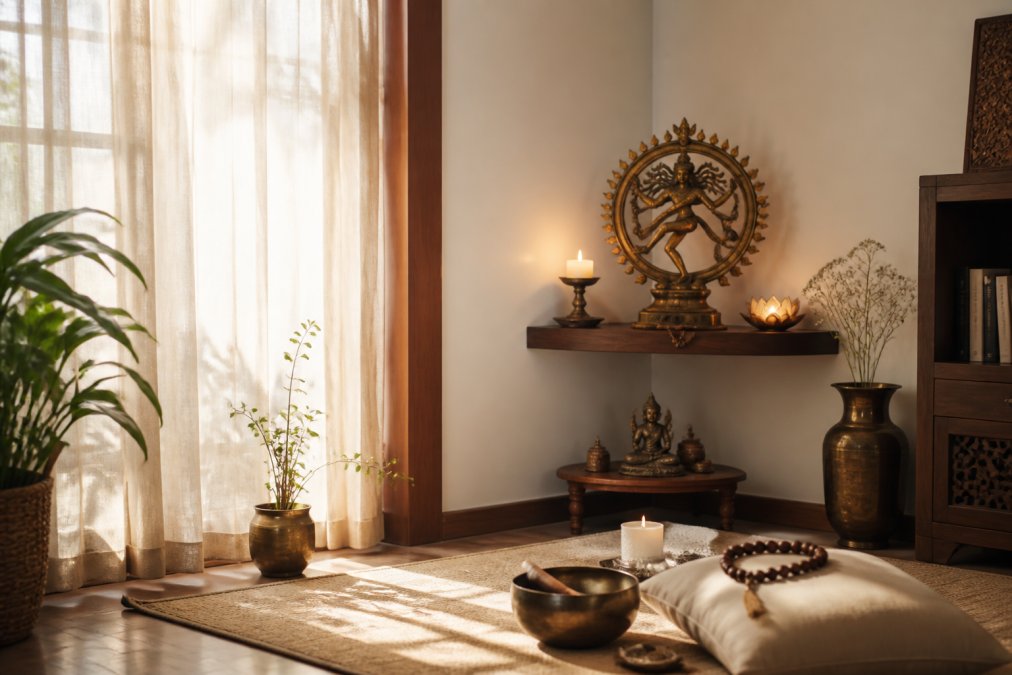
Proper placement amplifies the statue's spiritual benefit and ensures energetic harmony. Vastu Shastra, the ancient Indian system of spatial harmony, offers specific guidance for positioning sacred objects.
Northeast Corner: This is the most auspicious location. Vastu designates the northeast as the zone of spiritual energy and enlightenment. Placing your statue here aligns it with divine energy flow and supports meditation and spiritual practice.
Elevated Placement: The statue should never sit on the floor. Place it on a shelf, altar, or pedestal at eye level or slightly above. A height between three and five feet from the ground creates optimal visual and energetic presence.
Sacred Space Orientation: Position the statue facing into the room rather than toward a wall. This allows the Cosmic Dance's energy to radiate outward and fill your space.
Lighting Considerations: Natural light is preferable, but soft, warm artificial lighting works well. Many people light candles or small oil lamps nearby, honoring tradition and creating a contemplative atmosphere.
Distance from Distractions: Keep the statue away from televisions, speakers, or high-activity areas. A quiet corner or dedicated altar ensures it remains a focal point for spiritual attention.
Locations to Avoid
Bedrooms: Avoid placing the statue in bedrooms, particularly near beds. The dynamic energy can overstimulate a space meant for rest.
Bathrooms and Kitchens: These functional spaces lack reverence appropriate for sacred statues. Water and moisture pose preservation risks for brass and other materials.
Directly Facing Entrances: Don't place the statue where it directly faces your front door. Position it to the side or in a more interior location.
Low or Floor Level: Never place the statue on the ground where people might step over it or accidentally kick it.
Cluttered or Chaotic Spaces: A Nataraja statue requires a relatively clean, organized environment. Clutter diminishes its spiritual impact.
Dark Corners: Avoid dim, shadowy areas. The Cosmic Dance represents illumination and should be visible and well-lit.
Addressing Common Myths and Misconceptions
Many people hesitate to bring a Nataraja statue home due to misconceptions about its spiritual implications.
Myth: Nataraja brings bad luck or negative energy. Destruction in Hindu philosophy is essential transformation, not negativity. When properly placed and respected, a Nataraja statue creates a spiritually supportive environment.
Myth: Only initiated practitioners should keep Nataraja at home. The statue is accessible to anyone with genuine spiritual interest. Sincerity and respect matter more than credentials.
Myth: The statue must be worshipped daily or it becomes problematic. Regular attention deepens your connection, but daily ritual isn't required. Maintaining it with cleanliness and respect suffices.
Myth: You can't keep Nataraja with a meditating Shiva. Many practitioners keep multiple Shiva forms in different rooms. Intentional placement based on each statue's energy creates harmony rather than conflict.
Myth: Size doesn't matter. Larger pieces (12-24 inches) allow better appreciation of iconographic detail and create more noticeable energetic presence.
Myth: Material doesn't affect spiritual benefit. Hand-cast brass or stone statues from reputable sources carry vastly different energy than mass-produced resin knockoffs. Care taken in creation infuses the piece with intention and quality.
Authentic Materials, Craftsmanship, and Care
Material Considerations and Durability
The material of your Nataraja statue significantly affects its longevity, aesthetic appeal, and spiritual resonance.
Brass: This is the traditional and most respected material for Hindu deity statues. Hand-cast brass develops a natural patina over time that many consider beautiful and spiritually significant. Brass is durable, corrosion-resistant when properly maintained, and ages gracefully. A quality brass statue lasts for generations.
Bronze: Similar to brass in appearance and durability, bronze offers a slightly different aesthetic with a warmer tone and distinctive patina.
Stone (Marble, Granite, Soapstone): Stone statues offer permanence and different aesthetic qualities. They're less susceptible to tarnishing but more vulnerable to chipping. Soapstone is popular because it allows fine detail work.
Resin and Composite Materials: These are inexpensive but lack authenticity and longevity. Mass-produced resin pieces look cheap and don't age well. For genuine investment, avoid these materials.
When selecting from HD Asian Art's collection, material choice reflects your commitment level. A hand-cast brass piece represents serious investment in authentic craftsmanship.
Caring for Your Nataraja Statue
Proper maintenance ensures your statue remains beautiful and spiritually vibrant for decades.
Regular Cleaning: Dust your statue weekly with a soft, dry cloth. For brass or bronze, use a gentle cloth that won't scratch the surface. Avoid harsh chemicals or abrasive cleaners.
Preventing Tarnish: Brass naturally oxidizes and develops patina, which many consider desirable. If you prefer brightness, occasional gentle polishing with brass-specific polish maintains shine without harming the piece.
Moisture Management: Keep the statue in a relatively dry environment. Excess humidity accelerates tarnishing. In humid climates, consider placing a small silica gel packet nearby.
Handling: Handle the statue with both hands and clear intention. This is both practical and a form of respect that deepens your relationship with the piece.
Placement Stability: Ensure the statue sits on a stable surface where it won't be knocked over.
Seasonal Attention: In spring and fall, give your statue extra attention. Clean it thoroughly, check for damage, and reposition if needed for optimal lighting.
Spiritual Maintenance: Some practitioners perform simple rituals, lighting a candle, offering flowers, or meditating nearby, to maintain spiritual vitality and deepen connection.
The Spiritual and Interior Design Value
A Nataraja statue serves dual purposes: spiritual focal point and interior design element that transforms a space.
Spiritual Value: For practitioners, the statue becomes a tangible reminder of cosmic principles and spiritual transformation. Meditating near a Nataraja deepens understanding of impermanence and the acceptance of change. Many report that a quality piece enhances meditation and creates sacred presence in their home.
Interior Design Impact: A well-crafted Nataraja elevates any interior aesthetically. The dynamic pose and intricate details create visual interest that mass-produced decor cannot match. Brass or bronze pieces develop character over time, becoming more beautiful with age. A thoughtfully placed statue signals refinement and cultural awareness.
Energetic Transformation: Spaces with a quality spiritual focal point feel different, calmer, more intentional, and more aligned with inhabitants' values.
Conversation and Connection: A beautiful Nataraja statue draws questions and conversation, creating opportunities to share spiritual interests and introduce others to Hindu philosophy and art.
The investment in a quality piece from HD Asian Art pays dividends across all these dimensions. You're acquiring a spiritual tool, artistic masterpiece, and permanent enhancement to your living environment.
Conclusion: Is It Worth the Investment
Whether a Shiva Nataraja statue is worth it depends on your genuine engagement with its spiritual significance and appreciation for authentic craftsmanship. If you seek a decorative object, cheaper alternatives exist. But if you value spiritual practice, artistic excellence, and a piece deepening your home's atmosphere for decades, the investment becomes clear.
A quality Nataraja statue from HD Asian Art transforms both your meditation practice and living space. The statue serves as a constant reminder of cosmic transformation, supports your spiritual work, and elevates your interior design. With proper Vastu placement and basic care, your statue becomes an heirloom growing more beautiful with age.
Browse HD Asian Art's refined collection of Nataraja pieces and discover the statue resonating with your spiritual path. Each piece is selected for authenticity and craftsmanship, ensuring your investment supports both your practice and your home's sacred atmosphere.
Frequently Asked Questions
Can I keep a Nataraja statue at home, or is it only for temples?
Yes, you can keep a Nataraja statue at home. Many spiritual practitioners and art collectors display Nataraja statues in meditation rooms, drawing rooms, and personal sanctuaries. The key is respectful placement and intention. Treat it as either a sacred focal point for worship and meditation or as a meaningful piece of art, both approaches are valid. What matters is that you honor its spiritual significance and place it in a clean, elevated space away from foot traffic and clutter.
What are the main benefits of keeping a Nataraja statue in your home?
A Nataraja statue can serve multiple purposes: it acts as a focal point for meditation and spiritual practice, symbolizes transformation and the cosmic cycle of creation and destruction, enhances your home's aesthetic with culturally rich artistry, and promotes inner clarity and spiritual balance. For many, it creates a sacred space that encourages mindfulness and connection to deeper spiritual traditions. The benefits depend on your relationship to the piece, whether you engage with it ritually or appreciate it as meaningful decor.
How do I know if a Nataraja statue is authentic and high-quality?
Authentic Nataraja statues typically feature intricate detailing in the iconography, proper proportions in the cosmic dance pose, and quality materials like brass or bronze. Check for smooth craftsmanship, clear definition of facial features and limbs, and appropriate weight for the material. Reputable sellers provide provenance information, material specifications, and clear photographs showing fine details. Ask about the artist, origin, and any certifications. Be cautious of pieces that seem unusually cheap or lack detailed documentation about their creation and history.
Where should I place a Nataraja statue according to Vastu Shastra?
According to Vastu principles, the northeast corner of your home or meditation room is considered auspicious for spiritual statues and promotes positive energy flow. Alternatively, place the statue in your pooja room, meditation space, or a clean, elevated shelf in your drawing room. Ensure the statue faces outward into the room and is positioned above eye level when seated. Avoid placing it in bedrooms, kitchens, or bathrooms, and keep it away from direct foot traffic. The space should be clean, well-lit, and free from clutter to honor the deity's presence.
What's the difference between a Nataraja statue and a meditating Shiva statue?
A Nataraja statue depicts Shiva in dynamic motion, performing the cosmic dance (Tandava) with multiple arms, representing transformation and the cycle of creation and destruction. A meditating Shiva statue shows Shiva in a calm, seated pose, often in deep meditation or contemplation. Choose Nataraja if you're drawn to symbolism of movement, energy, and cosmic cycles; choose meditating Shiva if you prefer a more serene, introspective energy. Both are spiritually significant, your choice depends on the atmosphere you want to create and which form resonates with your spiritual practice.
The decision ultimately rests on whether you're ready to commit to a piece that demands respect, intentional placement, and genuine spiritual engagement. For those ready to make that commitment, a Nataraja statue proves to be one of the most rewarding investments you can make in your spiritual life and home environment.
