



How to Perform a Buddha Statue Blessing Ceremony
How to Perform a Buddha Statue Blessing Ceremony
Table of Contents
- Understanding Buddha Statue Blessings
- Buddha Statue Altar Setup for Your Ceremony
- Offerings for a Buddha Statue Blessing
- Buddha Statue Blessing Prayers and Recitations
- How Long Does a Buddha Statue Blessing Take
- Performing the Blessing Ceremony Step by Step
- Common Mistakes to Avoid
- Frequently Asked Questions
Understanding Buddha Statue Blessings
A Buddha statue blessing is a spiritual ritual that consecrates and activates a statue's sacred purpose. Whether you're new to Buddhist practice or seeking to deepen your spiritual connection, understanding how to perform a Buddha statue blessing ceremony can transform a decorative piece into a meaningful focal point for meditation and reverence.
The practice of blessing Buddha statues exists across many Buddhist traditions. Some practitioners view a formal blessing as essential to awakening the statue's spiritual energy. Others find that a statue remains meaningful through intention and respectful use, even without a formal ritual. Both approaches have merit, depending on your personal beliefs and practice.
At HD Asian Art, we recognize that many collectors and spiritual practitioners want to honor their statues with proper ceremony. This guide walks you through the steps to perform a Buddha statue blessing ceremony in your own space, using accessible methods that respect Buddhist traditions while adapting to your home environment.
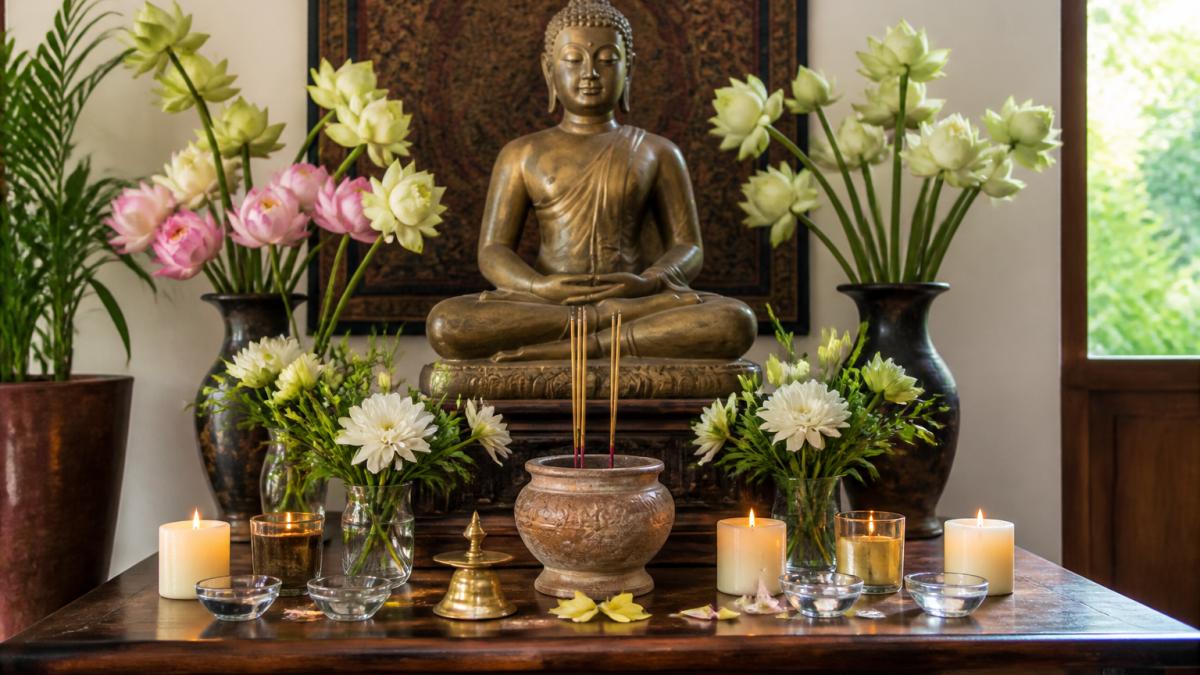
Buddha Statue Altar Setup for Your Ceremony
Choosing Your Location
Select a clean, quiet space where you won't be interrupted during your Buddha statue blessing ceremony. This location becomes your temporary altar. The space should feel calm and purposeful, a corner of a bedroom, a shelf in a meditation room, or a dedicated table all work well.
Avoid placing your altar in high-traffic areas or spaces associated with noise and activity. Elevation matters too. Position your statue at eye level or slightly above when you're seated. This creates a respectful visual relationship between you and the statue during the ceremony.
Preparing the Space
Before performing your Buddha statue blessing ceremony, clean the area thoroughly. Wipe down surfaces, remove clutter, and ensure the space feels fresh. Many practitioners believe that physical cleanliness mirrors spiritual preparation.
Arrange your altar with intention. Place the Buddha statue in the center as the focal point. Leave room around it for offerings and ritual items. The space should feel balanced and uncluttered, simplicity enhances focus during the ceremony.
Offerings for a Buddha Statue Blessing
Traditional Offering Items
Offerings play a central role in a Buddha statue blessing ceremony. They represent gratitude, respect, and your commitment to the practice. Common offerings include:
- Fresh flowers (symbolizing impermanence and beauty)
- Incense (representing purification and the rising of prayers)
- Candles or oil lamps (symbolizing light and wisdom)
- Water (representing clarity and refreshment)
- Fruit or food items (symbolizing nourishment and generosity)
- Tea or beverage offerings (showing hospitality)
You don't need every item. Choose offerings that feel meaningful to you and are available in your home.
Arranging Your Offerings
Place offerings symmetrically around your Buddha statue. This balanced arrangement creates visual harmony and shows respect through careful attention. Position water bowls on either side of the statue. Place flowers in a vase behind or beside it. Arrange candles safely at a distance where they won't tip or create fire hazards.
The arrangement itself becomes part of your Buddha statue blessing ceremony. Move slowly and mindfully as you place each item. This deliberate action prepares your mind and heart for the ritual ahead.
Buddha Statue Blessing Prayers and Recitations
Opening Invocations
Begin your Buddha statue blessing ceremony by centering yourself. Sit comfortably before your altar. Take three deep breaths and set a clear intention for the blessing. You might think or speak words like: "I gather here to honor this statue and deepen my spiritual practice." Preparing your space with the proper essential ritual tools helps to ground this intention and establishes a sacred atmosphere for the ceremony to unfold.
Many traditions use opening invocations that call upon Buddhist principles or figures. A simple opening might be: "I bow to the Buddha, the Dharma, and the Sangha. May this blessing bring clarity, compassion, and peace."
Core Blessing Mantras
Mantras are repeated phrases that focus the mind during your Buddha statue blessing ceremony. A widely recognized mantra is "Om Mani Padme Hum," which invokes compassion. Another is "Om Amideva Hrih," associated with Amitabha Buddha.
You need not speak Sanskrit perfectly. The intention behind the words matters more than precise pronunciation. Repeat your chosen mantra 27 times, 108 times, or simply until you feel a sense of completion. Let the rhythm guide you into a meditative state.
How Long Does a Buddha Statue Blessing Take
A Buddha statue blessing ceremony typically lasts 20 to 45 minutes, depending on your approach and experience level. Beginners often spend 30 to 40 minutes moving through each step with care and attention.
The duration matters less than the quality of your focus. A brief, heartfelt ceremony can be more powerful than a lengthy one performed with distraction. Listen to your own pace and allow the ritual to unfold naturally.
Performing the Blessing Ceremony Step by Step
Step 1: Purify Yourself and Your Space
Begin by washing your hands and face with clear water. This physical act prepares you mentally for the ceremony. If you prefer, you can also light incense throughout your space to symbolize purification.
Stand or sit before your altar and take three conscious breaths. Feel yourself settling into the present moment. Acknowledge any distractions and gently set them aside.
Step 2: Light Incense and Candles
Light your incense stick or candle carefully. Watch the flame or smoke rise. In many traditions, this rising smoke carries prayers and intentions upward. As you light each candle or incense stick during your Buddha statue blessing ceremony, silently offer a moment of gratitude.
Ensure all flames are stable and positioned safely away from flowers, fabrics, or anything flammable.
Step 3: Present Your Offerings
Approach your offerings with reverence. Lift each item slowly and place it before the statue. As you present flowers, acknowledge their beauty and impermanence. As you offer water, think of clarity and purification. Move through each offering mindfully.
This step transforms your Buddha statue blessing ceremony from a mental exercise into a physical, embodied practice. Your hands and body participate in honoring the statue.
Step 4: Recite Prayers and Mantras
Sit comfortably and begin your opening invocation. Speak clearly and slowly. Then move into your chosen mantra or prayer. Let your voice settle into a rhythm that feels natural.
If you forget the exact words, pause and return to your intention. Sincerity matters far more than perfection during a Buddha statue blessing ceremony.
Step 5: Meditate and Set Your Intention
Close your eyes and sit in silence for 5 to 10 minutes. Focus on your breath or on the image of the Buddha statue in your mind. This meditation anchors the blessing and allows its energy to integrate.
Before concluding, set a clear intention. You might think: "May this statue remind me daily to cultivate compassion and wisdom. May it support my spiritual growth."
Common Mistakes to Avoid
Rushing through the ceremony undermines its purpose. Take your time. Each step deserves attention and presence.
Neglecting to clean your space beforehand can scatter your focus. A tidy altar supports mental clarity.
Choosing offerings you don't have access to creates unnecessary stress. Use what's available and meaningful to you. Sincerity trumps tradition.
Performing the Buddha statue blessing ceremony in a noisy or chaotic environment dilutes the experience. Find or create a quiet moment, even if it's brief.
Doubting the validity of your practice can interrupt your connection. Trust your intention and commitment, regardless of your experience level.
Blessing a Buddha statue connects you to a spiritual lineage while honoring your personal practice. Whether you're establishing a meditation space or deepening your relationship with a cherished piece, this ceremony transforms both the statue and your intention. HD Asian Art's carefully curated collection of Buddhist statues provides the perfect centerpiece for your sacred space. Browse our selection of authentic, handpicked pieces designed to enhance your altar and support your spiritual journey.
Frequently Asked Questions
Can you bless a Buddha statue yourself, or do you need a monk?
A formal blessing or consecration is not considered necessary in every context. You can perform a meaningful Buddha statue blessing at home yourself, depending on your intention and spiritual practice. Many traditions recognize that personal intention and respectful engagement create significance. However, some practitioners prefer having a monk or ordained spiritual teacher perform the ceremony for added spiritual authority. Both approaches are valid, choose based on your tradition and comfort level.
What offerings are appropriate for a Buddha statue blessing ceremony?
Traditional offerings include flowers (fresh blooms symbolizing impermanence), incense (representing purification and the spread of prayers), water (symbolizing clarity and cleansing), light from candles or oil lamps (representing wisdom), and fruit or rice (representing sustenance and generosity). Some practitioners also include honey, milk, or herbs. Arrange offerings in odd numbers, typically three, five, or seven items. Avoid meat, alcohol, and garlic, as these are considered spiritually unsuitable in most Buddhist traditions.
How long does a Buddha statue blessing ceremony take?
A personal Buddha statue blessing ceremony typically takes 20 to 45 minutes, depending on how many prayers and mantras you recite and how long you meditate. A simple blessing might take 20 minutes, while a more elaborate ceremony with multiple recitations and extended meditation can extend to an hour or longer. There is no strict time requirement, what matters is your sincere intention and mindful presence throughout the process.
What should you say during a Buddha statue blessing?
Begin with an opening invocation to show respect and set your intention, such as bowing and stating your purpose. Recite traditional mantras relevant to your Buddhist lineage, common options include the Buddha's name mantra or the Heart Sutra. Speak words of reverence acknowledging the Buddha's teachings and your commitment to spiritual practice. You may also express personal intentions for peace, compassion, or wisdom. Conclude with gratitude and a dedication of merit. Use whatever language feels authentic to your practice.
