



Asian Art Gift Guide: Meaningful Picks for Every Budget
Asian Art Gift Guide: Meaningful Picks for Every Budget
Finding a gift that actually means something is harder than it sounds. Most people default to candles or gift cards. But an Asian art gift, chosen with care, carries centuries of spiritual tradition, extraordinary craftsmanship, and genuine cultural weight.
Whether you are shopping for a meditation practitioner, a serious collector, or someone who simply loves beautiful objects in their home, Buddhist and Hindu sculptures from across Asia offer something that no mass-market gift can replicate: a physical object with depth, history, and intention behind it.
Table of Contents
Why Religious Art Makes a Powerful Gift
|
Key Insight |
Explanation |
|---|---|
|
Spiritual gifts outperform generic ones in long-term meaning |
A Buddha or Hindu deity sculpture is displayed and reflected upon daily, not stored in a drawer after one week. |
|
Origin country matters enormously |
A Burmese alabaster Buddha carries different aesthetic and spiritual qualities than a Thai bronze or a Cambodian sandstone piece. Matching origin to recipient preference shows real thought. |
|
Museum-quality pieces are available at accessible price points |
Authentic, hand-finished sculptures start well under £100. You do not need a collector's budget to give something genuinely exceptional. |
|
Iconography communicates intention |
Giving a Buddhist statue gift of the Medicine Buddha signals a wish for health. Gifting Lakshmi signals abundance. The choice of deity is itself a message. |
|
Lacquerware is an overlooked and highly distinctive gift |
Traditional Burmese lacquerware is rare in Western markets, making it a standout option for recipients who already own sculpture. |
|
Free shipping thresholds change the value calculation |
Retailers like HD Asian Art offer free shipping on orders over £35, meaning a modestly priced piece arrives with no hidden delivery cost eating into your budget. |
|
Provenance and sourcing build trust with serious collectors |
Collectors care where a piece was sourced. Specialists who work directly across Burma, Cambodia, India, Indonesia, Japan, Thailand, and more carry credibility that general marketplaces cannot match. |
The global market for religious and spiritual gifts has grown steadily, with mindfulness and meditation-adjacent consumer spending reaching approximately $2.2 billion in the US alone according to Statista. Across the UK and Europe, interest in Asian spiritual objects for home altars and meditation spaces has followed a similar upward trend. This is not a niche corner of the gift market any longer.
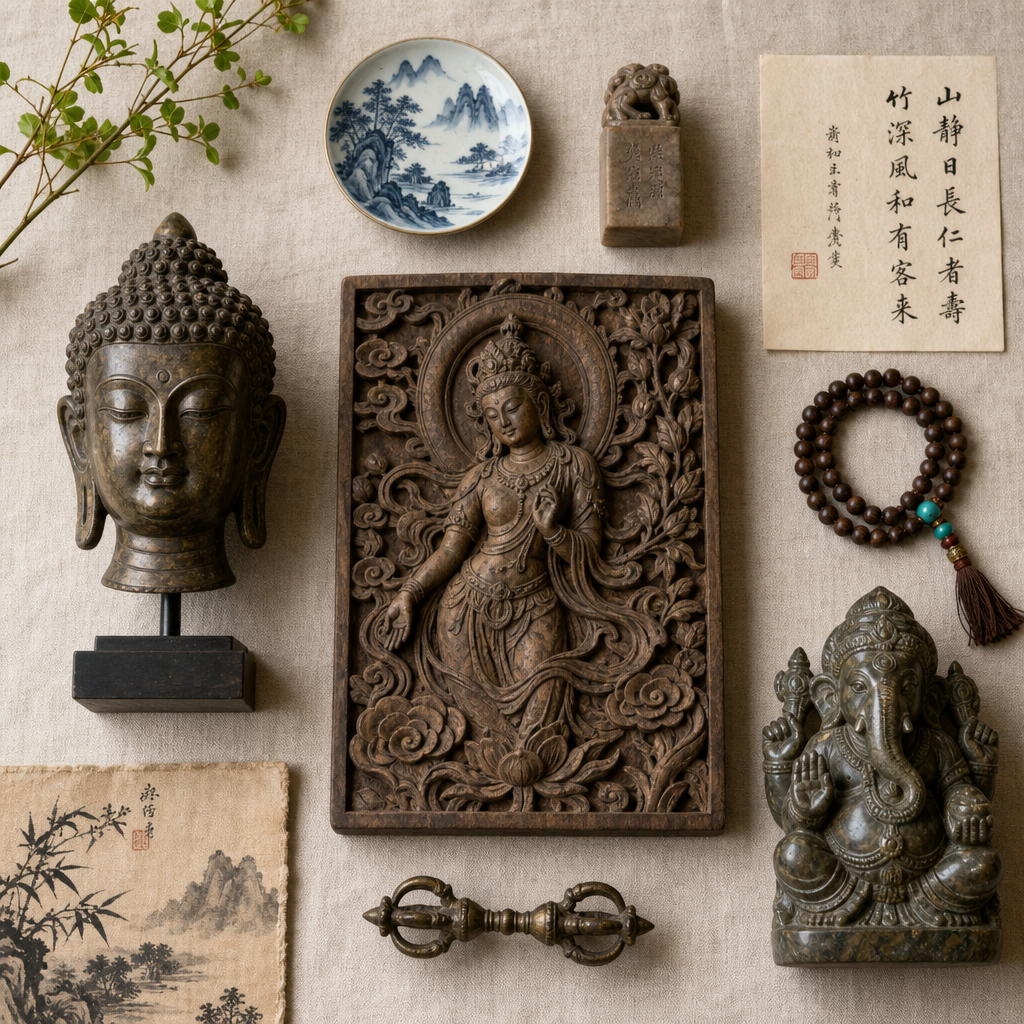
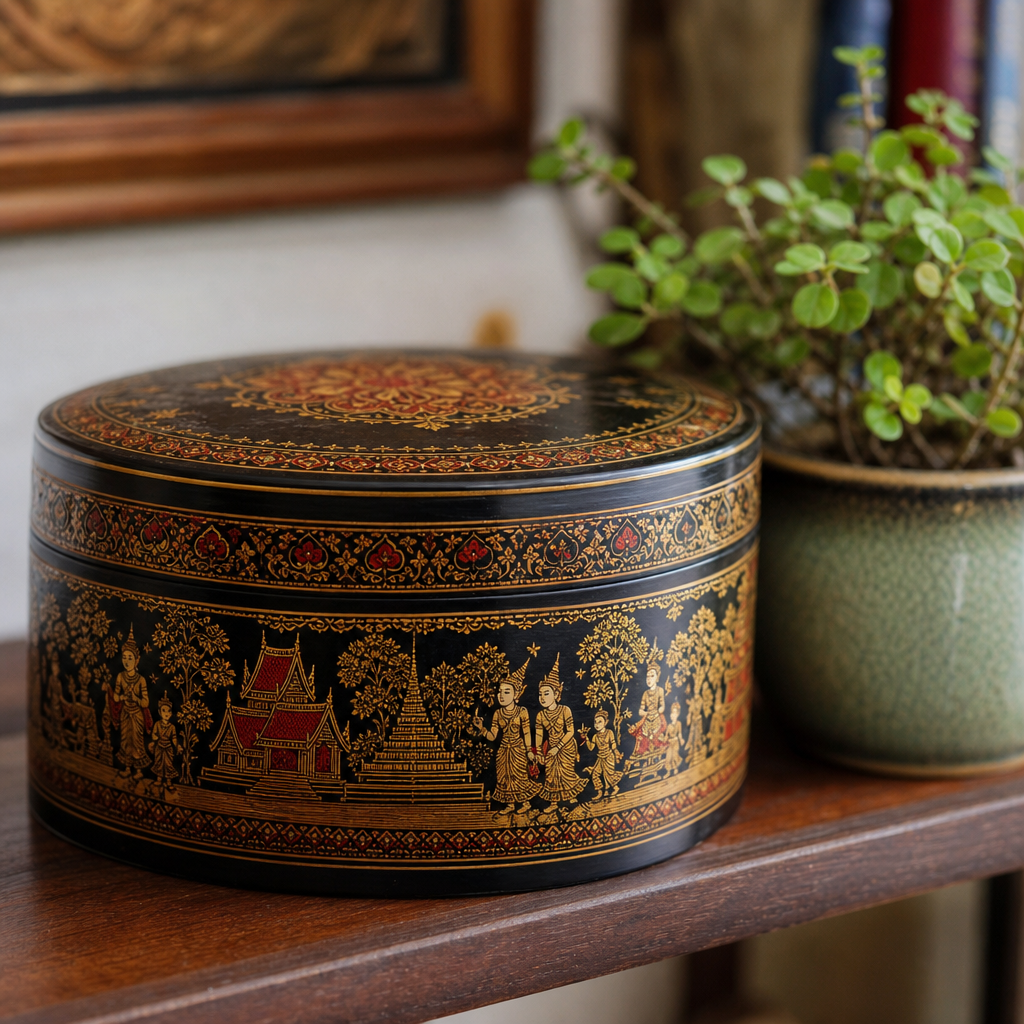
In practice, what distinguishes a truly memorable gift from a forgettable one is specificity. Anyone can pick up a generic Buddha figurine from a home goods chain. Choosing a hand-carved Mandalay-style alabaster Buddha or a cast bronze Ganesh from a specialist retailer tells the recipient that you paid attention to what they actually care about.
Understanding Your Recipient Before You Buy
Before you browse a single product page, answer three questions about the person you are buying for. First, do they have an active spiritual or meditation practice? Second, do they already collect Asian art or sculpture? Third, is their home aesthetic minimal and contemporary, or rich and layered with objects?
A common mistake is buying a large, elaborate piece for someone with a sparse interior. It creates visual tension and the gift ends up stored rather than displayed. Conversely, giving a tiny, understated piece to a collector with a dedicated altar room can feel like an afterthought. Scale and visual weight matter as much as the subject matter itself.
For Spiritual Practitioners and Meditators
This audience wants objects that anchor their practice. A meaningful spiritual gift for a meditator is almost always a deity or figure associated with the qualities they are cultivating. The Medicine Buddha (Sangye Menla) is appropriate for anyone dealing with illness or supporting others through health challenges. Avalokiteshvara (Quan Yin in Chinese tradition) represents compassion and suits someone in a caring profession or going through emotional difficulty.
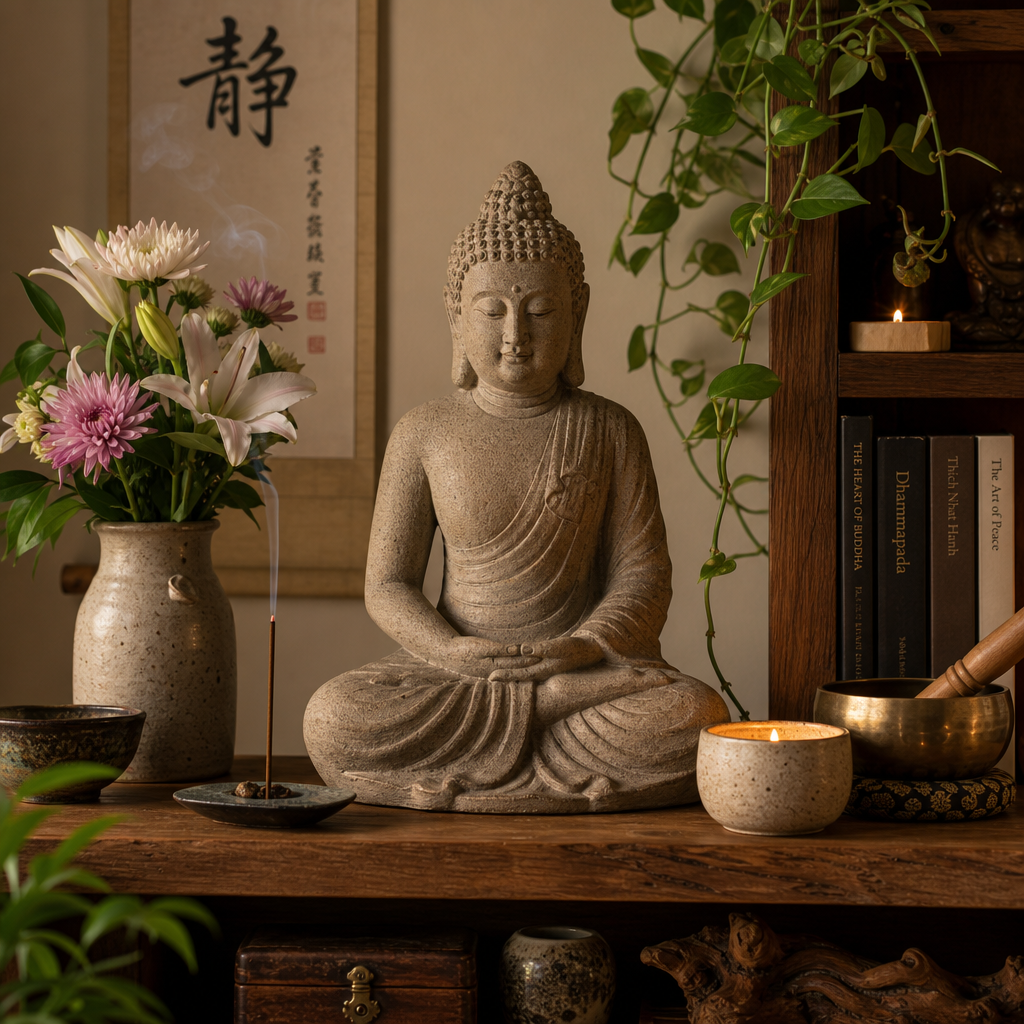
Thai and Burmese bronzes in the mudra of meditation, with hands resting in the dhyana gesture, are particularly suited to people who sit formally. The posture of the statue mirrors and reinforces their own practice.
For Art Collectors and Antiquities Enthusiasts
Collectors respond to rarity, regional specificity, and quality of casting or carving. For this audience, a Khmer-style sandstone piece from Cambodia or a Japanese wooden Bodhisattva will land better than a more widely available Thai seated Buddha. The conversation you can have about the piece, its region, its period style, and its iconographic details matters as much as the object itself.
Serious collectors also notice finish quality immediately. Museum-quality sourcing, hand-applied patinas, and accurate iconographic details are not optional extras for this group. They are the baseline.
Budget Breakdown: What You Can Expect at Every Price Point
One of the most persistent misconceptions about Asian religious art as a gift is that anything worth giving costs hundreds of pounds. That is simply not true when you shop from a specialist rather than a premium auction-house catalogue.
Under £75: Thoughtful and Genuine
At this price point you are looking at smaller sculptures, typically under 15 cm, in resin, brass, or carved stone. Resin might sound like a compromise, but a well-cast, hand-finished resin piece from a reputable specialist is a genuine art object, not a tourist trinket. A small Ganesh, a seated Laughing Buddha, or a miniature Quan Yin all work beautifully on a desk, shelf, or bedside table. Free shipping on orders over £35 means your full budget goes toward the piece itself.
£75 to £200: Distinctive and Display-Worthy
This range opens up solid bronze, larger carved wood pieces, and Burmese lacquerware. A hand-carved Burmese lacquerware box or bowl at this price point is an exceptional choice for someone who already has sculpture and needs something different. For deity gifts, bronze pieces of Shiva, Vishnu, or Lakshmi in the 20 to 30 cm range are available and genuinely striking.
£200 and Above: Collector Territory
Hindu statue gift ideas at this level include larger bronze castings, pieces with significant hand-detailing, or regional styles that are genuinely rare in Western retail. A Cambodian Khmer-influenced Shiva or an Indonesian Javanese Buddha in this range would be a centrepiece acquisition for any serious collector. At HD Asian Art, this tier includes museum-quality pieces sourced directly from across the Asian region.
The Best Asian Art Gifts by Tradition
The tradition a piece comes from shapes everything about it: the materials used, the gestures depicted, the symbolic attributes carried by the deity, and the visual language the piece speaks. Matching tradition to recipient knowledge and preference is the single highest-value decision you will make when choosing an Asian art gift.
Theravada Buddhist Sculpture from Burma, Thailand, Sri Lanka, and Laos
Theravada traditions produce the most widely recognisable Buddha images in the West. Thai bronzes with their pointed flame ushnisha (the crown flame on the Buddha's head) and Burmese alabaster pieces with their characteristic smooth white finish are both approachable for recipients who are new to Buddhist iconography. Sri Lankan pieces often feature a more serene, rounded aesthetic influenced by ancient Anuradhapura-period styles.
For a first-time gift of a Buddhist statue gift, a Thai or Burmese seated Buddha in the meditation mudra is the most reliable choice. The imagery is universally recognised and carries immediate calming presence in any space.
Mahayana Buddhist Sculpture from China, Japan, and Tibet
Mahayana traditions offer a much wider range of figures beyond Shakyamuni Buddha. Quan Yin (Guanyin), the Bodhisattva of compassion, is possibly the most gifted single figure in Asian religious art because she resonates regardless of whether the recipient practises Buddhism. Japanese wooden Bodhisattvas and Chinese gilded bronzes carry a distinctly different visual sensibility, more elaborate, often multi-armed, and rich in symbolic attributes.
Hindu Deity Sculpture from India and Indonesia
Hindu iconography is expansive, and the right deity choice communicates something specific. Ganesh (remover of obstacles) is appropriate for anyone starting a new chapter: a new job, a new home, a new creative project. Lakshmi suits gifts centred on abundance and prosperity. Shiva in his Nataraja form (the cosmic dancer) is visually dramatic and suits collectors more than casual recipients. Saraswati, goddess of knowledge and the arts, is ideal for artists, writers, students, and teachers.
Indonesian pieces, particularly those influenced by Javanese and Balinese temple traditions, carry a distinctive aesthetic that differs meaningfully from South Indian bronzes. Both are valid; they just speak different visual languages.
Comparing Gift Approaches: Statue vs. Lacquerware vs. Relief Panel
Not every meaningful Asian art gift has to be a freestanding statue. Understanding the full range of options helps you match the object to the recipient's lifestyle and display situation.
|
Gift Type |
Best Suited For |
Key Consideration |
|---|---|---|
|
Freestanding Sculpture (Buddha or Hindu deity statue) |
Meditators, collectors, dedicated altar owners, and anyone with shelf or table display space |
Scale is critical. Measure the intended display space before ordering. A piece that is too large dominates; too small disappears. |
|
Burmese Lacquerware (bowls, boxes, panels) |
Recipients who already own sculpture or who prefer functional decorative objects over purely ornamental ones |
Lacquerware is rare in Western retail, making it a distinctive choice. It works equally well in Buddhist and secular home contexts. |
|
Wall-Mounted Relief Panel |
Recipients with limited surface space but adequate wall space, or those who want a visual focal point without occupying a shelf |
Installation requires a wall hook or fitting. Confirm the recipient is comfortable with this before choosing a wall piece over a freestanding one. |
"The finest gifts are those that continue to give, not by their expense, but by their daily presence in the life of the recipient." Paraphrased from gift-giving research published in the Journal of Consumer Psychology, summarising findings on experiential versus object-based gifts.
In practice, the most common error is choosing based on what appeals to the buyer rather than what suits the recipient's home and practice. A dramatic multi-armed Shiva Nataraja is extraordinary, but it requires space, confidence with Hindu iconography, and a recipient who appreciates visual complexity. A simple, serene seated Buddha in alabaster asks nothing of the recipient except a flat surface and an appreciation for calm.
Pro tip: When in doubt about scale, choose one size smaller than you think is right. A 20 cm piece that fits naturally on a shelf will be displayed every day. A 40 cm piece that overwhelms the space will be quietly moved to storage within a month.
Common Mistakes When Buying a Spiritual Art Gift
A common mistake is treating all Buddha statues as interchangeable. They are not. The hand gesture (mudra), the posture, the style, and the regional tradition all communicate specific meanings. Giving someone a laughing Hotei figure (the round, jolly figure often mislabelled as the Buddha) when they have a serious Zen practice is likely to miss the mark. Hotei is a Chinese folkloric figure, not a representation of Shakyamuni Buddha, and a practitioner will notice the difference immediately.
Buying from General Marketplaces Instead of Specialists
General online marketplaces are flooded with mass-produced pieces that lack any regional specificity or quality control. A specialist retailer that sources directly across Burma, Cambodia, India, Indonesia, Japan, Laos, Sri Lanka, and Thailand is accountable for the quality and authenticity of what they sell in a way that a marketplace aggregator simply is not.
The data consistently shows that collector and practitioner communities are highly attuned to quality. A gift that reads as cheap or inauthentic does not just fail to impress. It signals that the giver did not invest genuine thought in the selection.
Ignoring the Gifting Context
Religious and spiritual objects carry different weight in different cultural contexts. In practice, most Western recipients with an interest in Buddhist or Hindu art welcome these pieces enthusiastically, particularly when they come with some contextual information about the deity or tradition represented. Including a brief note about why you chose that particular figure, what the gesture means, or where the style originates transforms a gift into a conversation.
Pro tip: HD Asian Art's product descriptions include iconographic detail and regional context. Read the description carefully before buying and use that information to write a short personal note to accompany the gift. It costs nothing and transforms the entire experience of receiving the piece.
Overlooking Occasions Where Religious Art Excels
New home gifts, milestone birthdays, wedding presents for couples with a meditation or yoga practice, retirement gifts for someone entering a new chapter, and memorial gifts to honour someone who has passed away are all occasions where a piece of Asian religious art lands with genuine power. Most people have never received one. That alone makes it memorable.
Frequently Asked Questions
Is it appropriate to give a Buddhist or Hindu statue as a gift to someone who is not a practitioner?
Yes, provided the recipient has expressed interest in Asian art, spirituality, or mindful living. These pieces function equally well as art objects and as spiritual tools. A seated Buddha in alabaster or a bronze Ganesh reads as beautiful sculpture even to someone with no formal spiritual practice. The gesture and deity choice matter more than whether the recipient formally identifies with the tradition.
What is the most universally appropriate Buddhist statue gift for a first-time recipient?
A seated Buddha in the meditation mudra (dhyana mudra, with hands resting one on top of the other in the lap) is the safest and most resonant choice. It is universally recognised, carries no ambiguous iconographic associations, and works in virtually any interior context. Thai and Burmese styles in bronze or alabaster are both excellent in this regard.
What makes a Hindu statue gift idea appropriate for a specific deity?
Each Hindu deity is associated with specific qualities and life circumstances. Ganesh suits new beginnings and the removal of obstacles. Lakshmi suits wishes of abundance and prosperity. Saraswati suits creativity, learning, and the arts. Shiva suits recipients who are drawn to transformation and cosmic energy. Matching the deity to the recipient's current life chapter is the most thoughtful approach possible.
How do I choose between pieces from different countries if the recipient has no stated preference?
Default to visual appeal first and then consider the spiritual tradition second. Thai bronze and Burmese alabaster are the most accessible starting points for recipients new to Asian religious art. For collectors or recipients with more experience, a Khmer-influenced Cambodian piece or a Japanese-style Bodhisattva offers distinctiveness that a more common Thai or Chinese piece cannot. Specialists like HD Asian Art source across nine countries, so the regional range available in a single catalogue is genuinely broad.
What is Burmese lacquerware and why is it a good gift option?
Burmese lacquerware is a centuries-old craft tradition in which bamboo or wood forms are coated with multiple layers of natural thitsi lacquer and then hand-engraved with intricate decorative patterns. The results are functional objects, typically bowls, boxes, or trays, that are also genuine works of art. As a gift, lacquerware is distinctive because it is rare in Western retail, functional in daily life, and carries strong cultural and artistic credentials. It is an excellent choice for anyone who already owns Buddhist or Hindu sculpture and appreciates something different.
Is free shipping available and does it affect which pieces are practical to gift?
HD Asian Art offers free shipping on orders over £35, which covers the vast majority of pieces in their catalogue. This means you can factor the full listed price into your budget without worrying about delivery costs reducing the value of the gift. For international orders, confirm shipping terms at checkout, but for UK-based gifting the free shipping threshold is low enough to apply to almost any purchase.
What Asian art gifts have you given or received that made a lasting impression? Share your experience in the comments below and help others make a more informed choice.
References
