



Alternatives to Traditional Brass Hindu Idols
Alternatives to Traditional Brass Hindu Idols
Table of Contents
Why Consider Alternatives to Brass Hindu Idols
Brass has long been the default choice for home mandirs, but it isn't the only option. Understanding alternatives to traditional brass hindu idols opens possibilities that align better with your spiritual practice, aesthetic preferences, budget, and environmental values. Different materials carry distinct spiritual resonance, require different maintenance, and suit different spaces. Before defaulting to brass, it's worth exploring what else exists.
This guide examines alternatives to traditional brass hindu idols available today. Whether you're drawn to the precious resonance of silver, the clarity of crystal, the timeless elegance of marble, or eco-friendly materials, there's an option that aligns with your values. HD Asian Art specializes in curated selections across these material categories, making it easier to find an idol that feels right for your spiritual space.
Marble vs. Brass God Statues: Material Comparison
Marble and brass represent two fundamentally different approaches to deity representation. Marble is a natural stone, cool, solid, and permanent. Brass is a metal alloy, warm, resonant, and traditionally associated with Hindu worship for centuries.
Marble statues offer visual elegance and permanence. They're heavier, more durable against drops, and develop a timeless patina as they age. Each piece is genuinely unique due to natural stone variations. However, marble requires careful handling during transport, can be porous (absorbing oils and dust), and may crack under extreme temperature shifts.
Brass idols are lighter and more portable. They develop a natural patina, a darkening oxidized finish, that many devotees find spiritually significant, representing the passage of time and deepening spiritual connection. Brass is believed in Hindu tradition to transmit positive spiritual energy and is considered highly auspicious. The downside: brass tarnishes with moisture and requires regular polishing to maintain shine.
The cost difference is significant. Hand-carved marble idols typically command higher prices due to labor-intensive carving and material weight. Brass idols are generally more affordable, though precious brass pieces and large statues can still be expensive.
| Material | Weight | Durability | Maintenance | Aesthetic | Cost Range |
|---|---|---|---|---|---|
| Marble | Heavy | Very durable | Occasional dusting | Timeless, elegant | Higher |
| Brass | Light | Durable | Regular polishing | Warm, traditional | Moderate |
Best Material for Home Mandir Idols: A Complete Guide
Choosing the best material for home mandir idols depends on your space, spiritual practice, maintenance commitment, and values. No single material is universally "best"; each excels in different contexts.
Copper Idols: Sacred and Spiritually Resonant
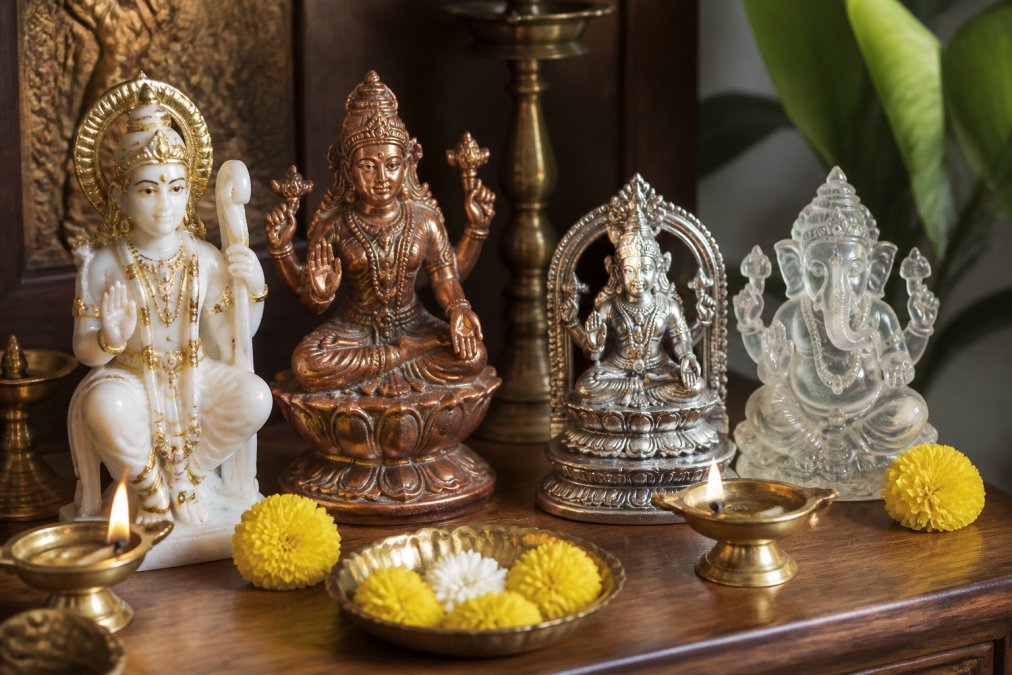
Copper holds deep significance in Hindu tradition. Pure copper is believed to amplify and transmit positive spiritual energy, making it a preferred choice for serious practitioners. Copper idols are handcrafted by artisans who understand sacred geometry and deity iconography.
Copper develops a natural greenish patina over time that many consider beautiful and spiritually meaningful. Unlike brass, which requires frequent polishing, copper's patina can develop naturally, reducing maintenance demands. In Ayurvedic and yogic traditions, copper is associated with purification and energy transmission. For daily worship and abhishekam (ritual bathing of the idol), copper is considered especially auspicious.
Copper idols are moderately priced, more affordable than silver or marble, comparable to quality brass pieces. Durability is excellent; with basic care, a copper idol lasts generations.
Silver Idols: Precious and Auspicious
Silver represents the highest tier of precious metal idols. In Hindu tradition, silver is associated with the moon, purity, and divine feminine energy. Silver idols are often BIS hallmarked, certifying their purity as 925 sterling silver (92.5% silver, 7.5% other metals for durability).
The spiritual significance is profound. Silver is considered one of the most auspicious metals for worship. Many temples use silver for their most sacred murtis. The metal's reflective quality is seen as a metaphor for the divine reflecting through material form.
Silver idols require regular polishing to prevent tarnishing, but this maintenance becomes a meditative practice for many devotees. The investment is significant. Silver idols are the most expensive metal option, with prices reflecting both material cost and artisanship. For those seeking a true heirloom to pass down through generations, silver is unmatched.
Crystal Idols: Clarity and Positive Energy
Crystal represents a modern approach to deity representation, blending contemporary spirituality with traditional iconography. Crystals like quartz, amethyst, and rose quartz are believed to amplify positive energy and enhance clarity of mind and spirit.
Clear quartz is associated with amplification and clarity; amethyst with spiritual awareness and intuition; rose quartz with compassion and divine love. A crystal Ganesha or Durga idol becomes both a devotional object and an energy tool for your meditation space.
Crystal idols are generally more affordable than precious metals, though high-quality pieces can still represent significant investment. They're lighter and more portable than marble or large brass pieces, making them suitable for smaller spaces or those who move frequently. The primary concern is fragility. Crystals can chip or break if dropped, requiring gentle handling and careful placement away from high-traffic areas.
Eco-Friendly Alternatives: Clay, Resin, and Seed Idols
Environmental consciousness is reshaping how many devotees approach idol selection. Eco-friendly alternatives honor both spiritual tradition and planetary responsibility.
Clay idols represent the most traditional approach. Handcrafted from natural, biodegradable clay, these idols dissolve completely during immersion, aligning with ancient Hindu customs. They're affordable and accessible. They're ideal for festival celebrations like Ganesh Chaturthi, where immersion is central to the practice.
Seed idols take sustainability further. Crafted from clay or cow dung and embedded with seeds, basil, marigold, spinach, that sprout into plants after immersion, they symbolize the deity transforming into living growth. After immersion, they require proper care to ensure germination.
Cow dung idols represent an ancient practice gaining renewed attention. Handcrafted from pure cow dung (considered sacred in Hindu tradition), these idols are completely biodegradable and often embedded with basil seeds. They emit a soft, earthy fragrance and are believed to have air-purifying properties. Purchasing supports traditional rural craftspeople.
Marble dust resin idols offer a middle path. They combine marble dust with resin to create a marble-like appearance with enhanced durability. They're lighter than solid marble, less prone to chipping, and more affordable, capturing marble's visual appeal without the fragility or highest price tag.
The choice depends on your primary concern. For festival immersion, clay or seed idols are ideal. For year-round display with environmental consciousness, marble dust resin or cow dung idols work well. For the longest-term eco-friendly option, crystal or copper idols (used indefinitely) have less environmental impact than frequently replaced materials.
How to Maintain Marble Idols and Other Materials
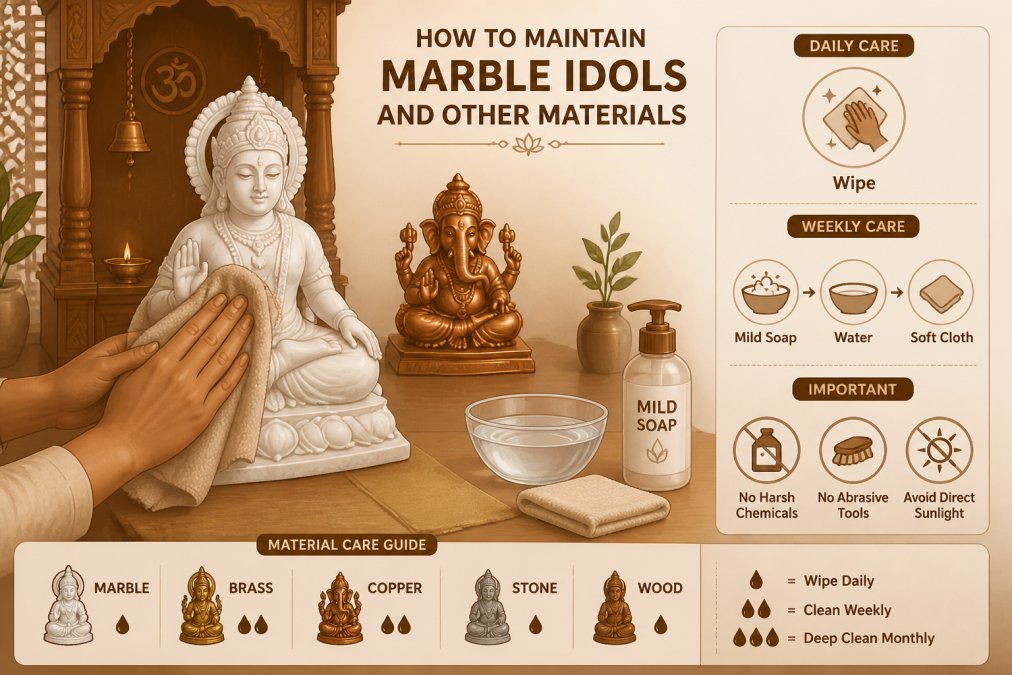
Proper maintenance extends your idol's life and preserves its spiritual and aesthetic qualities.
Marble idols need gentle care. Dust regularly with a soft, dry cloth. For deeper cleaning, use a barely damp cloth with lukewarm water and a tiny drop of mild, pH-neutral soap. Never use acidic cleaners, vinegar, or harsh chemicals. Dry immediately after any water contact. Avoid direct sunlight for extended periods and keep marble in stable temperature environments.
Brass and copper idols develop patina naturally. If you prefer the bright finish, polish regularly with a soft cloth and appropriate polish. For those who appreciate patina, simply dust occasionally. Never use harsh abrasive cleaners. Keep brass and copper away from moisture when possible.
Silver idols require regular polishing to prevent tarnishing. Use a soft silver cloth or silver polish designed for jewelry. Store silver in a dry place, ideally in a cloth pouch that minimizes air exposure. Some devotees let silver tarnish naturally, viewing it as part of the idol's spiritual journey.
Crystal idols need protection from breakage. Handle with care and store securely on stable surfaces away from edges. Dust with a soft cloth and clean with lukewarm water and mild soap if needed, drying immediately.
Eco-friendly idols (clay, seed, cow dung) are temporary by design. Handle gently to avoid breakage before immersion. If keeping a seed idol to encourage germination, follow the supplier's specific post-immersion care instructions.
Vastu Shastra Compliance and Material Selection
Vastu Shastra, the ancient science of spatial harmony, offers guidance on idol placement and material selection. Different materials resonate with different directions and elements. Copper and brass, associated with fire and energy, work well in eastern or northeastern areas of your home. Silver, associated with the moon and water element, harmonizes with northern or northwestern placements. Marble, being earth element, suits southwestern or southern positions.
The material's inherent vibration matters in Vastu. Metals like copper and brass amplify and transmit energy, making them ideal for active meditation and daily worship. Stone materials like marble provide grounding, stable energy, better for contemplative, less-frequent worship. Crystal materials, being transparent, are associated with clarity and spiritual insight; they work well in meditation spaces.
Vastu also considers the deity's nature. Fierce deities like Durga or Kali are traditionally represented in darker metals or stones. Gentle deities like Krishna or Lakshmi are often depicted in lighter, more reflective materials. Your personal intuition matters most. If a particular material calls to you, that alignment is itself a form of Vastu harmony.
Budget-Friendly vs. Heirloom Quality: Finding Your Ideal Idol
The price spectrum for deity idols ranges from under twenty dollars to thousands. Understanding the difference helps you make an intentional choice.
Budget-friendly options include clay idols, smaller resin pieces, and mass-produced brass or copper items. They're accessible and ideal for those new to home worship or festival use. The trade-off: they may lack artisanal detail, spiritual resonance, or durability of higher-quality pieces.
Mid-range pieces include quality handcrafted brass, copper, or marble dust resin idols, as well as smaller silver or crystal pieces. These represent genuine artisanship, better materials, and pieces designed to last decades with proper care. Many devotees find this range offers the best balance of quality, affordability, and spiritual significance.
Heirloom-quality idols include large marble statues, substantial silver pieces, antique brass idols, and custom-commissioned works. Handcrafted by master artisans, they capture spiritual essence and aesthetic perfection. These are meant to be passed down, improving with age as they're worshipped over decades or centuries.
When you factor in longevity and maintenance, a higher-quality piece often represents better long-term value. HD Asian Art's curated selection spans this spectrum, making it possible to find pieces at various price points without compromising on authenticity, artisanship, or spiritual quality.
Conclusion
The choice of material for your home mandir idol is deeply personal. It reflects your spiritual values, aesthetic preferences, practical needs, and budget. Alternatives to traditional brass hindu idols, marble, copper, silver, crystal, and eco-friendly materials, each offer distinct advantages. Marble provides timeless elegance and permanence. Copper resonates with spiritual tradition and requires minimal maintenance. Silver represents the highest tier of precious metal devotion. Crystal brings clarity and positive energy to your space. Eco-friendly options honor both your spiritual practice and environmental responsibility.
The best material is the one that aligns with your home, your practice, and your heart. Rather than defaulting to brass because it's traditional, consider what genuinely calls to you. Visit HD Asian Art to explore their carefully curated collection of Hindu statues and deity idols across materials and price points. Their handpicked pieces are selected for authenticity, artisanship, and spiritual resonance. Browse their collection and find the idol that transforms your meditation space into a true sanctuary.
Frequently Asked Questions
Which material is most auspicious for home mandir idols?
Copper and silver are traditionally considered highly auspicious in Hindu practice, believed to transmit positive spiritual energy. Marble holds sacred significance as a natural stone material. However, the best material depends on your personal spiritual beliefs, maintenance capacity, and living space. Brass remains popular for its durability and traditional use, but alternatives like copper or marble may resonate more deeply with your devotional practice. Vastu Shastra principles suggest that materials aligned with the specific deity's energy work best.
What are the key differences between brass and marble god statues?
Brass idols develop a natural patina over time, require regular polishing to maintain shine, and are lightweight and portable. Marble statues offer a refined, elegant aesthetic with a cooler spiritual presence, are heavier and more substantial, but require careful handling to prevent chipping. Marble suits permanent altar placement, while brass works well for homes where portability matters. Maintenance differs significantly: brass needs frequent cleaning to prevent tarnishing, while marble requires gentle dusting and occasional mild cleaning with soft cloths.
How do I maintain marble idols properly?
Dust marble idols regularly with a soft, dry microfiber cloth to prevent dirt accumulation. For deeper cleaning, use lukewarm water with a small amount of mild soap and a soft cloth, then dry immediately with another soft cloth. Avoid acidic cleaners, harsh chemicals, or abrasive materials that can damage the stone's surface. Keep marble idols away from direct sunlight for extended periods, as this can cause discoloration. Never immerse marble idols in water, and handle them carefully to prevent chips or cracks. Store in a dry location away from moisture.
Are eco-friendly idols like clay or seed-embedded options spiritually valid?
Yes, eco-friendly idols hold deep spiritual significance, especially for devotees who practice conscious immersion. Clay idols align with ancient Hindu traditions where murtis dissolve naturally in water after festivals, symbolizing the impermanence of material form. Seed-embedded idols like those with basil or spinach seeds add a layer of meaning: the sprouting plant represents ongoing blessings and renewal. Many spiritual practitioners find these options spiritually powerful because they embody dharmic principles of harmony with nature and minimal environmental harm, making them ideal for festivals like Ganesh Chaturthi.
