



What a Deity Sculpture in an Office Really Means
What a Deity Sculpture in an Office Really Means
A deity sculpture in an office is a symbolic or sacred form, either a consecrated murti or an aesthetic object, whose presence signals a specific spiritual, psychological, or design intention. It might invoke a virtue like prosperity or focus, mark a genuine devotional practice, or simply anchor a room the way any strong piece of art does.
The term for the underlying object is murti, the traditional Hindu term for a devotional image used in worship. Its form usually follows the visual rules laid out in the Shilpa Shastras, the classical Indian texts that govern proportion, posture, and attributes in religious sculpture. Vastu Shastra, a related body of guidance on architecture and placement, is often cited for where such objects should sit in a room, though that guidance works as tradition rather than binding rule in a modern office.
One distinction changes everything about how a sculpture should be treated: whether it has been consecrated through a ritual called prāṇa pratiṣṭhā, or whether it functions as a secular design object. That single fact determines what respect, care, and etiquette the piece requires.
Key Takeaways
A deity sculpture’s meaning in an office depends on three factors working together: which deity is depicted, whether it has been ritually consecrated, and how it’s placed and treated day to day.
| Point | Details |
|---|---|
| Meaning varies by figure | Ganesha signals obstacle removal, Lakshmi prosperity, Saraswati knowledge, and seated Buddha calm and focus. |
| Iconography is intentional | Mudras, attributes, and vehicles like Ganesha’s mouse encode specific meanings, not decoration. |
| Consecration changes obligation | A consecrated murti expects ongoing care; a decorative figure does not. |
| Placement follows practicality | Eye level, stable surfaces, and colleague consultation matter more than strict directional rules in shared offices. |
| Sourcing verified pieces matters | HDAsianArt documents provenance and materials on curated bronze, stone, and wood sculptures shipped worldwide. |
Table of Contents
What Does a Deity Sculpture in an Office Mean by Figure?
Certain figures show up in workplaces far more often than others, and each one carries a fairly consistent shorthand meaning, even though full traditions attach many more layers to them.
- Ganesha: placed near entrances or desks as an invocation against obstacles and for smooth beginnings, a natural fit for launches and negotiations.
- Lakshmi: associated with prosperity and abundance, often chosen for finance teams, retail businesses, or anywhere revenue growth is the daily goal.
- Saraswati: linked to knowledge, learning, and clear communication, a common choice for research teams, writers, and design studios.
- Seated Buddha: read as a symbol of calm, discipline, and focus rather than a specific power, making it the most flexible figure for group settings.
These one-line meanings are useful shorthand, not the full story. Regional traditions differ substantially, a single deity often carries multiple, sometimes contradictory, roles depending on the region and sect, and the same figure can mean something slightly different in a Cambodian bronze than in a South Indian bronze. Treat the summary as a starting point for further reading, not a final answer.
Many corporate and shared offices lean toward secular substitutes for exactly this reason. A neutral-finish seated Buddha or an abstract lotus motif reads as culturally inclusive mindfulness decor rather than an explicitly religious statement, which matters in workplaces with colleagues from many backgrounds.
How Do You Read the Symbolism of a Sculpture?
Every detail on a well-made deity sculpture is deliberate. Nothing about the pose, the hand gesture, or the objects held is decorative filler.
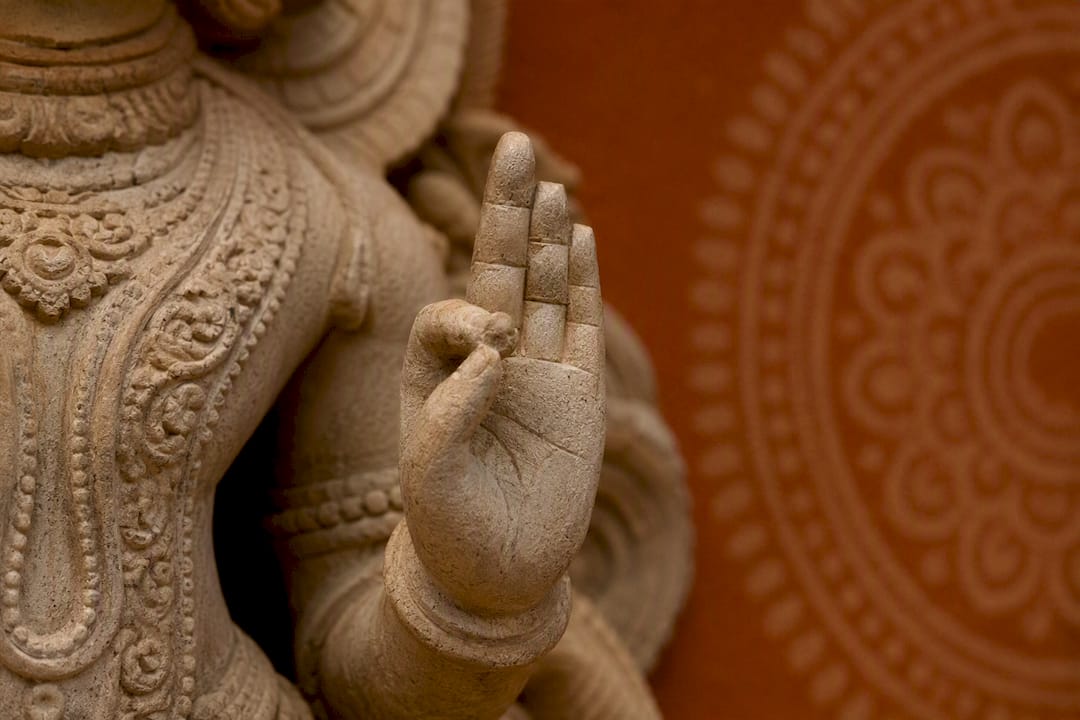
A murti, as defined in Hindu tradition, is a sacred form or locus of presence that becomes a focus for darshan and worship once it has been ritually consecrated, according to Wikipedia’s entry on murti. Reading one starts with a few visual categories: mudras (hand gestures signaling blessing, teaching, or reassurance), attributes (the specific objects a figure holds, like a weapon, lotus, or musical instrument), vahanas (the animal a deity rides or stands beside), and posture and proportion, which together indicate rank, calm, or active power.
A few examples make this concrete. Ganesha’s elephant head signals wisdom and his small mouse vehicle represents the ability to overcome even the smallest obstacles. Saraswati’s veena and book point directly to music, arts, and learning. Multiple arms on a figure like Lakshmi or Durga usually indicate the range of powers or blessings the deity extends at once, not literal anatomy.
Scholarship on Indian sculpture, including the work associated with art historian Vidya Dehejia and the Metropolitan Museum’s essay on divine iconography, emphasizes that these forms are idealized and rule-based rather than naturalistic portraits. The goal was never resemblance. It was recognition.
That is precisely why iconography works as a visual language: once you know the code, you can identify a figure’s intended role from across a room.
Where Should a Deity Sculpture Go in an Office?
Vastu Shastra guidance commonly recommends specific directions for certain figures, Ganesha near an entrance, Lakshmi facing a particular compass point, but workplace realities usually take priority over traditional placement rules. A shared office layout, fire codes, and simple foot traffic will override a directional preference every time.
A few practical steps keep placement respectful in almost any setting:
- Position the sculpture at eye level or above, never on the floor, which is traditionally read as disrespectful for a sacred figure.
- Choose a clean, stable surface where it won’t be jostled or knocked during daily work.
- Keep it out of bathrooms, break rooms with food waste nearby, or anywhere it might be treated casually.
- In shared offices, check with teammates or facilities before placing anything visibly religious in common areas.
- If the piece functions devotionally for you, a brief daily acknowledgment, a moment of quiet attention or a light dusting, is enough; it doesn’t require a full ritual to be meaningful.
Pro Tip: Before displaying a figure in a shared workspace, ask your office manager or a colleague familiar with the tradition whether the piece reads as neutral decor or as an active devotional object. That five-minute conversation prevents most misunderstandings before they start.
Is a Deity Sculpture Consecrated or Just Decorative?
A consecrated murti is fundamentally different from a decorative figure, and the difference isn’t visual. Consecration through prāṇa pratiṣṭhā, a ritual traditionally performed by trained priests, is understood to invite the deity’s presence into the object, which creates an ongoing obligation of care. A desk-sized figure bought purely for its aesthetics or as a mindfulness cue carries no such obligation.
- Consecrated: expects regular puja or acknowledgment, careful handling, and placement that avoids casual contact.
- Decorative or mindfulness object: can be dusted occasionally, moved freely, and displayed without ritual expectation.
- Uncertain provenance: if you inherited or received a piece without knowing its history, it’s reasonable to treat it with moderate respect (clean surface, eye level) until you learn more.
Inclusivity in a shared office comes down to a few honest habits. State your intention plainly if a colleague asks, whether the piece is spiritual to you or simply art you admire. Get informal consent before placing anything overtly religious in a common area rather than a private desk. Offer a neutral alternative, like the seated Buddha many offices already favor, when a shared space needs a calming visual anchor without a specific devotional claim attached.
Pro Tip: If you’re unsure whether a piece in your office was ever consecrated, the safest default is respectful treatment without assuming ritual obligation, and a quick question to whoever placed it there.
How Do You Choose an Authentic Deity Sculpture?
Choosing a sculpture starts with intention. Are you buying something devotional, something purely aesthetic, or both? That answer should guide every decision that follows, from material to provenance.
Once intention is clear, a short verification checklist protects both your wallet and your cultural respect for the piece:
- Ask for documented age and provenance, not just a seller’s claim of “antique.”
- Confirm the material, bronze, stone, or wood, since each has distinct care needs and value patterns.
- Request detailed photographs of the base, joints, and any repairs, not just a flattering hero shot.
- Ask directly whether the piece was ever ritually consecrated, which affects both its handling and its meaning to you.
- Check the seller’s return policy and shipping insurance before committing to a larger stone or bronze piece.
Museum-level standards treat documentation and condition as non-negotiable trust signals, a principle echoed in exhibitions like the Asian Art Museum’s collection of Hindu sculpture. Provenance isn’t paperwork for its own sake. It’s how a buyer confirms a piece was sourced and handled with genuine respect for its origin, and it’s a major factor in long-term collectability. Readers building a collection with specific deities in mind may find a collector’s guide to identifying goddess statues useful for narrowing down features before buying.
Pro Tip: A seller who can’t answer a direct question about a piece’s history or material is a seller worth walking away from, regardless of how good the photos look.
How Do You Care for a Deity Sculpture Long Term?
Care depends entirely on material. Bronze, stone, wood, and lacquer each demand a different maintenance routine, and treating them all the same way is the fastest route to damage.
- Dust bronze and stone with a soft, dry cloth and skip chemical cleaners entirely.
- Let bronze patina develop naturally; it’s part of the object’s aging and its value, not tarnish to scrub off.
- Keep wood pieces away from direct heat or humidity swings, which cause cracking over time.
- Never use abrasive cleaning on painted or lacquered surfaces, including Burmese lacquerware, since it strips original finish.
- Call a professional conservator before attempting any repair on a piece with real age or documented provenance.
A Curator’s Reading of an Office Sculpture
When I look at a sculpture in a workspace, I check the iconography first: the gesture, the vehicle, the attributes. Then I ask about intent, devotional or decorative, before recommending placement or care. Respect for provenance and fit matters as much to a collector as to the office where the piece lives.
Where to Find a Sculpture Worth Placing in Your Office
HDAsianArt curates individually researched, museum-quality Buddhist and Hindu sculpture from Cambodia, Thailand, Indonesia, Sri Lanka, and Vietnam, each piece documented and shipped worldwide with insured DHL delivery.
If you’re weighing a focal piece for a design-forward office, much like the eight-foot Saraswati idol built into a Pune office design, a larger stone or bronze work can anchor a room the same way. A piece like this antique Khmer style Banteay Srei goddess statue offers that kind of presence with full provenance documentation attached. Browse the full HDAsianArt collection to compare materials, sizes, and regional styles before deciding what fits your space and your intention.
Frequently Asked Questions
What does a deity sculpture in an office mean spiritually? It usually signals an invocation of a specific quality, prosperity, focus, or protection from obstacles, tied to the deity depicted, unless the piece has been formally consecrated, in which case it also carries an ongoing devotional obligation.
Do I need to worship a deity sculpture I display at work? No. A non-consecrated figure kept for its symbolism or aesthetics carries no ritual requirement; only a piece that has undergone prāṇa pratiṣṭhā implies that expectation.
Is it disrespectful to keep a deity sculpture as office decor? Not inherently, as long as it’s placed thoughtfully, kept off the floor, and treated with basic care. Problems arise mainly from careless placement, not from secular appreciation itself.
Which deity sculpture is best for a shared office? A seated Buddha in a neutral finish is a common choice because it reads as a calm, culturally broad mindfulness symbol rather than a specific devotional claim, which suits mixed-background workplaces.
How can I tell if a sculpture in my office was ever consecrated? Ask whoever placed it there or the seller who provided it. Absent that information, treat it with moderate respect, clean surface, eye level placement, until you learn more.
Sources
- Recognizing the Gods - The Metropolitan Museum of Art
- Murti - Wikipedia
- Deities in Stone: Hindu Sculpture from the Collections of the Asian Art Museum | SFO Museum
- In Pune, this 5,500-square-foot office is designed around an eight-foot Saraswati idol | Architectural Digest India
