



Meditation Altar Decor for Beginners: Step-by-Step Setup
Meditation Altar Decor for Beginners: Step-by-Step Setup
Table of Contents
- What You'll Need: Meditation Altar Essentials
- Choosing a Location for Your Meditation Altar
- How to Create a Meditation Altar: A Step-by-Step Guide
- Small Meditation Altar Setup for Apartments and Tight Spaces
- Meditation Altar Ideas for Personal Practice
- Common Mistakes to Avoid
- Caring for Your Meditation Altar
- Frequently Asked Questions
What You'll Need: Meditation Altar Essentials
Creating a meditation altar requires no purchases. Many effective altars use items already in your home, supplemented gradually with pieces that resonate with your practice.
No-Purchase Starter Altar
You can build a functional meditation altar from household objects:
- Focal point: A framed photo, a meaningful book, a plant, or any object that draws your attention
- Surface: A shelf, nightstand, dresser corner, windowsill, or small table
- Light: A window for natural light, or a regular household lamp (avoid harsh overhead lighting)
- Natural elements: A glass of water, stones from outside, leaves, or a potted plant
This setup costs nothing and works just as well as a decorated altar.
Budget-Friendly Additions (Optional)
If you want to add pieces gradually, prioritize in this order:
- Candles: Unscented or lightly scented. Tea lights are safe. Always place on a stable, heat-resistant surface away from fabric, curtains, or anything flammable.
- Incense or essential oil diffuser: Sandalwood, frankincense, lavender, or cedarwood are common choices. Ensure good ventilation, never use incense in sealed rooms or near pets or children with respiratory sensitivity.
- A focal-point statue or image: Choose something that genuinely moves you spiritually, not just aesthetically.
- Natural stones or crystals: Collect free stones outdoors, or purchase a few that appeal to you.
- Fresh flowers or plants: A single stem or small potted plant adds life and freshness.
Safety and Accessibility Essentials
Regardless of budget, follow these non-negotiable practices:
- Candle safety: Use candles only on stable, level surfaces. Never leave them unattended. Keep at least 12 inches from anything flammable. Use candle holders or plates to catch wax.
- Incense and ventilation: Use incense only in well-ventilated spaces. Open a window to allow smoke to escape. Never use incense in bedrooms or near pets or children.
- Stable surfaces: Ensure your altar surface won't tip or collapse. Test stability before placing objects on it.
- Pet and child safety: Keep the altar elevated or inaccessible to pets and young children. Avoid toxic plants or small swallowable objects.
Cultural Respect and Personal Practice
If you're drawn to symbols or statues from traditions you don't belong to, approach them with respect:
- Understand the cultural and religious context of objects you choose. A statue is a sacred representation, not merely a decorative symbol.
- Distinguish between a personal meditation space and a tradition-specific altar. A personal altar can include objects from many sources; a tradition-specific altar follows that faith's practices and rules.
- Treat sacred symbols with the reverence practitioners of that tradition would show. Avoid placement in bathrooms, under feet, or in disrespectful positions.
- Learn basic information about objects that matter to you. This deepens your connection and shows respect for their origins.
At HD Asian Art, we understand that meditation altar decor reflects your spiritual practice. Our carefully curated Buddhist and Hindu statues serve as powerful focal points that ground your sacred space with authentic craftsmanship and spiritual presence.
Choosing a Location for Your Meditation Altar
Where you place your meditation altar matters as much as what goes on it. The right location supports your practice and protects your sacred space from daily disruption.
Look for a spot that feels naturally calm, a corner with soft natural light, a quiet shelf away from high traffic, or a small dedicated table.
Consider these factors when selecting your location:
- Natural light availability (indirect sunlight is ideal)
- Quiet, low-traffic areas
- Stable surfaces that won't shift or tip
- Protection from pets, children, or accidental disturbance
The space should feel intentional. When you look at your meditation altar, you should feel drawn to practice there.
How to Create a Meditation Altar: A Step-by-Step Guide
Building your meditation altar is a gradual, intentional process. Each step builds on the last, creating a space that reflects your spiritual journey.
Step 1: Prepare and Cleanse Your Space
Dust the surface thoroughly and wipe it clean with a soft cloth. Consider opening windows to let fresh air circulate. Some practitioners light incense or use sound to energetically cleanse the space.
Step 2: Select Your Focal Point
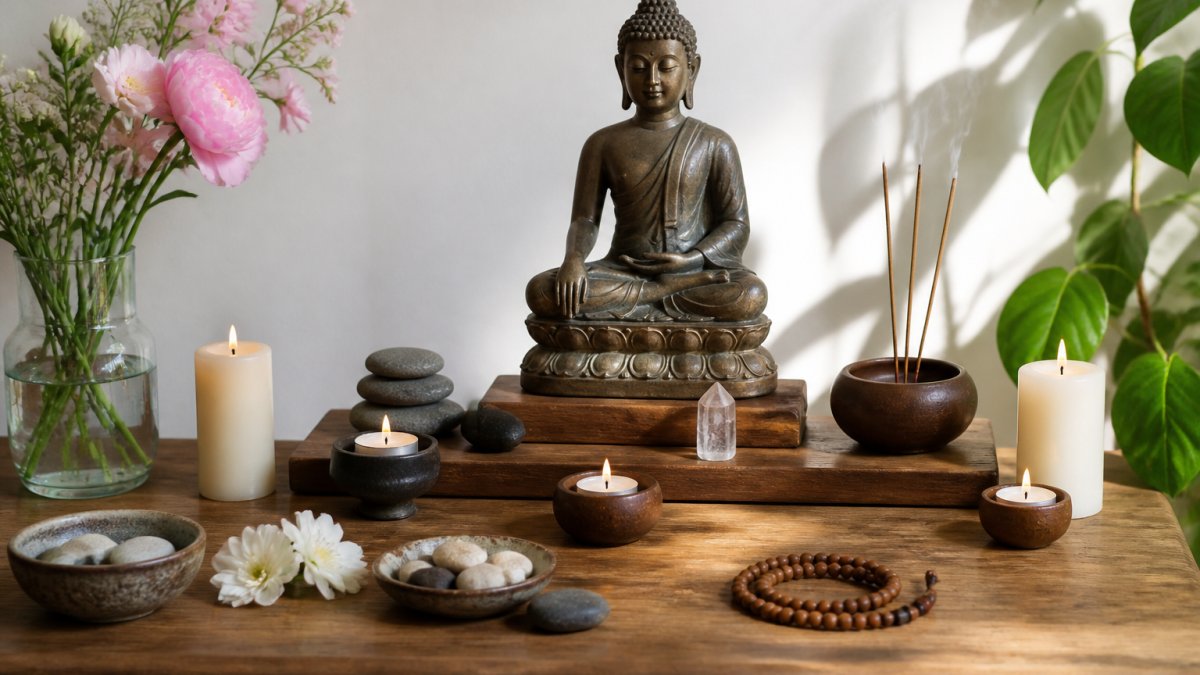
Your focal point anchors the entire altar. This is typically a statue, image, or sacred object that draws your eye and heart when you sit to meditate. Place this object at the back or center of your altar, elevated slightly if possible.
Step 3: Arrange Your Meaningful Objects
Surround your focal point with objects that support your practice, crystals, stones, meaningful jewelry, or totems representing qualities you're cultivating. Arrange them intentionally, varying heights and spacing to create visual balance and allow energy to flow.
Step 4: Add Light and Scent
Light and scent transform your meditation altar into a multisensory sacred space. Choose unscented or lightly scented candles. Incense options include sandalwood, frankincense, or lavender. Select scents that calm your mind rather than distract it. Place candles safely away from fabric or anything flammable.
Small Meditation Altar Setup for Apartments and Tight Spaces
Limited space doesn't prevent you from creating a meaningful meditation altar. A small setup works beautifully on a shelf, nightstand, or desk corner. Use vertical space by stacking elements carefully or using wall space above a small table.
Use wall-mounted shelves, a single focal point statue, rolled incense sticks, small potted plants, stacked stones, and a cloth mat that rolls up for storage. Renter-friendly options include removable wall hooks and adhesive shelves.
Meditation Altar Ideas for Personal Practice
Your meditation altar should reflect your unique spiritual path. Consider what your practice needs, compassion, clarity, creativity, or peace, and support these intentions through intentional object selection.
Create altars around specific intentions: manifesting (goals and prosperity symbols), healing (soothing stones and calming scents), creativity (inspiring objects and vibrant colors), or grounding (earth elements and heavy stones). Allow your meditation altar decor to grow and change as your practice deepens.
Common Mistakes to Avoid
Many beginners overcomplicate their altars. The most common mistake is buying too much too quickly and creating visual chaos instead of calm.
Another frequent error is placing the altar in a high-traffic area where it gets bumped, moved, or disrupted.
Watch out for these pitfalls:
- Cluttering with too many objects at once
- Choosing objects for appearance rather than spiritual meaning
- Placing the altar in unstable locations
- Using harsh lighting that creates glare
The best altar is one you actually use. An elaborate setup gathering dust serves no one. A simple altar you visit daily transforms your practice.
Caring for Your Meditation Altar
Your meditation altar is a living space, not a static display. Regular care keeps it energetically vital and prevents it from becoming a neglected corner that contradicts your practice.
Weekly Maintenance Routine
Set aside 5-10 minutes once a week to tend your altar:
- Dust gently: Use a soft cloth or brush to remove dust from surfaces and objects. Handle each piece mindfully, treating it as part of your practice rather than a chore.
- Check candle holders: Remove old wax buildup from candle holders or plates. Wipe away any spilled wax or debris.
- Refresh water: If you keep a glass of water on your altar, replace it with fresh water. Stagnant water loses its symbolic freshness.
- Inspect stability: Ensure all objects remain stable and secure, especially if you have pets, children, or live in an area with vibrations from traffic or appliances.
Every Few Days: Natural Elements
- Replace flowers: Remove wilted or browning flowers and replace with fresh blooms, or remove them entirely if you prefer simplicity. Dying flowers create visual and energetic stagnation.
- Check plants: Water potted plants as needed. Remove dead leaves. A thriving plant is more powerful than a struggling one.
- Refresh incense: If you use incense regularly, ensure you have fresh sticks or cones on hand. Stale incense loses potency and can smell musty.
Monthly Refresh
Once a month, take a deeper look at your altar:
- Rearrange objects: Move pieces around to create a fresh perspective. This prevents the altar from feeling static or invisible through familiarity.
- Remove what no longer resonates: If an object no longer draws you or feels misaligned with your current practice, remove it. Your altar should evolve with you.
- Deep clean: Wipe down the surface thoroughly. Polish any metal objects. Wash cloth bases or mats if they've accumulated dust.
- Assess lighting: Check whether your light source still serves your practice. Adjust candle placement, add or remove lighting, or reposition the altar if natural light has changed with the season.
Seasonal Shifts
Altar care naturally aligns with seasonal change:
- Spring: Refresh with new flowers, lighter colors, and symbols of growth. Remove heavy or dark objects that felt grounding in winter.
- Summer: Emphasize natural light and air. Use cooling scents like mint or eucalyptus. Keep the altar minimal to match the energy of the season.
- Fall: Introduce warm colors, earth tones, and grounding stones. Add symbols of harvest or gratitude. Use warming scents like cinnamon or frankincense.
- Winter: Deepen candlelight, use heavier objects, and incorporate symbols of rest and introspection. Scents like sandalwood or cedarwood support inward focus.
Troubleshooting Common Issues
Altar feels stale or uninspiring: This is normal. Rather than adding more objects, try removing one or two pieces.
Objects are gathering dust and you're not using the altar: Reassess your location.
Candles or incense are causing headaches or respiratory irritation: Reduce frequency or switch to unscented options. Ensure better ventilation.
Natural elements are decaying quickly: This is expected.
You're bored with your altar: Change is healthy.
Frequently Asked Questions
What should a beginner put on a meditation altar?
Start with a focal point, a statue, image, or object that holds spiritual meaning for you, and add elements that support your meditation altar decor. Include at least one source of light (candle or lamp), natural elements like stones or flowers, and optional scent (incense). Arrange these on a dedicated shelf, table, or corner. The key is choosing meaningful objects that reflect your personal practice, not filling the space with items you don't connect to.
How do you set up a simple meditation altar at home?
Choose a quiet, clean corner or shelf. Place your focal point in the center, add candles on either side, and arrange stones, flowers, or water nearby. If you have incense, position the holder safely away from flammable items. Step back and assess the arrangement, it should feel calm and intentional, not cluttered. You can refresh it weekly to keep the space energized and aligned with your spiritual practice.
Can a meditation altar be small or portable?
Absolutely. A small meditation altar setup works perfectly in apartments, dorm rooms, or shared spaces. Use a small shelf, nightstand corner, or even a decorative box. Include a compact focal point, a tea-light candle, a few stones, and a small flower. Portable altars can fit in a drawer or bag, making them ideal for renters or anyone who needs flexibility. The size doesn't diminish the spiritual impact, intention matters more than space.
How do you personalize a meditation altar?
Choose objects that reflect your beliefs, values, and spiritual journey. Include items from nature you've collected, specific stones, shells, or branches. Add photos, jewelry, or symbols meaningful to you. If you follow a particular tradition, incorporate relevant statues or ritual items. Arrange them in a way that feels balanced and inviting to you. Your altar should tell your story and support your meditation practice, not follow a template.
A meaningful meditation altar deepens your practice and transforms your home into a sanctuary. Start simply with a focal point and one or two supporting elements. As your practice evolves, your altar will too. At HD Asian Art, we offer carefully curated Buddhist and Hindu statues that serve as powerful, authentic focal points for your sacred space. Browse our collection to find the piece that calls to your spiritual practice.
