



Japanese Buddhist Sculpture: Nara Period to Modern Collections
Japanese Buddhist Sculpture: Nara Period to Modern Collections
Few artistic traditions in world history rival the depth and continuity of Japanese Buddhist sculpture. From the gilt bronze masterpieces commissioned by Emperor Shomu in the eighth century to the lacquered Amida figures that still draw collectors today, this tradition spans over 1,400 years of unbroken craft refinement.
Yet most buyers entering this space underestimate how dramatically quality, iconography, and material choices vary across periods. Understanding those differences is not optional, it is the difference between acquiring a meaningful piece and making an expensive mistake.
Table of Contents
Quick Takeaways
|
Key Insight |
Explanation |
|---|---|
|
Nara period sculptures are the benchmark |
Pieces from 710 to 794 CE set the canonical proportions and iconographic rules that all later Japanese Buddhist sculpture either follows or deliberately departs from. |
|
Wood became the dominant material after the Nara period |
Heian and Kamakura craftsmen shifted from dry lacquer and bronze to single-block wood carving, then joinery, producing warmer, more naturalistic figures. |
|
Hand gestures (mudras) carry precise doctrinal meaning |
The dhyana mudra signals meditation and Amida iconography; the bhumisparsha mudra marks the moment of enlightenment. Misidentifying these changes the figure's entire meaning. |
|
Kamakura realism is the most collector-accessible period style |
The hyper-realistic portrait statues and dynamic guardian figures of the 12th to 14th centuries remain the most widely studied and most competitively collected Japanese Buddhist works. |
|
Lacquerware and sculpture often came from the same workshops |
Traditional Burmese and Japanese lacquer techniques share craft DNA with Buddhist sculpture production, meaning collectors interested in one medium frequently find the other equally compelling. |
|
Provenance documentation now affects value significantly |
Post-2000 international cultural property agreements mean documented provenance is not just a moral consideration, it directly affects resale value and legal standing. |
|
Regional Japanese styles differ as much as national ones do |
Kyoto workshops, Nara temple commissions, and provincial ateliers produced recognizably different sculpture even within the same century, making regional attribution a distinct collecting skill. |
Nara Period Foundations: Where It All Begins
The Nara period, running from 710 to 794 CE, is the single most important chapter in Japanese Buddhist sculpture history. Emperor Shomu's decree to build provincial temples throughout Japan, culminating in the great Todai-ji complex in Nara, created the first nationwide demand for high-quality Buddhist imagery. The colossal bronze Vairocana Buddha at Todai-ji, completed in 752 CE, remains the largest bronze Buddha in Japan and a direct measure of how serious that imperial patronage was.
Two technical approaches dominated Nara period production. The first was dry lacquer construction, in which craftsmen built up layers of lacquer-soaked cloth over a clay core, then removed the clay to leave a hollow, lightweight shell. The second was bronze casting, requiring enormous furnaces and highly organized workshops. Both methods produced the same effect: figures with confident, full-bodied proportions influenced by Tang dynasty Chinese models brought over by monk-scholars such as Ganjin, who arrived in Japan in 754 CE.
In practice, Nara period pieces that appear on the collector market today are almost exclusively later period replicas or workshop copies. Original Nara period sculptures are national treasures held in temple collections and Japanese national museums. What this means for collectors is that understanding Nara period aesthetics gives you the calibration point for assessing everything else, not a realistic acquisition target.
Pro tip: When evaluating any Japanese Buddhist statue described as ancient or antique, compare its proportional system to documented Nara period examples in the Tokyo National Museum's online collection. Deviations in head-to-body ratio, usnisha shape, and robe rendering often reveal the actual period far more reliably than surface patination alone.
Heian and Kamakura Evolution: Refinement and Realism
The Heian period (794 to 1185 CE) marks a decisive turn away from continental Chinese influence toward a distinctly Japanese sculptural sensibility. The esoteric Buddhism of the Shingon and Tendai schools, introduced by monks Kukai and Saicho respectively at the start of the period, demanded a much wider iconographic range. Multi-armed deities, fearsome Myo-o guardian figures, and complex mandala compositions replaced the relatively straightforward Buddha triads of the Nara workshops.
The Ichiboku Technique and Its Significance
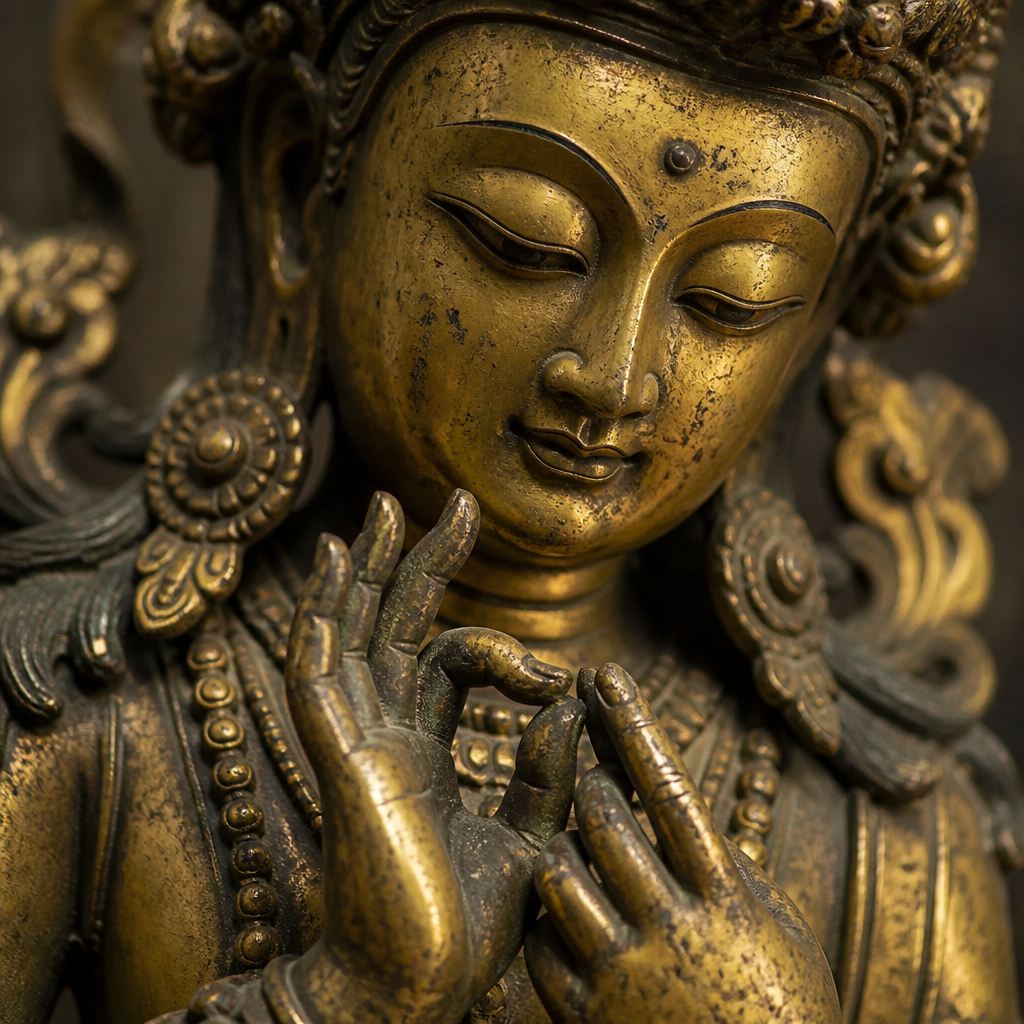
Early Heian sculptors pioneered the ichiboku technique, carving entire figures from a single block of Japanese cypress (hinoki). This produced statues with a heavier, more brooding quality than the elegant Nara bronzes. The grain of the wood became part of the aesthetic, and the slight asymmetries inherent in single-block carving gave Heian figures a psychological intensity that purely symmetrical bronze work could not replicate.
By the late Heian period, workshops had moved to the yosegi technique, assembling figures from multiple carved and hollowed wooden blocks joined together. This allowed larger figures, faster production, and the insertion of sacred objects inside the hollow body, a practice that fundamentally changed the religious function of the sculpture from art object to reliquary.
Kamakura Realism and the Busshi Tradition
The Kamakura period (1185 to 1333 CE) introduced a realism so extreme it can be disorienting. The sculptor Unkei and his workshop produced portrait statues of monks with glass eyes, individually inserted hair follicles on eyebrows, and veins visible on the backs of hands. These were not artistic flourishes. They reflected a new warrior-class patronage that valued directness and physical presence over courtly refinement.
The busshi, professional hereditary sculptors organized into competing workshops, brought a level of technical consistency to Kamakura production that made the period's output remarkably uniform in quality even as it varied in style. Collectors working with Japanese Buddhist statues from Southeast Asian traditions, such as Cambodian or Thai work available through specialists like HD Asian Art, will recognize similar workshop traditions operating across Buddhist Asia during overlapping centuries.
"The Kamakura sculptors achieved something unique in world art: a religious imagery that was simultaneously doctrinally rigorous and viscerally human. The Unkei workshop figures do not ask for reverence. They command it." , Dr. Penelope Mason, History of Japanese Art, Prentice Hall, 2005.
Reading the Iconography: What Every Gesture and Attribute Means
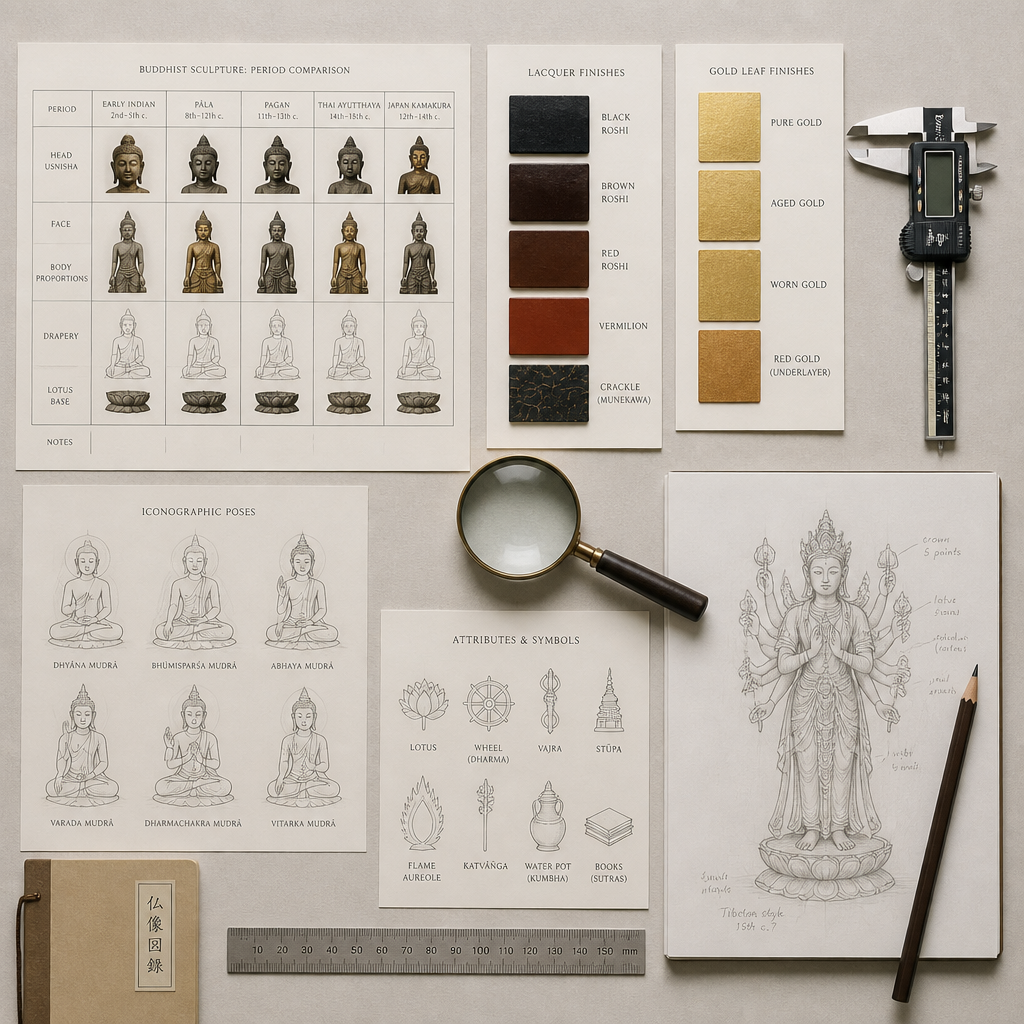
A common mistake among first-time collectors of Japanese Buddhist sculpture is focusing entirely on aesthetic quality while ignoring iconographic identity. The gesture of the hands, the objects held, the number of arms, the crown or its absence, and the lotus position of the feet all carry precise doctrinal content that determines what deity or Buddha is depicted and what function the object serves in a ritual context.
The Core Buddhas and Their Distinguishing Features
Amida Nyorai (Amitabha) is the most commonly collected Japanese Buddha figure. He is almost always depicted seated in meditation with hands in the dhyana mudra (both hands resting in the lap, palms up) or in the raigo mudra (hands raised, fingers forming circles), signaling his role in welcoming the dying to the Pure Land. The elongated earlobes, usnisha cranial bump, and serene expression are consistent across all periods.
Shaka Nyorai (Shakyamuni, the historical Buddha) is identified by the bhumisparsha mudra, the right hand reaching down to touch the earth at the moment of enlightenment. Yakushi Nyorai (Medicine Buddha) almost always holds a medicine jar in the left hand. Maitreya (Miroku in Japanese), the future Buddha, is frequently depicted in a contemplative pose with one leg crossed over the other and one hand raised to the cheek, a form particularly associated with Korean and early Japanese sculpture.
Bodhisattvas, Guardians, and Fierce Deities
Kannon (Avalokiteshvara) is the most iconographically complex figure in Japanese Buddhist sculpture. The eleven-faced, thousand-armed form, the horse-headed form, and the standing willow-branch form all represent different aspects of the same bodhisattva. Fudo Myo-o, the most important of the five Wisdom Kings, stands in flames holding a sword and rope, with a fierce expression specifically designed to frighten away obstacles to enlightenment. These guardian figures became particularly important under Shingon and Tendai esoteric practice.
Pro tip: Before purchasing any Japanese Buddhist figure described simply as a Buddha statue, identify the specific deity. Amida, Shaka, and Yakushi figures have very different ritual roles and appeal to different collecting motivations. HD Asian Art's Japanese collection is organized by deity type precisely because iconographic specificity matters to serious collectors and practitioners alike.
Materials and Techniques Across the Centuries
The material history of Japanese Buddhist sculpture is also a history of resource availability, trade networks, and religious doctrine. Bronze required imported copper and tin, making large-scale bronze sculpture a statement of state power during the Nara period. Wood, specifically hinoki cypress and zelkova, was abundant throughout Japan and became the default medium for temple and private devotional sculpture from the Heian period onward.
Lacquer, Gold, and Pigment Application
Surface treatment in Japanese Buddhist sculpture is as technically demanding as the underlying carving. Kirikane, the application of precisely cut gold leaf in geometric patterns to simulate textile weave on robes, reached its highest development in the late Heian period. A single robed figure might carry hundreds of hours of kirikane work, all of it applied with a brush and thin paste. This technique is directly related to the lacquer arts tradition, and collectors familiar with traditional Burmese lacquerware will recognize the shared vocabulary of meticulous surface articulation.
Gold leaf application over white gesso ground was the standard finish for most Japanese Buddhist sculpture intended for temple use. The gesso layer itself, made from shells and animal glue, requires specific humidity conditions to survive intact, which is why storage and display environment matters so much for Japanese Buddhist statues in private collections.
Modern Reproduction and Studio Craft
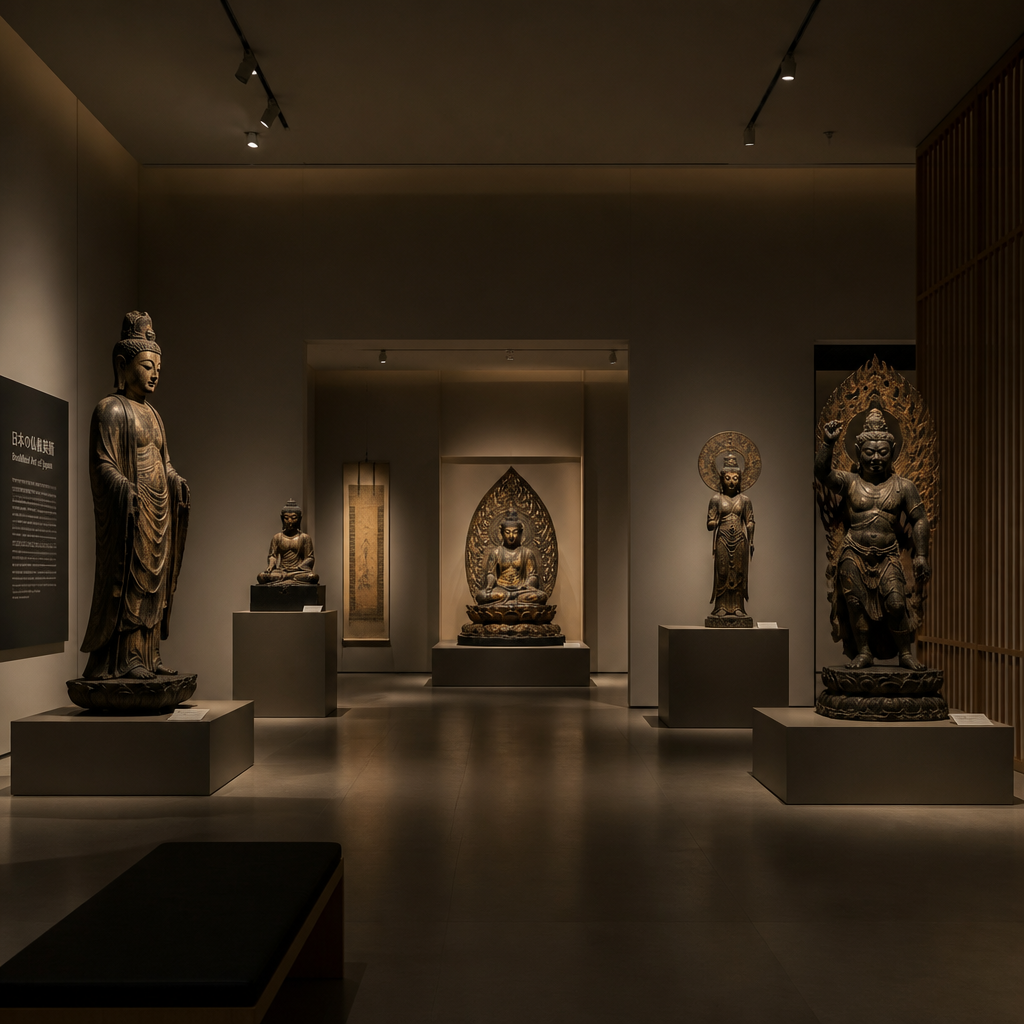
Contemporary Japanese sculptors trained in traditional busshi techniques continue to produce devotional figures using identical materials and methods to those of the Kamakura period. These are not forgeries. They are the living continuation of a craft lineage, and they serve the same ritual purposes as historical pieces. The distinction between a museum-quality modern reproduction made by a named Japanese studio craftsperson and an anonymous mass-produced figure is enormous, both in terms of artistic value and in terms of the experience it delivers to a home altar or collection.
Comparison of Major Period Styles
Understanding how the major historical periods differ in practice helps collectors make faster and more confident attribution judgments. The table below compares the three most important periods for collectors working with Japanese Buddhist sculpture.
|
Feature |
Nara Period (710 to 794 CE) |
Heian Period (794 to 1185 CE) |
Kamakura Period (1185 to 1333 CE) |
|---|---|---|---|
|
Primary material |
Bronze, dry lacquer over clay core |
Single-block hinoki cypress (ichiboku), later joinery (yosegi) |
Yosegi joinery, crystal eyes inlaid from inside |
|
Stylistic character |
Full-bodied, serene, Tang Chinese influence |
Brooding, heavy, esoteric complexity |
Hyper-realistic, dynamic, expressive individuality |
|
Dominant iconography |
Vairocana, Shakyamuni, simple triads |
Amida, Fudo Myo-o, multi-armed Kannon, Yakushi |
Amida, Kannon, fierce Myo-o, portrait statues of monks |
|
Collector market availability |
Essentially zero. All originals are national treasures. |
Rare. Museum and major auction house territory. |
More accessible. Workshop pieces appear at specialist dealers. |
|
Surface treatment |
Gilded bronze, painted lacquer |
Kirikane gold leaf, painted pigments on gesso |
Gold leaf, painted details, fabric-like surface articulation |
Collecting Japanese Buddhist Sculpture Today
The collector market for Japanese Buddhist sculpture has never been more globally accessible, and it has never required more careful navigation. The combination of international shipping, online specialist retailers, and digitized museum collections means a collector in London or Los Angeles can now access the same quality of comparative material that previously required visits to Kyoto and Nara. What remains irreplaceable is developed visual judgment, built by sustained exposure to documented authentic pieces.
Building a Coherent Collection
The most satisfying collections of Japanese Buddhist sculpture are built around a clear organizing principle rather than assembled opportunistically. Some collectors focus on a single deity across multiple periods, tracking how the iconography of Kannon or Amida evolved. Others focus on a single period and collect deeply within it. A third approach, particularly relevant to collectors working with a retailer like HD Asian Art, is to collect across Buddhist Asia with Japan as the anchor, using Thai, Cambodian, and Indian Buddha figures to illuminate the pan-Asian transmission of Buddhist iconography that made Japanese sculpture possible.
This comparative approach is intellectually rewarding and practically accessible. A Cambodian Avalokiteshvara from the Angkor period and a Japanese Kannon from the Heian period share doctrinal identity across completely different visual vocabularies. Owning both deepens the understanding of each.
Home Altar Use versus Display Collection
Collectors who are also spiritual practitioners approach acquisition differently than pure aesthetics-driven collectors. For home altar use, iconographic correctness and the quality of the figure's spiritual presence, often described in Japanese as mie or divine appearance, matter more than period authenticity or rarity. A museum-quality modern reproduction of Amida by a trained Japanese sculptor serves a home altar better than a damaged historic piece with missing hands or obscured surface detail.
HD Asian Art's collection explicitly serves both audiences. The key is knowing which category you are in before you begin shopping, because the evaluation criteria differ completely.
Authenticity, Quality, and What to Look For
Authenticity in Japanese Buddhist sculpture is not a single binary question. It branches into at least three separate questions: Is this piece what the seller says it is in terms of period and origin? Is it of genuine quality within its claimed category? And does it have documented provenance that satisfies both ethical and legal standards?
In practice, the second question is the one most commonly neglected by new collectors. A piece can be genuinely old and genuinely Japanese and still be a mediocre workshop product with no artistic merit. The Kamakura period produced both masterpieces and utilitarian temple furnishings. The same century, the same material, the same iconography, but completely different artistic investment. Learning to distinguish between them requires looking at the quality of the underlying carving, the precision of surface articulation, and the internal proportional logic of the figure.
Red Flags and Due Diligence
A common mistake is trusting artificial aging signs over structural evidence. Worn gold leaf, darkened wood, and general surface deterioration can all be induced artificially in months. What cannot easily be faked is the internal logic of the carving: the way the robe folds relate to the body beneath them, the precision of the facial planes, and the coherence of the figure's pose from all angles. Authentic period pieces were carved by craftspeople who understood anatomy and drapery from sustained practice. Fakes almost always fail when examined from the side or back.
Pro tip: Request detailed photographs from multiple angles, including the back and base, before purchasing any significant Japanese Buddhist statue. The treatment of the back of the figure, including any cavity for sacred objects and the joinery if it is a yosegi piece, tells you more about period and quality than the front view alone.
Frequently Asked Questions
What makes Nara period art different from all later Japanese Buddhist sculpture?
Nara period art is the direct translation of Tang dynasty Chinese Buddhist models into a Japanese context, using primarily bronze and dry lacquer techniques. It has a full-bodied, classically serene character that later periods either refined or deliberately rejected. Every subsequent period of Japanese Buddhist sculpture can be understood as a response to the Nara template, making it the essential reference point for the entire tradition.
How can I tell which deity a Japanese Buddhist statue represents?
Start with the hand gestures, called mudras. The dhyana mudra (both hands resting in the lap) indicates Amida or a meditating Shakyamuni. The bhumisparsha mudra (right hand touching the earth) indicates Shakyamuni at the moment of enlightenment. Holding a medicine jar identifies Yakushi. Multiple arms almost always indicate a bodhisattva rather than a Buddha, with Kannon being the most common multi-armed form in Japanese sculpture. Flame background and fierce expression indicate a Myo-o guardian deity.
Is it legal and ethical to collect Japanese Buddhist sculpture?
Collecting pieces with documented provenance that predates major cultural property legislation, specifically the 1970 UNESCO Convention on the Means of Prohibiting and Preventing the Illicit Import, Export and Transfer of Ownership of Cultural Property, is both legal and widely practiced. Reputable specialist dealers, including those who source museum-quality Buddhist sculpture professionally, document provenance as standard practice. Pieces without provenance documentation should be approached with significant caution, not only for ethical reasons but because their legal status in multiple jurisdictions is genuinely uncertain.
What is the difference between a Japanese Buddha statue and one from Thailand or Cambodia?
The iconographic core is shared across all Theravada and Mahayana Buddhist traditions, but the visual vocabulary differs dramatically by region and period. Japanese Buddha statues tend toward robed, formal presentations with complex surface treatments including gold leaf and pigment. Thai Buddha statues frequently feature flame-shaped usnishas and flame ornaments on the crown. Cambodian figures from the Angkor period have a distinctive sandstone sensibility and jeweled headdresses for bodhisattva figures. Each tradition rewards specialist study and collecting on its own terms.
What should a beginner collector prioritize when starting a Japanese Buddhist sculpture collection?
Begin with iconographic literacy before aesthetic preference. Spend serious time with museum collections, both in person and through digitized archives from institutions like the Tokyo National Museum and the Metropolitan Museum of Art. Then identify a specific period or deity type that genuinely interests you rather than buying broadly. A focused collection of five carefully chosen Amida figures across three centuries will teach you more and retain more value than fifteen pieces spanning every period, deity, and quality level without a coherent organizing principle.
Why do Japanese Buddhist sculptures sometimes have objects placed inside them?
The practice of inserting sacred objects, including sutras, smaller sculptures, rice, coins, and documents, into hollow wooden Buddha figures reflects the belief that these contents animate the figure with spiritual power. This practice developed primarily during the late Heian and Kamakura periods, when the yosegi joinery technique made hollow figures structurally feasible. Finding intact original contents inside a figure is both a significant scholarly discovery and a measure of authenticity, since the contents and their condition confirm that the cavity has not been opened or interfered with.
What is your experience with Japanese Buddhist sculpture, whether as a collector, practitioner, or someone who simply finds these objects compelling? Share your thoughts and questions in the comments.
References
-
The Metropolitan Museum of Art, research and collection resources for Buddhist art across Asia
-
UNESCO, international cultural property conventions and guidelines relevant to collecting Asian art
-
Smithsonian Magazine, editorial coverage of Asian art history and Buddhist artistic traditions
-
JSTOR, peer-reviewed academic journals covering Japanese art history and Buddhist iconography
