



Best Materials for Bedroom Buddha Statues: 2026 Guide
Best Materials for Bedroom Buddha Statues: 2026 Guide
Quick Summary
The best materials for bedroom buddha statues are wood, bronze, and brass, with sealed stone and quality resin close behind. Choose wood for warm, light pieces in stable dry rooms, and bronze or brass where heated air or humidity swings would stress other materials.
- Bronze is the material least bothered by dry heated air, suiting bedrooms with forced-air heat.
- Keep statues elevated at chest height or above, out of direct sun and damp air.
- Anchor wall shelves into studs, not drywall alone, before placing heavy pieces.
- Dust weekly with a dry cloth matched to the material, and lift statues only when needed.
- Avoid unsealed wood and porous stone in humid or poorly ventilated rooms.
Table of Contents
- Why Bedroom Conditions Change the Material Decision
- Buddha Statue Placement in Bedroom: Light, Air and Respect
- The Main Statue Materials Compared: Wood, Bronze, Brass, Stone, Resin and Ceramic
- Wooden Buddha Statue for Bedroom: Warmth, Weight and Humidity
- How to Choose a Buddha Statue for Home: Size, Pose and Finish
- Finishes, Coatings and Material Authenticity
- Weight, Stability and Safe Placement on Shelves and Risers
- Practical Care by Material
- Frequently Asked Questions
Why Bedroom Conditions Change the Material Decision
The best materials for bedroom buddha statues are wood, bronze, and brass, with sealed stone and quality resin close behind, and bedroom buddha statues reward a material chosen for the room rather than the gallery.
A bedroom is not a gallery. Doors open and close, radiators and vents push dry air around, and morning sun hits one corner hard. A porous material near a window wicks moisture differently than a dense metal on a shaded shelf. That single fact reshapes which statue you should buy.
Most buying guides rank materials by looks alone. That is the mistake we want you to avoid. Below, we break down how each material behaves in real bedroom conditions, how to size and place a piece safely, and how to care for it without damaging the finish.
Buddha Statue Placement in Bedroom: Light, Air and Respect
Buddha statue placement in bedroom settings should follow three rules: keep the statue elevated, keep it out of direct sun and damp air, and keep the space around it clear. A calm, uncluttered corner reads as respectful and protects the finish at the same time.
Position matters as much as material. A shelf at chest height or above, facing the room rather than a wall, works well in most bedrooms. Avoid the floor, the foot of the bed, and any spot where laundry or clutter piles up.
Airflow is the quiet factor. A statue near a vent or a drafty window frame will dry out faster on one side. For broader guidance on displaying sacred pieces at home, our article on how to display Buddhist statues in your home walks through room-by-room options.
The Main Statue Materials Compared: Wood, Bronze, Brass, Stone, Resin and Ceramic
Six materials dominate the market, and each behaves differently in a bedroom. Wood and bronze are the most practical picks for indoor sleeping spaces, brass offers a bright polished surface, stone brings weight and stability, and resin and ceramic serve budget and small-space needs. What most guides skip is how each one actually performs against the four things a bedroom throws at a statue: humidity swings, dust, the risk of being knocked, and the visual warmth the room needs.
According to HD Asian Art's 2026 guide to Asian sculptures for a bedroom sanctuary, bronze develops a natural patina over time and wood adds organic warmth, which makes both well suited to bedroom display. That matches what we see across our own collection of handpicked antique and contemporary pieces.
Pros and Cons at a Glance
| Material | Bedroom Pros | Bedroom Cons | Best For |
|---|---|---|---|
| Wood | Warm tone, lighter weight, ages gracefully | Sensitive to humidity swings and dry heat | Calm, natural decor |
| Bronze | Durable, stable, develops patina | Heavier, needs a solid shelf | Long-term focal pieces |
| Brass | Bright polished surface, easy to dust | Tarnishes without occasional polishing | Small altars, warm light |
| Stone | Very stable, holds position, cool presence | Heavy, porous grades absorb moisture | Low, wide surfaces |
| Resin | Light, affordable, detailed casting | Can look flat up close | First statues, tight budgets |
| Ceramic | Smooth glaze, refined look | Chips if knocked, fragile on high shelves | Shelves away from traffic |
How Each Material Performs in a Bedroom
Wood. The lightest of the traditional materials and the warmest to look at.
Bronze. Dense, stable, and slow to react to humidity.
Brass. Similar stability to bronze but with a brighter, more reflective surface. Brass shows dust and fingerprints more than bronze, so it asks for a light dusting more often.
Stone. The most stable on a shelf and the heaviest. Dense polished stone is fine in most bedrooms; porous, unsealed grades will absorb moisture from the air and from any spill nearby.
Resin. Light, affordable, and capable of fine detail. The trade-off is that resin can look flat up close and does not age the way wood or metal does.
Ceramic. A glazed ceramic piece has a refined, smooth look and is easy to dust.
Material Selection by Bedroom Conditions
Match the material to the room, not the other way around:
- Dry, heated room: bronze or brass, since metal does not crack when air dries out.
- Humid or poorly ventilated room: sealed stone or bronze; avoid unsealed wood and porous stone.
- Bright window corner: resin, ceramic, or patinated bronze; keep bare wood out of direct sun.
- Small apartment corner: resin, brass, or a compact wood piece that fits a narrow shelf.
- Weight-limited shelf or riser: wood or resin over stone.
- Household with pets or young children: bronze or a heavy stone piece on a low, anchored surface; avoid ceramic and tall, narrow resin figures that tip easily.
- Near a bathroom door: bronze or brass over wood and porous stone.
If you are still weighing the trade-offs, our guide on where to buy authentic high-end Buddhist statues explains what to check before committing to a material.
Wooden Buddha Statue for Bedroom: Warmth, Weight and Humidity
A wooden Buddha statue for bedroom display brings warmth and a softer presence than metal, and it is usually light enough to lift onto a shelf without help. The trade-off is humidity: wood expands and contracts with moisture changes, so a stable room matters more than the species.
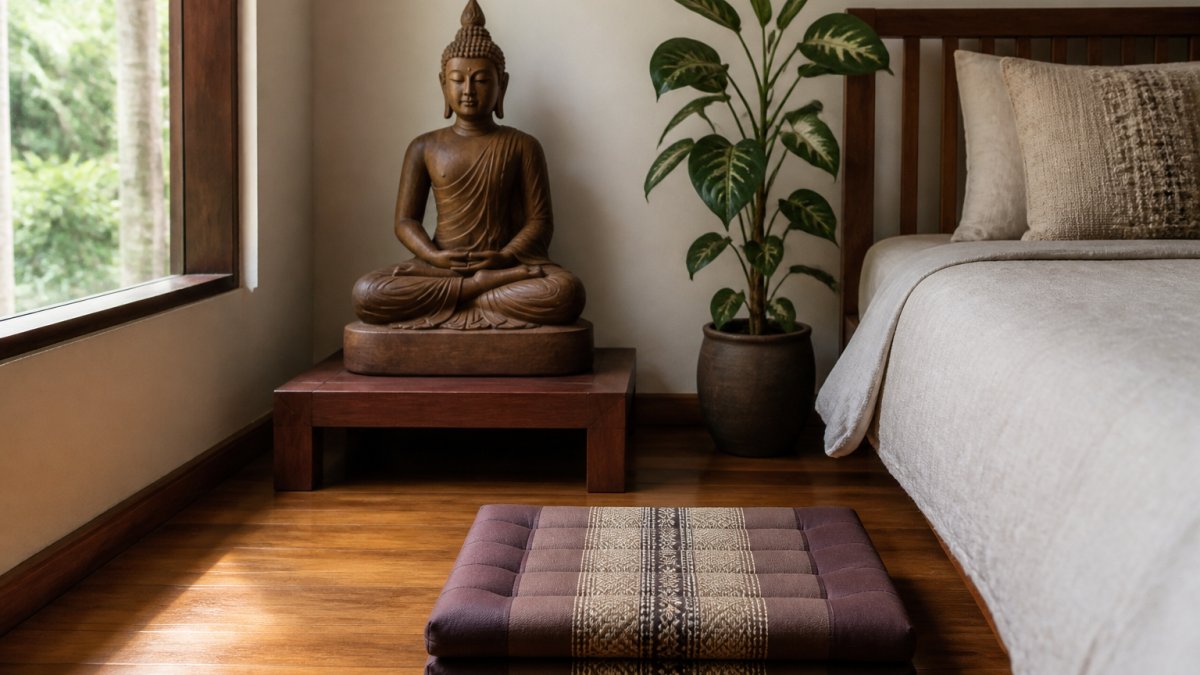
A common mistake is placing wood directly against an exterior wall, where condensation collects behind the piece. Leave a small gap for air to move. Keep wooden pieces away from humidifiers and radiators alike; both push moisture or dryness into the grain.
How to Choose a Buddha Statue for Home: Size, Pose and Finish
Choosing a Buddha statue for home use comes down to three decisions: size relative to the surface, pose relative to the room's purpose, and finish relative to the light. Get those right and the piece settles into the space instead of fighting it.
Size first. Measure the shelf or riser, then leave a margin on every side so the statue does not look cramped. A piece that fills the surface edge to edge reads as clutter, not calm. Pose second: a seated meditation pose suits a bedroom better than a standing or reclining figure, because it reads as stillness. Finish last.
For a deeper walkthrough of size, pose, and finish selection, see our guide on how to choose a Buddha statue for your home altar.
Finishes, Coatings and Material Authenticity
Finish quality separates a piece that ages well from one that looks tired within a year. A good finish follows the material: oiled or waxed wood, natural patina on bronze, and sealed stone that still feels like stone rather than plastic.
Watch for coatings that hide the material instead of protecting it. Thick lacquer on wood can trap moisture, and a painted finish over cast resin often signals mass production rather than handwork. Ask what the surface is and how to maintain it.
Weight is a useful honesty check. Solid bronze and stone feel dense for their size; a hollow-feeling piece at a heavy price deserves questions. For help telling handcrafted work from mass-produced casts, read our article on how to spot a mass-produced statue.
Weight, Stability and Safe Placement on Shelves and Risers
Stability is the most overlooked part of bedroom display. A statue that shifts when the door slams is a hazard, and a heavy piece on a weak shelf is worse. Match weight to support before anything else.
- Anchor wall shelves into studs, not drywall alone (How To Hang Shelves On Plaster Walls).
- Use a timber riser or a felt pad to spread weight and stop sliding.
- Keep heavy stone and bronze low and centered, never on a narrow floating shelf.
- Leave clearance above the piece so it can be lifted off safely.
- Keep statues off surfaces that get bumped daily, like nightstands beside the bed.
Practical Care by Material
Care routines should be short and material-specific. Overcleaning does more damage than dust.
Wood. Dust with a dry, soft cloth, a microfiber cloth or a clean cotton rag works well.
Bronze. A dry cloth is usually enough.
Brass. Brass tarnishes faster than bronze and shows fingerprints. A dry dusting every week keeps it presentable.
Stone. Dry dusting is the default. Blot any spill immediately rather than wiping, so moisture does not spread into porous areas.
Resin. A dry cloth only. Resin reacts badly to solvents, alcohol, and direct heat, so keep it away from lamps, radiators, and windowsills that get hot.
Ceramic. Dust gently with a soft cloth or brush. Keep ceramic away from shelf edges and high-traffic spots where a knock is likely.
A simple routine: dust weekly with a dry cloth matched to the material, do a deeper material-specific clean once or twice a year, and leave everything else alone. For detailed guidance on caring for and preserving Buddhist art, see our dedicated article. The most common care mistake in a bedroom is over-handling, moving a piece to dust under it every week invites knocks and drops. Lift a statue only when you need to, and put it back in the same spot.
Frequently Asked Questions
Which material is best for a bedroom Buddha statue?
Wood and bronze are the two most practical choices for a bedroom. Wood brings organic warmth and stays light enough for a shelf or riser, while bronze develops a natural patina over time and tolerates humidity changes better than porous materials. Resin suits small apartments and tight budgets, and ceramic works if the piece sits away from drafts. Stone is better saved for a garden or entryway because of its weight and cool surface.
Can a Buddha statue be placed in a bedroom?
Yes, and it is common among practitioners who keep a meditation corner at home. Treat the statue with respect: set it on an elevated shelf or riser rather than the floor, keep it facing the room rather than the foot of the bed, and avoid placing it where clothing or clutter piles up. A quiet corner with steady light and low foot traffic supports both the practice and the material's long-term condition.
Are wooden or metal Buddha statues better for a bedroom?
It depends on your room. A wooden Buddha statue for bedroom use is lighter, warmer to the eye, and easier to move when you rearrange furniture, but it reacts to swings in humidity and should stay away from radiators and open windows. Bronze and brass handle moisture and temperature shifts with less fuss and hold fine detail well, though they cost more and need a stable, weight-bearing surface.
What should you consider before placing a Buddha statue in a bedroom?
Check four things first: the surface's weight capacity, the distance from heating and air-conditioning vents, the light exposure through the day, and the height of the placement. A statue should sit at or above chest height on a stable base, ideally on a timber riser or sealed pavers if the piece is heavy. Keep the spot free of clutter and confirm the pose and size suit the scale of the room.
A bedroom altar only works when the material, size, and placement all suit the room it sits in. HD Asian Art curates Buddhist and Hindu statues, including handpicked antique and contemporary Khmer and Southeast Asian pieces, with free shipping and a focus on temple-inspired decor for meditation spaces and refined home interiors. Browse the collection to find a piece that fits your room's conditions and your practice.

