


Why Buddhists Do Not Seek to Convert Others: A Philosophy of Respectful Liberation
Why Buddhists Do Not Seek to Convert Others: A Philosophy of Respectful Liberation
Unlike many major world religions, Buddhism does not actively seek converts. This distinctive approach arises not from passivity or indifference, but from a deep-rooted respect for individual experience, free will, and spiritual readiness.
Grounded in compassion, introspection, and the pursuit of wisdom, Buddhism emphasizes that the path to liberation must be walked willingly—not preached, imposed, or sold.
In an age of global spiritual exploration and religious dialogue, Buddhism’s non-proselytizing nature offers a powerful reminder: that true transformation arises from within, not from persuasion.
The Buddha’s Own Teaching Style: An Invitation, Not a Command
The foundation of this ethos lies in the Buddha's own life. After attaining enlightenment under the Bodhi tree, the Buddha did not compel others to follow him. Instead, he taught those who came to him with sincere curiosity and readiness.
He spoke of the Dhamma (Dharma) as something to be investigated, not blindly believed:
“Come and see” (Ehipassiko), he urged—offering an open invitation rather than a requirement.
This concept of self-discovery over dogma remains at the heart of Buddhist spiritual transmission.
Key Reasons Why Buddhists Do Not Seek Converts
1. Freedom of Thought Is Sacred
Buddhism holds personal autonomy and discernment (Pali: vibhajjavāda) as vital. Unlike proselytizing traditions, Buddhists trust that individuals must come to truth through their own insight, not by external pressure.
-
Teachings are offered, not imposed.
-
The practitioner chooses whether, how, and when to engage.
This leads to a deeply respectful attitude toward other faiths, encouraging dialogue over debate.
2. No Central Authority to Mandate Conversion
Most Buddhist traditions are decentralized, without a singular religious authority or missionary agenda. While monastic communities and teachers may share teachings, there is no institutional drive to increase numbers or assert dominance.
Instead, monastics live by example and offer the Dhamma only when requested, in accordance with the Vinaya (monastic code).
3. Spiritual Ripeness Over Numbers
In Buddhism, a person must be karmically ready to walk the path. Awakening is seen as a gradual, personal realization.
-
One cannot be forced into enlightenment.
-
Seeking converts might interfere with their natural karmic journey.
As such, Buddhism does not measure success in numbers, but in individual awakening.
4. The Middle Way: Avoiding Extremes of Evangelism
Buddhism teaches the Middle Way—a path of balance. Aggressive proselytizing is viewed as an extreme that creates ego, conflict, and attachment to being "right".
By contrast, Buddhism encourages non-harming (ahimsa) and right speech, which includes refraining from divisive talk or religious coercion.
Historical Context: How Buddhism Spread Without Conversion
Interestingly, Buddhism has spread widely—from India to Sri Lanka, China, Japan, Southeast Asia, and the West—often without conquest, colonization, or forced conversion.
-
King Ashoka (3rd century BCE), who played a major role in spreading Buddhism, sent out peaceful emissaries, not armies.
-
In Southeast Asia, Buddhism integrated with local traditions rather than erasing them.
-
Even in modern times, many Westerners adopt Buddhism not through conversion, but through study, meditation, and lived experience.
This organic spread speaks to the magnetic quality of the Dhamma, which appeals to those seeking inner clarity and compassion.
Respect for Other Paths
Buddhist teachings are non-exclusive. One can learn from Buddhism without abandoning one's own religion. Some people incorporate Buddhist meditation or ethics into their spiritual lives without ever “converting.”
This openness arises from Buddhism’s recognition of multiple paths to wisdom and a refusal to judge others’ spiritual journeys. The Dalai Lama has famously said:
“Do not try to use what you learn from Buddhism to be a Buddhist; use it to be a better whatever-you-already-are.”
This statement encapsulates Buddhism’s ethos: it enhances rather than replaces.
Modern Context: Sharing vs. Selling the Dhamma
In today’s world of global spirituality, there are Buddhist teachers, centers, and websites that share the teachings—but always with the same spirit:
-
No pressure.
-
No exclusivity.
-
No marketing tactics.
Some traditions, like Tibetan Buddhism or Zen, have become popular globally through art, literature, and mindfulness—but these are shared as invitations to practice, not doctrines to adopt.
The rise of interest in meditation and mindfulness is an example of Buddhism’s silent transmission. People come to it when they are ready, drawn by the inner peace it promises, not external persuasion.
Symbolism in Buddhist Art: Quiet Invitations to Wisdom
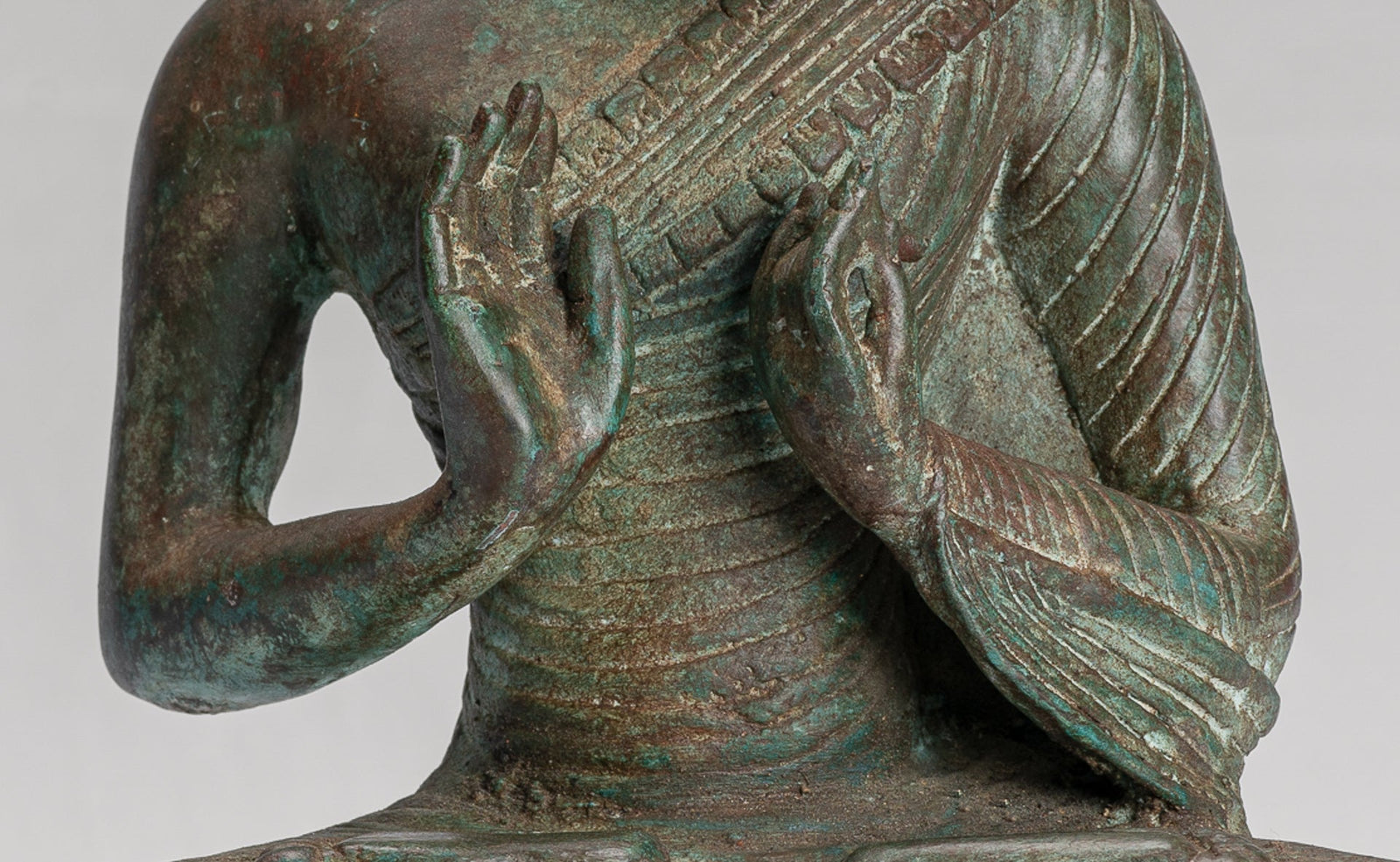
Buddhist sculpture—such as the Dhyana Buddha, the Protection Buddha, or the Enlightenment Buddha—carries this same spirit.
-
These figures don’t demand belief.
-
They invite contemplation, gently guiding the viewer toward stillness and insight.
Owning or meditating with a Buddha statue is not about conversion. It is about personal connection to inner peace, mindfulness, and compassion.
Conclusion: A Tradition of Peaceful Sharing
Buddhism does not seek to convert because it trusts the wisdom of each soul to find its own way. With compassion at its core, it offers teachings, practices, and symbols to those who seek them—never as a demand, but as a gift freely given.
In a world often divided by ideological battles, Buddhism’s quiet, steady presence is a reminder that true change begins within—and that peace, like water, flows best where it is not forced.
✨ Discover Buddhist Symbols of Peace & Insight
Explore HDAsianArt.com’s curated collection of Buddha statues, mudras, and spiritual sculptures. Whether you practice Buddhism or simply admire its serene aesthetics, each piece invites stillness, awareness, and timeless beauty into your home.
