



What Does a Water Feature Buddha Garden Mean?
What Does a Water Feature Buddha Garden Mean?
A Buddha water feature in a garden is defined as a deliberate combination of Buddha statuary and flowing or still water, designed to express Buddhist spiritual values through physical form. The practice draws directly from Buddhist temple garden traditions, where living elements like water and plants serve as material expressions of spiritual teachings rather than mere decoration.
Understanding what does water feature buddha garden mean requires knowing three core concepts: water as a symbol of impermanence, Buddha imagery as a focal point for mindfulness, and intentional placement as a tool for mental clarity. Together, these elements create a garden space that functions as a sanctuary for reflection.
What does a water feature Buddha garden mean spiritually?
Water in Buddhist philosophy carries a specific and layered meaning. Buddhist water symbolism emphasizes flow, impermanence, purification, and release, mirroring continuous transformation and encouraging mindful letting go. The sound and movement of water in a garden setting make these abstract teachings tangible and immediate.
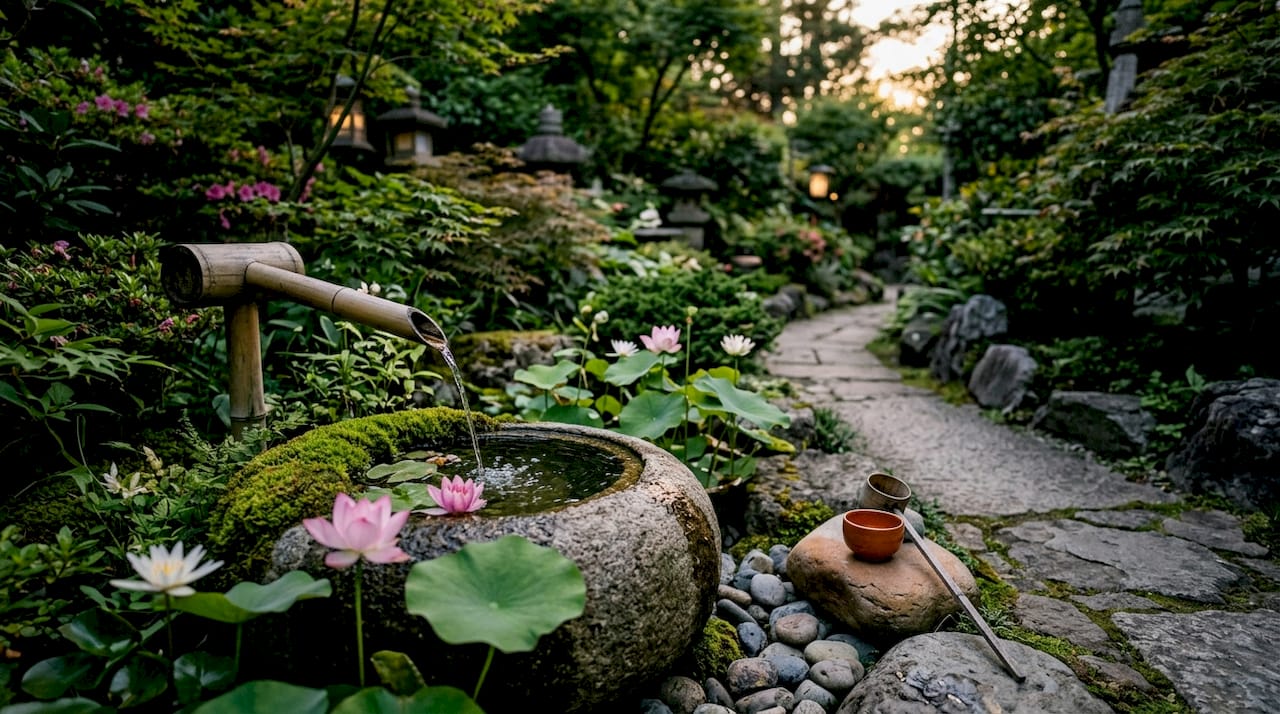
Buddha imagery adds a second layer of meaning. A seated or meditating Buddha statue placed near water signals a specific intention: the space is for stillness, contemplation, and awareness. The symbolism of Buddha statues varies by posture and hand gesture, so the statue you choose communicates a distinct spiritual quality. A meditating posture paired with flowing water reinforces the teaching that peace arises from observing change, not resisting it.
The lotus flower is the third essential element in Buddha garden water meaning. The lotus (Nelumbo nucifera) is the central symbolic plant in Buddhist temple garden design across Southeast Asia, representing spiritual potential. Its significance comes from biology: the lotus rises from muddy water and blooms clean, making it a direct visual metaphor for enlightenment.
“Water in Buddhism teaches clarity through natural settling rather than forced stillness. A Buddha water feature in a garden holds that teaching in physical form, visible every time you walk past it.”
These three elements work together to communicate a unified message:
- Water represents impermanence and the natural flow of life
- Buddha imagery provides a focal point for mindful attention
- The lotus motif symbolizes spiritual rebirth and purity rising from ordinary conditions
How does placement shape the significance of a Buddha garden?
Placement is not incidental in Buddhist garden design. It is the mechanism through which symbolic intent becomes spatial experience. Two major frameworks guide this: Vastu Shastra and Zen garden principles.
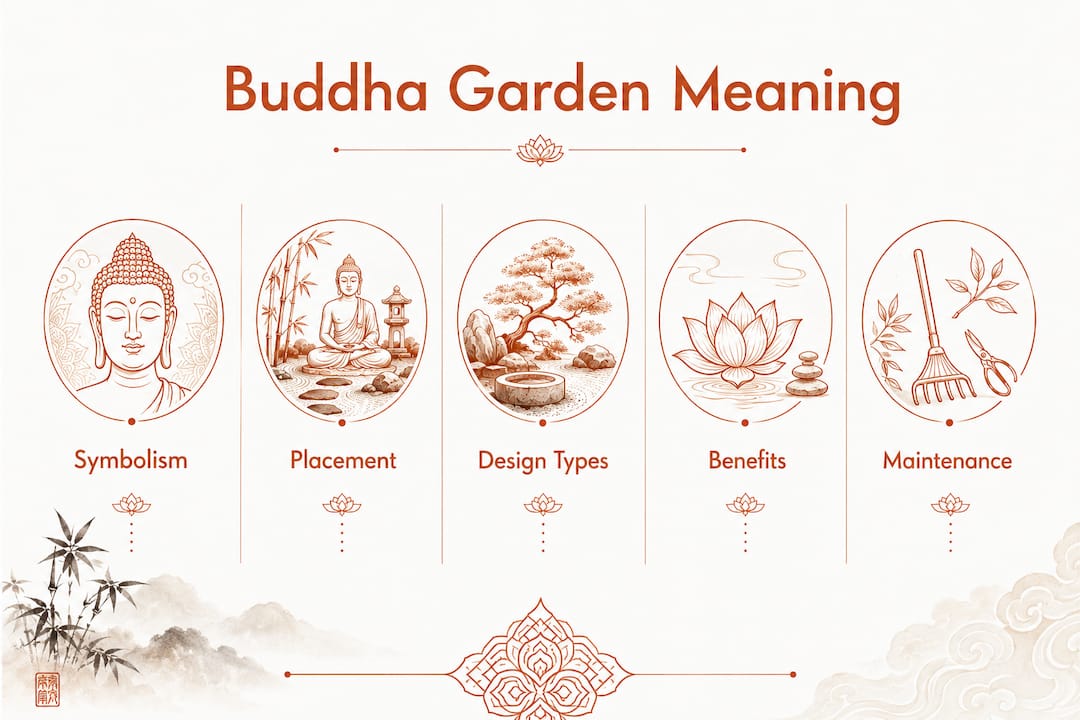
Vastu Shastra advises placing Buddha water fountains in the northeast corner of a property to maximize spiritual well-being and mental clarity. The northeast direction in Vastu is associated with water, wisdom, and divine energy. Placing a fountain there aligns the garden’s physical structure with the intended spiritual function.
Zen garden principles operate differently. The Japanese kare-sansui tradition uses raked gravel to mimic water flow and evoke the flow of consciousness, providing psychological benefits similar to real water. This approach shows that the significance of a Buddha garden does not require literal water. Abstract representation, when placed with intention, carries the same contemplative weight.
- Northeast placement (Vastu Shastra): Position water features in the northeast corner to align with energy flow and maximize mental clarity.
- Eye-level sightlines: Place the Buddha statue so it is visible from a regular sitting or standing position, making mindful engagement natural rather than effortful.
- Pathway proximity: Locate the feature near a path you use daily. Repeated, casual exposure builds a consistent mindfulness habit without requiring formal practice.
- Scale matching: A small courtyard calls for a tabletop fountain and a modest statue. A large garden can support a pond-based installation. Mismatched scale disrupts the sense of calm.
- Sound consideration: Position the feature where water sound is audible but not dominant. The goal is ambient awareness, not distraction.
Pro Tip: Read about Buddha statue placement before you finalize your garden layout. The direction a statue faces changes its symbolic meaning and affects the overall energy of the space.
What are the practical benefits and maintenance considerations?
A Buddha water feature delivers measurable benefits when it is easy to maintain. Horticulture research from Kansas State University confirms that water in a natural space reduces noise pollution and invites sensory engagement, supporting mental well-being. The same research notes that maintenance simplicity is the key factor in sustaining those benefits over time.
A feature that requires constant cleaning, pump repairs, or chemical treatment stops being a source of calm and becomes a source of stress. Self-contained Buddha fountains, which recirculate water through a sealed reservoir, solve this problem directly. They require minimal plumbing, fit any garden size, and are easy to clean seasonally.
Water features near frequented pathways and water sources are more effective in providing mental well-being benefits and are easier to maintain. This is a practical argument for integrating the feature into the part of the garden you already use, rather than creating a separate destination that requires deliberate effort to visit.
Key maintenance principles for sustaining the therapeutic effect:
- Use a self-contained pump system to avoid complex plumbing and reduce cleaning time
- Clean the basin monthly to prevent algae buildup, which disrupts both aesthetics and water clarity
- Choose weather-resistant materials such as cast stone, bronze, or resin for outdoor statues to reduce deterioration
- Cover or store the feature in winter if you live in a freeze zone, protecting both the pump and the statue
- Keep the water level consistent so the pump runs quietly and efficiently
Pro Tip: The meditative power of Buddha statues depends partly on their physical condition. A weathered, mossy statue can add character, but a cracked or damaged one disrupts the sense of care and intention the space is meant to convey.
How do different design types create varied spiritual experiences?
The design of a Buddha water feature shapes the specific quality of experience it produces. A tiered fountain creates continuous sound and movement, which suits gardens designed for active relaxation. A still lotus basin creates silence and reflection, which suits spaces intended for seated meditation. Each type communicates a different aspect of Buddhist teaching.
Lotus fountains frequently incorporate tiered water flow with lotus flower motifs, symbolizing purification, fertility, and cosmic harmony. They also serve a practical function: the moving water cools the surrounding area and creates a meditative atmosphere through sound. This dual function, symbolic and sensory, is what makes lotus-themed designs the most common choice in formal Buddha water gardens.
Lighting and material choices extend the feature’s effect beyond daylight hours. Warm LED uplighting on a bronze or stone Buddha statue creates a focal point at night that reads as sacred rather than decorative. Natural stone materials age in ways that reinforce the Buddhist theme of impermanence. Bronze develops a patina; stone weathers to gray. These changes are features, not flaws.
| Design type | Primary symbolism | Best setting |
|---|---|---|
| Tiered flowing fountain | Purification, continuous renewal | Active garden, patio, or courtyard |
| Still lotus basin | Enlightenment, stillness, reflection | Meditation garden, enclosed space |
| Dry kare-sansui with gravel | Flow of consciousness, abstraction | Minimalist or Zen-style garden |
| Wall-mounted water panel | Clarity, focused attention | Small urban garden or balcony |
| Pond with Buddha focal point | Abundance, cosmic harmony | Large garden or estate setting |
The lotus flower’s significance in Buddhist art makes it the most symbolically loaded design choice for any water feature. Incorporating it, whether as a carved basin, a floating motif, or a planted specimen, anchors the garden firmly in Buddhist iconographic tradition.
Key Takeaways
A Buddha water feature in a garden combines Buddhist symbolism, intentional placement, and sensory design to create a space that supports mindfulness and mental clarity.
| Point | Details |
|---|---|
| Core symbolic meaning | Water represents impermanence and purification; Buddha imagery anchors mindful attention. |
| Lotus motif significance | The lotus symbolizes spiritual rebirth, making it the most meaningful design element in Buddha water gardens. |
| Placement matters | Vastu Shastra recommends northeast positioning; Zen principles show that abstract water representation works equally well. |
| Maintenance simplicity | Self-contained, low-maintenance features preserve the calming effect and prevent upkeep from becoming a stressor. |
| Design type shapes experience | Tiered fountains suit active relaxation; still basins and dry landscapes suit seated meditation and minimalist spaces. |
What I have learned from years of working with Buddhist garden art
The most common mistake people make when designing a Buddha water feature is treating it as a decorative category rather than a symbolic one. They choose a statue based on size and price, add a fountain nearby, and wonder why the space does not feel the way they expected. The issue is almost always a lack of intentional connection between the elements.
The gardens that work, the ones that actually produce a sense of stillness when you stand in them, share one quality: every element was chosen for a reason. The statue’s posture communicates something specific. The water’s movement or stillness was selected to match that message. The placement reflects an understanding of how the space is used. That level of intention is not complicated, but it requires knowing what the symbols mean before you buy anything.
I have also noticed that people consistently underestimate the role of scale. A large, imposing bronze Buddha next to a small tabletop fountain creates a visual tension that works against calm. A modest stone figure beside a quiet lotus basin creates coherence. The relationship between elements matters as much as the elements themselves.
Start with one well-chosen statue. Understand its posture and what it communicates. Then build the water element around that meaning. Simplicity, done with intention, produces a more powerful result than complexity done without it.
— James, HDAsianArt.com
Authentic Buddha statues for your garden sanctuary at HDAsianArt
HDAsianArt offers a curated selection of authentic bronze, stone, and wood Buddha statues sourced from Cambodia, Thailand, Indonesia, Sri Lanka, and Vietnam. Each piece is individually researched and photographed by specialists, with detailed descriptions of its spiritual symbolism and cultural origin.
For garden installations, the Javanese Avalokiteshvara Bodhisattva statue represents a refined choice: museum-quality craftsmanship with clear iconographic meaning, suited to both indoor and outdoor settings. HDAsianArt ships worldwide with insured DHL delivery, making it straightforward to source a piece that matches your garden’s scale and spiritual intent. Browse the full Asian Buddhist art collection to find statues that complement water features at every garden scale.
FAQ
What does a Buddha water feature symbolize in a garden?
A Buddha water feature symbolizes spiritual tranquility, impermanence, and purification. The combination of Buddha imagery and flowing water creates a focal point for mindfulness and reflection rooted in Buddhist teaching.
Where should a Buddha water fountain be placed in a garden?
Vastu Shastra recommends placing a Buddha water fountain in the northeast corner of a property to balance energy and support mental clarity. Proximity to a frequently used pathway also increases its daily meditative benefit.
What is the significance of the lotus in a Buddha water garden?
The lotus (Nelumbo nucifera) symbolizes spiritual rebirth and purity, rising clean from muddy water. In Buddha water garden design, lotus-shaped basins or motifs reinforce the theme of enlightenment emerging from ordinary conditions.
Do Buddha water features need real water to be effective?
No. Zen kare-sansui dry landscapes use raked gravel to represent water flow and produce psychological benefits comparable to real water features. Intentional design and placement carry the symbolic weight regardless of whether water is literal or abstract.
How do I keep a Buddha water feature low-maintenance?
Choose a self-contained fountain with a recirculating pump, clean the basin monthly, and use weather-resistant materials such as cast stone or bronze for outdoor statues. Placing the feature near an existing water source simplifies refilling and upkeep.
