



Provenance Research for Asian Antique Sculpture: A Scholar's Guide
Provenance Research for Asian Antique Sculpture: A Scholar's Guide
Provenance research for Asian antique sculpture is the process of tracing and verifying an artwork’s full ownership and exhibition history using specialized historical, cultural, and technical methods unique to the region.
The field demands far more than a simple chain of sale receipts. Institutions like the National Museum of Asian Art have spent years cross-referencing archival photographs, temple records, and legal frameworks to confirm authenticity and lawful ownership. Properly documented Himalayan sacred art can fetch five times more market value than undocumented pieces. That gap alone tells you how much provenance matters, both ethically and financially.
What makes provenance research for Asian antique sculpture different?
Western provenance models center on auction records, dealer invoices, and exhibition catalogs. Asian antique provenance requires a fundamentally different framework, and applying the wrong model produces unreliable results.
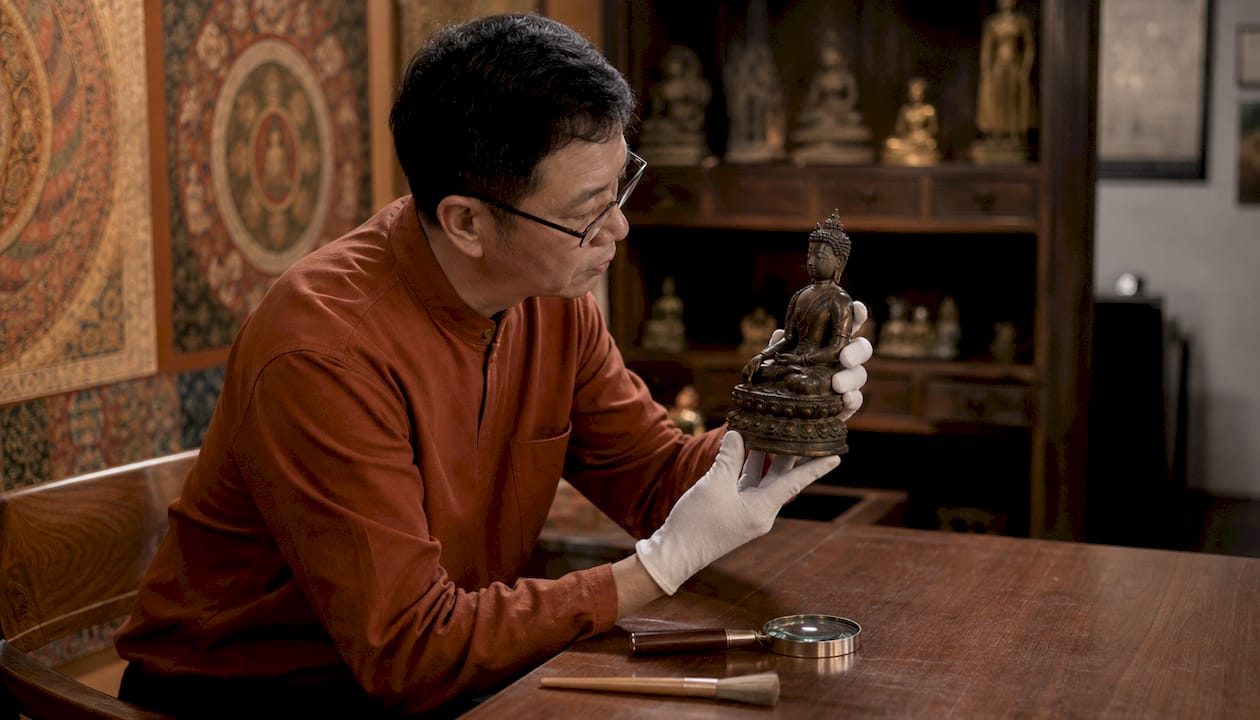
Scholar Seiichi Sato has noted that Western provenance models fail for Asian crafts entirely. Japanese kogei, for example, requires evaluation of raireki, a concept that encompasses master-student lineage, certification history, and the cultural context of production. No auction record substitutes for that chain of transmission.
Key concepts that distinguish Asian provenance frameworks include:
- Raireki (Japanese kogei): The full lineage of a craft object, including the master who created it, the student who inherited the tradition, and any certification issued by recognized bodies.
- Hakogaki and tomobako: Physical box inscriptions and the artist’s original storage box. In Japanese kogei, these physical identifiers carry more evidentiary weight than auction metrics.
- Collaborative production in Himalayan art: Paubha paintings and sacred bronzes often involve multiple ritual contributors. The CIDOC Conceptual Reference Model documents all contributing agents, including ritual acts, as part of the provenance record.
- Fragmentary documentation: Many Southeast Asian and South Asian sculptures passed through colonial-era collections with incomplete or deliberately obscured records.
Pro Tip: When researching a Cambodian or Thai bronze, check whether the piece appears in pre-1970 institutional catalogs. The 1970 UNESCO Convention on cultural property is a legal and ethical benchmark for establishing lawful export.
The absence of fast rules is itself a defining feature of this field. No universal standard exists for Asian antiques provenance, which means each piece demands case-specific due diligence covering history, condition, and cultural context.
How do researchers gather provenance documentation for Asian sculptures?
Gathering evidence for historical research on Asian sculpture follows a structured sequence. Skipping steps creates gaps that undermine the entire record.
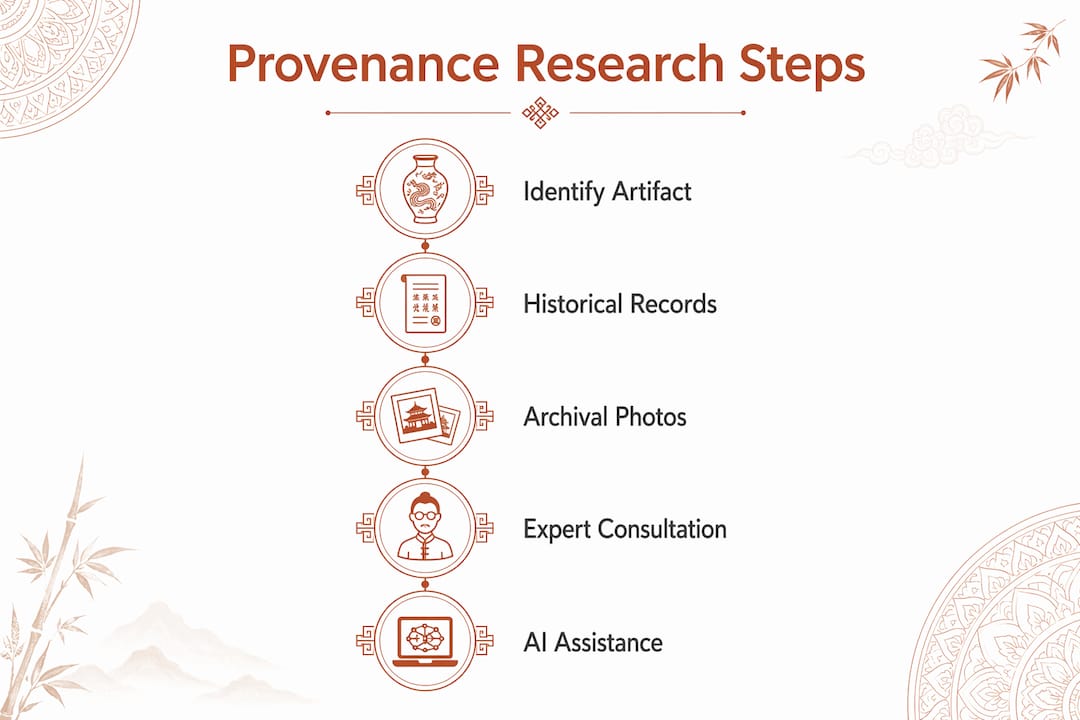
- Locate archival photographs. The French Institute of Pondicherry holds photographic archives documenting South Indian temple interiors from the mid-20th century. The National Museum of Asian Art used 1950s temple photographs from this collection to identify three Indian bronzes that had been illegally removed. Photographs showing a sculpture in its original setting are among the strongest forms of provenance evidence.
- Examine inscriptions and original packaging. Box inscriptions, dedicatory texts carved into bases, and artist seals all provide datable, attributable evidence. For Japanese works, the tomobako is often the first document a specialist examines.
- Review exhibition and purchase histories. Catalog entries from museum exhibitions, dealer invoices, and auction lot notes establish a timeline of ownership. Cross-reference these against institutional acquisition records.
- Consult museum provenance teams. Major institutions maintain dedicated provenance research departments. Reaching out directly often surfaces unpublished records or correspondence files not available in public databases.
- Map collector networks. When written documentation is absent, reconstructing social and family networks of mid-20th-century collectors can reveal connections between a work and its creator. This approach is especially relevant for Chinese ink painting and mid-century Southeast Asian sculpture.
The following table summarizes the primary documentation sources and their evidentiary strength:
| Documentation source | Evidentiary strength | Best applied to |
|---|---|---|
| Archival temple photographs | Very high | South Asian and Southeast Asian bronzes |
| Hakogaki and tomobako | Very high | Japanese kogei and lacquerware |
| Exhibition catalog entries | High | Works circulated through institutional channels |
| Collector correspondence | Medium to high | Mid-20th-century Asian paintings and sculpture |
| Auction records alone | Low for Asian works | Western-market pieces with incomplete Asian context |
Collectors researching antique bronze Buddha statues will find that the authentication process maps closely onto this documentation sequence.
How can AI improve provenance research in Asian antique sculpture?
AI functions as a force multiplier in provenance research. It does not replace expert judgment. It accelerates the archival scanning that would otherwise take years.
AI efficiently scans large archives for evidence threads, identifying patterns in calligraphy, dedications, and collector inscriptions that a human researcher might miss across thousands of documents. The key limitation is that AI surfaces candidates for expert review. It does not verify them.
Practical applications of AI in identifying antique Asian art include:
- Calligraphy and inscription analysis: AI tools trained on historical scripts can flag stylistic inconsistencies in box inscriptions or dedicatory texts, helping researchers identify forgeries or later additions.
- Biographical database cross-referencing: AI can link names appearing in archival correspondence to known collector profiles, accelerating the network-mapping process described above.
- Photographic archive scanning: Large institutional photo collections can be searched for visual matches to a sculpture’s distinctive features, such as casting seams, iconographic details, or base markings.
Pro Tip: Treat any AI-generated provenance lead as a hypothesis, not a conclusion. Every AI finding requires independent verification through primary sources before it enters a formal provenance record.
The Southeast Asian bronze tradition presents particular opportunities for AI-assisted research, given the volume of colonial-era photographic archives that remain only partially cataloged.
What are the most common pitfalls in Asian antique provenance research?
The most damaging mistake in this field is applying a Western ownership model to a piece that requires a culturally specific framework. A Khmer sandstone deity and a Japanese lacquer box demand entirely different evidentiary standards.
“There are no fast rules for Asian antiques. Buyers need deep, case-specific research on history, condition, and quality.” — Marco Almeida, as cited in The Art Newspaper
Other common pitfalls include:
- Accepting unverifiable provenance claims: A seller’s verbal account of a piece’s history carries no evidentiary weight. Require documentation that can be independently checked.
- Overreliance on single-source records: One auction catalog entry does not establish a chain of custody. Provenance requires multiple, independent sources that corroborate each other.
- Ignoring the 1970 UNESCO benchmark: Any piece that cannot be documented before 1970 requires heightened scrutiny. The return of stolen Indian bronzes by the Smithsonian followed years of research that established unauthorized removal using exactly this standard.
- Skipping collaborative verification: Provenance research on Asian sculpture benefits from input across disciplines. Art historians, conservators, regional scholars, and legal specialists each contribute evidence that no single researcher can replicate alone.
Collectors building a Buddhist art collection should treat provenance verification as an ongoing process, not a one-time check. New archival discoveries regularly revise established attributions.
Key Takeaways
Effective provenance research on Asian antique sculpture requires culturally specific frameworks, multi-source documentation, and iterative expert verification rather than any single standard or shortcut.
| Point | Details |
|---|---|
| Asian frameworks differ from Western models | Concepts like raireki, hakogaki, and CIDOC documentation replace auction-record-based provenance. |
| Archival photographs are primary evidence | Temple photographs from institutions like the French Institute of Pondicherry have resolved major repatriation cases. |
| Documented pieces command higher value | Properly documented Himalayan sacred art fetches up to five times more than undocumented equivalents. |
| AI accelerates but does not replace expertise | AI scans archives efficiently but every finding requires independent expert verification before use. |
| The 1970 UNESCO Convention is the legal benchmark | Any piece without pre-1970 documentation requires heightened scrutiny under international cultural property law. |
What I have learned from years of Asian provenance research
The part of this field that surprises most newcomers is how collaborative it actually is. You cannot do serious provenance research on a Javanese bronze or a Khmer sandstone piece alone. You need regional scholars, conservators who can read casting marks, and archivists who know which colonial-era collections were photographed and which were not.
What I find most intellectually honest about this work is accepting that a provenance record is rarely complete. The goal is not a perfect chain of custody. The goal is enough corroborating evidence from independent sources to establish reasonable confidence in a piece’s history and lawful ownership. That distinction matters enormously when you are advising a collector or preparing a piece for institutional acquisition.
The integration of AI into archival research has genuinely changed the pace of this work. I have seen cases where AI-assisted scanning of photographic archives surfaced a match in days that would have taken months of manual review. The discipline required is treating those matches as starting points. The expert judgment that follows is where the real work happens.
The ethical dimension of this field is not separate from the research methodology. It is built into every step. Collectors and historians who approach Asian antique provenance with rigor protect cultural heritage and protect themselves. The market for Asian antiques is growing, with over 80% of bidders now coming from the Asia Pacific region. That growth makes rigorous provenance research more important, not less.
— James, HDAsianArt.com
Authenticated Asian sculptures at HDAsianArt
HDAsianArt sources and documents antique Asian sculptures with the same standards this article describes: archival research, expert attribution, and transparent provenance records for each piece.
The collection includes individually researched works from Cambodia, Thailand, Indonesia, Sri Lanka, and Vietnam, each photographed and described by specialists. Pieces like the Javanese Avalokiteshvara Bodhisattva and the Khmer wood Enlightenment Buddha represent the kind of documented, museum-quality works that serious collectors and historians seek. Worldwide insured shipping is included. Visit HDAsianArt to review the full collection and provenance documentation.
FAQ
What is provenance research in Asian art?
Provenance research in Asian art is the process of tracing an artwork’s ownership, exhibition, and cultural history using region-specific frameworks, archival sources, and physical identifiers. It differs from Western models by incorporating concepts like raireki, hakogaki, and ritual contribution records.
How do you date antique Asian sculptures?
Dating antique Asian sculptures combines stylistic analysis, casting or carving technique assessment, and cross-referencing with dated archival photographs or temple records. The dating of antique Thai Buddha images, for example, relies heavily on iconographic period markers and regional casting traditions.
Why does provenance affect the value of Asian antiques?
Documented provenance directly increases market value. Properly documented Himalayan sacred art fetches up to five times more than undocumented equivalents, reflecting both reduced legal risk and confirmed cultural authenticity.
What is the 1970 UNESCO Convention and why does it matter?
The 1970 UNESCO Convention on the Means of Prohibiting the Illicit Import, Export and Transfer of Ownership of Cultural Property is the international legal benchmark for cultural property transactions. Any Asian antique sculpture without documentation predating 1970 requires heightened legal and ethical scrutiny before acquisition.
Can AI replace expert judgment in provenance research?
AI cannot replace expert judgment. It accelerates archival scanning and surfaces candidate evidence threads, but every AI-generated finding requires independent verification by qualified specialists before entering a formal provenance record.
