


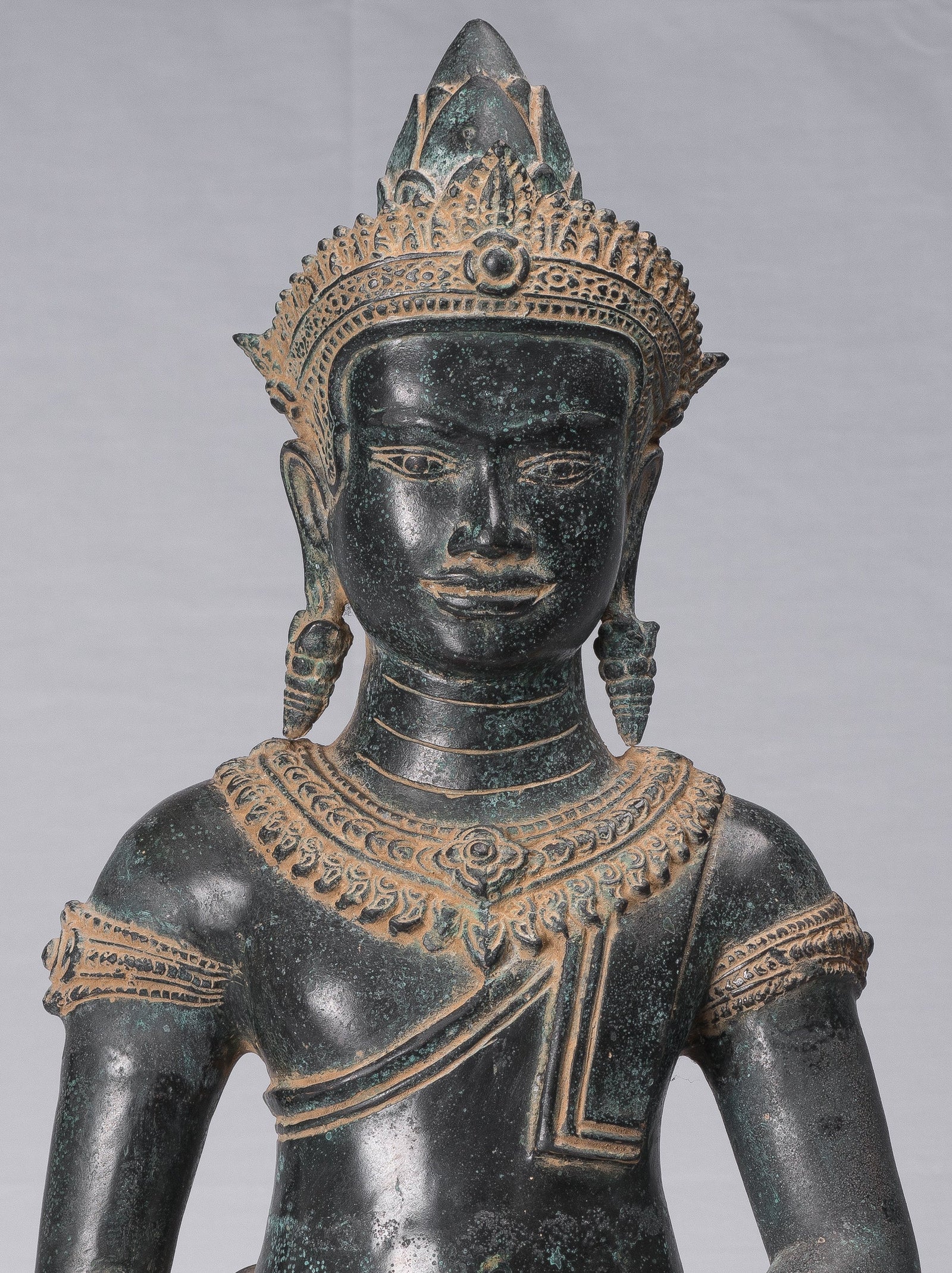
Inner Stillness: How Buddhist Practices Help Relieve Stress and Cultivate Calm
Inner Stillness: How Buddhist Practices Help Relieve Stress and Cultivate Calm
In a world that moves at breakneck speed, where stress and distraction are part of everyday life, more people are turning inward in search of peace. Amid this modern turmoil, the ancient wisdom of Buddhism offers practical, time-tested tools for calming the mind and healing the spirit.
Rooted in simplicity, awareness, and compassion, Buddhist practices such as meditation, mindfulness, breathwork, and ethical living provide a deeply restorative approach to well-being.
In this blog post, we explore how these core teachings of the Buddha can help relieve stress, reduce anxiety, and restore a sense of inner balance, as well as how they are reflected in Buddhist art and sculpture.
1. The Buddhist Perspective on Suffering and Stress
At the heart of the Buddha’s teaching is the recognition of dukkha—a Pali word often translated as suffering, but more accurately rendered as stress, unease, or dissatisfaction. According to the Four Noble Truths, suffering is an inherent part of life, but it is possible to understand, transform, and ultimately end it.
“Peace comes from within. Do not seek it without.” — The Buddha
This recognition isn’t pessimistic—it’s empowering. The Buddha offered a path to freedom through insight, ethical conduct, and mental discipline. Stress, in this view, is not something to suppress or escape from, but something to observe with awareness and gently release.
2. Mindfulness (Sati): Anchoring Yourself in the Present
One of the most effective Buddhist tools for managing stress is mindfulness, or sati in Pali. Mindfulness is the practice of bringing gentle, non-judgmental awareness to the present moment.
When we are mindful:
-
We notice our breath, body, and thoughts without clinging or aversion.
-
We reduce compulsive thinking and reactivity.
-
We develop a space between stimulus and response—allowing peace to arise naturally.
Practical Tip: The 3-Minute Mindful Breathing Break
Try pausing three times a day to breathe slowly and feel each inhale and exhale. Even a few mindful breaths can reset your nervous system and reduce stress.
In Buddhist art, mindfulness is often depicted in Dhyana (meditation) Buddha statues, where the Buddha is seated with hands in the lap, eyes gently closed, radiating quiet awareness. These sculptures are not just decorative—they serve as visual anchors for our own mindfulness practice.
3. Meditation (Bhāvanā): Training the Mind in Stillness and Clarity
Meditation, known as bhāvanā or "mental cultivation" in Buddhism, is a systematic method for developing calm (samatha) and insight (vipassanā).
Types of Buddhist Meditation for Stress Relief:
-
Samatha (Calm-Abiding): Focus on the breath or a single object to calm the mind and soothe the nervous system.
-
Metta (Loving-Kindness): Generate feelings of compassion and goodwill toward oneself and others.
-
Vipassanā (Insight): Observe thoughts, emotions, and sensations as impermanent and not-self, releasing identification and reducing anxiety.
Scientific Benefits of Buddhist Meditation:
Modern research confirms that regular meditation:
-
Reduces cortisol (the stress hormone)
-
Enhances emotional regulation
-
Improves sleep quality
-
Boosts resilience and focus
Visualization Tip: Meditate with a Buddha Statue
Place a meditating Buddha statue in your practice space. Allow its tranquil presence to inspire your own inner stillness. Many practitioners find that facing such a statue helps ground their attention and create a sacred container for reflection.
4. Ethical Living (Sīla): Aligning Actions with Peace
Stress often arises from internal conflict—when our actions, words, or choices are out of sync with our values. Buddhism teaches Sīla, or ethical conduct, as a foundation for peace of mind.
The Five Precepts—not killing, not stealing, not lying, not engaging in sexual misconduct, and not taking intoxicants—are simple, clear guidelines that support integrity, clarity, and relational harmony.
When our lives are ethically aligned, we reduce guilt, regret, and inner turmoil—creating fertile ground for calm and clarity.
In Buddhist sculpture, figures like Avalokiteshvara (Bodhisattva of Compassion) or Tara embody the fusion of ethical action and spiritual insight. Their serene expressions and protective gestures remind us that compassion is both a path and a destination.
5. Letting Go: The Art of Non-Attachment
One of the greatest sources of stress is clinging—to outcomes, identities, expectations, or possessions. Buddhism teaches that everything is impermanent (anicca), and that trying to hold onto fleeting experiences leads to suffering.
Through mindfulness and meditation, we learn to observe without grasping, to allow emotions to arise and pass like clouds in the sky. This “letting go” is not indifference—it’s freedom.
“You only lose what you cling to.” — The Buddha
This principle is often symbolized in Buddhist art by the lotus flower, which rises pure and unstained from muddy waters. The lotus teaches that serenity doesn’t come from avoiding discomfort, but from rising above it with grace.
6. Creating a Sacred Space: Bringing Calm into Your Home
To support your practice, consider setting up a quiet corner or altar that invites serenity and mindfulness:
-
Place a Buddha statue in a posture that resonates with your intention—Dhyana (meditation) for calm, Abhaya (fearlessness) for confidence, or Bhumisparsha (earth-touching) for grounded presence.
-
Light a candle or incense to signal the beginning of your practice.
-
Add natural elements—stones, flowers, or a small bowl of water—to connect with Earth and breath.
-
Sit in silence for even 5 minutes a day to reconnect with your inner stillness.
Conclusion: Peace Is Already Within You
Stress is an unavoidable part of modern life, but suffering doesn’t have to be. Through mindfulness, meditation, ethical living, and letting go, the Buddhist path offers not only relief from stress but a profound transformation of how we relate to ourselves and the world.
You don’t have to renounce everything or live in a monastery to benefit from these teachings. Even small, daily moments of awareness can open the door to serenity, resilience, and deep inner calm.
Discover the Art of Stillness
At HDasianArt.com, we offer a hand-picked selection of Buddhist sculptures and iconography designed to inspire your meditation space and support your journey toward peace. From serene Dhyana Buddhas to graceful lotus thrones, each piece is a bridge between ancient wisdom and modern tranquility.
Browse our collection and begin your journey toward mindful living today.
