


Guardians at the Gate: Foo Dogs and Their Protective Role in Southeast Asia
Guardians at the Gate: Foo Dogs and Their Protective Role in Southeast Asia
Regal, fierce, and dignified, Foo Dogs—also known as temple lions, guardian lions, or shishi—have long stood as powerful symbols of protection in sacred and secular architecture throughout Asia.
Often depicted in pairs and stationed at gates, doorways, or temple thresholds, these majestic creatures ward off negative forces and welcome prosperity and peace.
Though they originate in ancient Chinese tradition, Foo Dogs have been embraced and reinterpreted across many cultures, including in Southeast Asia, where they appear in diverse forms—from Khmer sandstone lions at Angkor to stylized guardian beasts in Burmese, Thai, and Vietnamese temples.
This blog post explores the symbolism, history, and artistic variations of Foo Dogs across Southeast Asia and how these guardian sculptures continue to enrich the spiritual and aesthetic landscape of the region.
What Are Foo Dogs?
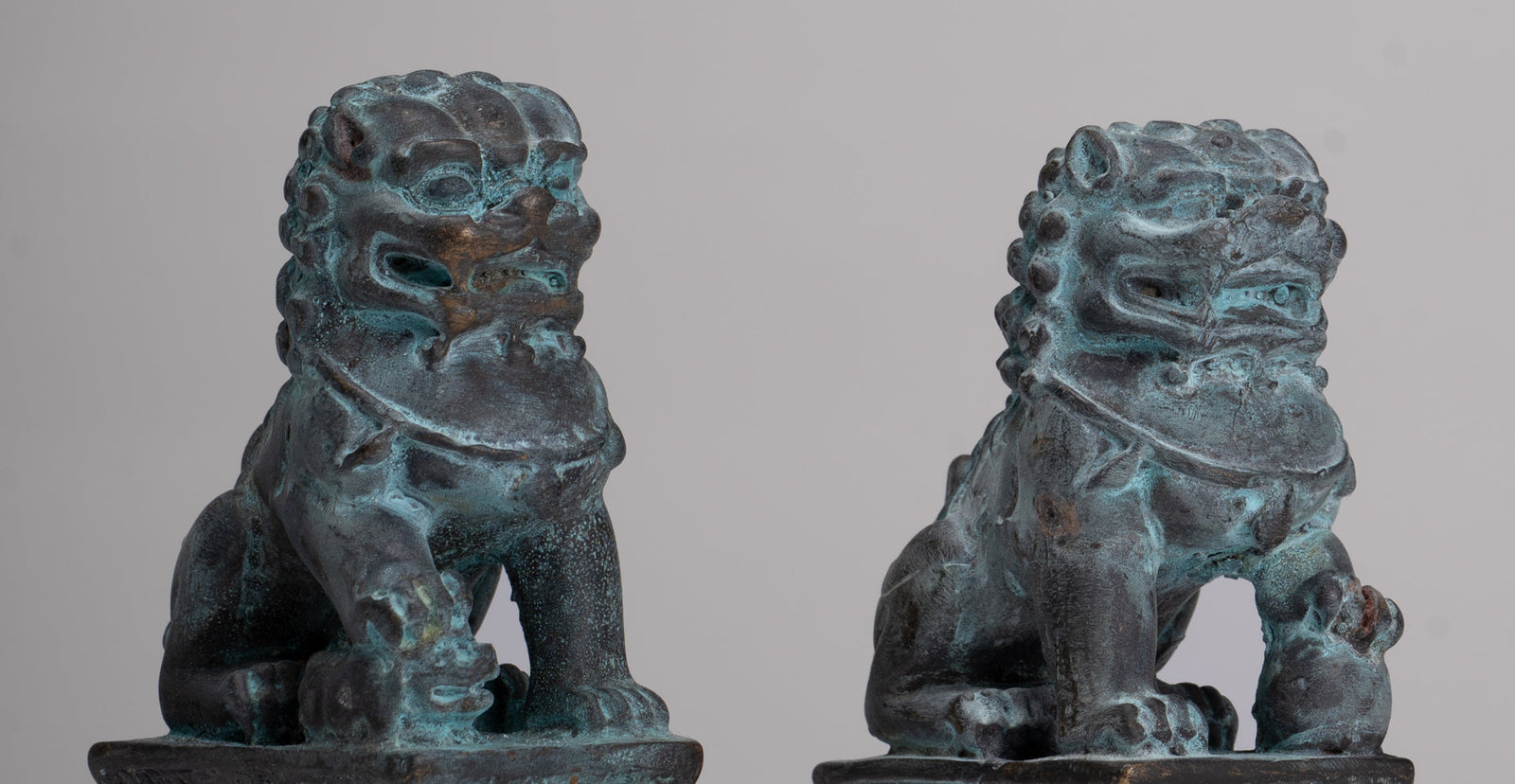
Despite the name, Foo Dogs aren’t dogs at all—they are stylized lions, called shi in Chinese, and often referred to as shishi, fu lions, or Buddhist guardian lions. The misnomer "Foo Dog" likely stems from a Western misinterpretation of the Chinese word "fu" (福) meaning blessing or good fortune.
These creatures are typically found in pairs:
-
The male lion rests one paw on a ball, symbolizing worldly power and control.
-
The female lion restrains a playful cub, symbolizing nurturing, protection, and the cycle of life.
Together, they represent the balance of yin and yang, masculine and feminine, and the harmony of power and compassion.
Origins in China and Their Spread to Southeast Asia
The concept of guardian lions emerged in Han dynasty China (circa 200 BCE – 220 CE). Inspired by descriptions of real lions brought to China via trade with India and Persia, they soon became associated with royal protection and Buddhist symbolism.
As Buddhism spread across Asia, so too did the image of the lion, seen as a protector of the Dharma. In time, Chinese guardian lions made their way into Korea, Japan, and Southeast Asia, evolving into local forms while preserving their core protective function.
Foo Dogs in Khmer and Cambodian Art
In Khmer architecture, particularly during the Angkor period, the lion became an essential guardian figure.
-
At temples like Angkor Wat, Preah Khan, and Baksei Chamkrong, stone lions are positioned at stairways and entrances, gazing outward with wide, alert eyes and open mouths.
-
These Khmer lions don’t closely resemble the Chinese Foo Dogs in style, but their role is identical: to protect the sacred space, intimidate harmful spirits, and signify the temple’s connection to royal and cosmic power.
-
In many cases, the lions are paired with Naga balustrades or Garuda motifs, reinforcing a symbolic ensemble of divine guardianship.
These sculptures are often carved from laterite or sandstone, and while more naturalistic than their Chinese counterparts, they still display an idealized, supernatural presence.
Thailand: Mythic Lions and Singha Imagery
In Thai culture, the Foo Dog’s role is fulfilled by the Singha, a mythical lion found in temple architecture and folklore.
-
The Singha is not just a guardian—it is a symbol of royal strength, moral virtue, and courage.
-
At Thai temples, Singha statues are placed in front of the ubosot (ordination hall) or around Buddhist stupas, echoing their protective purpose.
-
Thai guardian lions tend to be more stylized, with decorative manes, elongated features, and flowing forms—integrating seamlessly with the graceful curves of Thai temple design.
In addition to stone sculptures, wooden and stucco Singhas are often found adorning temple gates and rooflines, acting as both decoration and metaphysical shields.
Myanmar (Burma): The Chinthe as Guardian
In Myanmar, the guardian lion is known as the Chinthe. Like Foo Dogs and Singhas, Chinthes are protective spiritsplaced at the entrances of pagodas, monasteries, and royal compounds.
-
The Chinthe is often shown in a sitting position, roaring or baring its fangs, ready to defend the spiritual sanctity of the site.
-
They are typically crafted from stone or stucco and painted in bright colors—often white or gold with red or green details.
-
In Burmese mythology, the Chinthe is also linked to the Buddha’s early life, making its placement especially resonant in Buddhist temples.
Chinthes are typically seen in pairs and sometimes appear in national iconography, reflecting their importance in Burmese cultural identity.
Vietnam: Nghê, the Spirit Lion-Dog
In Vietnam, the lion-like guardian is called the Nghê, a mythical creature combining aspects of a lion, dog, and dragon.
-
Unlike the imposing Foo Dog, the Nghê is often depicted in a more modest, spiritual posture, sitting calmly and gazing inward—a reminder that protection can also come through virtue, humility, and loyalty.
-
Nghê sculptures appear at temple entrances, tombs, and ancestral shrines, serving both spiritual and architectural functions.
The Nghê reflects Vietnam’s unique blend of Confucian, Taoist, and Buddhist influences, and is increasingly appreciated in modern Vietnamese art and design for its subtle elegance.
Symbolism and Cultural Meaning
Despite their regional variations, Foo Dogs and their Southeast Asian counterparts share common symbolic themes:
| Symbol | Meaning |
|---|---|
| Lion Form | Courage, divine strength, guardianship |
| Pairing | Balance of masculine/feminine, yin/yang |
| Mouth Open/Closed | Cycle of birth and death ("Om" and "Hum") |
| Placement at Entrances | Boundary between sacred and profane |
| Association with Buddhism | Protector of the Dharma and temples |
In the modern context, Foo Dogs are also seen as symbols of status, spiritual awareness, and cultural pride, often used in homes, gardens, businesses, and public buildings.
How to Use Foo Dogs in Modern Interiors
A pair of Foo Dogs or Southeast Asian temple lions can bring both beauty and symbolism to a home or office:
-
Flanking a doorway: Offers a classic, symmetrical statement of protection and grandeur.
-
In a garden or courtyard: Creates a sacred atmosphere and connection with traditional aesthetics.
-
On a desk or shelf: Symbolizes mental clarity, vigilance, and protection of ideas.
-
Facing outward: Traditionally, guardian lions should face outward to guard against external forces.
Choose from bronze for elegance, stone for durability, or wood for warmth and natural beauty.
Conclusion: Timeless Guardians of Culture and Spirit
Whether in the form of the Chinese Foo Dog, Khmer lion, Thai Singha, Burmese Chinthe, or Vietnamese Nghê, these noble creatures serve as timeless protectors—not only of temples and palaces, but also of the ideals they embody: courage, loyalty, vigilance, and sacred strength.
By bringing one into your home, garden, or office, you invite not just a beautiful work of art, but a piece of cultural heritage and spiritual symbolism that continues to inspire across centuries and borders.
Explore Our Guardian Sculptures
At HDasianArt.com, we proudly offer a curated collection of Foo Dogs, Khmer temple lions, and Southeast Asian guardian sculptures in stone, bronze, and wood. Each piece is hand-selected for its craftsmanship, historical resonance, and spiritual significance.
Looking to add a guardian presence to your space? Discover our Guardian Collection today.
