


Divine Dance: Nataraja and the Cosmic Rhythm of Creation and Destruction
Divine Dance: Nataraja and the Cosmic Rhythm of Creation and Destruction
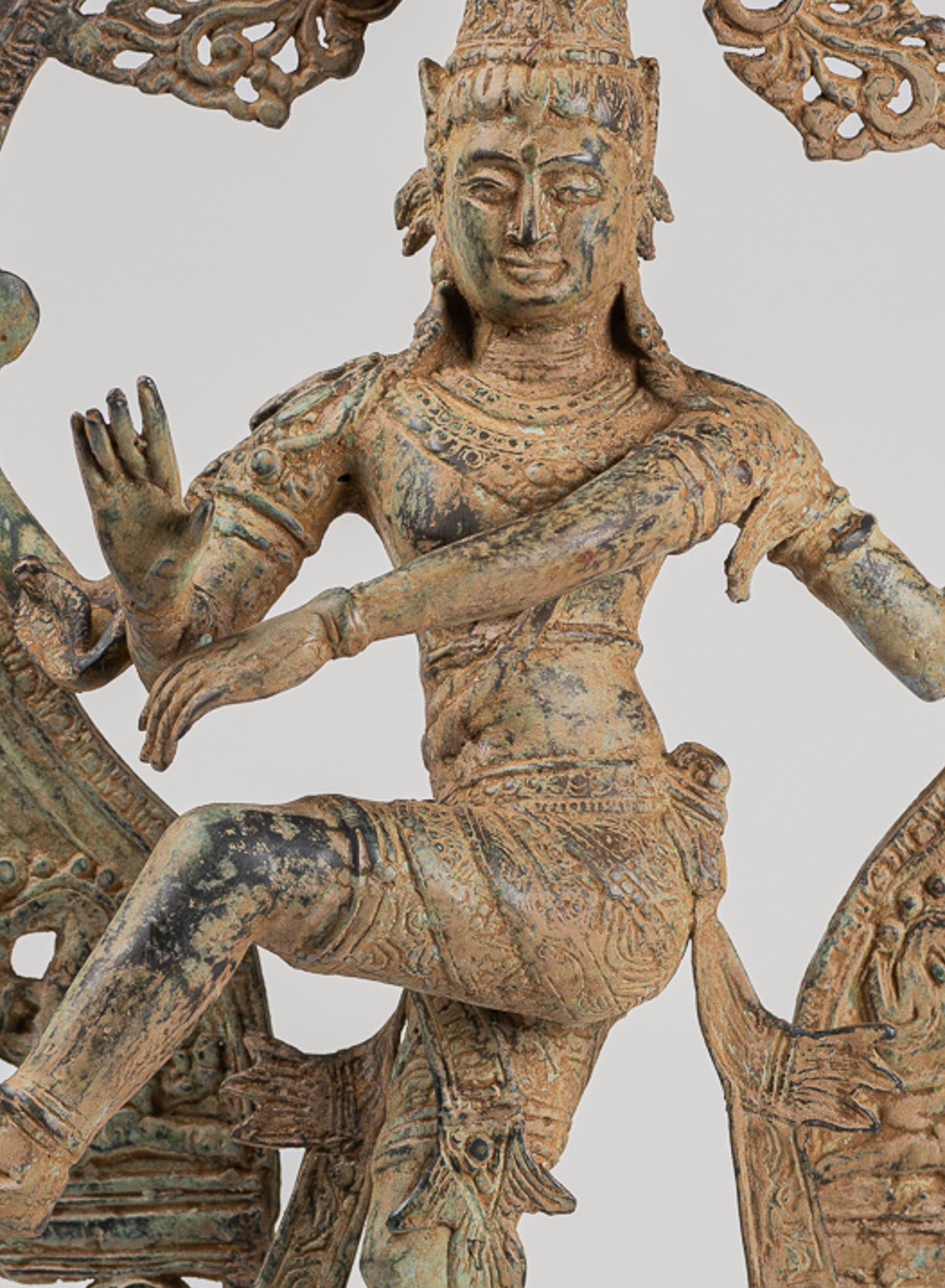
Among the most iconic and spiritually profound images in Hindu art is that of Nataraja—the Lord of the Dance, a manifestation of the god Shiva performing the cosmic dance that governs the universe.
Cast in bronze or carved into temple walls across India and Southeast Asia, the image of Nataraja is not merely decorative—it is a theological statement, a philosophical vision, and an artistic masterpiece.
In this post, we explore the deeper meaning of Nataraja in Hindu tradition, its symbolic components, and its widespread influence on the sacred art of Southeast Asia, particularly in Khmer and Chola bronzes, where the form reached its most refined expression.
Shiva as Nataraja: The Lord of the Dance
“Nataraja” derives from two Sanskrit words: nata (dance or actor) and raja (king). As Nataraja, Shiva is not simply dancing for joy or entertainment—his dance is a cosmic act. It encompasses the five divine functions (pañcakṛtya) that shape all existence:
-
Srishti – Creation
-
Sthiti – Preservation
-
Samhara – Destruction
-
Tirobhava – Illusion or concealment
-
Anugraha – Grace or liberation
This dance, known as the Ananda Tandava (“Dance of Bliss”), takes place within the cosmic circle of fire (prabhamandala), representing the cycle of time, the universe, and the transformative energy of Shiva.
Iconography of Nataraja: Symbolism in Motion
Every element of the Nataraja sculpture is rich in layered meaning. Let’s break down its core features:
1. The Circle of Fire (Prabhamandala)
The flaming aureole encircling Shiva signifies samsara, the cycle of birth and rebirth, and the ever-turning wheel of cosmic time. Fire represents both destruction and purification, reminding us that transformation is the essence of existence.
2. Four Arms and Their Gestures
Shiva’s four arms express his divine powers:
-
Upper right hand: Holds a damaru (drum), symbolizing the sound of creation—the primal beat of time and the rhythm of the cosmos.
-
Upper left hand: Holds agni (fire), the element of destruction and dissolution, which paves the way for renewal.
-
Lower right hand: Shows the abhaya mudra, the gesture of fearlessness and protection.
-
Lower left hand: Stretches across his body with fingers pointing toward his raised left foot, symbolizing spiritual liberation.
3. The Apasmara Demon
Shiva dances upon a dwarf-like demon named Apasmara, representing ignorance, ego, and illusion. This act reminds us that enlightenment arises only when ignorance is subdued.
4. The Raised Foot
Shiva’s lifted left foot offers mukti, or liberation. It is the way out of the burning cycle of suffering and into spiritual freedom.
5. The Serpent and Hair Locks
Shiva’s matted locks, flying outward with the force of the dance, often contain a serpent and symbols of the Ganges River, representing both asceticism and the divine flow of wisdom.
Historical and Cultural Origins
The earliest form of the dancing Shiva may be traced back to pre-Gupta India, but it flourished during the Chola dynasty (9th–13th centuries CE) in southern India. Under Chola patronage, bronze casting reached its zenith, and Nataraja emerged as the central image in Shaivite temple rituals and festivals.
The Chola Bronzes
Made using the lost-wax casting technique (cire perdue), Chola bronzes were more than sculptures—they were living icons, carried in procession and worshipped during temple ceremonies. The balance, grace, and divine energy in these bronzes make them some of the most admired sacred art in the world.
Khmer and Southeast Asian Adaptations
As Hinduism spread into Southeast Asia through trade, royal patronage, and cultural exchange, Nataraja appeared in regions like Khmer Cambodia and Java. Although Shiva’s forms in these areas were often more meditative, the dancing form still appeared, albeit less frequently.
In Khmer sculpture:
-
Shiva is depicted both as calm ascetic and dynamic dancer.
-
The iconography is sometimes localized, with regional styles blending Indian form with Khmer realism and grace.
In Java, particularly during the Majapahit period, depictions of Shiva’s dance, though rarer, were woven into temple reliefs that emphasized movement, divinity, and cosmic order.
Theological Significance: Movement as Metaphysics
Nataraja’s dance is not only an image of Shiva—it is a map of reality.
Hindu metaphysics teaches that nothing is static. The universe is in a constant state of flux—birth, life, death, and rebirth. The dance reflects this endless cycle and reminds us that destruction is not the end, but a necessary prelude to renewal.
Furthermore, the dance is not merely cosmic but internal. The ego (Apasmara) must be conquered. The soul (represented by the raised foot) must be reached. And grace (the abhaya mudra) is always available.
In this way, Nataraja is both cosmic dancer and inner guide, pointing the way to spiritual liberation.
Nataraja in Modern Interpretation and Legacy
Today, the image of Nataraja continues to inspire not only religious devotion but also artistic, philosophical, and even scientific discourse.
-
A bronze statue of Nataraja stands at the headquarters of CERN in Switzerland—offered by the Indian government—as a symbol of the universe’s rhythm and the deep connection between physics and metaphysics.
-
Nataraja also appears in contemporary sculpture, dance, and painting, symbolizing balance, dynamism, and harmony.
In the world of art collecting and museum curation, original Chola Natarajas are considered masterpieces of sacred bronze sculpture, commanding awe for their technical skill and spiritual beauty.
Nataraja and Sacred Art in Southeast Asia
Collectors and scholars of Southeast Asian art will appreciate how the image of Nataraja bridges Indian philosophy with regional styles. Though often associated with southern India, its symbolic power reached Cambodia, Thailand, Indonesia, and beyond.
Bronze and stone figures of Nataraja may be identified by:
-
Graceful movement: one leg raised, hips curved, arms in dynamic extension.
-
Symbolic attributes: drum, fire, mudras, and the demon underfoot.
-
Circle of fire or radiant halo: signifying time and transformation.
Each of these elements is not just artistic—they are teachings in visual form.
Conclusion: The Eternal Dance of the Divine
The Nataraja form of Shiva is a stunning synthesis of mythology, philosophy, and aesthetics. It tells a story that is at once cosmic and deeply personal: the dance of the divine that creates and destroys, that conceals and reveals, and ultimately invites us to transcend the illusions of ego and time.
In every raised foot and flaming circle, we are reminded that the world is not static—it is always in motion. And within that motion lies grace, rhythm, and liberation.
Explore Our Collection:
At HDAsianArt.com, we proudly feature bronze and stone depictions of Shiva, including Chola-inspired Natarajasand Khmer interpretations of Shiva’s dance. Each piece carries a story—of movement, mastery, and meaning.
