



Common Mistakes Placing Buddha Statues in Your Home
Common Mistakes Placing Buddha Statues in Your Home
Buddha statues carry genuine spiritual and cultural weight. They are not simply decorative objects you can drop anywhere and expect good results. The common mistakes placing buddha statues cause real disruptions to energy flow, undermine the peace you are trying to create, and can unintentionally signal disrespect to a tradition spanning thousands of years. Whether you are drawn to feng shui principles or simply want your space to feel right, understanding what not to do is just as instructive as knowing what to do.
Table of Contents
- Key takeaways
- 1. Placing the statue directly on the floor
- 2. Choosing bathrooms, kitchens, or cluttered areas
- 3. Getting the facing direction wrong
- 4. Placing Buddha statues in bedrooms
- 5. Overcrowding statues and skipping maintenance
- 6. Ignoring the cultural context behind statue types
- 7. Treating the statue as purely decorative
- My perspective on respectful placement
- Authentic Buddha statues from Hdasianart
- FAQ
Key takeaways
| Point | Details |
|---|---|
| Elevation matters | Statues placed below 30 inches communicate disrespect and weaken positive Qi flow in your space. |
| Location affects energy type | Bathrooms, kitchens, and cluttered rooms are energetically misaligned with the calm a Buddha statue represents. |
| Facing direction shapes energy intake | Orient statues toward the main entrance or room interior to draw in positive energy, not block it. |
| Bedrooms require caution | Yang energy from statues can disrupt the Yin energy your body needs for deep, restorative sleep. |
| Quality and care outweigh quantity | One well-placed, well-maintained statue does more than a crowded shelf of neglected pieces. |
1. Placing the statue directly on the floor
This is the most common buddha statue placement error, and it is also one of the most culturally significant. In Buddhist tradition, placing sacred objects at floor level signals the lowest possible status. Feet are considered the least spiritually elevated part of the body, and a statue sitting at foot level absorbs that symbolic weight.
From a feng shui perspective, elevation symbolizes respect and aligns with the Qi flow principles necessary for positive energy in the home. The practical standard is clear: statues should sit at least 30 inches (76 cm) above the floor on a stable shelf, pedestal, or dedicated console.
Practical options for proper elevation:
- A solid wood console at entry hall height
- A dedicated altar shelf mounted to a clean wall
- A stone or marble pedestal in a living room corner
- A built-in bookshelf alcove cleared of unrelated clutter
Pro Tip: In living rooms, place the statue at seated eye level so that when you sit, you face the statue directly. In entryways, aim for standing eye level to greet visitors with a sense of calm presence.
2. Choosing bathrooms, kitchens, or cluttered areas
You may have seen Buddha statues styled in bathroom spa setups or displayed near stove areas in open kitchen layouts. It photographs well. It does not function well. Bathrooms and cluttered zones are low-energy spaces that fundamentally conflict with what a Buddha statue is meant to radiate.
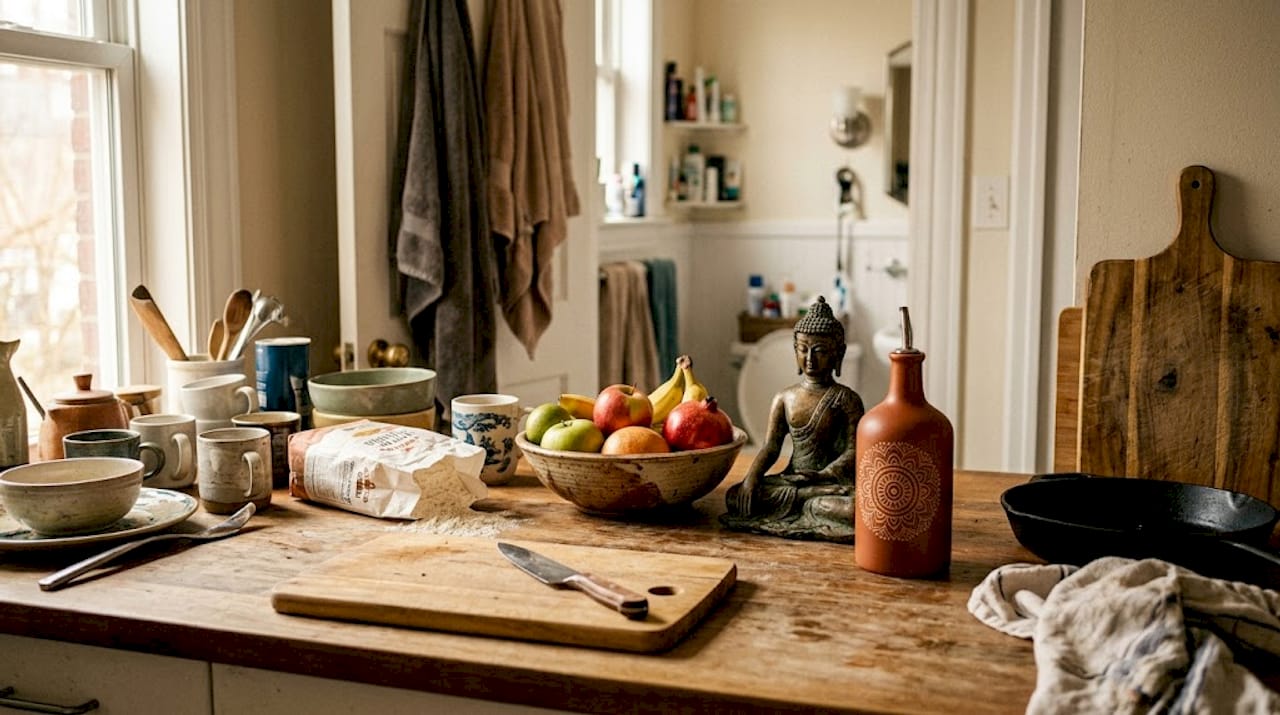
The kitchen problem goes deeper than aesthetics. Kitchen spaces are dominated by fire energy which is erratic and expansive, the opposite of the tranquil symbolism Buddha statues embody. Placing a statue of calm in a room of controlled combustion creates an energetic contradiction.
Bathrooms present a different issue. Symbolically, placing statues near bathrooms leads to spiritual energy being channeled away from the home rather than retained within it. Many feng shui practitioners describe it as placing something sacred beside a drain.
Rooms to avoid entirely:
- Bathrooms and powder rooms
- Kitchens with open layouts where fire elements dominate
- Laundry rooms or utility spaces
- Any room with visible clutter, broken items, or poor ventilation
Pro Tip: If your home has a small footprint and you are struggling to find a “clean” space, dedicate even a single corner of your living room or study to a cleared, intentional display area. A small shelf with nothing else on it still outperforms a cluttered bathroom ledge.
3. Getting the facing direction wrong
Buddha statue orientation mistakes are subtle but have measurable effects on how energy moves through a room. Most people place statues facing whatever wall seems natural, or toward the largest open space. Neither instinct is wrong, but neither is deliberate enough.
The guiding principle is that statues facing the main entrance welcome positive energy into the home and give arriving occupants a point of calm focus. Facing inward into the room also works, pulling Qi deeper into the space rather than blocking it at the threshold.
What to avoid when deciding on buddha statue facing directions:
| Facing direction | Why to avoid it |
|---|---|
| Toward a bathroom | Directs positive energy toward a low-energy zone |
| Directly at a wall | Blocks Qi flow and creates stagnant energy pockets |
| South or west in most layouts | Can amplify heat energy and create imbalance |
| Toward a trash area or clutter | Symbolic disrespect and energetic disruption |
For homes with open floor plans, orient the statue so it faces the most frequently used seating area. This positions the Buddha as a grounding presence in the room rather than a decorative afterthought placed against a corner wall.
4. Placing Buddha statues in bedrooms
This one surprises people. Bedrooms feel intimate and personal, which makes them seem like an obvious place for a meaningful spiritual object. The problem is energetic. Buddha statues emit Yang energy that actively conflicts with the Yin energy your body and mind need during sleep. The result is often subtle restlessness, lighter sleep, or a sense of unease that is hard to trace to a specific source.
This does not mean zero Buddha presence is acceptable in a bedroom. Small, subtle pieces with calm iconography, specifically the meditating Buddha rather than active or laughing forms, can work if placed in a corner away from the bed and kept at a respectful height. The key distinction is between a commanding centerpiece and a quiet background presence.
Alternatives that respect both your space and the statue:
- Move the statue to a dedicated meditation corner in a hallway or study
- Use the living room as the primary placement zone
- If you rent or have limited space, a feng shui bedroom setup that keeps energetically active objects away from sleep zones is a workable structure
Pro Tip: If removing the statue from your bedroom feels wrong, try relocating it to face away from the bed. Even this small reorientation reduces direct Yang energy projection toward your sleeping area.
5. Overcrowding statues and skipping maintenance
More statues do not mean more peace. Having too many statues creates visual stress and energetic confusion that neutralizes the benefit of any individual piece. A shelf with five statues competing for attention produces clutter, not calm. This is one of the most common errors in buddha statue setup among collectors and decor enthusiasts who acquire pieces they love but place without a plan.
The maintenance side of this mistake is equally underestimated. Incorrectly placed or neglected statues do not cause curses or active harm. What they do is neutralize the intended benefits, leaving you with a space that feels uneven without a clear reason why. Regular care is part of placement practice, not an optional afterthought.
Maintenance practices worth following:
- Dust statues weekly using a soft, dry cloth
- Avoid chemical cleaners that can damage bronze, stone, or agarwood surfaces
- Replace or retire broken or chipped statues. A damaged statue should not remain on display
- Clear the area around the statue of unrelated objects at least once a month
Pro Tip: Choose one statue that genuinely resonates with your intention and give it a single, well-prepared location. A single quality piece placed with intention outperforms a collection of pieces placed with indifference.
6. Ignoring the cultural context behind statue types
Not all Buddha statues carry the same meaning, and placing the wrong type in a specific area compounds other placement errors. The Laughing Buddha (Budai) and the Meditating Buddha serve different symbolic purposes and function differently in feng shui layouts. Treating them as interchangeable is a buddha statue placement error that undercuts both.
The Meditating Buddha, typically depicted in a lotus position with eyes downcast, radiates inward calm and is suited to quiet spaces: a study, a meditation area, or a living room with low foot traffic. The Laughing Buddha, associated with abundance and good fortune, works well in entryways and dining areas where active, welcoming energy is appropriate.
Placing a Meditating Buddha in a high-activity commercial entryway or a Laughing Buddha in a grief room or altar space creates symbolic dissonance. The cultural context behind the piece matters. For readers wanting deeper background on Buddha statue symbolism, HDAsianArt covers this topic with genuine depth.
7. Treating the statue as purely decorative
The final and perhaps most pervasive of the improper buddha statue locations errors is conceptual rather than physical. When a statue is treated as purely decorative, every other mistake follows naturally. You pick placement based on aesthetics alone. You ignore elevation, orientation, and room energy type. You let the area around it accumulate clutter because “it’s just decor.”
Buddha statues placed with clear intention, in an appropriate location, at the correct height, facing the right direction, are functionally different from statues placed arbitrarily. The arrangement of your space communicates your priorities to everyone who enters, including yourself. Spiritual decor without intentional placement is decoration. With it, you get something more useful: an environment that actively supports the mental state you are trying to build.
The tips for placing buddha statues most frequently overlooked all come back to this: purpose must precede placement. Decide what you want the statue to represent in your home, then let that decision guide every practical choice that follows. For Buddha statue placement guidance grounded in both cultural tradition and practical decor, Hdasianart’s editorial resources are a reliable reference.
My perspective on respectful placement
I have worked with collectors, interior designers, and feng shui practitioners across a range of home types, and one pattern stands out clearly. Most placement mistakes come from people who care about the statue. They bought it because it meant something. The mistake is not the intention. It is the gap between intention and knowledge.
What I have found surprising is how much the space around a statue matters compared to the statue itself. I have seen a modest stone piece placed on a clean, elevated shelf in a calm corner do more for a room’s energy than an expensive bronze on a cluttered mantelpiece surrounded by unrelated objects.
The other thing worth saying directly: you do not need to be Buddhist for this to work. The principles of elevation, orientation, and considered maintenance reflect a universal design logic. A well-placed, respected object in a clean space reads as intentional to everyone, regardless of their spiritual background. That intentionality is what shifts how a room feels.
— James, HDAsianArt.com
Authentic Buddha statues from Hdasianart
When placement knowledge is paired with a quality piece, the results are noticeably different. A statue with genuine provenance, crafted in traditional materials and properly proportioned, anchors a space in a way that reproductions simply do not.
Hdasianart offers an expertly curated collection of antique Buddhist statues in bronze, stone, and wood, sourced from Cambodia, Thailand, Indonesia, Sri Lanka, Vietnam, and beyond. Each piece is individually researched and described, with worldwide insured DHL shipping. If you are selecting a statue with placement in mind, the collection pages include detailed iconographic descriptions that help match statue type to intended location. Pairing a piece from Hdasianart with a small zen accent plant can complete a clean, respectful display area without additional clutter.
FAQ
Where should a Buddha statue face in a home?
Orient the statue toward the main entrance or inward into the primary seating area. Facing walls, bathrooms, or cluttered corners blocks positive Qi flow.
Can you place a Buddha statue in a bedroom?
Generally no. Buddha statues emit Yang energy that conflicts with the Yin energy needed for restful sleep. If you keep one in the bedroom, use a small meditating form placed away from the bed.
What is the minimum height for a Buddha statue placement?
Statues should sit at least 30 inches (76 cm) above the floor on a stable shelf or pedestal. Floor-level placement is considered culturally disrespectful.
How many Buddha statues should you keep in one space?
One well-placed statue is more effective than multiple competing pieces. Overcrowding creates energetic confusion and reduces the impact of each individual statue.
Do incorrectly placed Buddha statues cause harm?
Misplaced statues do not cause active harm. They neutralize the intended benefits, which can leave a space feeling energetically uneven or restless without a clear cause.
