


Chiang Saen: The Cradle of Northern Thai Buddhist Art and Culture
Chiang Saen: The Cradle of Northern Thai Buddhist Art and Culture
Tucked away in the lush hills of northern Thailand, near the borders of Laos and Myanmar, lies Chiang Saen—a city whose name may be unfamiliar to many, but whose cultural and artistic legacy helped shape centuries of Thai art and Buddhism.
The Chiang Saen period, typically dated from the 12th to the 14th century CE, was a golden age for the ancient Lan Na Kingdom, and a formative era for northern Thai identity.
This period is especially renowned for its contributions to Buddhist sculpture, temple architecture, and the spread of Theravāda Buddhism in the region. In this blog post, we delve into the history, artistic style, and spiritual significance of the Chiang Saen period, a crucial chapter in the development of Thai cultural heritage.
1. Historical Background: The Early Lan Na Kingdom
Chiang Saen was one of the oldest and most important cities of what would later become the Lan Na Kingdom. Situated on the Mekong River, it served as a key political and cultural hub in northern Thailand.
-
Founded possibly as early as the 8th or 9th century, Chiang Saen grew under the influence of Mon, Dvaravati, Haripunchai, and later Khmer civilizations.
-
By the 13th century, the region was united under King Mangrai, who established the Lan Na Kingdom and later founded Chiang Mai as his new capital in 1296.
-
Chiang Saen, however, remained a major religious center, with numerous temples and a strong monastic presence.
The art produced during the Chiang Saen period reflects a rich synthesis of regional influences and an evolving dedication to Theravāda Buddhist ideals.
2. Chiang Saen Art: A Distinctive Northern Thai Style
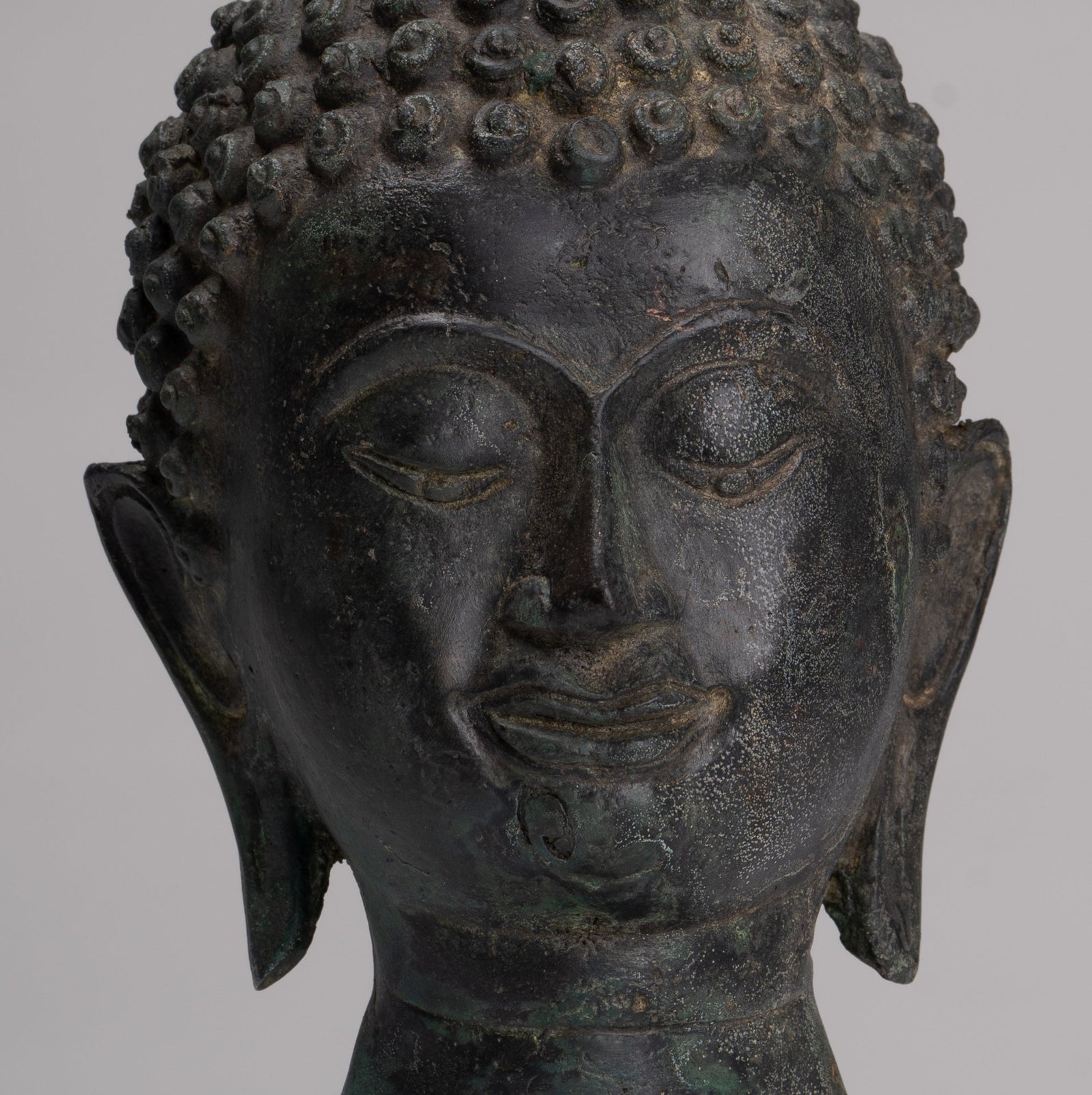
The art of the Chiang Saen period is especially known for its Buddhist sculpture in bronze and stone. It represents one of the earliest truly “Thai” artistic styles, distinct from both central Thai and Khmer influences.
Key Features of Chiang Saen Buddha Sculptures:
| Feature | Description |
|---|---|
| Material | Mostly bronze, sometimes stone |
| Facial Expression | Rounded face with full cheeks, calm and gentle expression |
| Eyes and Brows | Arched eyebrows meeting above the nose; eyes downcast in meditation |
| Hair and Usnīsha | Small curls, high domed usnīsha (cranial bump) often surmounted by a flame-like finial |
| Body Proportion | Broad shoulders, thick neck, and solid form suggesting strength and stillness |
| Postures (Asanas) | Most commonly seated in Dhyāna mudrā (meditation), often on a double lotus pedestal |
| Robe Style | Clings closely to the body, with a clear neckline and chest band, minimal decorative detail |
The overall effect is one of quiet majesty, spiritual power, and inner clarity—qualities that aligned with the growing emphasis on personal enlightenment and disciplined practice in northern Thai Theravāda Buddhism.
3. Temple Architecture and Urban Planning
Chiang Saen was home to many wats (temples), chedis (stupas), and monastic complexes, many of which remain in ruins today but still radiate a sense of sacred presence.
Notable Features:
-
Chedis in Chiang Saen typically take a bell-shaped or lotus-bud form, resembling Sinhalese stupas and reflecting the influence of Sri Lankan Theravāda Buddhism.
-
Many temples were aligned with cosmic principles, symbolizing Mount Meru and the Buddhist cosmos.
-
Laterite and brick construction, often covered in stucco, was common, and many temples featured mythical guardians like nagas and singhas.
One of the most important temple sites is Wat Pa Sak, known for its elegant 13th-century stupa, richly decorated with stucco carvings of celestial beings, lotuses, and Buddhist motifs.
4. Religious Significance: A Stronghold of Theravāda Buddhism
The Chiang Saen period coincided with the firm establishment of Theravāda Buddhism as the dominant faith in northern Thailand. This was due in part to strong connections with:
-
Sri Lankan monastic orders, from whom the Thai forest monks derived their Vinaya discipline.
-
Nearby regions like Sukhothai and Haripunchai, which also promoted Theravāda reform and purity.
Monasteries in Chiang Saen were not only centers of devotion and ritual, but also of education, manuscript preservation, and Buddhist scholarship.
The Buddha images produced during this time were not merely decorative—they were objects of veneration, meditative focus, and spiritual inspiration for monks and laypeople alike.
5. Legacy and Influence
Although later eclipsed politically by Chiang Mai and Ayutthaya, the Chiang Saen style continued to influence northern Thai art well into the 15th and 16th centuries.
-
Later Lan Na Buddha images and temples often retain Chiang Saen proportions, facial features, and spiritual atmosphere.
-
Chiang Saen bronzes are now considered among the finest in Thai art history, often commanding great reverence from collectors, museums, and religious institutions.
-
The Chiang Saen style is still replicated in contemporary Buddhist sculpture, and its aesthetic values—graceful stillness, meditative presence, and purity—remain deeply respected.
6. Chiang Saen Today: A Living Museum
Modern-day Chiang Saen is a small town with a quiet charm, surrounded by the ruins of over 70 ancient temples and fragments of ancient walls and chedis. The Chiang Saen National Museum houses many important artifacts from the period, including:
-
Bronze and stone Buddha images
-
Stucco reliefs from ruined temples
-
Ceremonial objects and inscriptions
Visitors to Chiang Saen today can walk among these sacred remnants, experiencing the tranquil spirituality and historical richness that once defined this influential city.
Conclusion: Chiang Saen—Where Art and Devotion Converged
The Chiang Saen period represents a pivotal era in Thai history, where political consolidation, religious reform, and artistic innovation converged to create a cultural legacy that still resonates today.
Its Buddhist sculpture, in particular, stands as a testament to the refined spiritual ideals of northern Thailand—capturing the Buddha not as a distant god, but as a compassionate, meditative presence accessible to all.
Explore Chiang Saen–Inspired Art
At HDasianArt.com, we honor the Chiang Saen tradition with a selection of Buddha sculptures and sacred art from northern Thailand, including works in the Chiang Saen style. Whether cast in bronze or carved in stone, these pieces embody the timeless grace of a spiritual era.
Browse our collection to bring the peace and strength of Chiang Saen into your space today.
