



Erkennen Sie, ob eine Statue hinduistisch oder buddhistisch ist: Ein visueller Leitfaden
Erkennen Sie, ob eine Statue hinduistisch oder buddhistisch ist: Ein visueller Leitfaden
Inhaltsverzeichnis
Um hinduistische und buddhistische Statuen identifizieren zu können, muss man die unterschiedlichen visuellen Sprachen verstehen, die in der heiligen Kunst jeder Tradition verankert sind. Körperliche Eigenschaften, Handgesten, symbolische Elemente und künstlerische Konventionen erzählen eine klare Geschichte. Nachfolgend sind die spezifischen visuellen Hinweise aufgeführt, die diese beiden großen religiösen Traditionen trennen.
Eine genaue Identifizierung ist für Sammler, spirituelle Praktizierende und Innenarchitekten wichtig, die auf eine korrekte Namensnennung angewiesen sind, um sicherzustellen, dass authentische Stücke zu fairen Preisen erworben und angemessen ausgestellt werden.
Warum diese Auszeichnungen für Sammler und Praktiker wichtig sind
Das Verständnis der visuellen Unterschiede zwischen hinduistischen und buddhistischen Statuen dient praktischen Zwecken: Sammler benötigen eine korrekte Identifizierung für die Provenienzforschung und -bewertung; Spirituelle Praktizierende müssen wissen, ob eine Statue zu einem buddhistischen Meditationsaltar passt oder Hindu-Puja-Raum; Innenarchitekten müssen Fehlplatzierungen oder unbeabsichtigte spirituelle Botschaften vermeiden.
Hinduistische und buddhistische ikonografische Systeme entwickelten sich über Jahrhunderte unabhängig voneinander und schufen völlig unterschiedliche visuelle Vokabulare. Hinduistische Skulpturen zelebrieren göttliche Formen durch mehrere Arme, kunstvolle Kronen und symbolische Waffen. Die buddhistische Skulptur betont den Weg zur Erleuchtung durch spezifische Körperzeichen, Handgesten und vereinfachte Ornamente. Regionale stilistische Unterschiede erschweren die Identifizierung zusätzlich, aber das Verständnis sowohl universeller Merkmale als auch regionaler Unterschiede unterscheidet sichere Sammler von unsicheren Sammlern.
Buddhistische Ikonographie und heilige Attribute verstehen
Buddhistische Statuen entwickelten konsistente physische Merkmale, die den erleuchteten Zustand Buddhas repräsentierten. Diese Markierungen tauchen über Jahrhunderte und geografische Regionen hinweg auf, von indischen Steinschnitzereien über tibetische Bronzen bis hin zu südostasiatischen Holzskulpturen. Eine zuverlässige Identifizierung erfolgt durch das gemeinsame Erkennen mehrerer buddhistischer Markierungen.
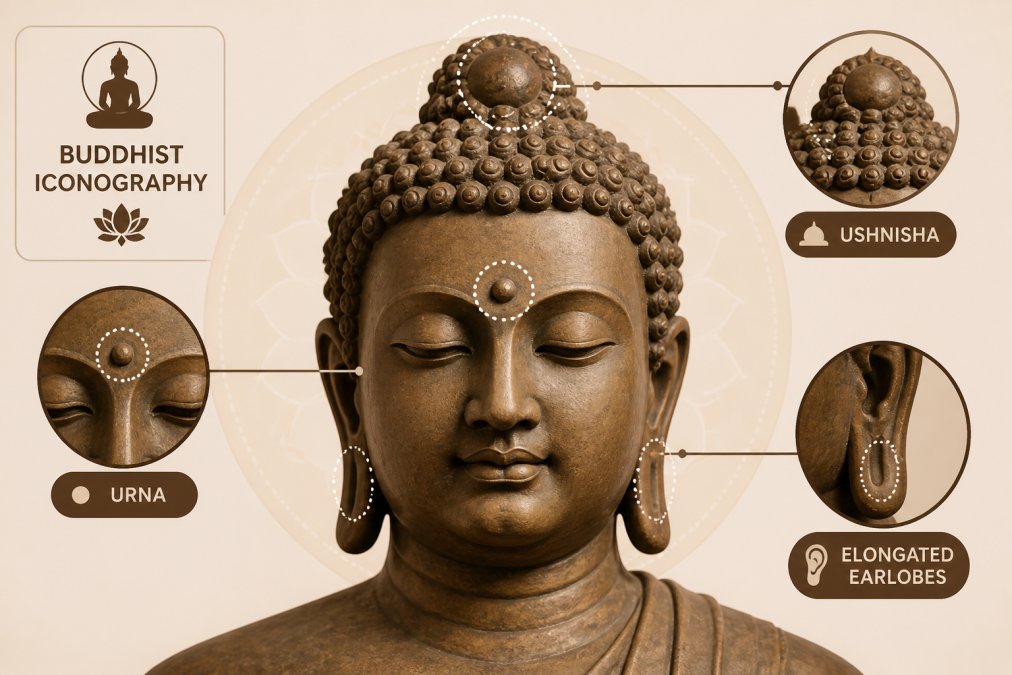
Die Ushnisha: Schädelbeule als Zeichen der Erleuchtung
Die Ushnisha ist ein markanter Schädelvorsprung, der sich vom Scheitel des Kopfes erhebt und eines der bekanntesten buddhistischen ikonografischen Merkmale ist. Diese Beule stellt spirituelle Weisheit dar, die durch unzählige Leben der Praxis angesammelt wurde, und symbolisiert das erleuchtete Bewusstsein des Buddha. Es erscheint auf praktisch jedem Original Buddha-Statue.
Die Form und Bedeutung der Ushnisha variiert je nach regionaler Tradition und künstlerischer Epoche. In südostasiatischen Stilen erscheint es als subtile abgerundete Beule. In tibetischen und Himalaya-Traditionen nimmt es oft eine ausgeprägte Kegel- oder Spiralform an. Trotz stilistischer Unterschiede bleibt das Grundprinzip konstant: Ein erhöhter Vorsprung an der Krone signalisiert buddhistische Ikonographie.
Hinduistische Gottheiten zeigen niemals eine Ushnisha. Stattdessen tragen sie aufwendige Kronen, Kopfbedeckungen oder haben natürlich fließendes Haar. Wenn Sie eine erhabene Beule am Scheitel sehen und nicht eine Krone auf dem Kopf, haben Sie es mit ziemlicher Sicherheit vor einer buddhistischen Darstellung.
Die Urna: Stirnmal und seine spirituelle Bedeutung
Die Urna ist ein kreisförmiges oder halbmondförmiges Zeichen zwischen den Augenbrauen auf der Stirn und stellt ein Haarbüschel dar, das Licht und Weisheit ausstrahlt. Dieses Zeichen symbolisiert die spirituelle Ausstrahlung und Fähigkeit Buddhas, den Weg zur Erleuchtung zu erhellen. Die Urna erscheint je nach Material und regionalem Stil als erhabener Punkt, gravierter Kreis oder juwelenbesetztes Ornament.
Die Urna kommt in allen großen buddhistischen Traditionen einheitlich vor. Hinduistische Gottheiten tragen manchmal Tilaka-Zeichen auf der Stirn, diese unterscheiden sich jedoch optisch: Typischerweise handelt es sich eher um gemalte oder aufgetragene Zeichen als um skulpturale Merkmale, und sie nehmen je nach Gottheit und Region unterschiedliche Formen an. In Kombination mit anderen buddhistischen Markierungen wird die Urna besonders nützlich zur Identifizierung.
Verlängerte Ohrläppchen und ihre Symbolik in der buddhistischen Skulptur
An praktisch jeder Buddha-Statue sind längliche Ohrläppchen zu sehen, die den Verzicht Buddhas auf weltlichen Luxus symbolisieren. Der buddhistischen Tradition zufolge trug Prinz Siddhartha als königlicher Erbe schwere goldene Ohrringe, die seine Ohrläppchen streckten. Nachdem er sein Leben als Fürst aufgegeben hatte, um sich der Erleuchtung zuzuwenden, nahm er die Ohrringe ab, doch die länglichen Ohrläppchen blieben als dauerhaftes Zeichen seiner Verwandlung erhalten.
Die länglichen Ohrläppchen buddhistischer Statuen reichen oft bis zu den Schultern und bilden so eine unverwechselbare Silhouette. Hindu-Gottheiten tragen manchmal kunstvolle Ohrringe und können Ohrlöcher haben, aber ihre Ohrläppchen werden typischerweise als normale menschliche Proportionen dargestellt. In Kombination mit Ushnisha und Urna bilden längliche Ohrläppchen ein Dreipunkt-Bestätigungssystem, das buddhistische Statuen eindeutig identifiziert.
Hinduistische Ikonographie: Gottheiten anhand von Attributen identifizieren
Hinduistische Statuen basieren auf einem völlig anderen ikonografischen System, das sich auf göttliche Attribute, symbolische Waffen und mehrere Arme konzentriert. Anstatt ein einzelnes erleuchtetes Wesen zu markieren, würdigt die hinduistische Skulptur zahlreiche Gottheiten, jede mit unterschiedlichen visuellen Merkmalen, die ihre kosmische Funktion und spirituelle Kraft vermitteln.
Mehrere Waffen und Waffen in der Hindu-Skulptur
Das optisch auffälligste Merkmal der hinduistischen Ikonographie ist das Vorhandensein mehrerer Arme, typischerweise vier, sechs oder zehn, die jeweils symbolische Gegenstände oder Waffen halten. Diese zusätzlichen Gliedmaßen repräsentieren die göttliche Allmacht und die Fähigkeit der Gottheit, in mehreren Dimensionen gleichzeitig zu agieren. Jeder Arm und das dazugehörige Objekt vermitteln spezifische Aspekte der Macht und Rolle der Gottheit in der kosmischen Ordnung.
Shiva erscheint üblicherweise mit vier Armen: Die obere rechte Hand hält typischerweise eine Trommel (als Symbol für die Schöpfung), die obere linke Hand hält das Feuer (als Symbol für Zerstörung und Transformation), die untere rechte zeigt die Abhaya-Mudra (keine Angst-Geste) und die untere linke Hand zeigt nach unten in die Varada-Mudra (Segens-Geste). Durga erscheint normalerweise mit acht oder zehn Armen, von denen jeder Waffen wie Schwerter, Dreizacke und Schilde trägt. Vishnu erscheint häufig mit vier Armen, die eine Muschelschale, einen Diskus, eine Keule und eine Lotusblume halten.
Buddhistische Statuen weisen praktisch nie mehrere Arme auf. Der Buddha und die Bodhisattvas erscheinen in Standarddarstellungen mit zwei Armen. Die einzige Ausnahme bilden bestimmte tibetische und ostasiatische buddhistische Traditionen, in denen zornige Gottheiten mit mehreren Armen dargestellt werden dürfen, diese stellen jedoch nur eine kleine Minderheit dar Buddhistische Skulptur.
Heilige Symbole und göttliche Markierungen
Hinduistische Gottheiten tragen spezifische symbolische Objekte, die ihre Rolle und Macht in der kosmischen Ordnung kommunizieren. Die Muschelschale (Shankha) repräsentiert kosmischen Klang und Schöpfung. Der Diskus (Chakra) symbolisiert den Geist und den Kreislauf der Zeit. Die Lotusblume steht für Reinheit, Erleuchtung und spirituelle Entwicklung. Der Dreizack (Trishula) repräsentiert die drei Aspekte der Existenz: Schöpfung, Erhaltung und Zerstörung.
Kronen und aufwändige Kopfbedeckungen zeichnen hinduistische Gottheiten optisch aus. Shivas Halbmondkrone, Vishnus hohe zylindrische Krone und Durgas mit wilden Gesichtszügen geschmückte Krone vermitteln alle göttliche Identität und Macht durch Kopfbedeckungen. Auch die Anwesenheit einer Schlange (Naga) weist in den meisten Fällen auf die hinduistische Ikonographie hin, da Shiva Kobras um den Hals und im Haar trägt.
Mudras Bedeutung: Handgesten, die religiöse Identität offenbaren
Handgesten, sogenannte Mudras, stellen eines der ausgefeiltesten Identifikationssysteme überhaupt dar Asiatische Ordensleute Skulptur. Diese sorgfältig kodifizierten Positionen vermitteln spirituelle Zustände, Segnungen und theologische Konzepte. Das Verständnis von Mudras ermöglicht eine sofortige und zuverlässige Identifizierung sowohl buddhistischer als auch hinduistischer Statuen.
Gemeinsame buddhistische Mudras und ihre Interpretationen
Bei der Abhaya-Mudra (Angst-nicht-Angst-Geste) wird die rechte Hand auf Schulterhöhe erhoben, die Handfläche nach außen gerichtet und die Finger nach oben ausgestreckt. Diese Geste vermittelt Schutz, Segen und die Beseitigung der Angst.
Bei der Varada Mudra (Wunscherfüllungsgeste) wird die Hand gesenkt, die Handfläche nach außen gerichtet und die Finger nach unten ausgestreckt. Diese Geste symbolisiert die Erfüllung von Wünschen, Mitgefühl und die Erfüllung spiritueller Sehnsüchte. Oft in Kombination mit dem Abhaya-Mudra auf der anderen Seite ergibt es eine ausgewogene Komposition.
Bei der Dhyana Mudra (Meditationsgeste) liegen beide Hände im Schoß, die Handflächen zeigen nach oben, eine Hand liegt über der anderen. Diese Position steht für tiefe Meditation und spirituelle Kontemplation.
Bei der Bhumisparsha Mudra (Geste der Erdberührung) berührt die rechte Hand den Boden, während die linke im Schoß ruht. Diese Position bezieht sich auf den Moment der Erleuchtung Buddhas.
Die Vitarka Mudra (Lehrgeste) zeigt die erhobene rechte Hand mit Daumen und Zeigefinger, die einen Kreis bilden, während die anderen Finger nach oben gestreckt sind. Diese Position repräsentiert die Weitergabe buddhistischer Lehren.
Handpositionen in der Darstellung hinduistischer Gottheiten
Hinduistische Gottheiten verwenden unterschiedliche Mudras, die ihre spezifischen göttlichen Funktionen und Kräfte kommunizieren. Das Abhaya-Mudra kommt auch in der hinduistischen Ikonographie vor, allerdings typischerweise nur auf einer Hand, während die andere eine Waffe oder einen symbolischen Gegenstand hält. Das Varada-Mudra kommt auch in hinduistischen Statuen vor, oft in Kombination mit einer Waffe oder einem symbolischen Gegenstand und nicht mit einem anderen Mudra auf der gegenüberliegenden Hand.
Der Hauptunterschied: Buddhistische Mudras erscheinen typischerweise symmetrisch oder in meditativer Konfiguration, während hinduistische Handpositionen häufig Asymmetrie aufweisen, wobei eine Hand in einem Mudra ist und die andere eine Waffe oder ein Attribut hält. Dieser kompositorische Unterschied spiegelt die theologische Unterscheidung zwischen der buddhistischen Betonung innerer spiritueller Zustände und der hinduistischen Feier der göttlichen kosmischen Macht wider.
Unterschiede zwischen hinduistischer und buddhistischer Kunst: Stilistische Analyse
Über spezifische ikonografische Merkmale hinaus unterscheiden sich die gesamten ästhetischen und kompositorischen Ansätze zwischen hinduistischen und buddhistischen Skulpturen erheblich. Diese stilistischen Unterschiede spiegeln tiefere theologische Unterschiede wider und bieten zusätzliche Identifikationsinstrumente.
Haltung, Haltung und Sitzpositionen
Buddhistische Statuen zeichnen sich überwiegend durch Sitzpositionen aus, insbesondere durch die Lotusposition (Padmasana), bei der der Buddha mit gekreuzten Beinen sitzt und beide Füße auf den gegenüberliegenden Oberschenkeln platziert. Diese Haltung steht für Meditation, spirituelle Stille und das Erreichen der Erleuchtung. Der Lotussitz kommt in der buddhistischen Ikonographie so häufig vor, dass eine sitzende Figur in dieser Pose mit ziemlicher Sicherheit buddhistisch ist.
Hinduistische Gottheiten weisen eine weitaus größere Haltungsvielfalt auf. In der hinduistischen Skulptur dominieren stehende Posen, wobei Gottheiten in dynamischen, manchmal tanzenden Positionen dargestellt werden, die kosmische Energie und göttliche Aktivität feiern. Shivas kosmischer Tanz (Nataraja) zeigt ihn in einer kunstvollen Standhaltung mit erhobenem Bein und Armen in dynamischen Positionen. Sitzende Hindu-Gottheiten erscheinen typischerweise auf Thronen oder in Positionen königlicher Autorität und nicht in meditativen Lotussitzen.
Diese Haltungsunterscheidung ermöglicht eine sichere Identifizierung: Eine Statue im Lotussitz ist buddhistisch. Eine stehende Figur in dynamischer Pose oder eine sitzende Figur auf einem Thron ist wahrscheinlich hinduistisch.
Ornamente, Schmuck und Kronen
Buddhistische Statuen weisen typischerweise eine minimale Verzierung auf. Der Buddha verzichtete auf weltlichen Luxus, und die buddhistische Skulptur spiegelt diesen Verzicht durch Einfachheit wider. Die meisten Buddha-Statuen tragen einfache Gewänder und minimalen Schmuck. Diese Ästhetik lenkt die Aufmerksamkeit des Betrachters auf das Gesicht, die Haltung und die Mudras des Buddha.
Hinduistische Gottheiten weisen aufwändige Verzierungen als Kernelement ihrer Ikonographie auf. Shiva trägt Schlangen um den Hals, kunstvollen Schmuck und eine Mondsichelkrone. Vishnu zeigt juwelenbesetzte Ornamente, kunstvolle Kronen und reich verzierte Kleidungsstücke. Das Vorhandensein eines kunstvollen Throns weist in den meisten Fällen auch auf eine hinduistische Herkunft hin.
Regionale stilistische Variationen und ikonografische Nuancen
Das Verständnis regionaler und zeitlicher Unterschiede verhindert Fehlidentifikationen aufgrund unbekannter künstlerischer Stile. Die buddhistische und hinduistische Skulptur entwickelte sich in den verschiedenen geografischen Regionen unterschiedlich, behielt aber die ikonografischen Grundprinzipien bei.
Südostasiatische und Khmer-Einflüsse
Khmer-buddhistische Skulptur aus Kambodscha (insbesondere die Angkor-Zeit, 9.-15. Jahrhundert) entwickelte charakteristische Merkmale, die sich von indischen buddhistischen Traditionen unterscheiden. Khmer-Buddhas zeichnen sich oft durch breite Gesichter, vereinfachte Gesichtszüge und einen gelassenen Gesichtsausdruck aus, der den spirituellen Frieden betont. Die wichtigsten ikonografischen Merkmale, Ushnisha, Urna, verlängerte Ohrläppchen und Meditationshaltung, bleiben konstant, auch wenn der künstlerische Ausdruck variiert.
Die hinduistische Ikonographie in Südostasien entwickelte sich unterschiedlich, insbesondere auf Java und Bali, wo hinduistische und buddhistische Traditionen nebeneinander existierten. Die hindu-javanische Skulptur zeigt den Einfluss beider Traditionen, aber das Vorhandensein mehrerer Waffen, Waffen, kunstvoller Verzierungen und spezifischer Gottheiten bewahrt die Hindu-Identität auch in regionalen Variationen.
Indische, tibetische und chinesische Skulpturentraditionen
Die indische buddhistische Skulptur, insbesondere aus der Gandhara- und Mathura-Zeit (1.–5. Jahrhundert), begründete das grundlegende ikonografische System, das alle nachfolgenden buddhistischen Traditionen beeinflusste. Trotz des griechisch-römischen künstlerischen Einflusses auf die Gandhara-Buddhas bleiben die zentralen buddhistischen Merkmale präsent und erkennbar.
Die tibetisch-buddhistische Skulptur entwickelte einen unverwechselbaren Stil, der stark von indischen buddhistischen Traditionen beeinflusst war, sich aber an die Ästhetik und Materialien des Himalaya anpasste. Tibetische Bronzen zeigen häufig Buddha oder Bodhisattvas in aufwändigen Meditationshaltungen mit detaillierten Handpositionen. Die Ushnisha erscheint oft ausgeprägter und nimmt manchmal eine flammenartige oder spiralförmige Form an.
Chinesische und ostasiatische buddhistische Skulpturen entwickelten ihre eigenen regionalen Merkmale und behielten gleichzeitig die zentrale buddhistische Ikonographie bei. Trotz der stilistischen Besonderheit bleibt das grundlegende ikonografische System buddhistisch.
Provenienz, Authentizität und ethische Sammelpraktiken
Die korrekte Identifizierung hinduistischer und buddhistischer Statuen steht in direktem Zusammenhang mit Fragen der Authentizität, der Herkunft und des ethischen Erwerbs. Wenn Sie wissen, wie man Patina, Gusstechnik und Materialzusammensetzung beurteilt, können Sie echte antike Stücke von hochwertigen Repliken unterscheiden.
Beurteilung von Patina, Gusstechnik und Materialzusammensetzung
Authentische antike Bronzestatuen entwickeln eine charakteristische Patina, eine Oberflächenschicht, die durch Oxidation und chemische Verwitterung über Jahrzehnte oder Jahrhunderte hinweg entsteht. Diese Patina erscheint je nach Legierungszusammensetzung und Umgebungsbedingungen als grüne, braune oder schwarze Färbung. Echte Patina entwickelt sich ungleichmäßig, mit dunkleren Bereichen in Spalten und helleren Bereichen auf erhabenen Oberflächen.
Die Casting-Technik bietet einen weiteren Authentifizierungsmarker. Authentische Bronzestatuen, die im Wachsausschmelzverfahren gegossen wurden, weisen charakteristische Nähte an den Verbindungsstellen der Formteile auf. Diese Nähte sollten Anzeichen von Handbearbeitung, kleine Feilspuren oder Abweichungen in der Glätte aufweisen, was auf Nachbearbeitungsarbeiten hindeutet.
Die Materialzusammensetzung variiert je nach Tradition und Epoche. Indische und südostasiatische Bronzestatuen verwenden typischerweise Messing- oder Bronzelegierungen mit spezifischen Zinn- und Kupferverhältnissen, die je nach Region und Zeit variieren. Steinstatuen weisen charakteristische Verwitterungsmuster und Werkzeugspuren auf, die sich von modernen Schnitztechniken unterscheiden.
Unterscheidung authentischer Antiquitäten von hochwertigen Repliken
Die Unterscheidung zwischen authentischen antiken Stücken und hochwertigen zeitgenössischen Repliken ist immer schwieriger geworden, da die Replikathersteller ihre Techniken verbessert haben. Die Provenienzdokumentation bietet die zuverlässigste Authentifizierungsmethode. Eine Statue mit klarer Dokumentation ihrer Besitzgeschichte, Ausstellungsaufzeichnung und wissenschaftlichen Zuschreibung besitzt weitaus größere Glaubwürdigkeit als ein undokumentiertes Stück.
Das Vorhandensein von Abnutzungsmustern bietet Hinweise zur Authentifizierung. Echte antike Statuen weisen alters- und gebrauchsbedingte Abnutzungserscheinungen auf: geglättete Stellen, an denen die Statue wiederholt mit den Händen berührt wurde, leichte Schäden an erhabenen Merkmalen und Verwitterungsmuster, die darauf hindeuten, dass sie bestimmten Umweltbedingungen ausgesetzt waren.
Die wissenschaftliche Prüfung durch in der asiatischen Kunstgeschichte ausgebildete Experten bietet die zuverlässigste Authentifizierung. HD Asian Art pflegt eine detaillierte Provenienzdokumentation für alle Stücke in unserer Sammlung und sorgt so für Transparenz über die Herkunft, Geschichte und Authentizität jeder Statue. Unser Engagement für ethisches Sammeln bedeutet, dass wir nur Stücke mit klarer Dokumentation und überprüfter Herkunft erwerben.
Häufige Fehler bei der Identifizierung hinduistischer und buddhistischer Statuen
Selbst erfahrene Sammler identifizieren Statuen gelegentlich falsch, indem sie sich auf ein einzelnes Merkmal konzentrieren oder Identifizierungsregeln inkonsistent anwenden.
Die Annahme, dass alle südostasiatischen Statuen buddhistisch seien, ist der häufigste Fehler. Während der Buddhismus in vielen südostasiatischen Regionen vorherrschte, blühten hinduistische Traditionen auf Java, Bali und anderen Gebieten auf. Untersuchen Sie immer den gesamten Satz ikonografischer Markierungen, anstatt sich auf geografische Annahmen zu verlassen.
Die Verwechslung regionaler stilistischer Unterschiede mit religiöser Tradition führt zu einem weiteren häufigen Fehler. Ein Khmer-Buddha mit vereinfachten Gesichtszügen und einer dezenten Ushnisha mag auf den ersten Blick anders aussehen als ein indischer Buddha. Die Kernmerkmale bleiben jedoch in allen regionalen Traditionen konstant.
Die Übergewichtung eines einzelnen Merkmals führt zu einer Fehlidentifizierung. Untersuchen Sie immer mehrere Markierungen, Ushnisha, Urna, Ohrläppchen, Mudras, Körperhaltung und Attribute, um eine sichere Identifizierung zu erreichen.
Ein weiterer häufiger Fehler besteht darin, Bodhisattvas mit hinduistischen Gottheiten zu verwechseln. Bodhisattvas im Mahayana-Buddhismus erscheinen in einigen Traditionen mit mehreren Armen und aufwändiger Verzierung. Bodhisattvas bleiben jedoch buddhistische Figuren, und ihre Ikonographie enthält buddhistische Markierungen, die sie von hinduistischen Gottheiten unterscheiden.
Der zuverlässigste Ansatz kombiniert mehrere Identifizierungsmethoden: Untersuchen Sie Ushnisha und Urna, beobachten Sie die Ohrläppchen, identifizieren Sie die Mudras oder Handpositionen, zählen Sie die Arme, beurteilen Sie den Grad der Verzierung, bewerten Sie die Körperhaltung und berücksichtigen Sie die Gesamtkomposition.
| Identifikationsmerkmal | Buddhistische Statuen | Hinduistische Statuen |
|---|---|---|
| Schädelbeule (ushnisha) | Auf praktisch allen präsent | Abwesend; Stattdessen wurden Kronen getragen |
| Stirnmal (Urna) | Kreisförmige Markierung zwischen den Augenbrauen | Tilaka-Zeichen variieren je nach Gottheit |
| Ohrläppchen | Länglich, bis zu den Schultern reichend | Normale menschliche Proportionen |
| Anzahl der Arme | Zwei (Standard); seltene Ausnahmen in einigen Traditionen | Vier, sechs, acht oder zehn |
| Handgesten (Mudras) | Meditationsposen, symmetrische Positionen | Asymmetrisch; Eine Hand im Mudra, die andere hält einen Gegenstand |
| Waffen/Attribute | Minimal; gelegentlich Stab oder Schriftrolle | Mehrere Waffen und symbolische Objekte |
| Haltung | Sitzend im Lotussitz oder in der Meditationsposition | Stehend oder thronend; dynamische Posen |
| Ornamentik | Minimal; einfache Gewänder und Schmuck | Ausarbeiten; juwelenbesetzte Kronen und dekorative Elemente |
| Gesichtsausdruck | Gelassen, nach innen gerichtet, friedlich | Abwechslungsreich; wilde, dynamische oder königliche Ausdrücke |
| Gesamtästhetik | Spirituelle Einfachheit, die den inneren Frieden betont | Kosmische Kraft, die göttliche Autorität betont |
Um hinduistische und buddhistische Statuen sicher identifizieren zu können, muss man lernen, die unterschiedlichen visuellen Sprachen zu erkennen, die in der heiligen Kunst jeder Tradition verankert sind. Die ikonografischen Markierungen, Ushnisha und Urna für Buddhisten, mehrere Arme und Waffen für Hindus, schaffen klare Identifikationssysteme, die über regionale Variationen und Kunstepochen hinweg funktionieren. Indem Sie Statuen systematisch anhand mehrerer Markierungen untersuchen, anstatt sich auf einzelne Merkmale zu verlassen, entwickeln Sie die visuelle Kompetenz, die selbstbewusste Sammler von unsicheren unterscheidet.
Laut dem Leitfaden des Metropolitan Museum of Art zur asiatischen Skulptur hilft das Verständnis dieser ikonografischen Systeme dem Betrachter, sowohl die künstlerische Leistung als auch die spirituelle Bedeutung religiöser Statuen zu würdigen. Bei den visuellen Markierungen handelt es sich nicht um willkürliche ästhetische Entscheidungen, sondern um ausgeklügelte Kommunikationssysteme, die über Jahrhunderte hinweg entwickelt wurden, um theologische Konzepte und spirituelle Zustände zu vermitteln.
Für Sammler, die authentische Stücke mit nachgewiesener Herkunft suchen, Leitlinien der UNESCO zum Schutz des kulturellen Erbes betont die Bedeutung ethischer Erwerbspraktiken, die die Erhaltung authentischer kultureller Artefakte unterstützen. HD Asian ArtDas Engagement von s für eine detaillierte Herkunftsdokumentation und ethisches Sammeln stellt sicher, dass unsere Stücke diese Standards erfüllen und den Sammlern gleichzeitig Vertrauen in ihre Akquisitionen gibt.
Ganz gleich, ob Sie einen Meditationsraum kuratieren, eine ernsthafte Sammlung aufbauen oder einfach nur Ihre Wertschätzung für asiatische religiöse Kunst vertiefen möchten: Die Fähigkeit, zu erkennen, ob eine Statue hinduistisch oder buddhistisch ist, öffnet Türen zum Verständnis der reichen spirituellen Traditionen, die diese bemerkenswerten Skulpturen hervorgebracht haben. Die Dokumentation der asiatischen Kunstsammlung der Smithsonian Institution zeigt, wie diese Identifikationsfähigkeiten zum wissenschaftlichen Verständnis und zur Erhaltung der Kultur beitragen. Beginnen Sie damit, Statuen anhand der in diesem Leitfaden behandelten Markierungen zu untersuchen: Ushnisha, Urna, Ohrläppchen, Mudras, Arme, Verzierungen und Haltung, und Sie werden schnell das Selbstvertrauen entwickeln, fast jedes Stück zu identifizieren, auf das Sie stoßen.
Häufig gestellte Fragen
Was sind die Hauptunterschiede zwischen hinduistischen und buddhistischen Statuen?
Die Hauptunterschiede liegen in der Ikonographie, Symbolik und physischen Eigenschaften. Buddhistische Statuen weisen typischerweise eine Ushnisha (Schädelbeule), verlängerte Ohrläppchen und einen heiteren Gesichtsausdruck auf, der Erleuchtung widerspiegelt. Hinduistische Statuen zeigen oft mehrere Arme, Waffen oder Attribute, kunstvollen Schmuck und Kronen sowie dynamische Körperhaltungen. Das Verständnis der Unterschiede zwischen hinduistischer und buddhistischer Kunst hilft Sammlern, Herkunft und spirituelle Bedeutung zu erkennen. Auch Mudras (Handgesten) unterscheiden sich: Buddhistische Mudras vermitteln Meditation oder Lehre, während hinduistische Handhaltungen auf bestimmte göttliche Handlungen oder Segnungen hinweisen.
Wie hilft die Mudras-Bedeutung dabei, festzustellen, ob eine Statue hinduistisch oder buddhistisch ist?
Mudras sind symbolische Handgesten, die für beide Traditionen von zentraler Bedeutung sind, aber unterschiedliche Bedeutungen haben. Zu den buddhistischen Mudras gehören Dhyana Mudra (Meditation, Handflächen nach oben), Abhaya Mudra (Furchtlosigkeit, Handfläche nach oben) und Bhumisparsha Mudra (die Erde berühren, Erleuchtung erleben). Hinduistische Gottheiten verwenden Mudras, um bestimmte Handlungen anzuzeigen: Abhaya für Schutz, Varada für Segen oder Almosen. Die Positionierung, die Anzahl der Hände und die dazugehörigen Objekte (Lotus, Dreizack, Gebetskette) verdeutlichen die religiöse Identität. Das Erkennen dieser Handpositionen ist wichtig, wenn man lernen möchte, ob eine Statue hinduistisch oder buddhistisch ist.
Welche Bedeutung haben Ushnisha und Urna auf buddhistischen Statuen?
Die Ushnisha ist eine Schädelbeule oder Ausbuchtung, die die Erleuchtung und spirituelle Weisheit Buddhas symbolisiert. Die Urna ist ein Zeichen oder Punkt auf der Stirn zwischen den Augenbrauen, der das „Dritte Auge“ und die innere Vision darstellt. Diese Merkmale sind charakteristische Merkmale der buddhistischen Ikonographie und erscheinen bei hinduistischen Gottheiten selten in derselben Form. Die Ushnisha kann je nach regionalen Stilvarianten und Gusstechnik als Flamme, Haarknoten oder einfache Beule dargestellt werden. Zusammengenommen machen diese Attribute die Identifizierung für Sammler, die Authentizität und Herkunft bewerten, klarer.
Wie kann ich vor dem Kauf die Echtheit und Herkunft einer Statue überprüfen?
Untersuchen Sie die Patina (Oberflächenalterung), die Materialzusammensetzung (Bronze, Stein oder andere) und die Gusstechnik, um Alter und Herkunft zu beurteilen. Fordern Sie eine detaillierte Provenienzdokumentation an, aus der die Geschichte der Statue, die Vorbesitzer und das Erwerbsdatum hervorgehen. Achten Sie auf Anzeichen authentischer Abnutzung, Werkzeugspuren, die mit traditionellen Methoden übereinstimmen, und regionale Stilvarianten, die zur angeblichen Herkunft passen. Seien Sie vorsichtig bei Repliken, die oft eine gleichmäßige Patina oder moderne Werkzeugspuren aufweisen. Ethische Sammelpraktiken erfordern Transparenz: Seriöse Händler bieten archäologischen Kontext, gegebenenfalls Exportdokumentation und ehrliche Zustandsbewertungen. HD Asian Art ist auf sorgfältig kuratierte Stücke mit dokumentiertem Hintergrund spezialisiert.
